Pharmaceutical packaging
Accessible medicine information, built for regulated packaging.
Medicine cartons and patient leaflets carry essential information, but not everyone can access it easily. NaviLens adds an accessible digital layer that helps people locate and access approved product information more independently, while preserving the role of required printed information.
Cited by AEMPS · May 2026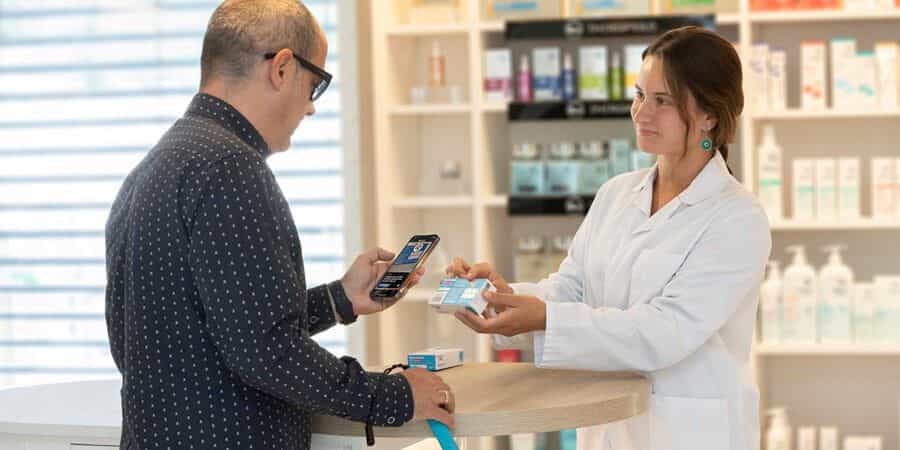
- 12×
- Farther than a QR code
- 42
- Languages with audio output
- <1s
- Detection time
- 160°
- Code capture angle
The challenge
Medicine information should be easier to locate and access.
Medicine packaging has to communicate essential information within limited physical space. Product name, presentation, lot number, expiry date, care information, warnings and patient leaflets all need to coexist within a tightly controlled packaging system.
For blind and low-vision people, and for anyone who struggles with small print, locating and understanding that information independently can be difficult.
NaviLens creates an additional accessible path to approved digital information without replacing the essential role of the carton or leaflet.
Physical packaging constraints
- · Limited surface area
- · Small printed information
- · Dense leaflet content
- · Fixed information hierarchy
Accessible digital layer
- · Easier to locate with compatible mobile technology
- · Approved information in accessible formats
- · Audio-supported content where appropriate
- · Multilingual and country-specific journeys where approved
Physical packaging. Accessible information layer. One connected experience.
From the carton to the information that matters.
A three-step journey between the physical pack and approved digital content — designed to keep the printed packaging in its central role.
- 01
Locate the accessible information point
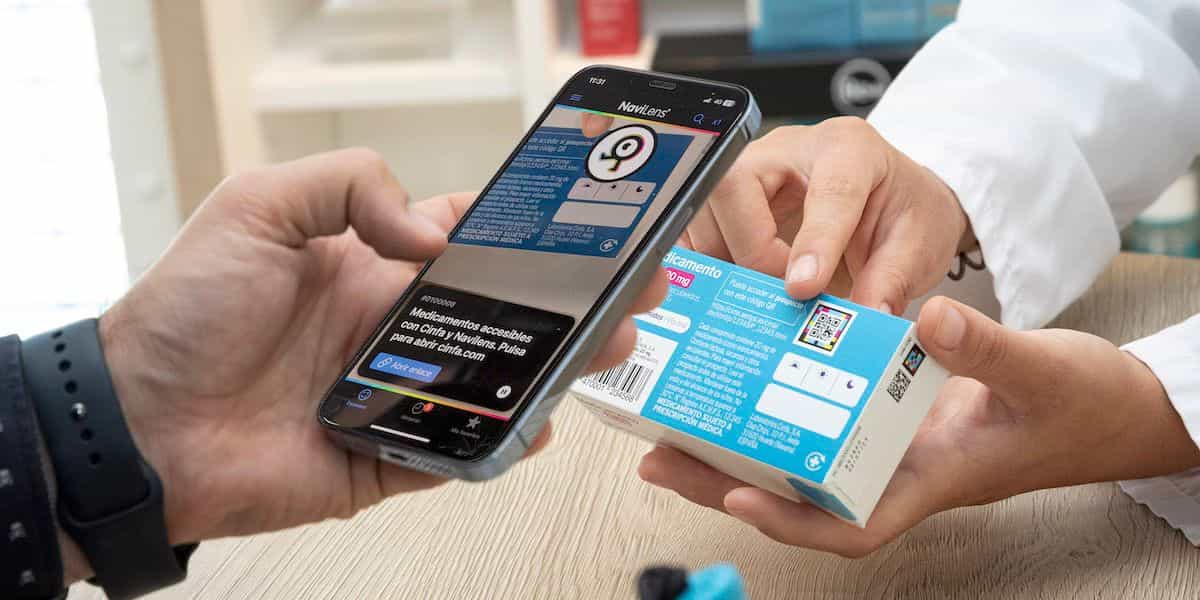
NaviLens helps users identify an accessible point on the carton or patient leaflet without needing to precisely locate or frame the code.
- 02
Access approved product information
Provide selected approved information in accessible formats, including product name, presentation, lot, expiry date and the relevant patient leaflet content when configured for that product.
- 03
Return to information when needed
The accessible information layer can remain available beyond the point of dispensing, helping people revisit approved product information when appropriate.
Controlled information journeys
Accessibility works best when information stays governed.
In pharmaceutical packaging, the technology is only one part of the experience. The information journey must remain aligned with approved product content, market requirements, languages and internal governance processes.
- 01
Approved content
Design the accessible information journey around approved product information and relevant authorised materials.
- 02
Country and language context
Support clear language and market-specific information paths where relevant to the product and implementation.
- 03
Artwork and readability review
Plan the NaviLens placement with packaging, regulatory and artwork teams so essential printed information remains legible.
- 04
Lifecycle management
Maintain the accessibility layer through the product-information lifecycle, internal approval process and packaging updates.
Accessible information should be as controlled as the packaging it complements.
Designed around pharmaceutical packaging realities.
NaviLens can be planned as part of a controlled packaging and product-information workflow, from initial review to artwork validation and phased rollout.
- 01
Assess
Review product range, carton and leaflet formats, target markets and accessible-information objectives.
- 02
Define
Define the content scope, customer journey and placement within the packaging information hierarchy.
- 03
Validate
Coordinate artwork, legibility, approved information and implementation requirements with the relevant teams.
- 04
Roll out
Deploy consistently across products and markets according to the applicable approval and implementation process.
Designed to complement essential medicine information.
NaviLens is designed to complement existing medicine-labeling and product-information systems. Printed packaging, patient leaflets, professional medical guidance and statutory information remain essential.
The role of NaviLens is to provide an additional accessible way to discover and access approved information.
- 01
Complements mandatory printed information
- 02
Supports approved information journeys
- 03
Designed for responsible implementation
Cinfa × NaviLens
From pioneering project to scaled access.
Cinfa began introducing NaviLens into medicine cartons and patient leaflets in 2024 after approximately eighteen months of validation and practical implementation work.
Through the accessible information layer, users can access information such as the product name, presentation, expiry date, lot number and complete patient leaflet content using their smartphone and accessibility tools.
Cinfa developed the project with NaviLens and with input from blind and low-vision people through Fundación IDDEAS.
- First medicines launched2024
- Cinfa prescription medicines in pharmacies that include NaviLens> 50%
- Cinfa mobility treatments with NaviLens75%
Last verified · October 2024
Built for cartons, leaflets and product-information journeys.
- 01
Outer cartons
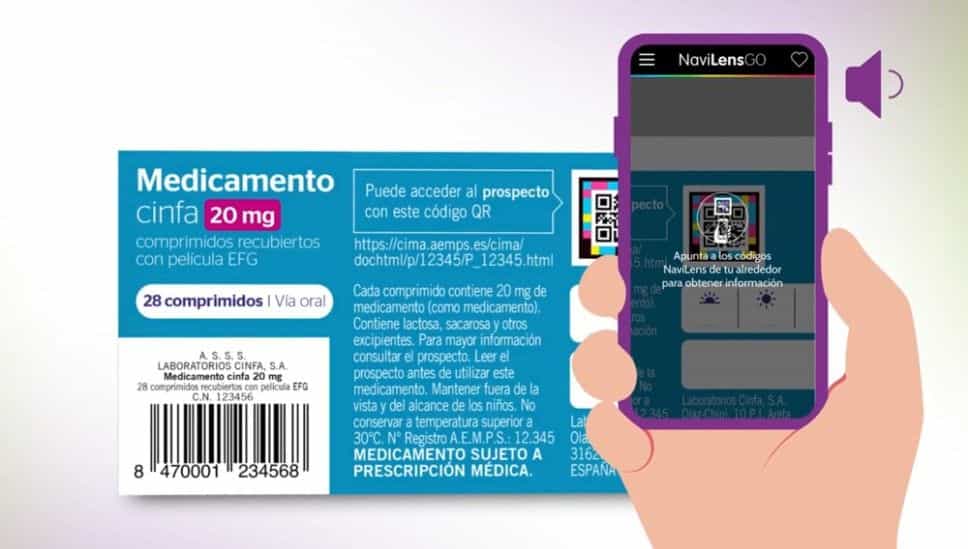
Create an accessible information point on the medicine carton while respecting the existing packaging information hierarchy.
- 02
Patient leaflets
Help users access the approved leaflet content through a more accessible digital route, alongside the printed leaflet.
- 03
Health products and related solutions
Apply the same accessibility approach to appropriate health-product formats where product information needs to be easier to access.
FAQ
Frequently asked questions about accessible pharmaceutical packaging.
Make approved medicine information easier to access.
Tell us about your product range, packaging formats, markets and accessibility goals. Our team will help you explore an implementation approach that fits your product-information and packaging workflow.