End-to-end autonomy
Voice readout from 100 ft for the check-in counter, the security line, the boarding gate and the accessible restroom. No focusing, no waiting for PRM staff.
Airport accessibility
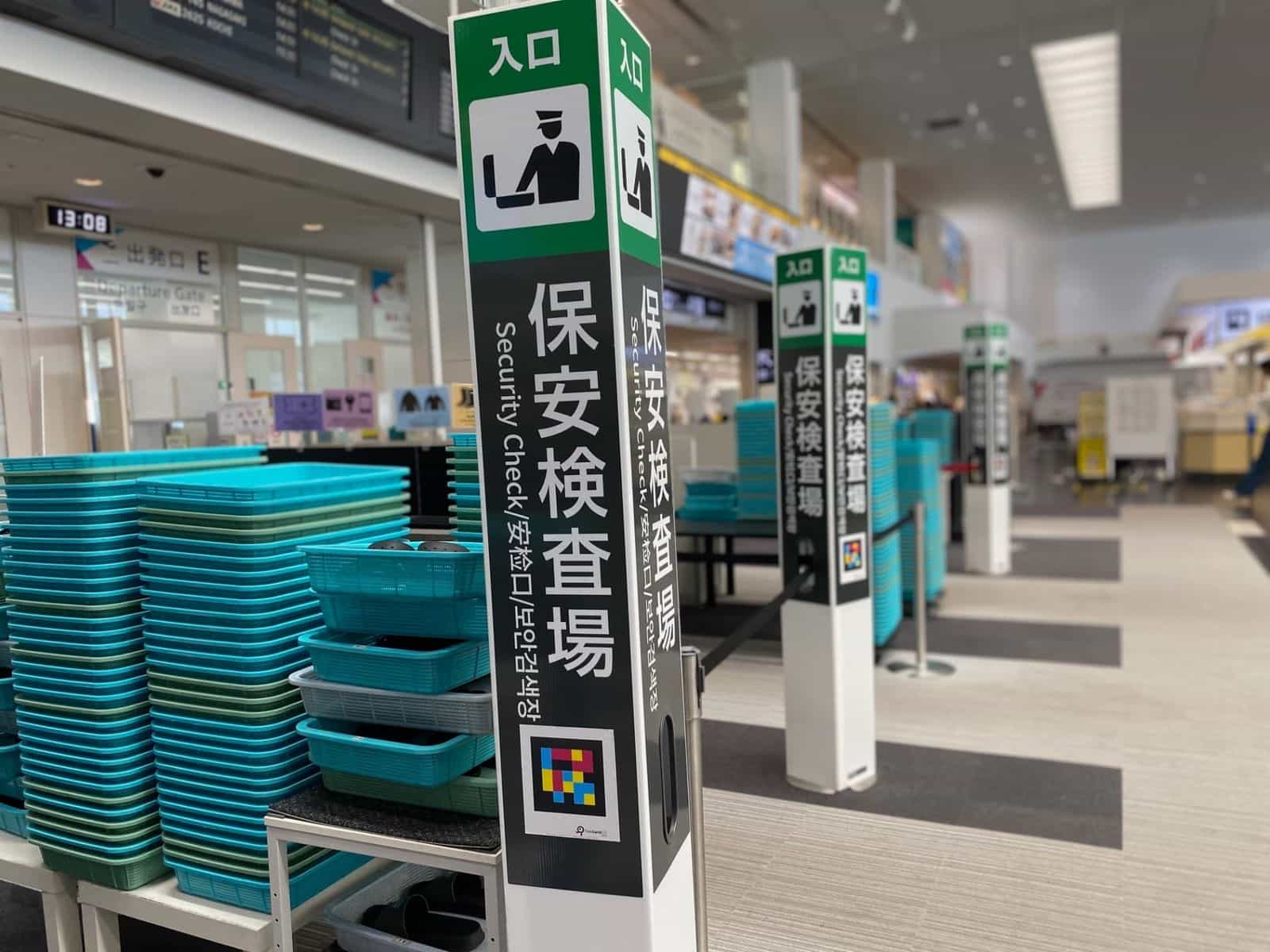
NaviLens adds an accessible wayfinding layer to the terminal and, when integrated with the FIDS, delivers real-time flight information. It guides passengers through check-in, security, gates, connections and arrivals — no construction works, in 42 languages.
§ The passenger journey
From arrival at the terminal to boarding, NaviLens turns every decision point — check-in, security, gates, connections and arrivals — into a point of accessible orientation and information.
Blind passengers depend on PRM assistance from the airport door to the aircraft, losing autonomy along the way.
With NaviLens they navigate alone: voice readout of counters, gates and panels from 100 ft, in their language, no help needed.
Departures and arrivals FIDS panels are visual and change constantly: no standard screen reader can read them.
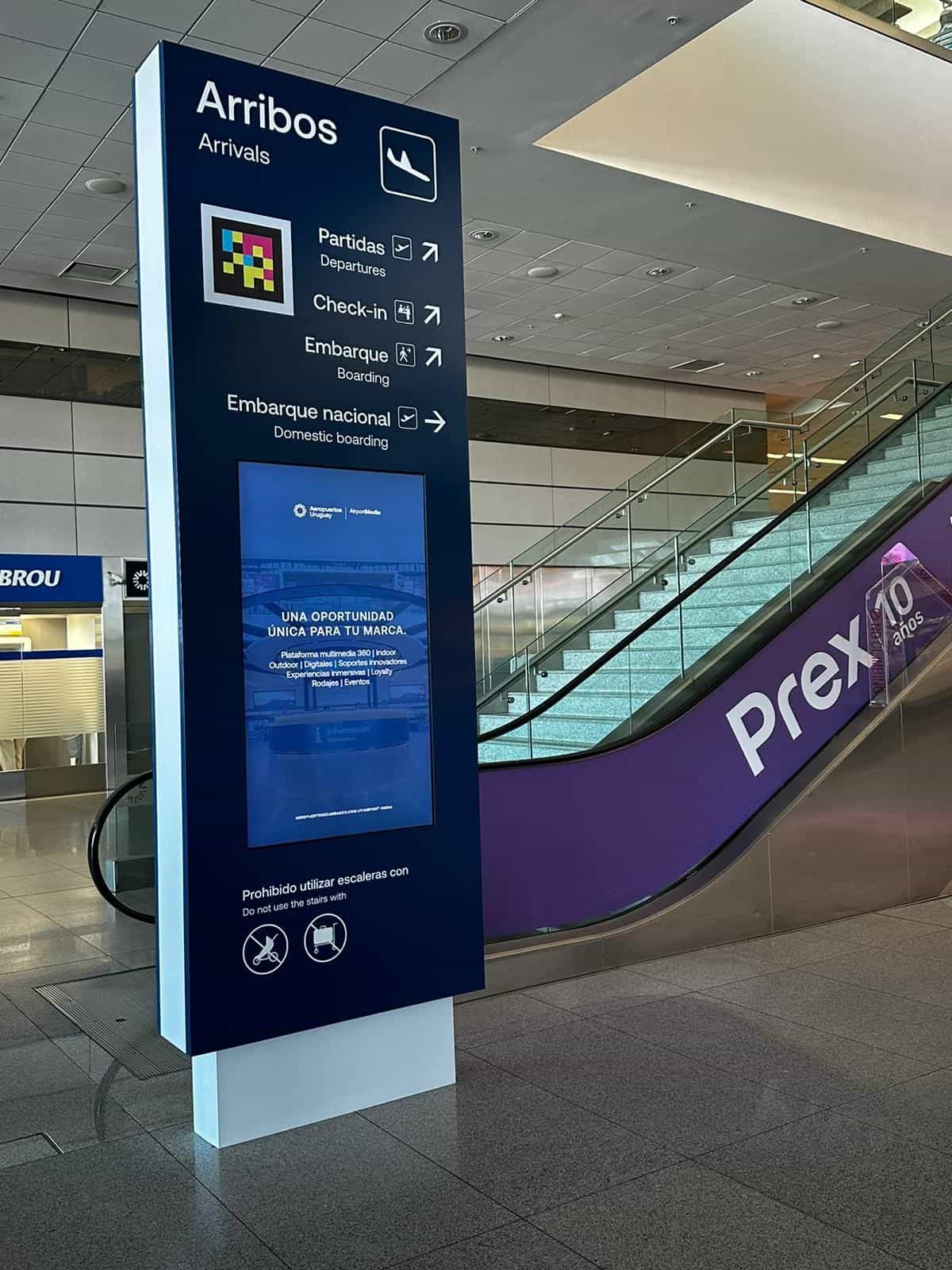
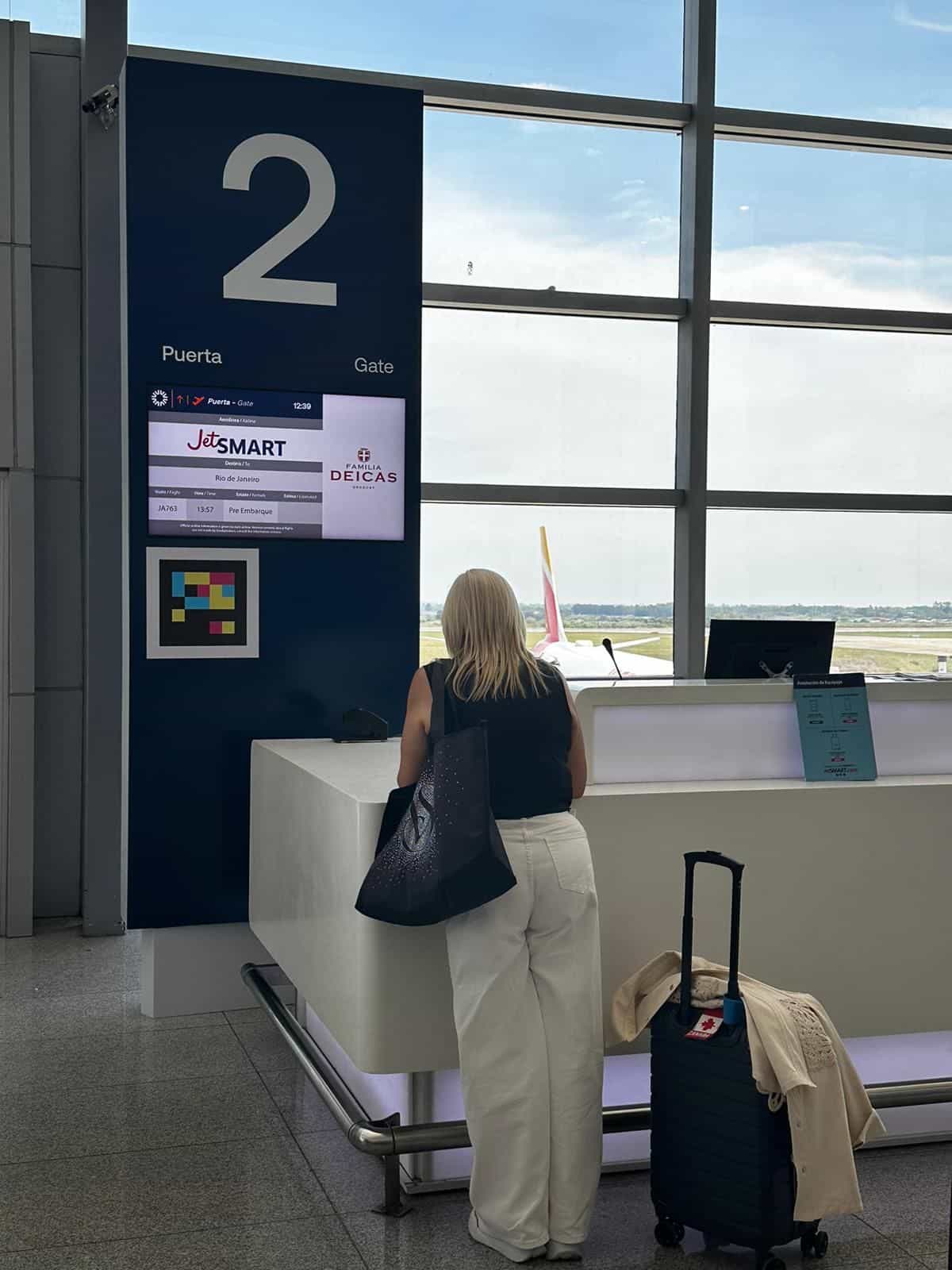
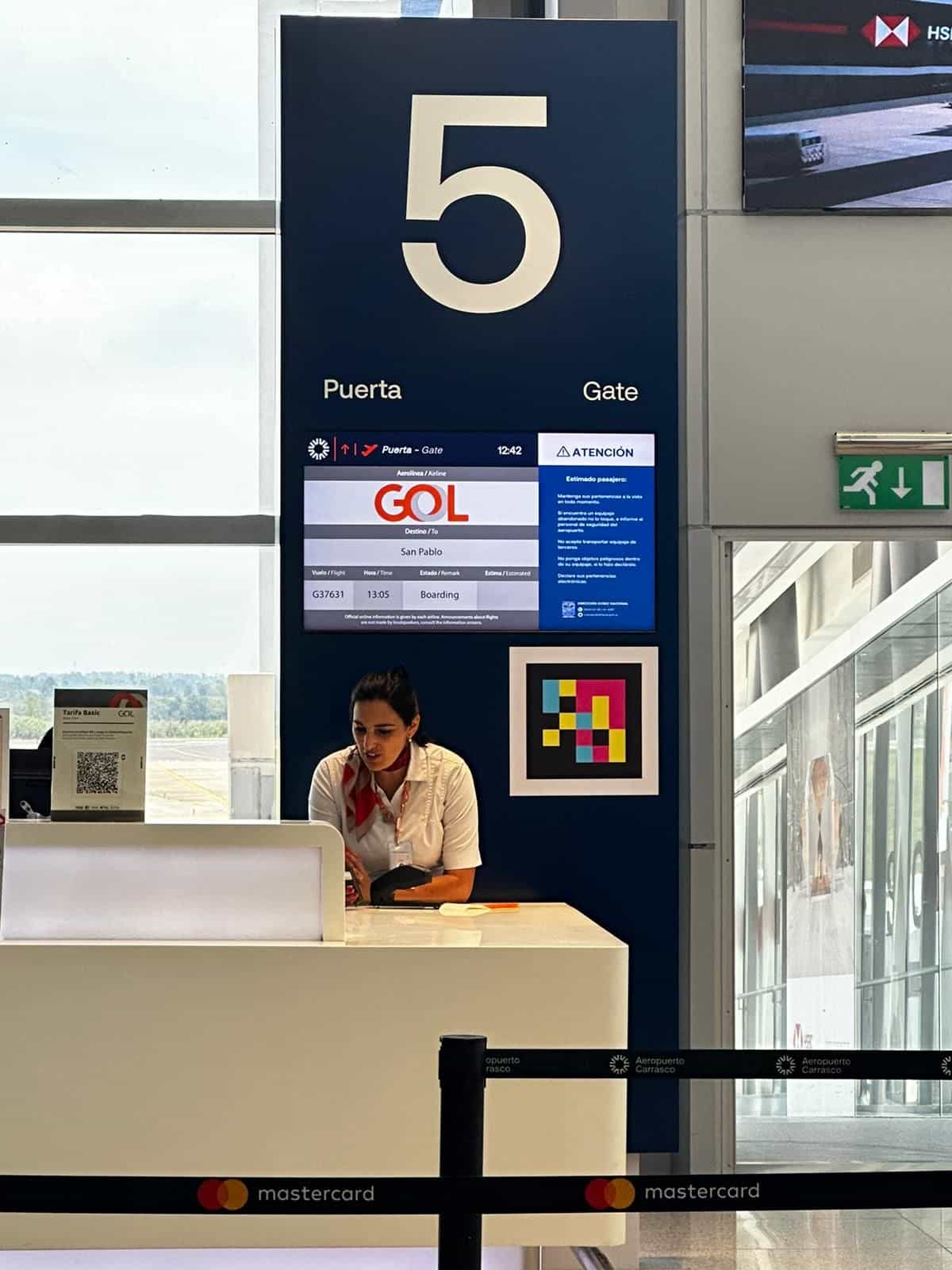
Carrasco integrates NaviLens into the FIDS: the marker tied to each flight updates in real time with gate, time and status.
International tourists don't read local signage, especially in non-Latin scripts (Japanese, Arabic, Cyrillic).
A single marker reads automatically in 42 languages depending on the phone's language.
Refurbishments break learned routes and memorised itineraries.
NaviLens stickers go up over the new signage in days, no civil works, and come down once the refurbishment ends.
§ How it rolls out
Deployment starts with an audit of signage and the critical points of the passenger journey. We define media, content and, where applicable, FIDS integration without interrupting terminal operations.
Walkthrough with your accessibility team to spot critical points: access, check-in, security, gates, transfers, restrooms, exits and public-transport connection.
Weeks 1-2
NaviLens and NaviLens GO signage designed to the airport's brand book. Stickers made to resist moisture and cleaning agents.
Weeks 3-4
Rollout in one terminal or area (e.g. Haneda T3 or the Olaya Herrera check-in hall) with airport staff and the maintenance app on site.
Weeks 5-6
Optional connection to the airport FIDS so each marker tied to a gate/flight updates in real time, as in Carrasco.
Weeks 7-8
Training for PRM, customer service and maintenance teams. Rollout to remaining terminals and public launch communication.
Weeks 9-12
§ Flagship case
Carrasco International Airport · Montevideo · Uruguay
At Carrasco, NaviLens connects markers installed in arrivals, lounges and boarding gates with the flight information system. Passengers can hear airline, destination, flight number, time and boarding status in real time, by voice.
Read the Carrasco case§ Airport deployments
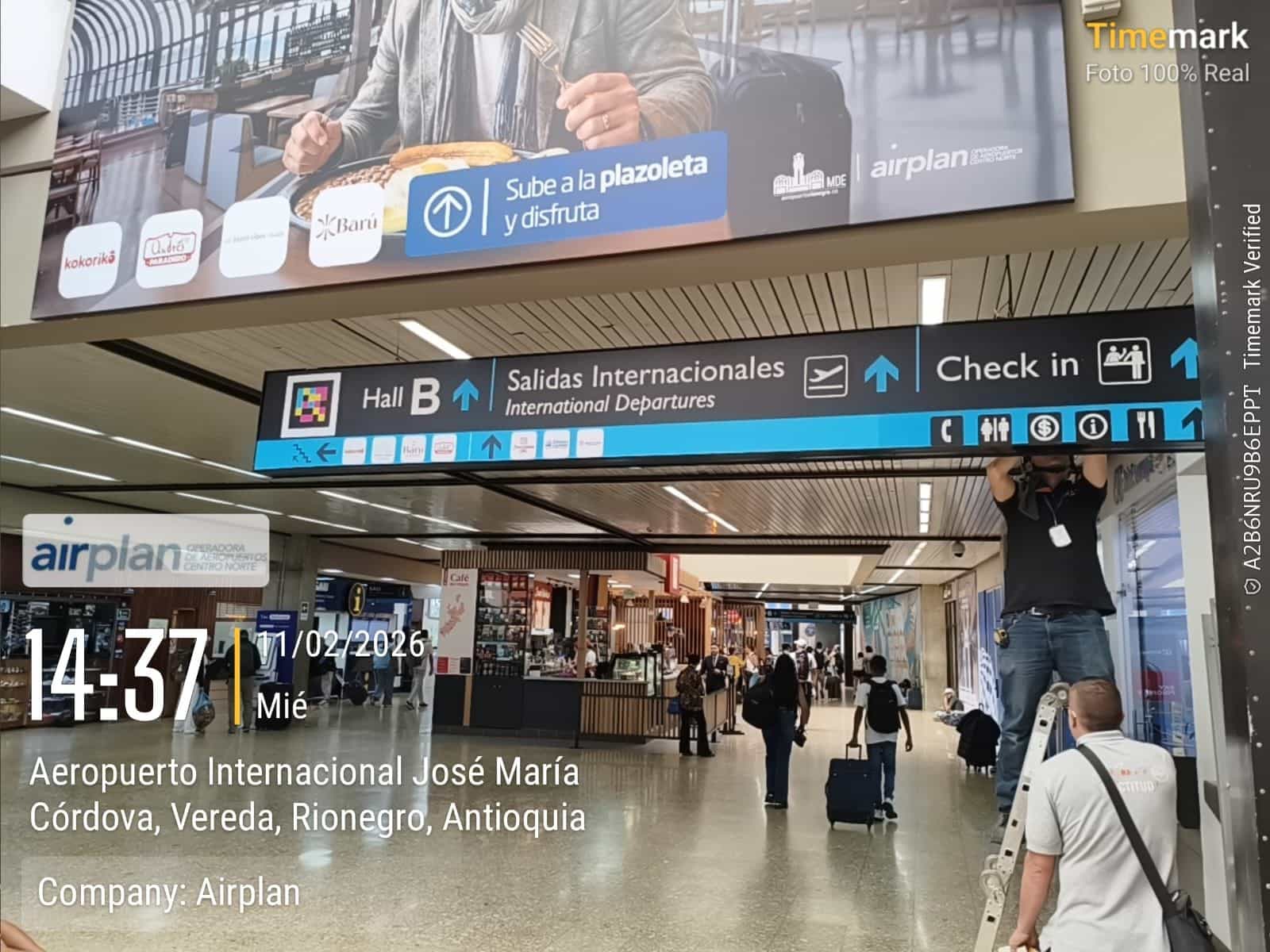
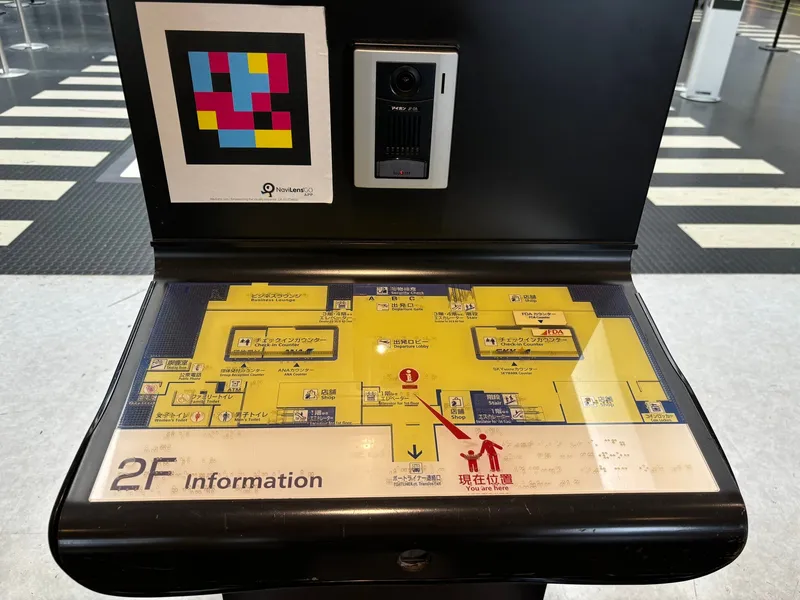
Blind, low-vision and international travelers scan these markers every day, from the check-in counter to the boarding gate, in 42 languages.
 KobeAirport→
Kobe
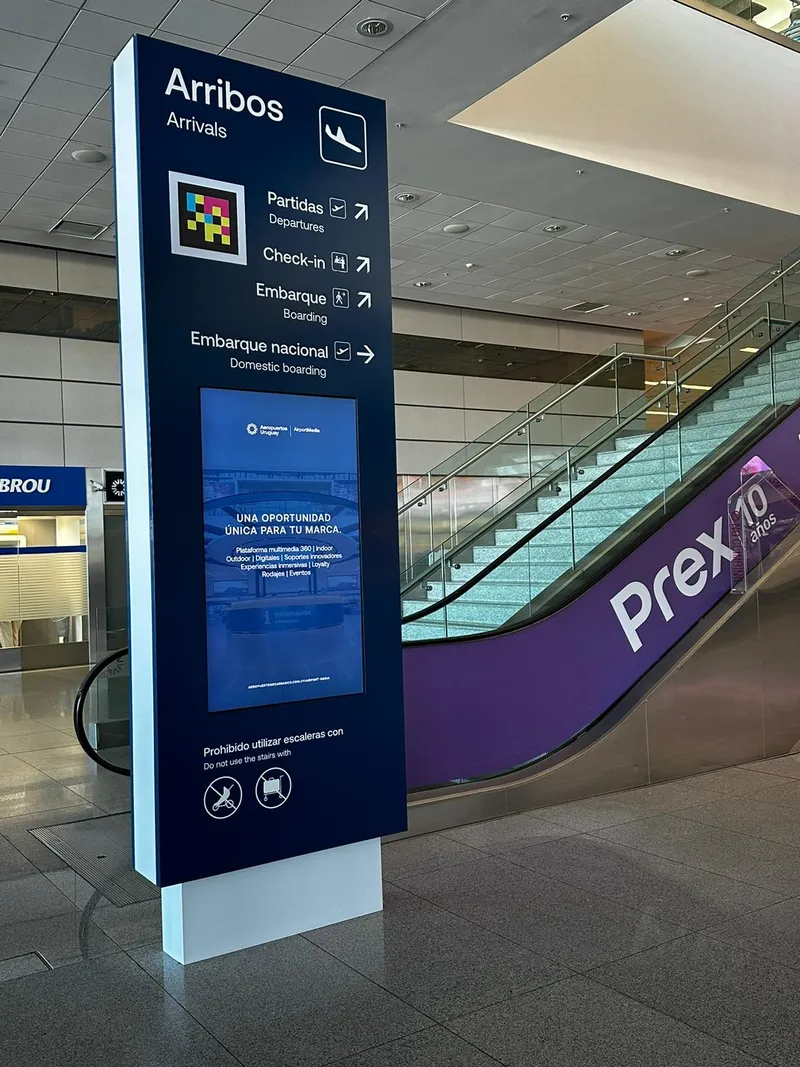 MontevideoAirport→
Montevideo
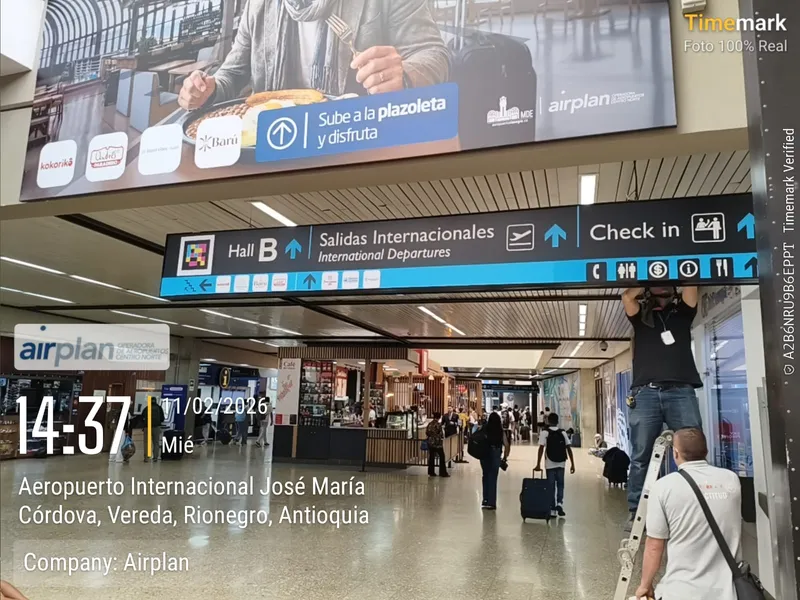 RionegroAirport→
Rionegro
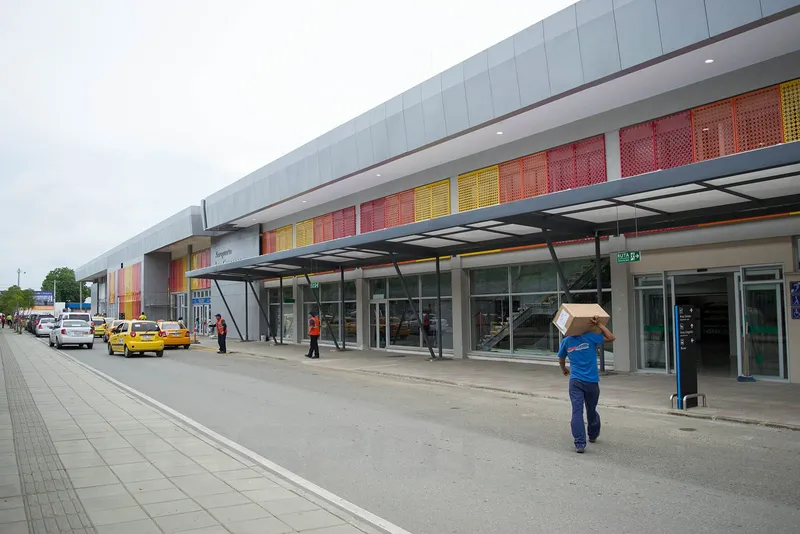 MonteríaAirport→
Montería
 MedellínAirport→
Medellín
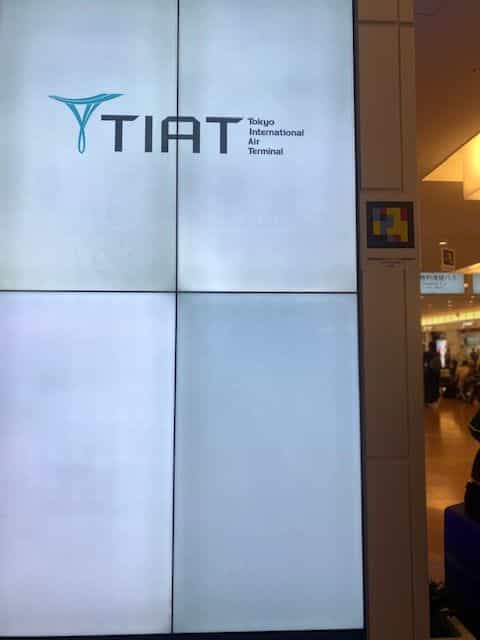
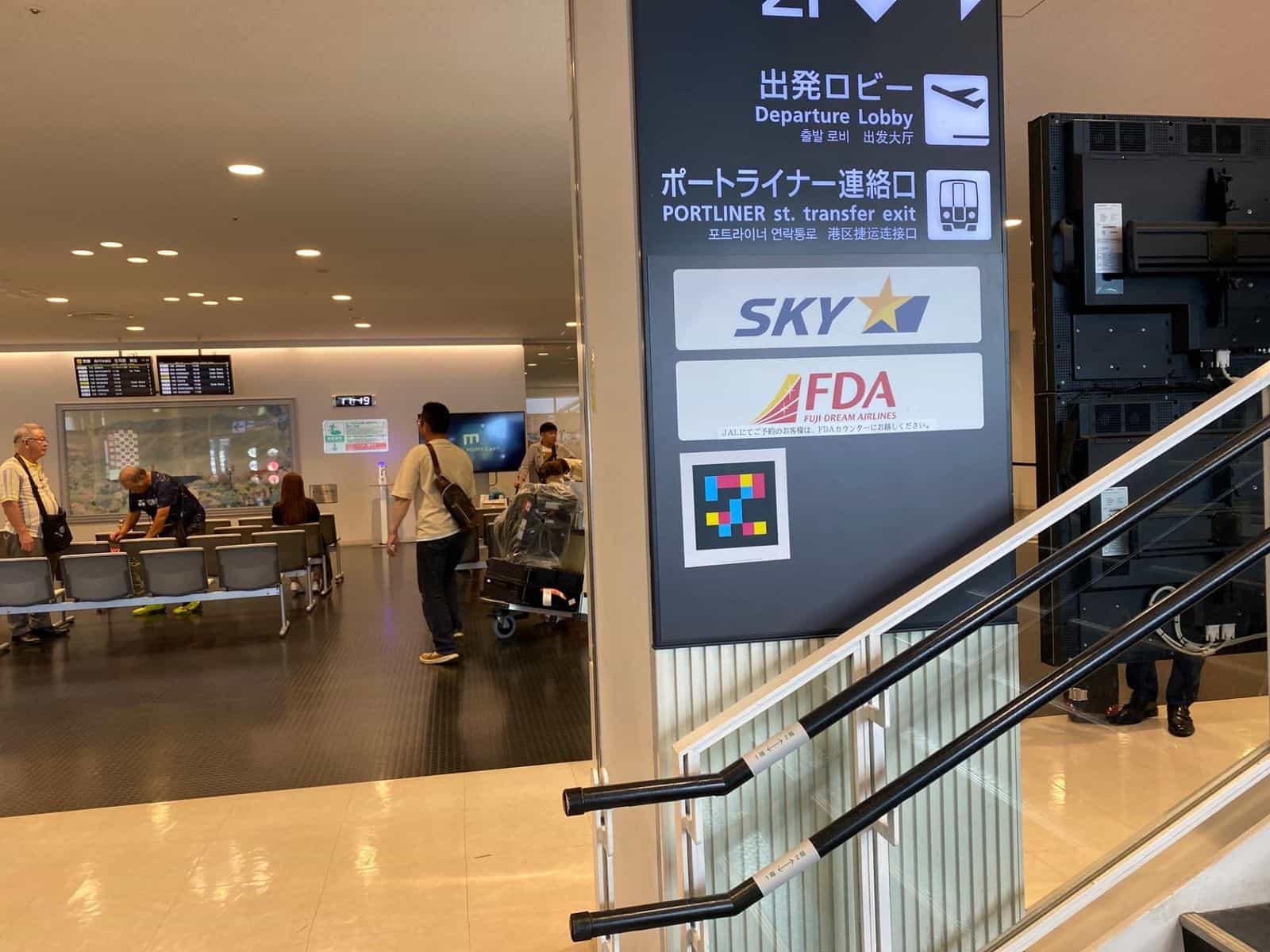
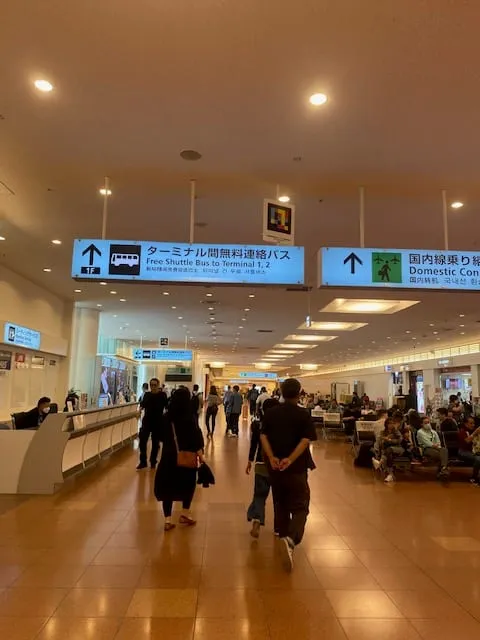 TokyoAirport→
Tokyo
§ What airports say
Kansai Airports Kobe is conducting a demonstration test of NaviLens, a visual assistance app developed in Spain, at Kobe Airport terminal building, to further improve customer service for passengers with visual impairments.
ACI Asia-Pacific
Comunicado del Airports Council International sobre el piloto del 神戸空港
It's really encouraging to not only see so many customers test the features as they travel through the station but to ask questions and provide comments as well. We welcome the honest feedback and look forward to receiving results that will help us determine what features to incorporate into future accessibility projects.
Alex Elegudin
Senior Advisor for Systemwide Accessibility · NYC Transit
Navigating access to public transit can be difficult for those with disabilities, specifically individuals who are blind or have low vision. We believe using public transit should be safe and easy for everyone. That is why CapMetro is piloting two user-friendly apps, NaviLens and Waymap, which are designed to assist blind and low-vision customers when using our services.
Matthew Banks
WayPoint Blog · CapMetro News
§ Key capabilities
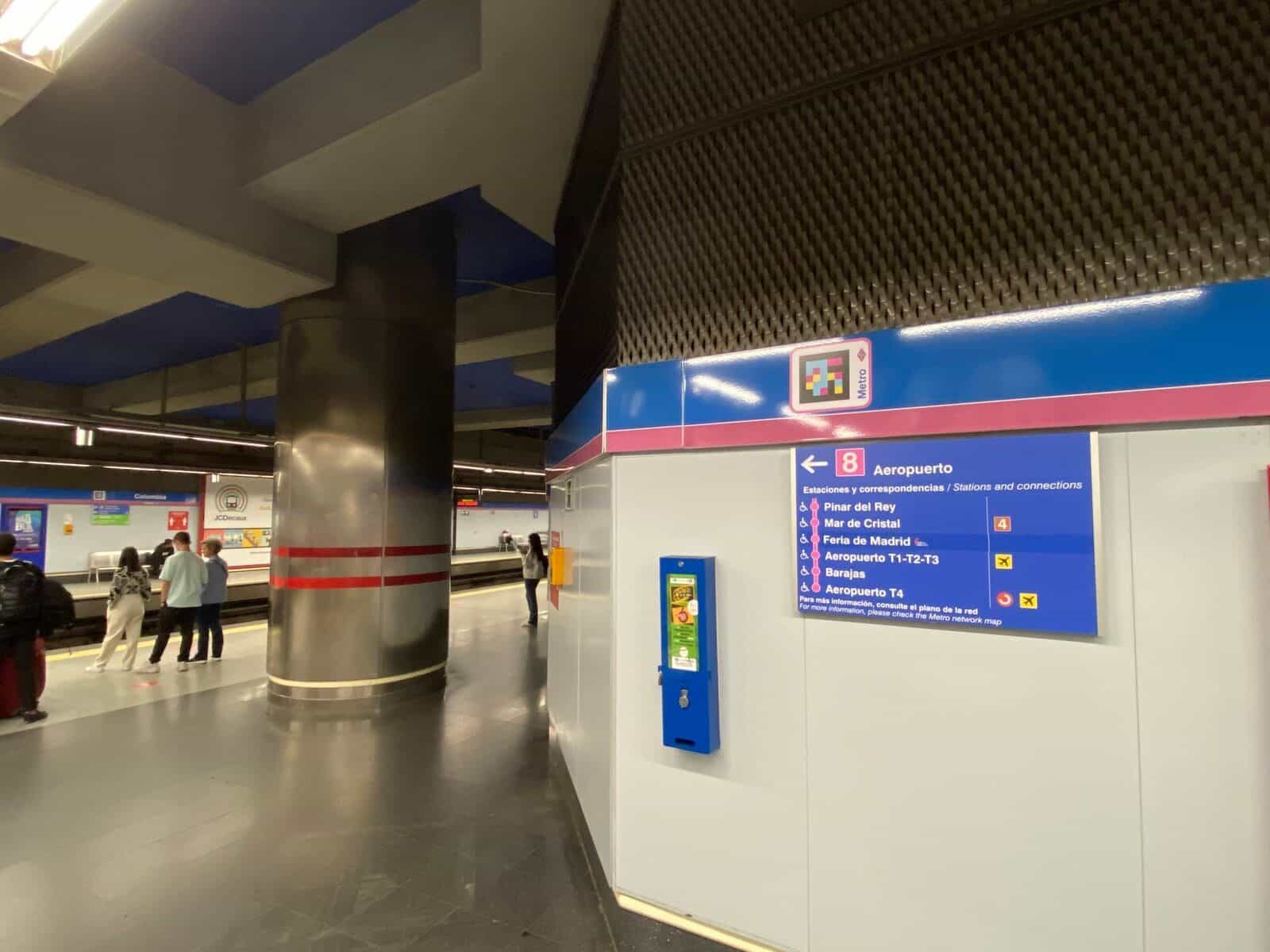
NaviLens improves wayfinding and access to information as part of a broader airport strategy. It complements physical signage, flight information and passenger assistance.
Information detectable from a distance at every point where passengers need to make a decision.
When integrated with the flight system, gate, time and status information can be delivered in real time.
The same signage delivers content that international passengers and people with visual impairments can understand.
The solution is added to existing signage with no cabling, no extra screens and no interruption to operations.
§ Benefits by user
A single signage infrastructure can improve the experience for blind or low-vision passengers, international travelers, older people and anyone who needs clear information at the right moment.
Voice readout from 100 ft for the check-in counter, the security line, the boarding gate and the accessible restroom. No focusing, no waiting for PRM staff.
42 automatic languages following the phone's locale. Especially useful at airports with non-Latin scripts (Haneda, Kobe) or tourist destinations with massive passenger flow.
Stickers over existing signage. No civil works, no cabling, no extra permits. Optional API integration with FIDS for real-time updates.
§ Frequently asked
§ Bring NaviLens to your airport
Audit, pilot and rollout side-by-side with the Murcia team and your PRM provider. No construction works — a pilot up and running in just weeks.
We reply within 48 business hours. If you prefer a call, mention it in the form and we'll propose a slot the same week.