Cognitive accessibility: beyond visual impairment
Easy reading, pictograms and clear language benefit 20% of the population. Why cognitive accessibility is the great pending issue of inclusive design.

When we talk about accessibility we think of sensory disability: ramps, braille, screen readers. But cognitive accessibility affects 20% of the population at some point in their lives, according to the WHO, and is the most overlooked dimension in inclusion projects.
Cognitive accessibility groups all measures that facilitate the understanding of information or the use of a service: plain language, easy reading, pictograms, journey anticipation, reduction of attentional load. Its audience is enormous and heterogeneous.
Who are the beneficiaries
- People with ASD (autism spectrum disorder): 1 in 100, according to the WHO
- People with ADHD (5-7% of the child population; 2-5% of adults)
- Older people with mild cognitive impairment
- People with intellectual disabilities or learning disorders
- Children in the process of literacy
- Tourists in a foreign language or people with low command of the local language
- People in a situation of stress, fatigue or occasional anxiety
- People with dyslexia (10% of the population)
Cognitive design principles
Reduce the load: one idea per message, one action per screen. Anticipate: show what comes next. Reinforce: use pictograms next to text. Structure: clear titles, short lists, visible hierarchy. Avoid: double negations, cultural metaphors, internal jargon.
The Easy Reading standard (ISO/IEC 23859:2023) proposes concrete rules: sentences of 15 words, common vocabulary, one idea per line, close examples. Adaptation to Easy Reading increases comprehension by between 30% and 60%, according to Inclusion Europe studies.
The role of audio information
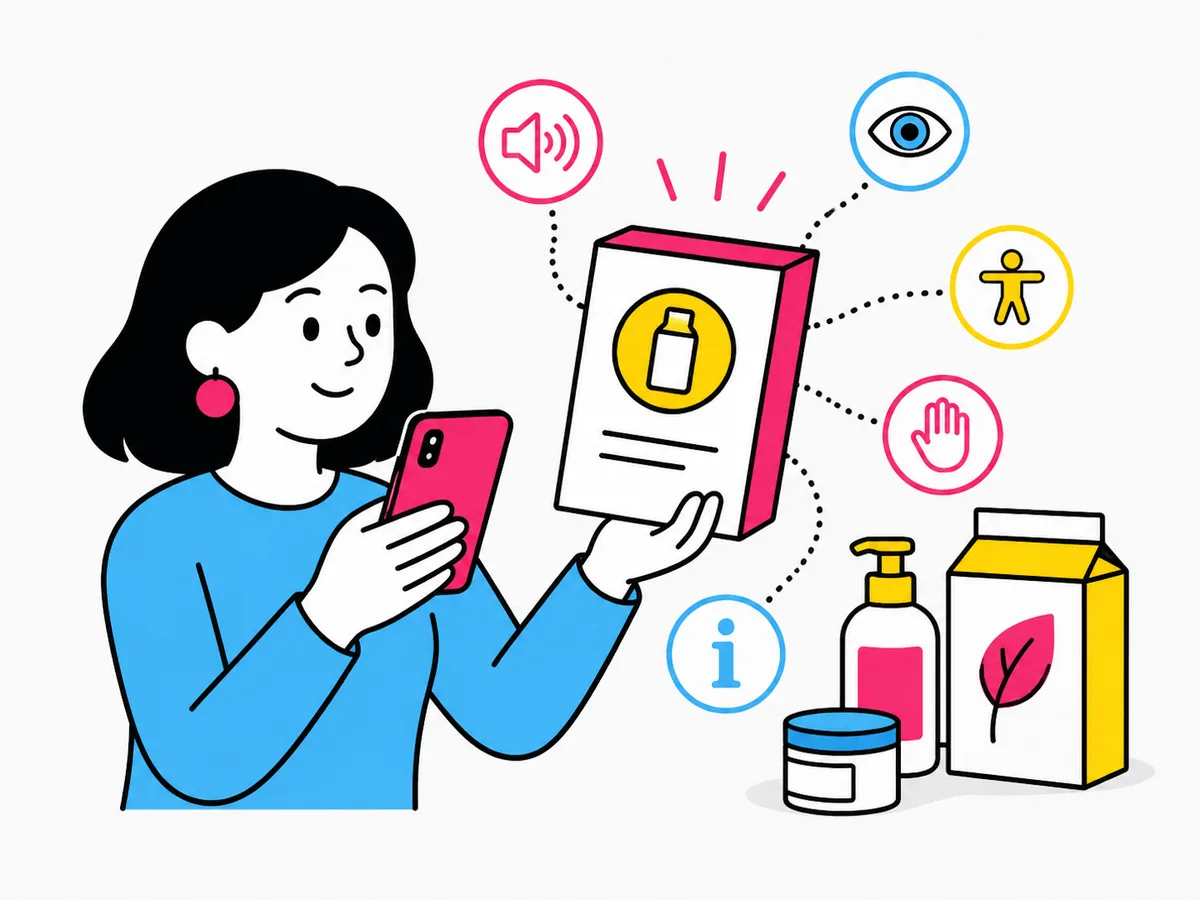
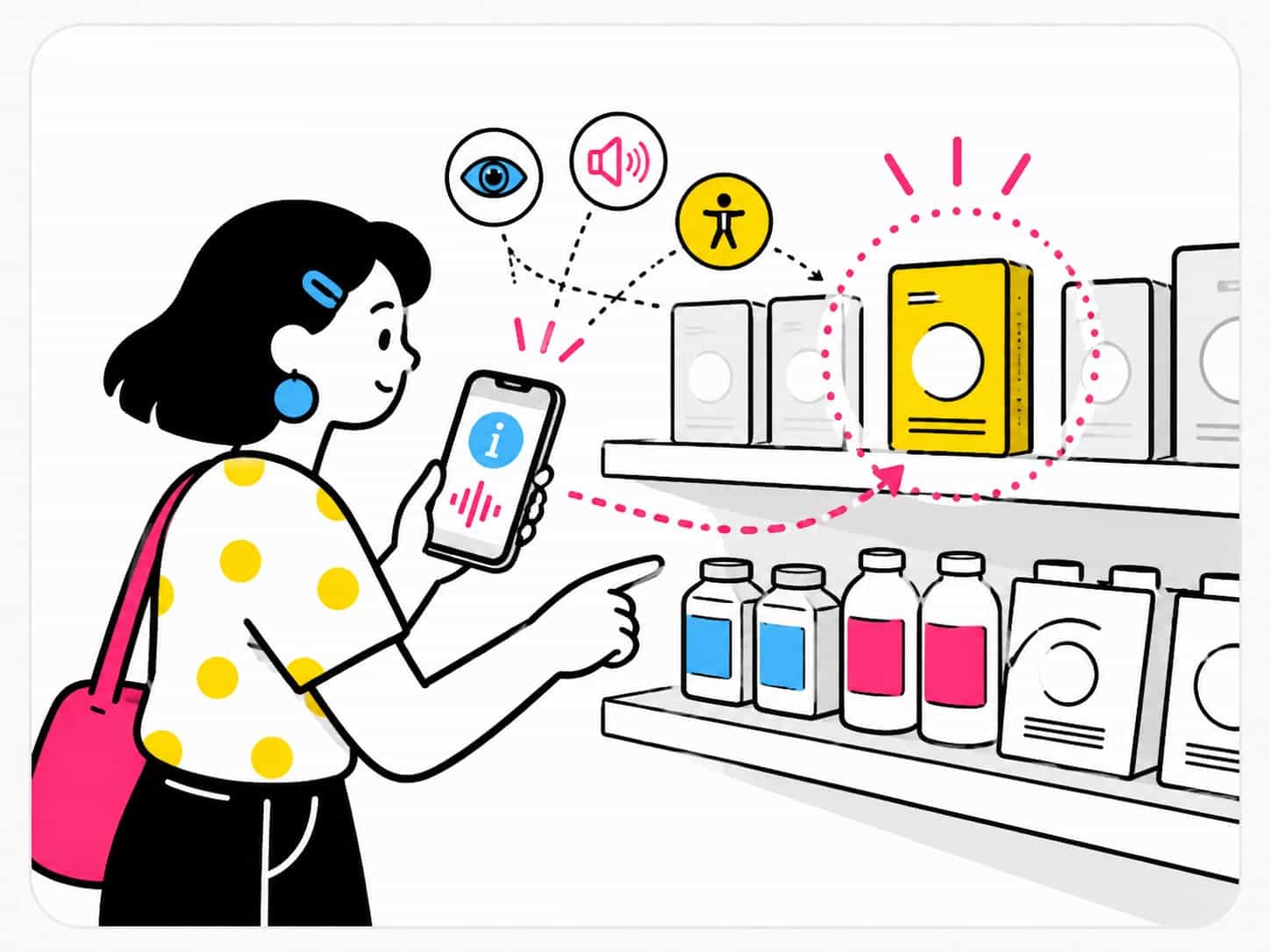
A person with dyslexia or low literacy understands a spoken message better. Codes like NaviLens convert any text into immediate audio, read in a natural voice. The integrated automatic translation allows a Chinese visitor to understand a sign in Swedish, without installing anything.
Application cases
Hospitals, airports and museums across Europe integrate cognitive layers: universal pictograms, easy-reading audio and multilingualism. The metric that improves most is 'tasks completed without asking for help' — a clear proxy for autonomy.