Accessible airports: from check-in to boarding
How to design an inclusive airport experience: check-in, security, lounges and gates. Lessons from Heathrow, Schiphol and Madrid-Barajas.

Flying is still a friction-filled experience for people with disabilities. And yet, airports are one of the environments where accessibility can be best planned: purpose-built spaces, with trained staff, budget and legal obligation (EU Regulation 1107/2006) to provide assistance.
According to ACI Europe, PRM (Persons with Reduced Mobility) assistance requests at European airports grew by 14% annually between 2019 and 2024, reaching 6 million in 2024. It is one of the fastest-growing passenger segments.
The passenger journey
- Access from public transport to the terminal building
- Check-in and baggage drop-off
- Security controls
- Transit through terminal and commercial areas
- Boarding lounge
- Gate and boarding (jet bridge or bus)
- Arrivals, baggage claim and connection with ground transport
Critical points
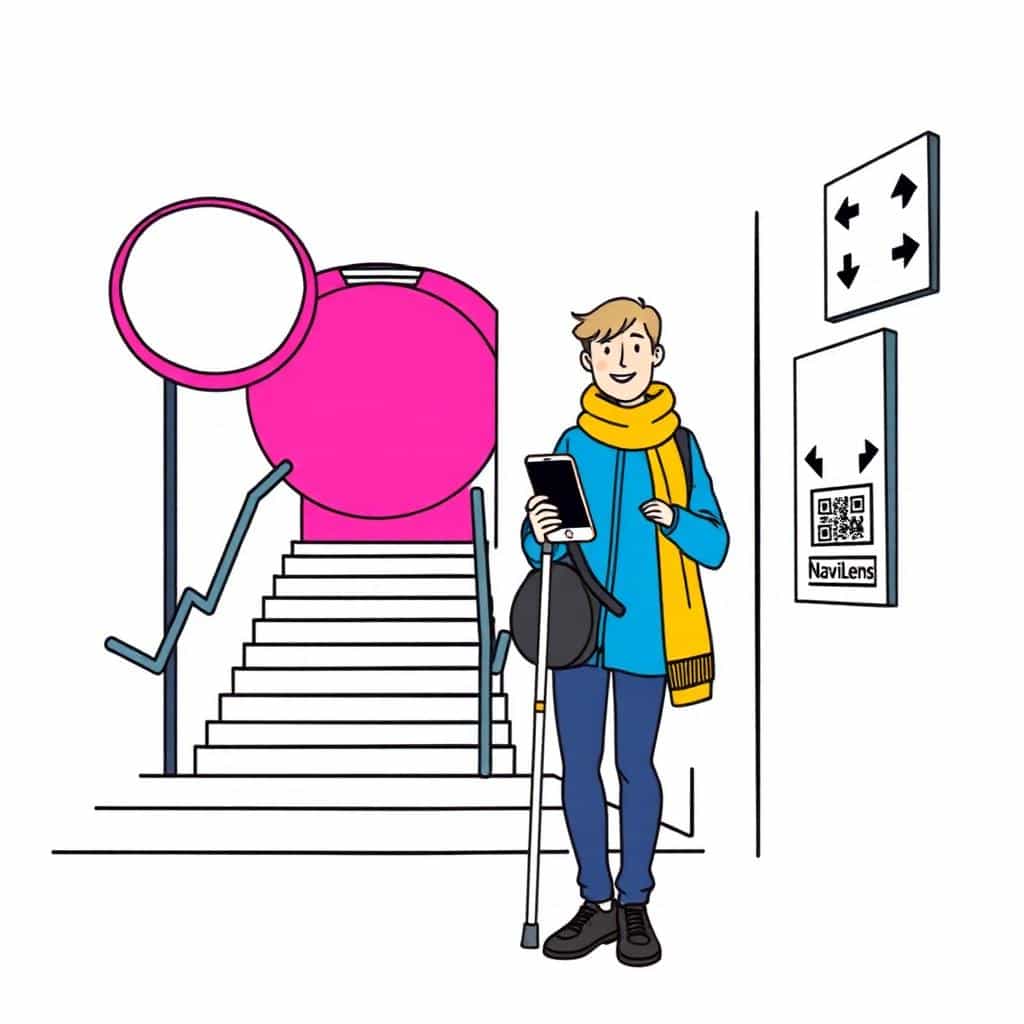
Security control and terminal transfers are the two points where most users get lost. Digital signage with accessible codes allows personalized real-time information: assigned gate, estimated time to gate, accessible route.
Another critical point is sound information: airport public address is often unintelligible for people with hearing loss. Screens with live captioning and app-based alerts are alternatives already implemented at airports such as Frankfurt or Munich.
Reference cases
Heathrow offers its Access HRW program with free assistance and specific app; Schiphol has integrated inclusive wayfinding throughout T1, with NaviLens codes at accesses and services; Madrid-Barajas deploys NaviLens at accesses and priority services since 2022 and maintains the first 'Sunflower Lanyard' program in Spain, which identifies non-visible disabilities.
Singapore Changi has maintained since 2019 a comprehensive program with trained staff, sensory-regulated rooms for ASD passengers and low-stimulus routes. Its NPS for passengers with disabilities exceeds 70, compared to the European airport average of 45.
Design recommendations
- Accessible codes at each decision node, integrated with flight and gate in real time
- Subtitling on boarding screens and commercial areas
- Hearing loops at information desks and gates
- Redundant signage: visual, audio and scannable digital
- Mandatory training for all ground staff in diversity attention
- Recognizable programs (Sunflower Lanyard) for non-visible disabilities