Accessible packaging: how to comply with the EAA in consumer goods
Kellogg's, Carrefour and Pascual already integrate accessible codes on their packaging. How they did it and what results they are measuring.

Packaging is the last point of contact with the consumer before consumption. For a person with a visual impairment, it is also the most opaque: ingredients, allergens, instructions, all written in body 6 or smaller. According to a Procter & Gamble study (2022), 86% of people with low vision give up buying products whose information they cannot read.
The CPG sector has been searching for solutions for years: braille (limited to allergens in some countries), increased font size (insufficient for severe low vision), or specific apps (with the problem of fragmentation). Accessible codes offer a comprehensive answer.
The Kellogg's Coco Pops case
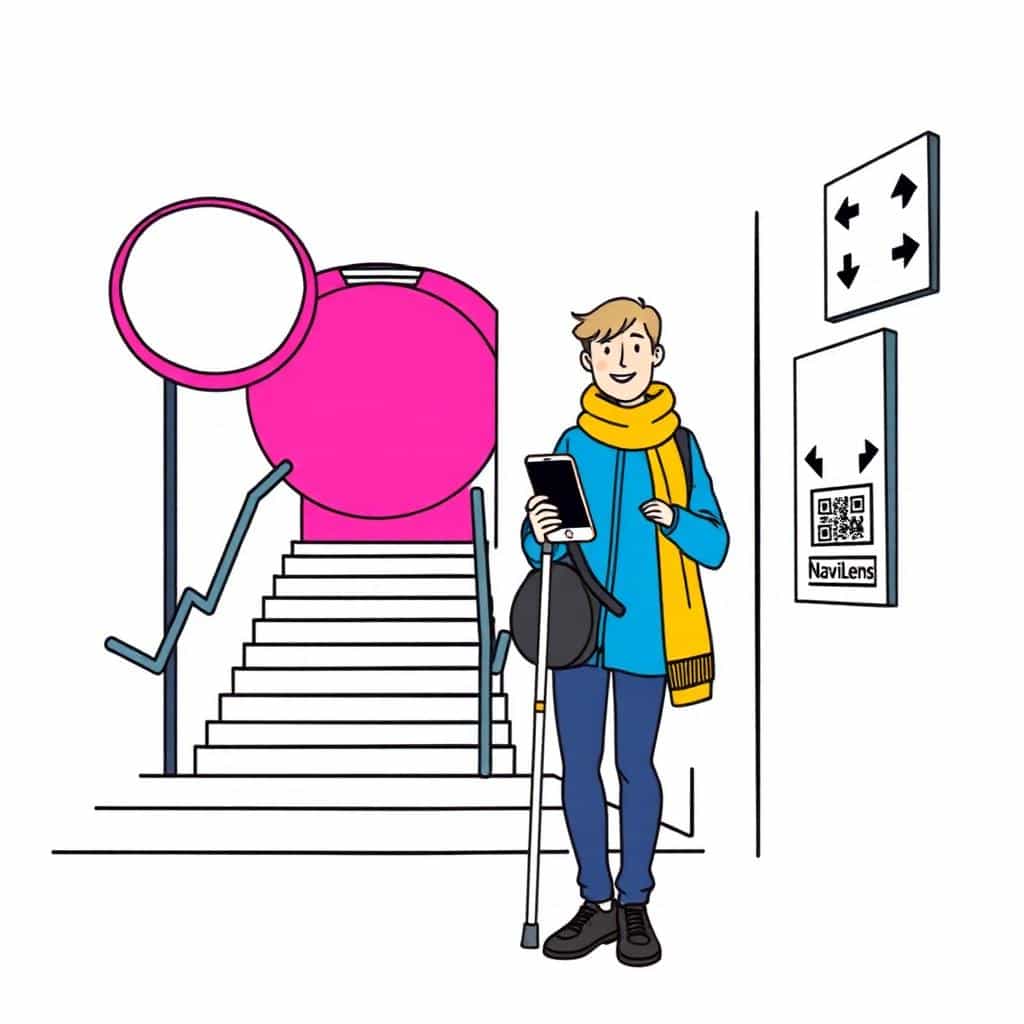
In 2021, Kellogg's launched in the United Kingdom the first cereal box with a printed NaviLens code. The code allowed blind people to listen to ingredients, allergens, nutritional values and preparation instructions, in any of the 42 supported languages.
The rollout extended to Special K and Rice Krispies, and later to the Pringles range. Internal result reported by Kellanova: 14% increase in repurchase intent among consumers with visual impairment and a measurable improvement in brand perception.
Lessons learned
- The code must be placed in a predictable area (right side of the front)
- Print contrast is critical: it does not work on shiny metallic surfaces
- Coordinating with the printing line adds a single color to the process
- Content must be available at least in the country language and in English
- Automatic translations are not enough: review each language with native speakers
- Announce the code on the product website: discovery is half the success
Other cases underway
Carrefour has begun rolling out accessible codes on its private label (more than 200 references in 2025). Pascual integrates them in its milk packs since 2024 and in yogurts since 2025. The German chain dm is testing them in cosmetics. Mercadona has confirmed a pilot in baby food for 2026.
The legal framework
The EAA does not directly require accessible labeling except in specific sectors, but the regulatory trend is clear: the European Packaging and Packaging Waste Regulation (PPWR) and the review of Directive 1169/2011 on food information point to growing requirements in accessibility of consumer information.
How to print it without inflating costs
The most common objection from production is cost. In practice, the accessible code is incorporated as one more graphic element in the final artwork: it requires no special inks, no substrate changes, and prints on the same offset, flexo or digital machinery already in place. The added per-unit cost is negligible when planned in from the design stage.
The real effort is coordination: validate the code with the print QA team, make sure the contrast survives the varnish, and that the reserved zone does not collide with legal seals, EAN-13 or recycling icons. A good practice is to prototype first on a short run and validate readability at 30-50 cm on several devices before the mass rollout.
Metrics worth tracking
- Scans per unit sold (proxy for real discovery)
- Language distribution of reads (guides future translations)
- Average dwell time on content (signals if the text is useful or excessive)
- Repurchase intent of scanners vs. general panel
- Brand mentions in low-vision and disability communities
Common mistakes (and how to avoid them)
The first mistake is burying the code in a low-contrast area or covering it with a seasonal promotion: if the user cannot locate it with a quick sweep of the phone, it does not exist. The second is translating mechanically: reading a literal translation aloud yields confusing text for users who cannot scan back with their eyes. The third is launching without communicating: if the blind and low-vision community does not know the brand has implemented it, the scans never arrive.
Practical rules: predictable zone, verified contrast, voice-overs reviewed by native speakers, and a communication plan with associations (ONCE, RNIB, AFB, JBOS) to validate and amplify the launch.
Beyond CPG: pharma, cosmetics and home appliances
The same principle works in sectors where information is critical: pharmaceutical leaflets (active ingredients, dosage, interactions), cosmetics (INCI, allergens, instructions for use) and home appliances (setup, maintenance, error codes). Cinfa has added it to part of its OTC range, and several small-appliance manufacturers are now integrating accessible codes both on the device itself and in the manual. For a deeper view of how we work with retail brands, see our dedicated approach to consumer goods and CPG packaging.