Accessible smart cities: Barcelona, Helsinki and Singapore
A smart city is only truly smart if it is accessible. Three urban models that have made inclusion their KPI.

A smart city that is not accessible is not smart, it is just expensive. Mass sensoring, open data and AI are of little use if urban services still fail to serve the 15% of the population with some form of disability. These three metropolises understand it and prove it with budget and results.
Barcelona
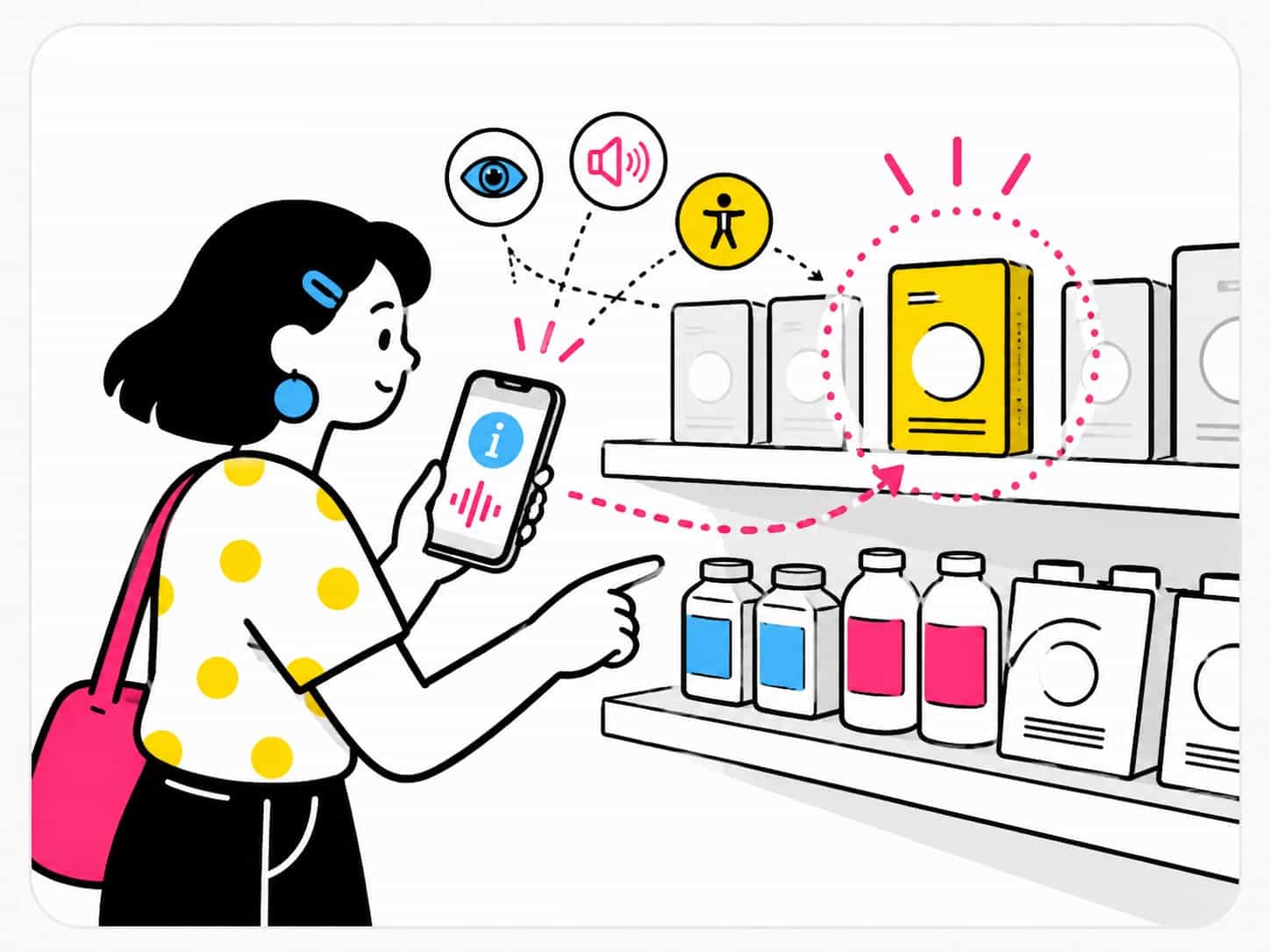
A pioneer in open accessibility data, Barcelona has published geolocated layers of ramps, elevators, accessible restrooms and adapted routes on its Open Data BCN portal since 2018. TMB (Transports Metropolitans de Barcelona) piloted NaviLens in 2018 and rolled it out from 2019 onwards; in April 2021 it became the first city in the world to deploy 9,100 smart ddTags across its entire metro and bus network (161 stations and 2,600+ stops).
The 'Barcelona Ciutat Accessible' plan includes a public action schedule, annual indicators and binding participation of disability federations. The city won the Access City Award in 2011 and remains a leader.
Helsinki
Helsinki rolled out in 2019 the first urban universal accessibility plan with public KPIs and annual review. Its 'Helsinki for Everyone' integrates mobility, housing, public space and municipal digital services. The Finnish capital came second at the Access City Awards in 2015 and 2022, and is a benchmark for winter accessibility: heated sidewalks, snow-clearing priority on accessible routes, audio at pedestrian crossings in winter.
Helsinki's MyData service lets people with cognitive disabilities consent to the use of their data to personalize public services — a model replicated in other Nordic cities.
Singapore
Singapore's Enabling Masterplan integrates mobility, housing, employment and public spaces in a single framework with a 2030 horizon. Each government agency has concrete accessibility KPIs and reports quarterly. The MRT system is 100% accessible, and SMRT launched NaviLens at Woodlands Integrated Transport Hub in May 2022 and extended NaviLens Go to the Bukit Panjang, Choa Chu Kang and Woodlands bus interchanges in August 2023.
The Singaporean model stands out for its preventive approach: accessibility is included at the urban planning stage, not as a later retrofit. Cost and effectiveness improve exponentially.
Common lessons
- Sustained political leadership across several terms
- Open accessibility data published and maintained
- Technology rolled out systematically (not just pilots)
- Binding participation of affected communities
- Public KPIs with annual review
- Cross-agency integration: transport, planning, health, education
The next step
The current frontier is the integration of the physical and digital layers. An accessible smart city is not the one with the most sensors, but the one in which any person can use any public service with autonomy. It is a measurable and achievable goal: these three cities prove it.