Case study · Benissa · GAB hall
An exhibition you listen to, piece by piece.
Center d'Art GAB in Benissa places two NaviLens codes next to each label—artist intro and work description—so any visitor can listen to the group show in 42 languages.
Benissa
Municipal exhibition hall GAB
Group show
Painting, sculpture, photography and textile
Artist + work
Two NaviLens codes per piece
42
Languages with voice readout
The client
Center d'Art GAB
— Ajuntament de Benissa
The Center d'Art GAB is the municipal exhibition hall of the Ajuntament de Benissa, in the Marina Alta (Alicante). It hosts temporary programming of painting, sculpture, photography, textile and mixed-media work by local and international artists residing in the region.
To open its cultural program to any visitor—residents with visual disability, the elderly and the area's significant international tourism—the hall adds NaviLens next to the traditional labels: two codes per work, one for the artist intro and one for the technical sheet of the piece.
§ The challenge
Let the hall speak to everyone.
- 01
Small labels, long texts
Traditional labels next to each work force visitors to get very close and read tiny type. For people with low vision, the elderly or visitors who do not read Spanish or Valencian, the artist and work information is inaccessible.
- 02
One hall, many artistic languages
The GAB group show brings together abstract painting, ceramic sculpture, textile, photography and mixed media. Each piece needs its own context—technique, year, materials, author's intent—without saturating the wall or breaking the exhibition silence.
- 03
An accessible layer, no works
Center d'Art GAB wanted to add universal accessibility to its municipal hall without installing screens, audio guides or cabling: any visitor with a phone should be able to listen to the information of each piece instantly.
§ The solution
Two codes next to each label.
Every piece in the group show carries two small NaviLens codes printed next to the label. The first contains the artist intro; the second, the work sheet (title, year, technique, materials, dimensions).
Pointing the free NaviLens GO app from several yards away, the visitor hears the information in their language. The accessible layer respects the original mounting and is printed and stuck in minutes.
§ Timeline
From label to accessible hall.
- Mounting
Two codes per work
Next to each artist's printed label, two small NaviLens codes are placed: one with the artist intro (bio, trajectory) and another with the work description (title, technique, year, materials).
- Opening
Accessible opening night
The public opens the show with the free NaviLens GO app: pointing the code from several yards and hearing, in their language, the information usually hidden in the label.
- Today
Replicable model for municipal halls
GAB proves any municipal exhibition hall can be accessible without works: just print and stick two codes next to each piece to multiply the reach of the cultural program.
§ Walk-through
Works of the group show, one by one.
Sculpture + painting
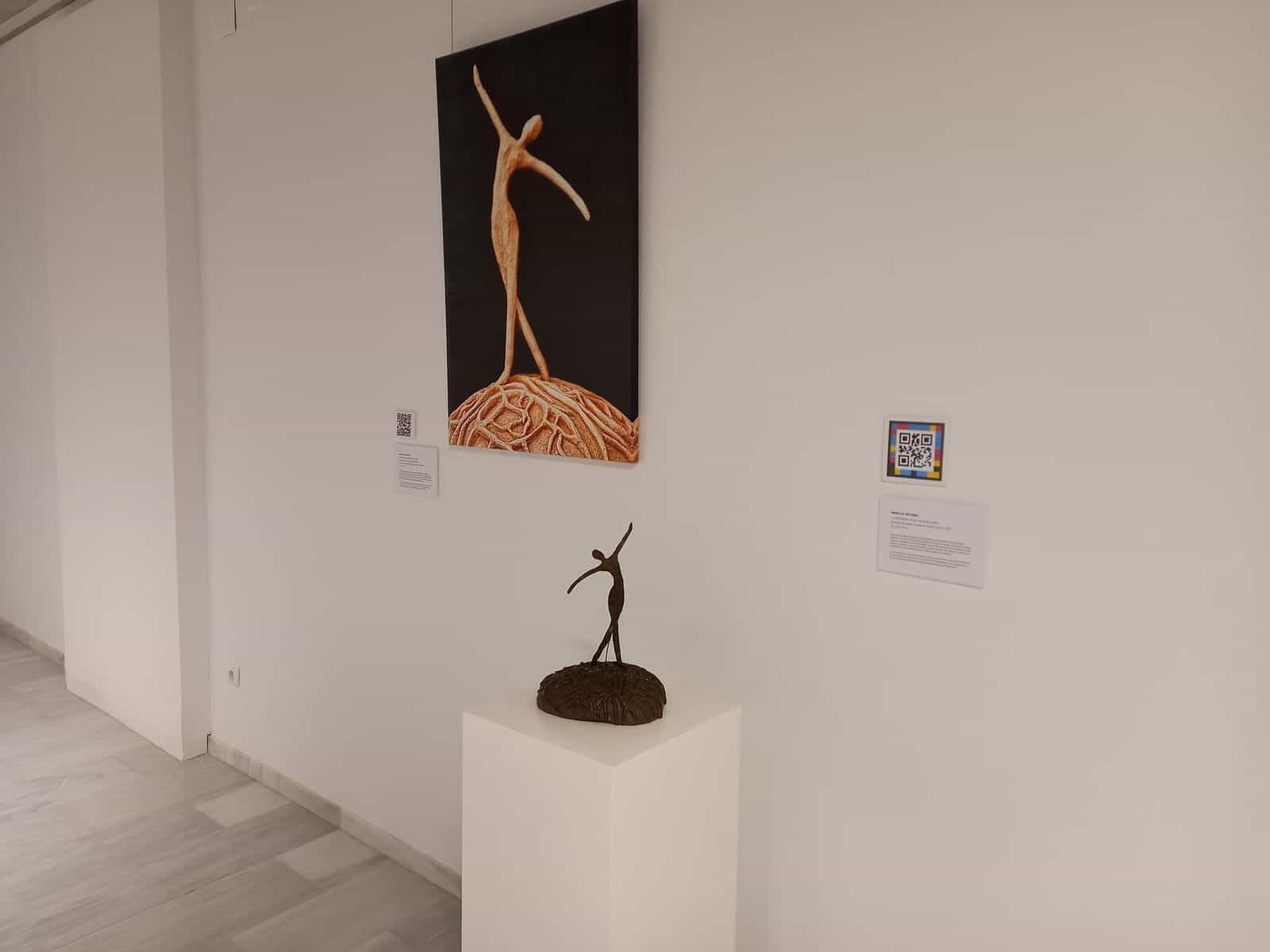
Mireille Getemli — La bailarina
Bronze sculpture and painted reproduction of the dancer on a woven sphere. Next to the label, the NaviLens code narrates the piece and the artist's trajectory.
Sculpture + paper
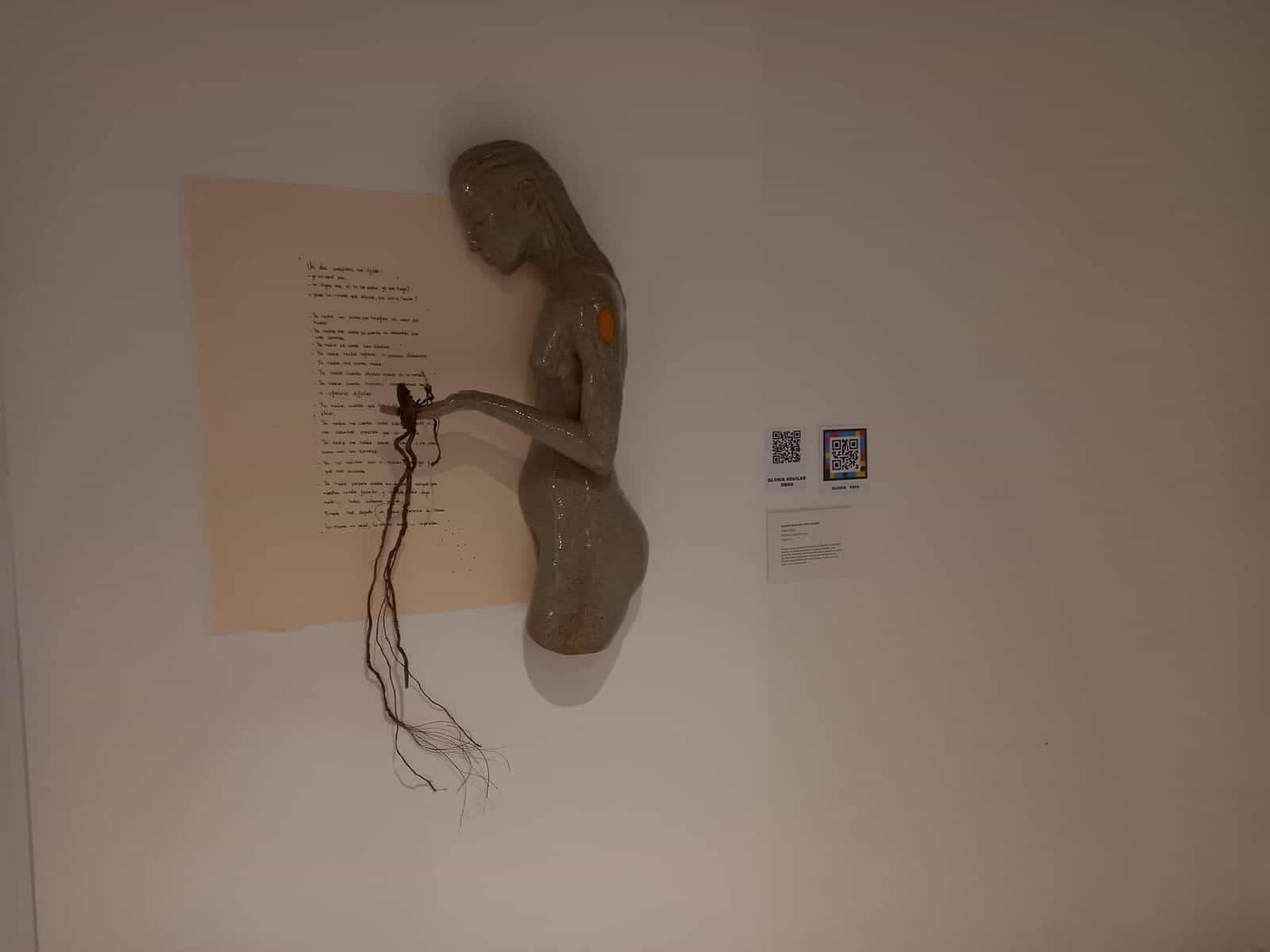
Gloria Aguilar López Palaez — Papá
Ceramic female figure holding a hand-written poem. Two codes—“Gloria Aguilar Obra” and “Gloria Papá”—let visitors hear the poem and the author's intent.
Wall sculpture
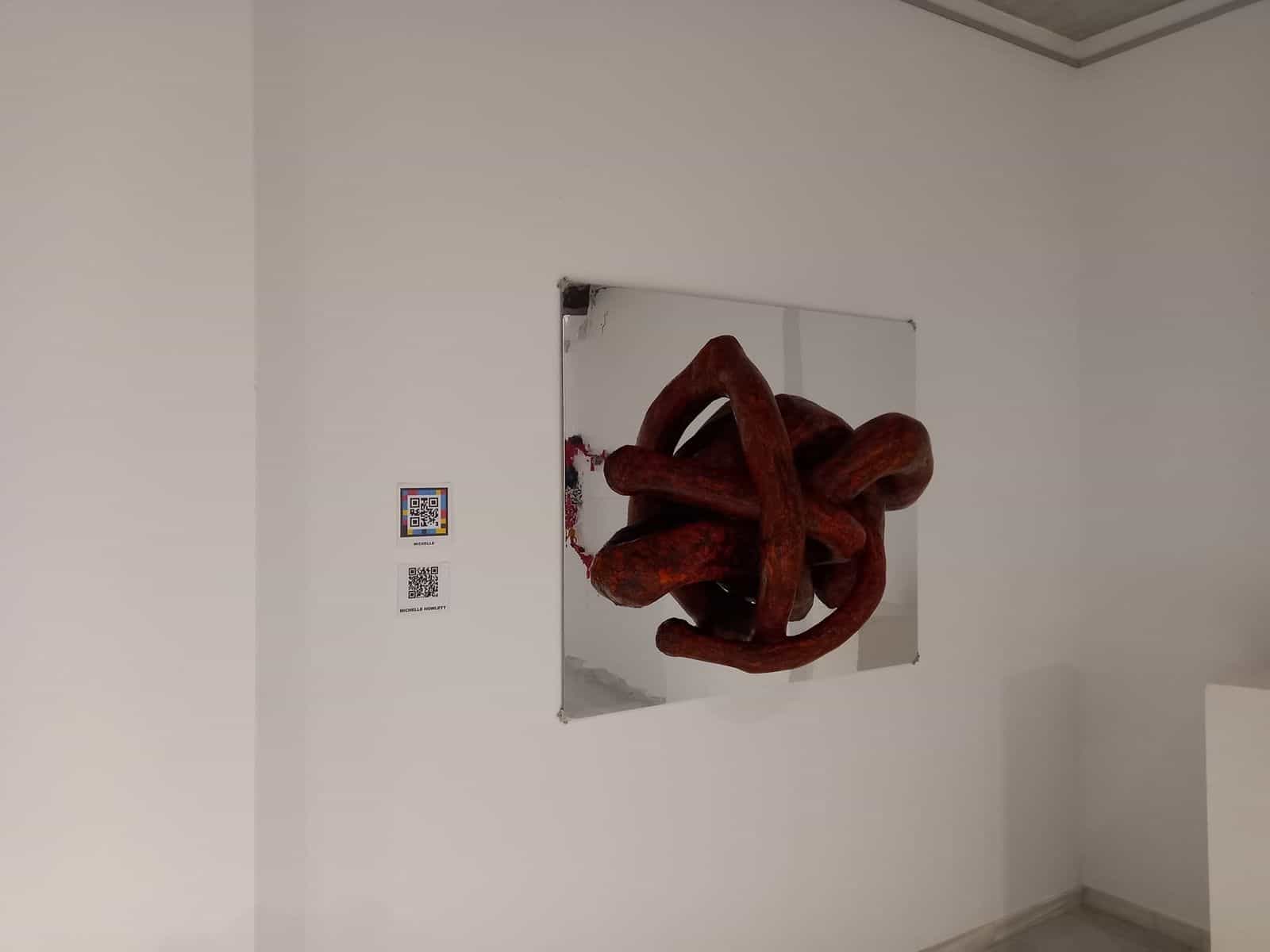
Michelle Howlett
Wall sculpture in reddish tones on a metal mount. The two NaviLens codes next to the piece identify the artist and describe the work without needing to read the label.
Painting + installation
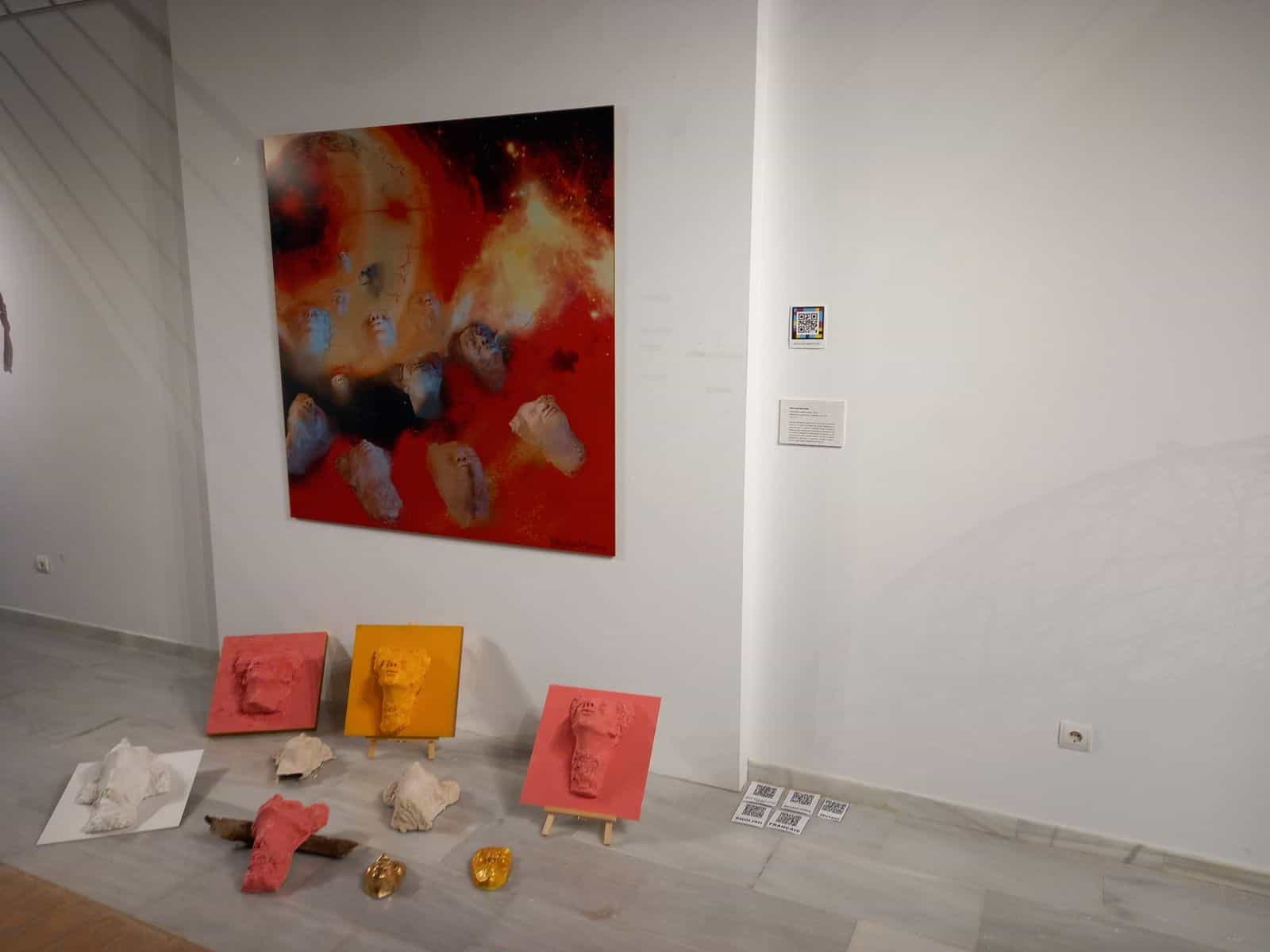
Rita Rae Mertens
Large-format canvas accompanied by sculptural heads in red, ochre and marble laid on the floor. Multilingual printed labels and a NaviLens code for voice readout.
Textile
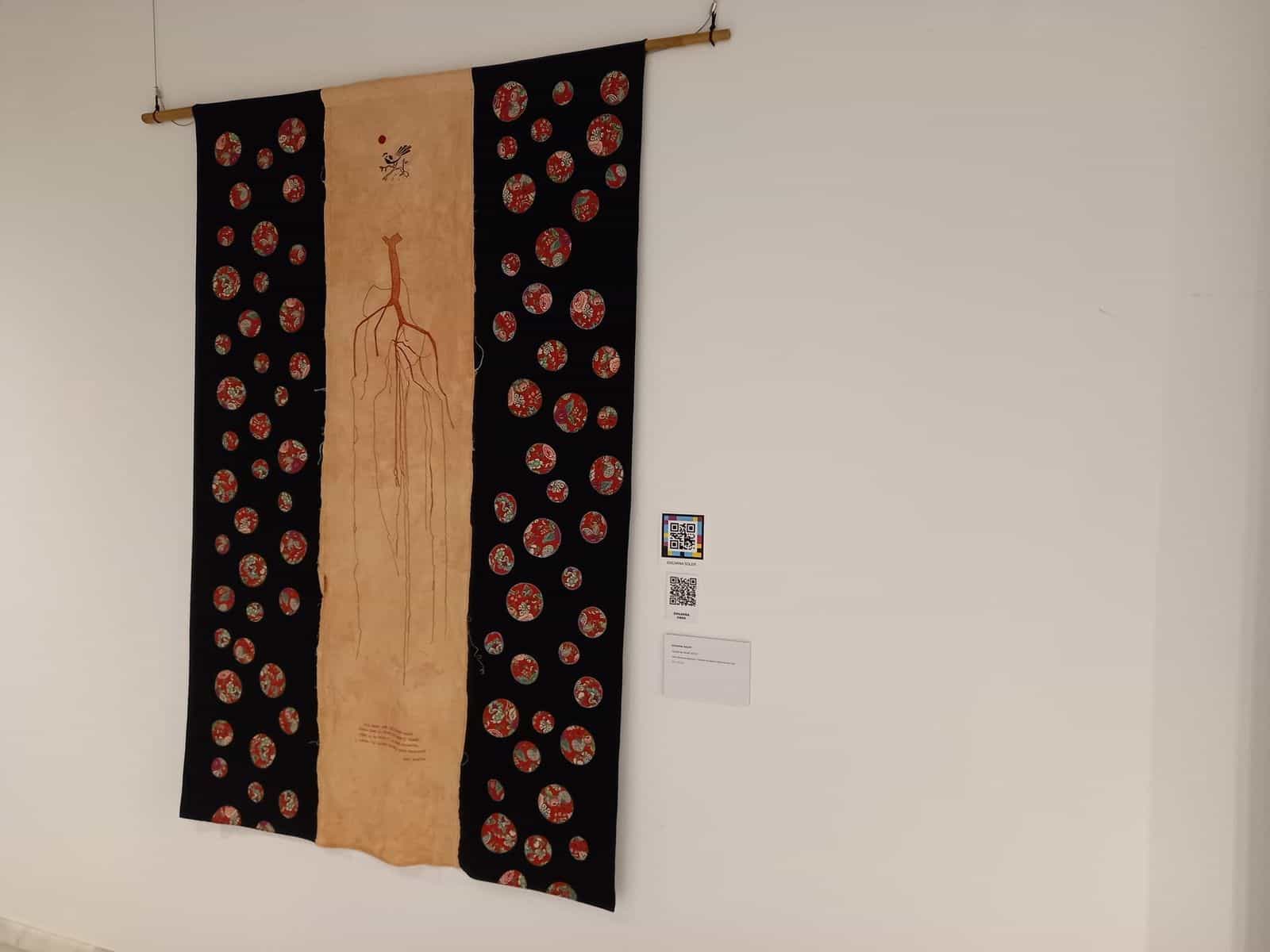
Encarna Soler — Tapestry
Hanging tapestry with embroidered roots and circular appliqués on a black background. “Encarna Presentation” and “Encarna Obra”: two NaviLens codes per piece next to the label.
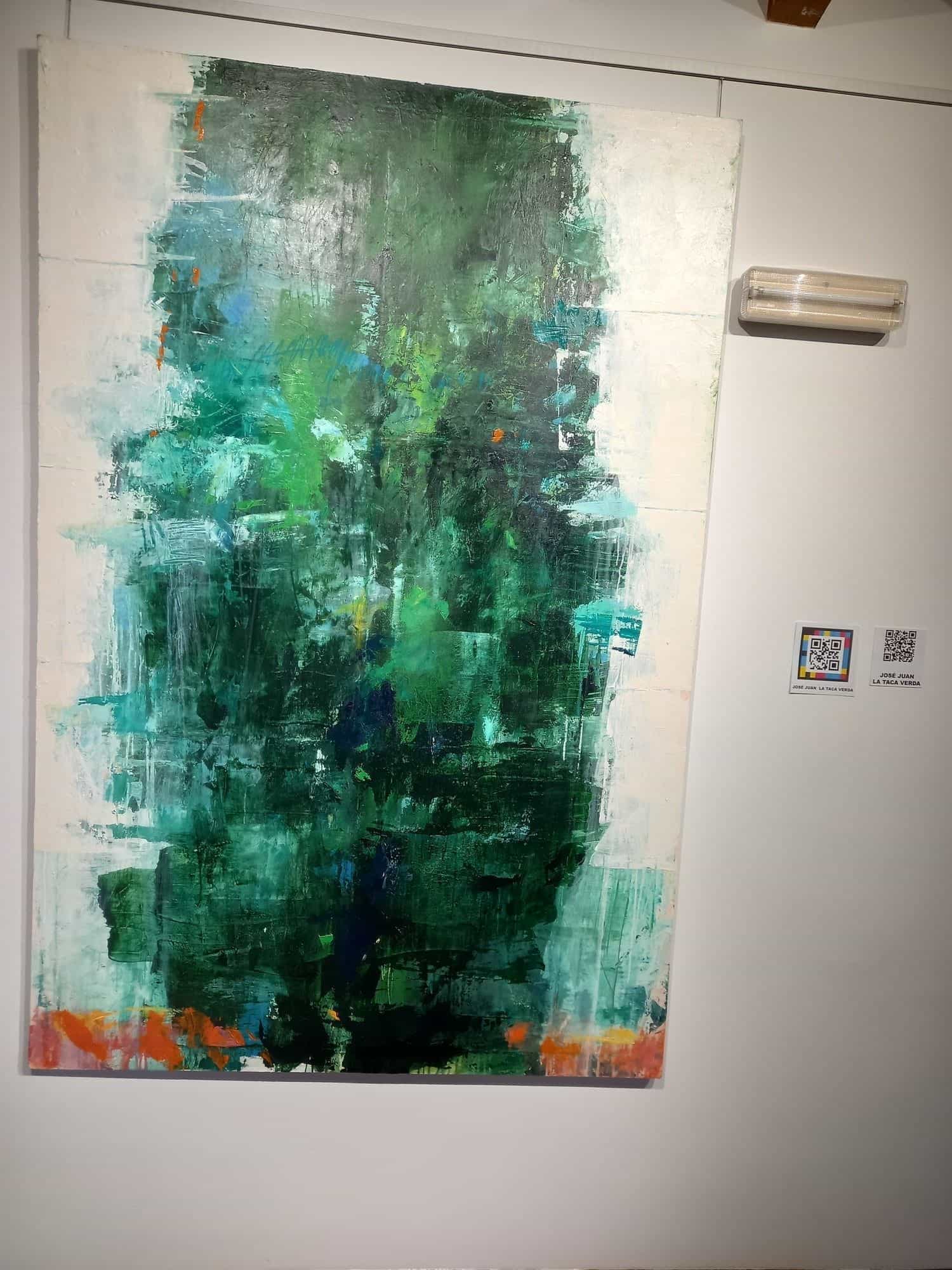
Abstract painting
José Juan — La taca verda (I)
Abstract painting in greens, turquoise and orange accents. The label next to the work includes two NaviLens codes with the artist intro and the technical sheet.
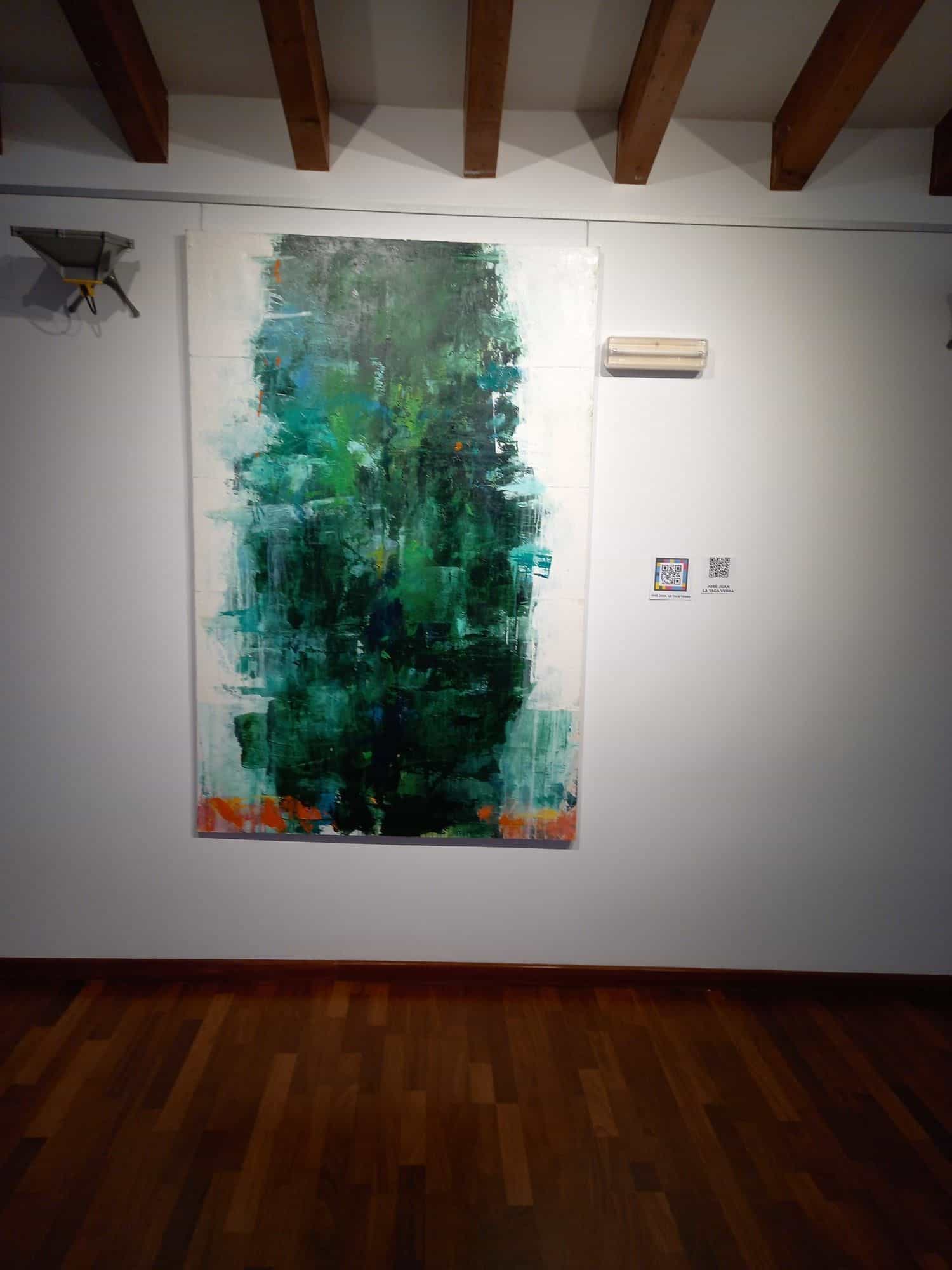
Abstract painting
José Juan — La taca verda (II)
Second piece of the “La taca verda” series under a wooden-beam ceiling. NaviLens codes next to the label with voice readout in 42 languages.
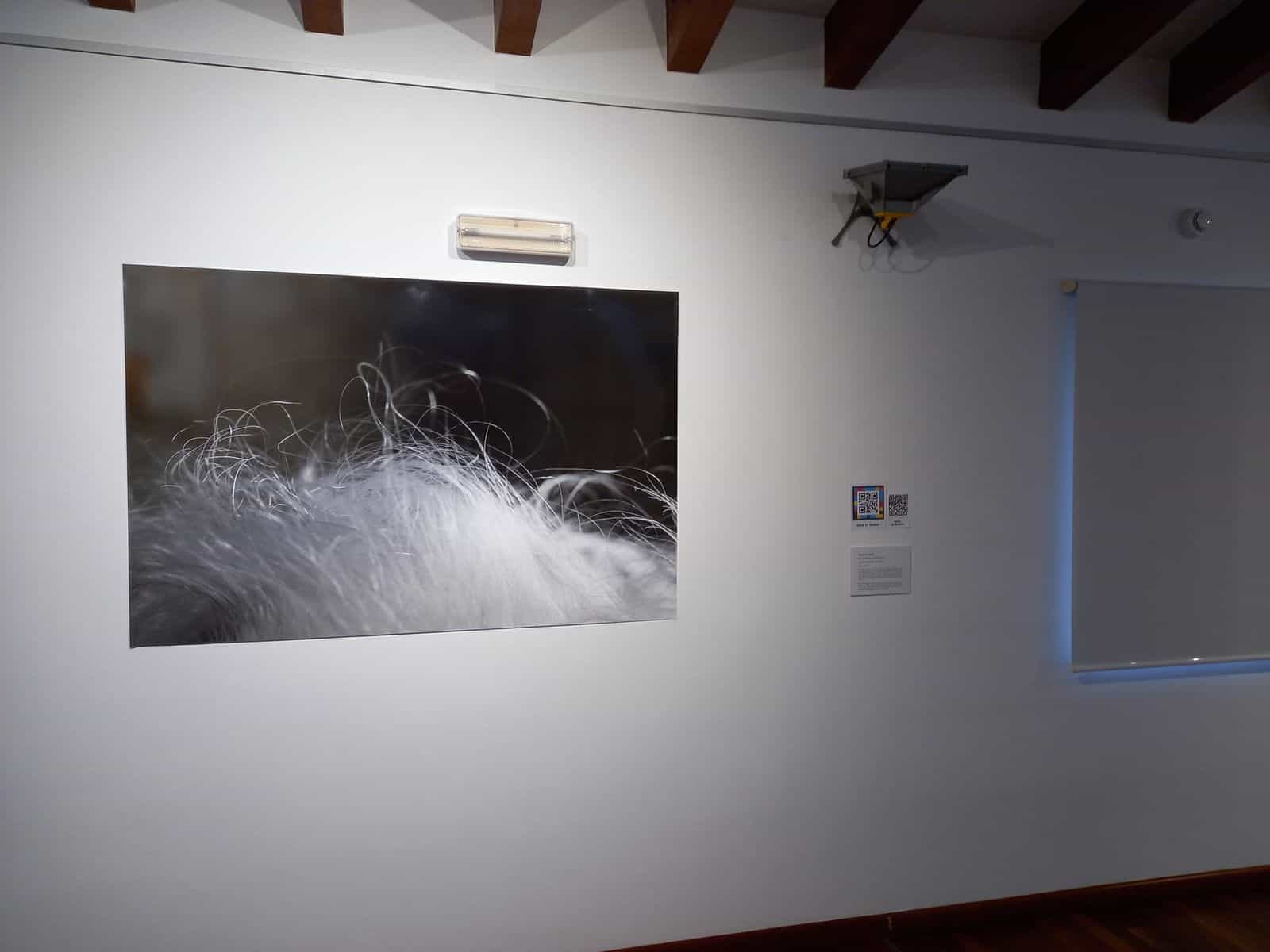
Photography
Rosa Ay Marie
Large black-and-white photograph of windblown hair. Next to the panel, the NaviLens GO code reads the title, technique and context of the image.
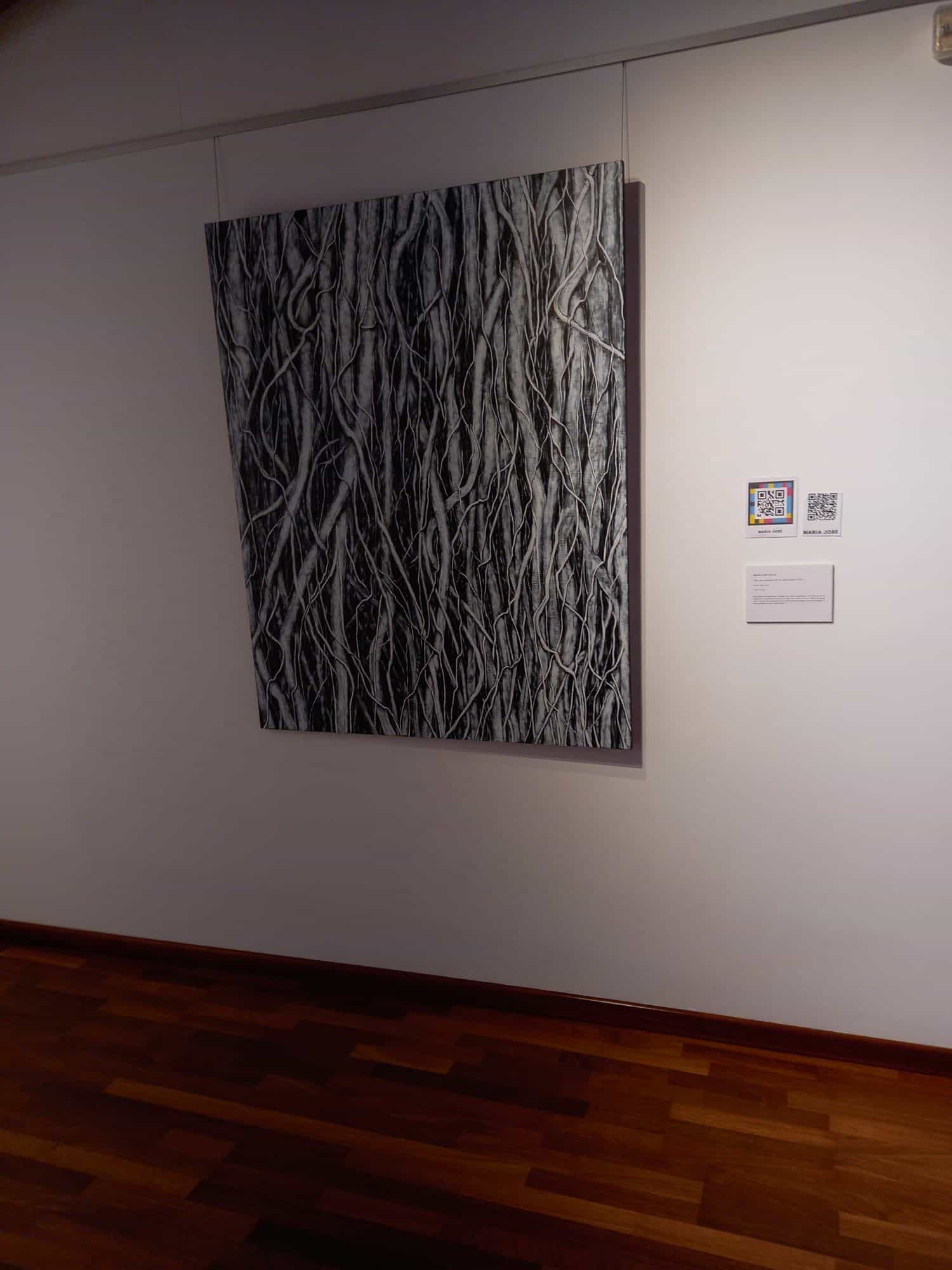
Painting
María José
Large-format painting with a tangle of white roots on a dark background. Two NaviLens codes next to the label let visitors hear the artist's proposal.
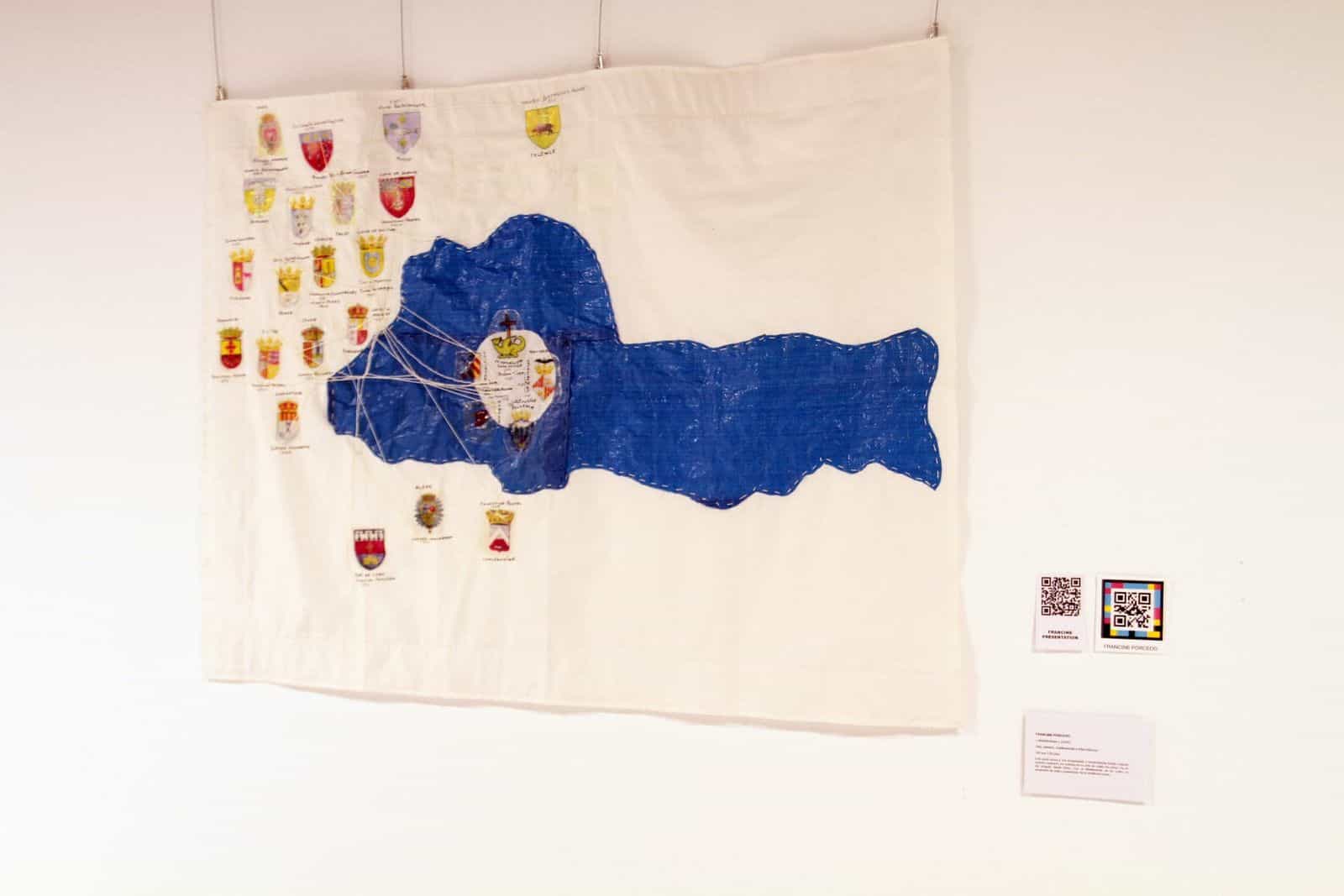
Textile + cartography
Francine Porcedo — Mediterráneo
Fabric with embroidered heraldic shields and a silhouette of the Mediterranean in blue. “Francine Presentation” and “Francine Porcedo” codes to listen to the work and the bio.
§ Results
A municipal hall for everyone.
0 works
Only two stickers next to each label
Voice + 42 languages
Bio and description read aloud
Inclusive culture
Visual disability, elderly and international tourism
§ What they said
“Benissa se esfuerza por ofrecer una experiencia inclusiva para todos. La playa de la Fustera y varios puntos del casco histórico cuentan con accesos adaptados, aparcamientos reservados y servicios especiales para personas con movilidad reducida, garantizando que todos puedan disfrutar de su encanto natural y cultural.”
§ And your destination?
Your destination can also guide in 42 languages.
Tell us about your trails, visitor centers, landmarks or galleries. We’ll show you how NaviLens would make your offering accessible—with comparable cases.