Case study · Nagaizumi, Shizuoka (Japan)
A sculpture garden made to be touched
—and walked on your own.
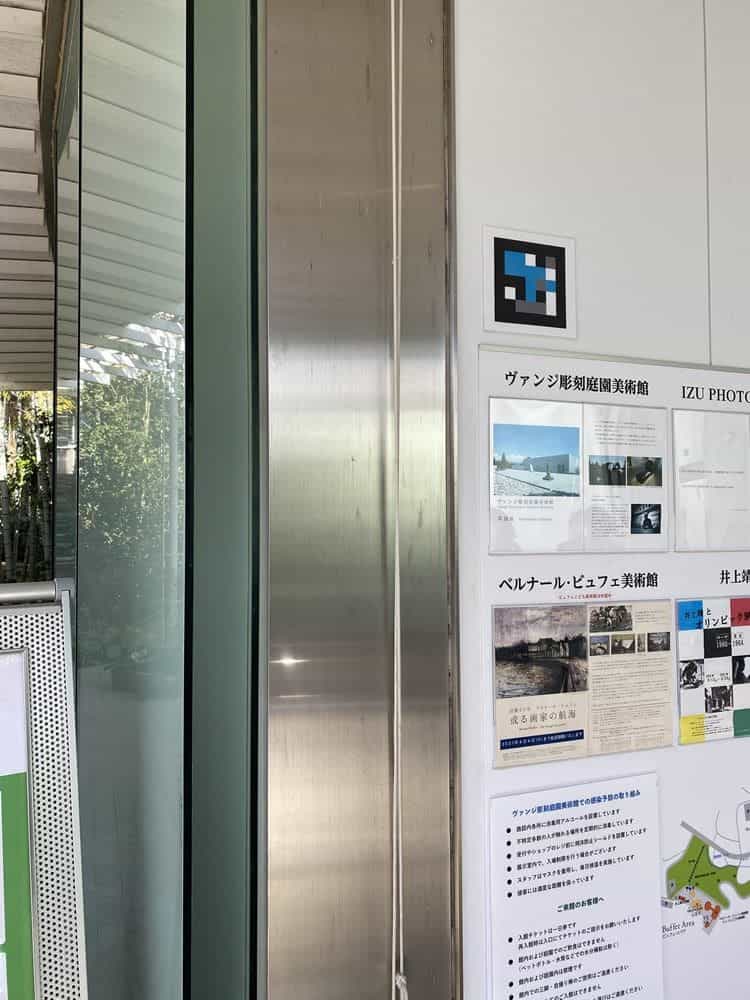
The Vangi Sculpture Garden Museum, inside the Clematis no Oka complex, deploys NaviLens alongside the 歩導くん guide mat so any person with a visual impairment can hear each artwork, find every fork in the garden and reach the tactile stone-sculpture room on their own.
Dec 2020
Start of the NaviLens pilot at the museum
50+ works
Giuliano Vangi sculptures (indoors + outdoors)
Garden + room
Codes on floor, walls, elevator and exit
42+ languages
Information available via the NaviLens app
Client
Vangi Sculpture Garden Museum · Clematis no Oka
Clematis no Oka (クレマチスの丘) is a cultural complex at the foot of Mount Aitaka, in Nagaizumi (Shizuoka Prefecture): three museums, a literary museum, a restaurant, a shop and a garden with about 2,000 clematis plants of around 200 varieties.
Inside the grounds, the Vangi Sculpture Garden Museum (ヴァンジ彫刻庭園美術館) is the only solo museum of Italian sculptor Giuliano Vangi, with more than 50 works—indoors and in the garden—centred on the human being. The team leading accessibility: Okano Taeko (head of NaviLens), Watarigawa Tomoko and Murauchi Mirei (curators), supported by NPO Eye Collaboration Kobe.
§ The challenge
Letting a sculpture garden be walked without needing to see.
- 01
A sculpture museum conceived through the eyes
The Vangi Sculpture Garden Museum is the world's only solo museum of Italian sculptor Giuliano Vangi: more than 50 works inside and outside the building, all centred on “the human being”. Opening that narrative to people with visual impairment meant adding an accessible information layer to the route.
- 02
A huge garden with no tactile paving
Clematis no Oka is a cultural complex in Nagaizumi (Shizuoka), with gardens of 2,000 clematis plants, a restaurant and three museums. Classic tactile paving was not viable: exhibitions change, the color palette is part of the project and the space could not be rebuilt every time.
- 03
A tactile exhibition that accelerated everything
For the fall 2022 group show—designed to let visitors touch the stone sculptures—Okano Taeko (head of NaviLens at the museum) decided that blind and low-vision visitors should reach the room on their own. She looked for a solution and landed on NaviLens through NPO Eye Collaboration Kobe.
§ Solution
NaviLens + guide mat,
an accessible layer with no building works.
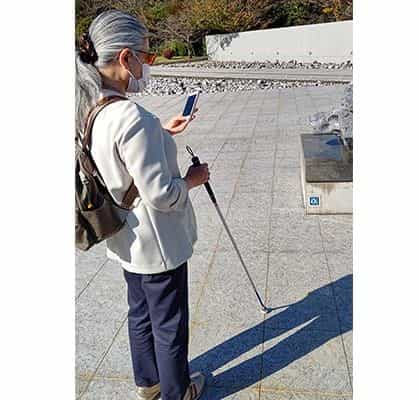
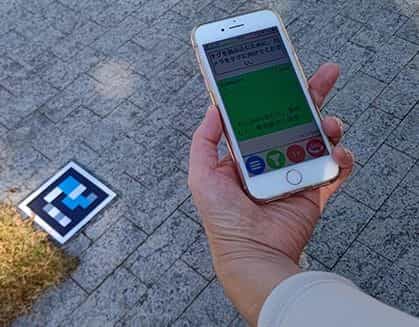
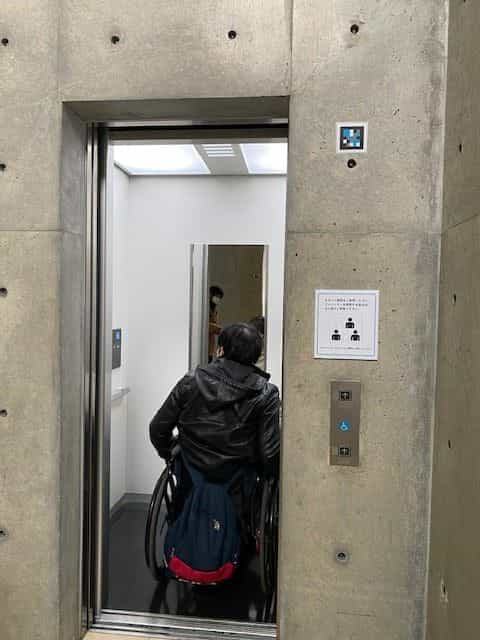
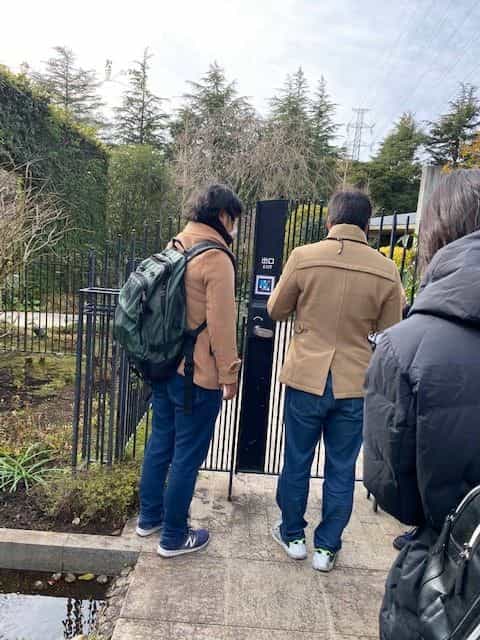
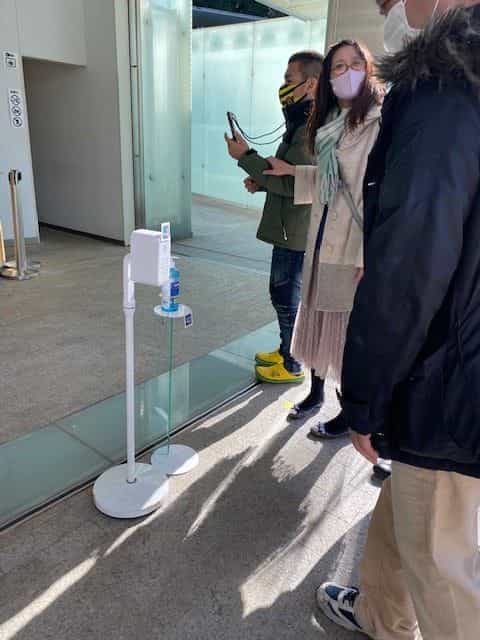
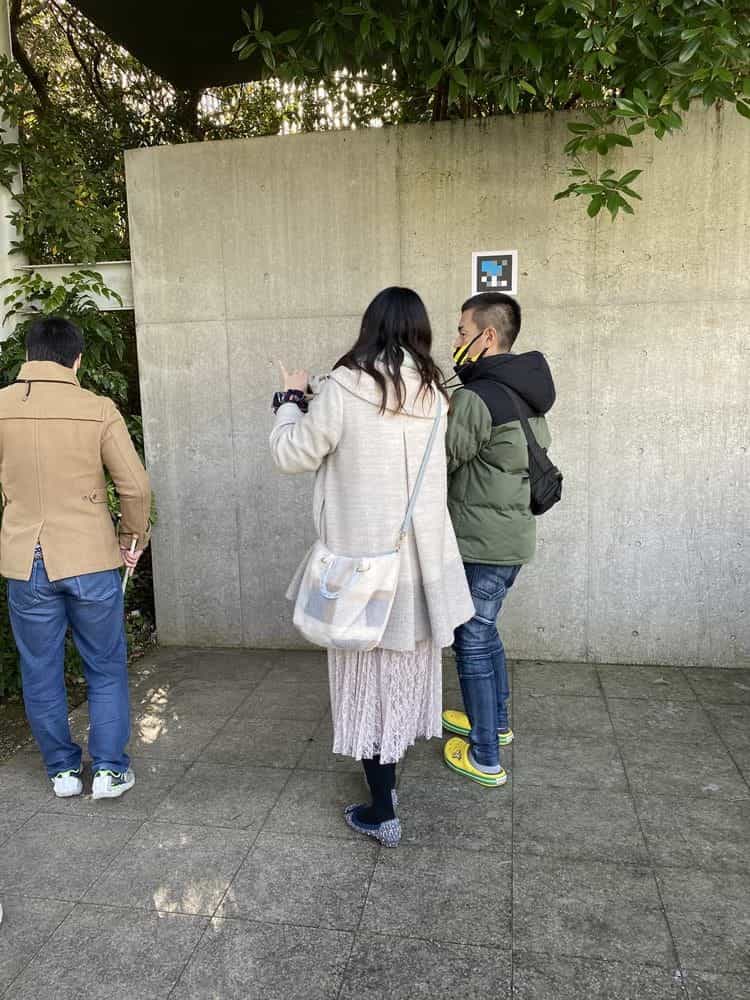
NaviLens codes on the garden paving, next to the tactile sculptures, on the hand-gel dispenser, on the accessible-elevator call button and on the exit totem. The free app detects them from several yards away, at an angle and on the move, and reads aloud in Japanese—or in any of the 30+ available languages—what artwork is in front of you and where to go next.
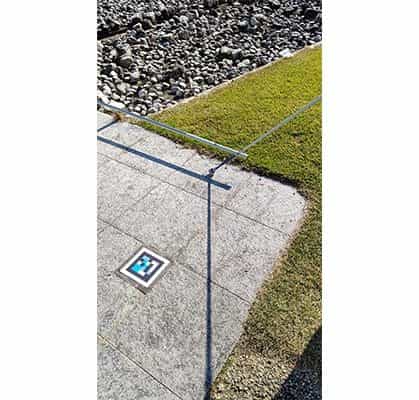
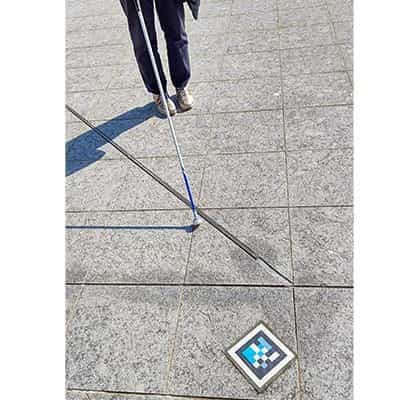
For the wider stretches of the garden, the museum combines NaviLens with the 歩導くん ガイドウェイ guide mat: cane-detectable, removable, repositionable and in a color chosen so as not to break the visual language of the site.
§ Timeline
From a 2020 experiment to a universal museum.
- Dec 2020
Pilot kick-off with NPO Eye Collaboration Kobe
The museum starts the NaviLens experiment guided by NPO Eye Collaboration Kobe, the leading body for NaviLens adoption in Japan. The same organization connects the team with the complementary 歩導くん ガイドウェイ solution.
- 2021–2022
Rollout across garden, room and services
NaviLens codes on the granite paving of the outdoor garden (next to the tactile sculptures), on the entrance panel, next to the hand-gel dispenser, on the accessible-elevator button and on the exit totem. Combined with the 歩導くん guide mat, chosen for being removable, repositionable and with a selectable color.
- Fall 2022
Tactile stone-sculpture exhibition
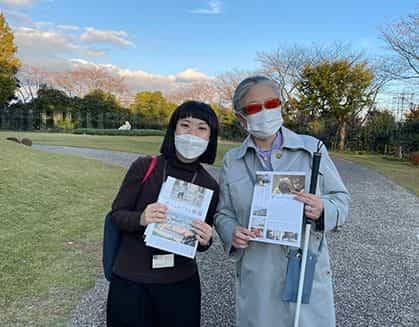
The group show that sparked the project arrives: an experience centred on “触察” (tactile observation) over stone works. Visually impaired visitors walk the museum independently with cane and phone, hearing each artwork and each fork of the route in their language.
- 2023
Official report by Shizuoka Prefecture
The “UD特派員” (Universal Design correspondents) series of Shizuoka Prefecture publishes UD reports #7 and #8 on the case, documenting the truly universal museum model of the Vangi Sculpture Garden Museum within Clematis no Oka.
§ What they said
What the museum team and the prefecture said.
“目指すのはユニバーサルミュージアム。障害者の方ってひとりでは来館されないでしょう?と言われることがある。そうだとしても、園内ではご自分のペースでひとりで自由に回れたらきっと嬉しいと思うし私も嬉しい。”
“美術館は生きる上で不要という意見や教育現場で美術の時間が減っている現実はあるが、作品や食やお花と出会って、心が揺れ動いたり、世界が広がって、自分自身が変化して豊かになれる。だから生きる上で大事なものと思っている。”
“ヴァンジ彫刻庭園美術館では外に様々な彫刻作品が展示されており、そのほとんどが来館者の手で直接触れることができます。これは「触察」というもので、視覚障害のある方々にも作品を楽しんでいただくための取り組みです。”
§ Where the system sits
Garden paving, elevator, exit and amenities.
§ Results
A museum you enter, touch and leave on your own.
Independent route
Blind people move on their own through garden and room
No civil works
Stuck codes — no rebuilding of paving or signage
Multilingual
Same route for international visitors
§ And your destination?
Your destination can also guide in 42 languages.
Tell us about your trails, visitor centers, landmarks or galleries. We’ll show you how NaviLens would make your offering accessible—with comparable cases.