Case study · Murcia · Museum
The MUBAM speaks too: from the Cerdán Pavilion to Sorolla.
Murcia’s Fine Arts Museum embeds NaviLens codes throughout the Cerdán Pavilion: technical panels, 19th-century Tiffany-blue halls, academic scenes and Sorolla studies all begin to speak for themselves.
Cerdán Pavilion
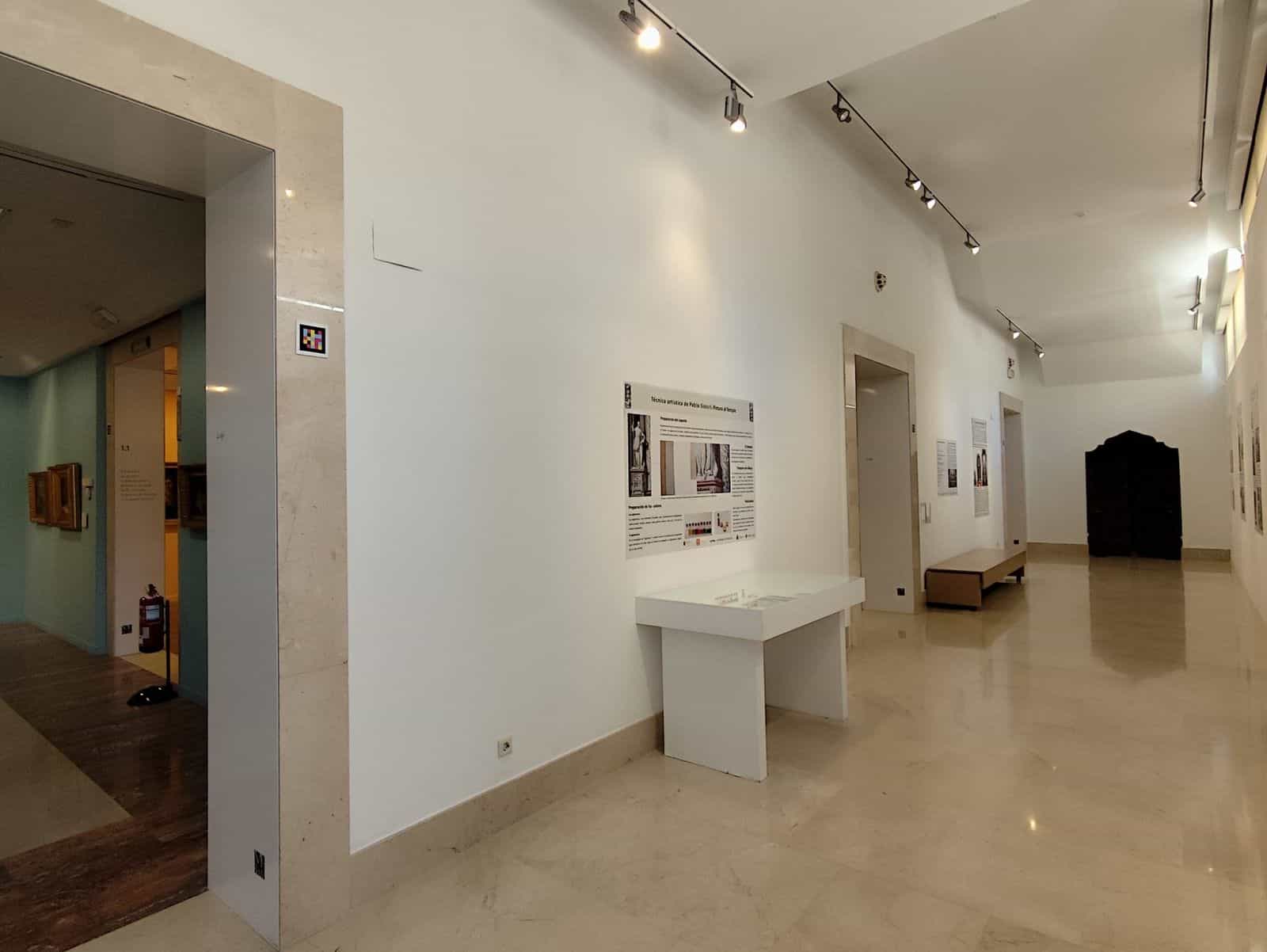
The historic building (1910) on the former Trinity Convent site houses the permanent collection with NaviLens codes
0 · 1 · 2
Three floors tagged with codes on thresholds, rooms, captions and restrooms
16th → 20th c.
From Pedro Orrente and Pablo Sistori to Sorolla, Inocencio Medina Vera or Antonio Campillo
Feb 2019 →
MUBAM joins the regional NaviLens pilot launched at MAM
The client
MUBAM · Murcia Fine Arts Museum
The Murcia Fine Arts Museum (MUBAM), run by the CARM’s Department of Tourism and Culture, stands at C/ Obispo Frutos 12, on the former site of the Trinity Convent in Santa Eulalia. The current building—the Cerdán Pavilion—opened in 1910 and, after several refurbishments, today houses the permanent collection. Next to it, the Contraste Pavilion hosts temporary exhibitions.
The tour spans the 16th century (Pedro Orrente) to the 20th (Antonio Campillo, Inocencio Medina Vera), via Murcian Baroque, 19th-century academic painting, Sorolla’s studies and Hispano-Muslim altarpieces. The official virtual tour covers rooms 0.1, 0.2, 1.1, 1.2, 1.3, 2.1, 2.2 and 2.3.
In 2019 MUBAM—alongside Santa Clara and Mula’s “El Cigarralejo”—joined the NaviLens pilot launched by the regional government at MAM, embedding codes on captions, panels, thresholds and pillars throughout the Cerdán Pavilion.
§ The challenge
Let the paintings speak on their own to those who can’t read the caption.
- 01
Long, technical, multi-voice captions
MUBAM combines dense thematic panels—“Pablo Sistori’s artistic technique: tempera painting” with support preparation, priming, drawing and color preparation—with small bilingual (Spanish / English) individual captions. Impossible to read comfortably for low-vision visitors without an audio-readable layer.
- 02
A historic building with rooms in enfilade
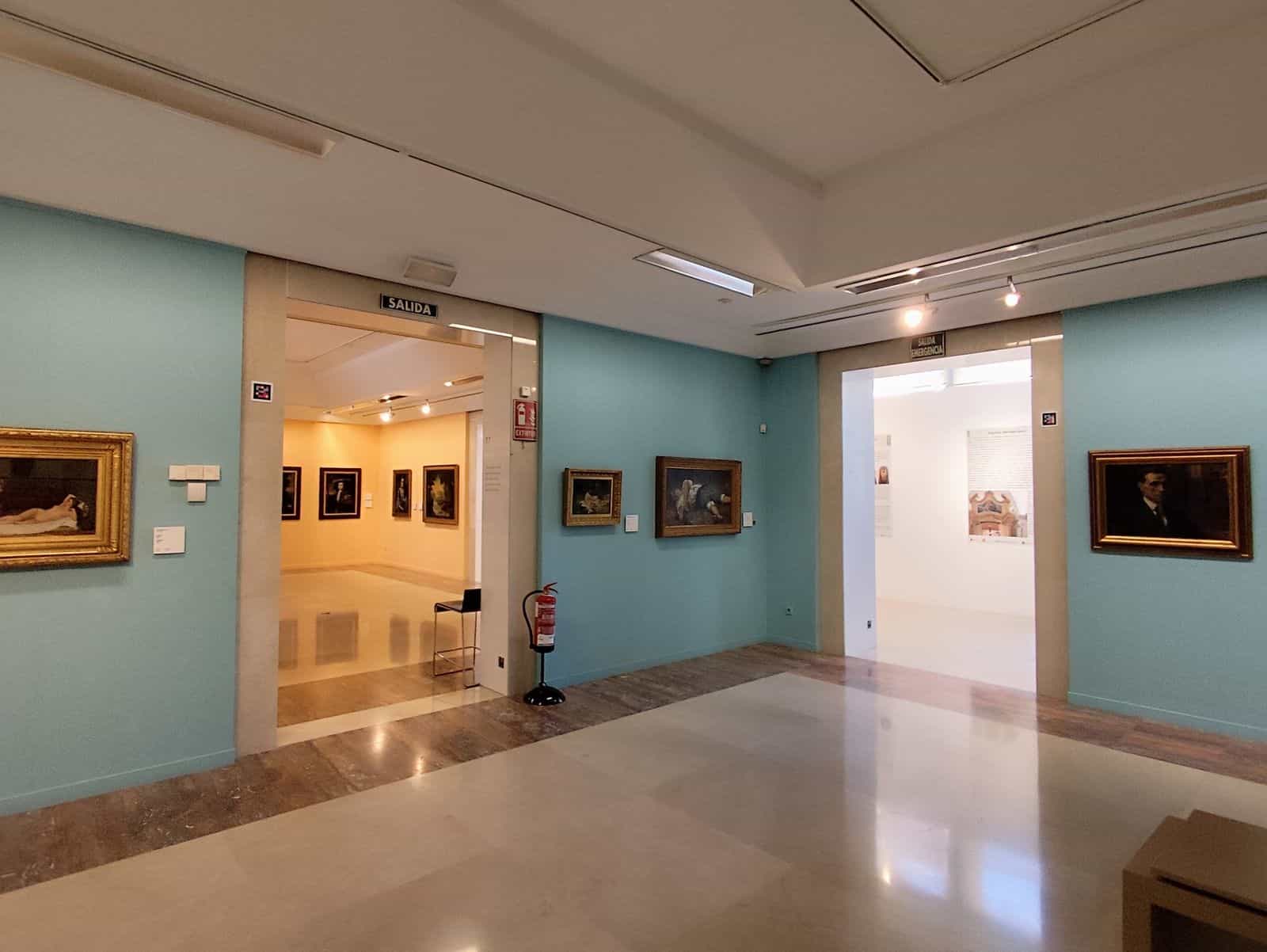
The Cerdán Pavilion lays out the visit across three floors (0, 1 and 2) and numbered rooms (1.1, 1.2, 1.3, 2.1, 2.2, 2.3, 0.1, 0.2). Marble doorways, successive thresholds and the two “Exits” (main and emergency) made independent wayfinding difficult for blind and low-vision visitors.
- 03
A visit designed for several audiences at once
School groups, international tourists, blind or low-vision visitors, people with reading difficulties: MUBAM needed a single digital wayfinding layer able to serve them all without multiplying signs or breaking the atmosphere of the rooms (Tiffany-blue walls, marble floors, gilded frames).
§ The solution
A NaviLens layer over the entire Cerdán Pavilion.
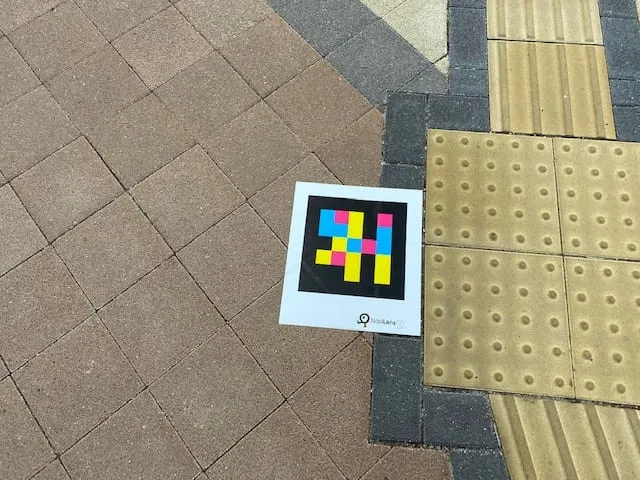
Every threshold between rooms, every corridor pillar, every thematic panel and every individual artwork caption gets a NaviLens code, mounted discreetly so as not to interfere with the museography: 19th-century Tiffany walls, gilded frames, marble floors.
The same physical asset is read by three free apps: NaviLens reads the content aloud for blind and low-vision visitors, ddtags Go provides easy-read for those with reading difficulties, and NaviLens Kids opens a children’s version of the same material.
The main exit and emergency exit doors also carry their own codes, so the visit—and any evacuation—remains accessible for a blind visitor.
§ The rollout
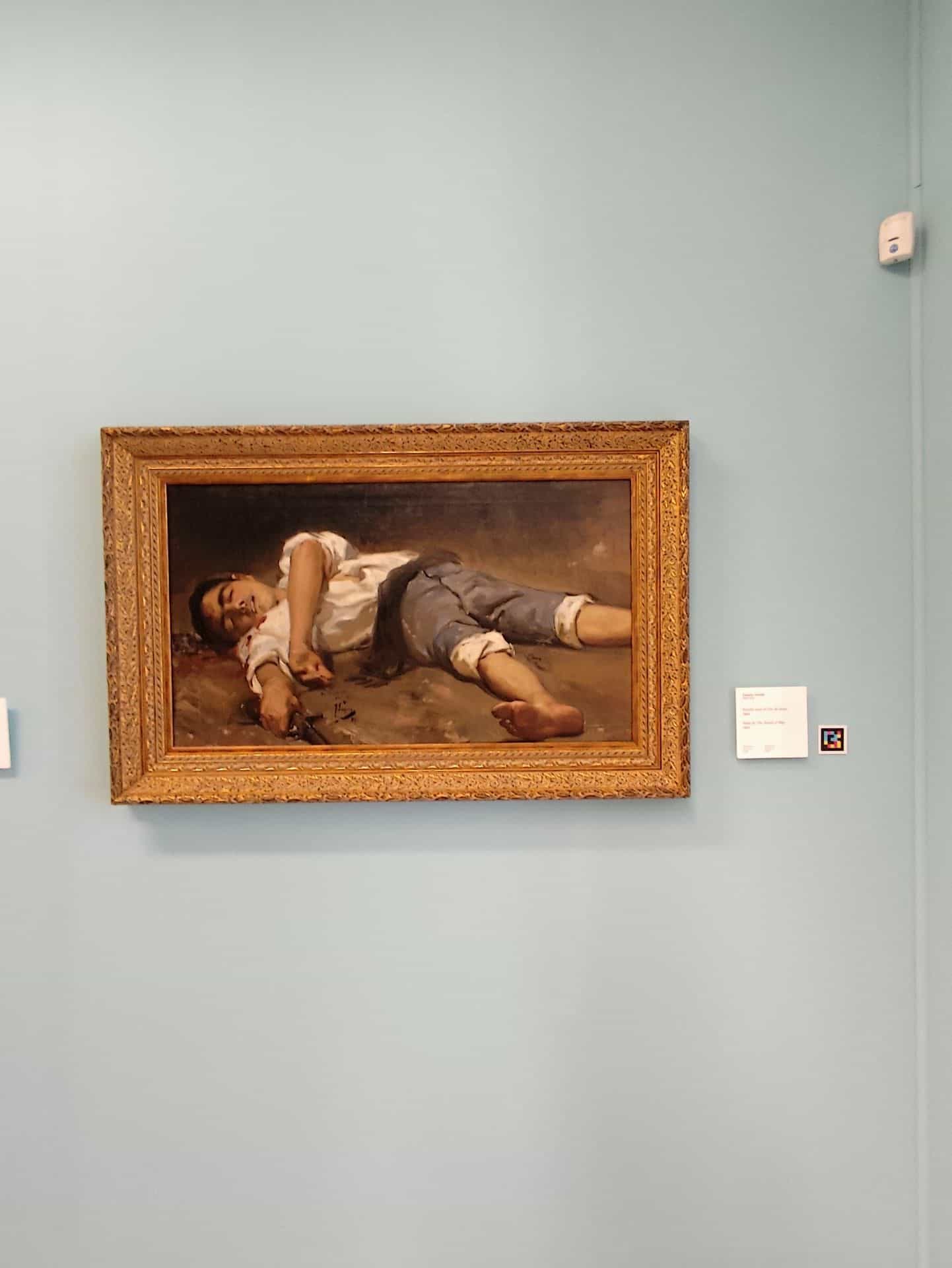
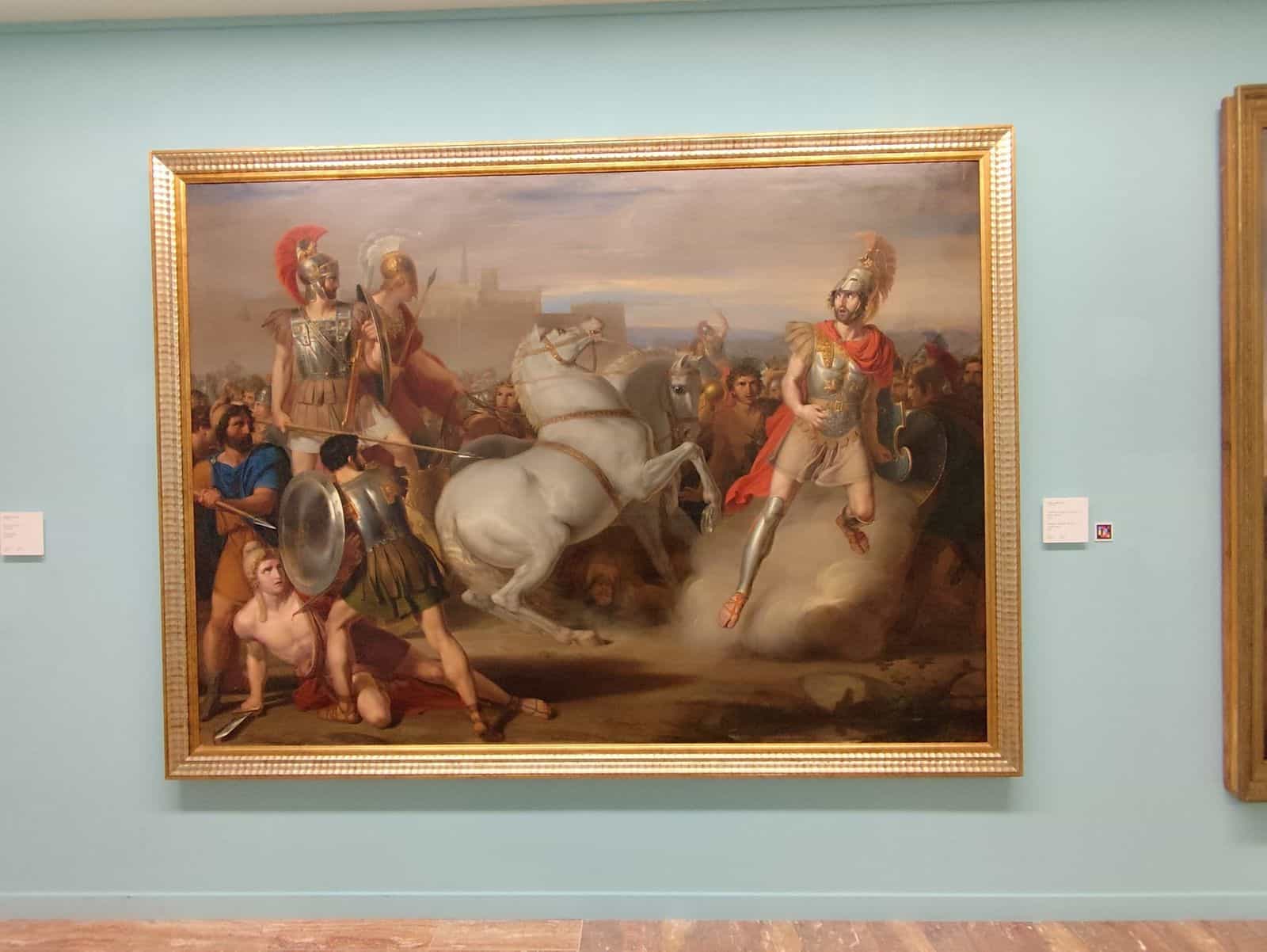
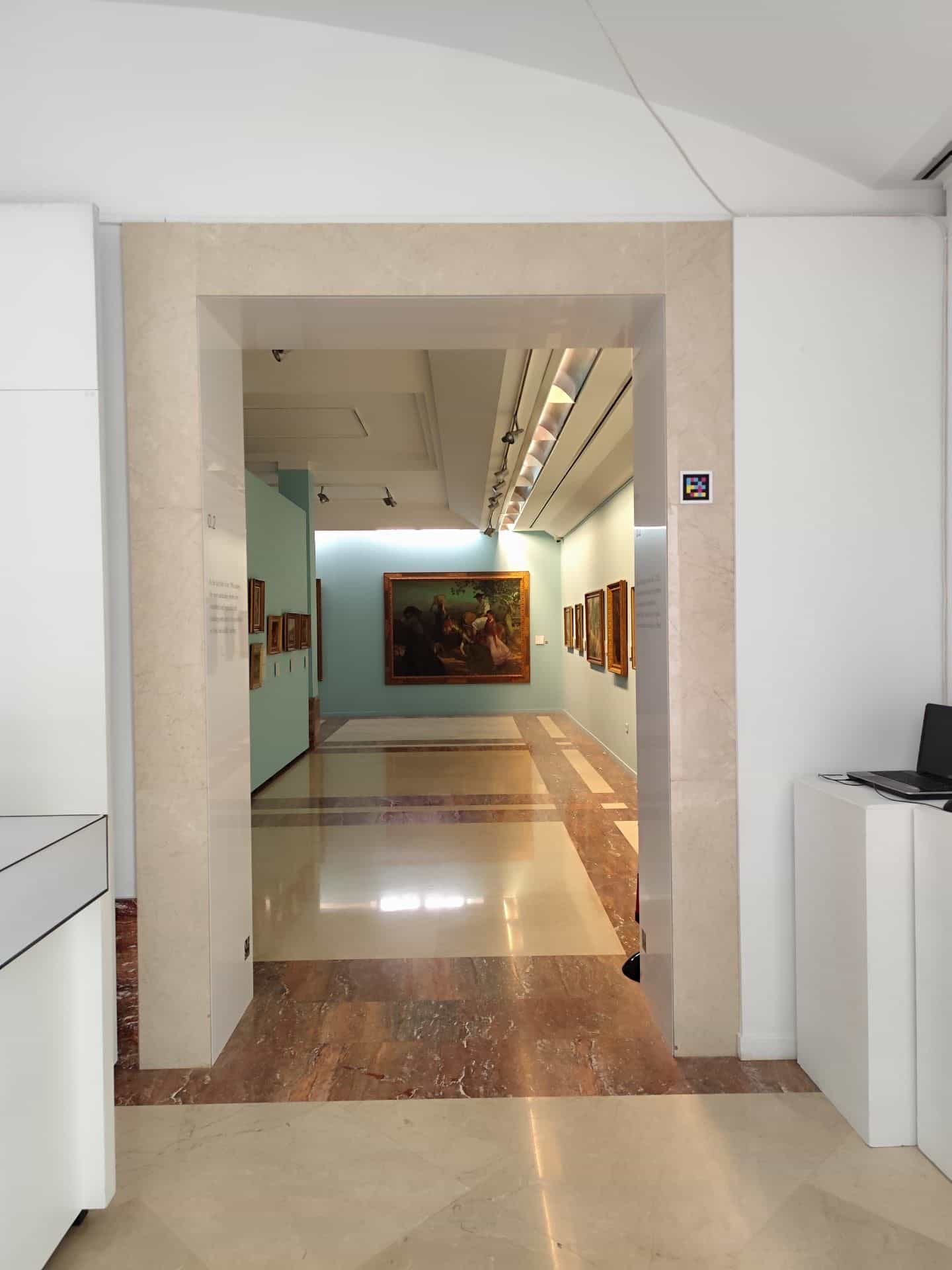
From Sorolla’s study to the tempera technique panel.
§ Timeline
From the MAM pilot to a regional model for Murcian museums.
- Feb 2019
MUBAM joins the regional NaviLens pilot
Following Tourism and Culture minister Miriam Guardiola’s presentation of the MAM rollout, La Opinión de Murcia announces that the Fine Arts Museum (MUBAM) and Santa Clara will be the next regional museums to join the NaviLens pilot developed with the Murcian firm Neosistec.
- 2019 →
Rollout across the Cerdán Pavilion
NaviLens codes are installed on thresholds between rooms, on corridor pillars next to institutional signage, on every individual artwork caption (Sorolla, academic history paintings, Pablo Sistori) and on the thematic panels about painting technique.
- May 2025
Updated accessibility statement
The Autonomous Community updates MUBAM’s accessibility statement (May 8, 2025) in compliance with RD 1112/2018, integrating the permanent-tour NaviLens signage as part of the museum’s cognitive and sensory accessibility commitment.
- Dec 2024 →
1,000 regional NaviLens licences
The Tourism Department (DG of Tourist Competitiveness and Quality) acquires 1,000 NaviLens licences for 80 tourist assets across the region (Mula, Bullas, Cehegin, Caravaca, Lorca, Cartagena, Yecla, Jumilla…), consolidating the model started at MAM and extended to MUBAM.
§ What they said
What the press said about the project.
“Murcia’s Archaeology Museum is the first, but over the coming months Fine Arts (Mubam) and Santa Clara—both also in the regional capital—will join in, as will the Iberian Art Museum ‘El Cigarralejo’ in Mula.”
“The Department of Tourism, through the DG of Tourist Competitiveness and Quality, has acquired 1,000 NaviLens code licences to be deployed across 80 tourist assets in the Region of Murcia.”
§ Results
A 19th-century museum that also speaks in 2026.
Independent visit
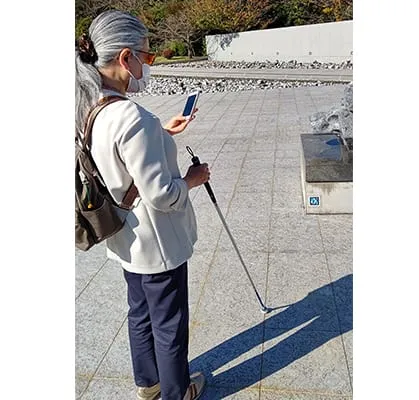
Visually impaired visitors find their way among the marble doorways of the Cerdán Pavilion by following NaviLens codes on pillars and thresholds, without relying on gallery staff
Spoken captions
Every work—from Sorolla’s Study for “The Second of May” to 19th-century academic canvases—has a code that reads the full caption aloud in Spanish, with English translation available
Easy read + Kids
The same tag opens a children’s version of the content with NaviLens Kids and, with ddtags Go, an easy-read version designed for school groups and people with reading difficulties
Sources · La Opinión de Murcia (15 feb 2019) · Murcia Diario (27 dic 2024) · MUBAM · accesibilidad · Visita virtual
§ And your destination?
Your destination can also guide in 42 languages.
Tell us about your trails, visitor centers, landmarks or galleries. We’ll show you how NaviLens would make your offering accessible—with comparable cases.