Case study · Canada · Halifax
Pier 21, the story of immigration read aloud.
The Canadian Museum of Immigration at Pier 21 integrates NaviLens across galleries, services and historic halls so any visitor can find their way and explore the museum in 42 languages.
Halifax
Canadian Museum of Immigration at Pier 21
Pier 21
National museum on a historic pier
Exhibits + halls
Wayfinding, galleries and public spaces
42
Languages read aloud
The client
Canadian Museum of Immigration at Pier 21 —Halifax, Nova Scotia
Pier 21 is Canada's national museum dedicated to immigration and one of Halifax's flagship cultural landmarks. Its visitor journey blends the industrial heritage of the historic pier, collective memory and contemporary exhibition design.
The museum has rolled out NaviLens at orientation points, room entrances, permanent galleries and immersive spaces so visitors can move around more independently without altering the building or the museography.
The technology is embedded as the museum's official accessibility solution under the Accessibility Plan 2023-2025 and the new Accessibility Plan 2026-2028, in line with the Accessible Canada Act: the official page confirms "nearly 100 codes around the Museum" (pier21.ca/visit/accessibility, quai21.ca/visiter/accessibilite, Accessibility Progress Reports 2023, 2024 and 2025).
§ The challenge
Making a national museum easy to navigate by voice.
- 01
A museum with layered storytelling
Pier 21 weaves together immigration history, immersive scenography, themed galleries and welcome areas for very different audiences. Wayfinding had to help people orient themselves without breaking the exhibition narrative.
- 02
Bilingual, international and accessible
The museum hosts local, school and international visitors in a bilingual English-French setting. Information had to be readable aloud and from a distance, including for blind and low-vision visitors.
- 03
From services to historic halls
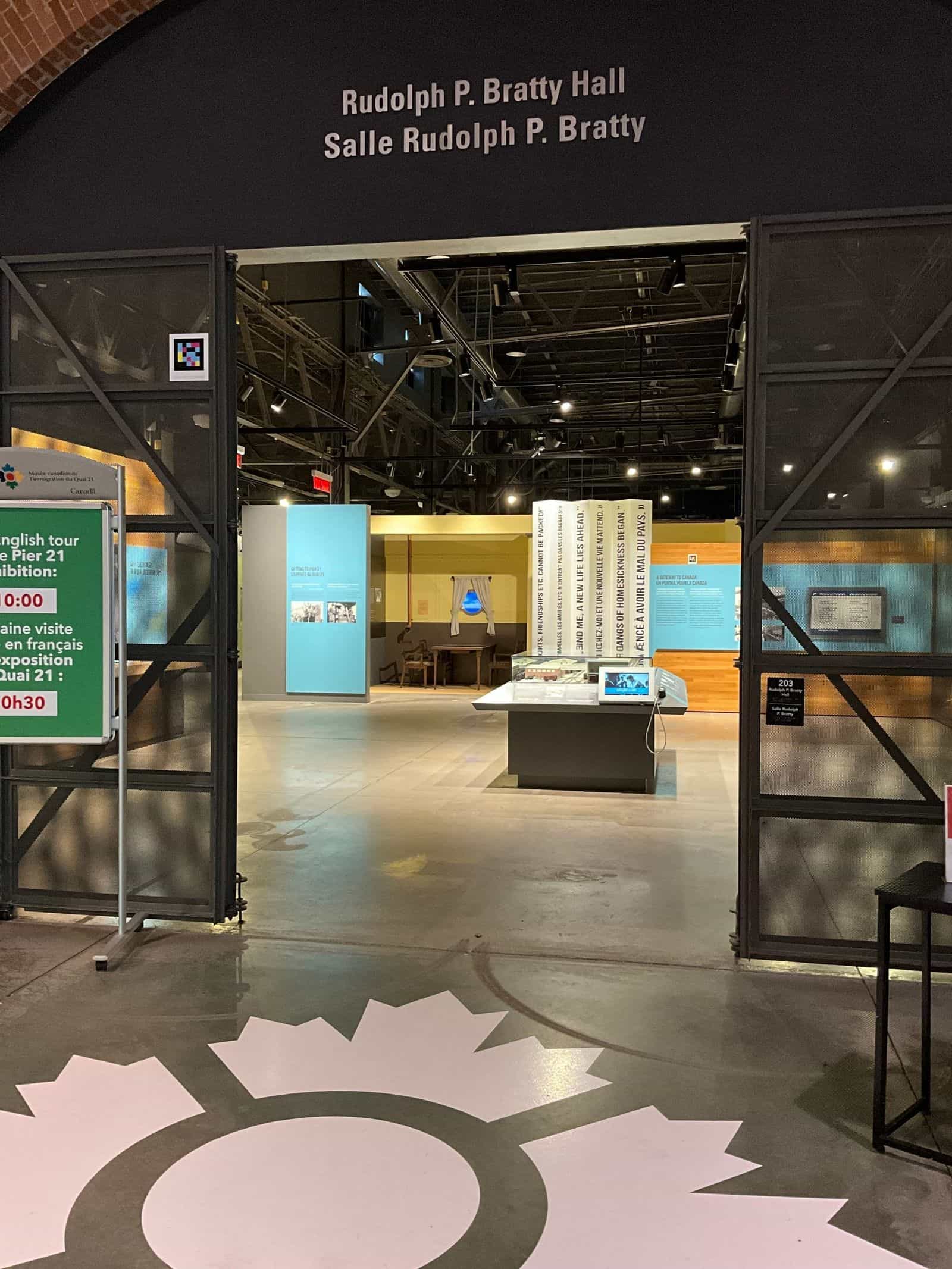
Labeling a single gallery wasn't enough: the solution had to cover restrooms, entrances to spaces like Rudolph P. Bratty Hall and immersive areas such as the ship cabin, creating a consistent layer of orientation across the full visit.
§ The solution
A code next to every wayfinding decision.
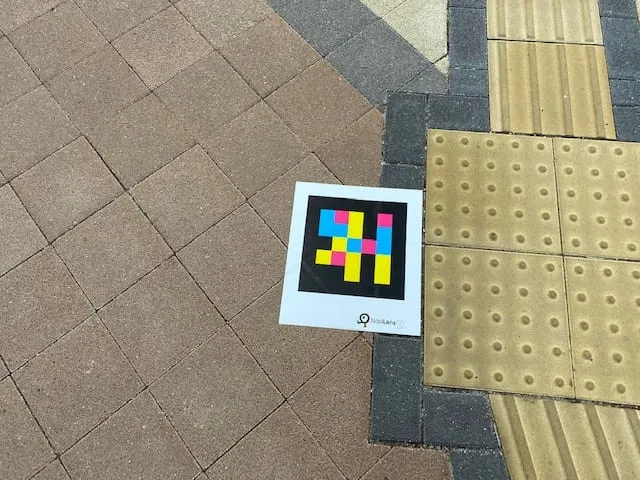
Pier 21 places NaviLens codes at hall entrances, services, galleries and immersive zones. The NaviLens GO app detects the code from a distance and reads the information in the visitor's language.
The accessibility layer sits on top of existing signs, walls and panels, keeping the museography of Canada's national immigration museum fully intact.
§ Timeline
From basic wayfinding to a complete journey.
- Entrance
Services and key touchpoints
Pier 21 deploys NaviLens at core orientation points like washrooms and entrances, so any visitor can identify essential services quickly without having to read up close.
- Exhibits
Permanent and interactive galleries
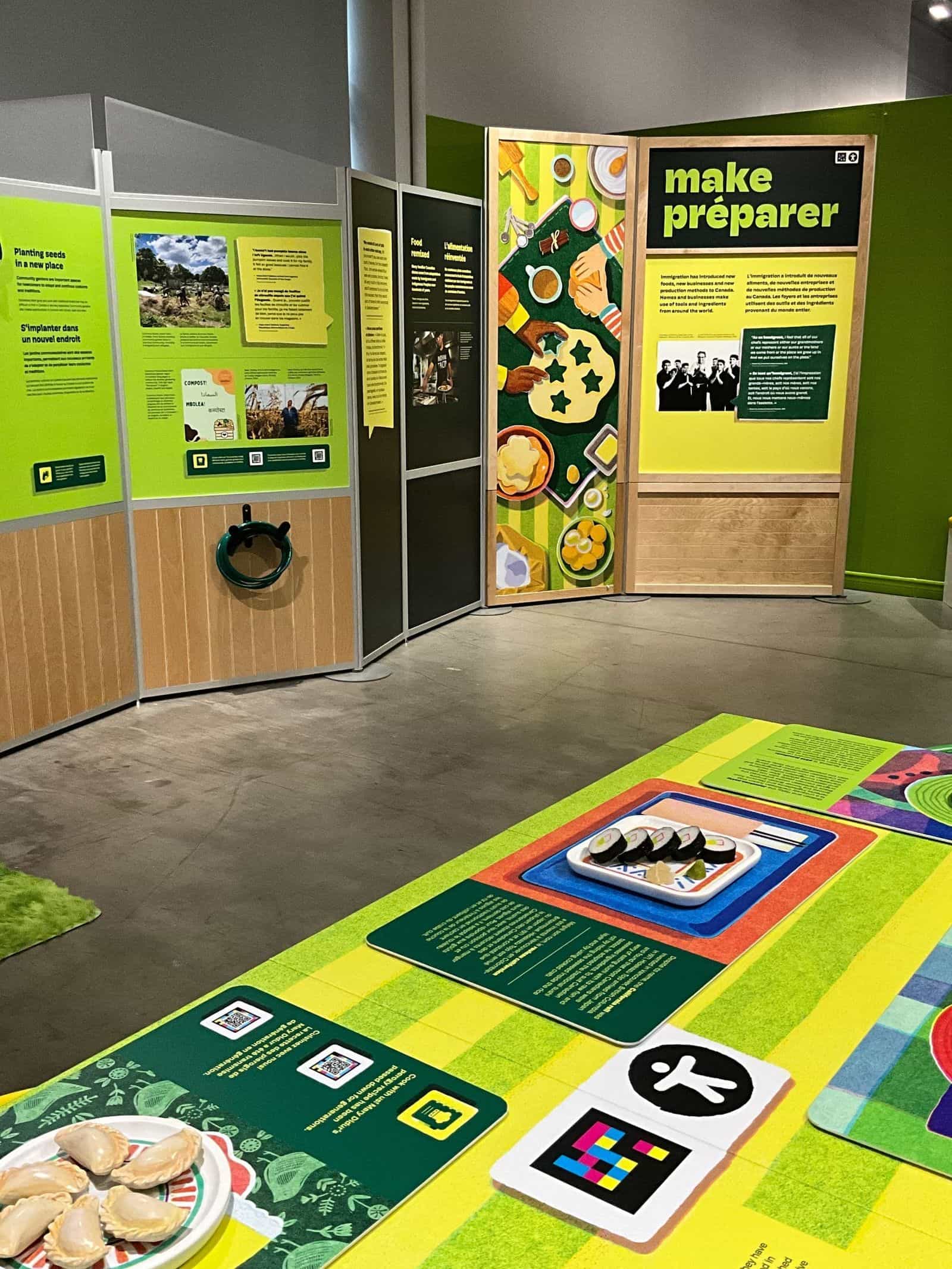
Codes are integrated into exhibit areas such as "make préparer", "Map Out Your Roots / Retracez vos racines" and the gallery devoted to European arrivals, linking signage and museum storytelling.
- Visitor journey
Historic halls and main hall
The solution extends to spaces like Rudolph P. Bratty Hall and historic recreations of the migration journey, helping visitors navigate the full museum with a more independent, multilingual experience.
§ Visitor journey
From the washrooms to Rudolph P. Bratty Hall.
Services
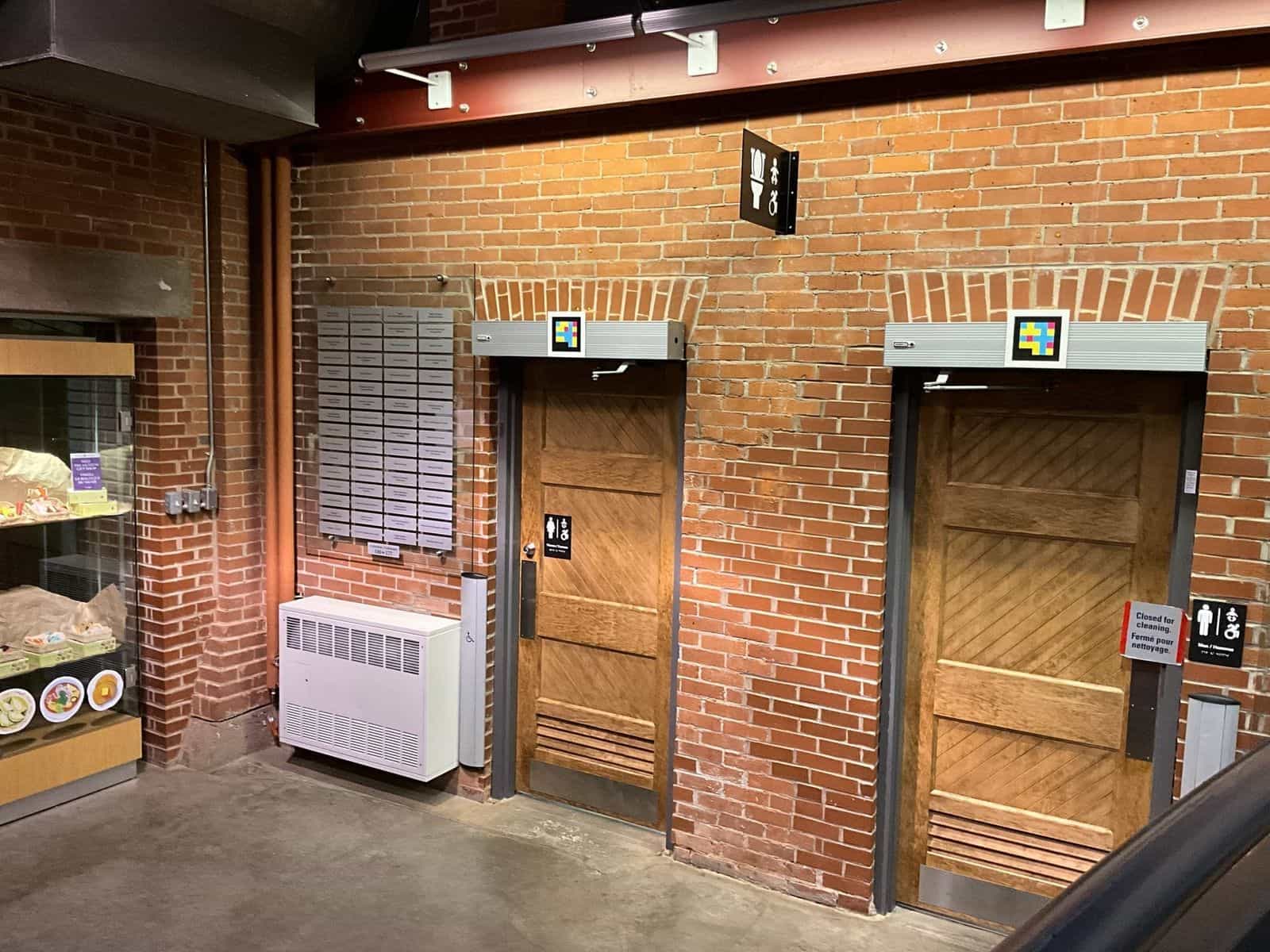
Washrooms / toilettes
The museum's restrooms carry NaviLens codes above every entrance, reinforcing the identification of essential services in a bilingual English-French setting.
Interactive
Make préparer
In the interactive area on food and new customs, NaviLens accompanies the panels to make exploration easier and the visit readable aloud.
Orientation
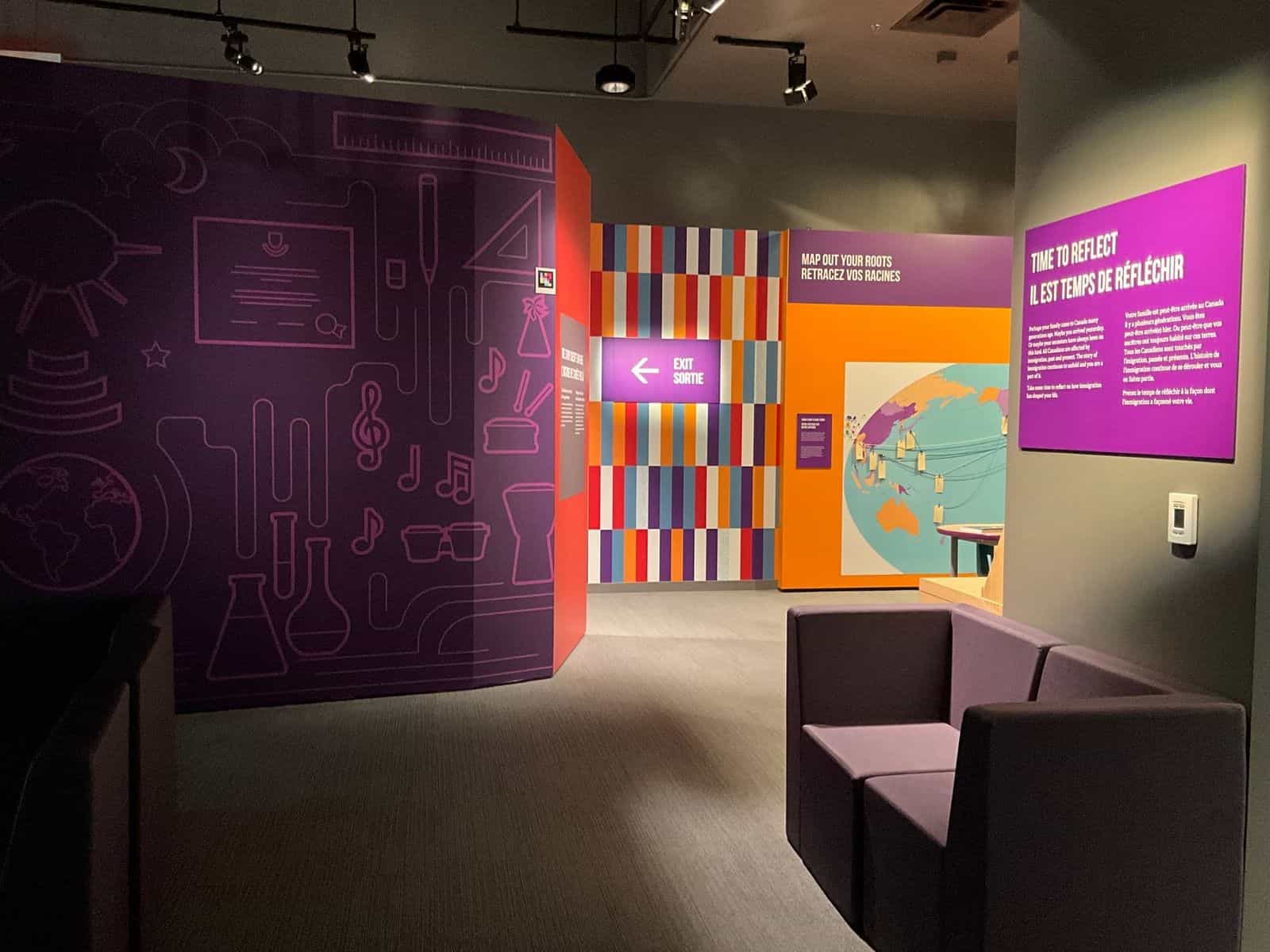
Map Out Your Roots / Time to Reflect
The transition between the reflection and roots-mapping areas adds NaviLens codes next to the signage, guiding visitors through spaces with a strong graphic and color presence.
Gallery
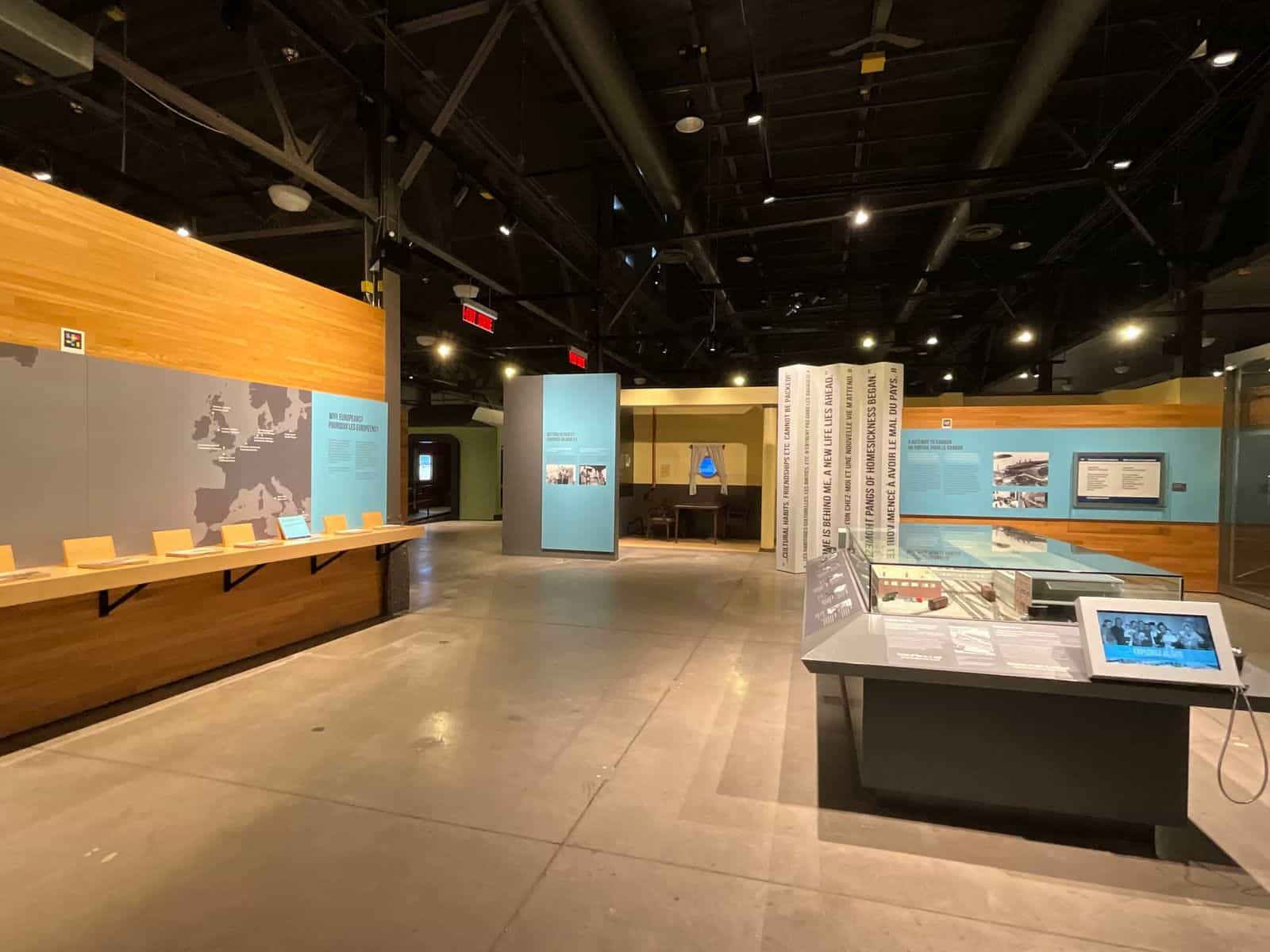
European arrivals
The large gallery on European immigration to Canada adds NaviLens to maps, display cases and panels, making it easier to navigate an open, large-scale space.
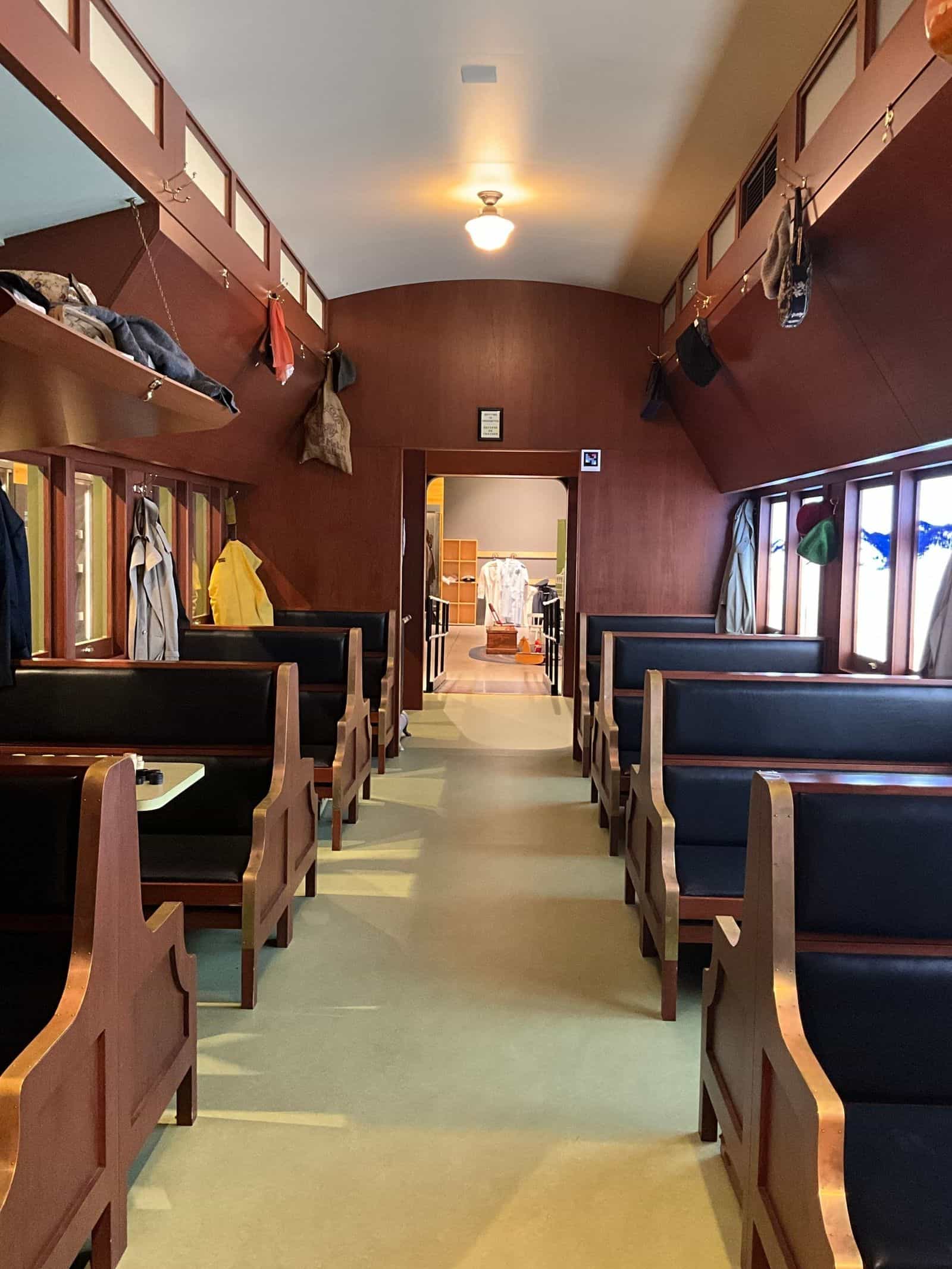
Scenography
Ship cabin recreation
The recreation of the migration journey inside the ship keeps its historic atmosphere while NaviLens helps locate the entrance and follow the exhibition itinerary.
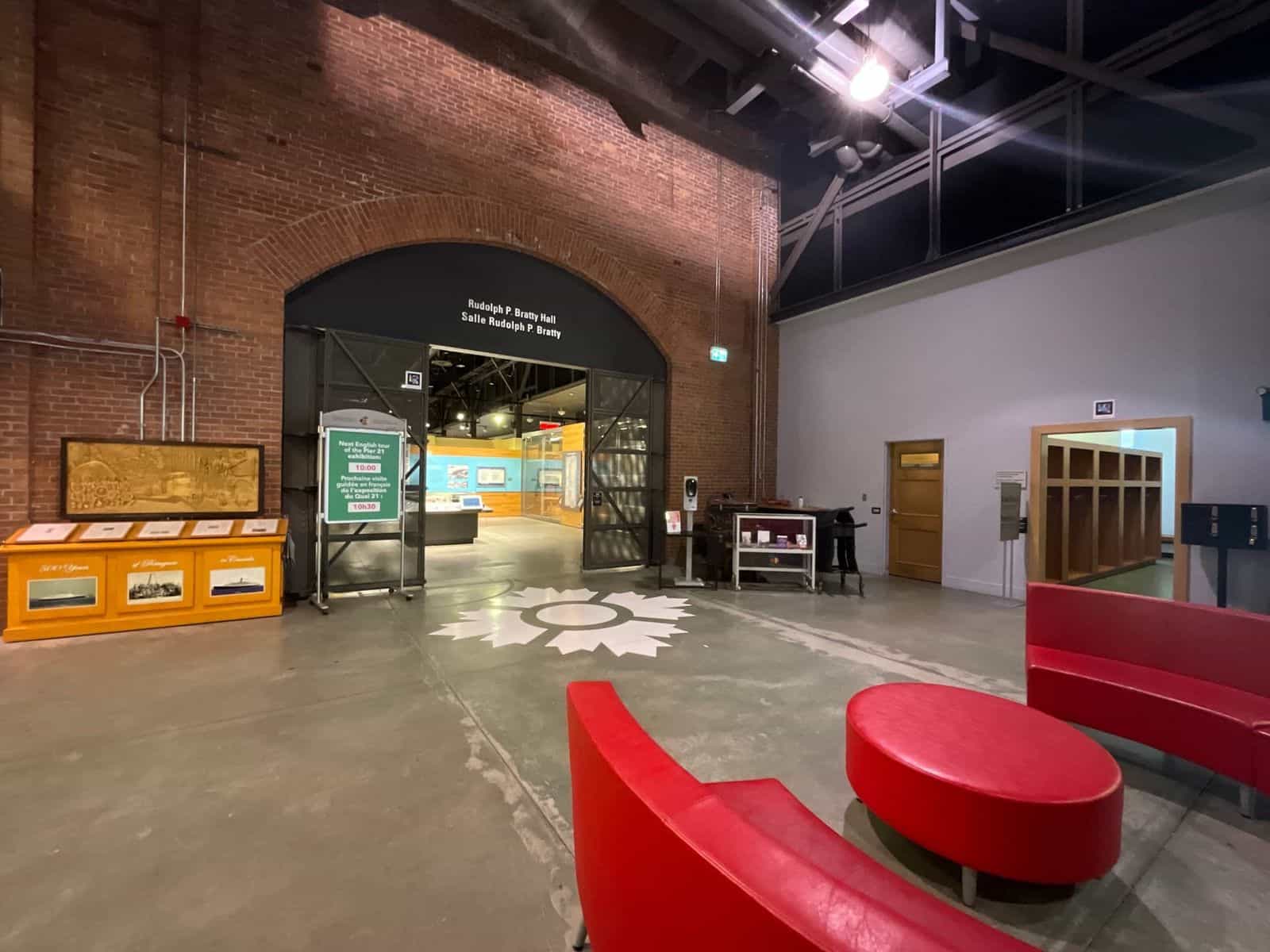
Hall
Rudolph P. Bratty Hall — overview
From the main hall, NaviLens guides visitors toward Rudolph P. Bratty Hall and other exhibition areas, making the spatial hierarchy of this heritage industrial building visible.
Hall
Rudolph P. Bratty Hall — entrance
The entrance to Rudolph P. Bratty Hall carries a NaviLens code next to the room sign, allowing the space to be identified from a distance and linked to the rest of the museum journey.
§ Results
A museum easier to navigate and understand.
Zero construction
Codes integrated on top of existing signage and panels
Voice + 42 languages
Wayfinding and content read aloud
National museum
Accessibility consistent with an international benchmark
§ What they said
“To improve accessibility, the Museum uses NaviLens technology. Download the free NaviLens App. You can scan nearly 100 codes around the Museum.”
“The Museum uses NaviLens technology to ensure an inclusive experience for those with visual, hearing, or mobility impairments.”
§ And your destination?
Your destination can also guide in 42 languages.
Tell us about your trails, visitor centers, landmarks or galleries. We’ll show you how NaviLens would make your offering accessible—with comparable cases.