Case study · Seville · Andalusia (Spain)
Finding your room in a hotel without counting doors.
The ibis Styles Sevilla City Santa Justa (Accor, 218 rooms, next to the high-speed station) installs NaviLens codes on every room jamb, on each floor's wayfinding signs and inside the elevators. A blind guest walks into the corridor and the app announces their room number as they pass it.
218
Rooms with a NaviLens code on the jamb
Floor by floor
Wayfinding codes: “stairs / elevators · 45-67 · 69-82”
Elevator
Pictogram + NaviLens code on every landing
42
Languages with voice readout
The client
ibis Styles Sevilla City Santa Justa · Accor · Avenida de la Buhaira, 2 · Seville
The ibis Styles Sevilla City Santa Justa is a 3-star Accor hotel right next to Sevilla-Santa Justa high-speed station, minutes on foot from the historic center. It has 218 rooms, a rooftop pool with panoramic views and an interior design that evokes Andalusian orange-tree courtyards.
Given the mix of international tourists, business travelers and the sheer number of rooms, the hotel integrated NaviLens into its indoor wayfinding so that any guest—including blind, low-vision or non-Spanish-reading guests—can reach their door without asking at reception.
§ The solution
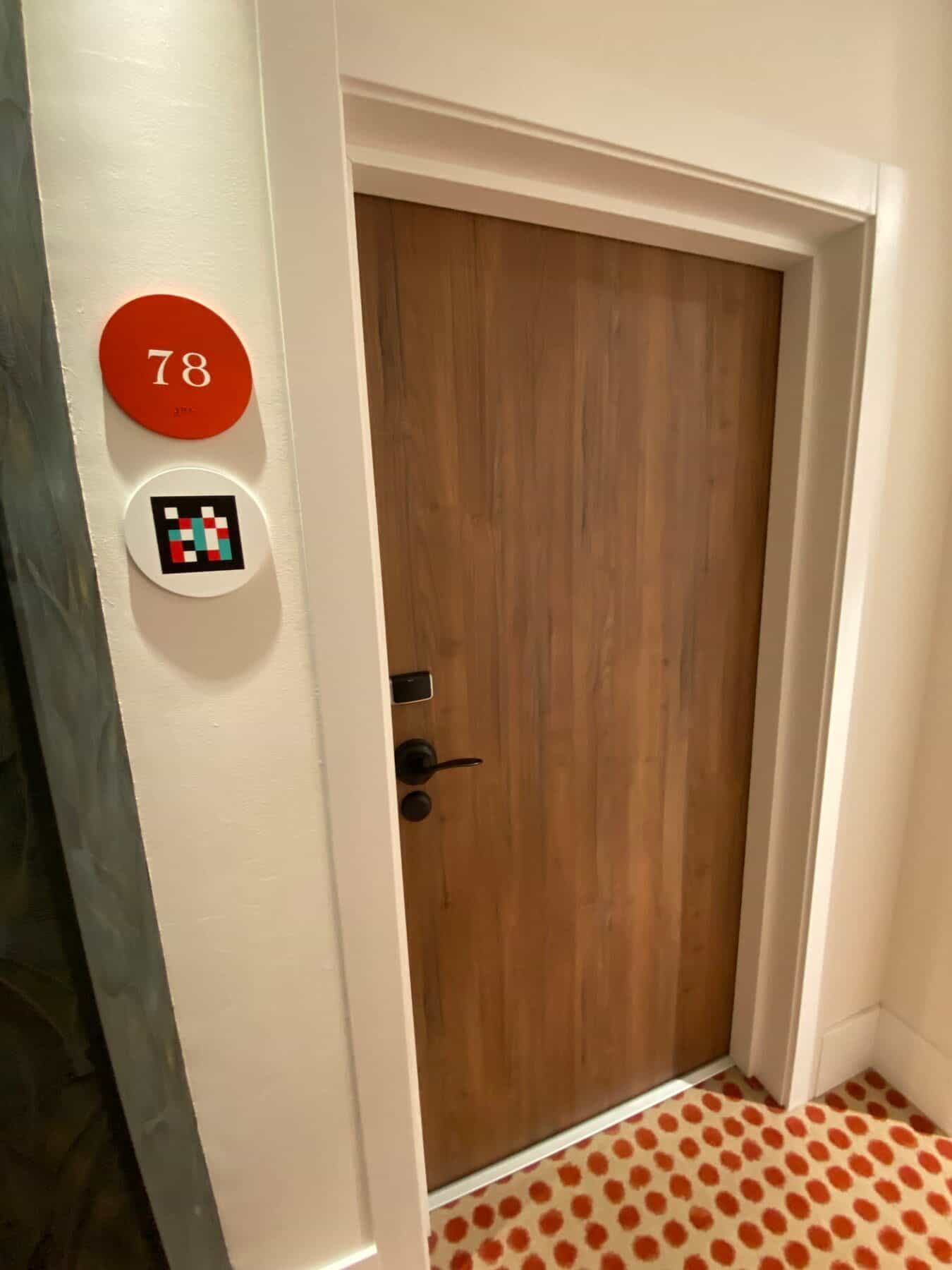
One single sign on every door: large number, braille and NaviLens.
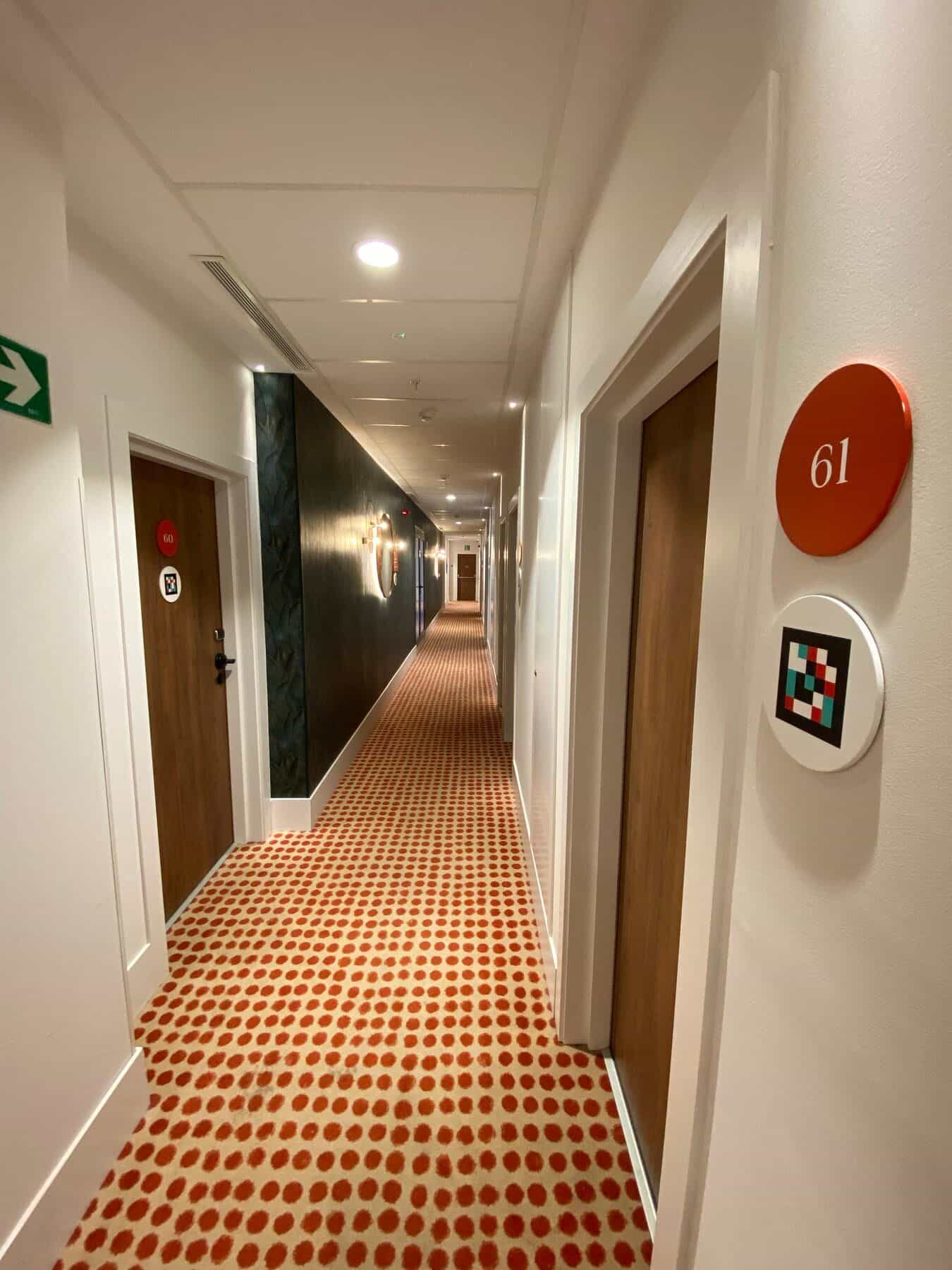
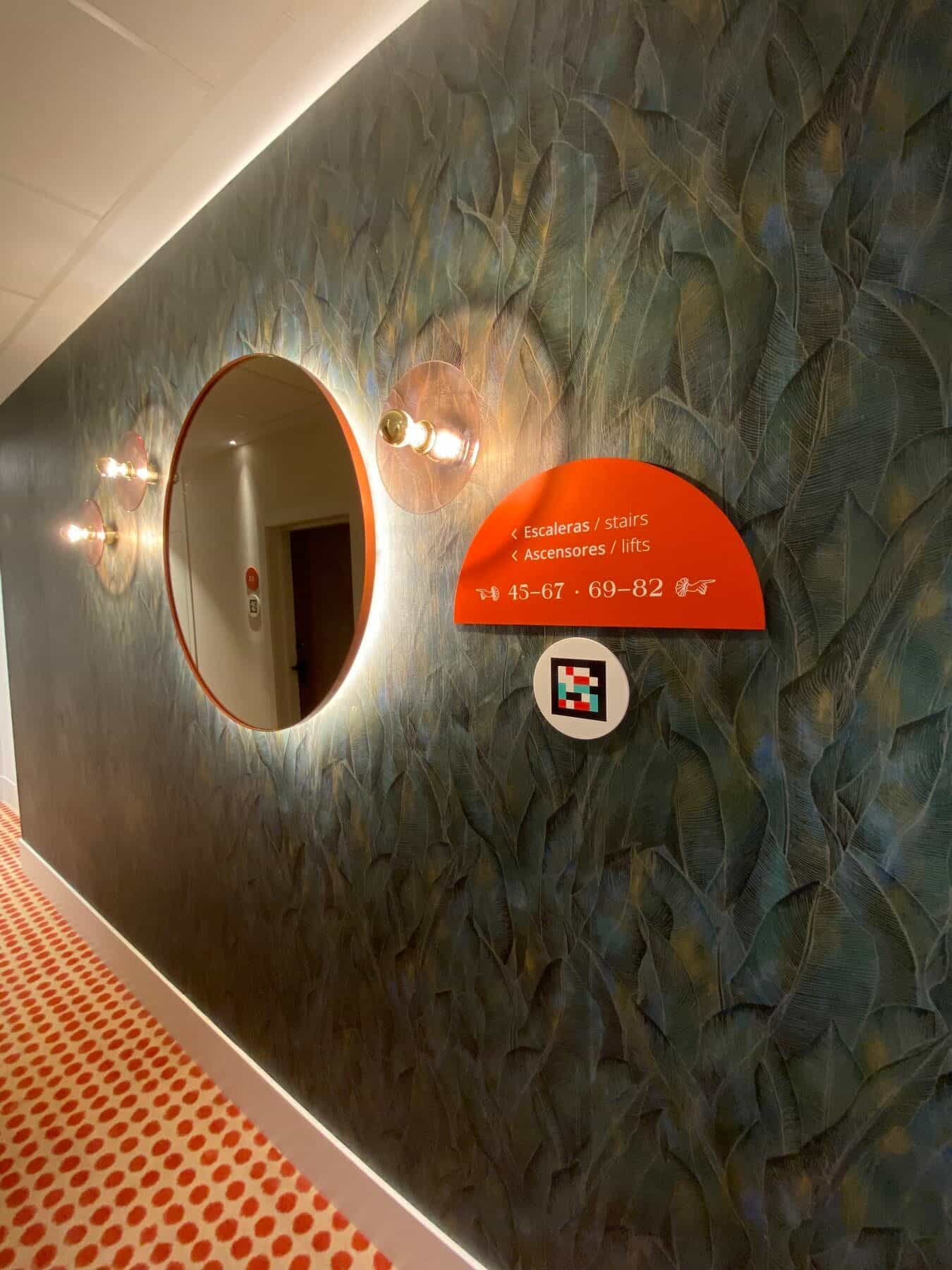
Each room combines three layers on the same jamb sign: a large number on a red disc, braille dots below and, right next to it, the NaviLens code on a white disc. A blind person does not have to feel their way door by door: the app announces the room number from several yards away, at various angles, even while walking.
Corridor wayfinding signs—“stairs · elevators · 45-67 · 69-82”—also carry their own code, as does the elevator landing with the N1 pictogram.
§ Journey
From the elevator to the door of your room.
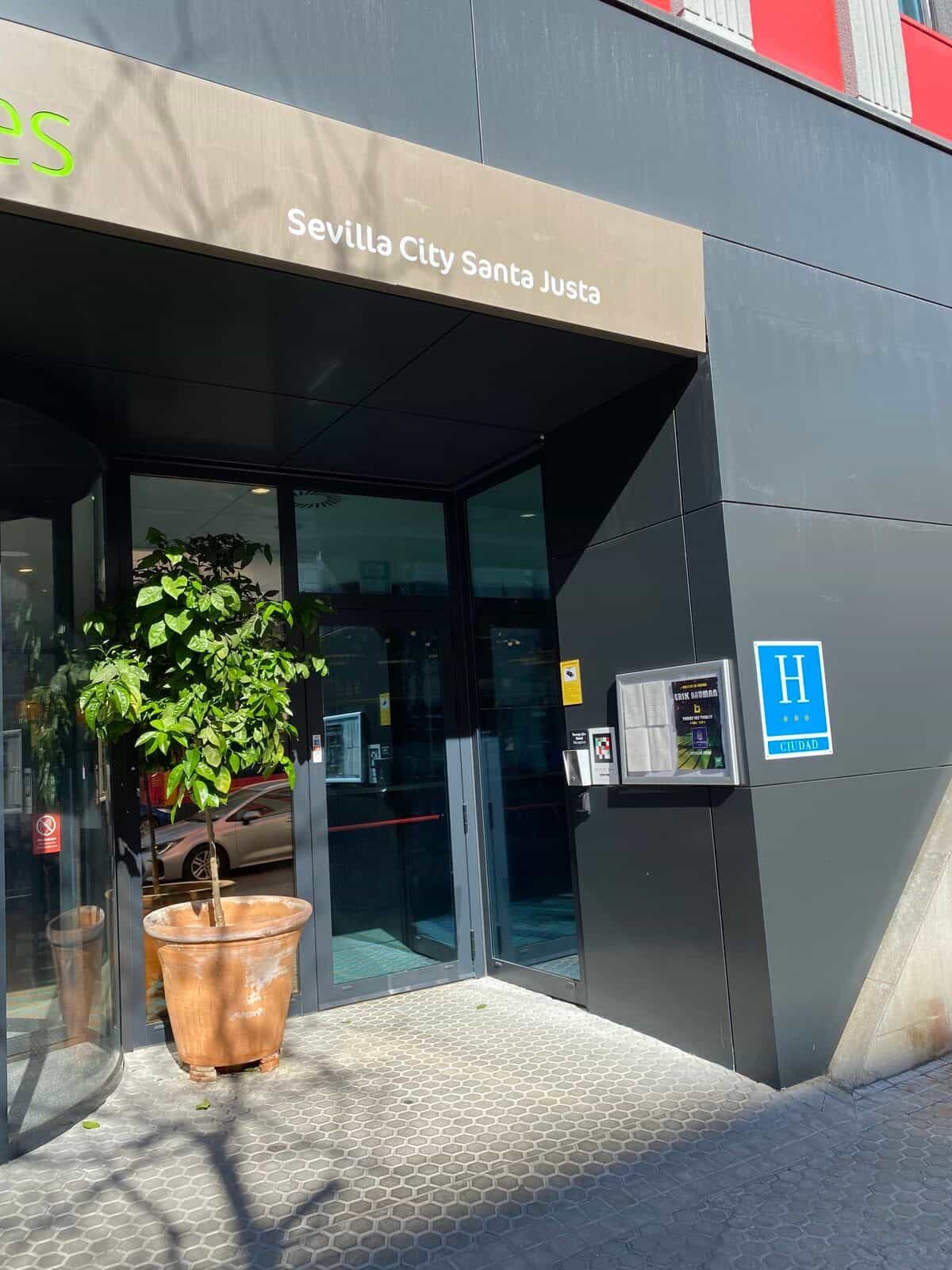
Arrival · Front door
“You're at the entrance of the ibis Styles Sevilla City Santa Justa”
The first code is outside, next to the revolving door. A blind person walking in from Santa Justa station confirms via the app that they have arrived at the right hotel before going in.
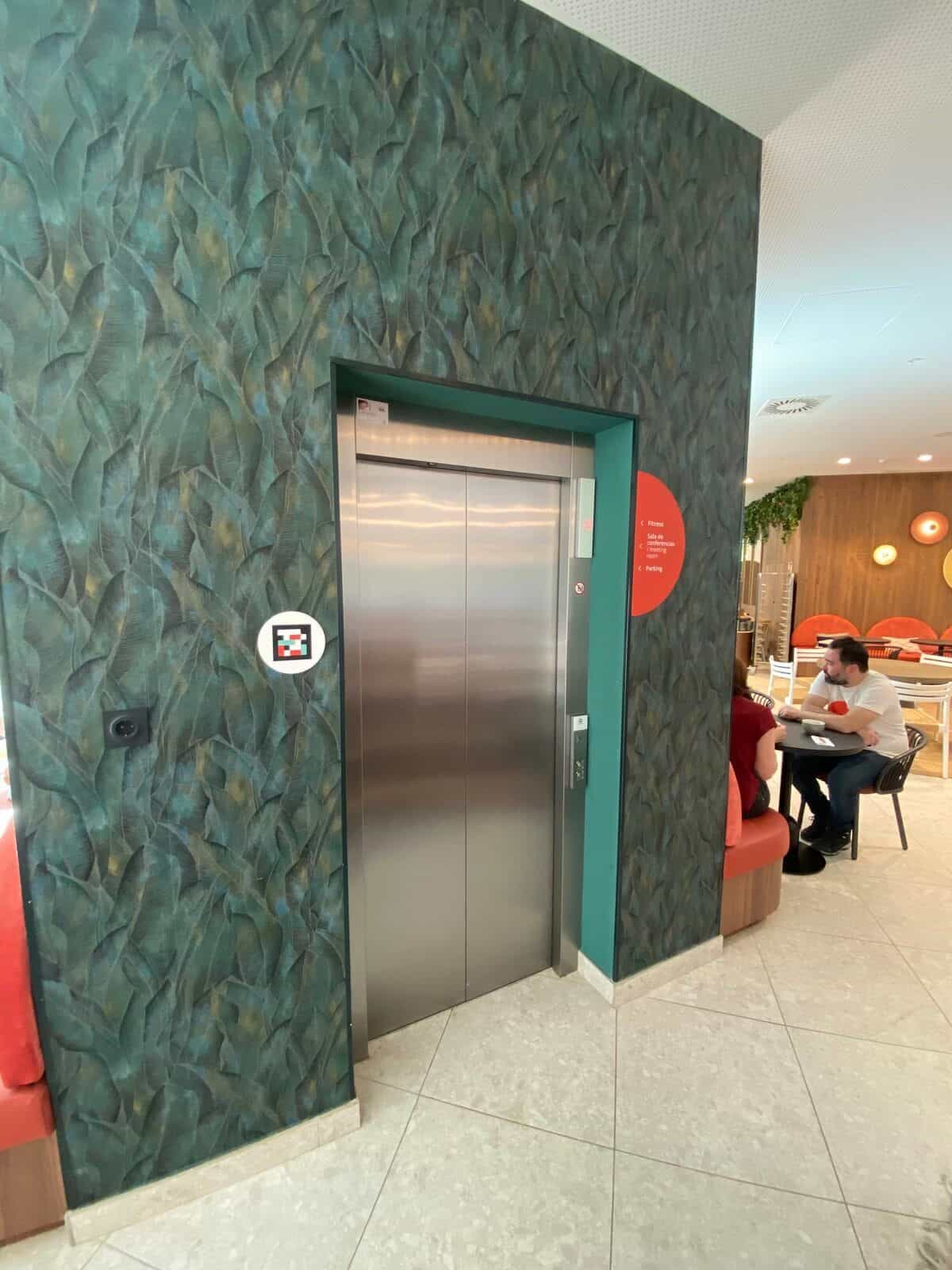
Lobby · Elevator to rooms
“Elevator to rooms, fitness, conference room and parking”
Next to the lobby elevator, the NaviLens code reads out the hotel directory and guides blind guests to the guest-room floors, the gym or the parking lot without needing to read the printed sign.
Elevator · Guest-room floor
“You're on the floor with rooms 45-82”
On stepping out of the elevator, the landing code confirms which floor the blind person is on and which range of rooms they will find left and right — no need to ask at reception.
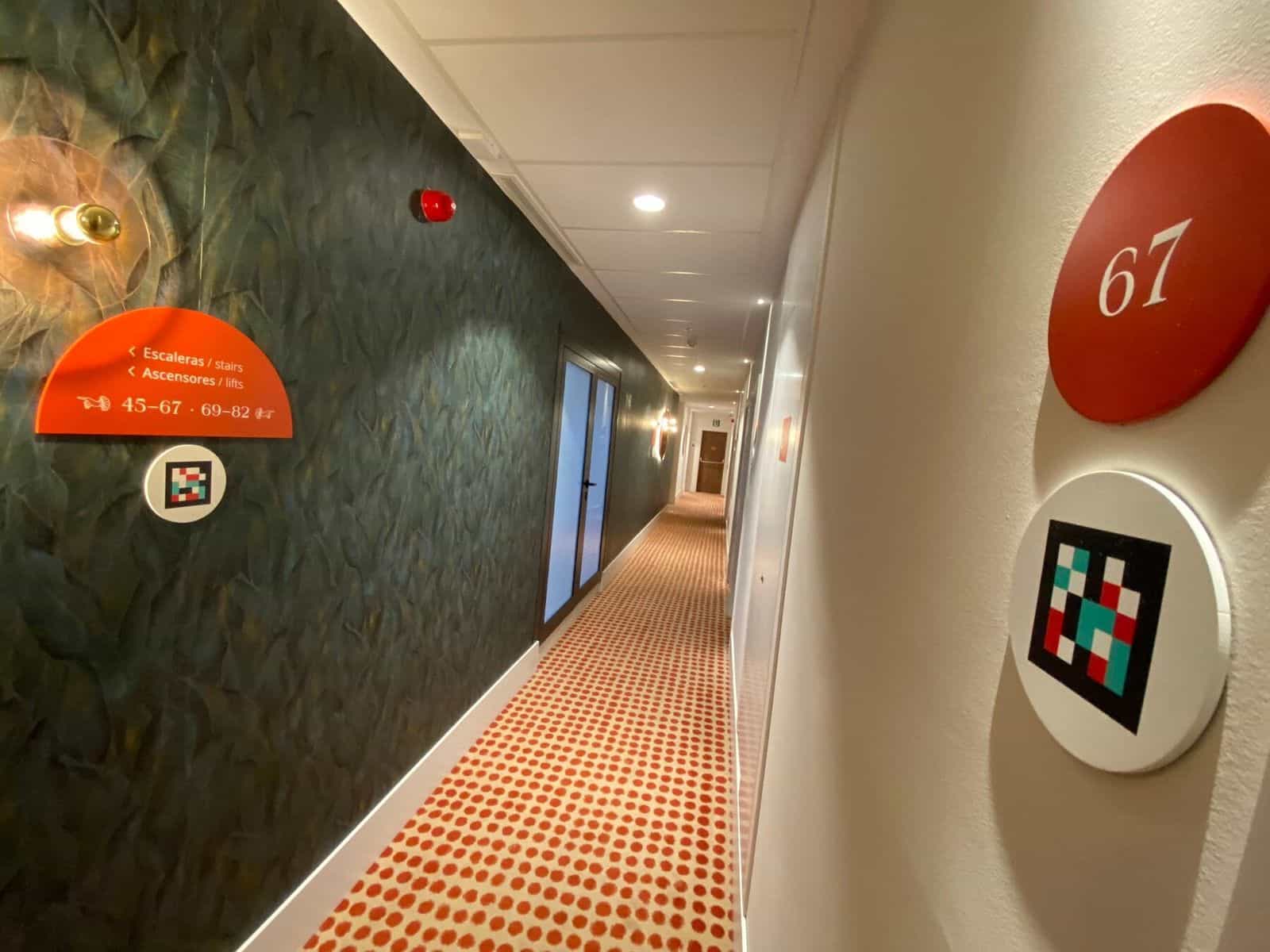
Wayfinding sign · Corridor junction
“Rooms 45-67 to the left, 69-82 at the end”
At every junction, the orange crescent visually indicates the room range; the NaviLens code reads exactly the same information aloud in the guest's language.
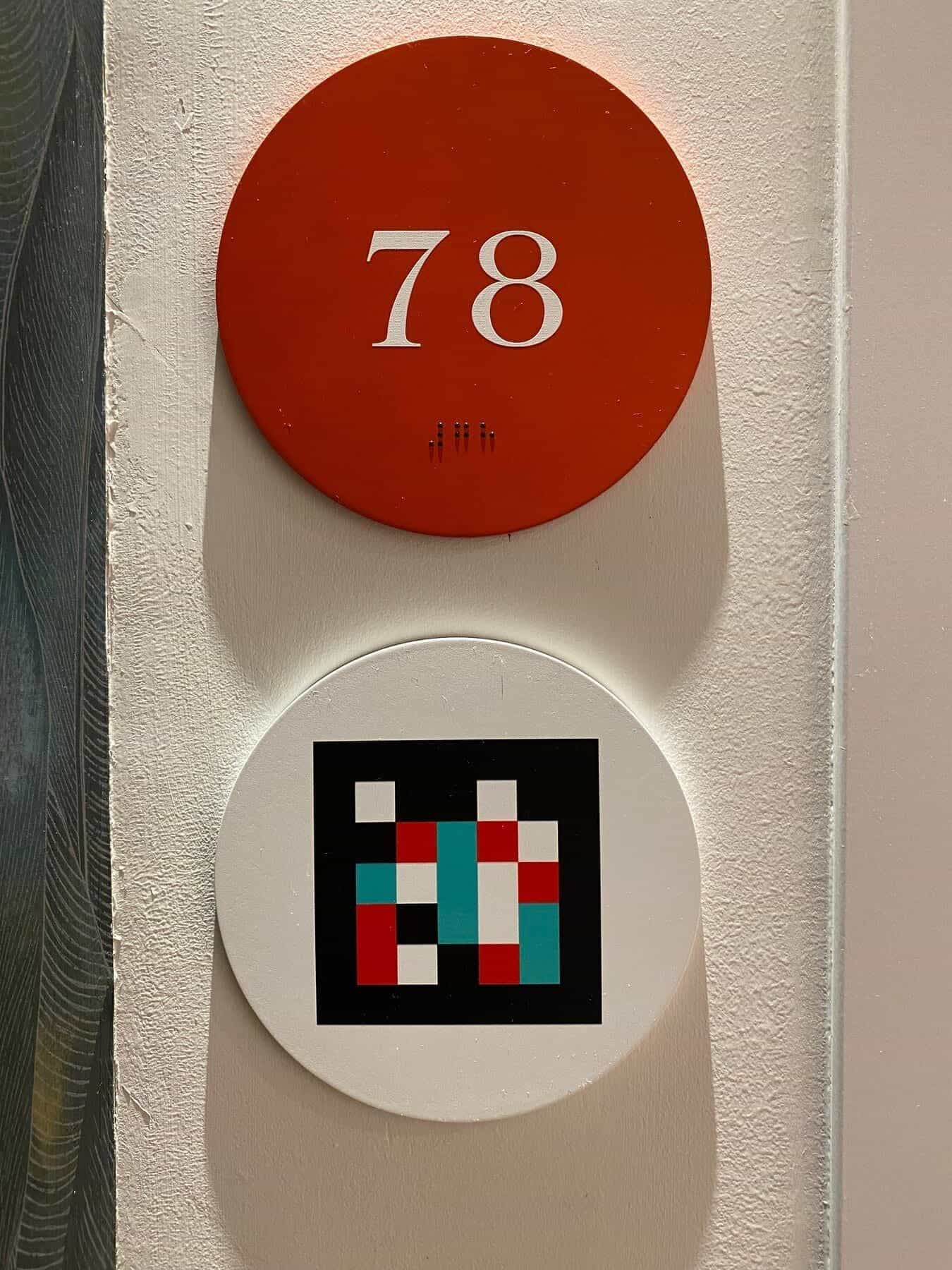
Corridor · Room 67
The corridor “announces itself”
Wayfinding signs and room numbers travel together. The blind person's app reads each code as they pass, like a quiet guide, until they find the right number.
Corridor · Rooms 60 and 61
Two doors facing each other, no confusion
When two doors face each other, the risk of mistake peaks. The NaviLens codes tell, without error, whether the guest is in front of Room 60 or Room 61.
Corridor · Rooms 75 and 73
Same pattern on every jamb, on every floor
The system is always the same: red disc with the number and, below or beside it, a white disc with the NaviLens code. Once learned, it works for all 218 rooms of the hotel.
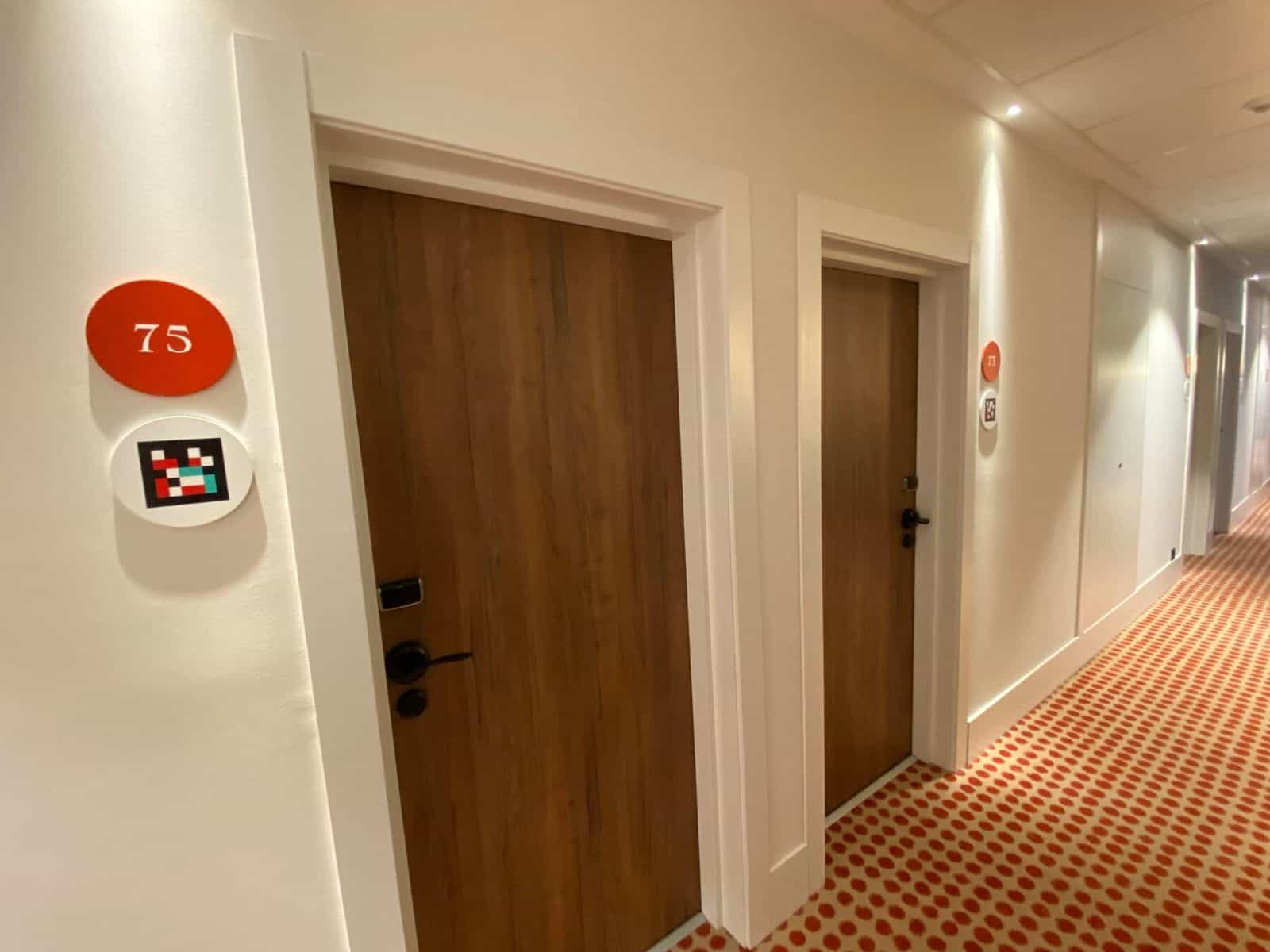
Arrival · Room 78
“You've reached your room”
The phone plays an approach tone, announces the number and confirms it's the booked room. The guest taps the card and walks in. Journey completed independently.
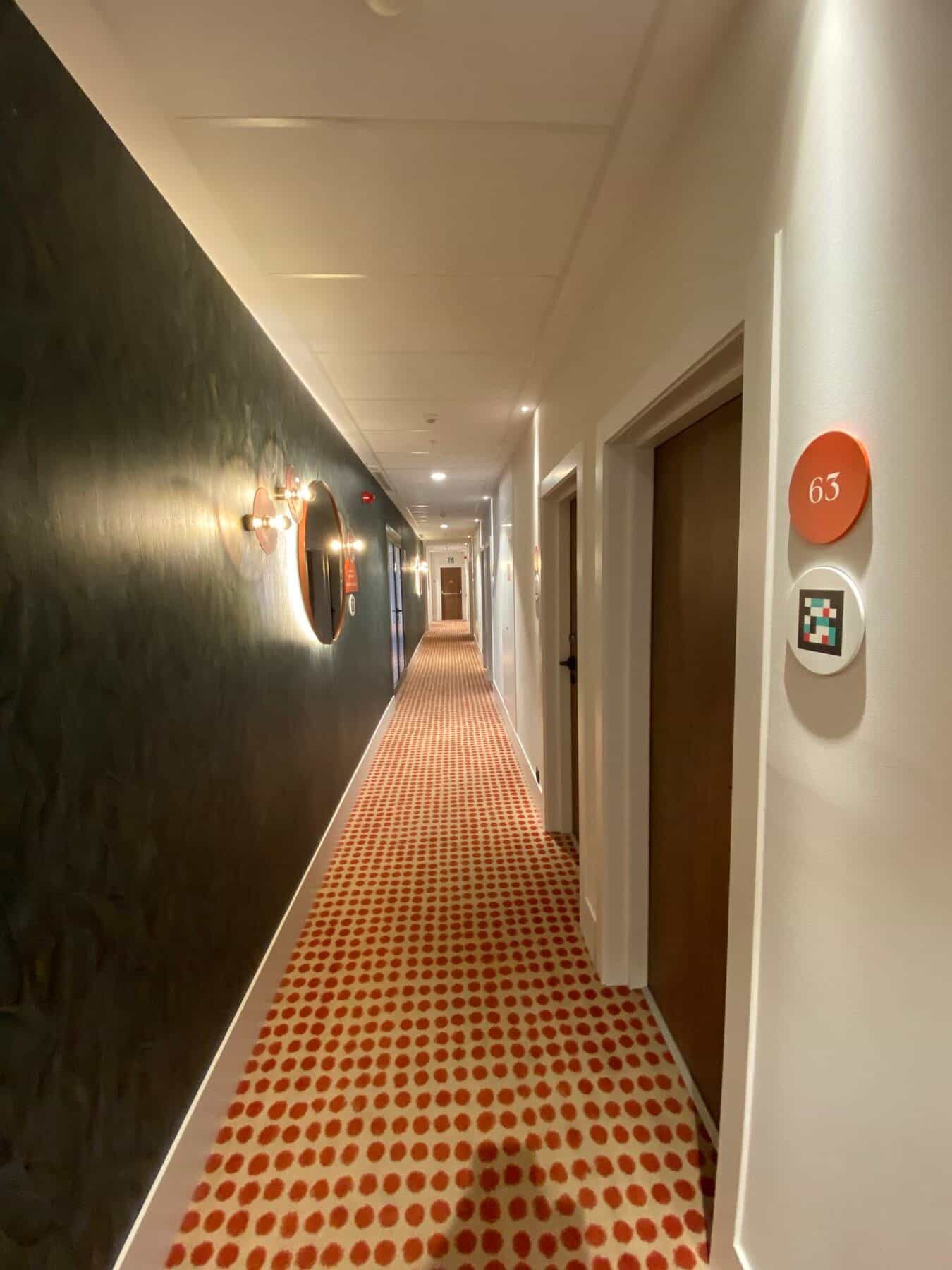
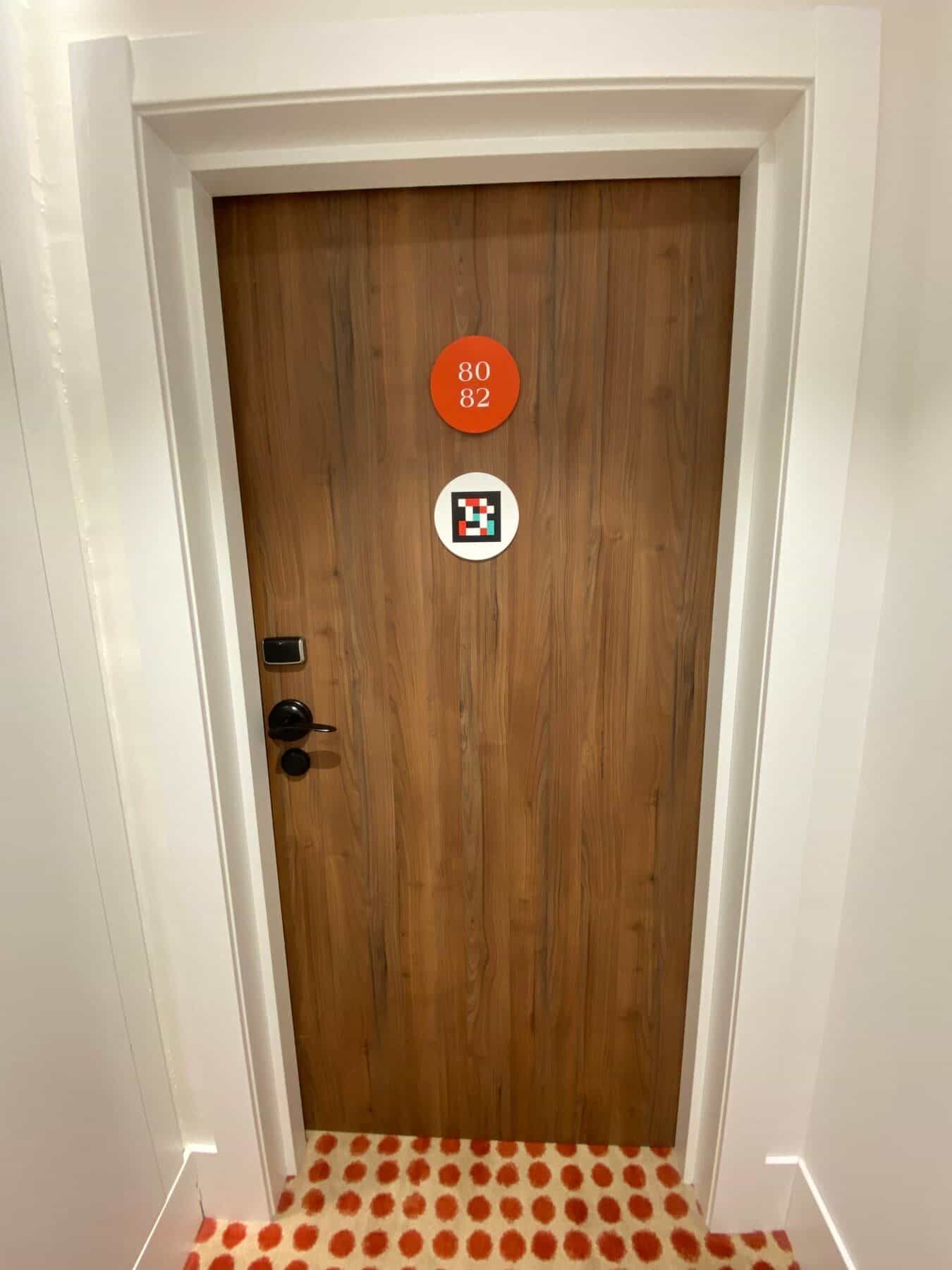
Accessible room · 80 / 82
Connecting room, also via voice
Room 80/82 (a connecting / accessible room) carries both numbers on the same disc; the NaviLens code reads both and announces that it is a room with a special configuration.
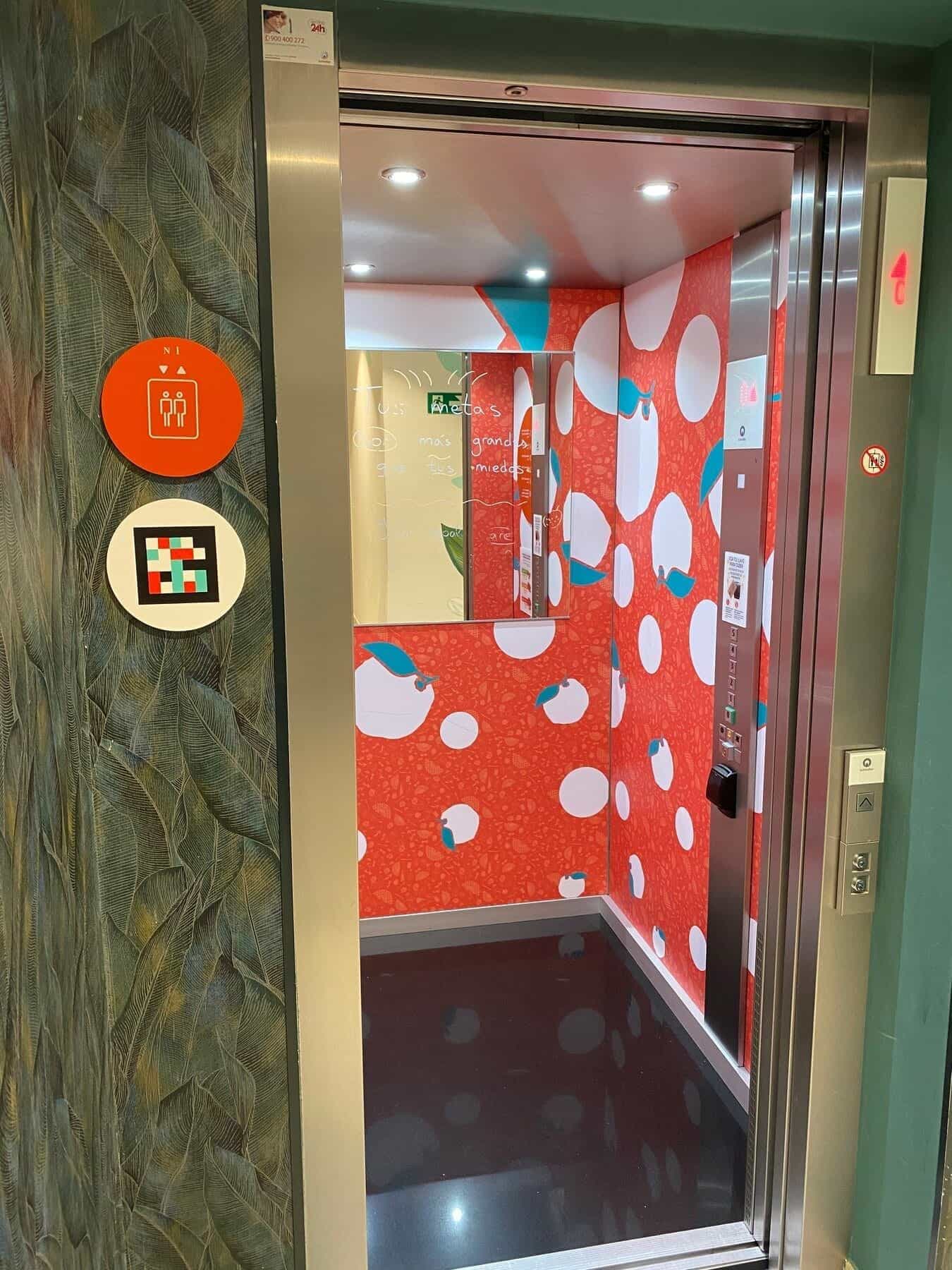
Corridor view · Room 63
218 rooms, one single visual grammar
The same graphic language—red disc + braille + NaviLens code—repeats on every floor and every wing. What a blind person learns at their first door works for the whole hotel.
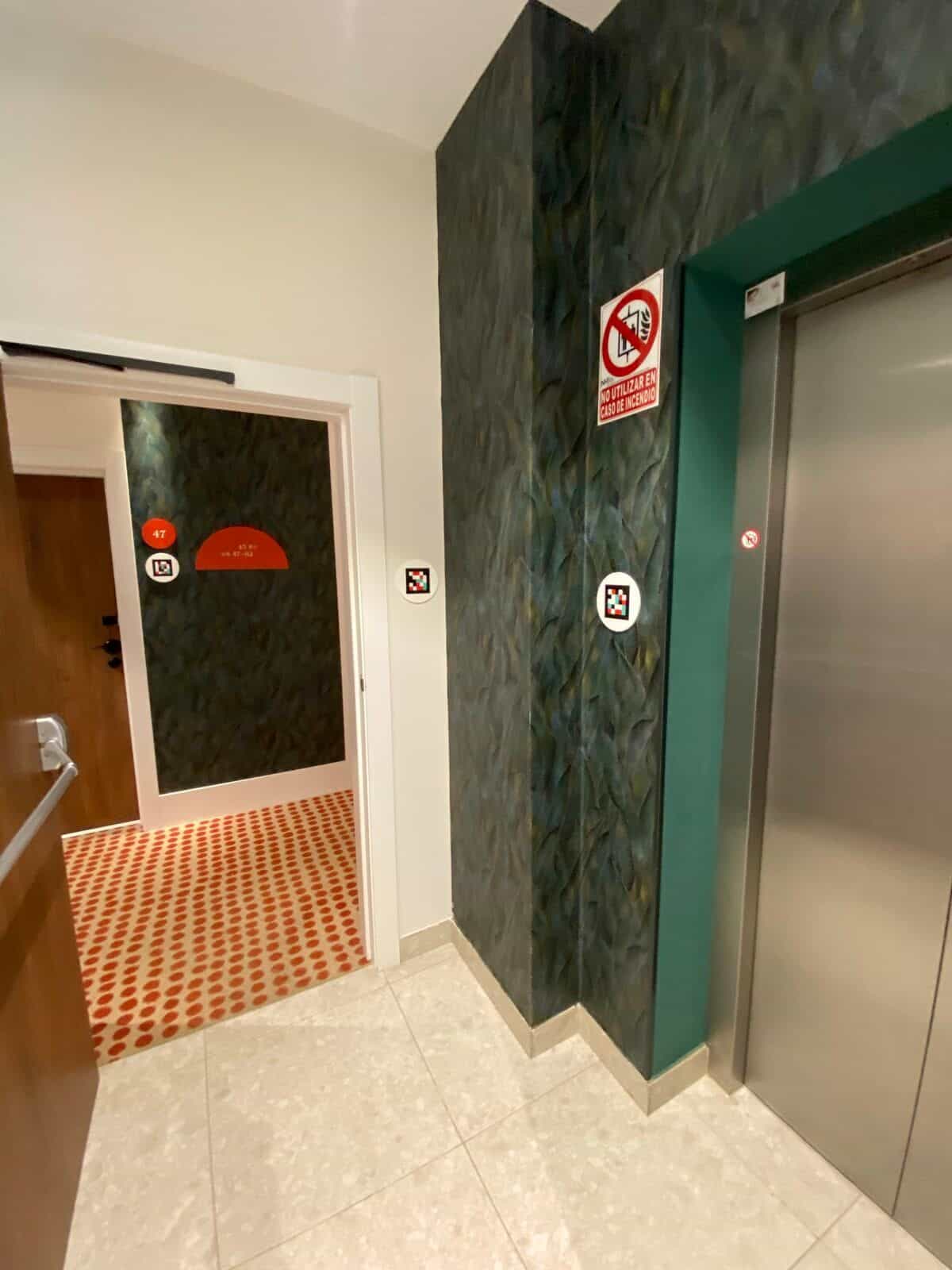
Landing · Elevator + sign + jamb
Three codes in sixteen feet
On stepping out of the elevator, the blind person finds a code on the elevator itself, another on the landing wall and a third on the first jamb (47). The system covers every decision: “is this the floor?”, “which way?”, “is this the door?”.
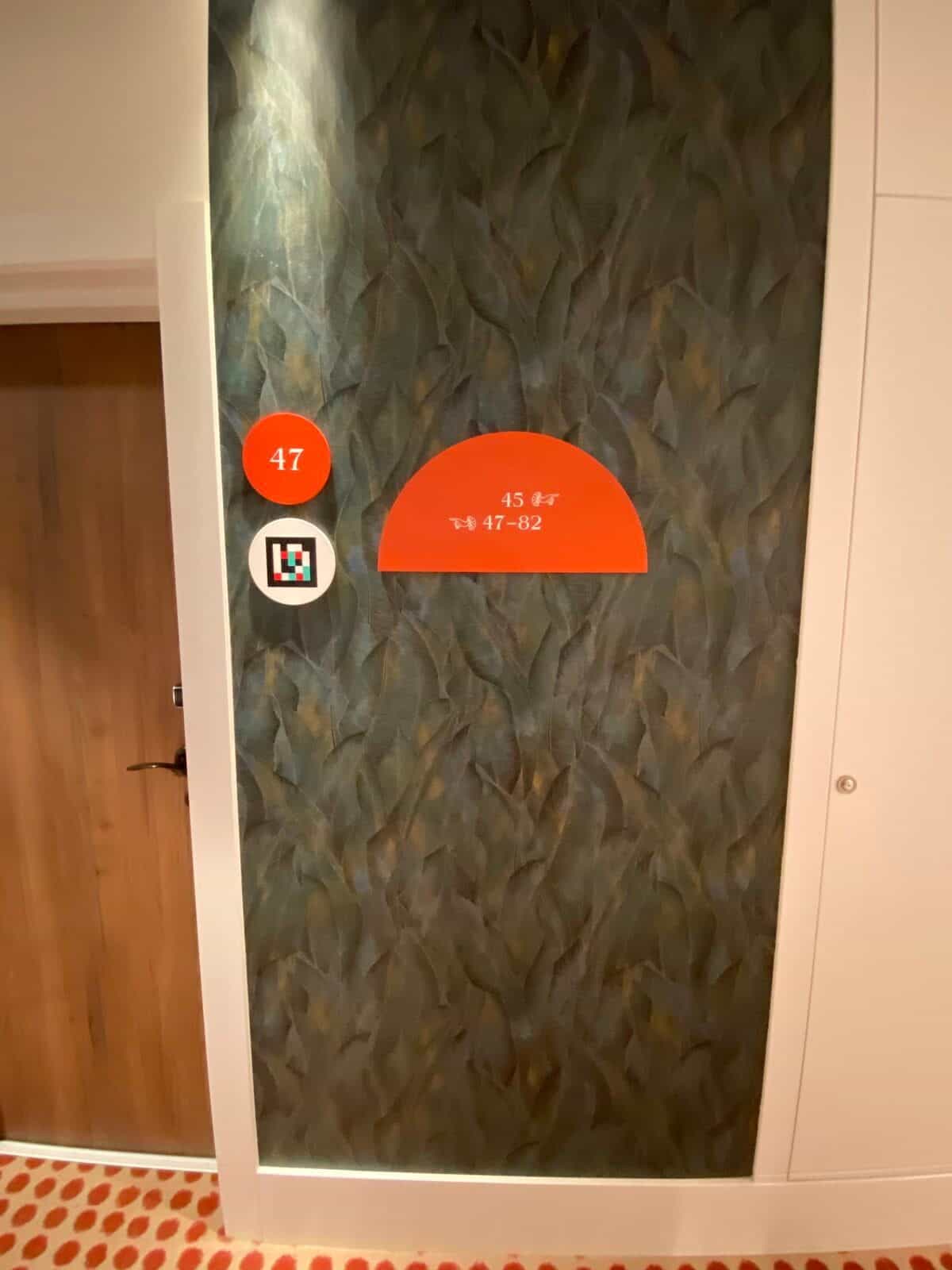
Jamb 47 · Combined wayfinding
Room number and wayfinding on the same jamb
On the first rooms of each floor, the jamb combines the door number with the “45 · 47-82” wayfinding cue. The NaviLens code reads both layers: where you are and what lies beyond.
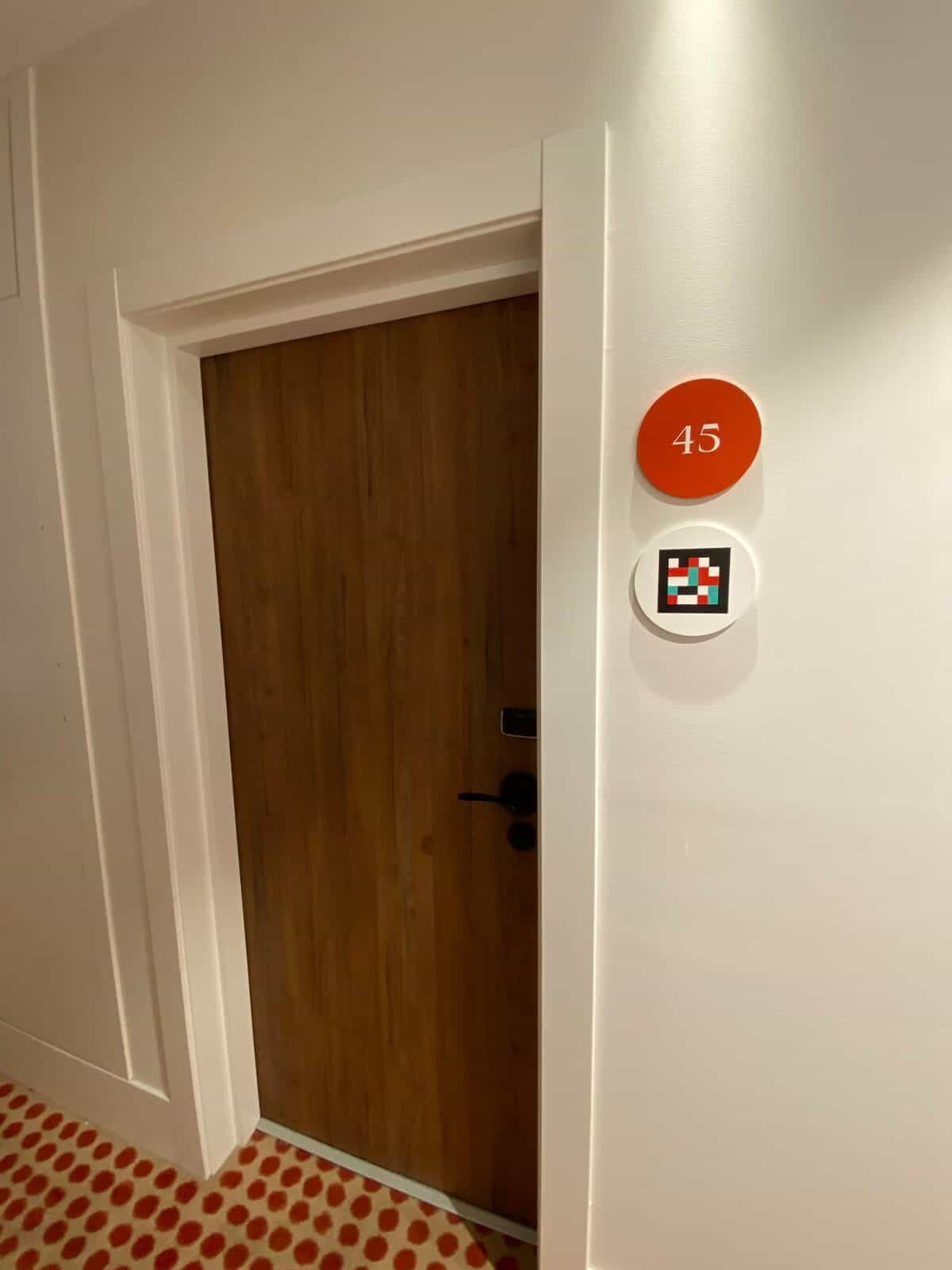
Room 45 · Start of floor
“Room 45”
Same language at every door: disc with the number and NaviLens code below. The blind person does not need to memorise where each room is — the app names it as they walk past.
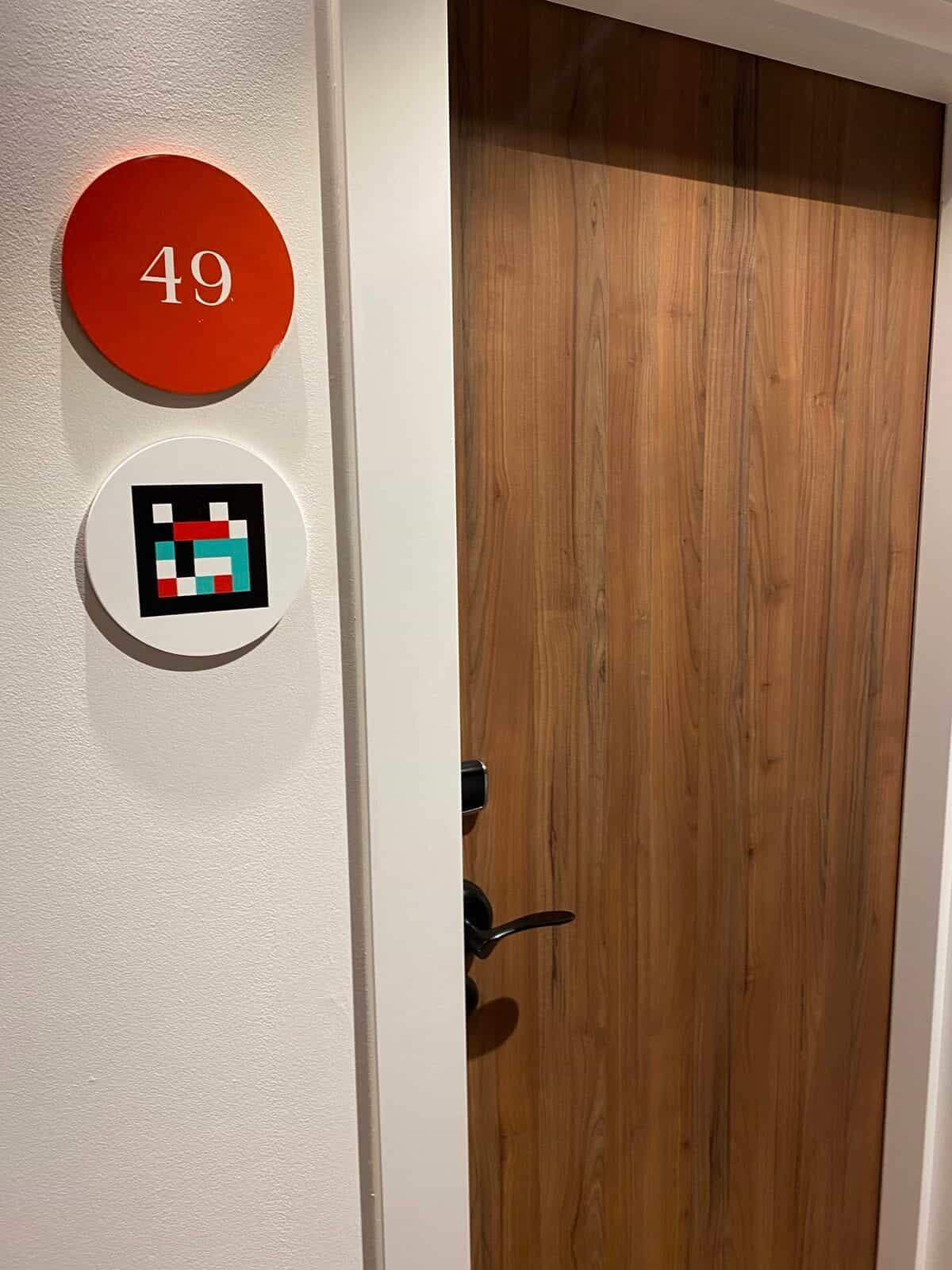
Room 49 · Jamb close-up
The same pair repeated 218 times
Orange disc with the number and NaviLens code. Each of the hotel's 218 rooms follows exactly the same pattern — a single grammar to learn.
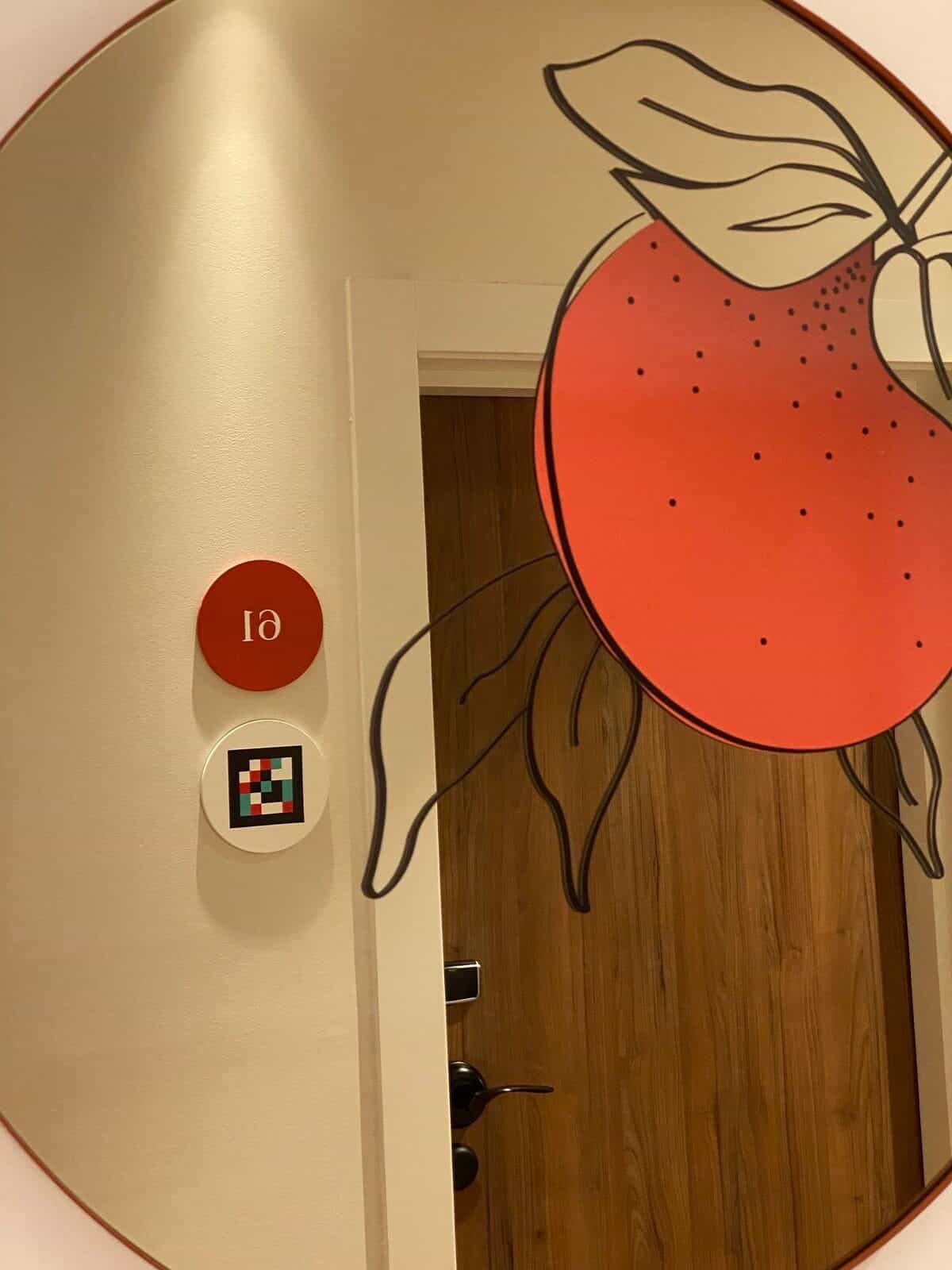
Room 61 · Corridor mirror
The code also works in the reflection
Even when the number sign is seen from behind or at an awkward angle, the NaviLens code is legible by the phone in tough conditions: from several yards, on the move or via a mirror.
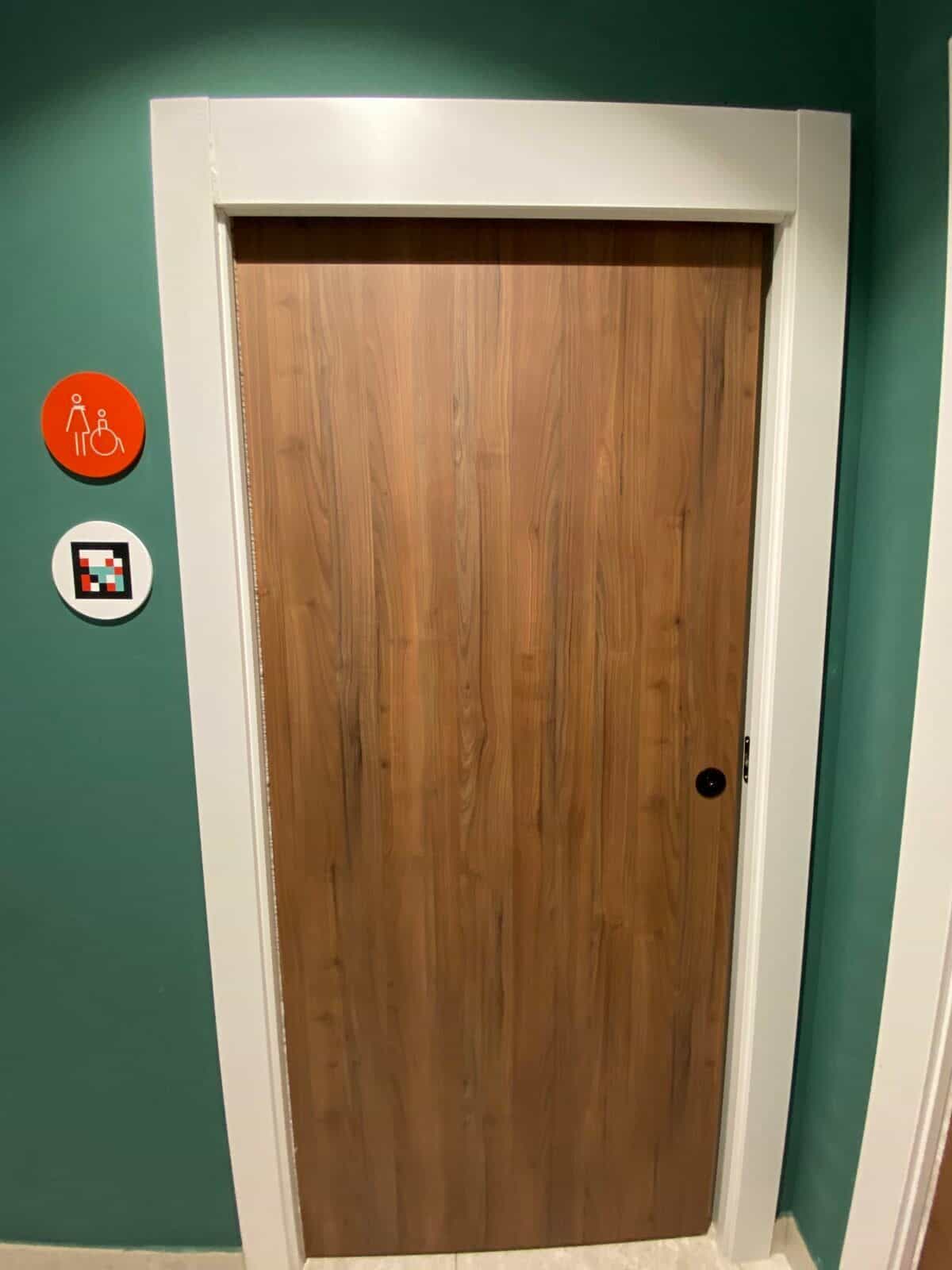
Accessible WC · Common areas
“Accessible shared restroom”
The shared accessible restrooms also carry a NaviLens code. The blind person can locate them at a distance — no need to touch doors to identify which one is the restroom or of what type.
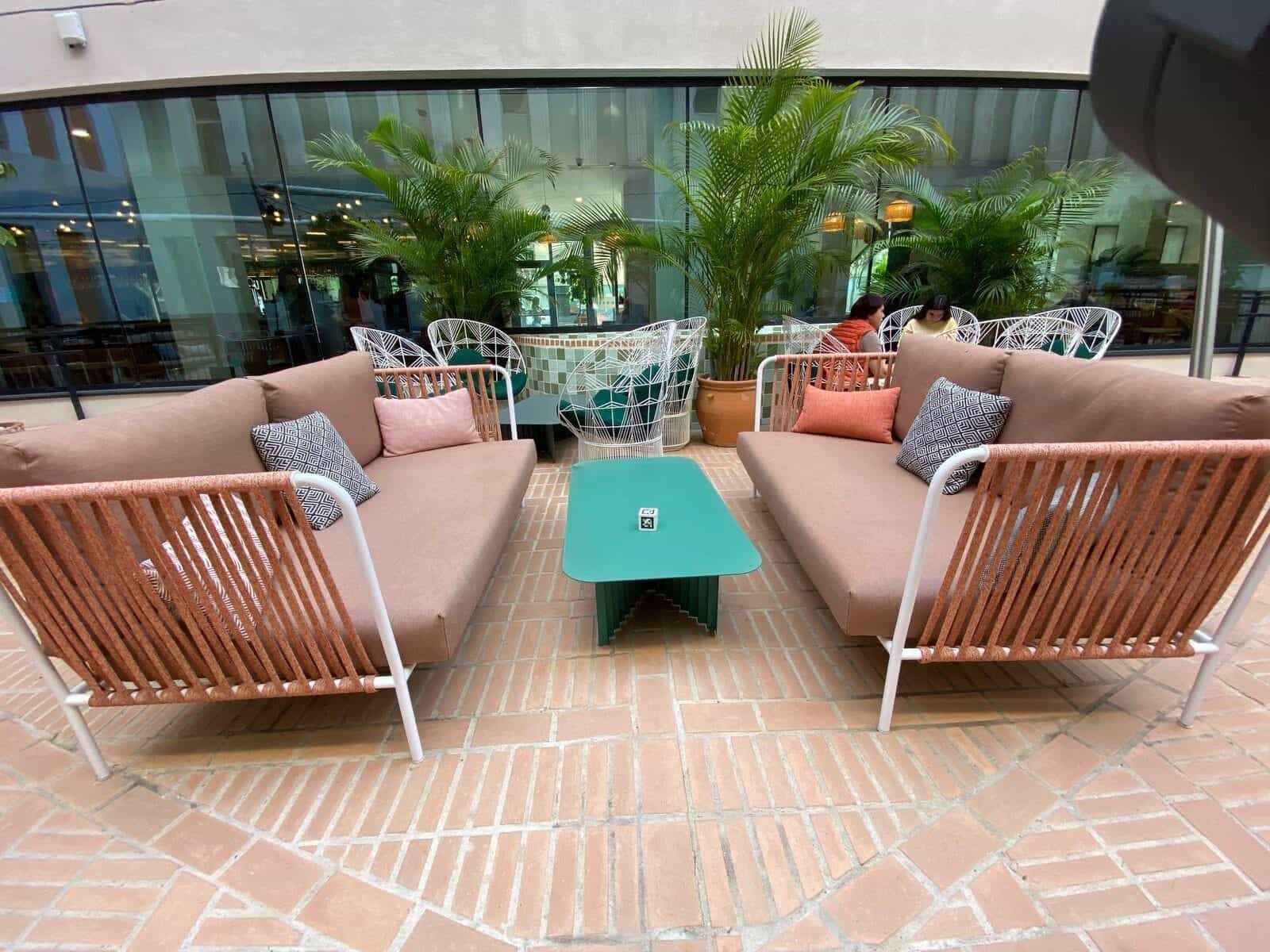
Patio · Social area
“You're in the hotel's Andalusian patio”
In the interior patio—a nod to the Andalusian orange-tree courtyard—a cube with a NaviLens code on the table describes the space: sofas, palms, restaurant access. The blind person can sit down and gradually understand where they are.
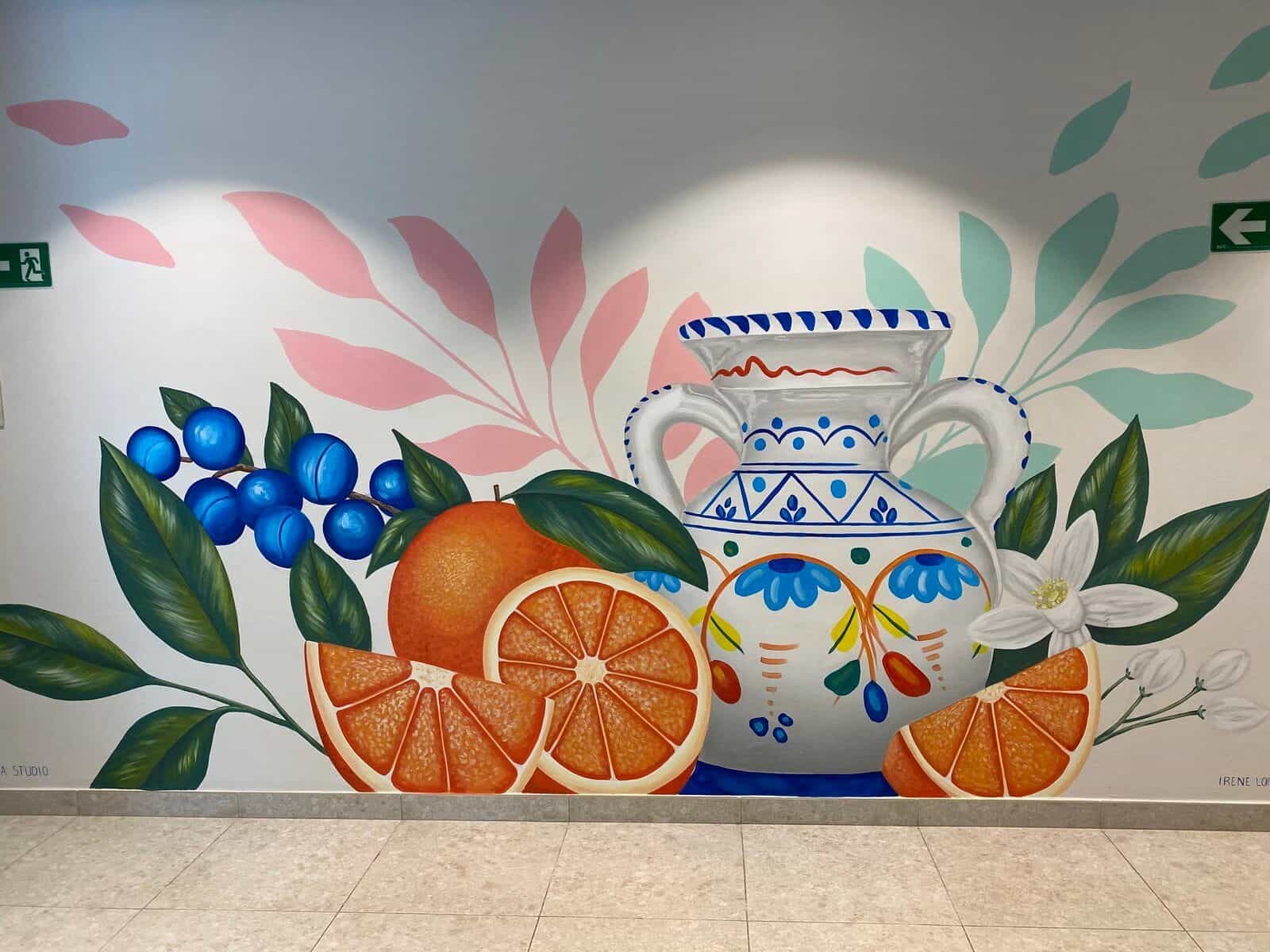
Mural · Andalusian identity
The hotel's story is also told aloud
The hotel's interior—orange-tree murals, Triana ceramics, elevator cabin with orange polka dots—is translated into an accessible experience: NaviLens lets blind guests learn what they are seeing and why this hotel feels “Sevillian”.
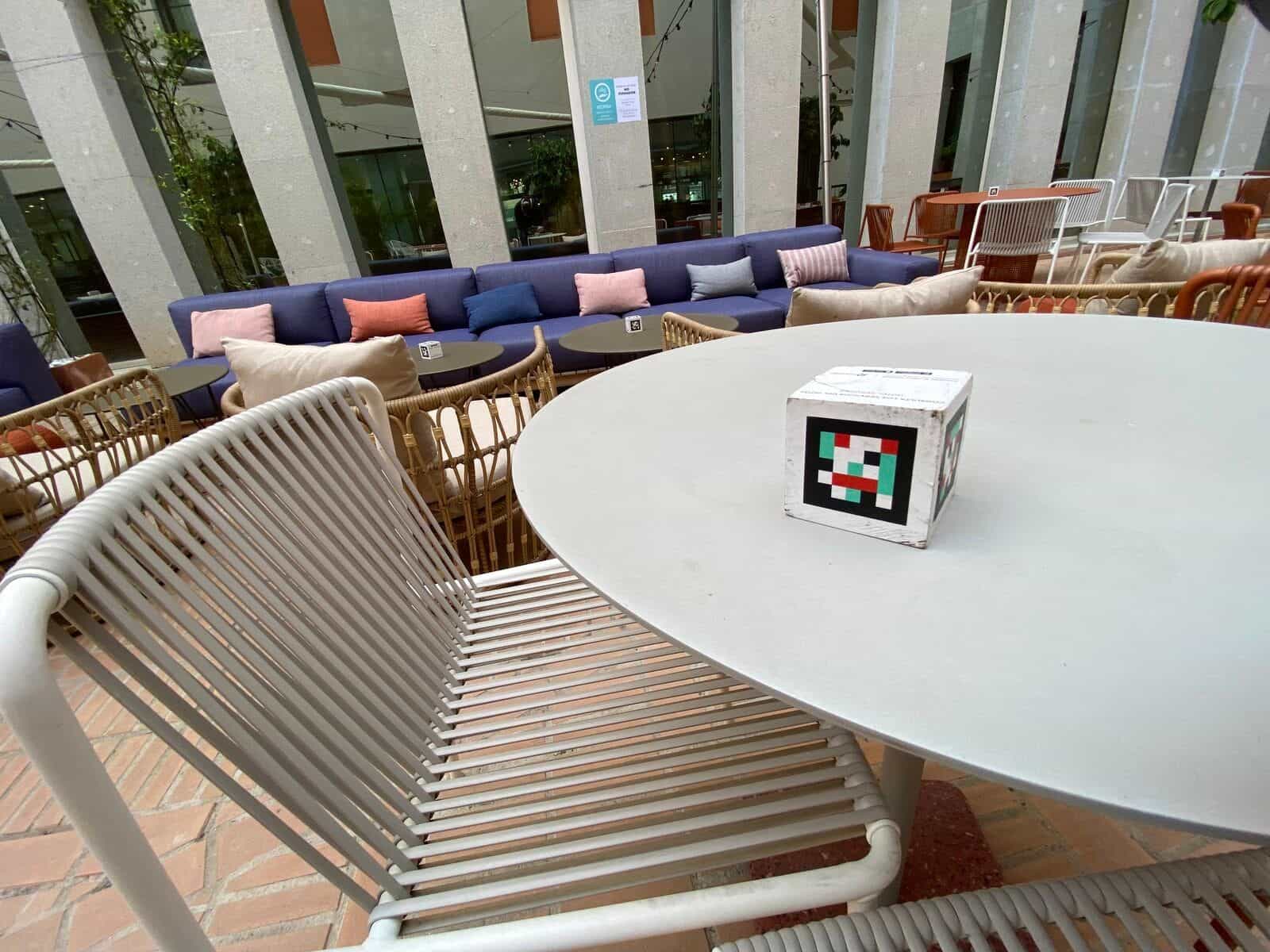
Lounge-bar · NaviLens cubes on each table
One code per table, not just on the walls
In the lounge-bar the hotel places a NaviLens cube on every table: the blind guest who sits down does not need to look for signage on the wall — they can scan from their seat.
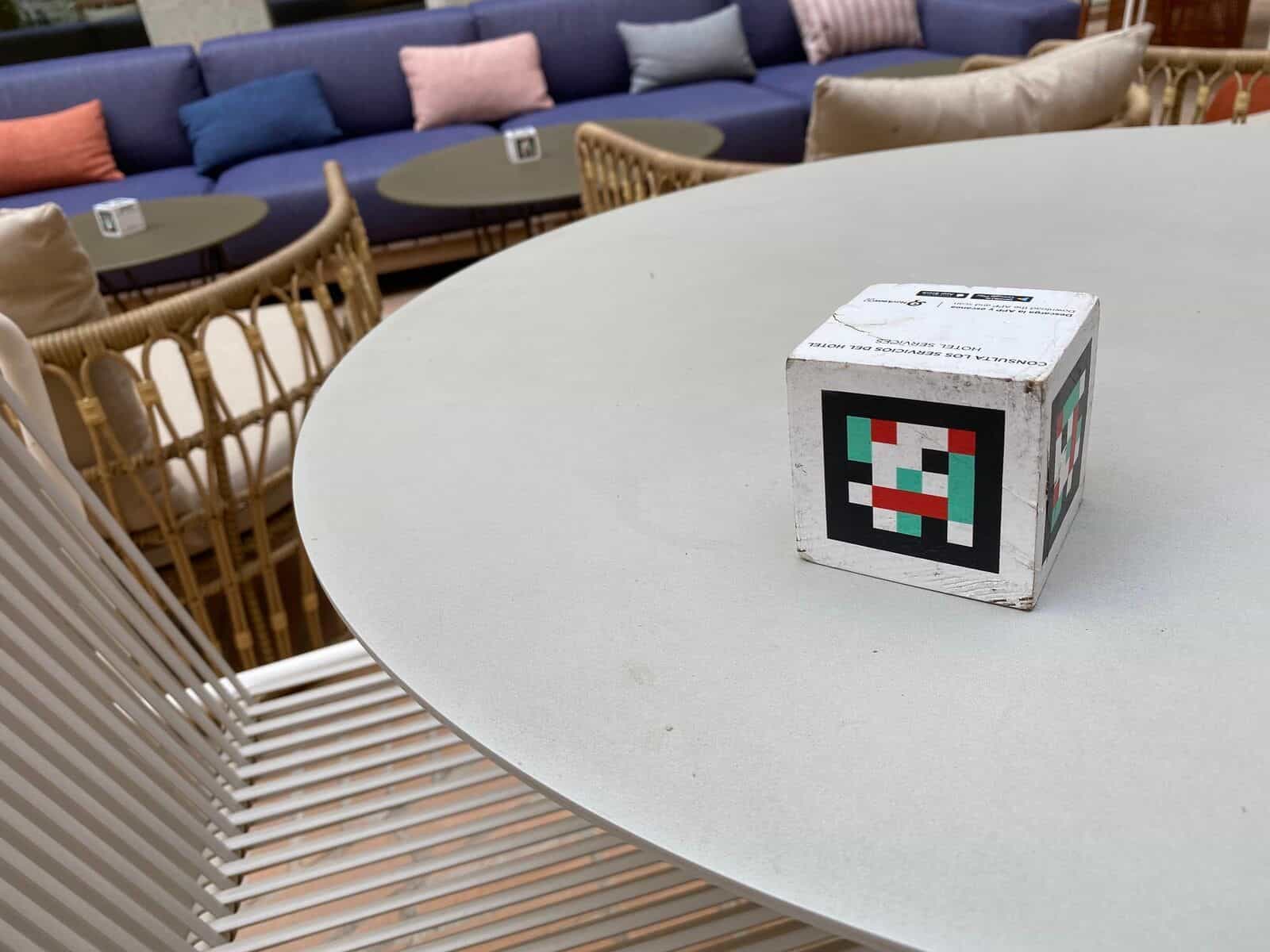
Bar table · NaviLens cube
“Check the hotel services”
The cube reads “Hotel services · Download the app and scan”. It works as an accessible menu and as the gateway to all the hotel's information without having to go to reception.
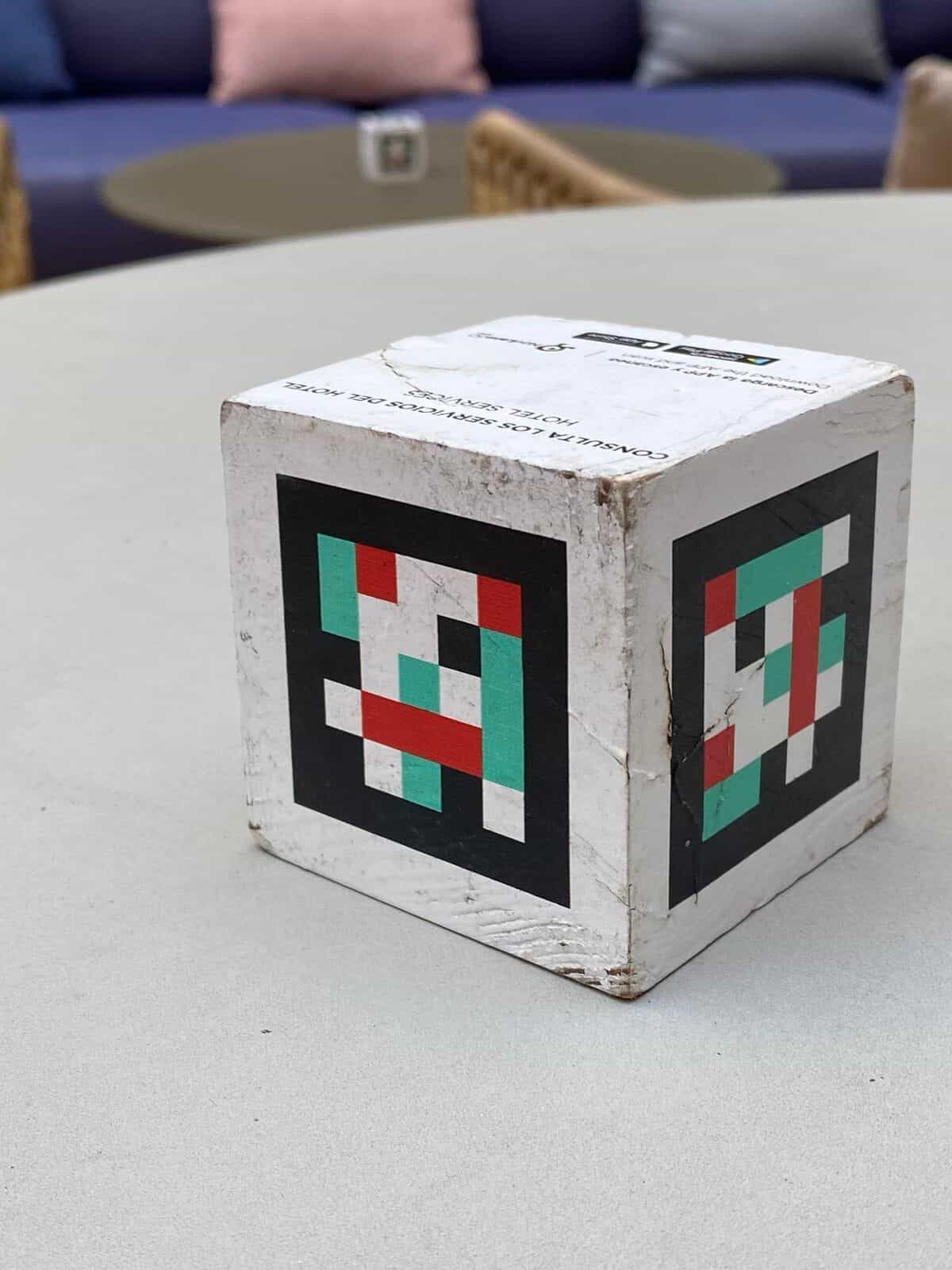
Close-up · NaviLens cube
Three faces, all legible from several yards
The cube exposes three faces simultaneously: the code can be read from almost any angle, even in uneven light or with the camera moving. It replaces the printed menu for guests who cannot read it — blind, low-vision or non-native speakers.
§ What they said
“The new ibis Styles hotel is right next to Sevilla-Santa Justa high-speed station. Its modern design evokes Andalusian orange-tree patios. Its 218 rooms offer top comfort with “Sweet Bed by ibis” beds.”
“Seville City Council has announced a project to install 800 NaviLens codes across the city to improve orientation and mobility for residents and tourists with visual impairment.”
“ILUNION Accesibilidad has incorporated NaviLens codes as accessible signage so that blind and blind and low-vision people can locate the different spaces of the Hotel Technology Institute (ITH) at FITUR.”
§ And your destination?
Your destination can also guide in 42 languages.
Tell us about your trails, visitor centers, landmarks or galleries. We’ll show you how NaviLens would make your offering accessible—with comparable cases.