Case study · History Museum on the Square · Springfield, Missouri
When the downtown museum starts telling itself out loud.
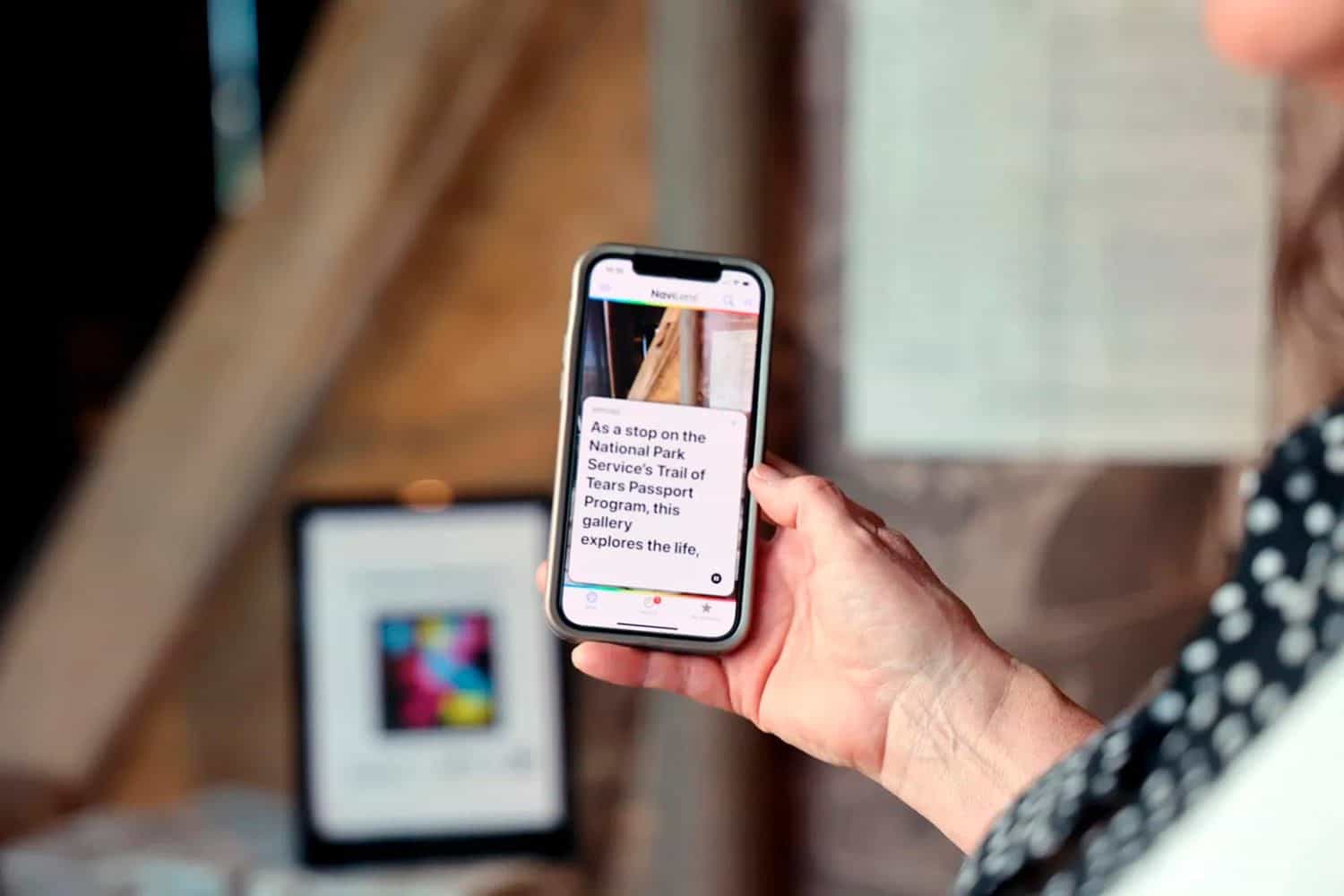
In March 2024, the History Museum on the Square (Springfield, Missouri) turned on NaviLens on its first floor with Mary's Braille International. From reception to the Native Crossroads gallery—a stop on the Trail of Tears Passport Program from the National Park Service—, any blind visitor scans a code and hears the full label.
March 2024
NaviLens rollout on the museum's first floor
Mary's Braille
Deployment driven by Mary's Braille International (Springfield, MO)
Trail of Tears
National Park Service Passport Program gallery included in the system
Square 154
154 Park Central Square — the historic heart of downtown Springfield
Client
History Museum on the Square
Springfield · Missouri · USA
The History Museum on the Square is Springfield's local history museum, set in the historic Fox Theatre building at 154 Park Central Square, in the heart of downtown. Its rooms walk through the history of the Ozarks: from the Indigenous presence before European settlement—including the Trail of Tears—to commerce, Route 66 and contemporary Springfield.
In March 2024 the museum partnered with Mary's Braille International, a local organization that “wants Springfield to be a national reference for accessible cultural experiences”. Coverage was immediate: Springfield News-Leader, KY3, KSMU Ozarks Public Radio, Springfield Business Journal and 417 Magazine all published pieces in the same week.
§ The solution
A scannable label at every stop along the route.
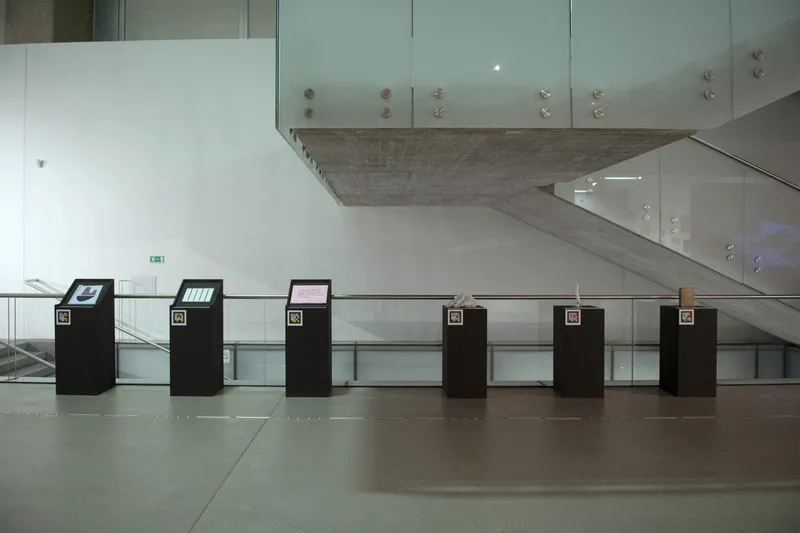
Mary's Braille and the museum printed NaviLens codes on black-framed signs spread across the first floor: at reception, at every exhibit entrance—“Exhibit Entrance”—and beside the most relevant pieces, such as the Native Crossroads at the Springs gallery, an official stop on the Trail of Tears Passport Program from the National Park Service.
The visitor points the phone from several yards away and the app reads the full label in their language. Any blind person can walk the museum without a human guide, and any sighted visitor can listen to the information while looking at the piece.
§ Walk-through
From reception to the tipi, told out loud.
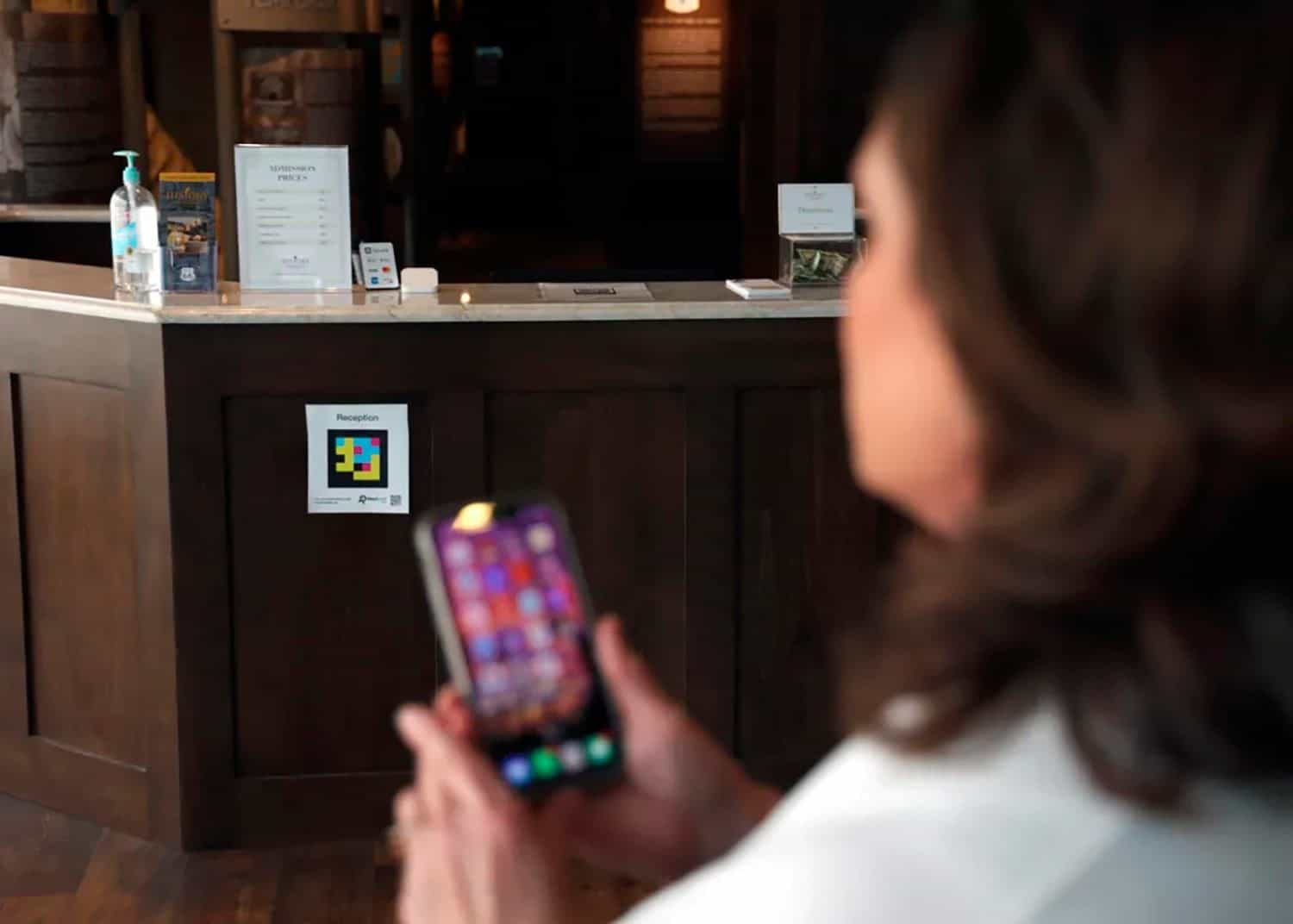
Reception · Counter
“Reception”
The museum's first code is on the reception counter. A blind visitor arriving alone scans from several steps away before approaching and the app confirms reception is ahead, with admission rates and services.
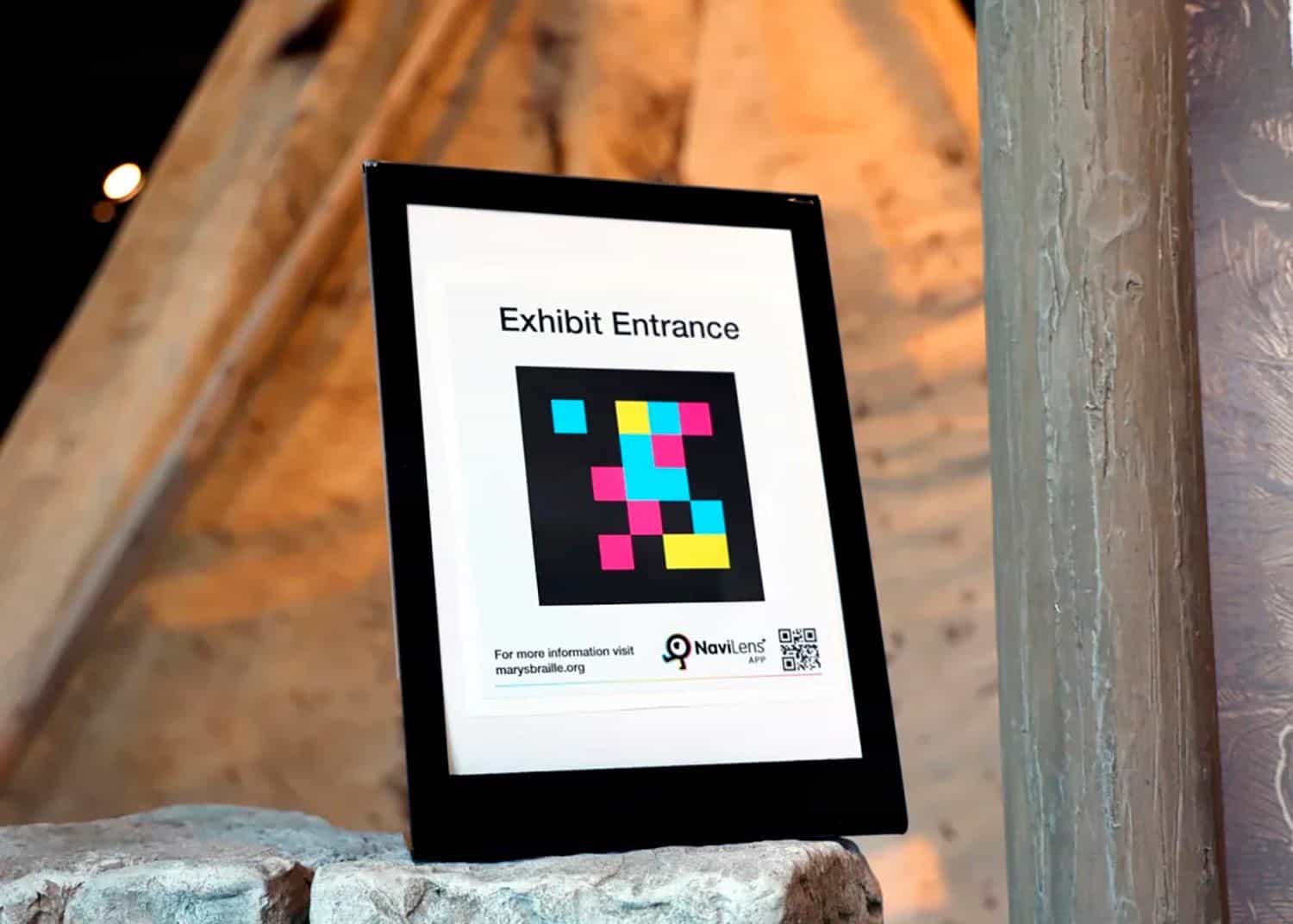
Room entrance · Mary's Braille
“Exhibit Entrance”
At every room entrance an identical sign: black frame, English heading and NaviLens code. The footer points to marysbraille.org, the local organization coordinating the rollout: the museum isn't improvising, there's a team behind it.
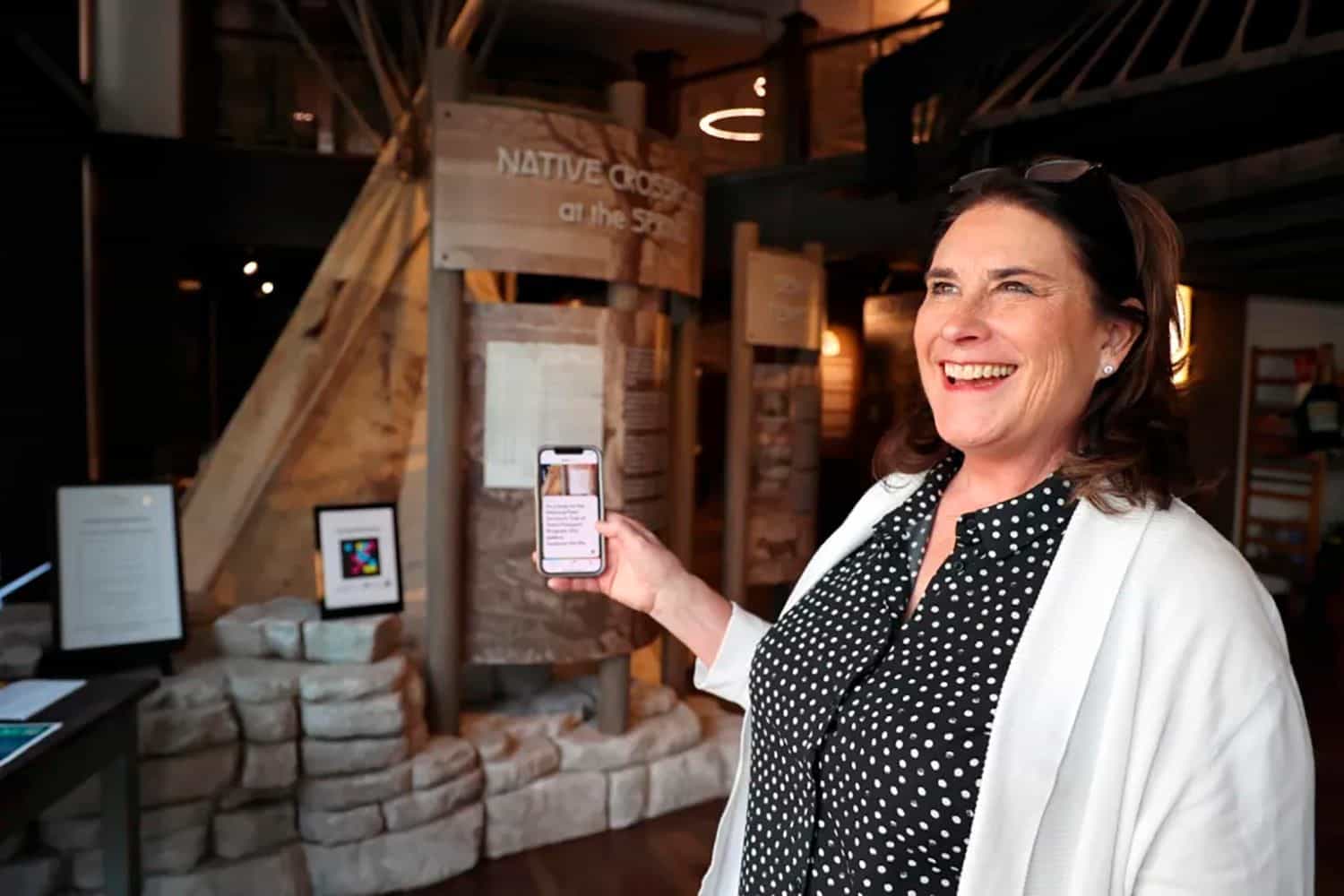
Native Crossroads room · Tipi
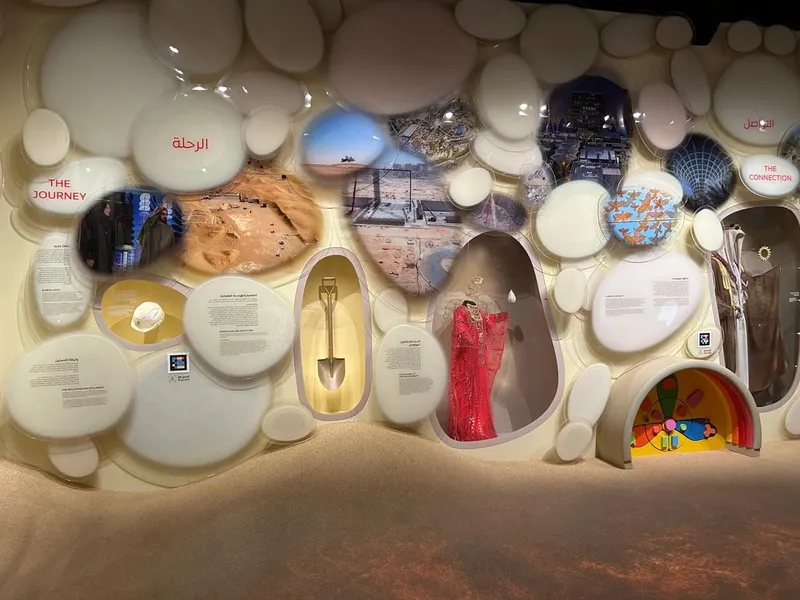
“Trail of Tears Passport Program”
In the room about the crossing of Indigenous peoples in the Ozarks, the code beside the tipi links to the Trail of Tears Passport Program from the National Park Service. The label tells the story, NaviLens reads it out, and the visitor watches the piece without losing the thread.
App · Label read aloud
“As a stop on the National Park Service's Trail of Tears…”
The app delivers the full label on screen and by voice: same information as the printed lectern, unfiltered and unabridged. For the low-vision visitor who can no longer get close to the sign, this is the whole museum.
Facade · 154 Park Central Square
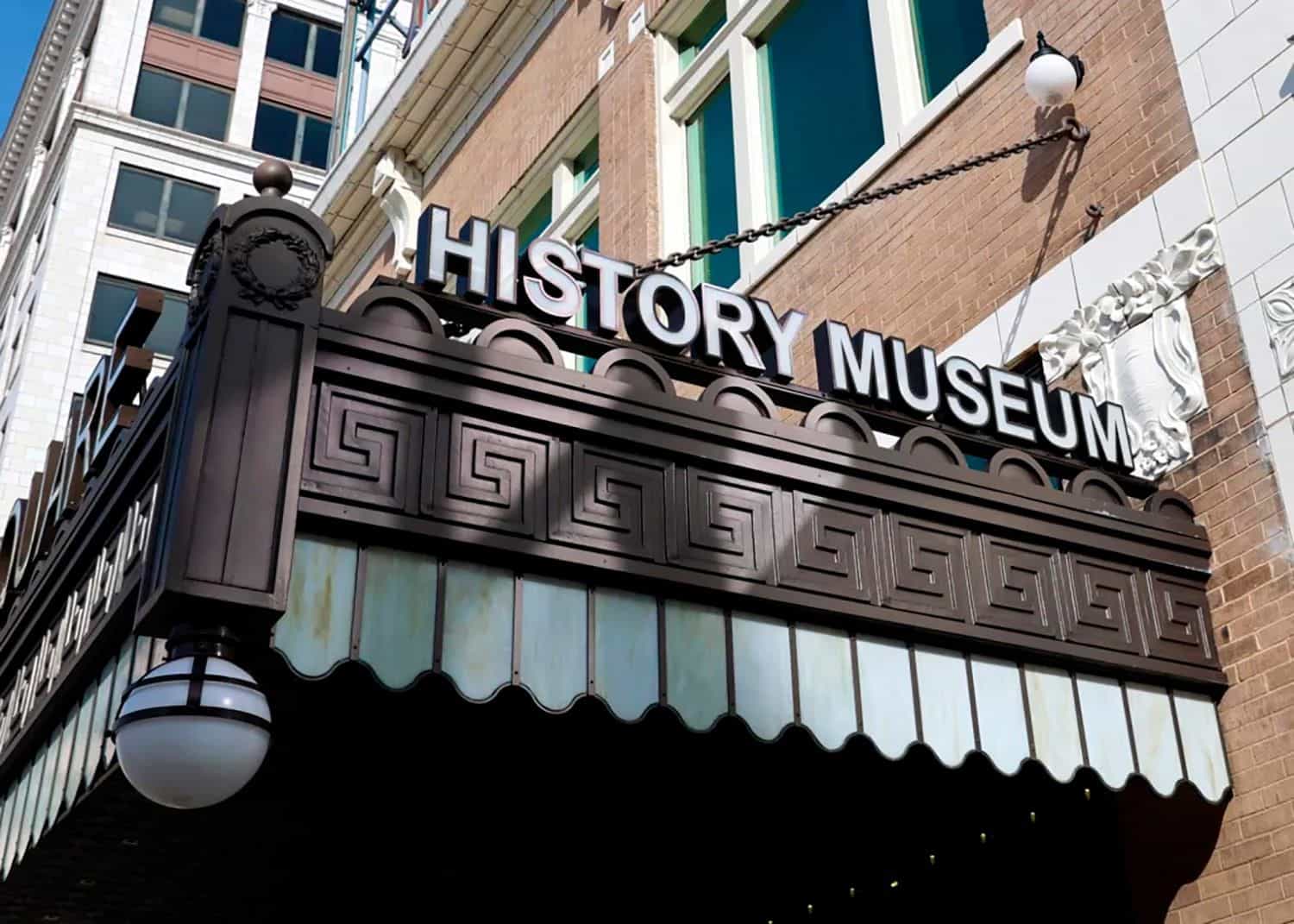
The museum in the heart of downtown
The historic Fox Theatre building hosts the museum on Park Central Square. NaviLens accessibility completes the wider inclusion plan the museum describes on its Accessibility page: ramps, seating, audio and, now, digital labels.
The deployment is part of a wider Mary's Braille International initiative in Springfield, which has also brought NaviLens to the offices of local agency Empower: Abilities, as reported by the Springfield Business Journal.
§ What they said
“The Springfield History Museum on the Square is offering more accessibility for visitors who are visually impaired. It uses an app called NaviLens. The program uses QR codes with colored patterns instead of black and white, which allows phones to scan them from much farther away and at different angles.”
“History Museum on the Square has implemented a digital signage system on its first floor designed to help those with visual impairments navigate the exhibits using NaviLens, an app that reads colored marker codes from a distance.”
“Charlotte McCoy thought the History Museum on the Square was already accessible. But a visit from the Springfield chapter of the National Federation of the Blind made clear there was more work to do — and now the museum's first floor uses NaviLens so visitors who are blind or visually impaired can scan colored marker codes and hear the exhibit labels.”
“NaviLens provides an inclusive experience for the visually impaired by allowing guests to scan QR codes for information. The History Museum on the Square has been using the program to enhance the guest experience and provide more accessibility to the museum's exhibits.”
§ And your destination?
Your destination can also guide in 42 languages.
Tell us about your trails, visitor centers, landmarks or galleries. We’ll show you how NaviLens would make your offering accessible—with comparable cases.