Case study · Cartagena, Spain
Roman Theatre Museum — a Moneo
that tells itself.
How MUSTER, with the Roman Theatre Foundation and Cartagena City Council, made reception, totems, audioguide and galleries accessible with NaviLens in 42 languages.
MUSTER
Roman Theatre Museum of Cartagena (Rafael Moneo)
Foundation
Roman Theatre Foundation · Cartagena City Council
July 2018
Pioneering: ~50 NaviLens markers across rooms and route
42
Languages with voice readout · synced with the audioguide
The client
Roman Theatre Foundation
Cartagena City Council
The Roman Theatre Museum of Cartagena (MUSTER)—designed by Rafael Moneo—is a journey that starts at the Pascual de Riquelme Palace and ends in the cavea of the Roman theatre itself. It is run by the Roman Theatre Foundation of Cartagena, together with the City Council.
With NaviLens, that journey becomes a museum that tells itself: reception, directional totems, numbered audioguide, temporary exhibitions and services can all be read aloud, in any language.
The launch was covered on 9–10 July 2018: the Roman Theatre Museum installed 50 NaviLens markers—"detected by the phone, they warn of obstacles and distances and offer information about the exhibited pieces"—becoming one of the first archaeological museums in Spain to adopt it (La Verdad, EFE).
§ The challenge
Letting the museum and the theatre speak in unison.
- 01
An itinerary-museum over the ruins
MUSTER is not a single room: it is a sequence designed by Rafael Moneo linking reception, galleries, corridors, temporary exhibitions and the direct exit to the Roman Theatre. Any visitor with low vision needed an orientation layer consistent with that sequence.
- 02
Classic audioguide, made accessible
The museum already had a numbered audioguide (points 1, 2, 4…). What was missing was a version anyone could trigger from their own phone, with no device to request, in their own language, even if they can't see well or don't read Spanish.
- 03
Reception, restrooms, shop and rooms — all signposted
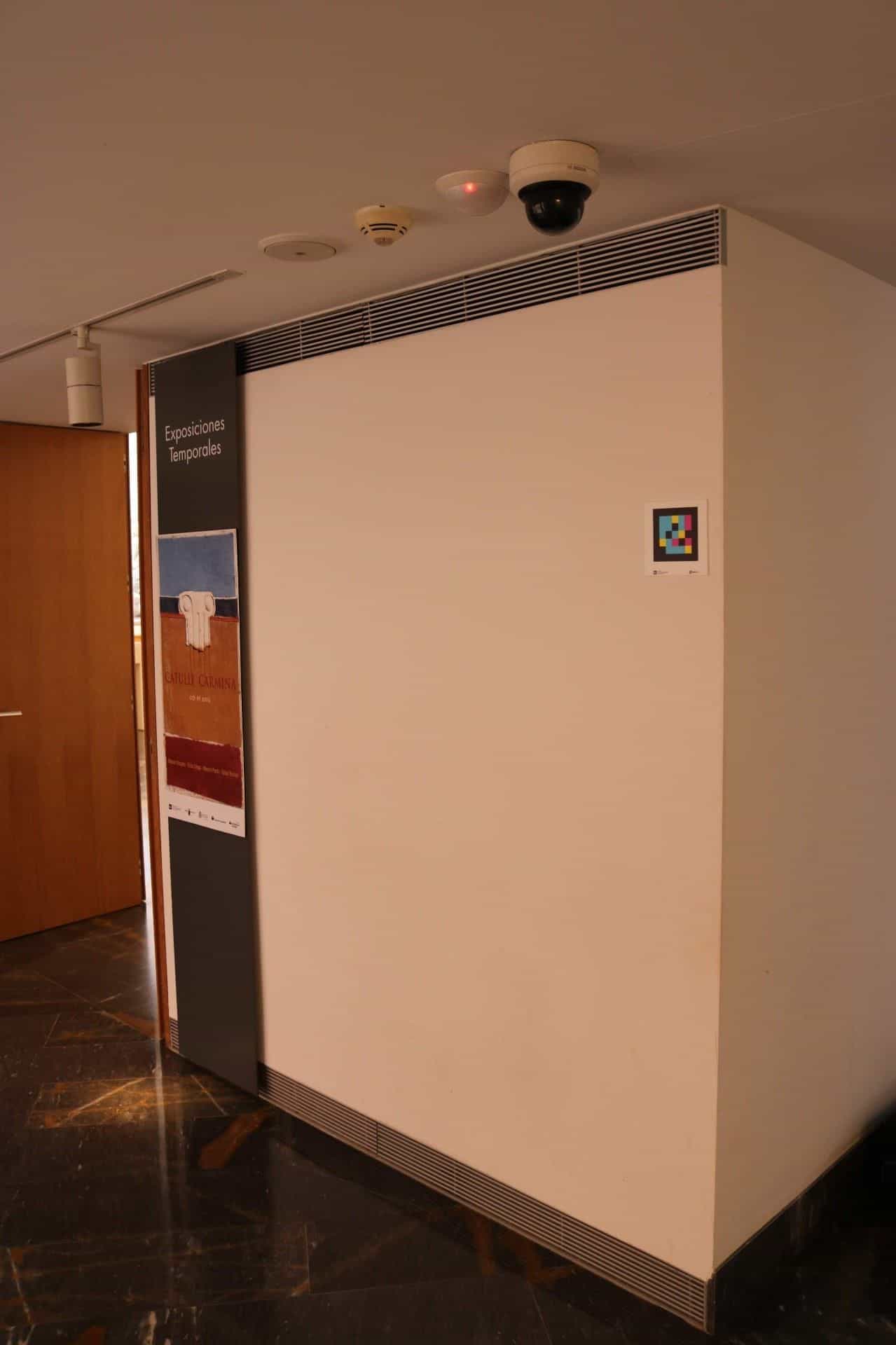
It wasn't enough to cover the artworks: Tickets & Info, Shop, Cloakroom, restrooms, Assembly Hall, Management and Board, and the History of the Theatre and Archaeological corridors all had to be covered, along with the theatre models and temporary exhibitions (e.g. Catulli Carmina).
§ The solution
NaviLens next to every
Moneo totem.
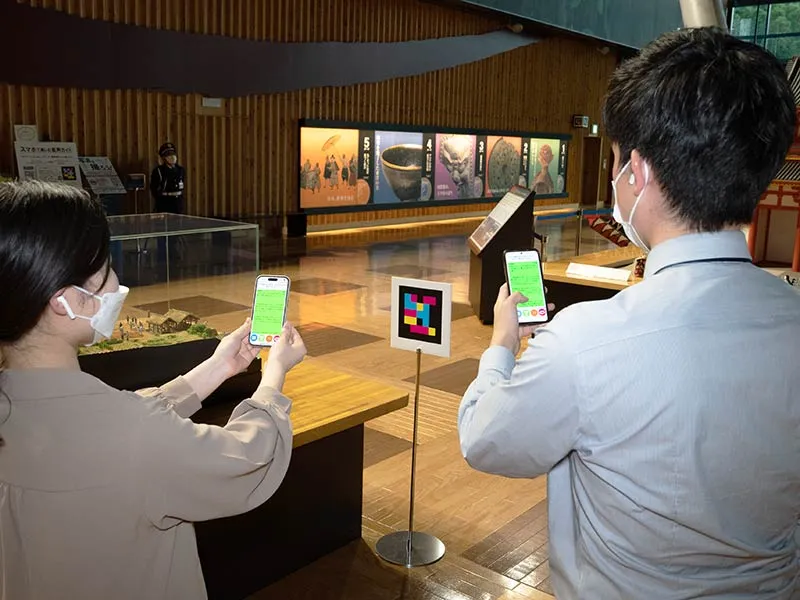
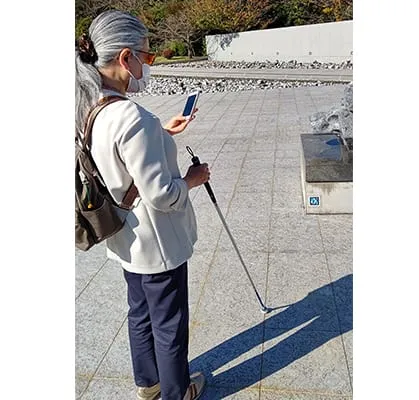
At every milestone of the route—reception, directional totems, audioguide stops and gallery entrances—there is a NaviLens code the app detects from several yards, without focusing.
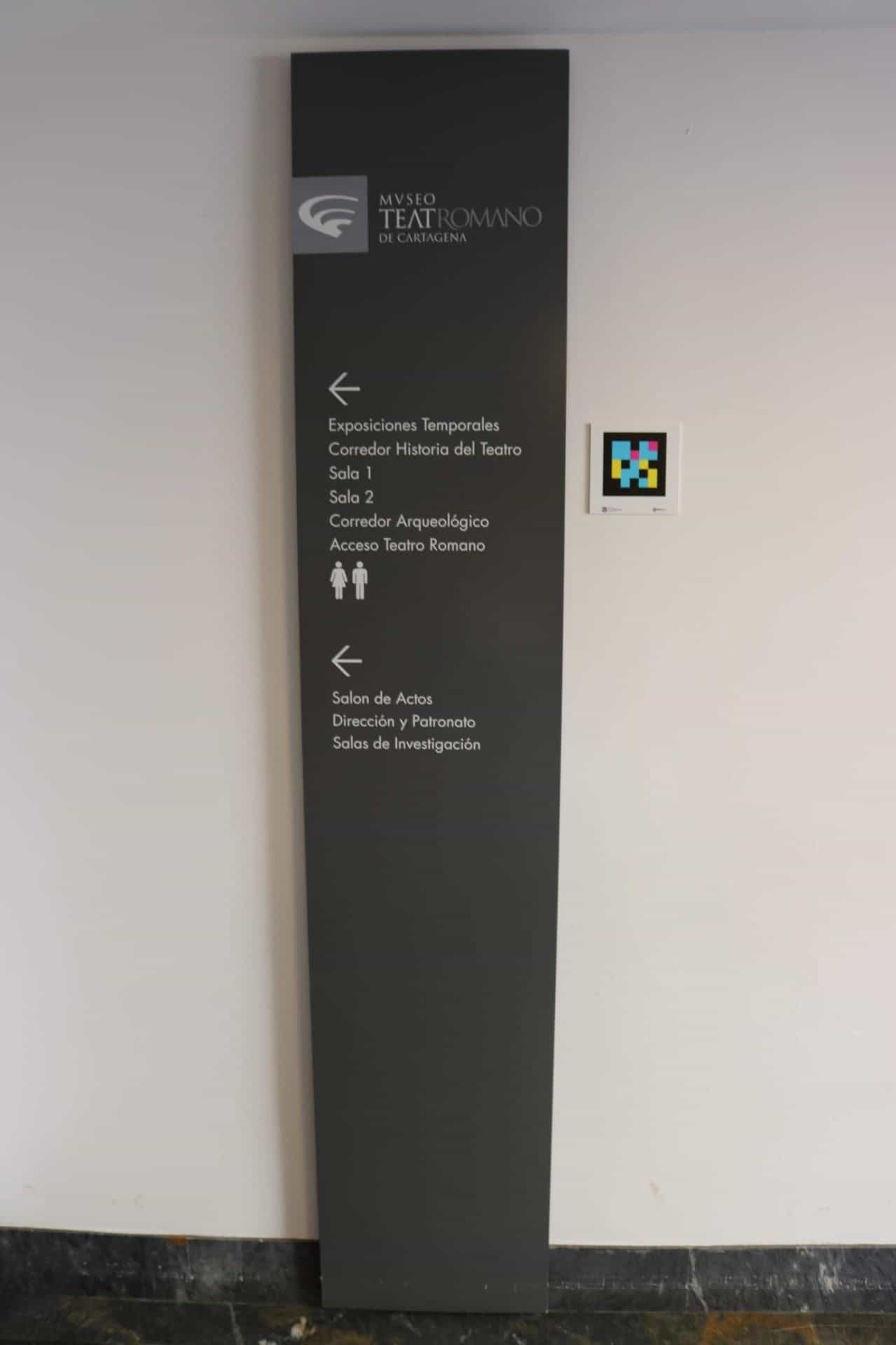
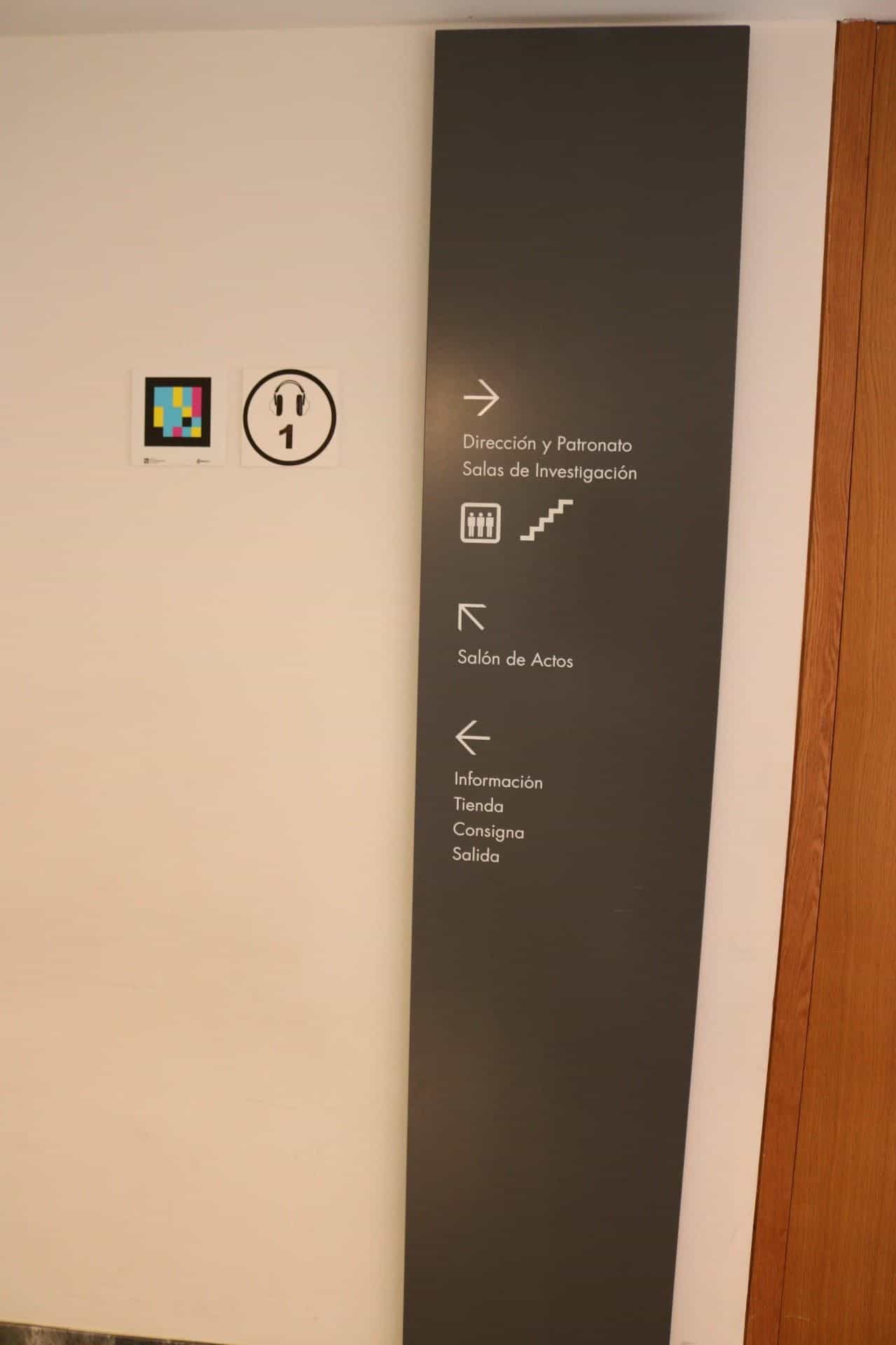
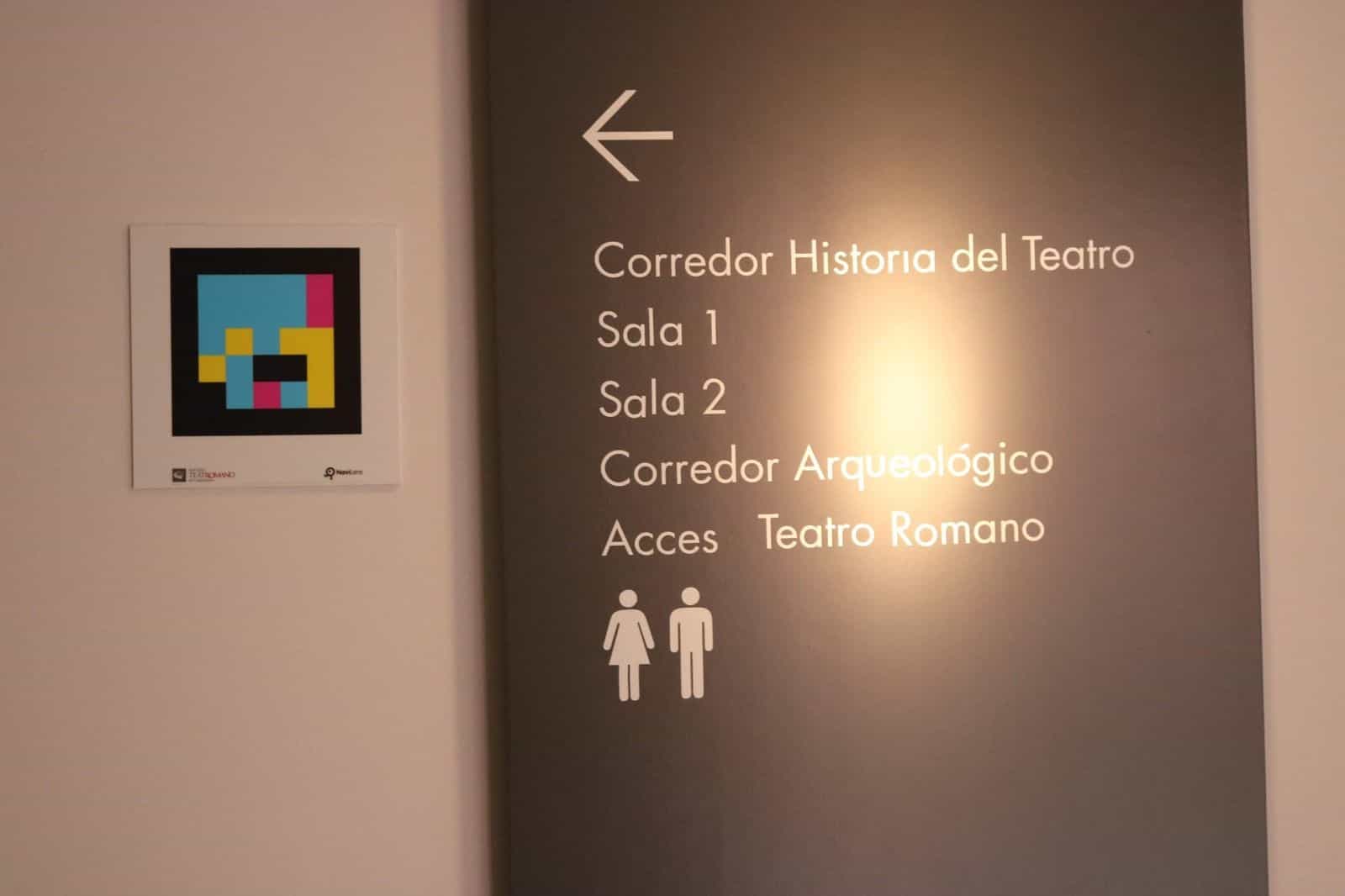
Visitors hear Moneo's directional sign (Rooms 1 and 2, History of the Theatre Corridor, Access to the Roman Theatre…), the audioguide stop and the description of the piece or model, all in their own language.
§ Timeline
From reception to the Roman theatre, with no barriers.
- Roll-out
NaviLens at reception and directional totems
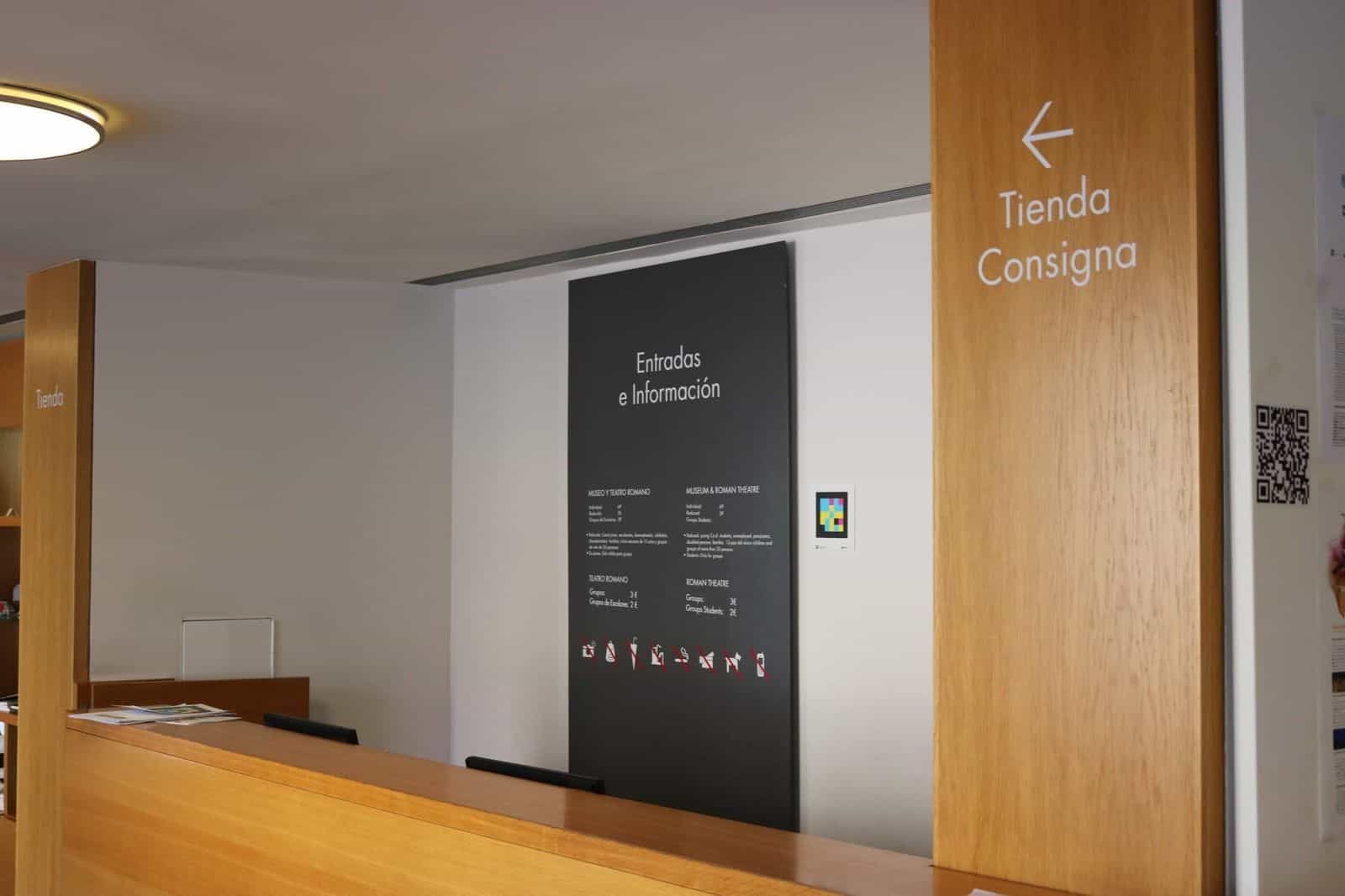
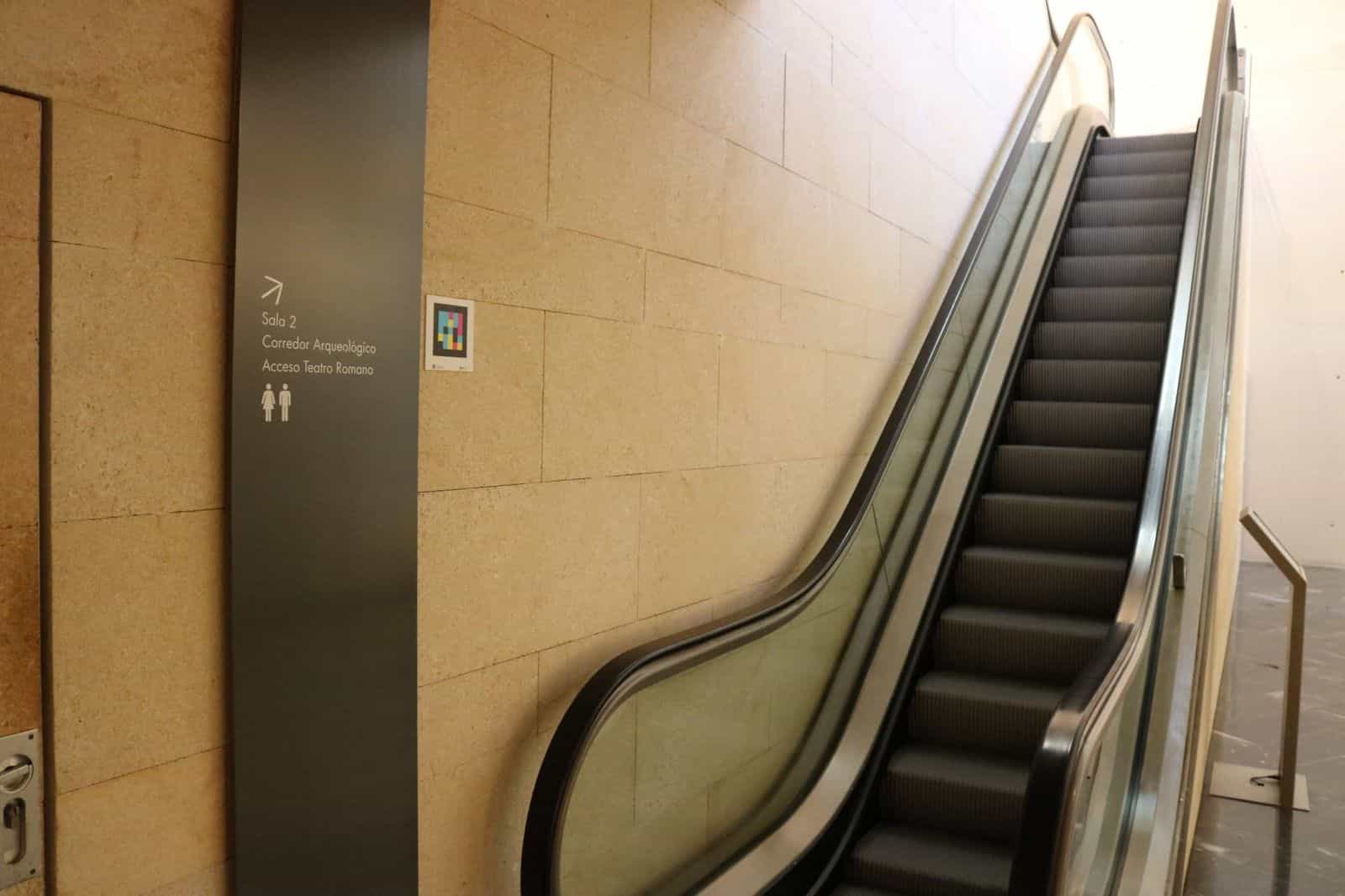
MUSTER places NaviLens codes next to the “Tickets & Info” panel, on Rafael Moneo's large black totems (Rooms 1 and 2, History of the Theatre Corridor, Archaeological Corridor, Access to the Roman Theatre, Assembly Hall, Management and Board) and on the “Shop · Cloakroom” column.
- Route
Multilingual audioguide at every stop
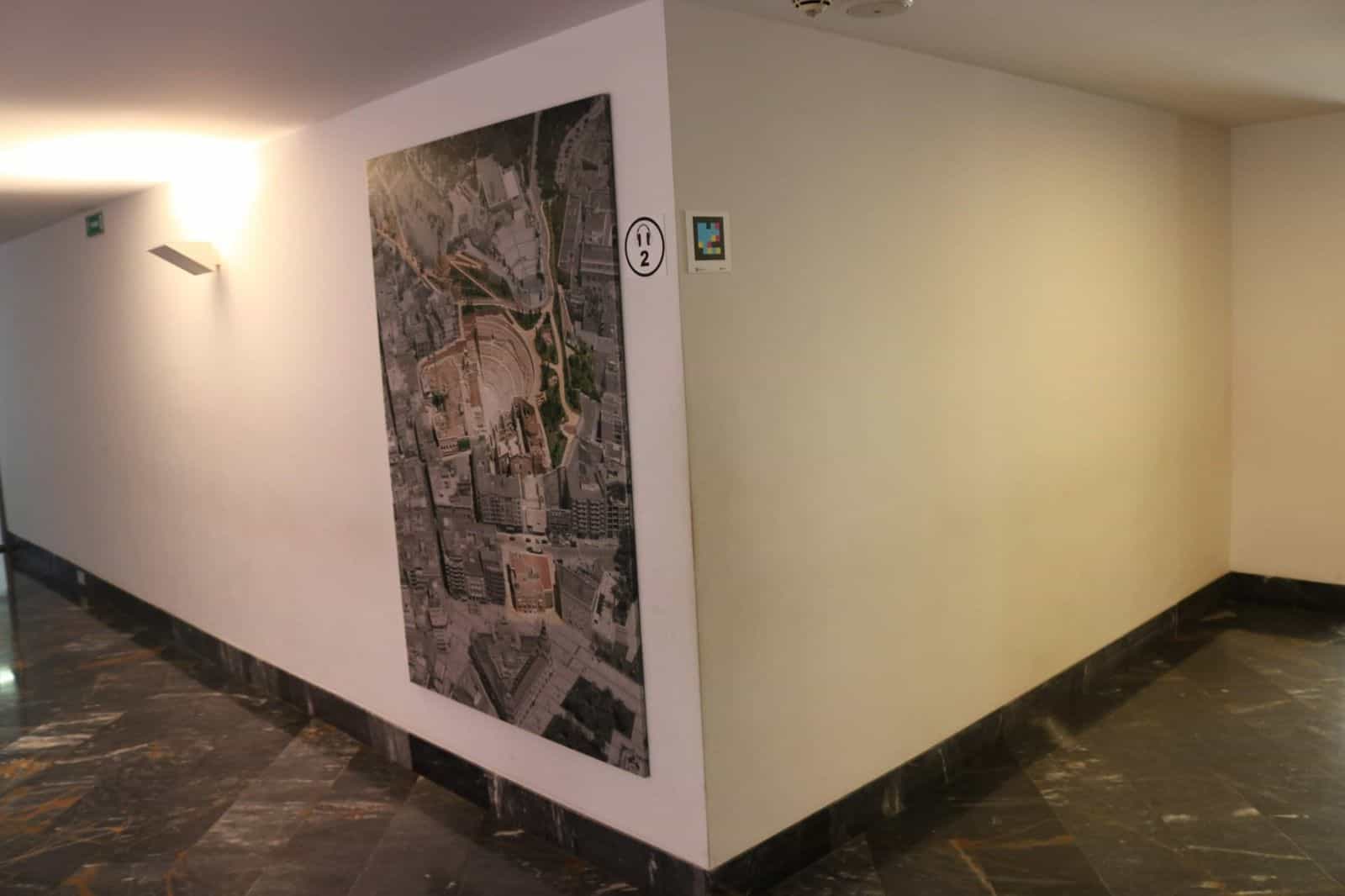
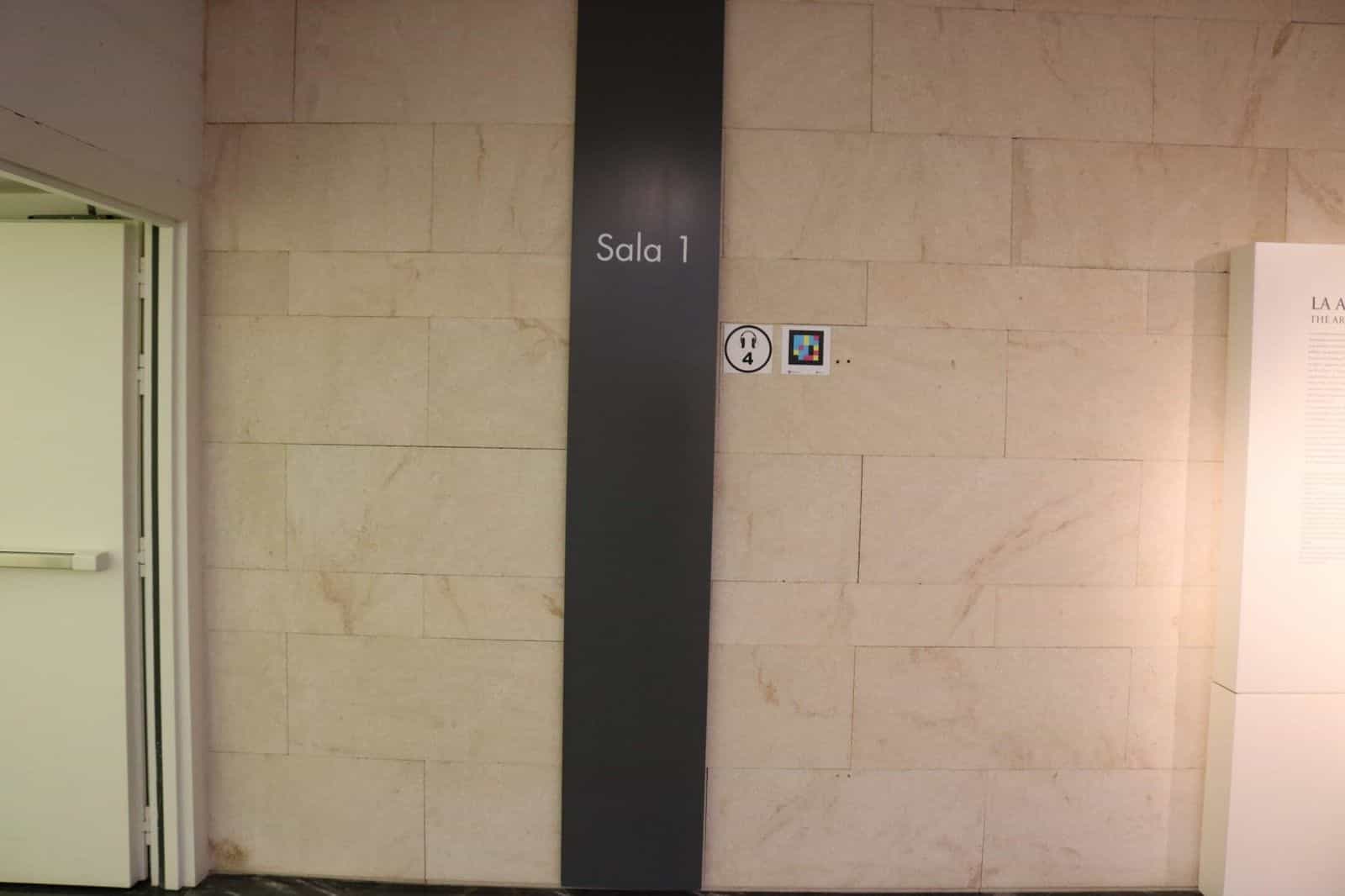
Every audioguide stop (1, 2, 4…) has a NaviLens code next to it. Visitors point with NaviLens GO from several yards away and hear the explanation in their own language, with no extra download and no device to request.
- Rooms & exhibitions
Accessible models, capitals and temporary shows
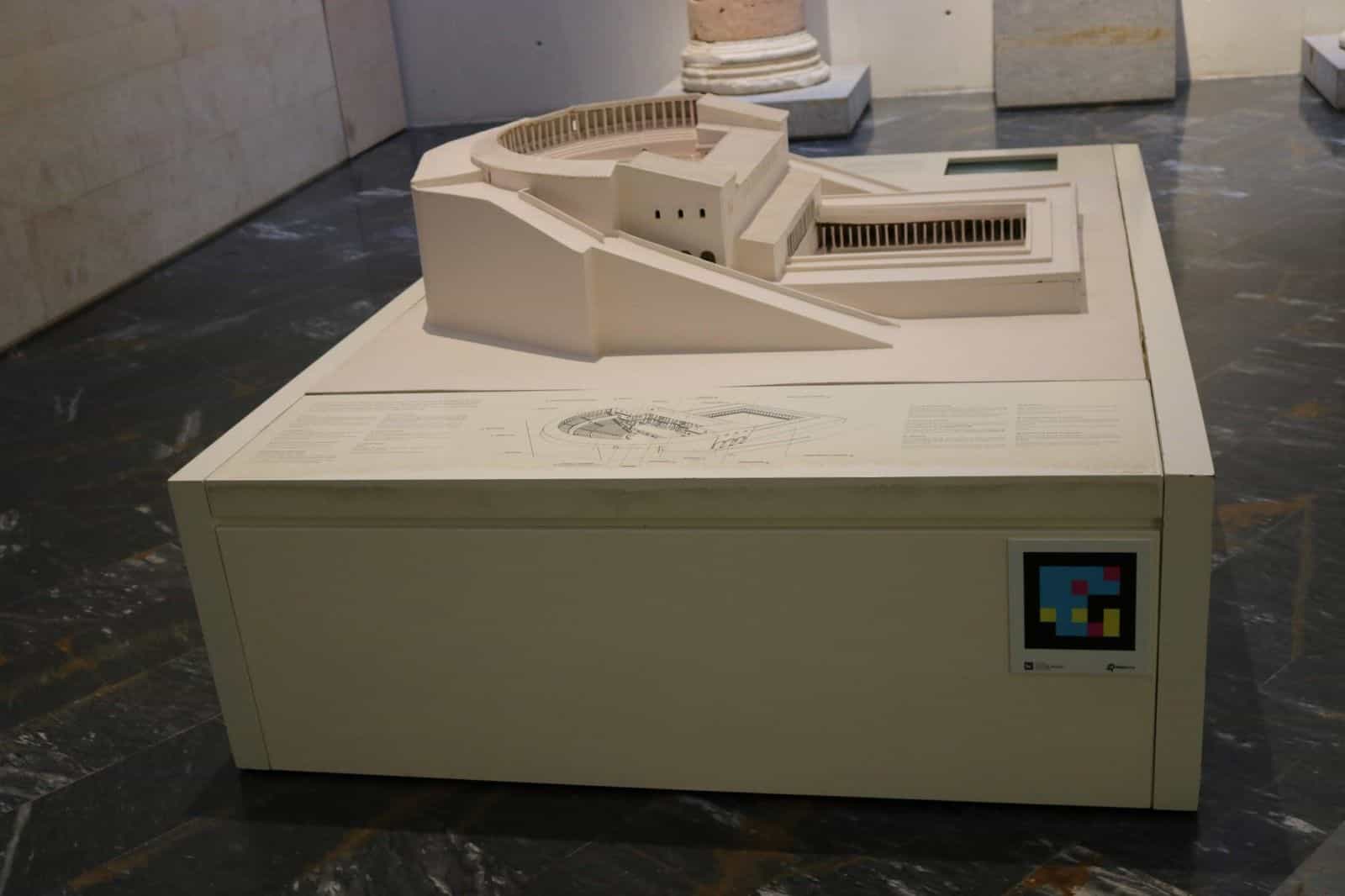
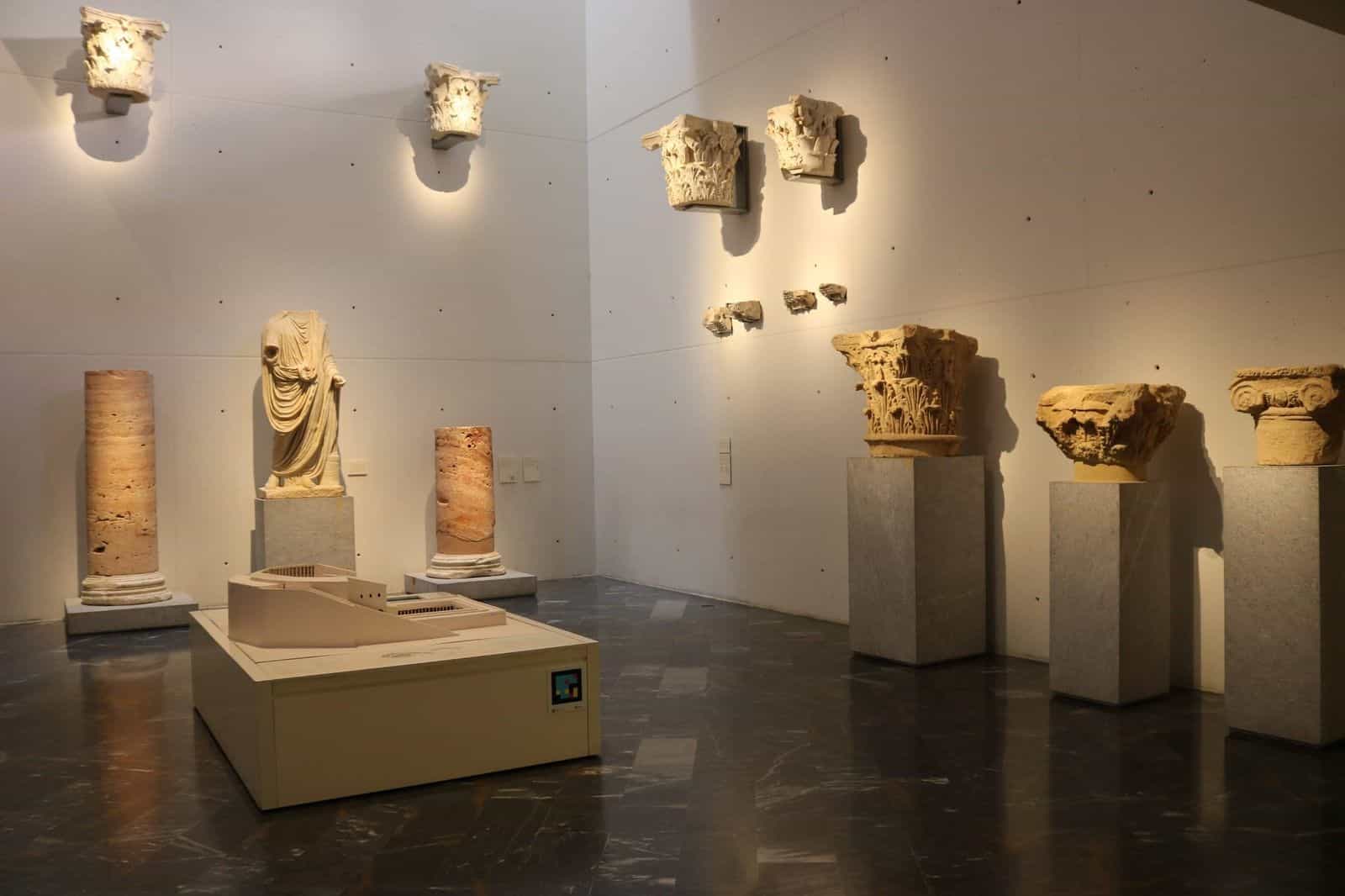
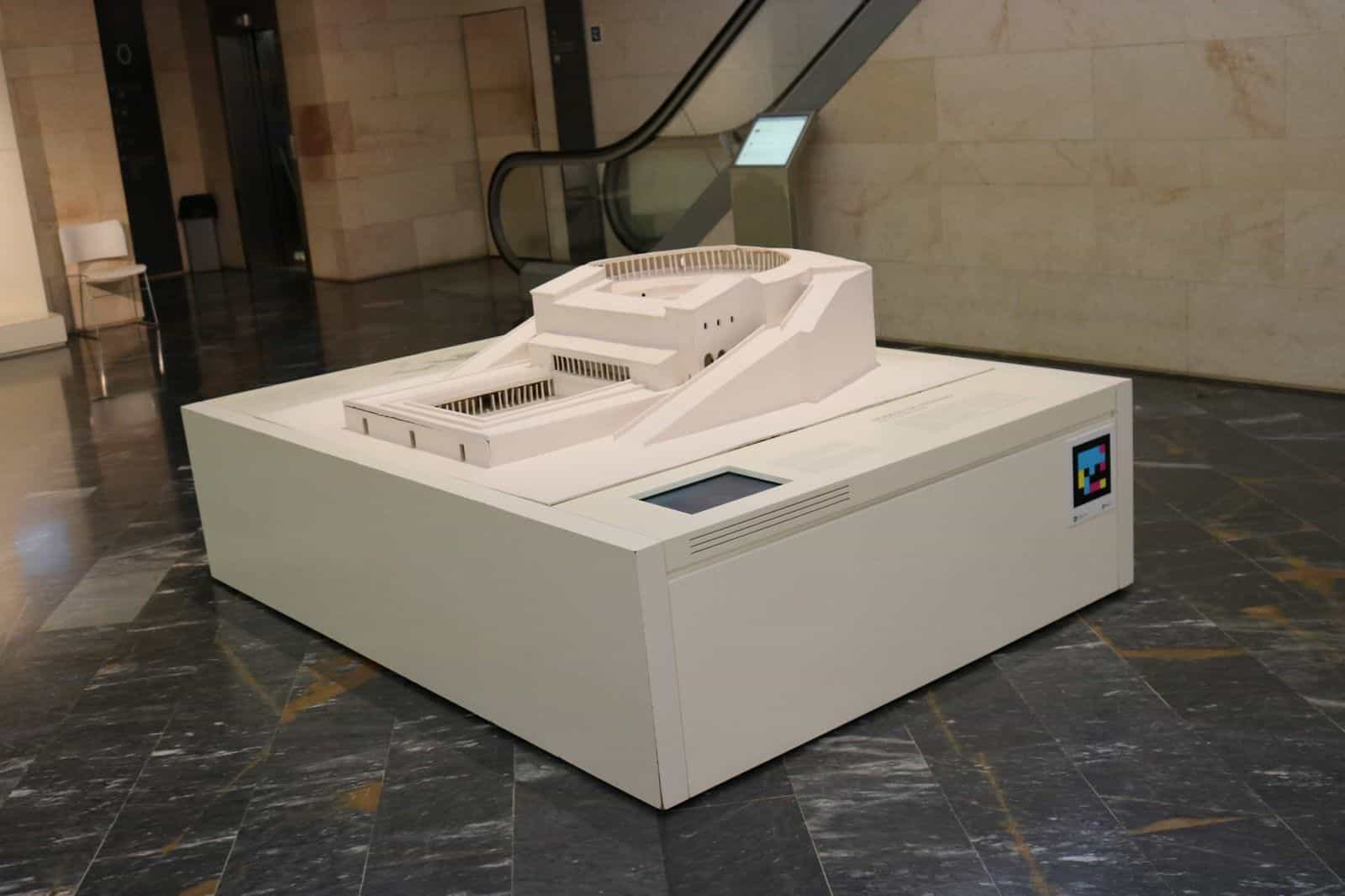
Models of the Roman Theatre, rooms of capitals and columns and the entrance to Temporary Exhibitions (Catulli Carmina) carry their own NaviLens code to describe the piece, its context and the show it hosts.
- Services
Restrooms, shop and cloakroom speak too
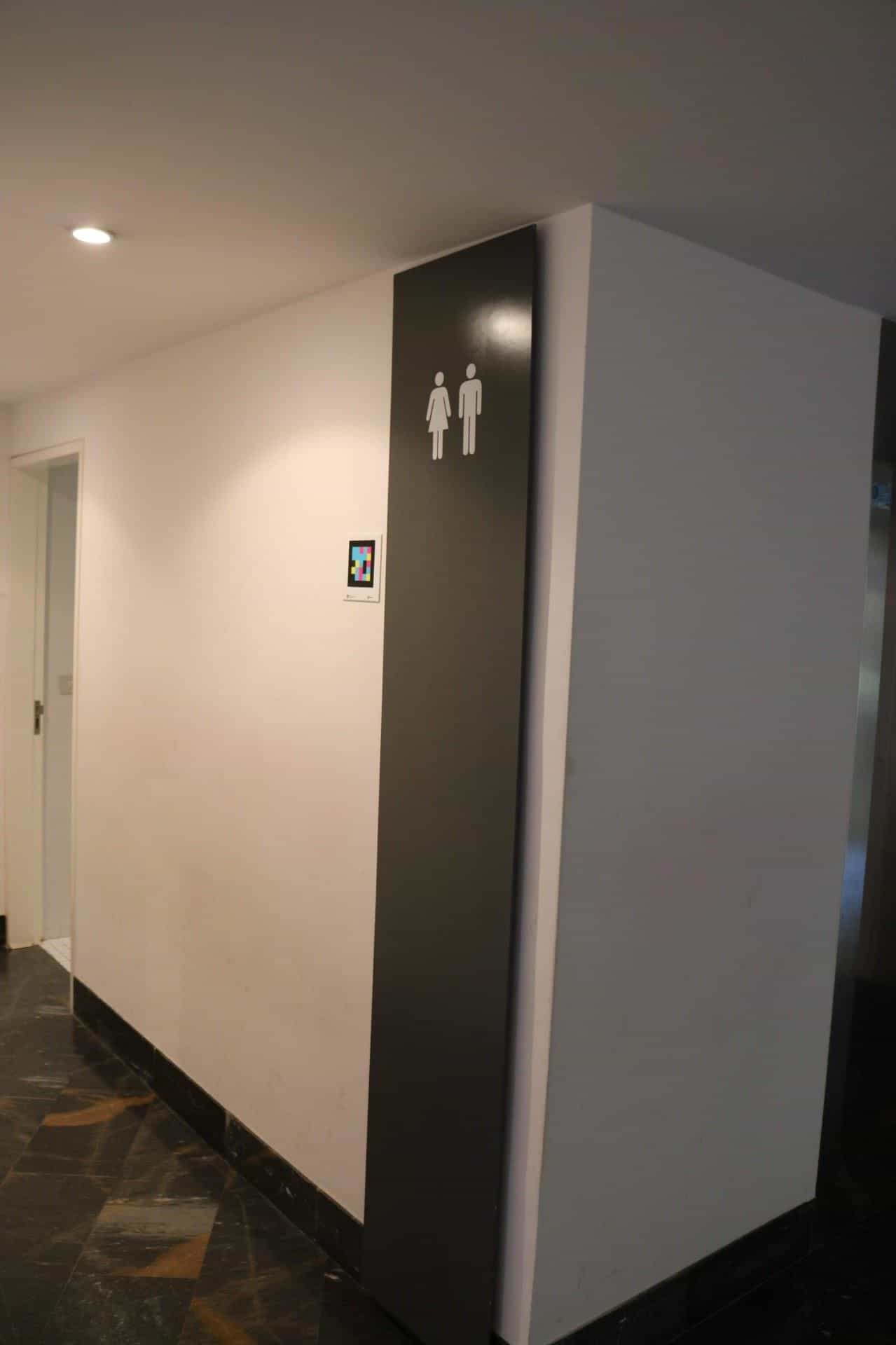
General restrooms, accessible restrooms, the shop and the cloakroom are signposted with NaviLens, so any visitor can find services without having to ask.
§ On the ground
Reception, rooms, audioguide and exhibitions.
§ Results
A Moneo museum that anyone can walk.
100%
Of the route covered: reception, galleries, corridors, restrooms and exhibitions
42
Languages — including English, French, German, Japanese and Arabic
0
Visual barriers to follow the audioguide and Moneo's signage
"A museum is truly accessible when the journey—not only the artworks—can be heard in any language."
§ What they said
“This is a system called NaviLens, and it is one more way to open this emblematic space to all citizens and make it more accessible.”
§ And your destination?
Your destination can also guide in 42 languages.
Tell us about your trails, visitor centers, landmarks or galleries. We’ll show you how NaviLens would make your offering accessible—with comparable cases.