Case study · Yamagata, Japan
A civic center on the 23rd floor that speaks in 42 languages.
How the Yamagata City Civic Activity Support Center and the mana-vi learning space made reception, meeting rooms and evacuation notices accessible with NaviLens.
山形市
City of Yamagata · Welfare & Disability Department
22-23F
Yamagata City Civic Activity Support Center · 学習空間 mana-vi
15+ sites
Municipal buildings with NaviLens in Yamagata
42
Languages with voice readout
The client
Yamagata City
Civic Activity Support Center
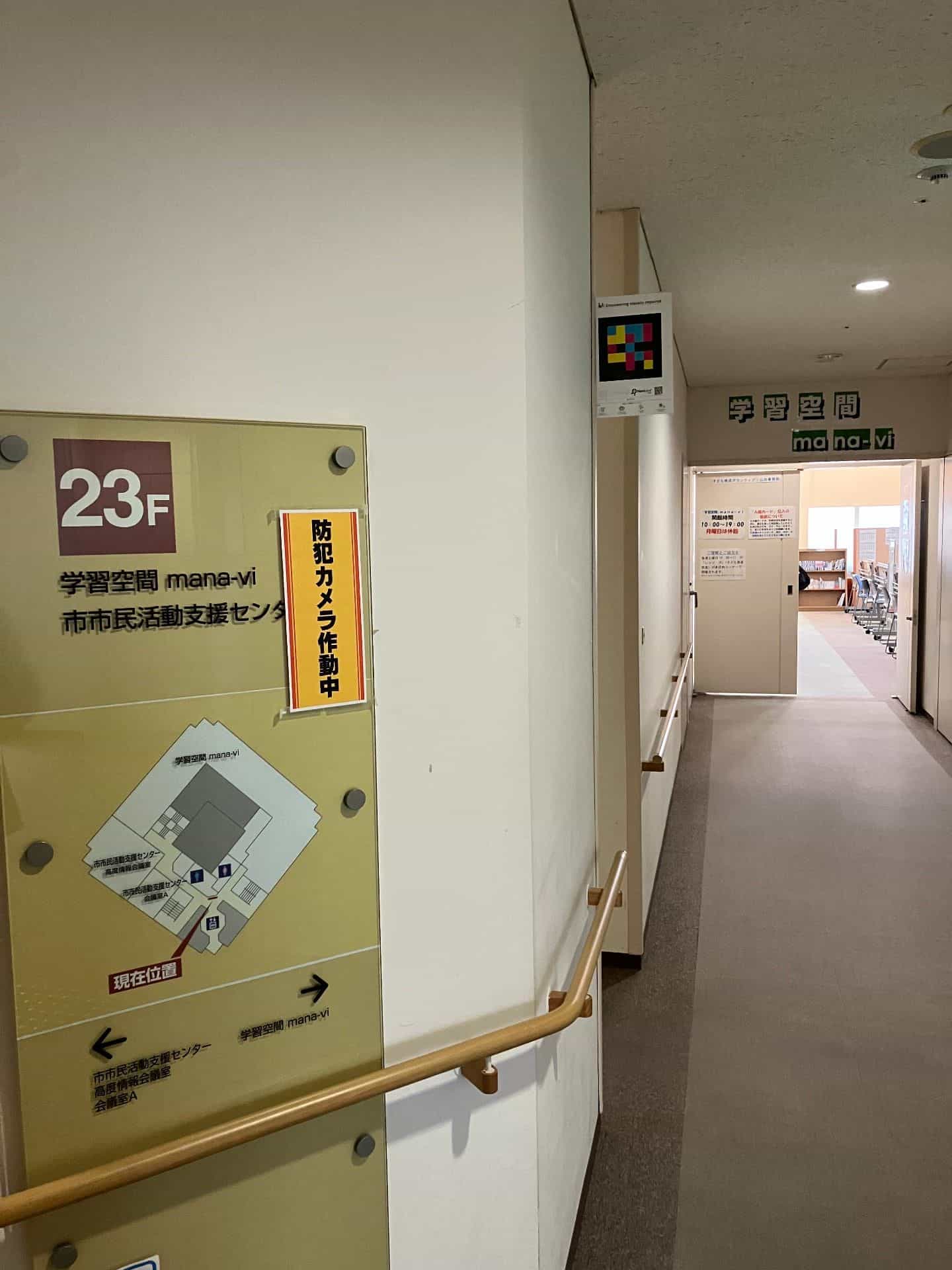
The 山形市市民活動支援センター (Yamagata City Civic Activity Support Center) is the municipal hub supporting associations, volunteering and citizen participation in the city of Yamagata, in the prefecture of the same name. It shares its floor with the mana-vi learning space (学習空間 mana-vi).
With NaviLens, the center turns reception, meeting rooms, library and evacuation notices into an accessible information layer that any neighbor, elderly visitor or foreign resident can listen to on their own phone, in their own language.
The deployment is part of the municipal initiative formalised by the City of Yamagata (city.yamagata-yamagata.lg.jp, updated 3 Oct 2025) and has spread to public space: on 17 Aug 2025 a local Yamabe NPO (NaviLens Japan User Group) installed 23 NaviLens codes on city sidewalks, covered by Yamagata Shimbun (24 Oct 2025) and Komei Shimbun (25 Oct 2025) as a Japanese reference for removing information barriers for blind and low-vision people.
§ The challenge
Making the 23rd floor easy for every neighbor.
- 01
A civic center at the top of a building
The Yamagata City Civic Activity Support Center and the mana-vi learning space occupy floors 22 and 23 of a civic complex (reception and meeting rooms on the 22nd, restrooms on the 23rd). Getting from the elevator to the right room is a challenge for elderly neighbors, low-vision users and visitors who do not read Japanese.
- 02
Signage in Japanese only
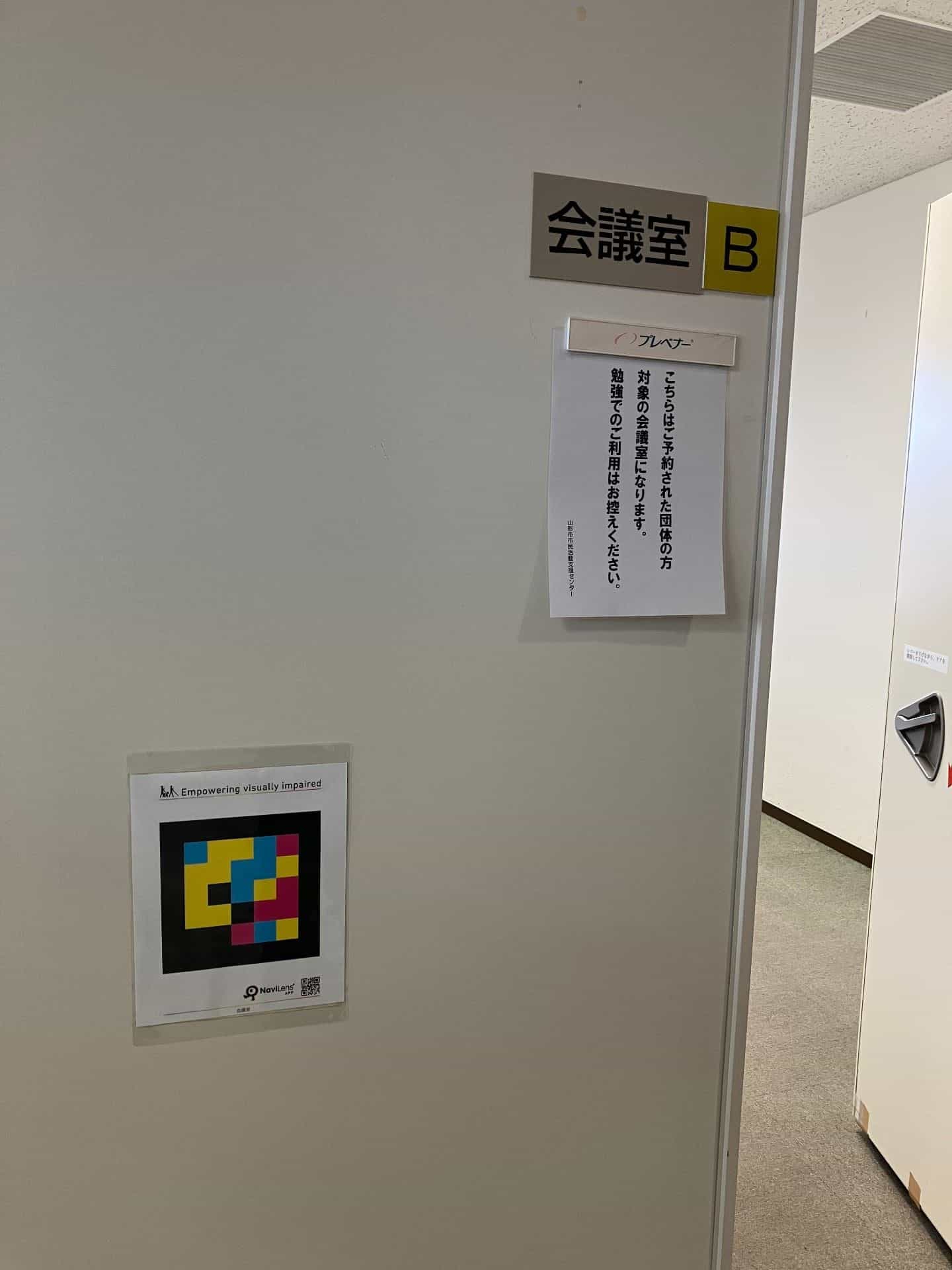
The center's signs (会議室 A, 会議室 B, 受付, 学習空間 mana-vi) and floor plans are in Japanese. NaviLens codes let anyone hear out loud the name, function and hours of each room in their own language, without asking for help.
- 03
Emergency information and services
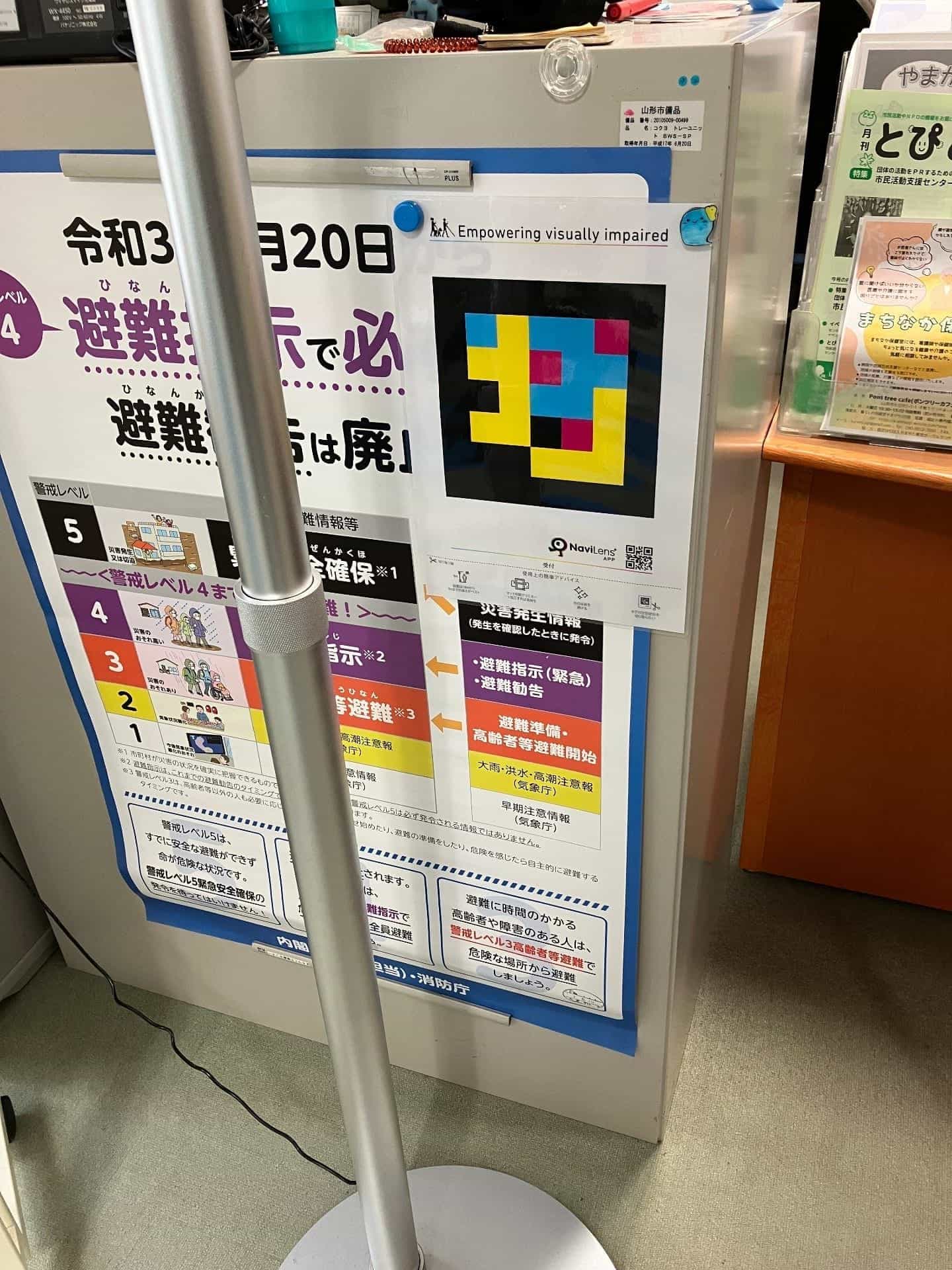
Next to reception sit the evacuation alert-level panel, leaflets of the “とぴあ” civic program and room booking notices. An accessible layer was needed to also read these critical contents for elderly people and blind and low-vision users.
§ The solution
One code beside
every door.
Every room (会議室 A, 会議室 B, 学習空間 mana-vi) and the reception desk carry their own NaviLens code, detectable from several yards and without needing to aim.
The visitor hears the room name, its hours, usage rules and booking notices in their own language, without asking staff and without downloading any extra content.
§ Timeline
From the elevator to the evacuation panel.
- Rollout
NaviLens codes at entrances and rooms (22-23F)
The center places NaviLens codes at reception on the 22nd floor (受付), at the meeting rooms (会議室 A, 会議室 B), at the entrance to the 学習空間 mana-vi space and at the 23rd-floor restrooms, within the “reasonable accommodations” (合理的配慮) program of the City of Yamagata.
- Visit
Voice readout in 42 languages
Neighbors and visitors point NaviLens GO from several yards away and hear the room name, its hours and notices in Japanese, English, Spanish, Chinese, Korean and 37 other languages, without downloading any extra content.
- Services
Reception, evacuation and the “とぴあ” guide
The reception code also reads out the “避難指示” panel (evacuation levels 1-5), the rules for using the study rooms and the monthly “とぴあ” guide of civic-center activities.
- Municipal plan
NaviLens across the whole public-building network
The deployment is part of a broader plan from the Welfare & Disability Department: the City of Yamagata extends NaviLens to the city hall (reception, elevators, restrooms), Kajo Central Health Center, Saiseikan Hospital, the Welfare Center, the Equality Center, the Municipal Library, Yamagata Terrsa, Big Wing (International Plaza), the sports center and the district kominkan (neighborhood centers).
- Inclusion
Elderly people, low vision and foreign residents
The deployment makes mana-vi one of the first Japanese civic centers designed at once for elderly neighbors, blind and low-vision people and foreign residents who study or meet on floors 22 and 23.
§ On the ground
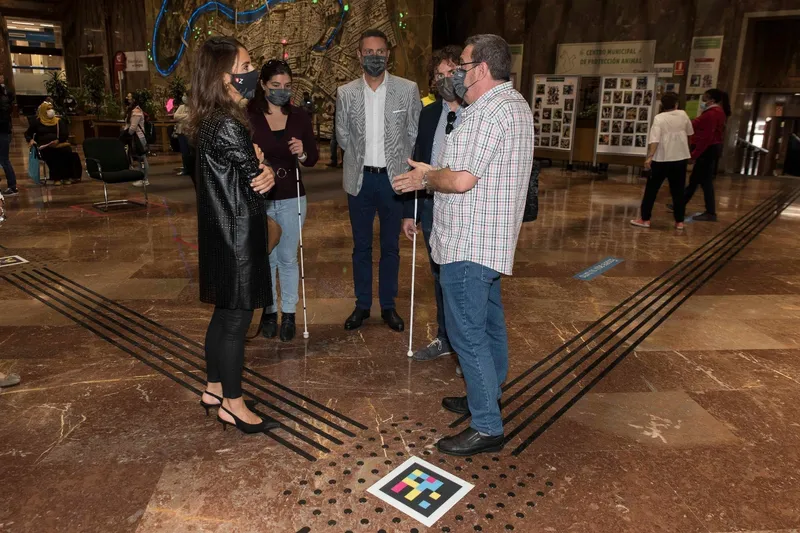
Reception, rooms and civic notices.
§ Results
A civic center that any neighbor can use.
100%
Of rooms, reception and civic panels identified by voice
42
Languages — including Japanese, English, Chinese, Korean and Spanish
0
Language or visual barriers to using the civic center
§ What they said
“目が不自由な人の移動や情報確保もバリアフリーに——。視覚障がい者を支援するため、スペインで開発されたスマホアプリ「ナビレンス」が音声で誘導する。”
“誰もが歩きやすい街に。位置情報を音声案内する「ナビレンス」普及へ、山辺NPOが山形市内に設置。”
“山形市は視覚障がい者の移動支援や合理的配慮として、目的地までの直線距離や方向を音声で案内する二次元コード「ナビレンス」を導入している。”
§ And your headquarters?
Your office can also welcome in 42 languages.
Tell us about your building, your services and your visitors. We’ll show you how NaviLens would make your office truly accessible.