Case study · Yamagata (Japan)
A braille library you can also listen to.
The 山形県立点字図書館 (Yamagata Prefectural Braille Library), a public library of Yamagata Prefecture specializing in braille books and audiobooks, installs NaviLens codes at the entrance and above the lintels of its rooms so that any blind or low-vision visitor can scan them from several yards away and hear out loud where they are and where each door leads.
山形市
Yamagata, Yamagata Prefecture (Tōhoku, Japan)
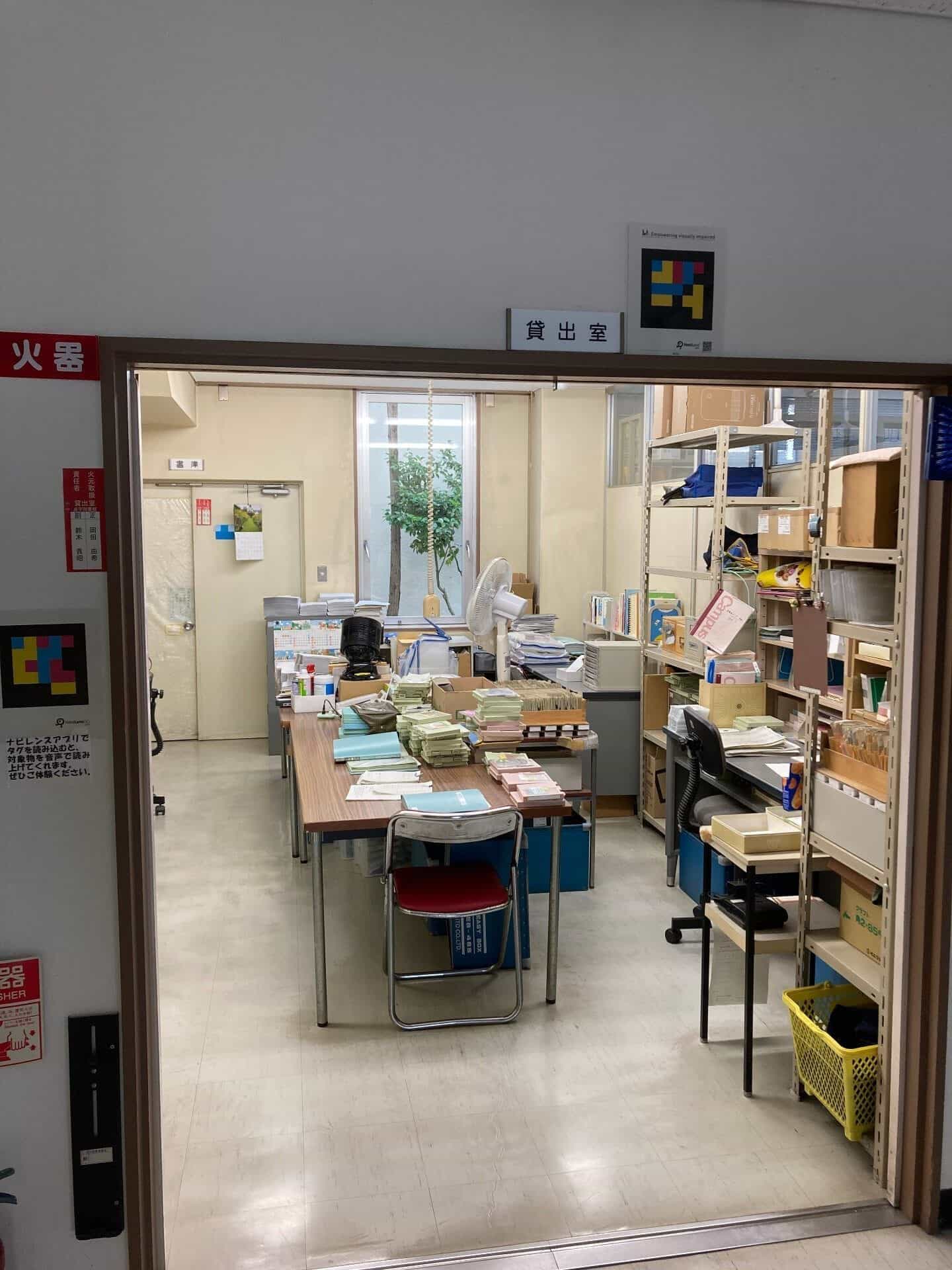
館長室 · 貸出室 · 会議室
Rooms signposted with NaviLens codes on the lintel
山形県身体障害者福祉協会
Operator: Welfare Association for People with Disabilities
NaviLens GO
Free app to scan without aiming and hear the content
Client
山形県立点字図書館
Yamagata Prefectural Braille Library
The 山形県立点字図書館 (Yamagata Prefectural Braille Library) is a public library of Yamagata Prefecture, in the Tōhoku region, specializing in braille literature and audiobooks for blind and low-vision residents of the whole prefecture.
Its operation is delegated to the 山形県身体障害者福祉協会 (Yamagata Prefecture Welfare Association for People with Physical Disabilities), a non-profit running lending, recorded reading and training services for blind and low-vision users.
Since 1 April 2025 the institution has been officially renamed 山形県視覚障がい者情報センター (Yamagata Prefectural Visually Impaired Information Center), reflecting an expanded mission beyond braille (DAISY audiobooks, advice, digital training). The NaviLens pilot is part of that transition.
As a prefectural reference in accessibility, the library promotes the testing of technologies such as NaviLens in its own building, alongside traditional braille and kanji signage, to validate the experience with its own users and share it with other braille libraries in Japan.
§ Challenge
Letting every door say its name out loud.
- 01
A library designed for those who cannot read visual signage
The 山形県立点字図書館 (Yamagata Prefectural Braille Library) is a public library of Yamagata Prefecture specializing in braille books and audiobooks for blind and low-vision people. Until now, room signage relied on kanji plates and braille on handrails, but anyone entering for the first time without a companion struggled to locate the lending desk, the director's office or the meeting room.
- 02
Short corridors crowded with identical doors
The building shares its floor with lockers, fire extinguishers and admin offices: a narrow corridor with several doors that feel almost identical to the touch. Traditional signs (館長室 “director's office”, 貸出室 “lending room”, 会議室 “meeting room”) are inaccessible to a blind person who does not read kanji or cannot reach the braille.
- 03
Testing NaviLens inside an accessibility-expert environment
As a library specializing in visual disability, the institution needed to evaluate NaviLens in a real scenario, validate the experience with its own users and serve as a reference for other braille libraries and centers in the Japanese network of welfare services for people with disabilities.
§ Solution
One code above every key door.
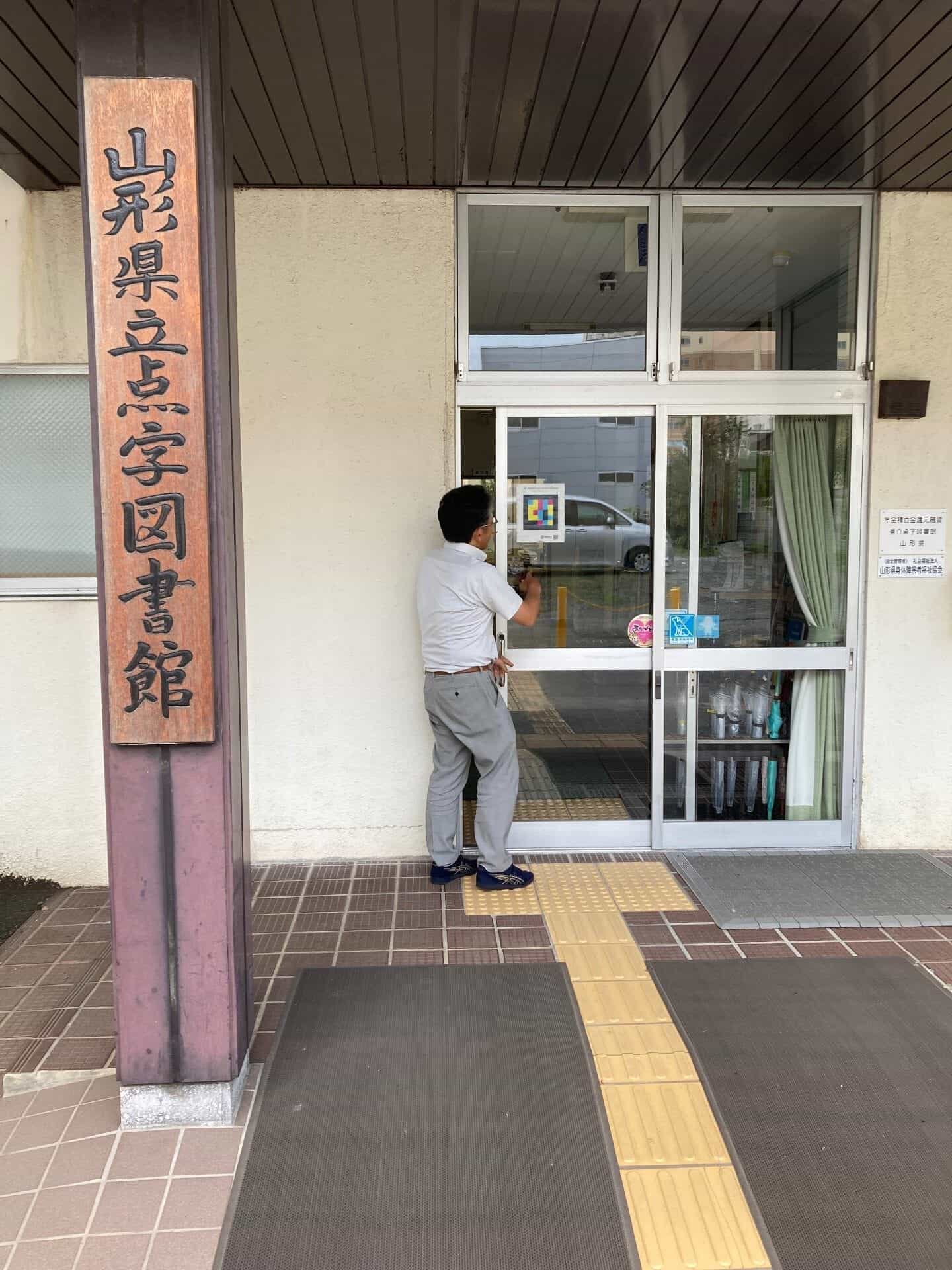
The library team placed NaviLens codes at the decision points along the route: the entrance door (next to the vertical wooden sign), the director's office (館長室), the lending room (貸出室) and the meeting room (会議室). All share the same square color format with the slogan “Empowering blind and low-vision”.
With the free NaviLens GO app, a blind or low-vision visitor scans without aiming and from several yards away. The phone announces out loud the name and function of each room—in Japanese or in their own language—and also gives instructions to reach the next safe door down the corridor.
The codes coexist with the traditional kanji signs and the tactile paving on the floor: NaviLens does not replace braille or the white cane, it complements them with an immediate audio layer the visitor can activate from the entrance.
§ Room by room
The same grammar across the whole library.
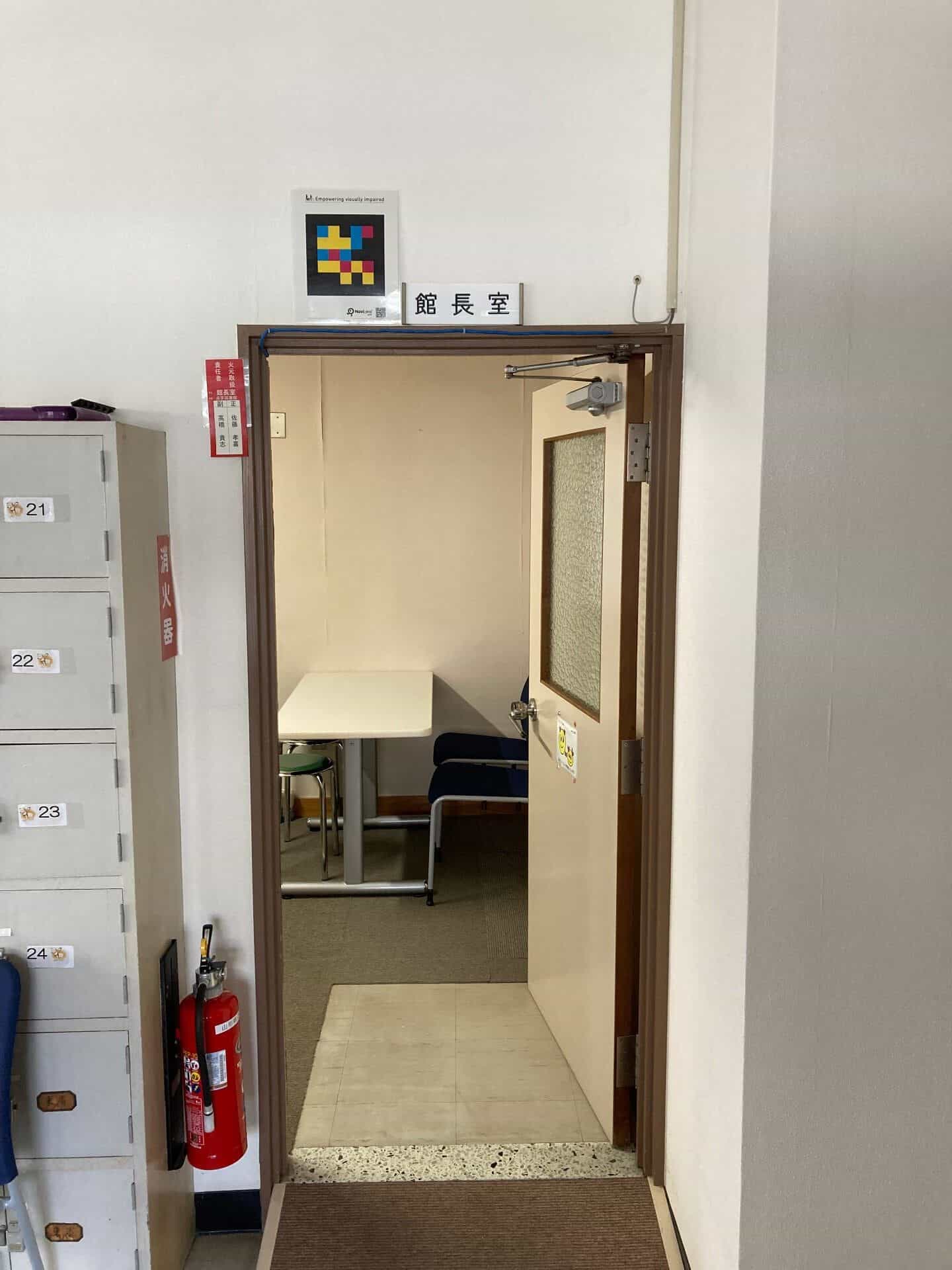
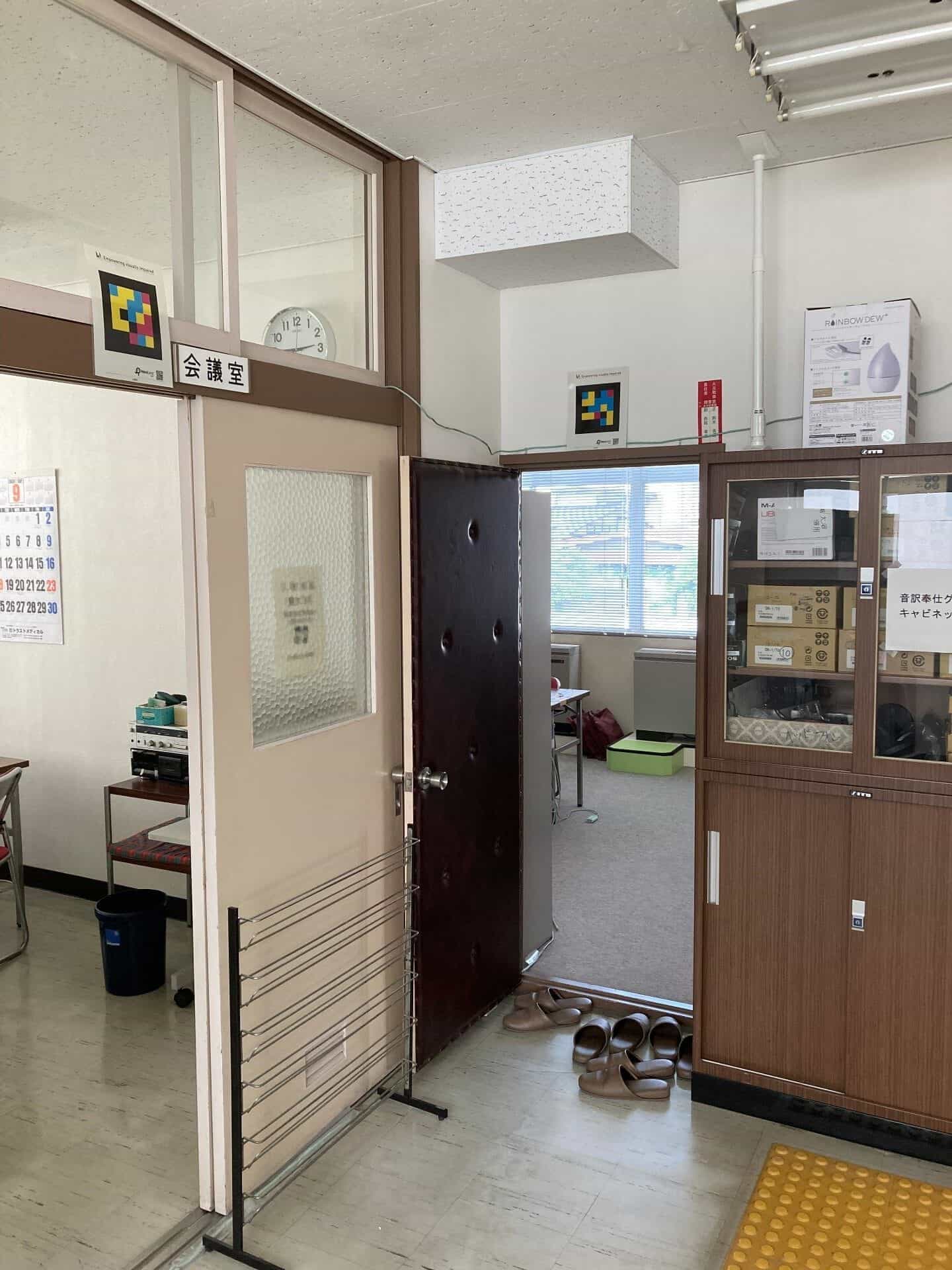
Same codes at the entrance, the director's office, the lending room and the meeting room: a single app—NaviLens GO—and a single grammar to walk through the full library, without depending on sight or staff escorts.
§ Why it matters
A braille library validating the visual standard.
点字 + 音声
braille and voice coexist: NaviLens adds an immediate audio layer on top of the kanji signage and tactile paving already present at the library.
Tōhoku
Yamagata joins other NaviLens pilots in Japan—such as the mana-vi center (Yamagata Civic Activity Support Center) or the Abe Eye Clinic in Ōita—in the bet for everyday accessibility, building by building.
福祉協会
the 山形県身体障害者福祉協会 validates the experience with real blind users and turns it into a reference for the Japanese network of braille libraries and welfare services for people with disabilities.
§ Sources
- 山形県立点字図書館 — official website of the Yamagata Prefectural Braille Library.
- 山形県身体障害者福祉協会 — Yamagata Prefecture Welfare Association for People with Physical Disabilities, operator.
- Yamagata Prefecture — official release on the renaming to “視覚障がい者情報センター” (26 Mar 2025).
- Yamagata Shimbun — “多様な支援、名に込めて — 県立点字図書館、県視覚障がい者情報センターに” (27 Mar 2025).
- Yamagata Prefecture — institutional portal of Yamagata Prefecture.
§ And your destination?
Your destination can also guide in 42 languages.
Tell us about your trails, visitor centers, landmarks or galleries. We’ll show you how NaviLens would make your offering accessible—with comparable cases.