Case study · Montréal · Québec · Canada
From the gare to the quai, in 42 languages.
On March 5, 2025, exo—the metropolitan train and bus operator of the Greater Montréal area—announced the rollout of NaviLens across the 15 Mascouche and 13 Mont-Saint-Hilaire commuter rail lines, the 10 stations of the Mascouche line and the Vallée du Richelieu buses, following the earlier pilot on bus line 15 Repentigny.
10 stations
Line 15 Mascouche
2 lines
Train 15 Mascouche · 13 Mont-Saint-Hilaire
Bus
Vallée du Richelieu + 15 Repentigny
Mar 5, 2025
Official announcement · 18-month pilot
The operator
exo · Réseau de transport métropolitain
exo is the public commuter rail and bus operator for the Greater Montréal area. It runs five commuter train lines—including line 15 Mascouche and line 13 Mont-Saint-Hilaire—and an extensive bus network across the northern and southern suburbs.
Following the initial pilot on bus line 15 Repentigny, in 2025 exo extended NaviLens to the two train lines above, to the 10 accessible stations of the Mascouche line (Mascouche, Terrebonne, Repentigny, Pointe-aux-Trembles, Rivière-des-Prairies, Anjou, Saint-Léonard-Montréal-Nord, Saint-Michel-Montréal-Nord, Ahuntsic and Central Station) and to the Vallée du Richelieu buses.
The pilot is designed to run for approximately 18 months, with real-world feedback from blind and low-vision people before being scaled to the rest of the network.
§ How the rollout was designed
Codes at the decision points of the station.
- 01
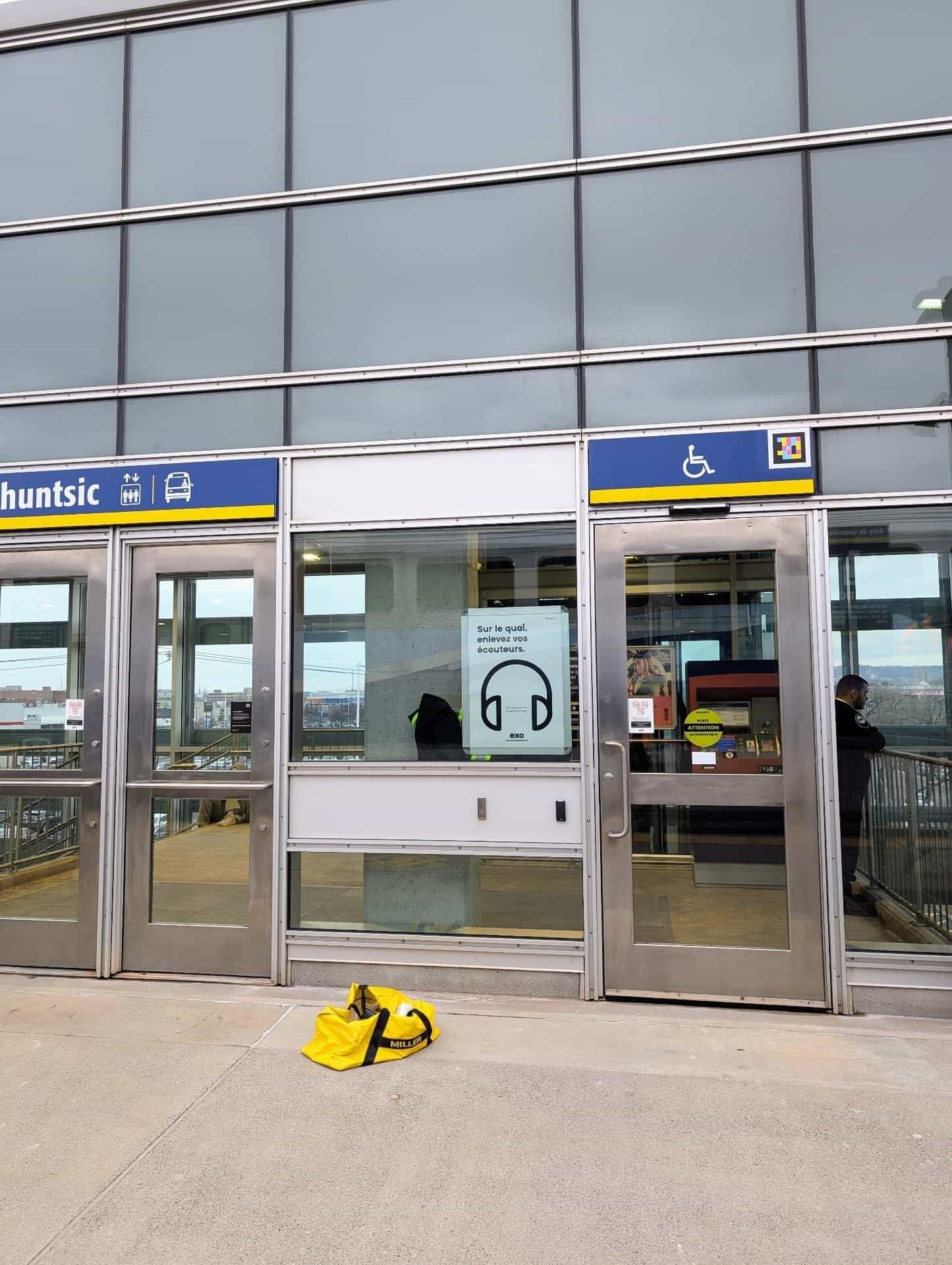
Station entrance, announced by voice
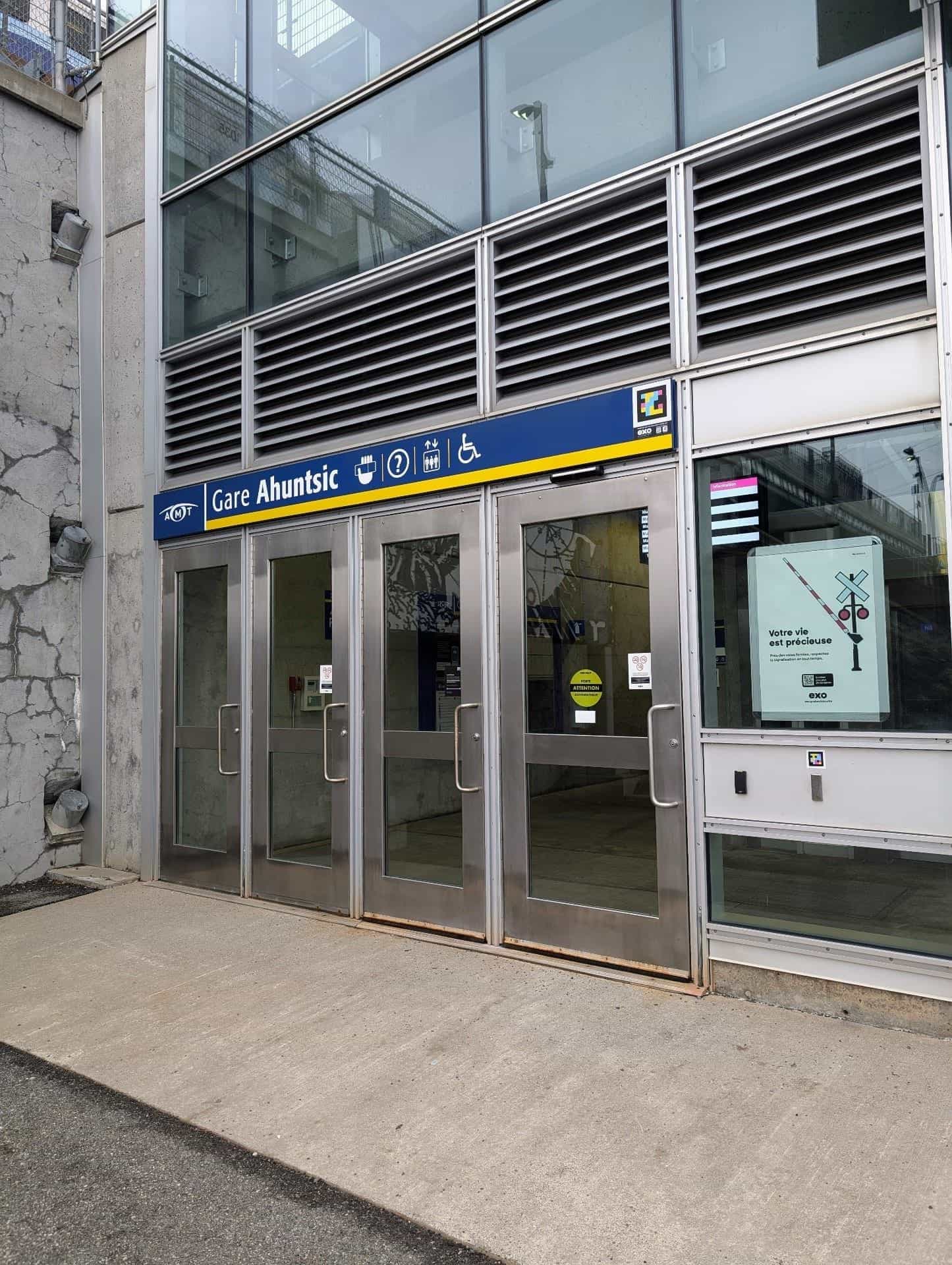
Every main entrance of the Mascouche-line stations—like Gare Ahuntsic—carries the NaviLens code next to exo's blue-and-yellow sign. The app announces the station name, available services (elevator, PMR accessibility, info) and the direction of the access points before the user even pushes the door.
- 02
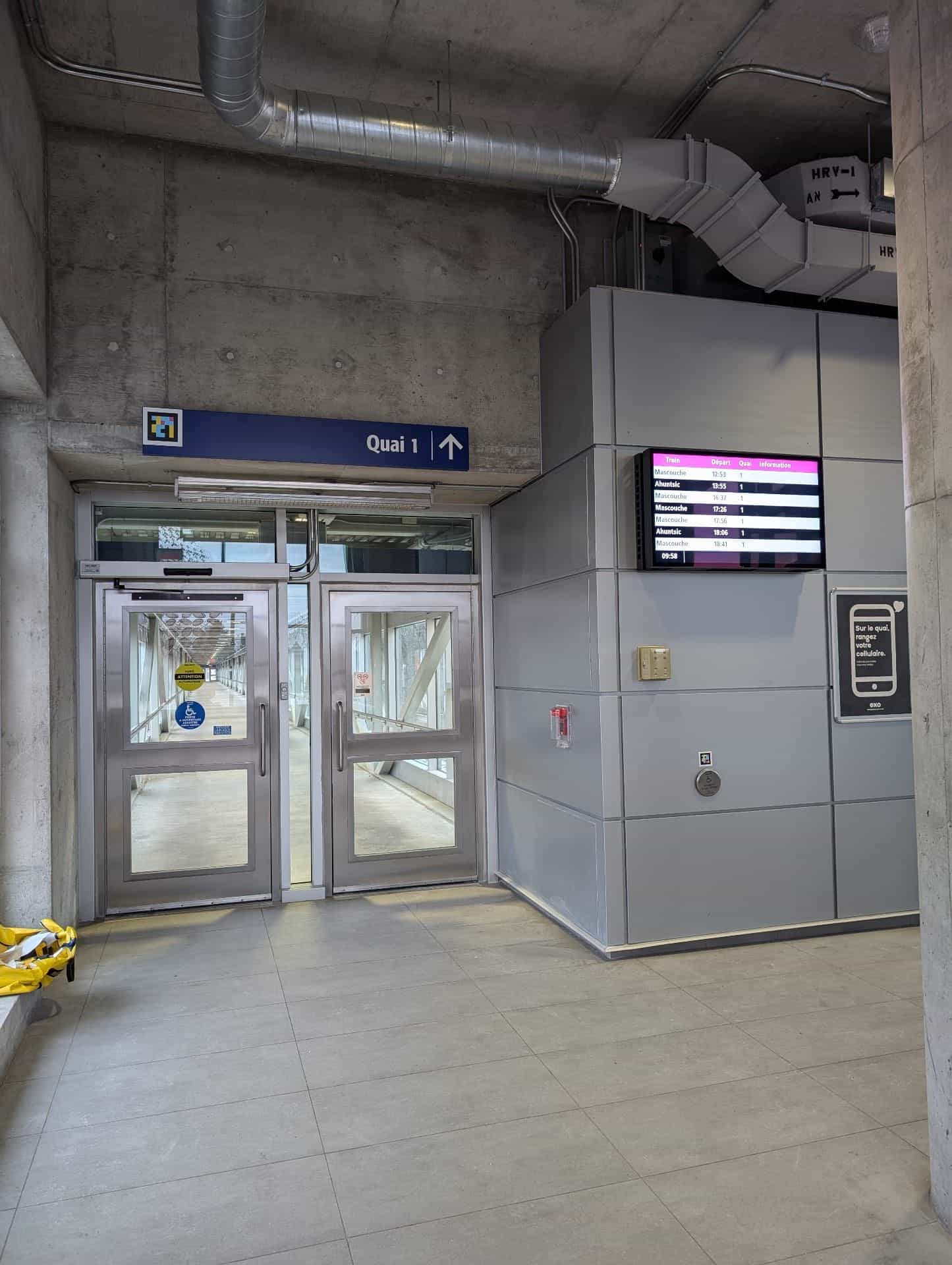
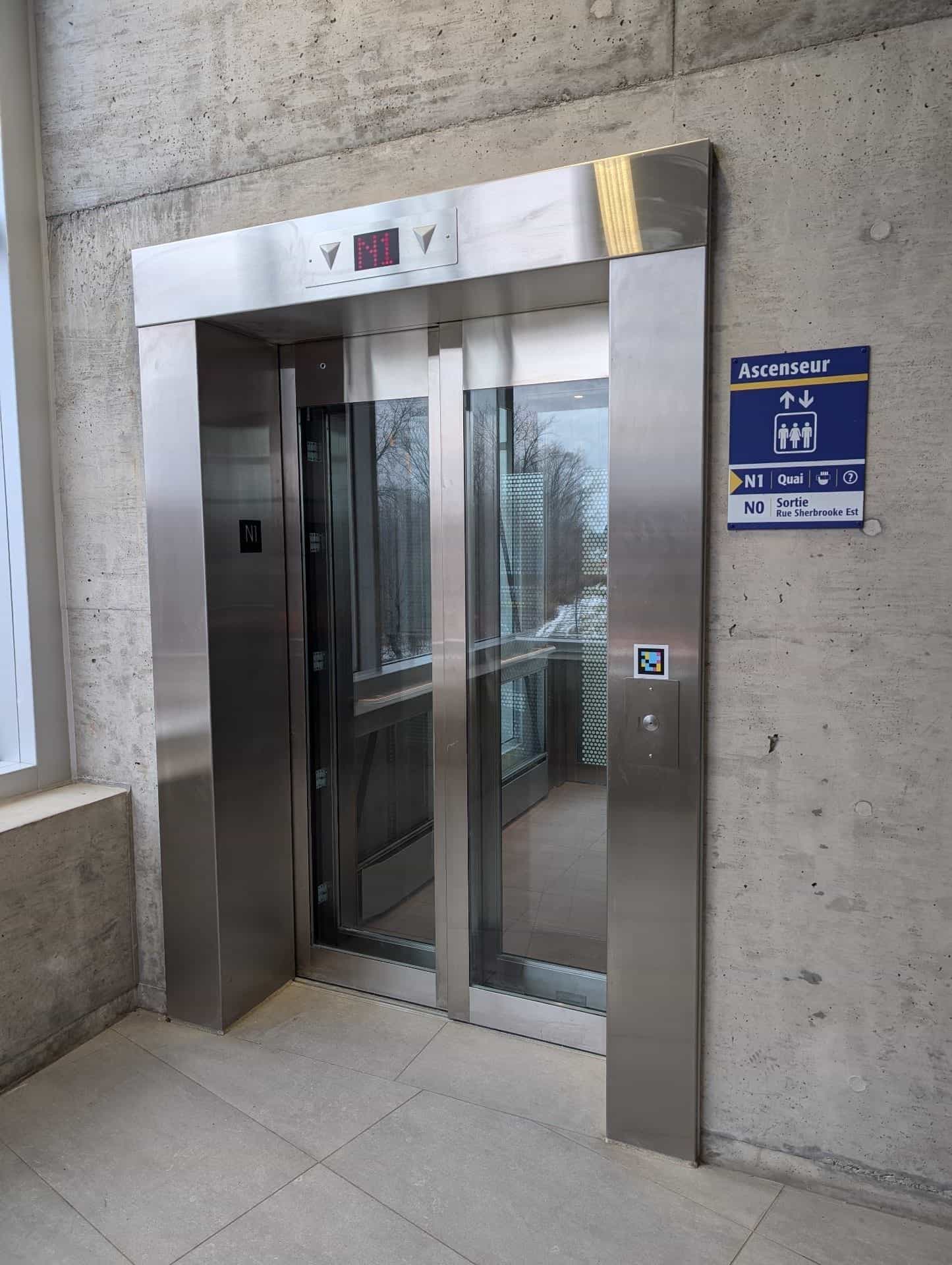
Quai 1, elevator N1 and PMR accesses
Codes are placed on the “Quai 1” directional signs, on the elevator frames “Ascenseur N1 / N0 Sortie Rue Sherbrooke Est” and next to doors marked with the wheelchair pictogram. They allow voice-guided orientation along the walkway to the platform without needing to read the signage.
- 03
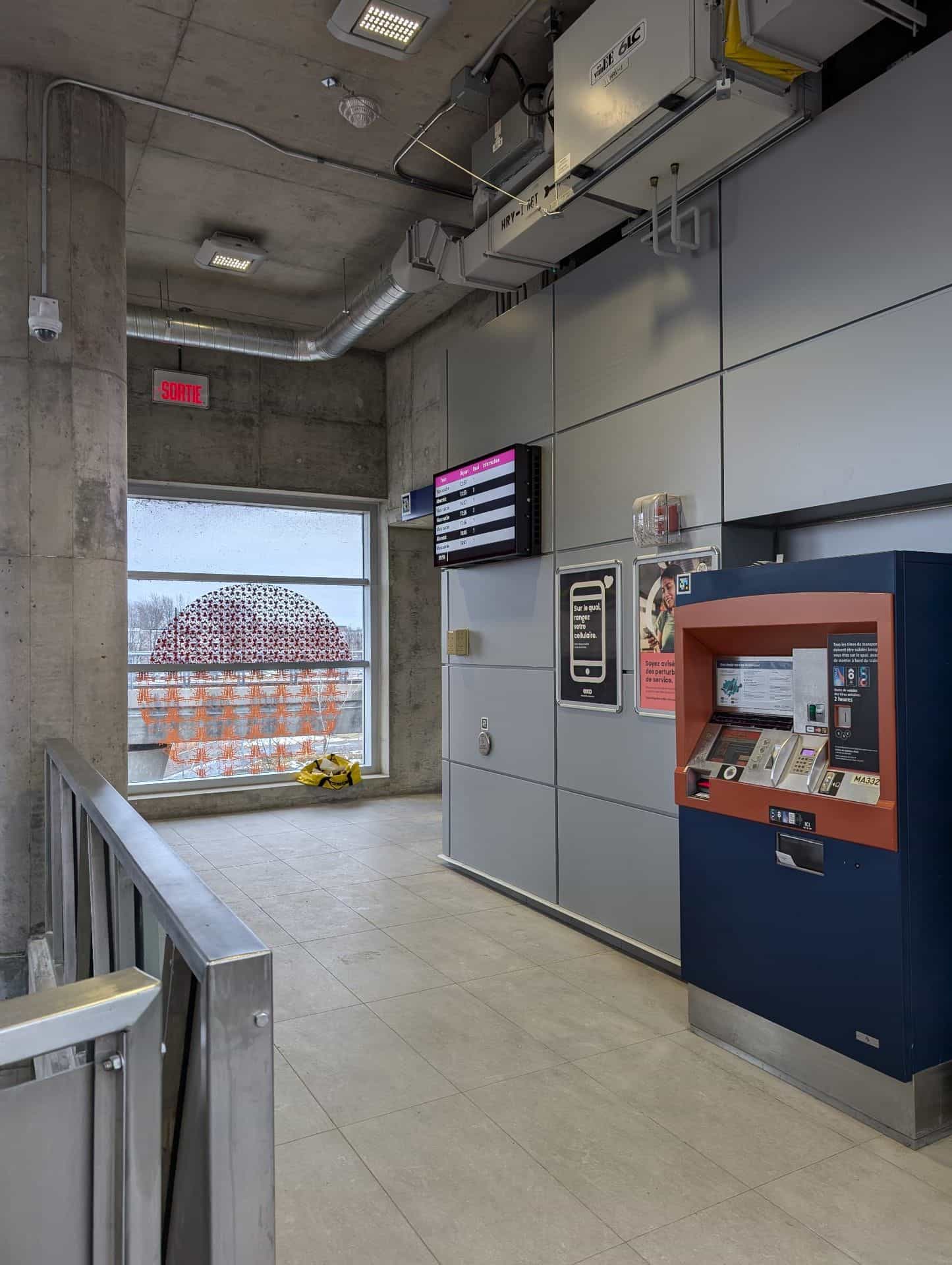
Ticket machines and departure screens
NaviLens codes have been added next to the ticket vending machines and below the “Train · Départ · Quai · Information” screens. A blind or low-vision user can confirm where to buy a ticket and check the next train to Mascouche or Ahuntsic with voice guidance.
§ The rollout up close
A voice layer over exo's blue-and-yellow signage.
§ Why it matters
Train, bus and station, all in the same app.
Multimodal
For the first time in the Greater Montréal area, a blind or low-vision person can combine commuter rail and intercity bus with continuous voice guidance, without switching apps between modes.
Bilingual
NaviLens delivers information in up to 42 languages; in an officially bilingual FR/EN region, the same code serves French-speaking, English-speaking and international travelers without printing new signage.
Evaluated pilot
18 months of controlled deployment, with feedback from blind and low-vision people, allow exo to decide on extending the rollout to the rest of its train and bus lines across the Metropolitan network.
§ And your network?
Your next station can also speak.
Tell us about your network, your pain points and the KPIs you want to move. We’ll show you how NaviLens would fit—with comparable cases.