Case study · New York
MTA — it started at Jay Street. Today it guides all of New York.
What began in 2019 as a pilot in a single Brooklyn station is now a NaviLens deployment across 59 subway stations, 133 bus stops, 4 bus lines and every car on the 6 line — funded by the US Department of Transportation.
59
Subway stations with NaviLens
133
Bus stops
42
Languages read aloud
$2 M
USDOT SMART Grant 2023
The client
Metropolitan Transportation Authority
The MTA operates the largest public transit network in North America: more than 5 million daily trips across subway, bus and commuter rail.
Its accessibility program is built to remove physical and cognitive barriers at every station. Jay Street – MetroTech, in Brooklyn, was the lab where it all began. NaviLens is now part of the agency's accessible-wayfinding standard, expanding across Manhattan, the Bronx and the rolling stock.
§ The challenge
Making a transit network the size of New York accessible.
- 01
Start with the hardest station
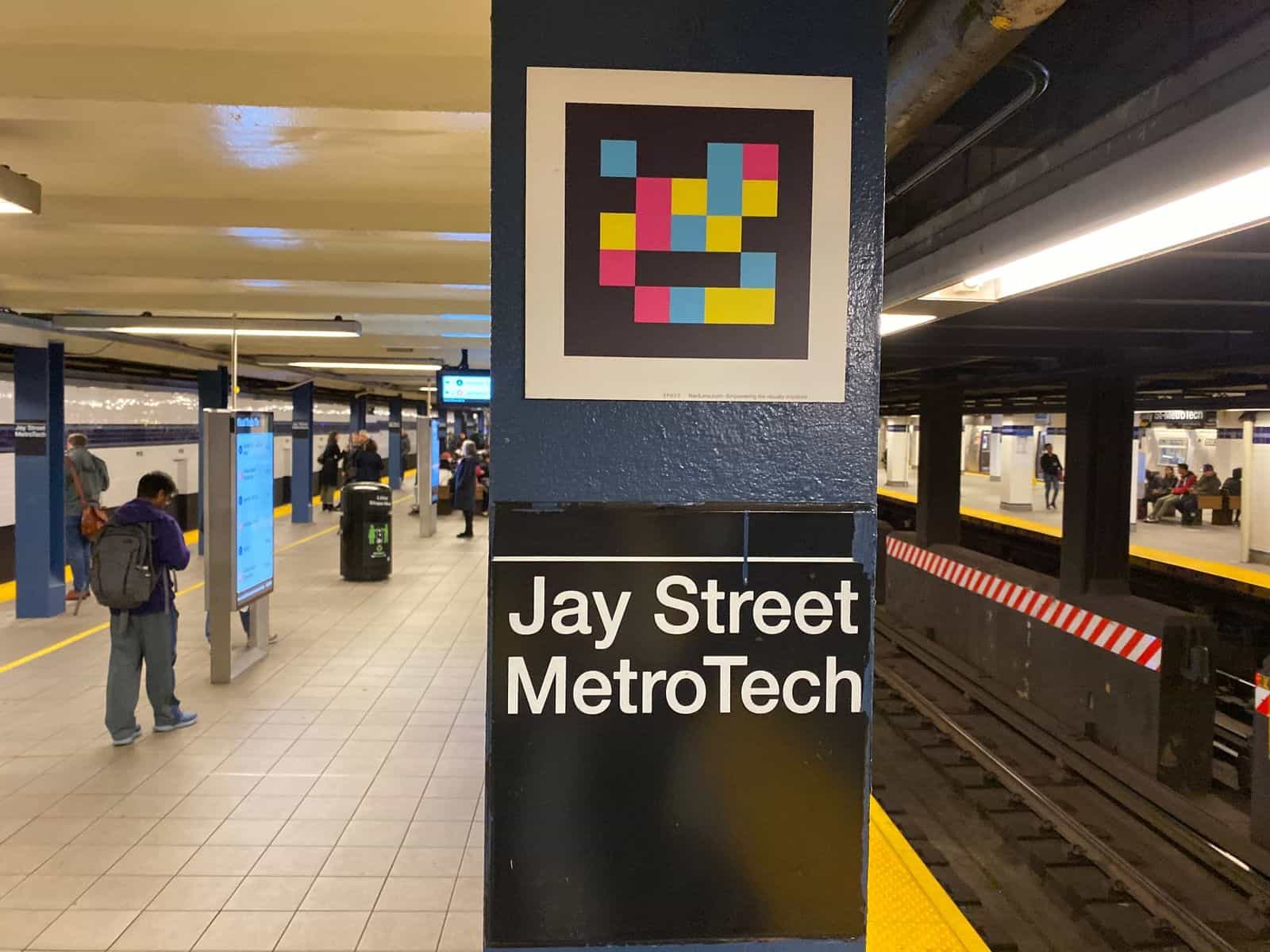
Jay Street – MetroTech was chosen as the Accessible Station Lab: three lines, multiple levels, thousands of riders crossing every hour. If NaviLens worked there, it would work anywhere on the system.
- 02
Scale with zero construction
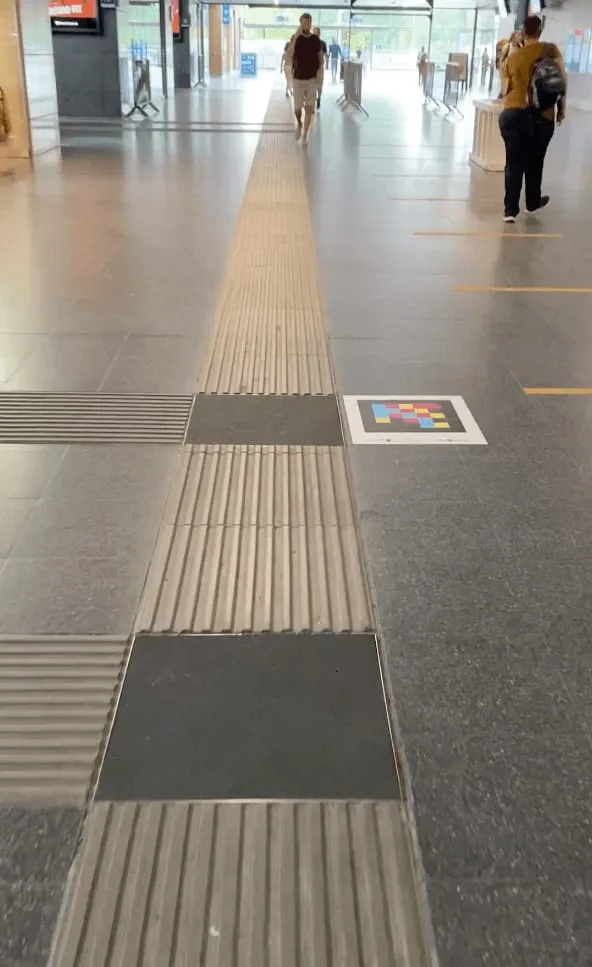
Going from a pilot to 59 stations, 133 bus stops and the entire 6-line fleet requires a technology that coexists with existing signage — no new power, no new panels. Zero added infrastructure.
- 03
Real time, in 42 languages
Arrivals, elevator and escalator status, service alerts and reroutes, delivered on the spot in the phone's language. Essential in a city where more than 200 languages are spoken.
§ The solution
Codes embedded into the signage. Zero construction.
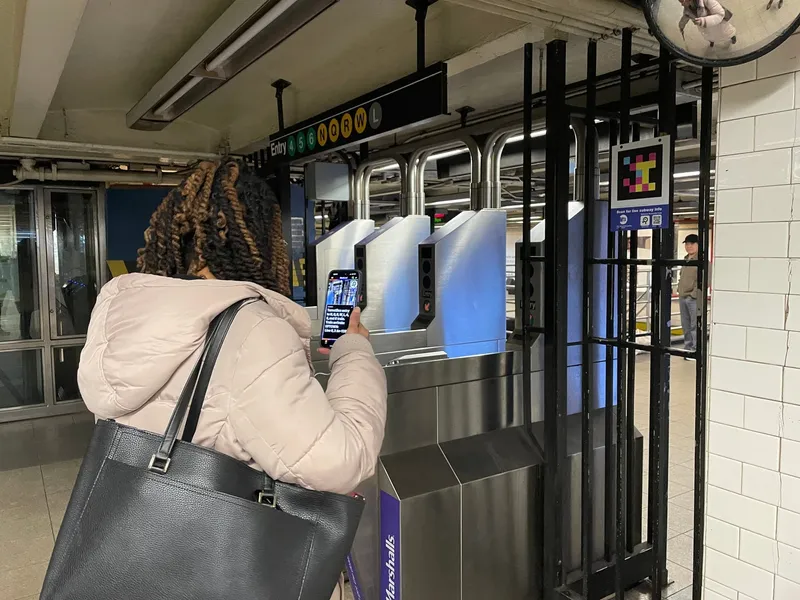
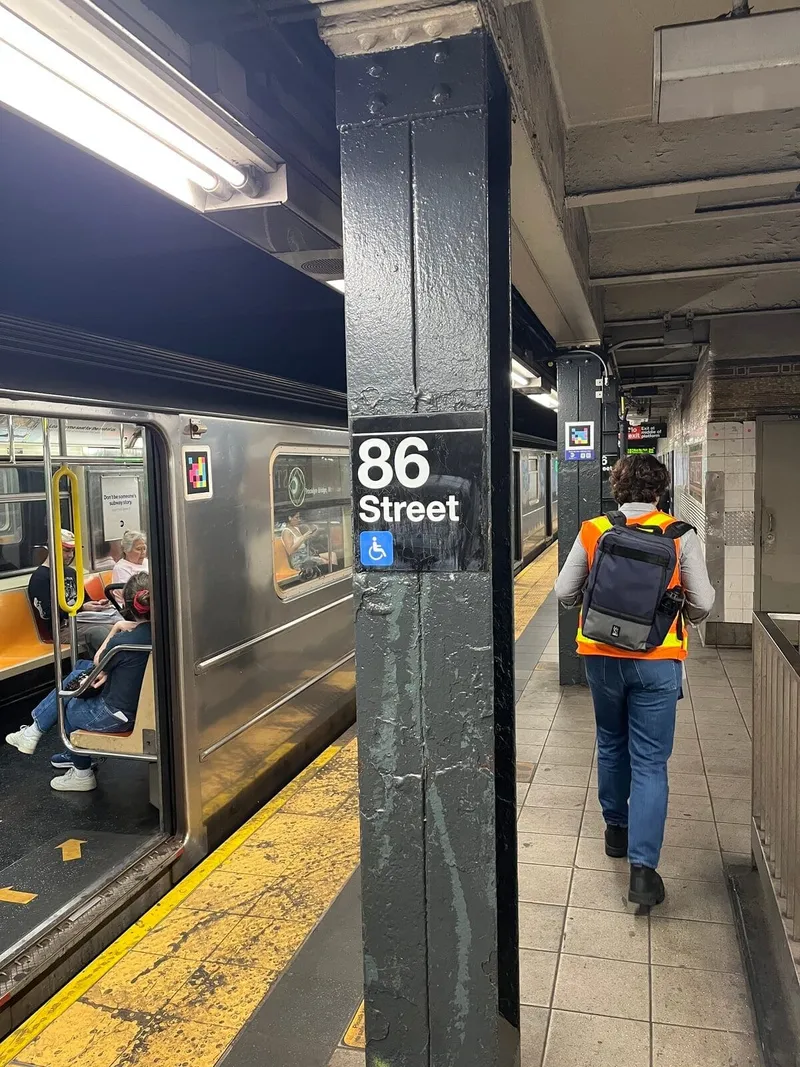
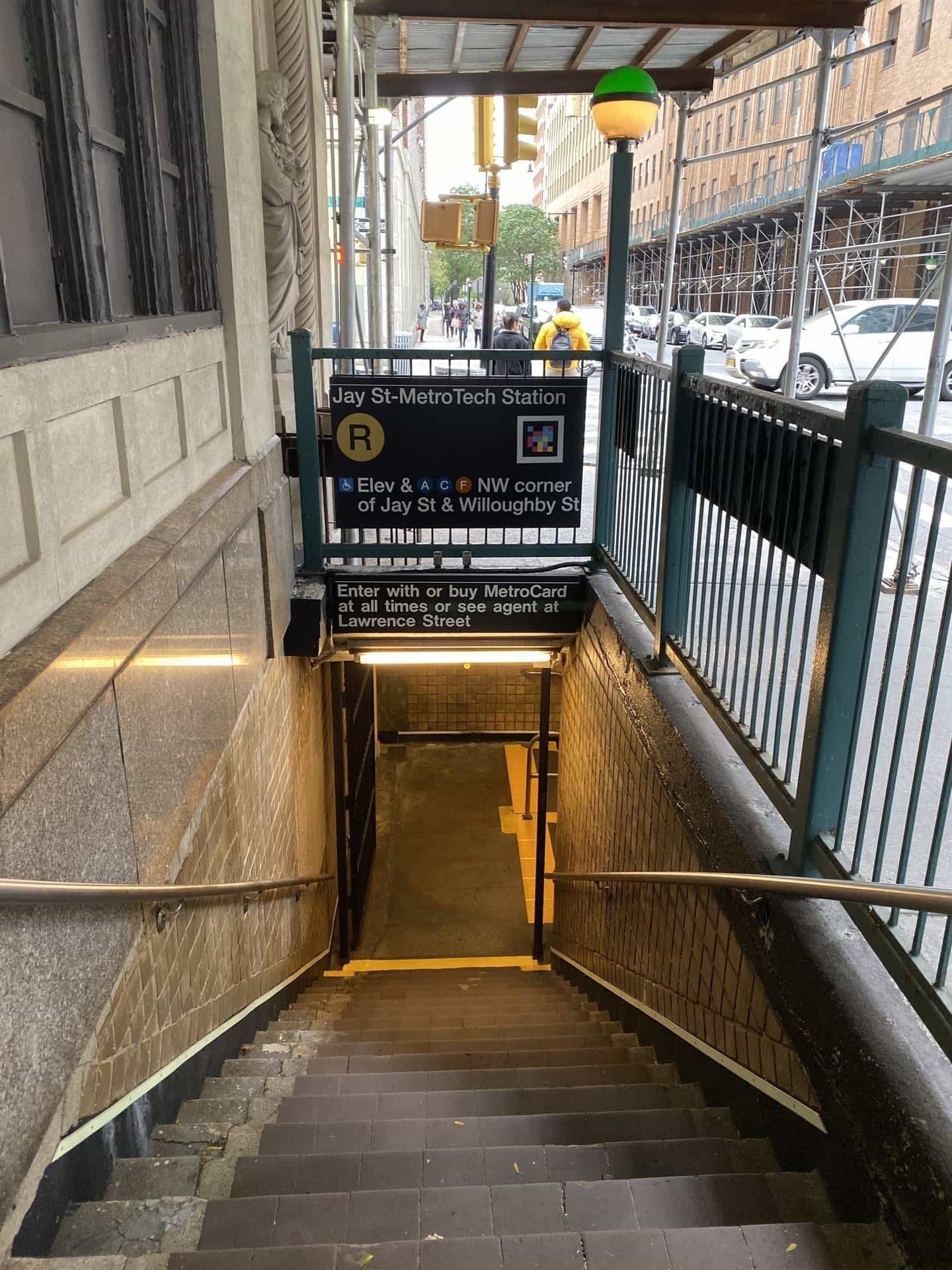
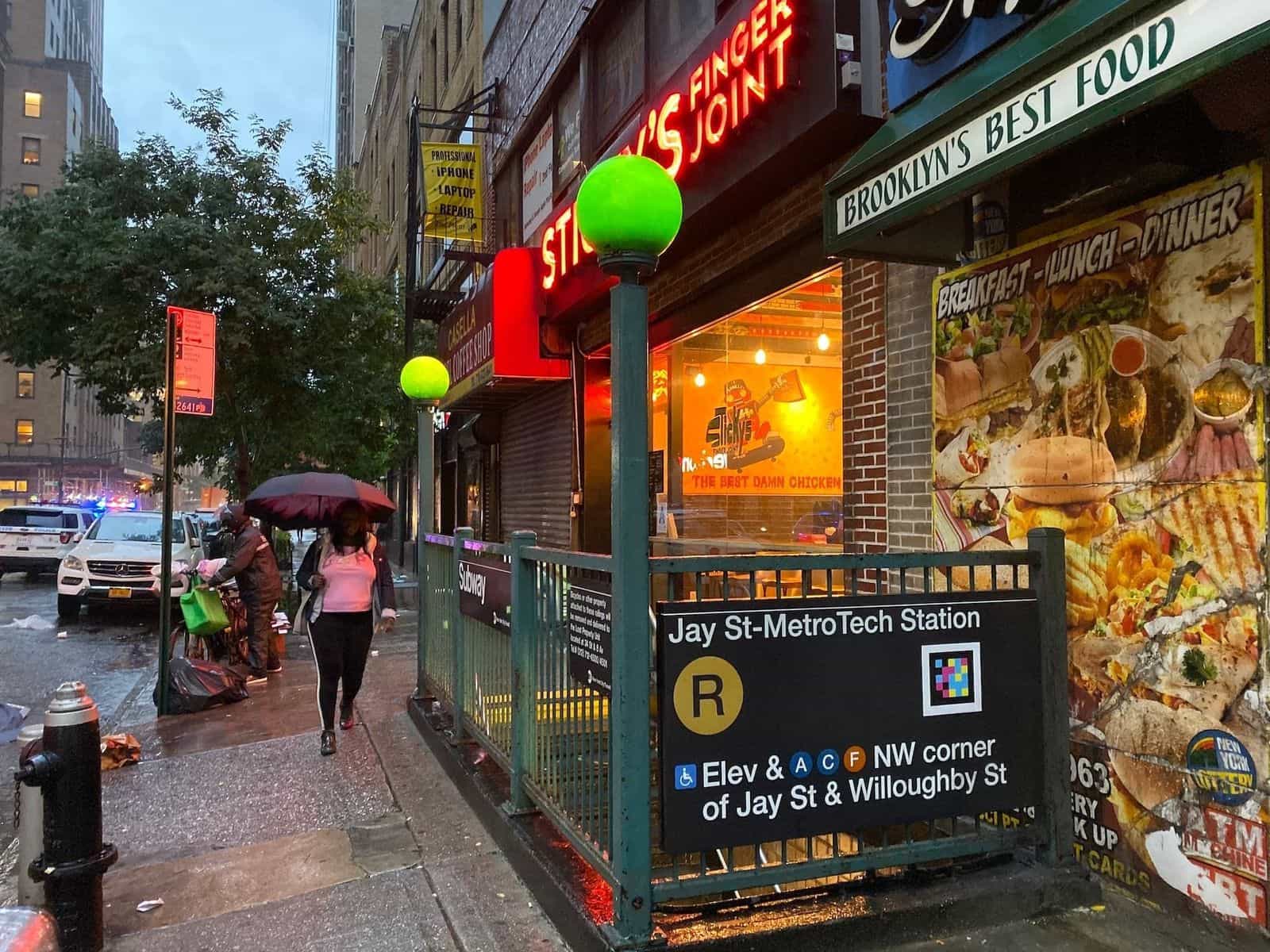
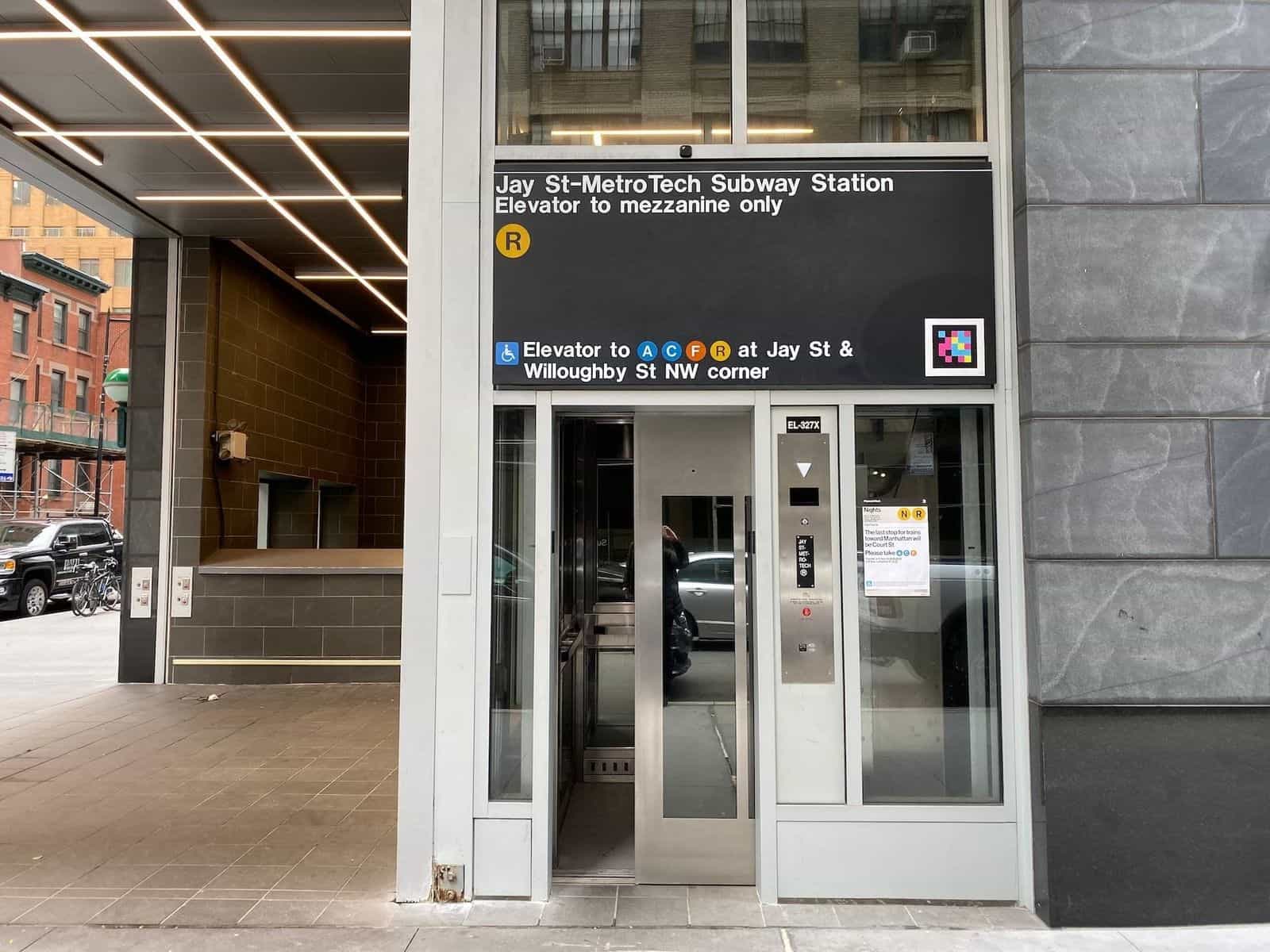
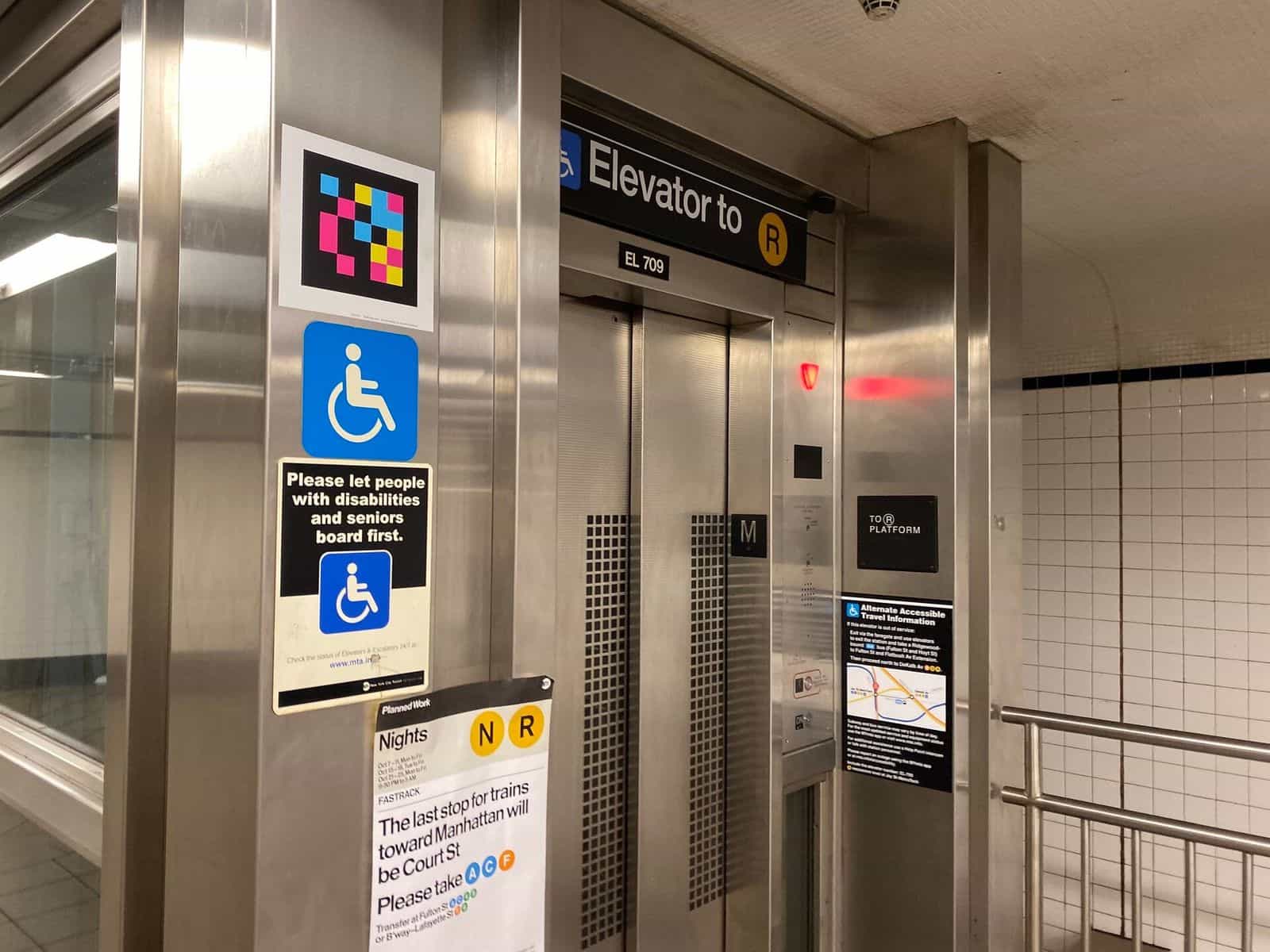
We printed NaviLens codes and embedded them into the existing signage at every station, bus stop, elevator and subway car: entrances, corridors, transfers, platforms and street poles.
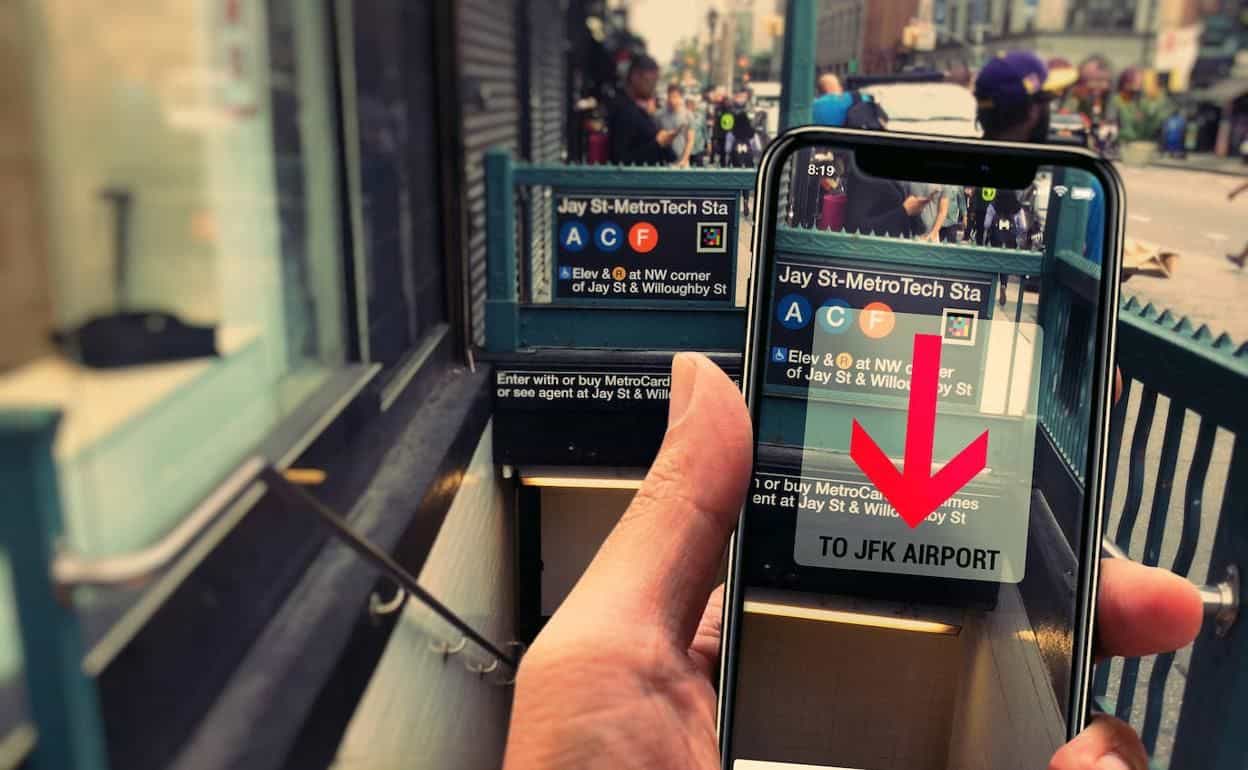
Any rider using the app—in their own language—gets audio guidance, haptic vibration and augmented-reality arrows toward their destination. NaviLens GO adds upcoming arrivals, elevator and escalator status and live service alerts, reading directly from the MTA's official feeds.
§ Where it is today
A live network: Manhattan, the Bronx and the fleet.
Official coverage reported by the MTA on mta.info/navilens (updated Sept. 2025). The rollout is phased and funded by the USDOT SMART Grant.
Subway stations
- Manhattan
- 41 / 151
- Bronx
- 17 / 70
- Brooklyn
- 1 / 169
- Total
- 59 / 493
Stations with NaviLens / total stations in the borough.
Bus stops
- Manhattan
- 54 / 2,156
- Bronx
- 79 / 1,864
- Lines
- Bx12, Bx12-SBS, M23-SBS, M66
- Total
- 133 / 13,269
Stops and lines with NaviLens on buses and poles.
§ Stations served
The stations and stops where NaviLens is already live.
Official list published by the MTA at mta.info/navilens (updated Sept. 2025). It expands in phases under the USDOT SMART Grant.
View the full list of stations⌄
Bronx · 17 stations (6 line)
- · 3 Av-138 St (6)
- · Brook Av (6)
- · Buhre Av (6)
- · Castle Hill Av (6)
- · Cypress Av (6)
- · E 143 St-St Mary's St (6)
- · E 149 St (6)
- · Elder Av (6)
- · Hunts Point Av (6)
- · Longwood Av (6)
- · Middletown Rd (6)
- · Morrison Av-Soundview (6)
- · Pelham Bay Park (6)
- · St Lawrence Av (6)
- · Westchester Sq-East Tremont Av (6)
- · Whitlock Av (6)
- · Zerega Av (6)
Manhattan · stations by line
- · 14 St-Union Sq (4·5·6)
- · 14 St-Union Sq (L·N·Q·R·W)
- · 14 St / 8 Av (A·C·E·L)
- · 18 St (1)
- · 23 St (1)
- · 23 St (6)
- · 23 St (C·E)
- · 28 St (1)
- · 28 St (6, downtown)
- · 33 St (6)
- · 50 St (1)
- · 51 St (6·E·M)
- · 59 St-Columbus Circle (A·C·B·D·1)
- · 59 St (4·5·6·N·R·W)
- · 66 St-Lincoln Center (1)
- · 68 St-Hunter College (6)
- · 72 St (1·2·3)
- · 77 St (6)
- · 86 St (4·5·6)
- · 96 St (6)
- · 103 St (6)
- · 110 St (6)
- · 116 St (6)
- · 125 St (4·5·6)
- · Astor Pl (6)
- · Bleecker St (6)
- · Broadway-Lafayette St (B·D·F·M)
- · Brooklyn Bridge-City Hall (4·5·6·J·Z)
- · Canal St (6)
- · Canal St (N·Q·R·W·J·Z)
- · Christopher St-Stonewall (1)
- · Houston St (1)
- · Spring St (6)
Brooklyn · Jay St – MetroTech (A·C·F·R), where the pilot launched in 2019.
Buses: Bx12 and Bx12-SBS (Bronx/Manhattan), M23-SBS and M66 (Manhattan).
§ How it's used
An app that adapts to the rider, not the other way around.
- 01
Phone against your chest
Just walk with the phone resting on your chest: the app scans the environment and detects codes as you move, no aiming needed.
- 02
Codes detected without framing
NaviLens codes are dynamic: they don't need to be in focus or fully within the camera frame to be read.
- 03
Shake to repeat
Missed the last instruction? Shake the phone and the app re-reads the last code detected.
NaviLens
Visual → audio. Built primarily for people who are blind or have low vision.
- · Wayfinding and orientation inside the station.
- · Exact location of bus stops.
- · Real-time subway and bus arrivals on scan.
NaviLens GO
Information in visual form, designed for everyone.
- · Upcoming arrivals on top of the scanned sign.
- · Systemwide service status.
- · Elevator and escalator status at your station.
Video without dialogue · image only
§ On video
Code reading on the move, directly on the bus itself.
The user points the phone at a moving bus and NaviLens reads the code despite the vehicle's speed. Distance, angle and motion are no longer a barrier to identifying the line, destination and service information.
§ Official resources
Information that is open to every rider.
Official MTA brochures (6 languages)
Downloadable PDFs published by the MTA. Each brochure explains how to download and use NaviLens and NaviLens GO across the network.
MTA rider feedback survey
The MTA keeps an open 5-minute survey to gather feedback from riders who have used NaviLens or NaviLens GO in a station, on a train, at a bus stop or on a bus.
Open survey ↗USDOT report — "Inclusive Wayfinding Through NaviLens"
Official US Department of Transportation report (Philipson, Ramsaywack and Singh — Dec 31, 2025) documenting the NaviLens deployment at the MTA under the SMART Grant.
View on ROSA-P (DOT) ↗§ Through the station
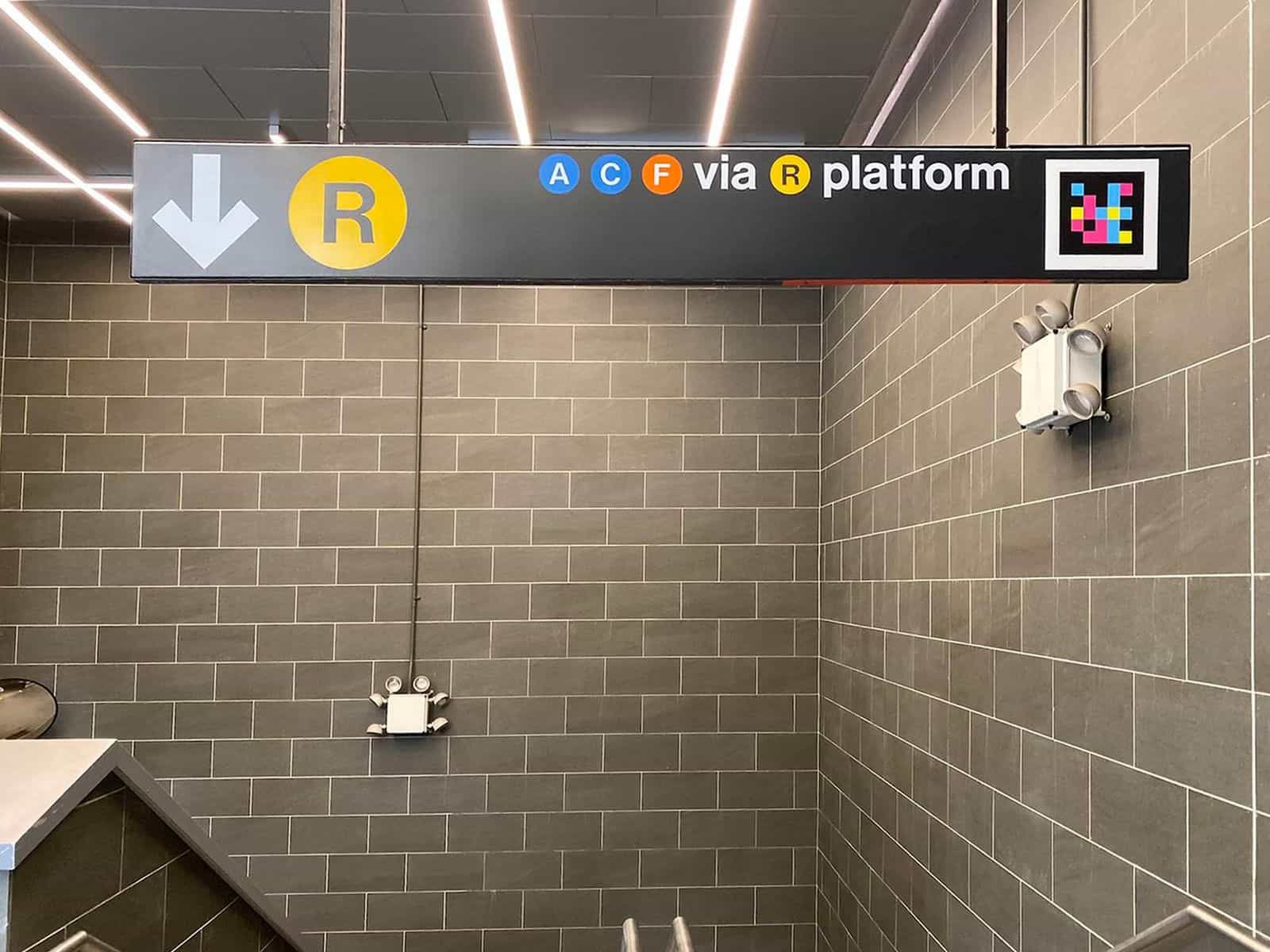
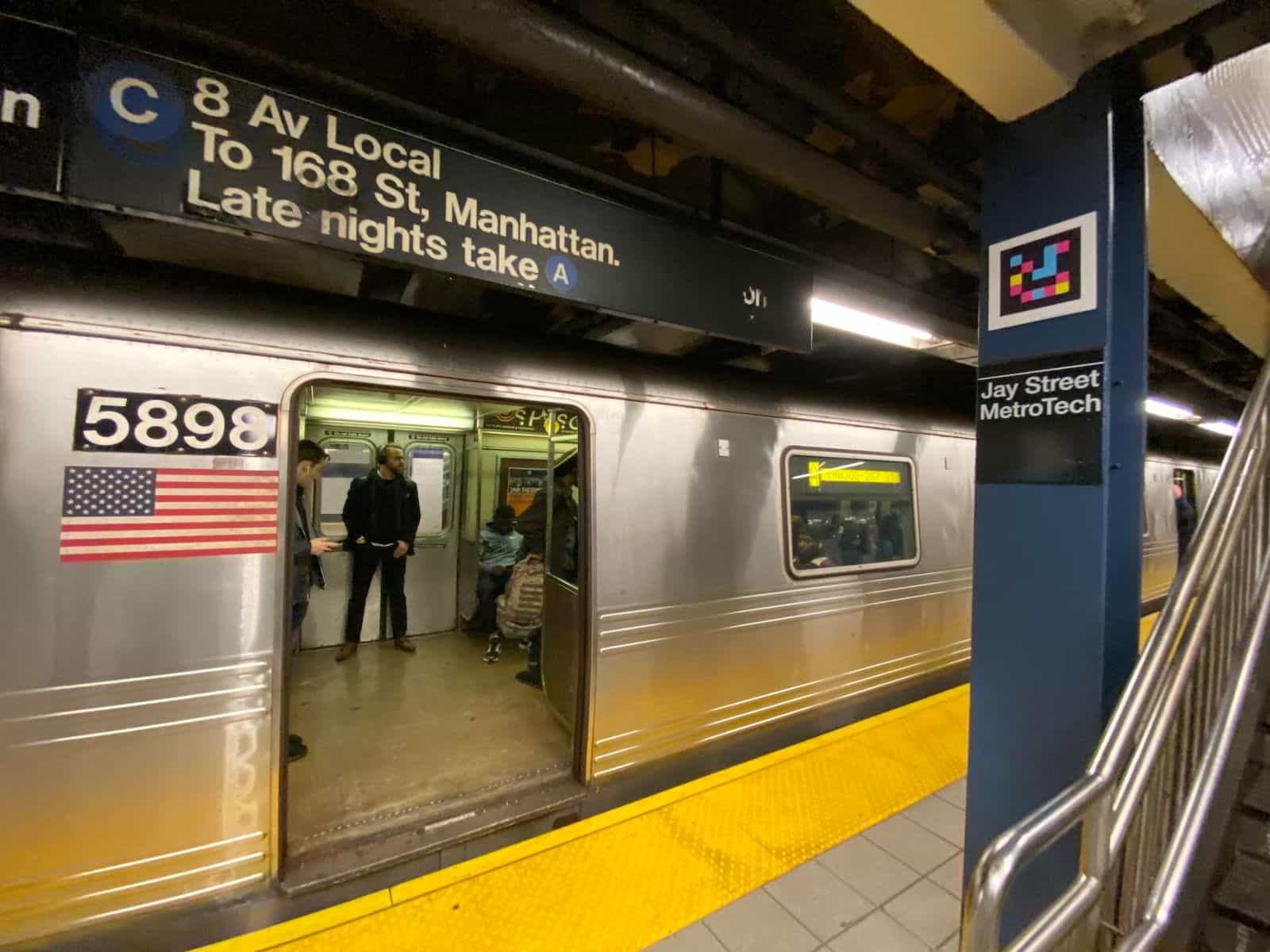
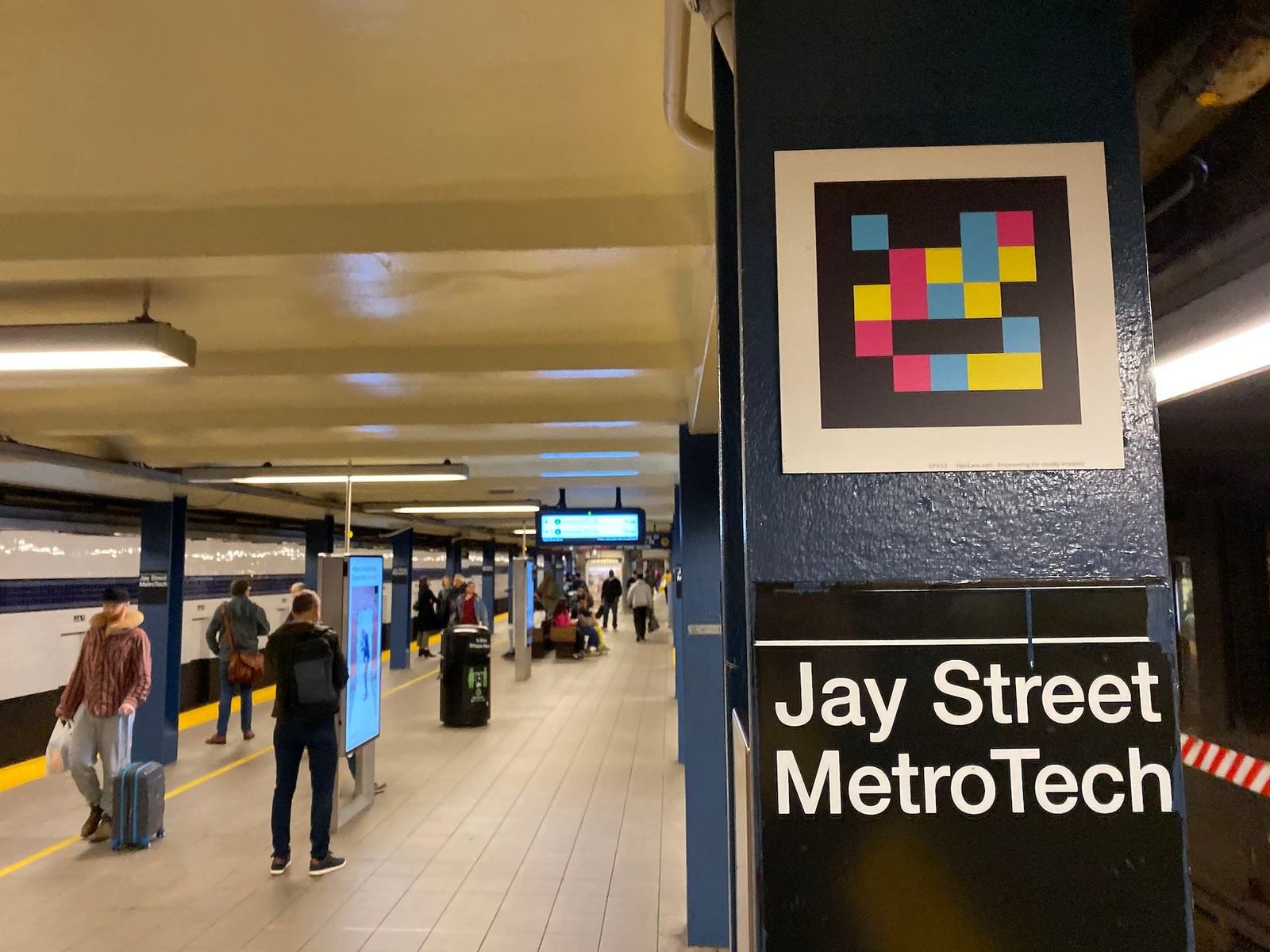
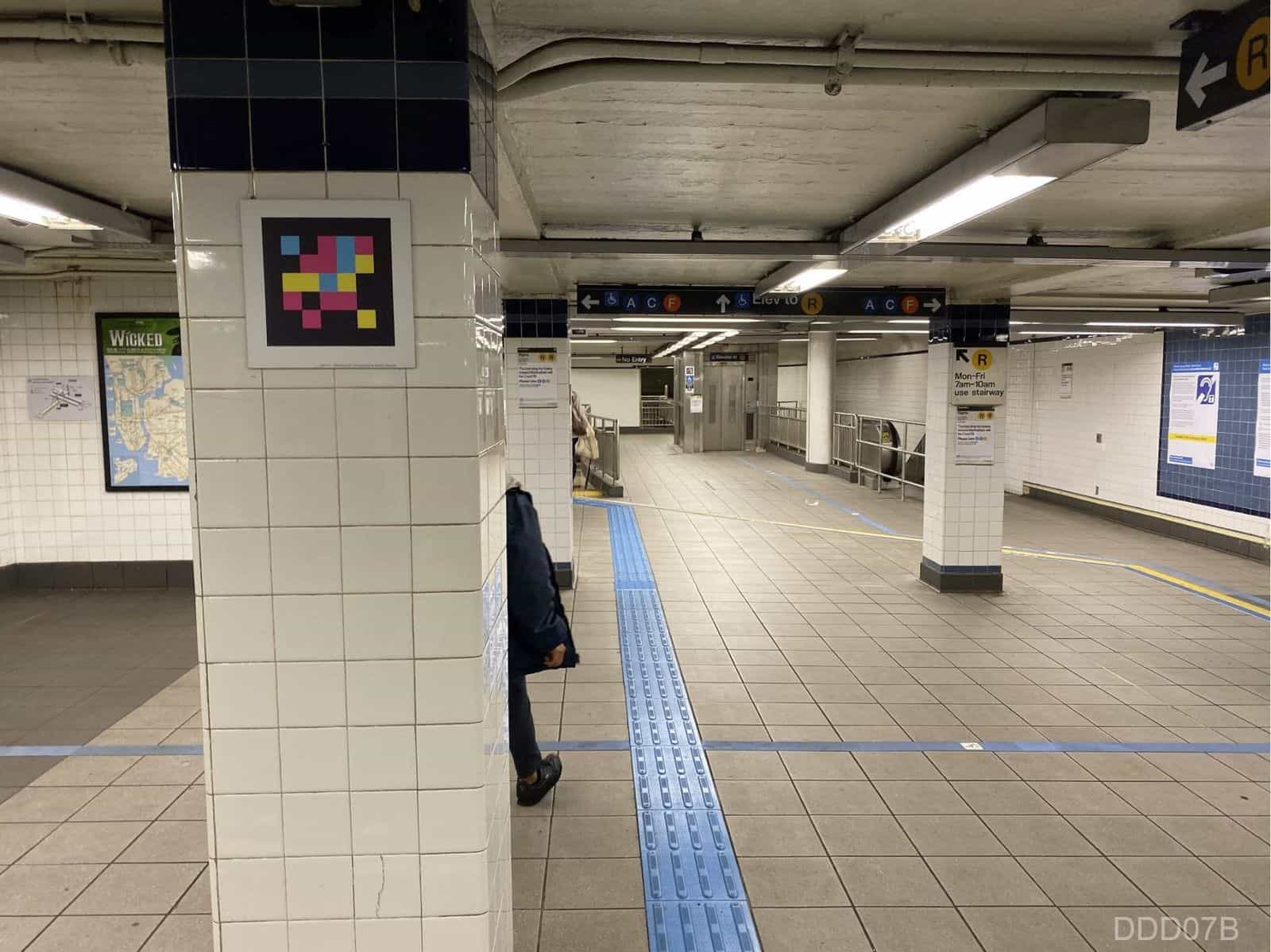
From Jay Street to the rest of the network, every landmark has a voice.
§ Timeline
From a Brooklyn pilot to an MTA-wide standard.
- Oct 2019
Accessible Station Lab
MTA New York City Transit launches the Accessible Station Lab at Jay St – MetroTech (Brooklyn), a “living lab” to test more than a dozen accessibility technologies, NaviLens among them.
- Jan 2020
“Surge of excited feedback”
NYC Transit announces a wave of positive feedback after the first months of the pilot and extends rider and advocacy-group comment collection.
- Mar 2023
USDOT SMART Grant ($2M)
Senator Schumer and Senator Gillibrand announce the federal SMART Grant from USDOT to expand NaviLens across the entire 6 line, its subway cars and the Bx12-SBS bus line.
- Jul 2023
Disability Pride Month
The MTA marks Disability Pride Month with an additional NaviLens expansion across stations and bus stops in NY State Senate District 47, funded by Senator Brad Hoylman-Sigal.
- 2024–2025
Manhattan + Bronx underway
Active rollout across 41 Manhattan stations, 17 Bronx stations and Jay St (Brooklyn). 133 bus stops and 4 bus lines (Bx12, Bx12-SBS, M23-SBS, M66). Every car on the 6 line carries integrated codes.
- Today
MTA standard
The MTA maintains a dedicated official page (mta.info/navilens), brochures in 6 languages (English, Bengali, Chinese, Haitian Creole, Korean and Russian) and an ongoing rider feedback survey. NaviLens and NaviLens GO deliver real-time arrivals and elevator/escalator status.
§ Results
A transit network that speaks the languages of New York.
59 + 133
Subway stations and bus stops with NaviLens across Manhattan, the Bronx and Brooklyn
42 languages
Automatic voice read-out in the phone's own language, including Bengali, Chinese, Haitian Creole, Korean and Russian
Real time
Arrivals, elevator and escalator status and service alerts via NaviLens GO over the MTA's official feeds
§ What they said
Voices from the rollout, in their own words.
“It's really encouraging to not only see so many customers test the features as they travel through the station but to ask questions and provide comments as well. We welcome the honest feedback and look forward to receiving results that will help us determine what features to incorporate into future accessibility projects.”
“These features greatly improve the transit experience of people with mobility, hearing, vision and intellectual/developmental disabilities. When expanded to more stations, they can be true game-changers for making the subway system more accessible.”
§ And your network?
Your next station can also speak.
Tell us about your network, your pain points and the KPIs you want to move. We’ll show you how NaviLens would fit—with comparable cases.