Case study · Japan · Tokyo · Haneda Terminal 3
Haneda T3 speaks in any language.
AMC (Access Move Comfort) installs NaviLens codes across the Tokyo International Air Terminal: hanging signage, elevators, restrooms, emergency exits, the inter-terminal shuttle stop and shops in the Edo Koji gallery.
Haneda T3
Tokyo International Air Terminal (TIAT)
AMC
Rollout operator · Access Move Comfort
Lobbies · Edo Koji
Departures lobby, connections and Edo retail area
42
Languages read aloud by NaviLens GO
The client
Tokyo International Air Terminal —Haneda T3 · operated with AMC
The Tokyo International Air Terminal (TIAT) runs Terminal 3 at Haneda, Tokyo's international gateway. Together with Japan Airport Terminal, NTT and Panasonic, it has spent years developing an Information Universal Design strategy to improve hospitality for visitors with diverse profiles (NTT/Panasonic/JAT/TIAT, 2017).
In 2023, the Japanese company Access Move Comfort (AMC) brought NaviLens to part of T3: every code carries a small “AMC” tag identifying the rollout operator.
The result is a layer of audio information that runs through the airport from the TIAT welcome panel to the traditional restaurants and shops of Edo Koji on the 4th floor.
§ The challenge
Make an international airport speak to every passenger.
- 01
An international terminal with multiple languages
Haneda T3 (Tokyo International Air Terminal) receives passengers in Japanese, English, Chinese and Korean. For blind, low-vision or reading-impaired travelers, identifying a “Restrooms”, “Departures” or “Shuttle Bus” sign from a distance still depended on staff or a companion.
- 02
Connections between terminals and modes of transport
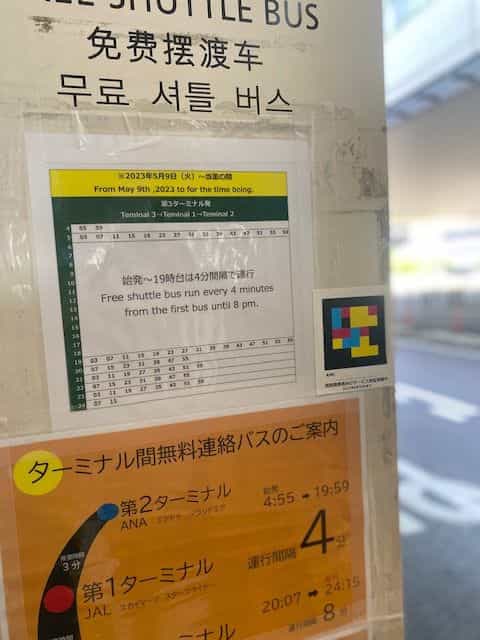
The free shuttle links T3 with T1 and T2 every 4 minutes until 20:00. Reading a printed schedule on a column or a corridor panel from several yards away is hard for many passengers — especially with luggage and a tight boarding time.
- 03
Finding the elevator, restroom and emergency exit
In such a large building, critical points—elevator, accessible restroom, emergency exit, official taxi stand—need to announce themselves. The challenge was doing so without cluttering the existing signage.
§ The solution
A code next to every sign and every door.
AMC installs NaviLens on hanging signage (shuttle, domestic connections, restrooms), information columns, elevators, emergency exits, free shuttle stops and shop signs.
The NaviLens GO app detects the codes from several yards away, at an angle and under the atrium's natural light, and reads them in 42 languages. The same sign works for a Japanese traveler, a Chinese visitor and a blind European tourist.
§ Timeline
From arrival to boarding.
- 2023
AMC installs NaviLens at Haneda T3
Japanese company Access Move Comfort (AMC) places NaviLens codes across a part of Terminal 3 at Haneda, identifying each one with the “AMC” tag underneath. It covers lobbies, connections and retail areas.
- Wayfinding
Codes on hanging signage
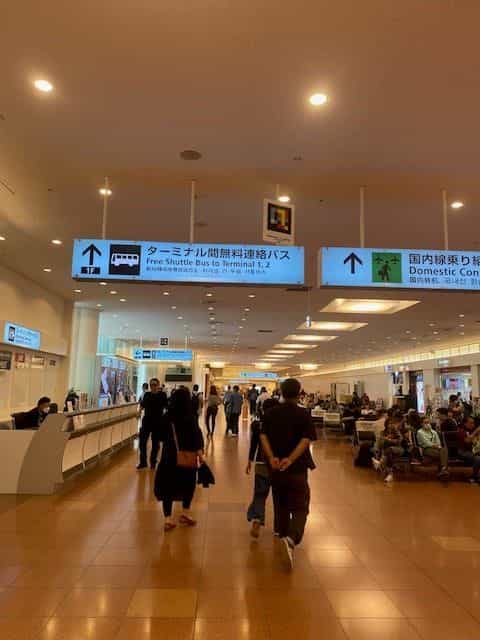
The hanging “Free Shuttle Bus to Terminal 1, 2”, “Domestic Connecting” and “Restrooms” signs embed a NaviLens code among the pictograms. The app detects them from several yards away and reads them in the passenger's language.
- Edo Koji
Restaurants and shops in the Japanese gallery
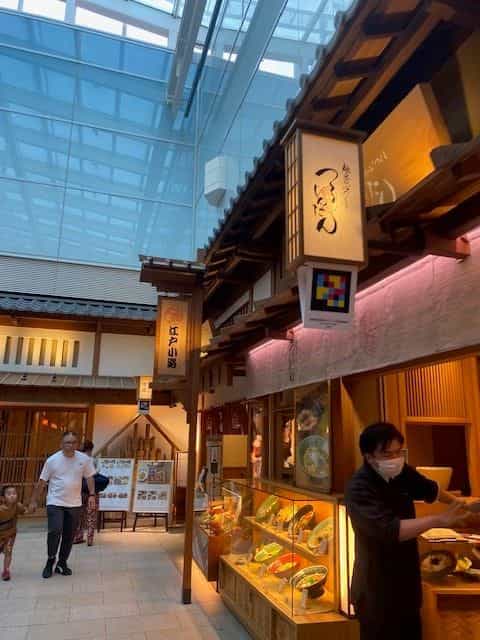
In the Edo Koji retail gallery (4F), restaurants like Tsurutontan and yukata shops hang a NaviLens code next to their sign: a blind traveler can tell which venue is in front of them without having to read the sign.
§ Route
From the TIAT panel to the Edo Koji gallery.
Welcome
TIAT panel — Tokyo International Air Terminal
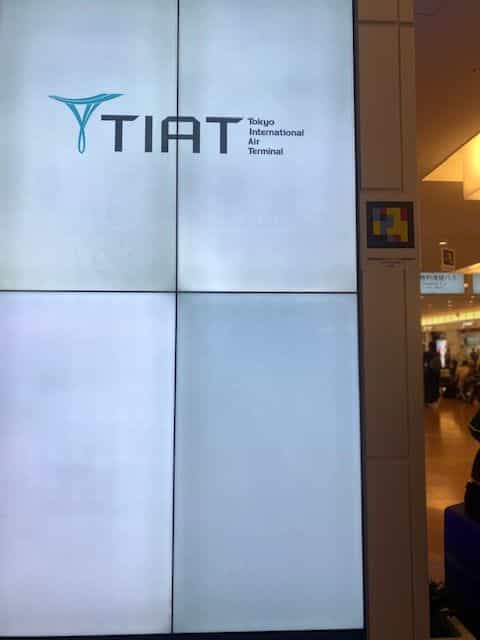
The large lit panel with the TIAT logo carries, on its right side, a NaviLens code with an “AMC” tag. Any passenger with the NaviLens GO app hears that they are in Haneda Terminal 3 and gets the first layer of orientation on arrival.
Wayfinding
“Free Shuttle Bus to Terminal 1, 2” / “Domestic Connecting”
The hanging signs for the inter-terminal shuttle and domestic flight connections embed a NaviLens code among the pictograms. A blind passenger can follow the signage without having to walk up and read the text in Japanese, English, Chinese or Korean.
Connections
“Domestic Connecting” column with taxi notice
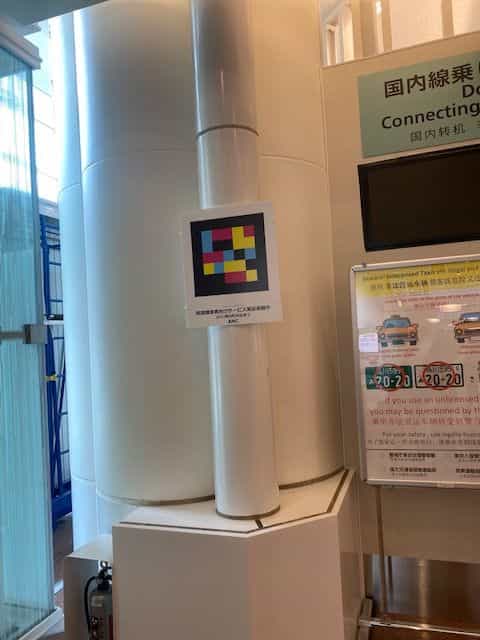
The white column next to the domestic connection doors carries a framed NaviLens code and an “AMC” tag. Next to it, the official notice about licensed taxis is voiced, so that blind and low-vision passengers don't end up in unauthorised cabs.
Vertical
Elevator with two codes and floor directory
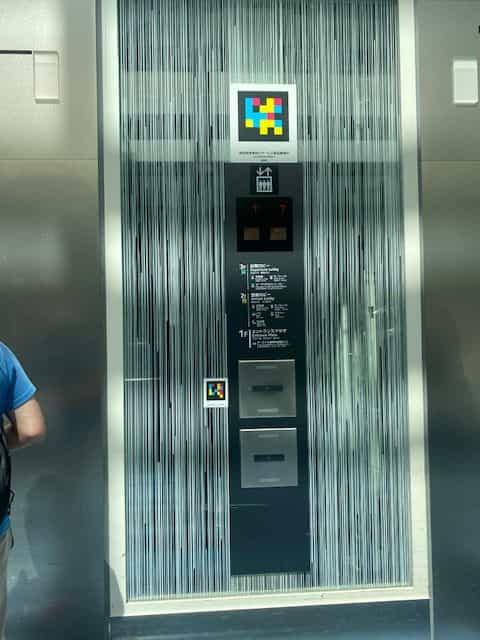
The fluted glass elevator carries two NaviLens codes: an upper one with the floor directory (Departures Lobby 3F, Arrivals Lobby 2F, Edens Plaza 1F) and another next to the button panel, so the user knows which floor they're selecting.
Restrooms
Multilingual “Restrooms” sign
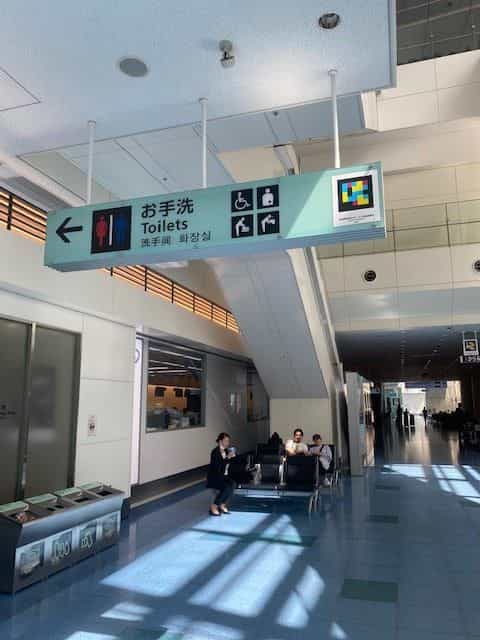
The blue sign with restroom pictograms and accessible bay embeds a NaviLens code on the right. The app indicates whether the accessible restroom is on the left and what services it includes — no need to read kanji, hangul or English.
Lobby
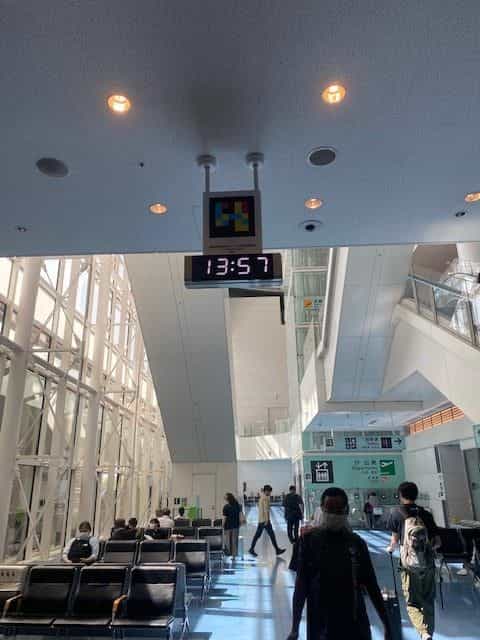
Departures clock and ceiling code
The digital clock + NaviLens code combination hangs from the departures lobby ceiling. The user points at the lit area and hears confirmation that they're in the Departures area with the current time read by the app.
Emergency
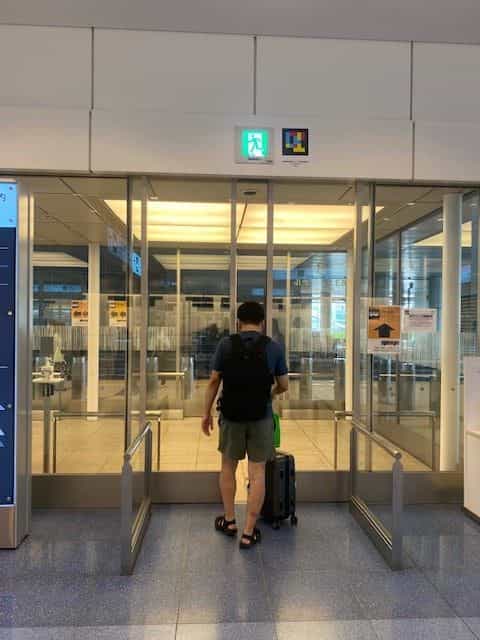
Emergency exit with code next to the pictogram
Above the glass double doors, the green emergency exit icon shares space with a NaviLens code. In case of evacuation, the app's voice reinforces direction and describes the exit for blind people.
Transport
Inter-terminal shuttle stop
At the outdoor Free Shuttle Bus stop, the printed schedule (T3 → T1 → T2 every 4 minutes until 20:00) carries a NaviLens code next to it. The passenger hears frequencies and first/last service without having to press their face against the sign.
Edo Koji
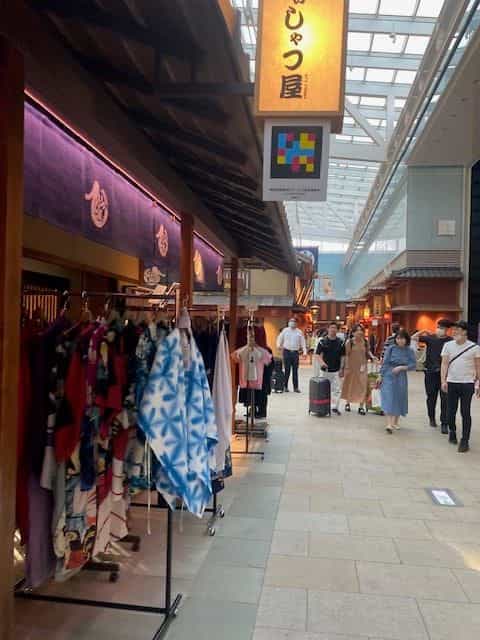
Yukata shop in the Japanese gallery
In the Edo Koji retail area (4F), a yukata shop hangs a NaviLens code from its sign. The app announces the type of venue, products and opening hours without needing to step inside.
Edo Koji
Tsurutontan restaurant
Tsurutontan, an udon restaurant, hangs its NaviLens code inside the Japanese paper lantern next to the entrance. A blind diner identifies the restaurant, hears the menu and locates the entrance unassisted.
§ Results
An accessible terminal, end to end.
Arrival → boarding
Continuous walkway: shuttle, connections, restrooms, emergency exit
Multilingual
Same code read in Japanese, English, Chinese, Korean and 38 more languages
Inclusive retail
Edo Koji restaurants and shops announce themselves with their own voice
§ What they said
“羽田空港第3ターミナルの一部にナビレンスを設置させていただきました。AMC(株式会社アクセスムーブコンフォート)はバリアフリーな社会を実現し、すべての人々が自由に移動し、生活を楽しめるよう取り組んでいます。”
“Public Testing of Information Universal Design begins at Haneda Airport — World-leading hospitality enters trial phase at the 'Gateway to Japan'. Tokyo International Air Terminal Corporation, Japan Airport Terminal Co., NTT and Panasonic launch a joint public test of new wayfinding technologies for international visitors with diverse needs.”
“New Haneda Airport Terminal facilities accommodating the increase in international flights are fully operational from March 29, 2020 — coinciding with a 40% increase in international flight slots, including early morning and late-night flights.”
§ And your network?
Your next station can also speak.
Tell us about your network, your pain points and the KPIs you want to move. We’ll show you how NaviLens would fit—with comparable cases.