Case study · Rionegro · Antioquia · Colombia
From Hall B to the Gate, in 42 languages.
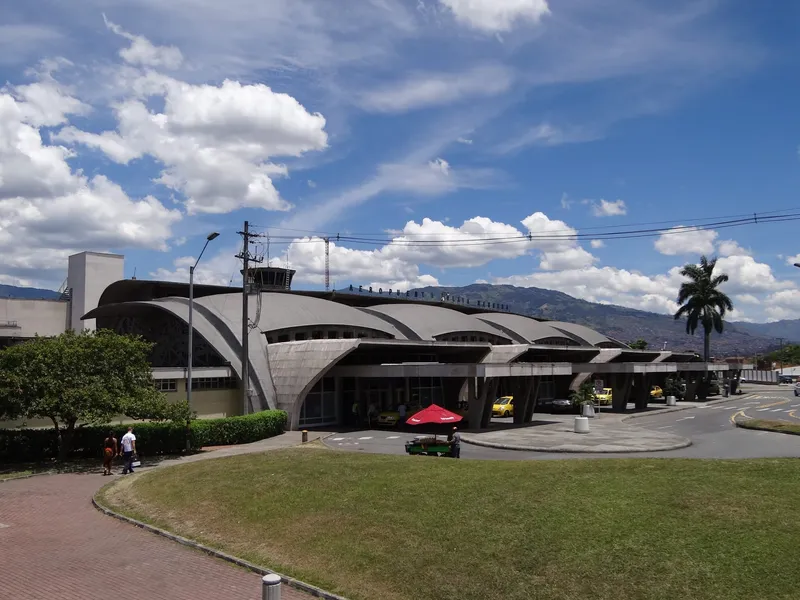
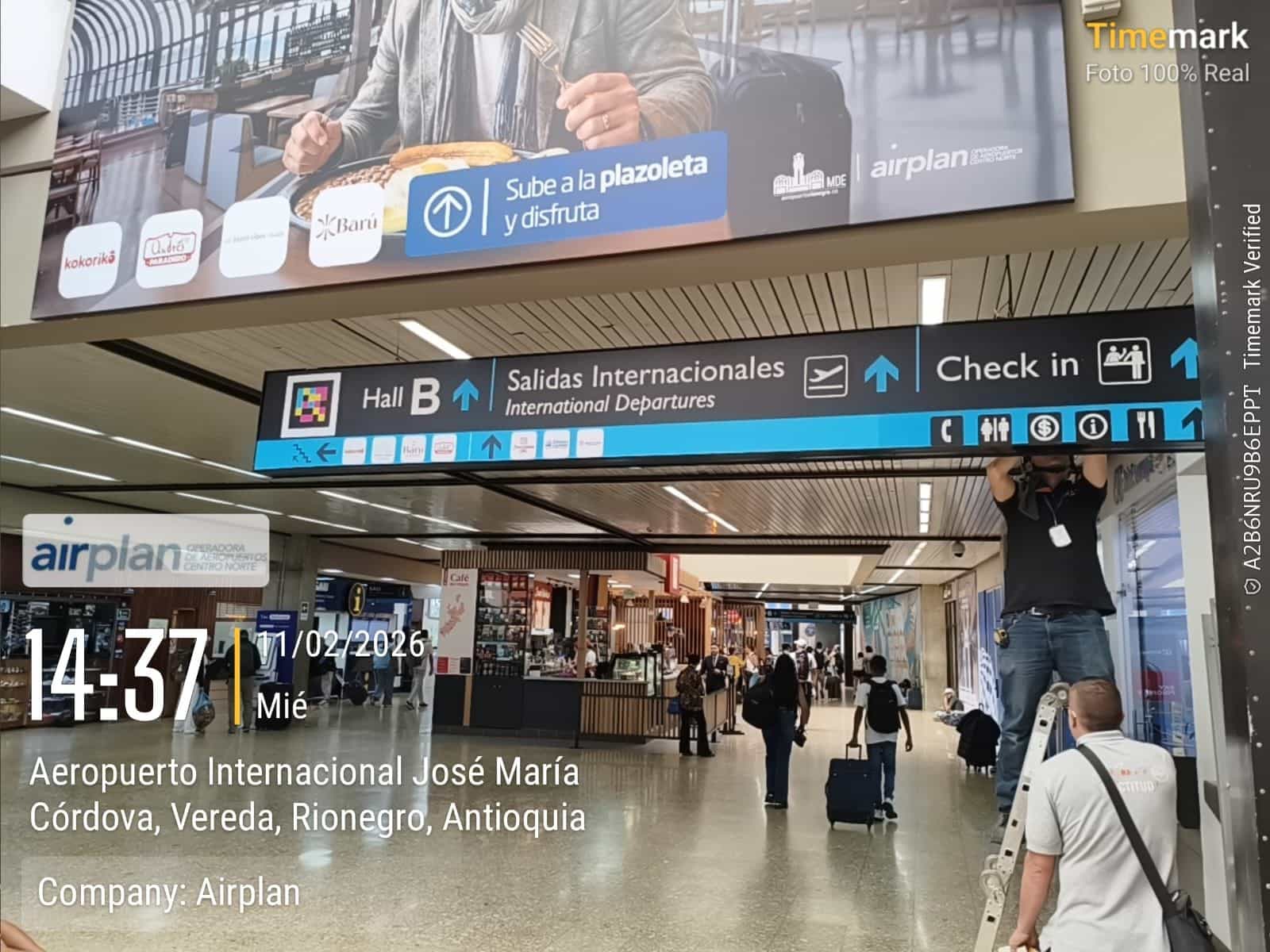
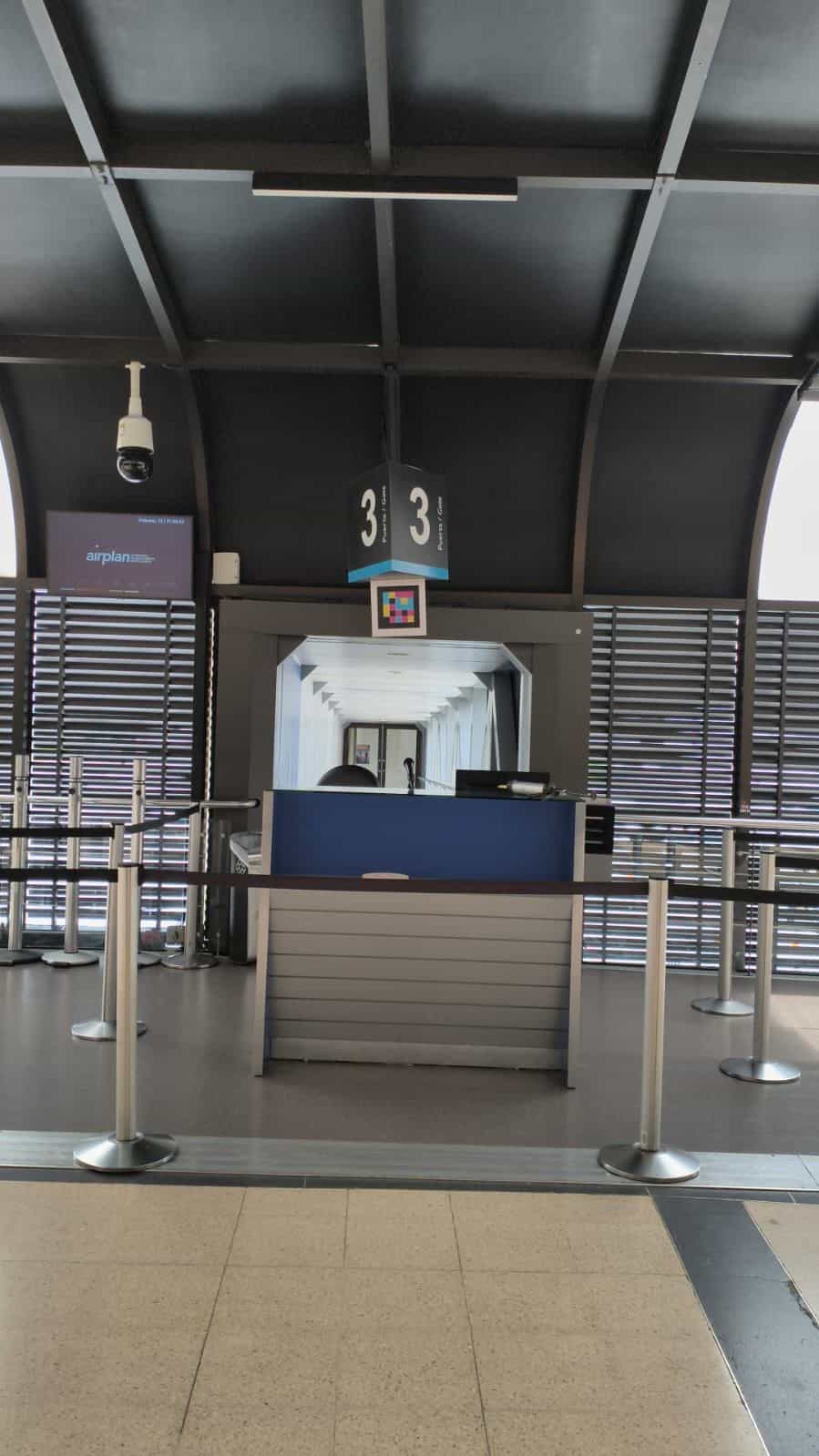
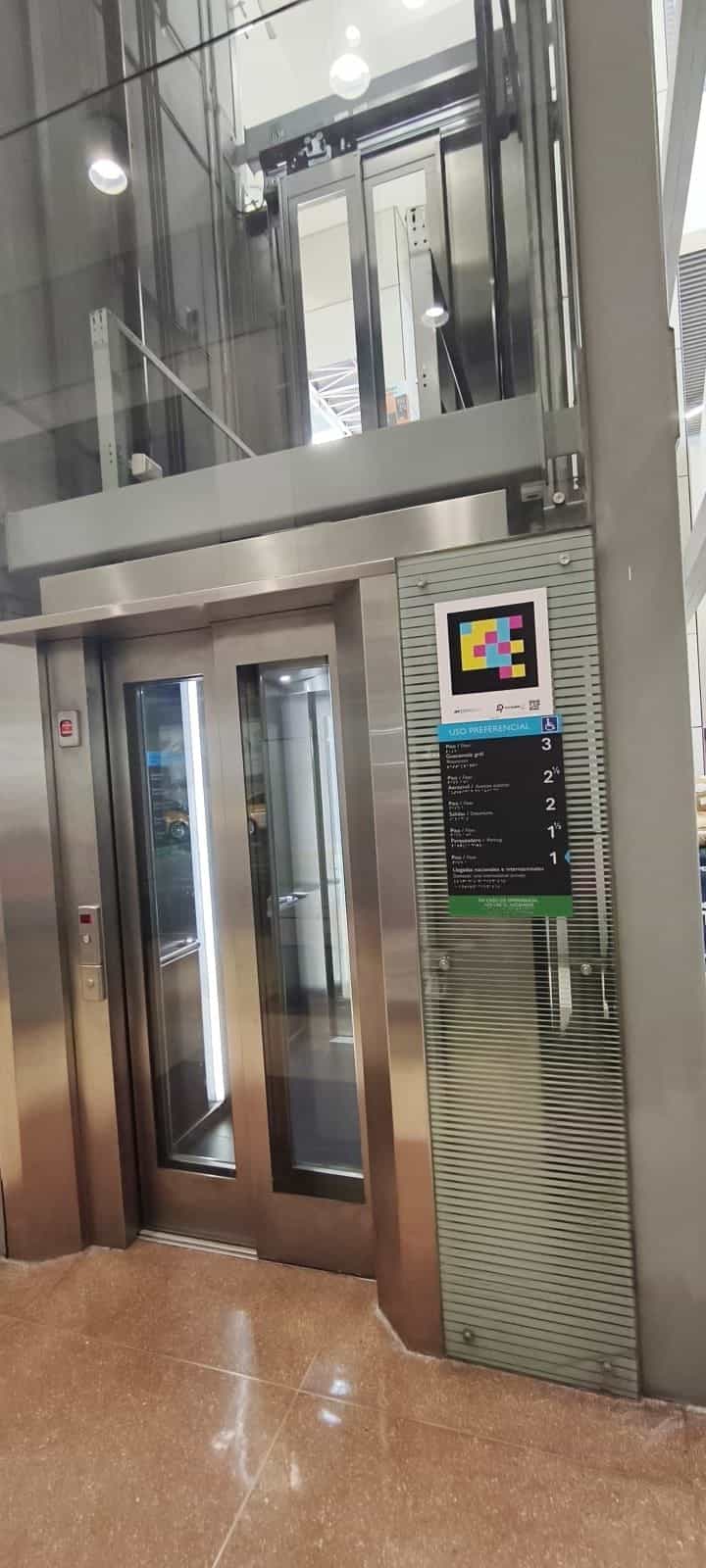
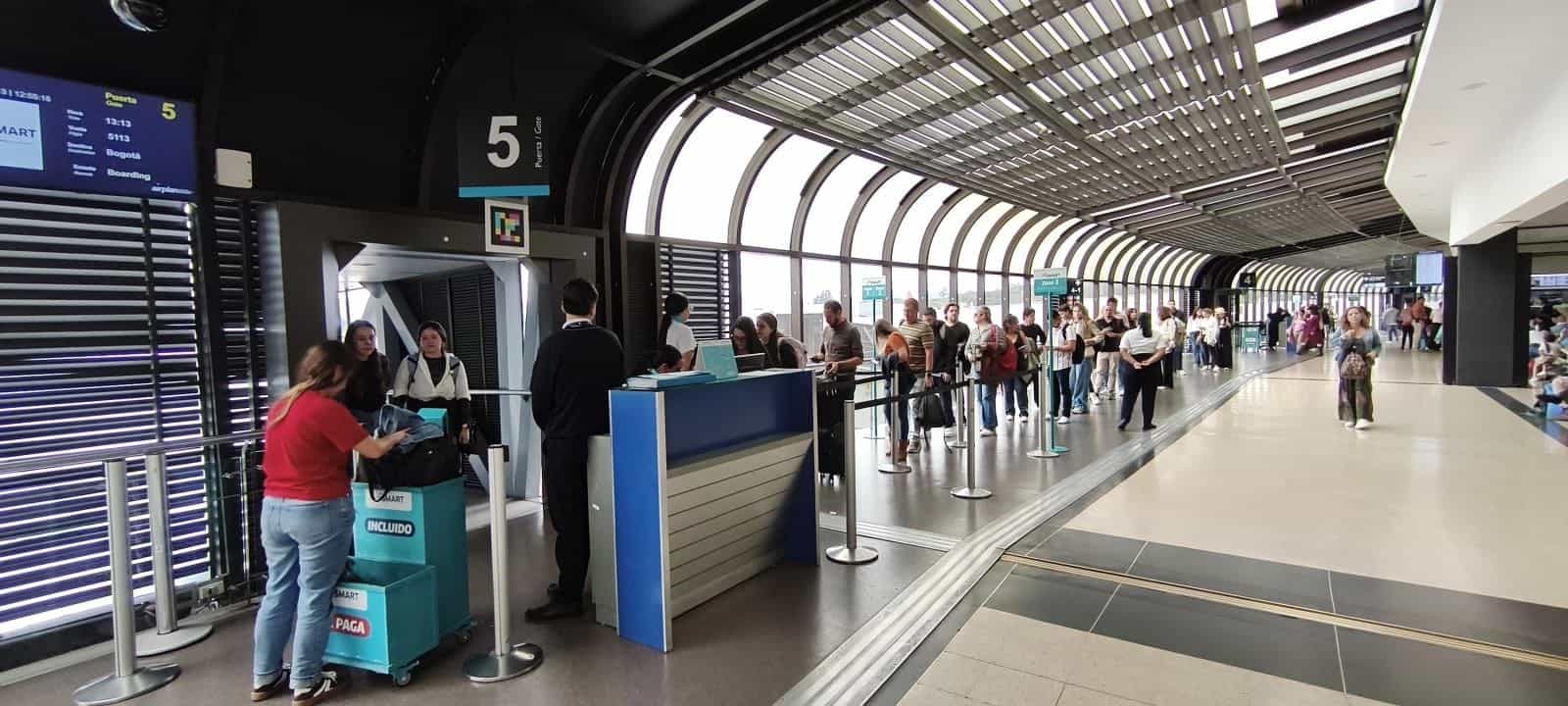
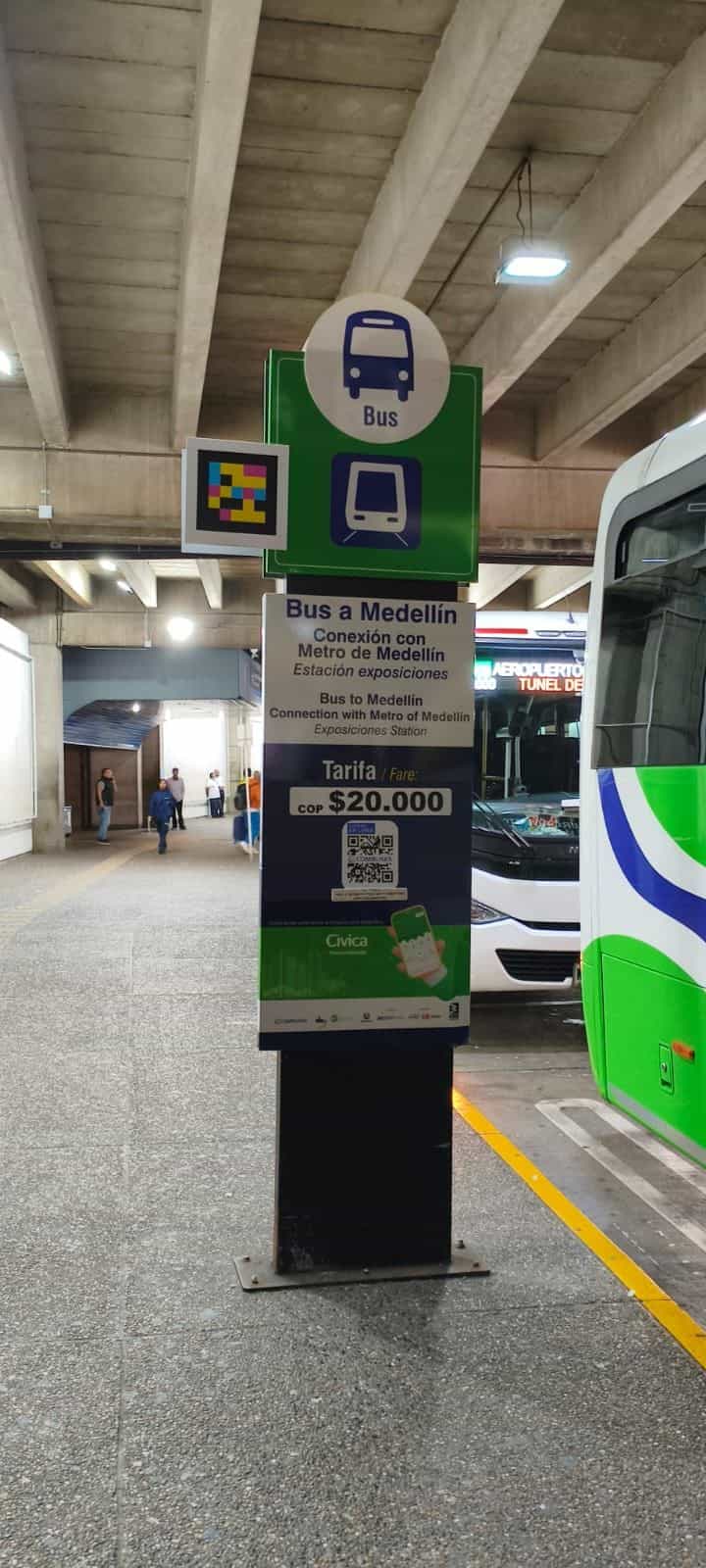
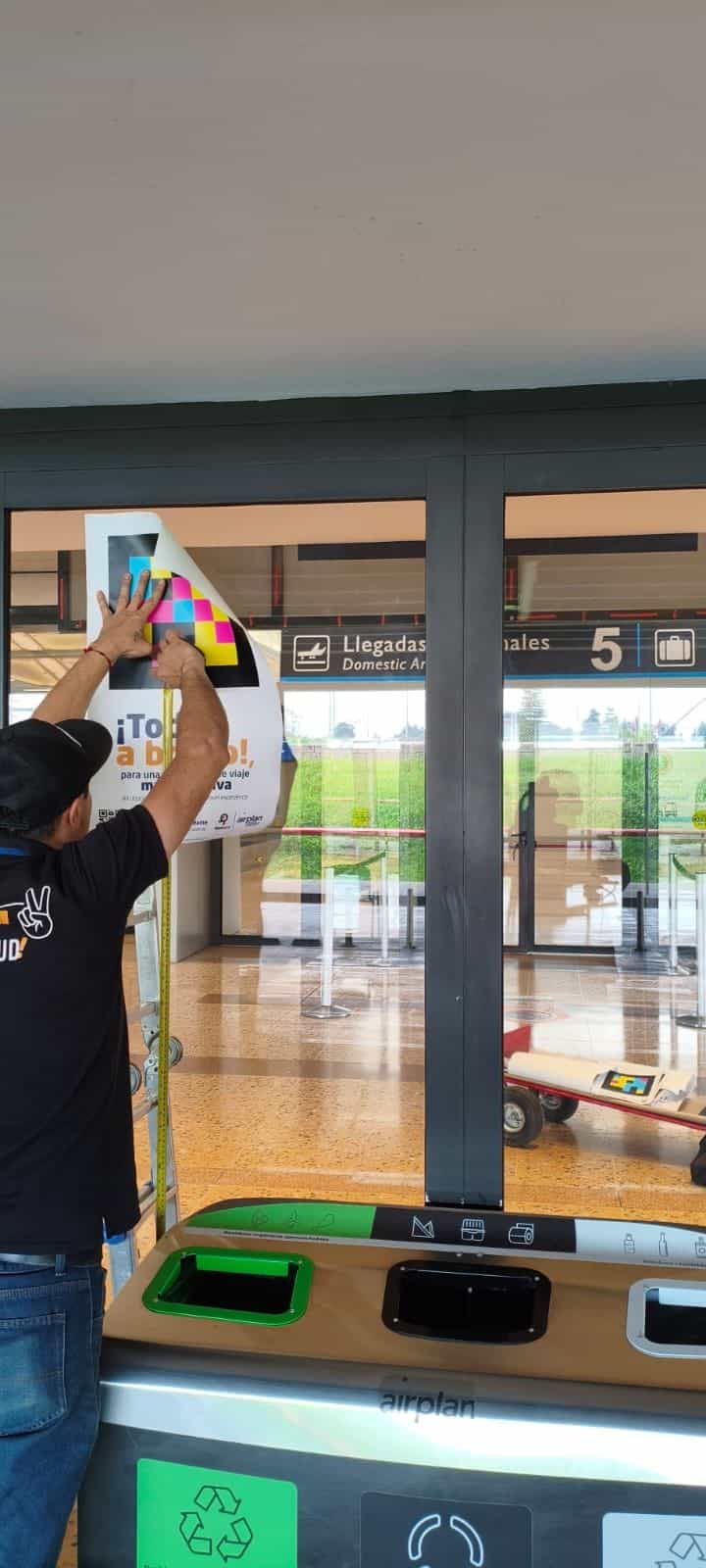
In February 2026, Airplan—operator of the airports of central-northern Colombia—deploys NaviLens at José María Córdova International Airport in Rionegro (IATA MDE, ICAO SKRG), Medellín's main terminal and Antioquia's busiest, with 14.5 M passengers in 2025. Codes go on the hanging wayfinding signs for Hall B, International Departures and Check-in, on the boarding gates next to the FIDS, on the “Priority use” elevator, and on the totem of the “Bus to Medellín · Metro Exposiciones Station”.
MDE · SKRG
José María Córdova International Airport
14.5 M
Passengers 2025 (Airplan)
42 languages
Voice readout up to 100 ft
Feb 2026
Rollout · 2nd NaviLens airport in LatAm
The operator
Airplan · Central-Northern Airports Concession
Airplan S.A.S. is the concessionaire of the six airports of central-northern Colombia: José María Córdova (MDE) in Rionegro, Olaya Herrera (EOH) in Medellín, Antonio Roldán Betancur (APO) in Carepa, and the airports of Quibdó, Montería and Corozal.
José María Córdova International Airport is the main air terminal for Medellín and all of Antioquia. In 2025 it handled 14.5 million passengers, on a growth curve that has led Colombia's ANI to approve optimization works to scale from 11 to 17 million passengers a year.
Against this backdrop, Airplan rolls NaviLens into its bilingual ES/EN signage as part of its “¡Todos a bordo! / All aboard for a more inclusive travel experience” strategy, making José María Córdova one of the first major Latin-American terminals with NaviLens universal accessibility — alongside the pioneering deployment at Montevideo's Carrasco International Airport (Uruguay).
§ How the rollout was designed
Codes at every decision point of the airport.
- 01
Hanging wayfinding signage (Hall B, Departures, Check-in)
The blue airplan hanging signs with ES/EN arrows—Hall B ↑, Salidas Internacionales / International Departures ↑, Check in ↑—carry a NaviLens code on their left. The app reads out the direction of each flow and the associated pictograms (phone, restrooms, exchange, information, food) before the user moves on.
- 02
Boarding gates linked to the FIDS
At the boarding gates (Gate 3, Gate 5…) the NaviLens code sits below the “Puerta / Gate” sign with the FIDS display. The app announces airline (JetSMART), flight (5113), destination (Bogotá), time (13:13) and status (Boarding) in real time, with no need to read the screen.
- 03
Priority-use elevator and multimodal connection
NaviLens codes on the elevator's “Priority use” panel—with every floor listed in Spanish, English, braille and Guarani: Floor 3 Guacamaya grill, Floor 2 Aerocivil, Floor 1½ Departures, Floor 1 Parking, Floor 0 Arrivals—and on the totem of the “Bus to Medellín · Connection with Metro of Medellín (Exposiciones Station)”, operated by COMBUSES at a COP $20,000 fare.
§ The rollout up close
A voice layer over airplan's blue signage.
§ Why it matters
Antioquia's air hub, accessible in 42 languages.
14.5 M/yr
One of Colombia's fastest-growing air terminals (14.5 million passengers in 2025), with ANI-approved expansion towards 17 million. The NaviLens rollout scales universal accessibility well beyond a station-level pilot.
Multimodal
The same standard covers the air flow (Hall B, Check-in, gates and FIDS), the priority-use elevator between floors, and the ground connection to Medellín's Metro (Exposiciones Station) through the COMBUSES bus service.
LatAm
After Carrasco (Montevideo), José María Córdova consolidates NaviLens in Latin-American airports and opens the door to extending the solution to the rest of the Airplan network: Olaya Herrera, Antonio Roldán Betancur, Quibdó, Montería and Corozal.
§ And your network?
Your next station can also speak.
Tell us about your network, your pain points and the KPIs you want to move. We’ll show you how NaviLens would fit—with comparable cases.