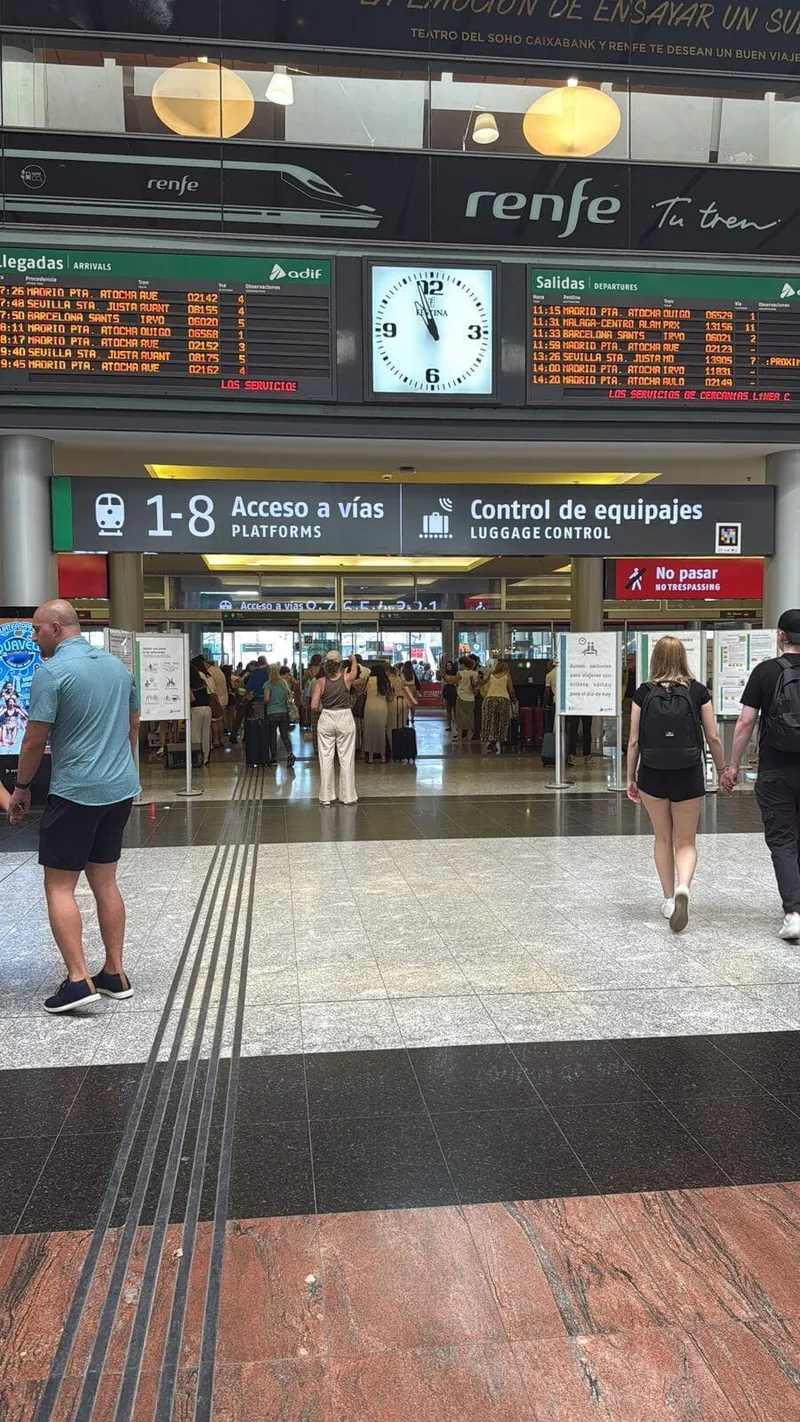
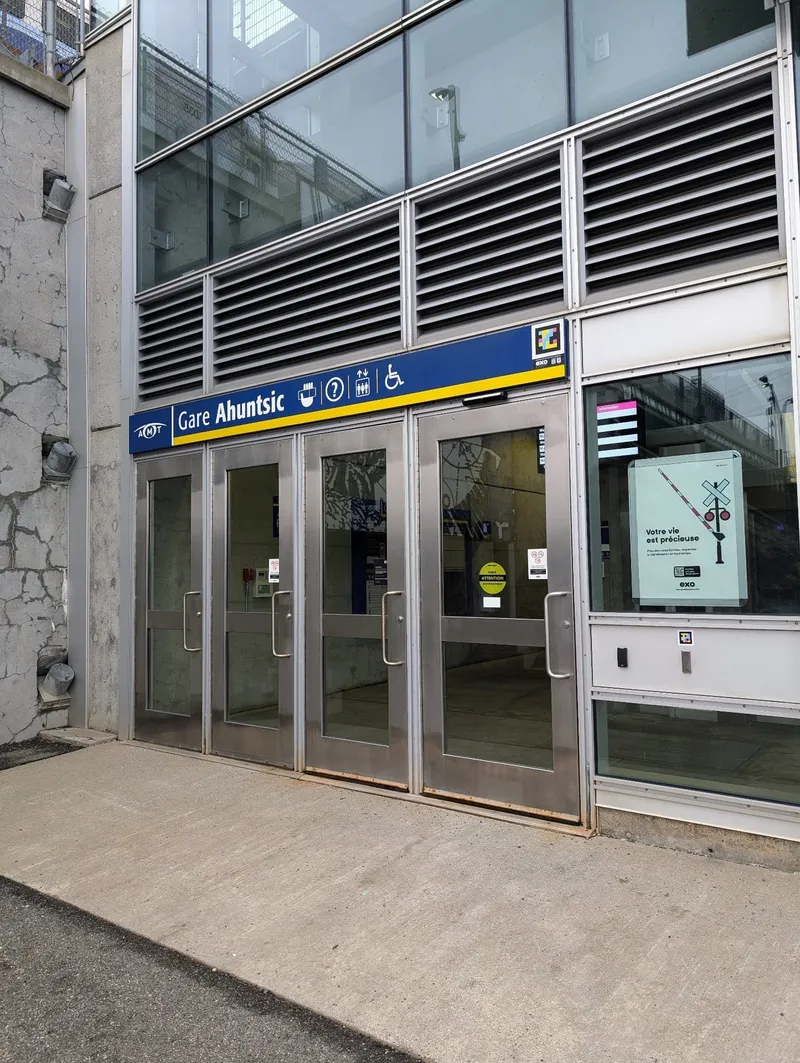
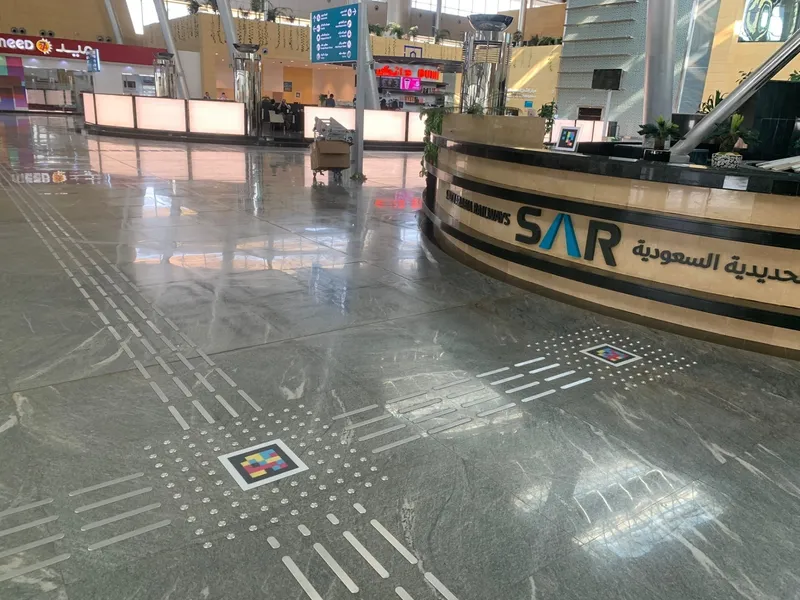
Case study · Île-de-France
The first French station that announces itself by voice.
In May 2021, Keolis and Île-de-France Mobilités equipped Gare de Versailles-Chantiers with NaviLens: a continuous trail of codes from the Phébus bus station to the platform, validated with a panel of blind and low-vision users. A French first.
Versailles · IDF
First NaviLens deployment in France (Keolis + Île-de-France Mobilités, 2021)
Gare de Chantiers
SNCF station + Phébus / Île-de-France Mobilités bus terminal
100 ft detection
No focusing required, on the move, any lighting
May 2021 → 2022
Pilot validated with a user panel and consolidated into daily use
The client
Keolis & Île-de-France Mobilités
Keolis is one of the world leaders in shared mobility and runs, together with Île-de-France Mobilités, the Phébus bus network serving Gare de Versailles-Chantiers (Transilien N/U, RER C, TER) and the wider Versailles Grand Parc area.
In May 2021 they announced a première en France: equipping the station with NaviLens in collaboration with the Fédération des Aveugles de France and a user panel, as part of their Keolab accessibility innovation program.
The pilot ran beyond summer 2021 and, in November 2022, Keolis confirmed that the route had been consolidated as part of the station's day-to-day offer.
§ The challenge
From the bus stop.
- 01
A complex interchange in the middle of works
Gare de Versailles-Chantiers connects Transilien N and U, RER C, TER and the Phébus / Île-de-France Mobilités bus terminal. For a blind or low-vision passenger, chaining entrance, concourse, ticket gates, stairs and platform was a journey full of decision points with no audible cues.
- 02
Tactile strips guide, but don't announce
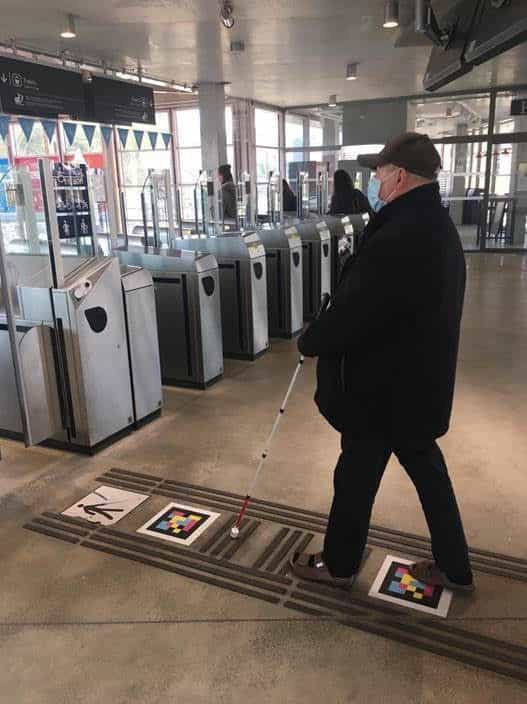
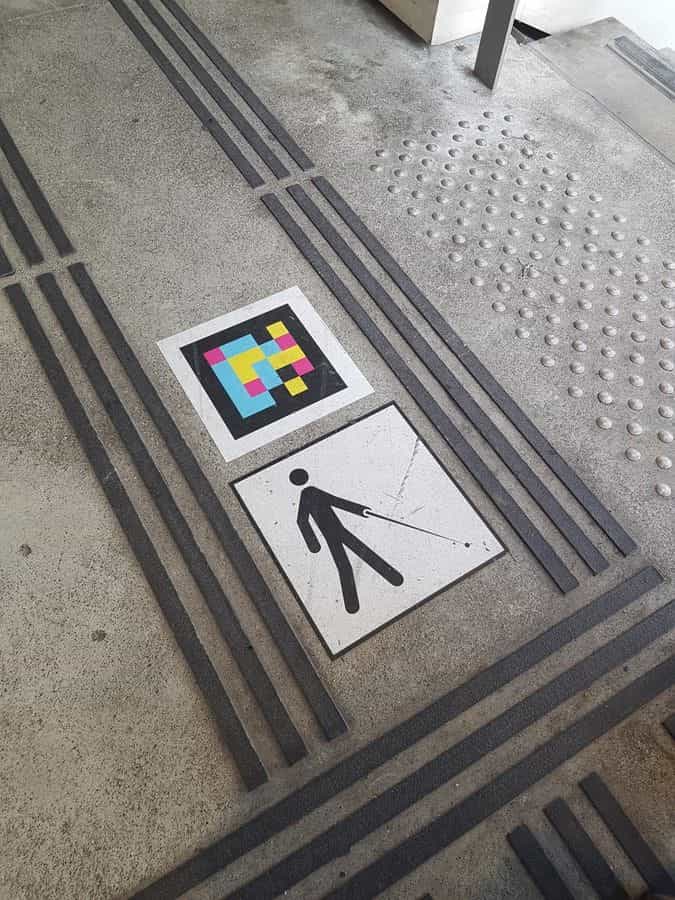
The station already had podotactile guiding strips and orientation pictograms. What was missing was a layer that could say out loud where you are, what's ahead and how far — without having to touch anything.
- 03
Trialling a French first with rigor
It was the first time NaviLens had been deployed in a French station. Île-de-France Mobilités and Keolis wanted to validate it with a panel of blind and low-vision people before considering its rollout to other stations on the network.
§ The solution
A trail of codes stitched into the tactile guide.
NaviLens codes were installed on the floor, sitting on the guiding strips, and at height (stop poles, shelters, entrances and bus bay roofs). The user opens the app, sweeps the phone and, up to 100 feet away, hears: direction, distance and what's ahead.
Codes don't need to be focused, they work on the move and in any light. The app stitches Phébus stop → entrance → concourse → ticket gates → stairs → platform as a single continuous journey.
The rollout was designed with the Fédération des Aveugles de France and the Keolab panel, making sure the order, height and message of every code matched real journeys.
§ The journey, step by step
From the gare routière.
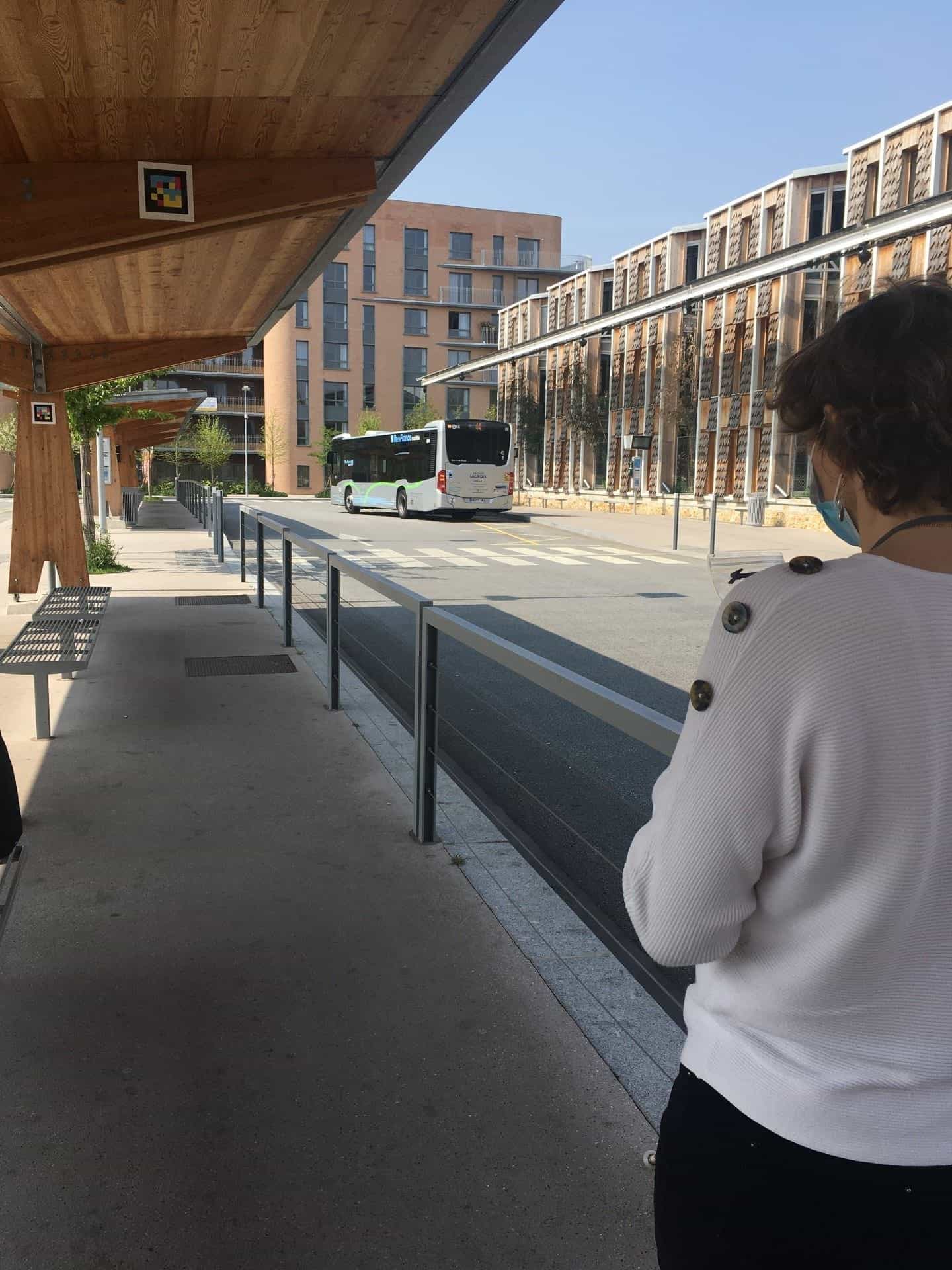
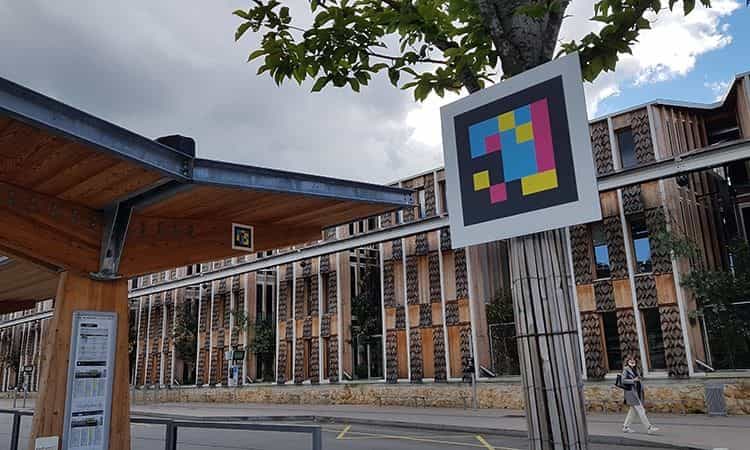
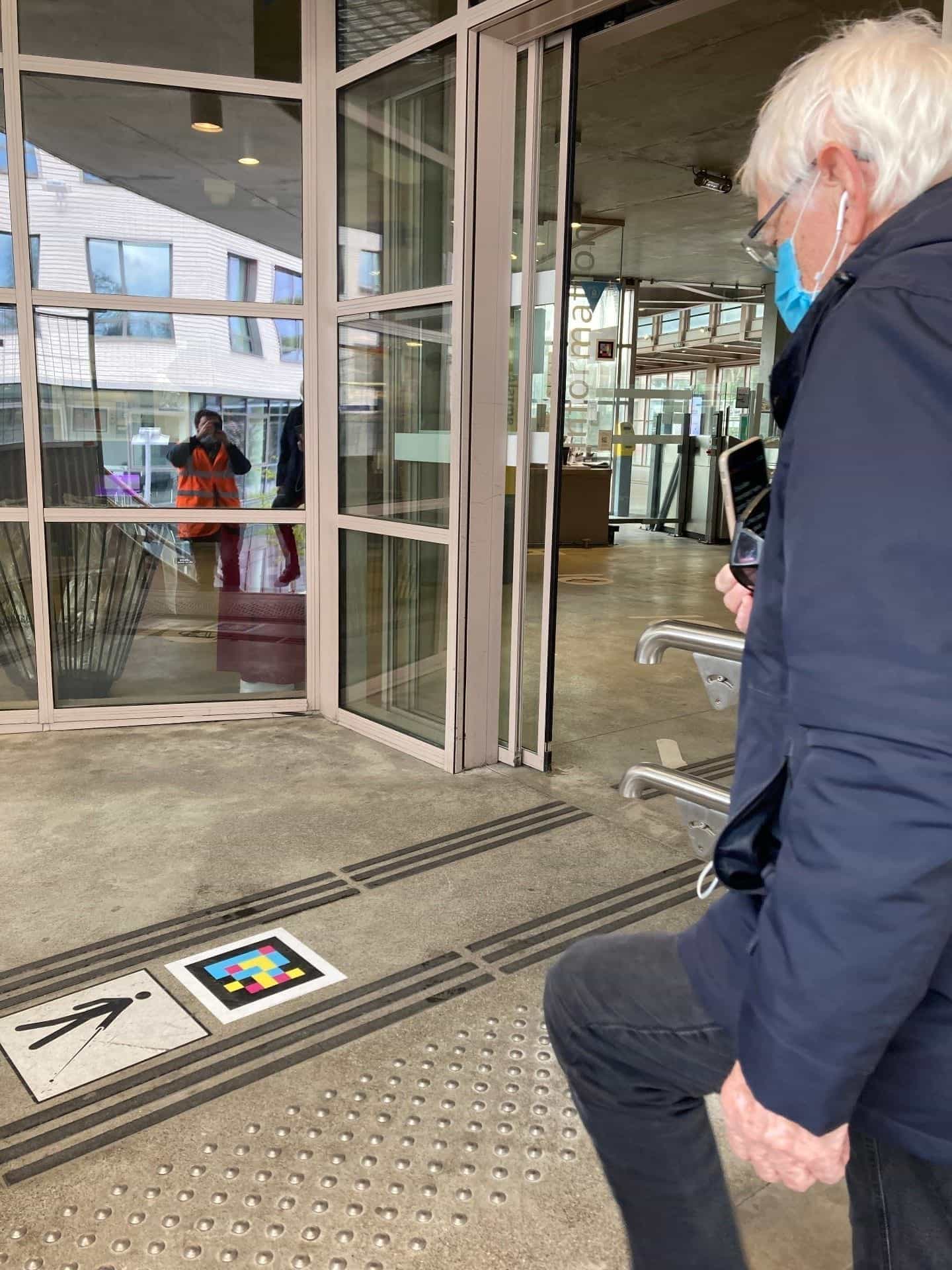
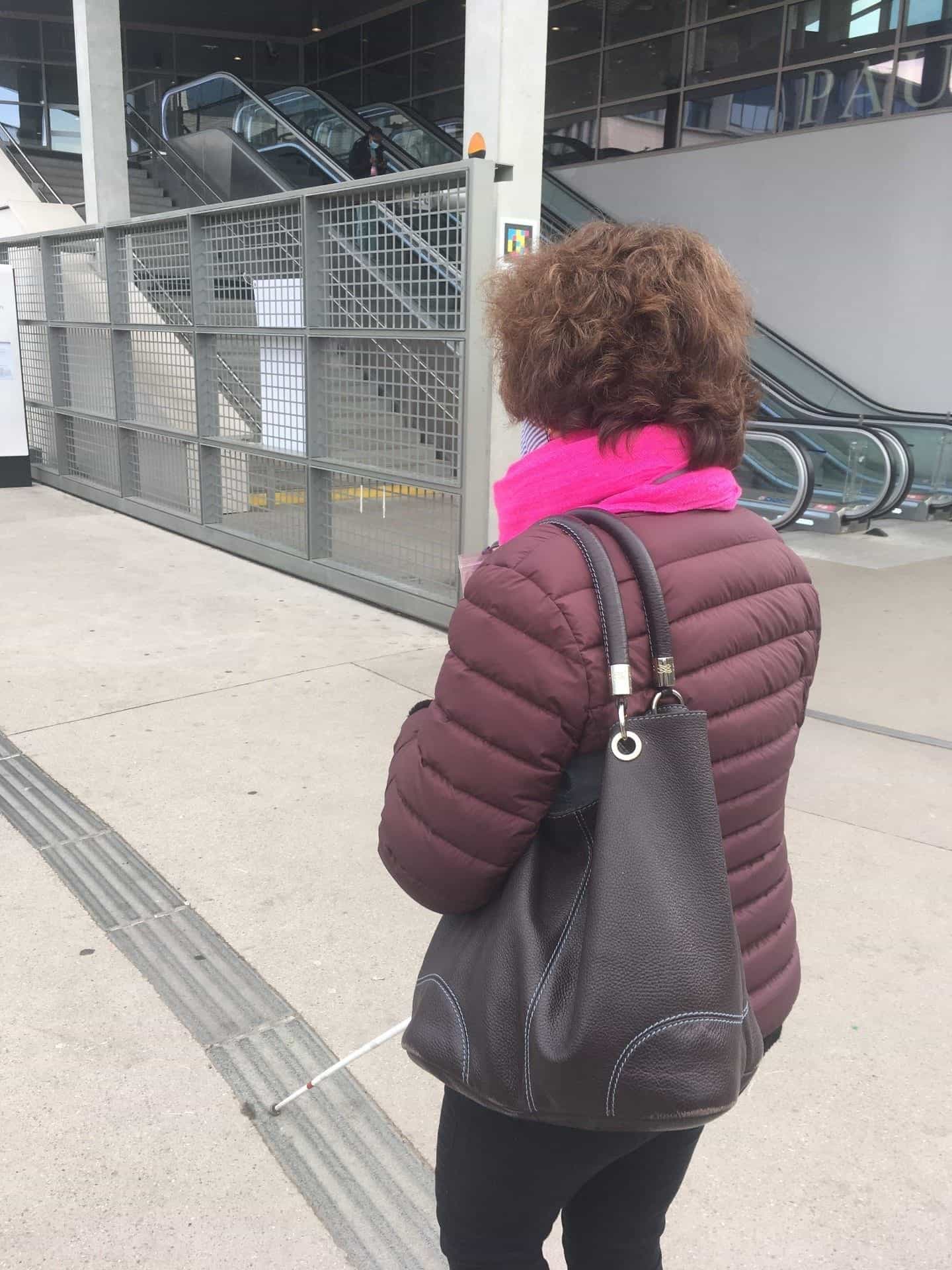
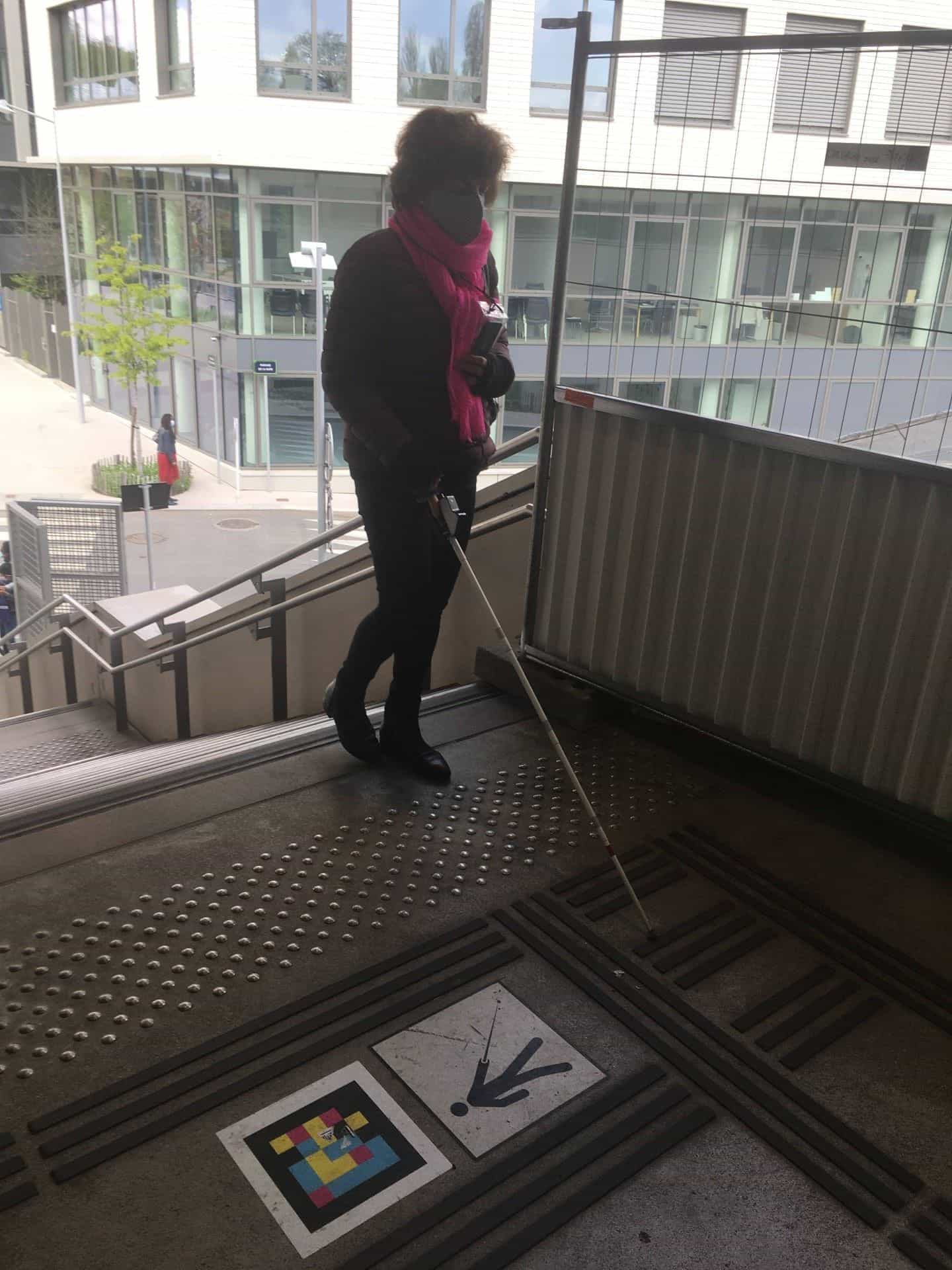
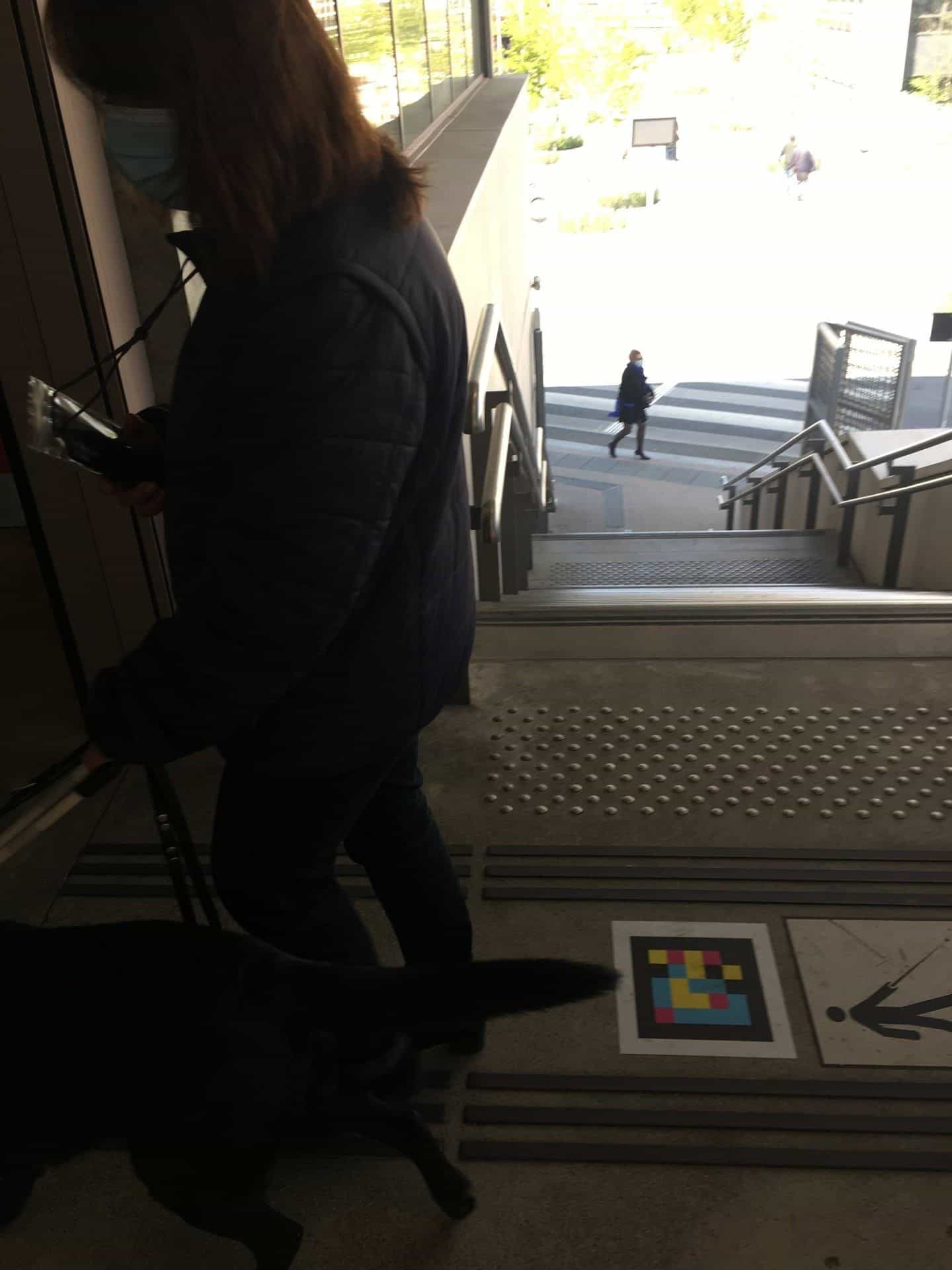
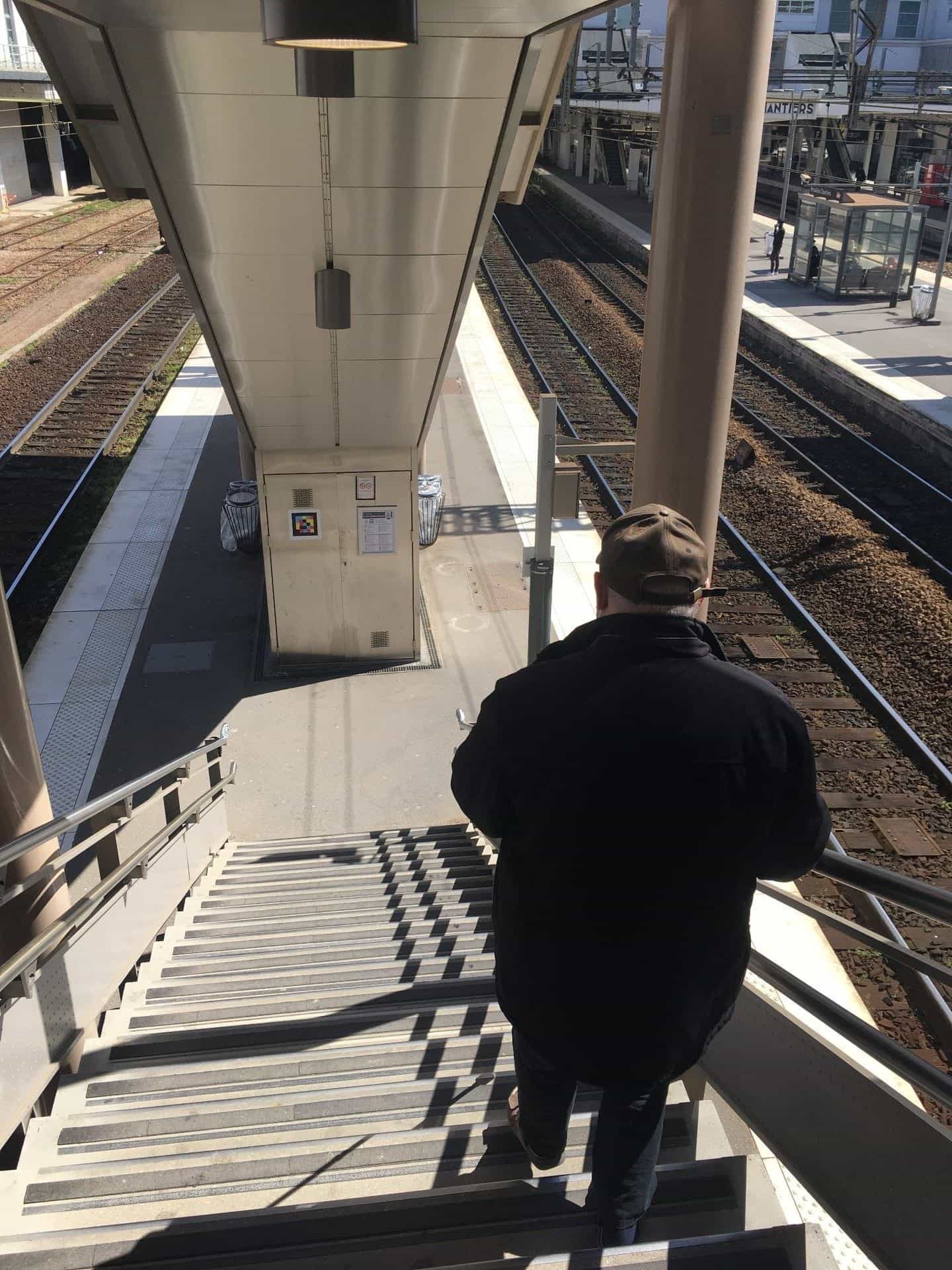
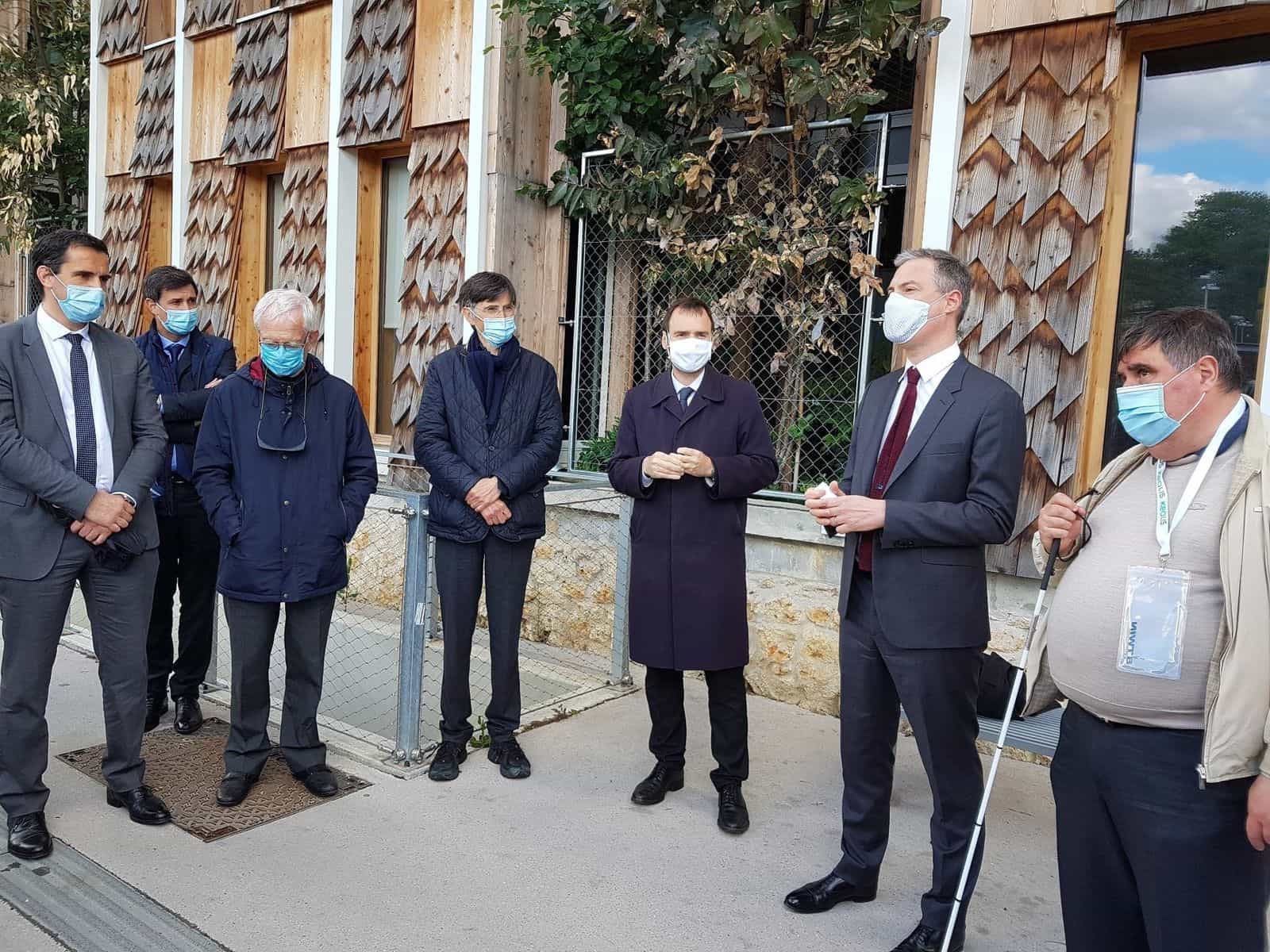
Codes were installed on the floor (on the podotactile strips), on the bus terminal's poles and shelters, at station entrances, next to ticket gates, at the top of stairs and on platforms — forming a continuous, reversible journey.
§ Why it matters
A small pilot that opened up France.
Première en France
Versailles-Chantiers is the first French station with NaviLens, paving the way for future Keolis and IDFM rollouts.
A layer, not a patch
NaviLens coexists with tactile strips and pictograms: each technology covers what the others can't, with no structural works.
Validated by users
Co-designed with the Fédération des Aveugles de France and the Keolab panel; consolidated into daily use after the initial pilot.
Sources: Keolis — «Keolis and Île-de-France Mobilités are testing NaviLens technology in Versailles» (19 May 2021); Keolis — «NaviLens : un pas de plus vers la mobilité inclusive» (28 Nov 2022); Le Parisien (22 May 2021); ITS International (28 May 2021).
§ And your network?
Your next station can also speak.
Tell us about your network, your pain points and the KPIs you want to move. We’ll show you how NaviLens would fit—with comparable cases.