§ Case study · Málaga · Adif · High Speed & Commuter Rail
The María Zambrano concourse, read aloud.
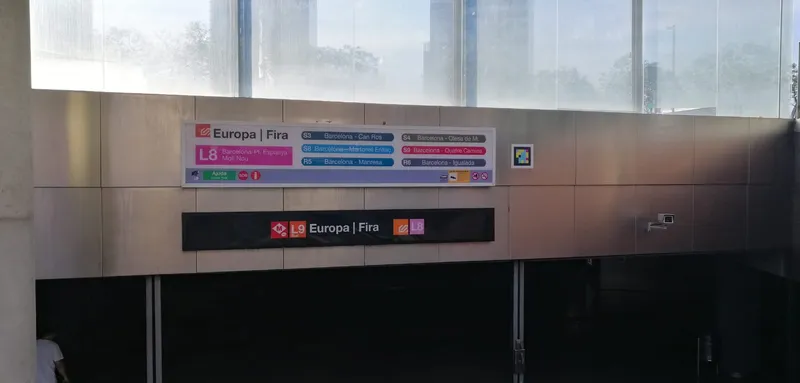
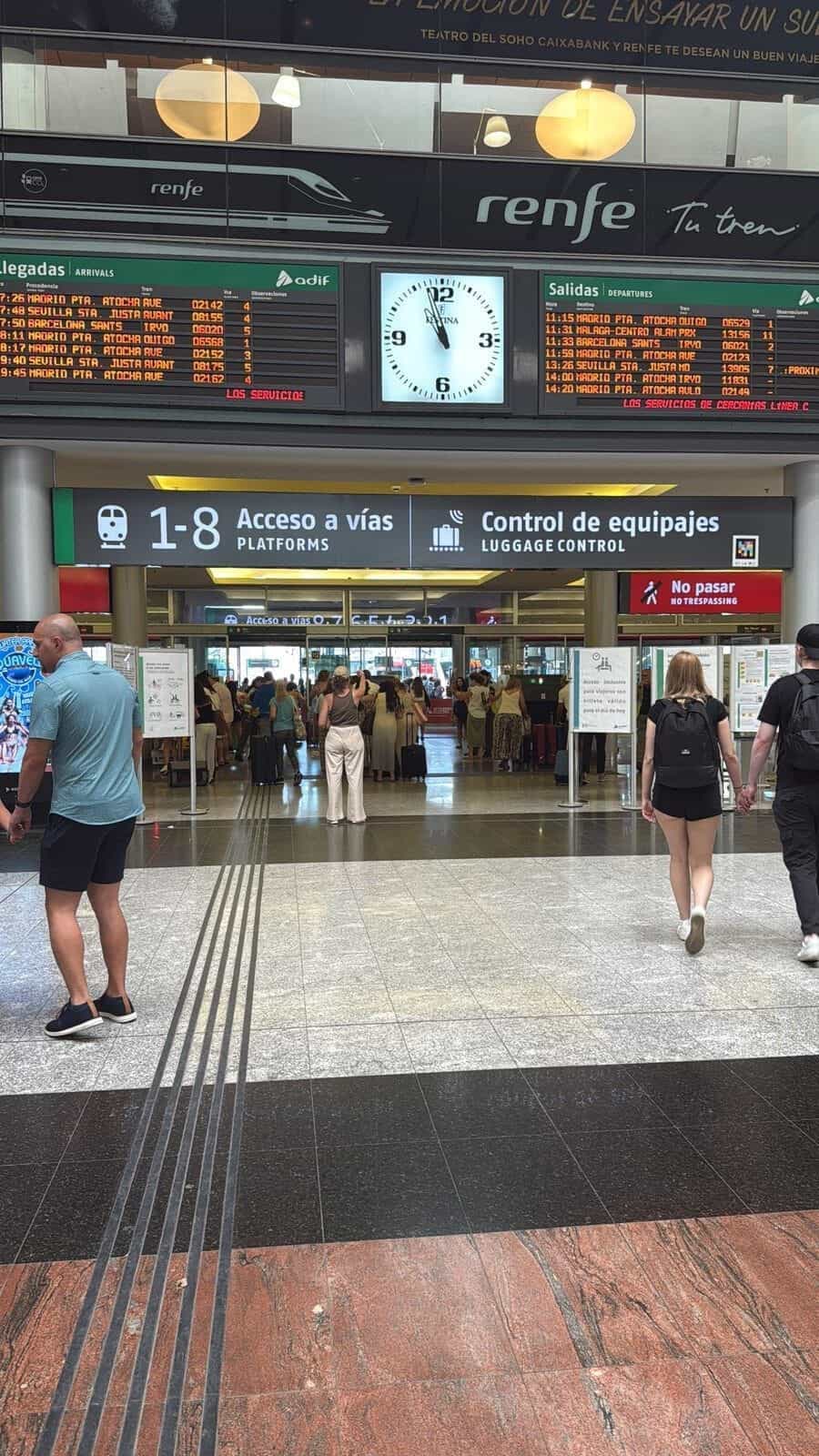
Adif's Málaga María Zambrano station—the AVE high-speed hub on the Costa del Sol—integrates NaviLens codes on the Platforms and Luggage Control signs and on the tactile pavement that leads to Customer Service. It's the first pilot of the Digital Station Transformation Plan and the reference for the new Adif · Renfe · Ineco accessible help point.
2021
Adif's first digital pilot
Jun 2025
Accessible help point · Adif · Renfe · Ineco
FP1-MOTIONAL
European ERJU · Horizon Europe project
5 profiles
Visual, hearing, motor, cognitive and reduced mobility
The operator
Adif · Málaga
María Zambrano station
Málaga María Zambrano is the main railway station of the Costa del Sol and one of the most relevant high-speed hubs in southern Spain. Run by Adif, it brings together AVE, long-distance, Avant, Málaga commuter rail, a direct link to the Málaga Metro (El Perchel stop), urban and intercity buses and the Vialia shopping center.
In December 2021, Adif chose María Zambrano to launch the first pilot of its Passenger Station Digital Transformation Plan, focused on universal accessibility, dynamic information and integration with wayfinding apps.
In June 2025 that commitment took a new step: Adif, Renfe and Ineco installed in the concourse an accessible help point— a physical totem—validated by people with visual, hearing, motor, cognitive and intellectual disabilities and reduced mobility. The pilot is part of the European FP1-MOTIONAL project of the Europe's Rail Joint Undertaking (ERJU), funded by Horizon Europe.
Challenge
Make every concourse sign heard.
- 01
An intermodal station with many decisions
María Zambrano concentrates high speed, long distance, Avant, commuter rail, the Málaga Metro, urban and intercity buses and a shopping center. For a passenger with a sensory disability every transfer—reaching luggage control, finding the platform, locating Customer Service—is a friction point.
- 02
Dynamic information that changes minute by minute
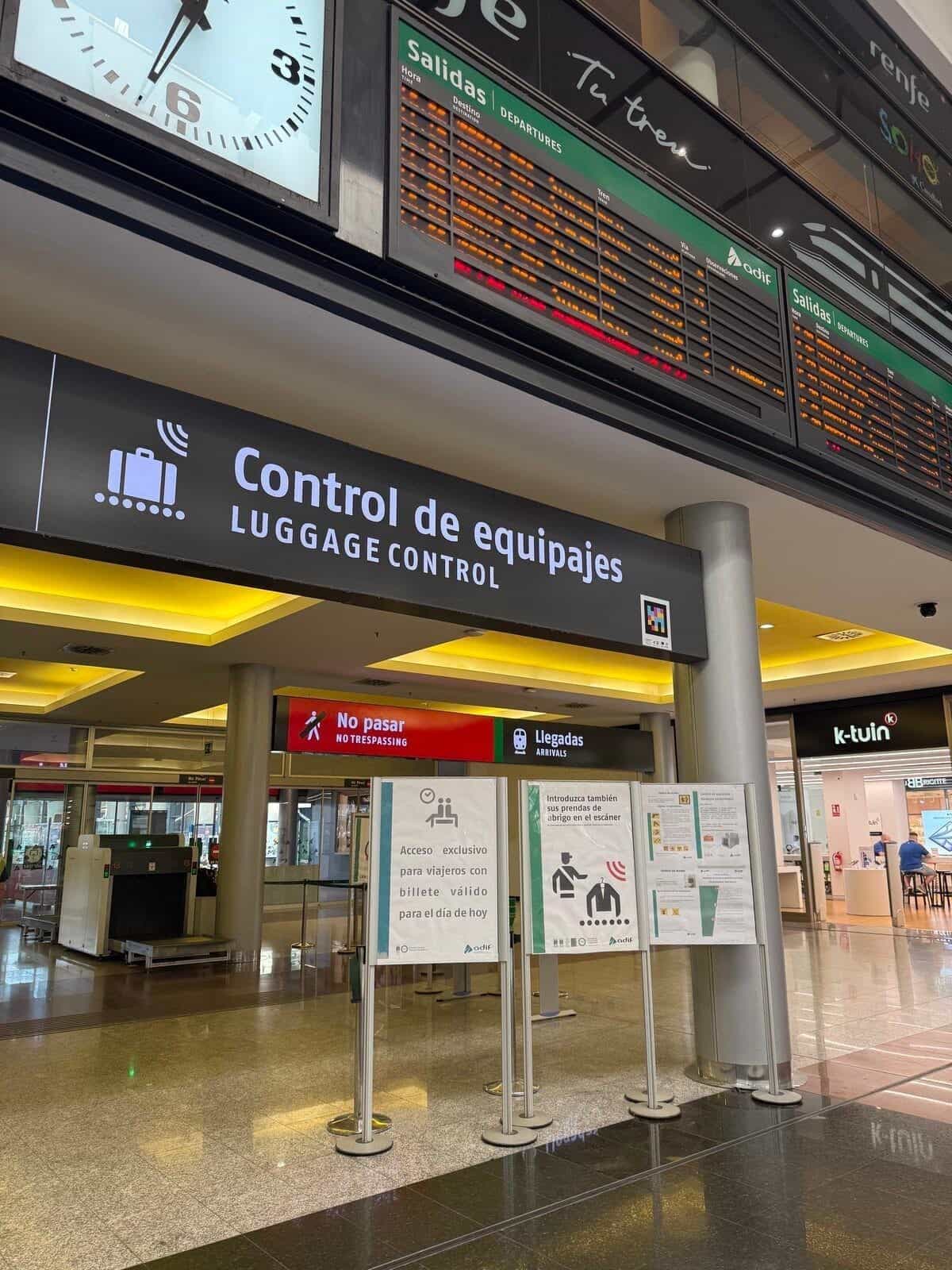
Adif's “Salidas / Departures” boards show schedule, destination, train and platform in real time. That information is only useful if it also reaches those who can't read it: audio guidance about the assigned platform, delays and boarding via luggage control.
- 03
Coexisting with existing signage and tactile paving
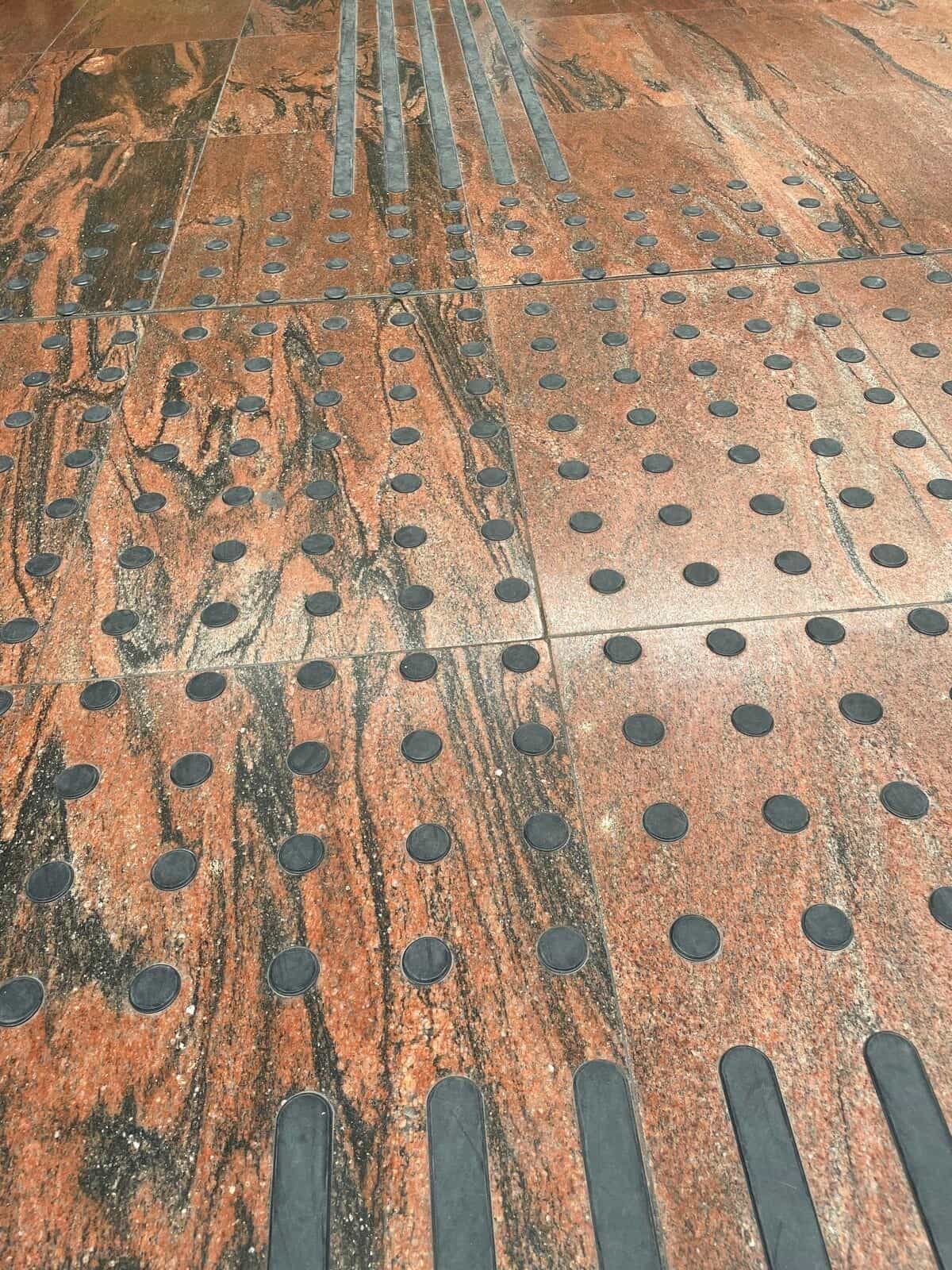
Adif already had tactile guide paving towards Customer Service and backlit signs above every filter. NaviLens had to add digital reading without replacing anything: same sign, same route, one more layer of information for those who need it.
§ Solution
Codes at every filter of the journey.
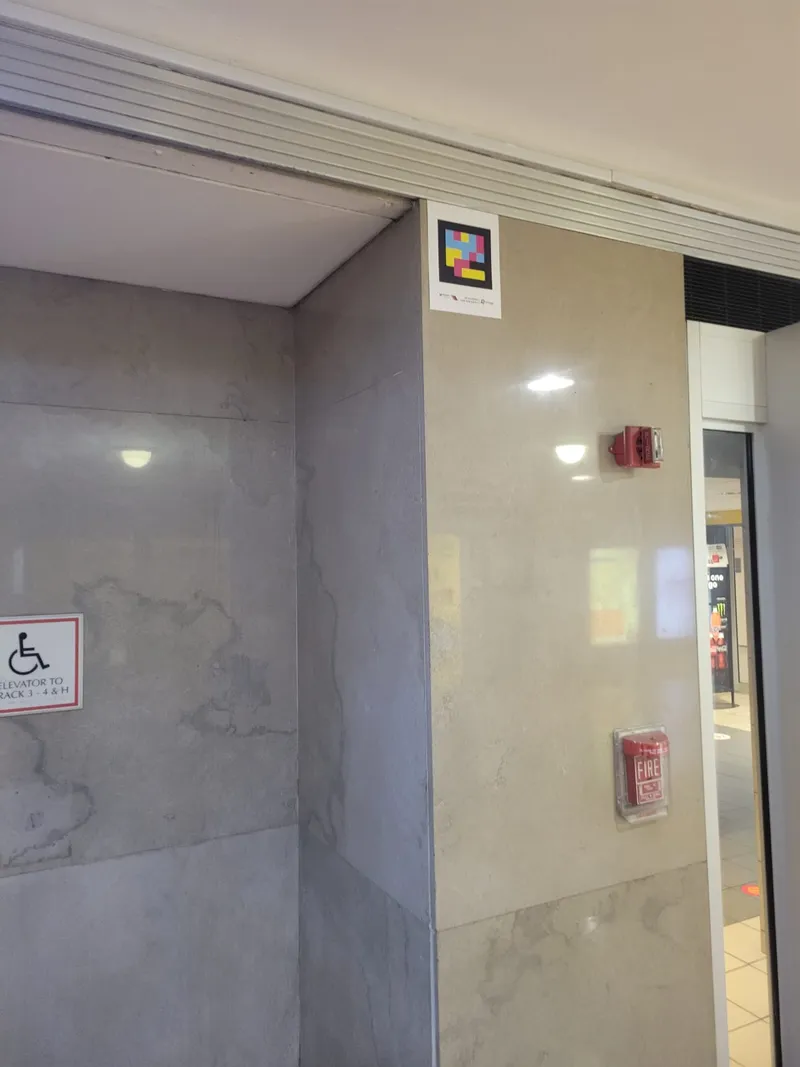
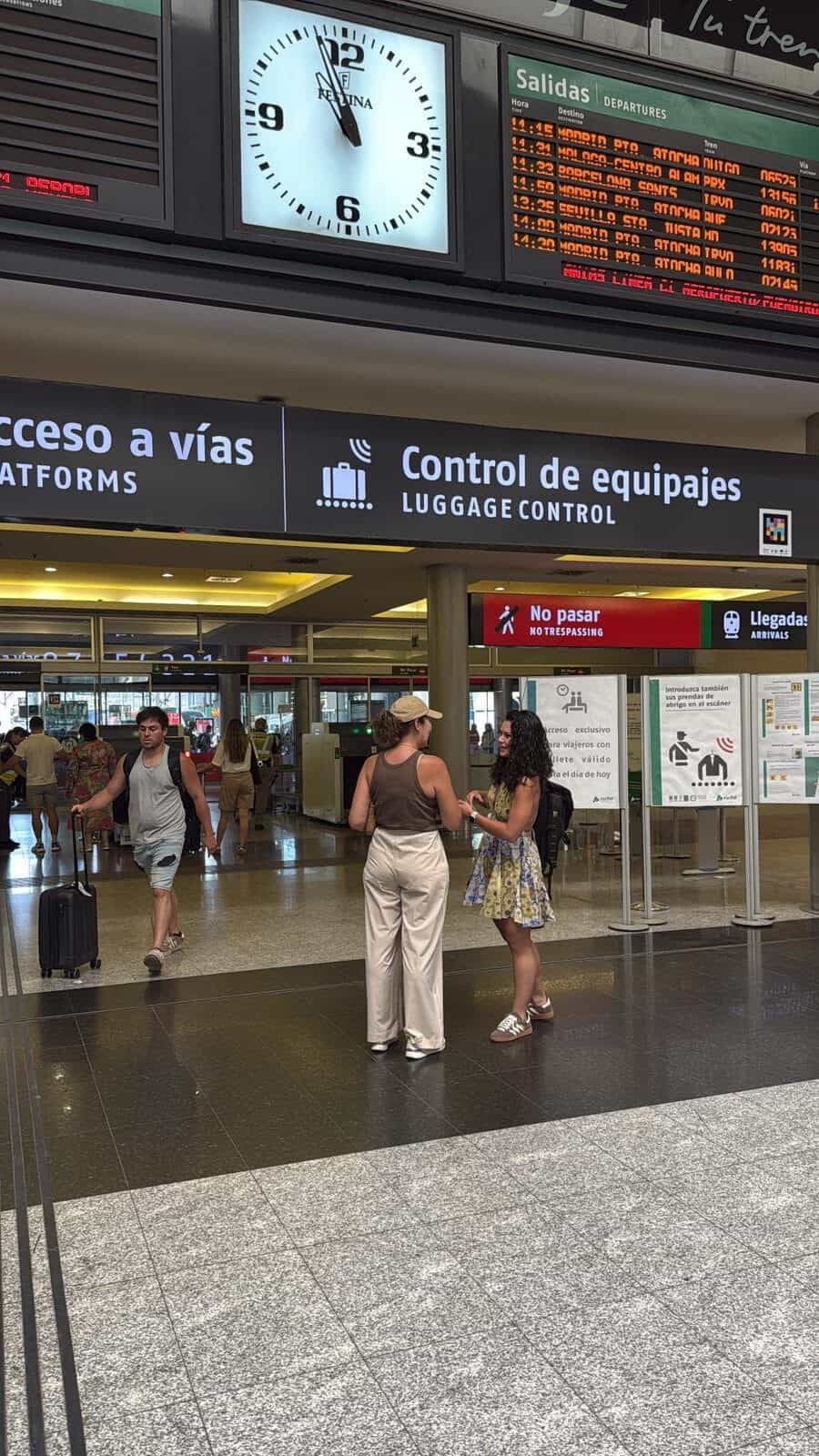
Adif placed NaviLens codes at the decision points of the main concourse: the “1-8 Platforms” sign leading to luggage control, the “Luggage Control” sign above the Adif scanner and the Departures boards where passengers check time, train and platform.
With the NaviLens app, a blind or low-vision person locates the code from several yards away without knowing where it is stuck and hears in their language which filter is in front of them, what documentation they need and where to continue towards the platform.
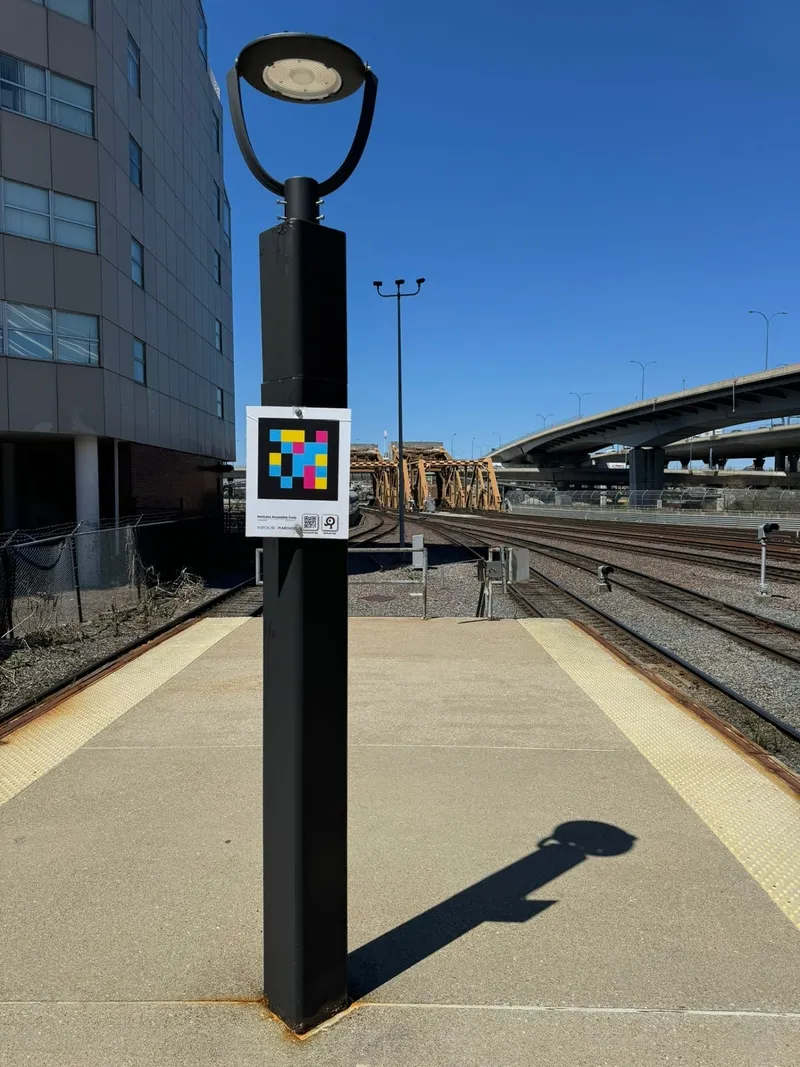
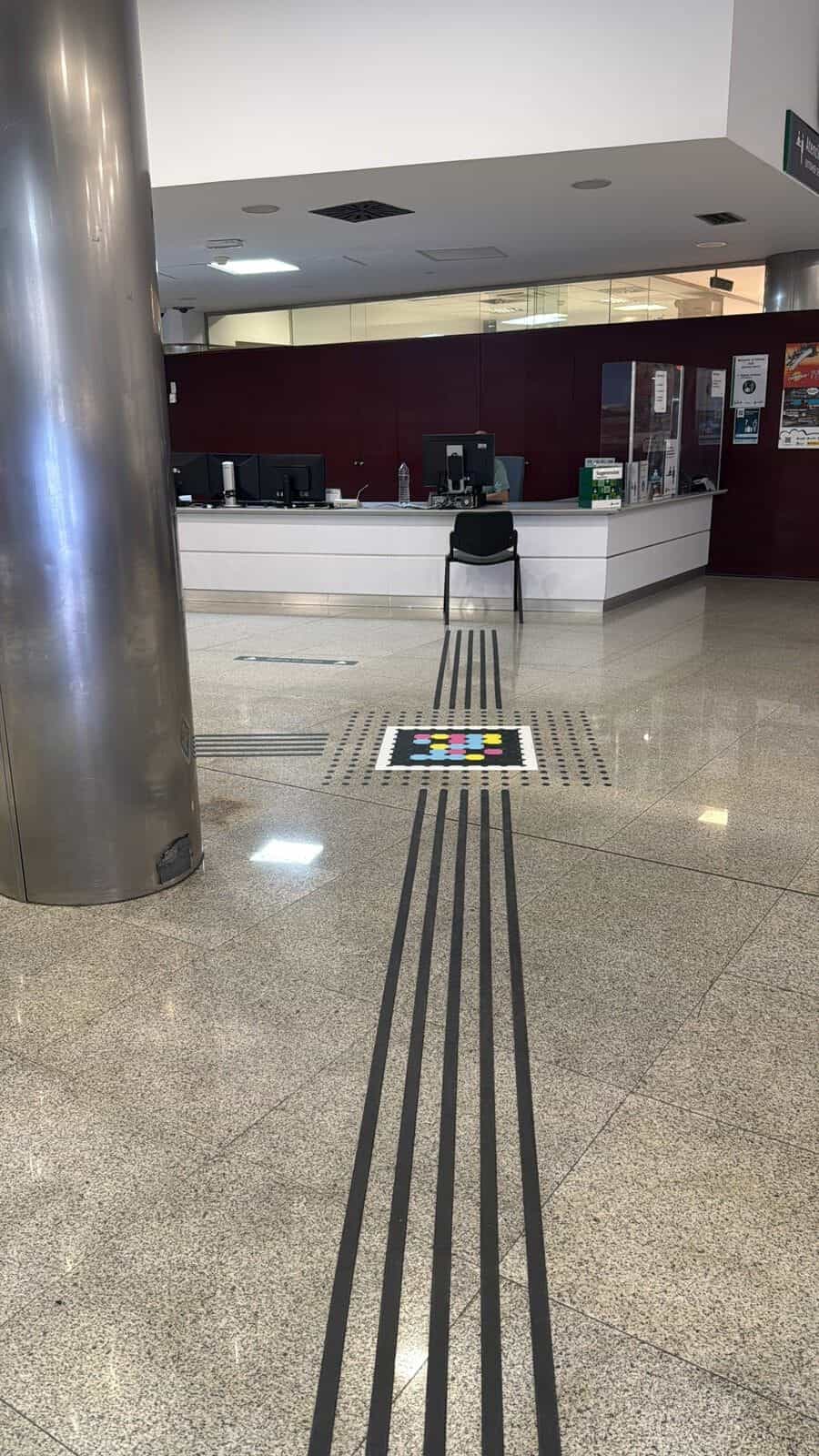
On the floor, on the tactile strip that ends in front of the Customer Service desk, a large-format printed NaviLens code turns the last meter of the route into information: “you have reached the Customer Service desk”.
§ On the concourse
The Departures board, also for those who can't read it.
§ Customer Service
A code on the floor, where the path ends.
Adif's tactile guide path—three continuous strips plus a button mat—ends right in front of the station's Customer Service desk. On that exact spot, a large printed NaviLens code identifies the arrival at the desk.
A cane user follows the tactile path safely and, before lifting their head, their phone has already confirmed they're standing in front of the right desk. It's the simplest way to close the chain: physical infrastructure + digital layer, with no construction and replacing nothing.
§ June 2025
An accessible totem that talks to the app.
In June 2025, Adif, Renfe and Ineco unveiled an accessible help point at María Zambrano: a physical totem providing real-time schedule, cancellation and metro frequency information, ticket scanning to know which platform the train is on, and guidance to accessible routes through several options — app, robot, visual map and NaviLens.
From 15 to 17 July 2025, people with visual, hearing, motor, cognitive and intellectual disabilities and reduced mobility ran real tests with the totem. The pilot is part of the European FP1-MOTIONAL project (ERJU · Horizon Europe).
§ Why it matters
The digital station starts with accessibility.
Pilot
First station of Adif's Digital Transformation Plan and reference for the accessible help point: what works here scales to the rest of the network.
Chain
Concourse, luggage control, Departures boards and Customer Service desk: information reaches the user at every link, without gaps.
Europe
Embedded in the Europe's Rail Joint Undertaking partnership, María Zambrano validates on Spanish soil methodologies later replicated by rail operators across the EU.
§ And your network?
Your next station can also speak.
Tell us about your network, your pain points and the KPIs you want to move. We’ll show you how NaviLens would fit—with comparable cases.