Case study · Madrid
The pink line, spoken aloud from end to end.
On 29 April 2023, the Community of Madrid and Metro de Madrid unveiled the NaviLens voice-guidance system for blind passengers at Colombia station. Together with Adolfo Suárez Madrid-Barajas Airport T1-T2-T3, it was the line 8 pilot before being rolled out to the whole pink line in August of that year.
Line 8 · the pink line
Nuevos Ministerios ↔ Adolfo Suárez Madrid-Barajas Airport
Pilot stations
Colombia and Airport T1-T2-T3, unveiled on 29 Apr 2023
Whole L8
Rollout reached all 8 stations in August 2023
ES · EN · 42+
Multilingual voice in the language of the traveler's phone
The client
Community of Madrid
Metro de Madrid · Line 8
Metro de Madrid's line 8— the pink line—is the fast link between the city center and Adolfo Suárez Madrid-Barajas Airport. Eight stations connect Nuevos Ministerios with the airport's two terminal areas, T1-T2-T3 and T4.
On 29 April 2023, the Community of Madrid's Minister for Transport and Infrastructure, David Pérez, visited Colombia station to unveil the voice-guidance system for blind people and people with cognitive disabilities. Colombia and Airport T1-T2-T3 were the first two stations to go live; in August 2023 the system extended to all eight stations on L8.
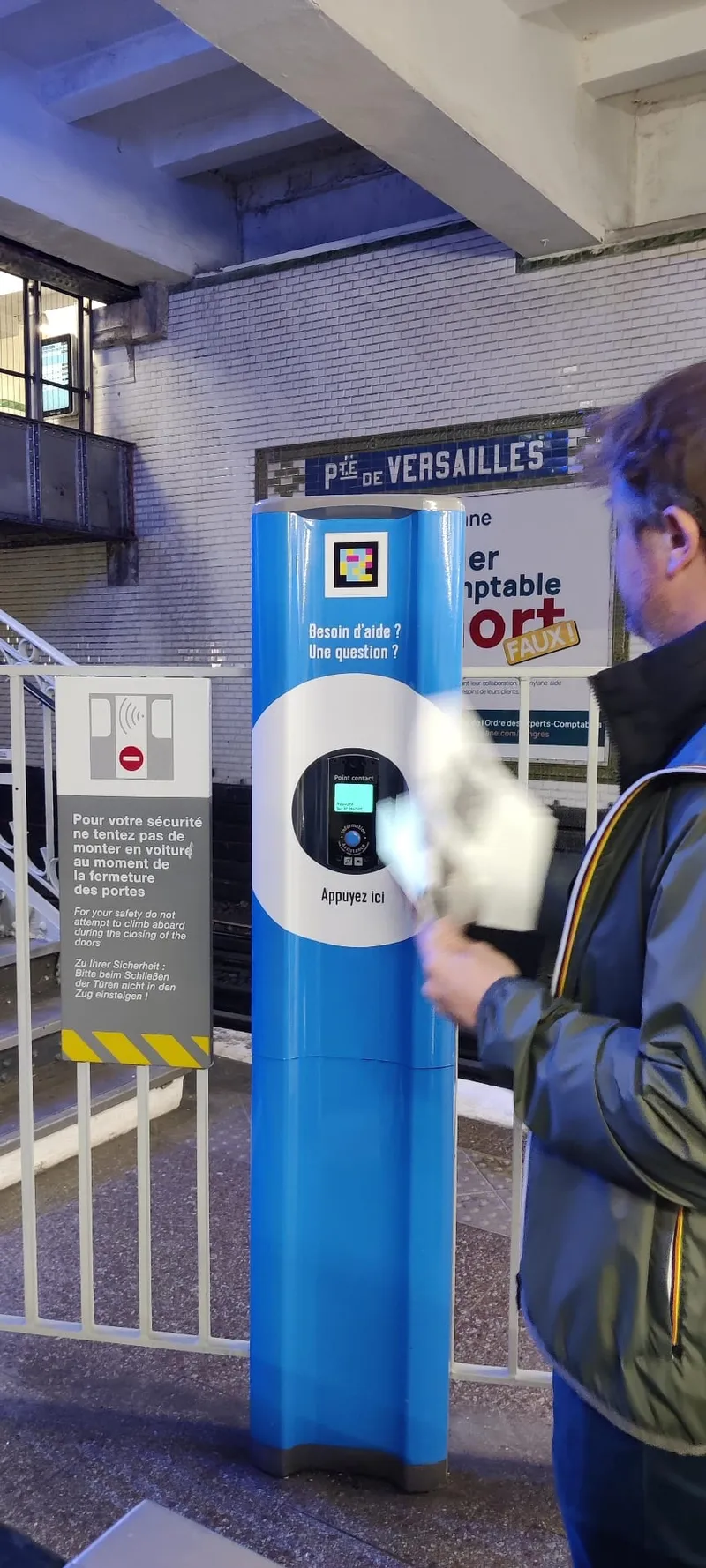
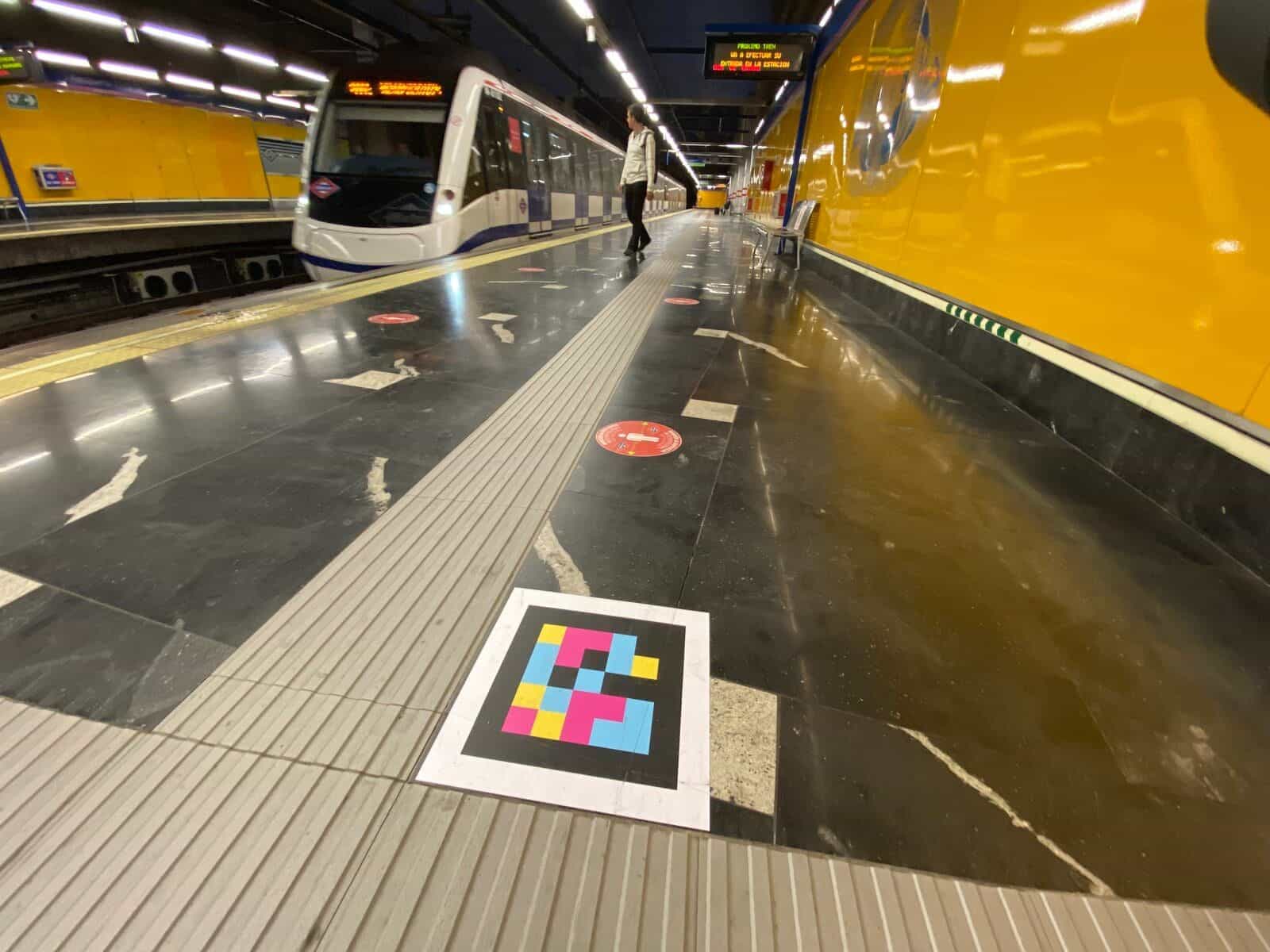
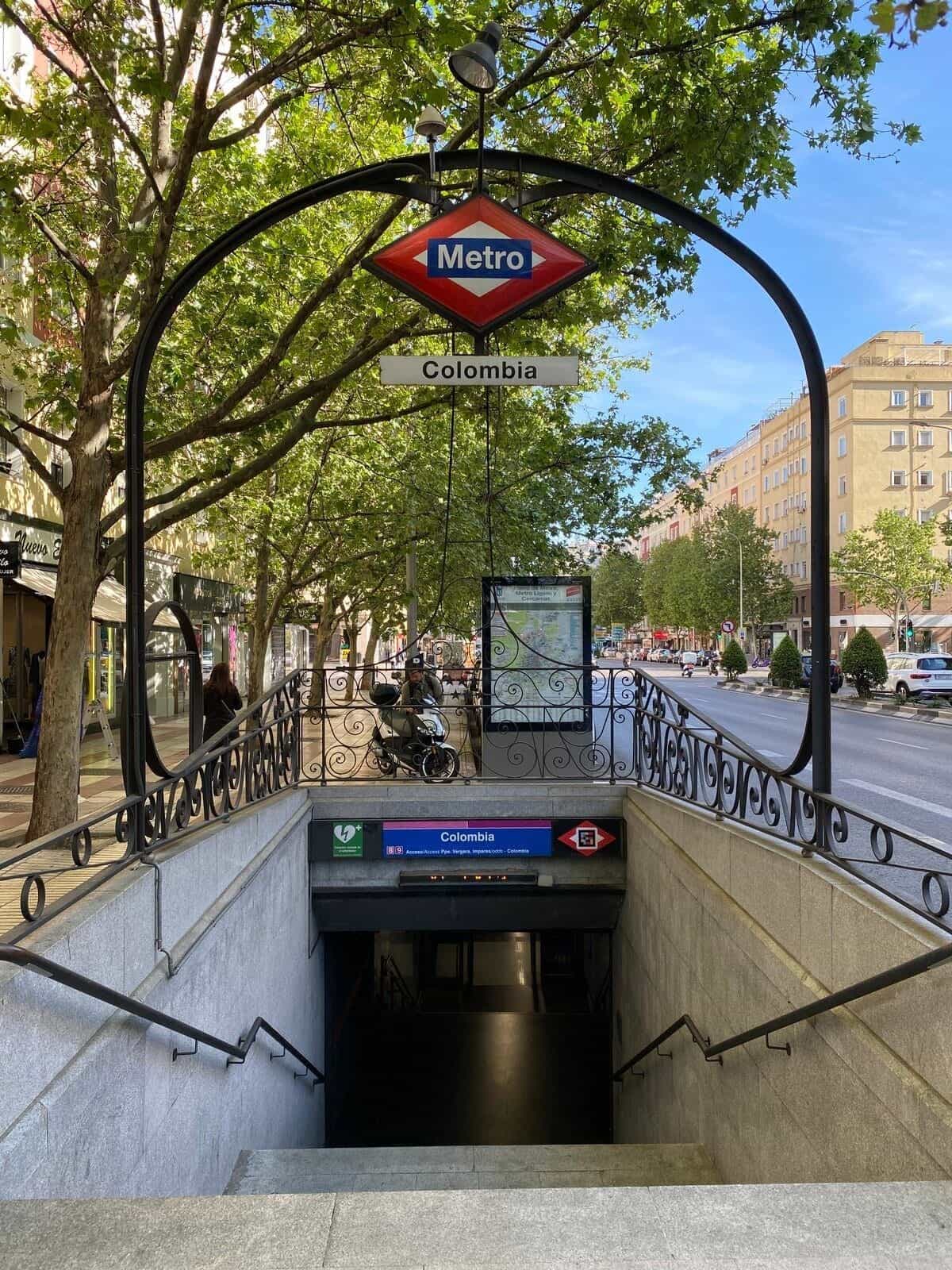
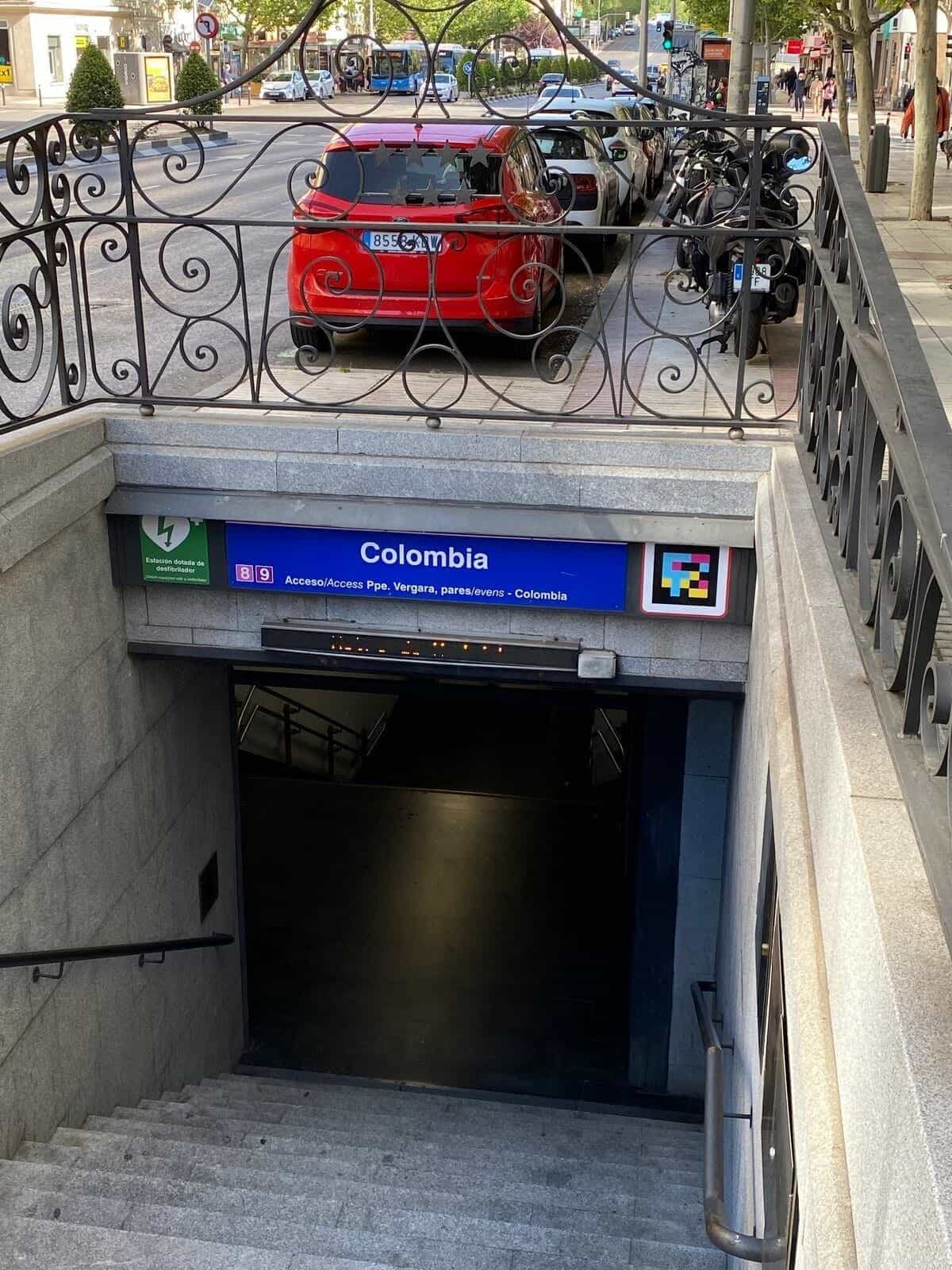
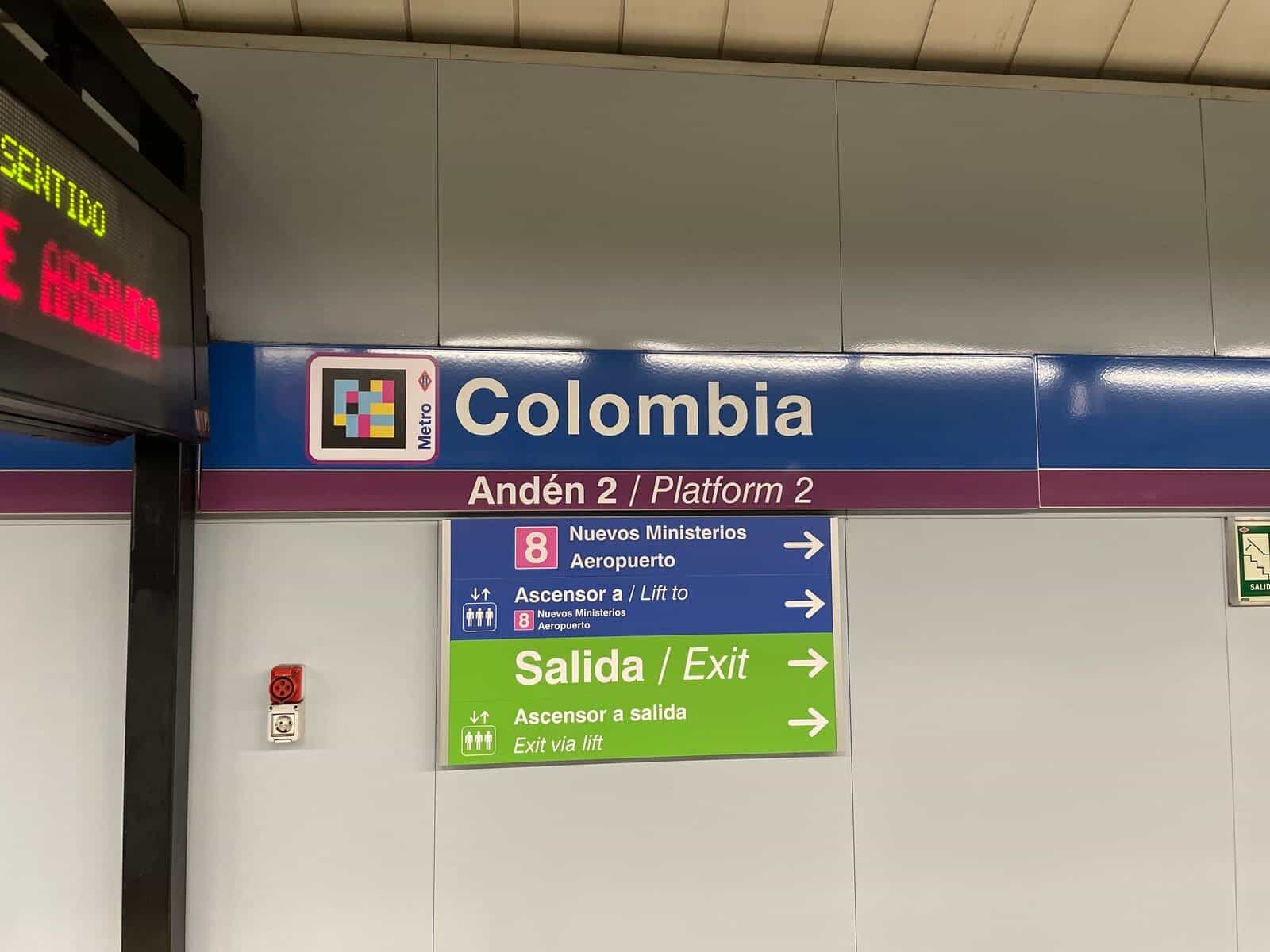
At every station, the NaviLens codes appear as a small color diamond beside the Metro's red diamond, on the upper edge of concourses, on platform signs, in elevators and on outside street panels. On top of Metro's iconic look—red diamond, line color bands, blue and green signs—NaviLens adds an audio information layer that the passenger receives in their own language.
§ The challenge
Getting to the plane without having to ask for help.
- 01
The line that connects the city center with the airport
L8 links Nuevos Ministerios with Adolfo Suárez Madrid-Barajas Airport in just a few minutes. For a blind person or an international traveler, that journey meant memorising different connections, platforms and exits at each station, or relying on staff at every change.
- 02
Colombia, an L8 ↔ L9 interchange with two concourses
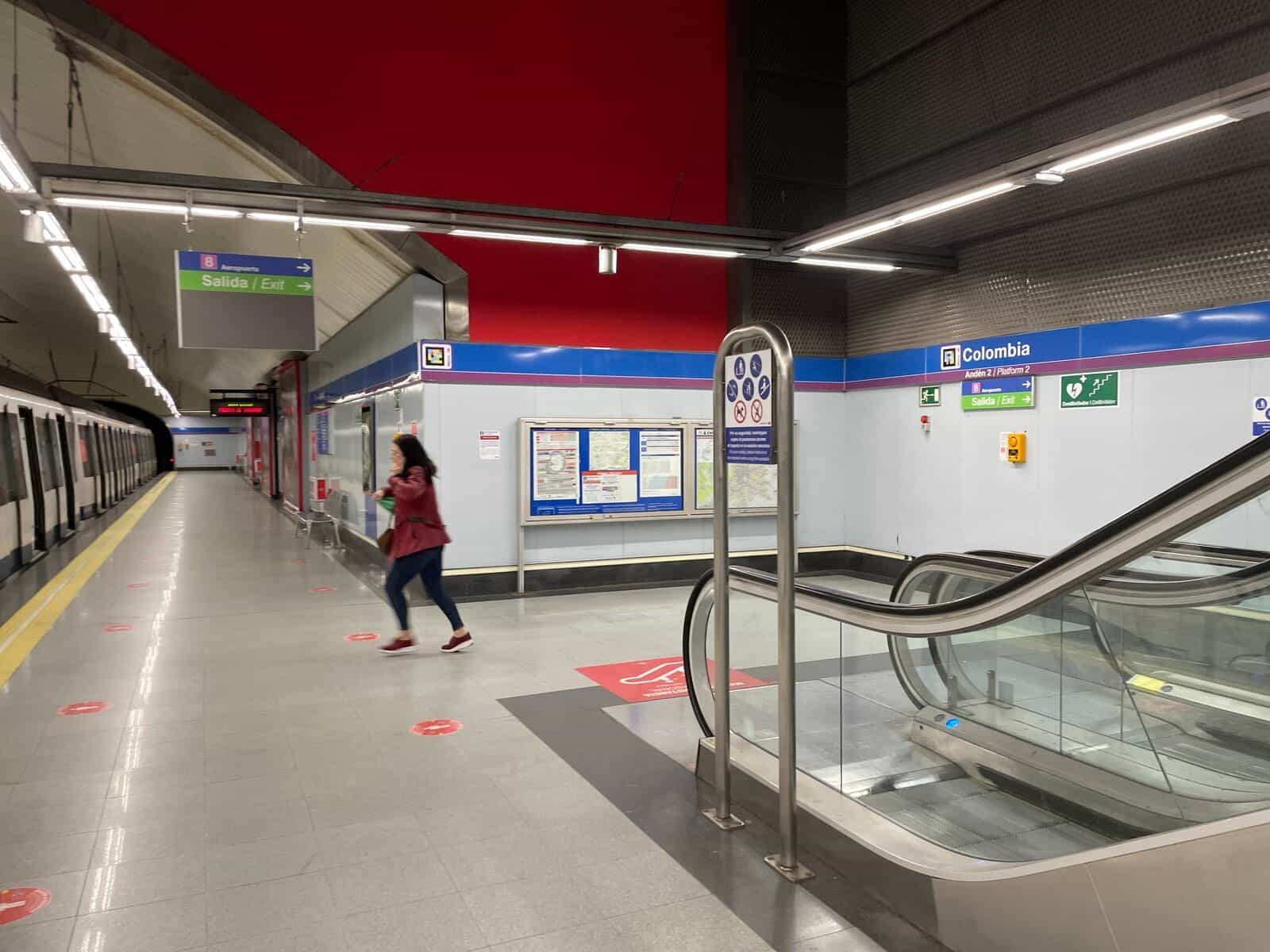
Colombia is a terminus of the pink line and an interchange with line 9. It has several surface accesses through wrought-iron modernist entrances, two concourses with elevators and two platforms on different levels. Without voice guidance, choosing which staircase to take or which elevator to use was the first obstacle of the journey.
- 03
Airport T1-T2-T3, arriving in and leaving the country
Airport T1-T2-T3 station welcomes travelers from all over the world, many with luggage, exhausted, or who don't speak Spanish. The station needed an audio information layer that also worked for international visitors without disabilities, in their own language, from platform to terminal exit.
§ The solution
A NaviLens diamond at every decision point.
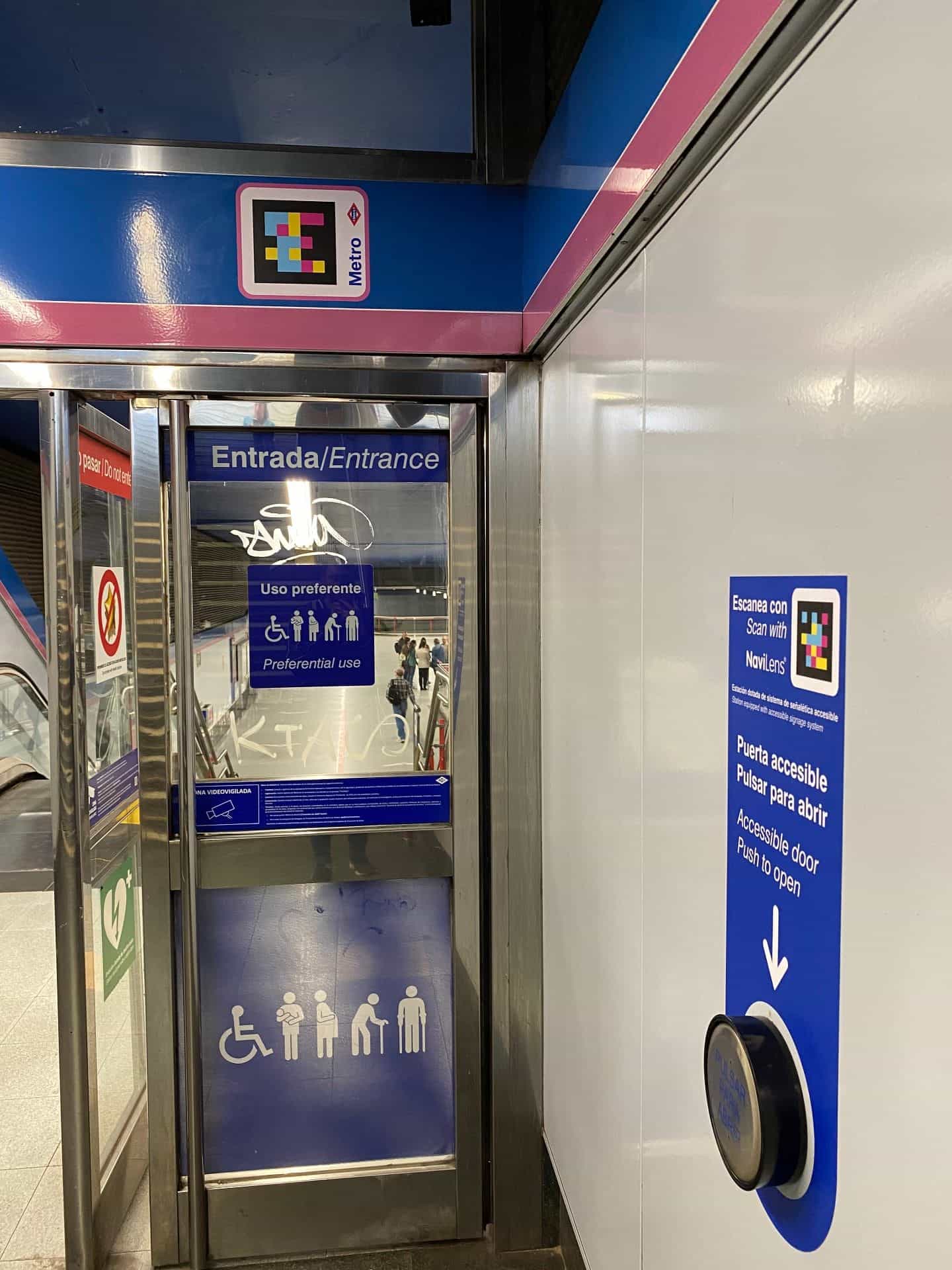
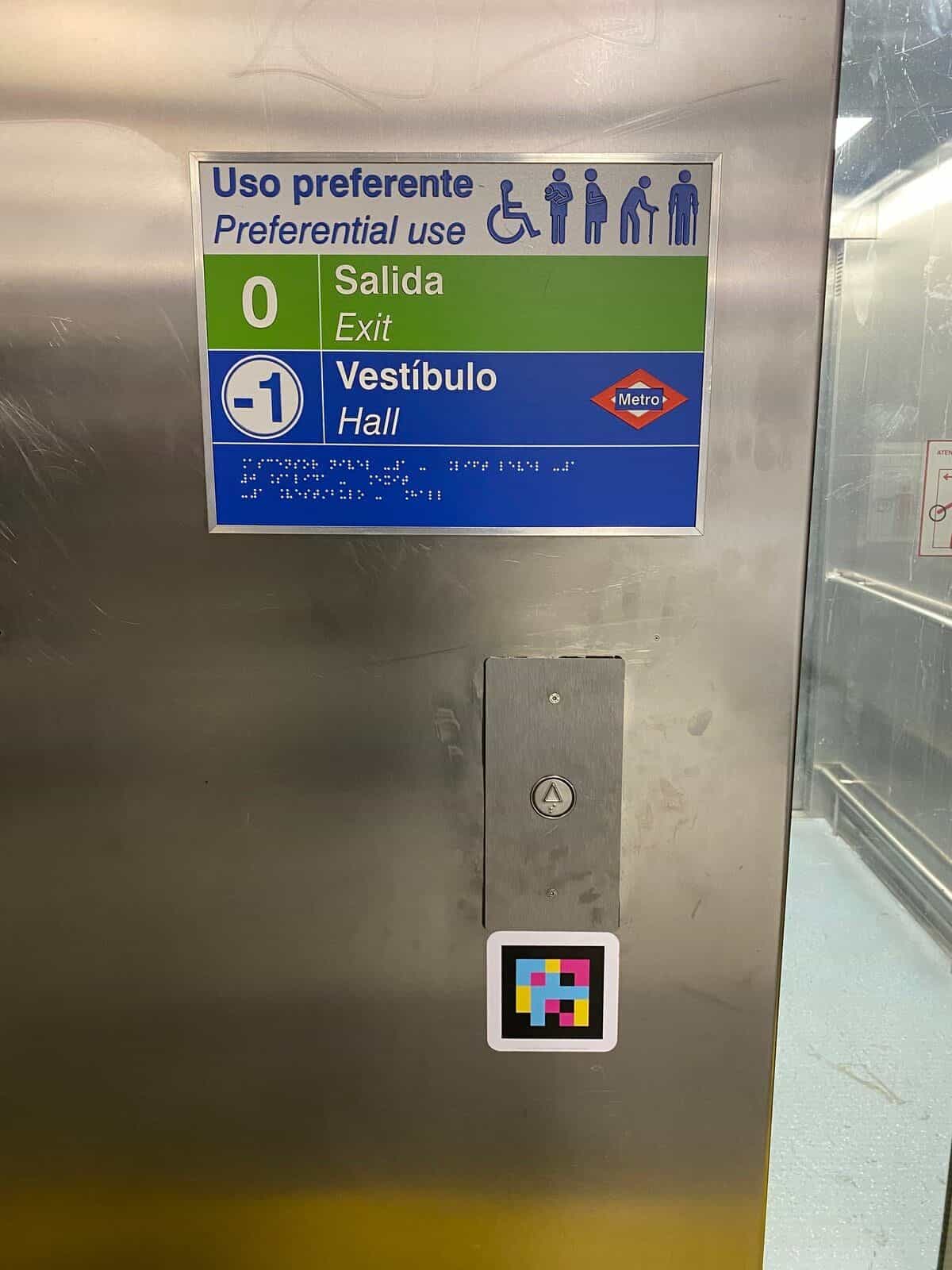
At Colombia and at Airport T1-T2-T3 the NaviLens codes sit at the points where the traveler has to decide: outside street panels, accessible gates with a “Scan with NaviLens” sign, elevators with their “Exit 0 / Concourse −1” panel, concourse upper edges above the green Exit signs and, on the platform, on the line 8 “Airport” sign itself with the list of next stations.
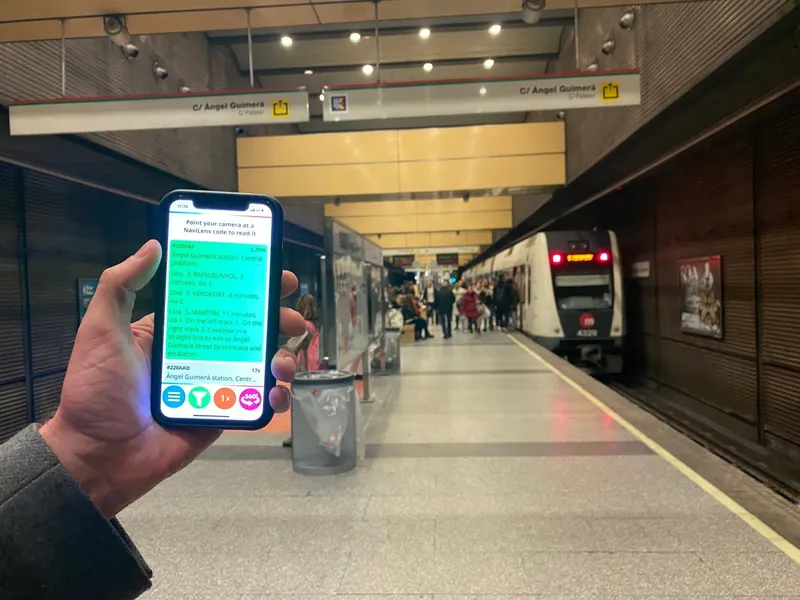
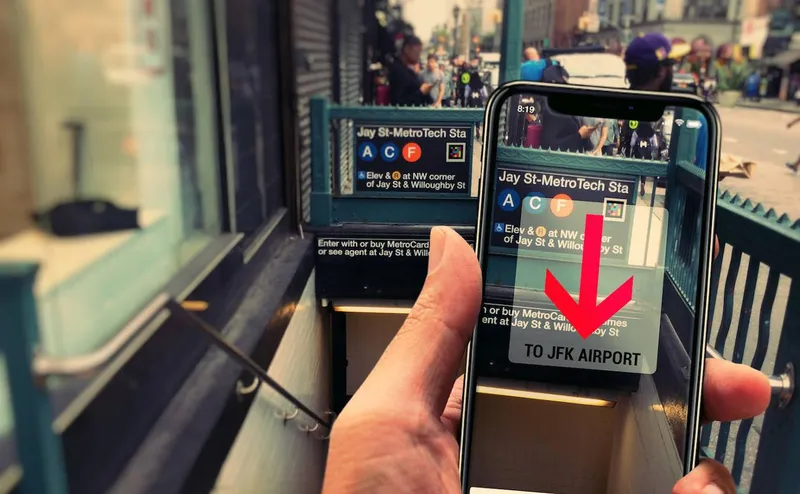
The traveler opens NaviLens GO and, with a sweep of the phone from several yards away and without aiming, hears aloud—in the language of their phone—which station they are at, which platform, where the next train is going and which exit to take.
The NaviLens layer lives alongside Metro de Madrid's usual signage — red diamond, L8 pink band, blue and green signs, priority pictograms, tactile paving, braille in elevators: it doesn't replace anything, it adds audio information on top of what is already there.
§ Colombia station
From the modernist entrance to the pink line platform.
§ Airport T1-T2-T3 station
The terminal, accessible underground too.
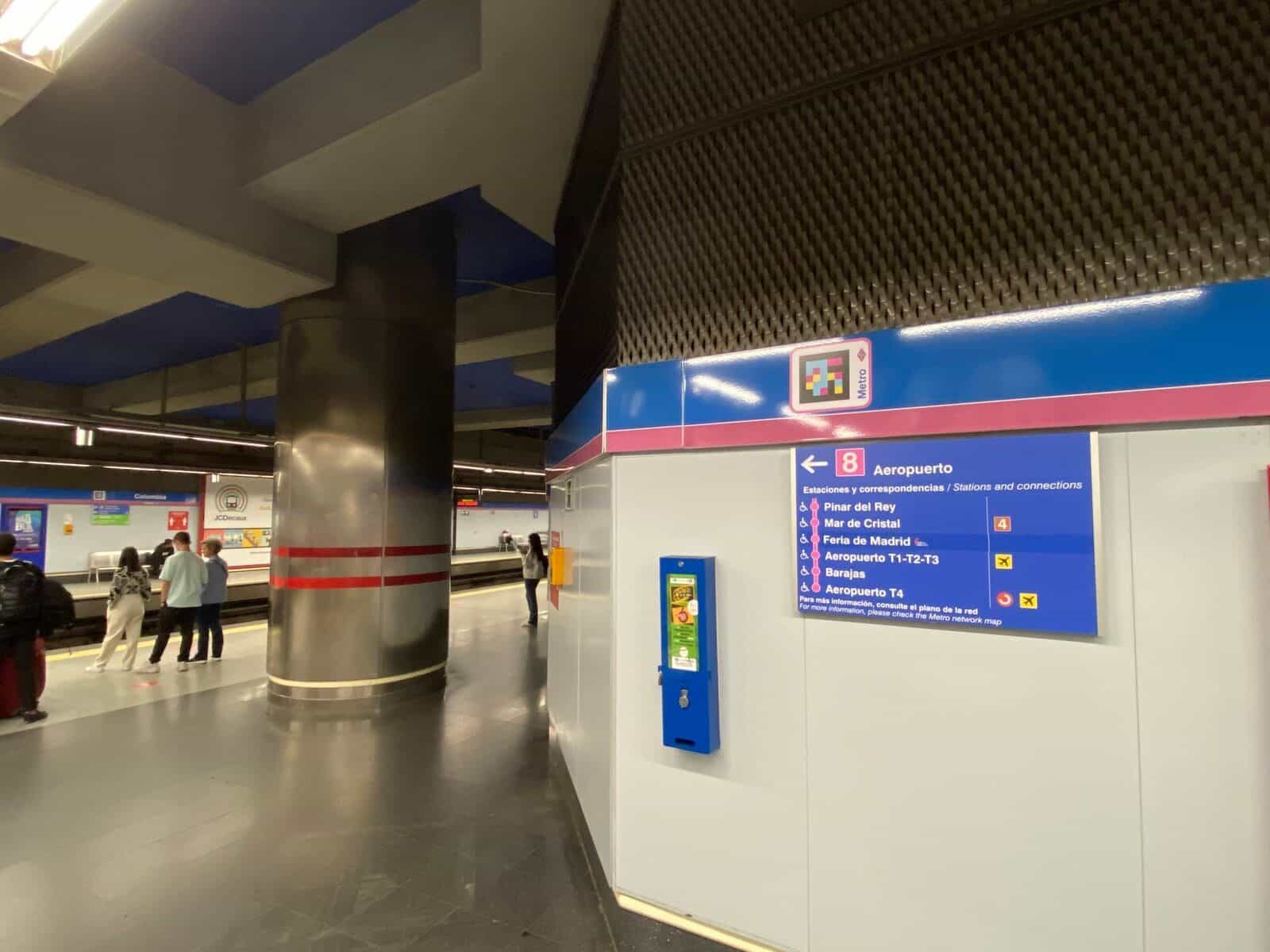
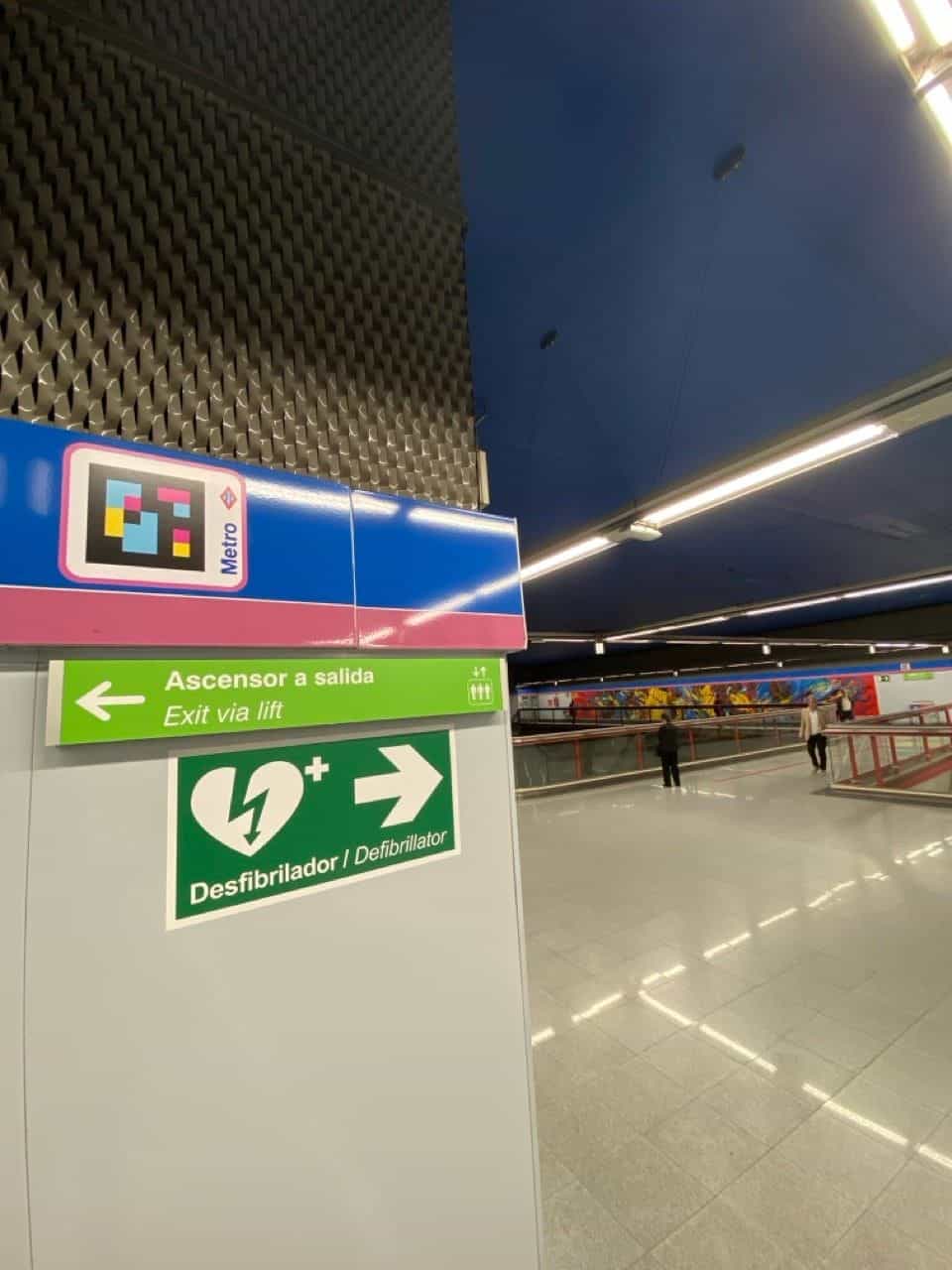
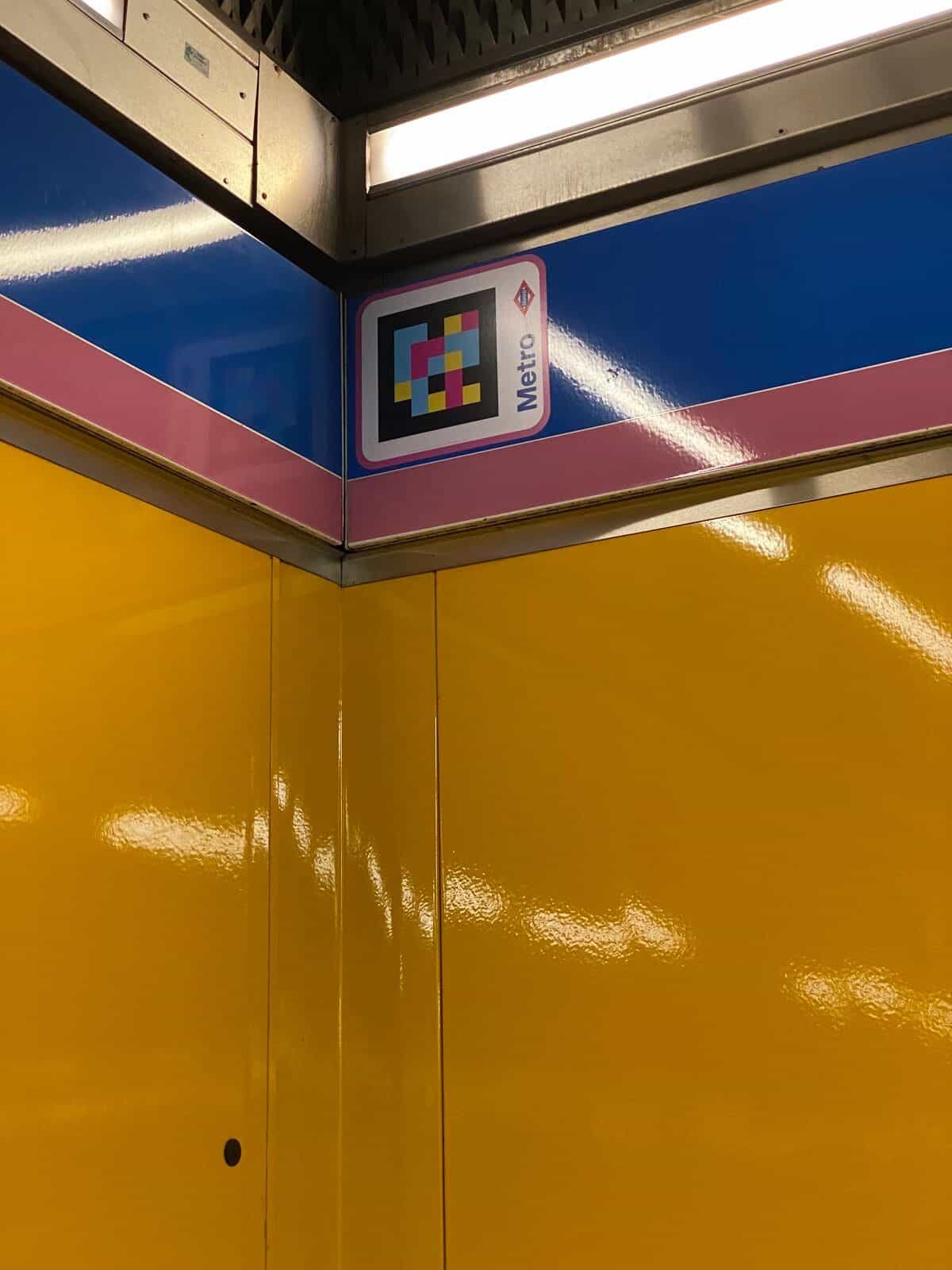
The codes are installed at the working height of each landmark—top edge of the concourse, platform floor, elevator, outside street panel—so a sweep of the phone is enough to detect them without aiming at an exact point, even at rush hour and with luggage.
§ Why it matters
The first pilot of a whole network.
Autonomy
A blind person can enter from the street, pass the gate, take the elevator, reach the right platform and get off at the airport without having to ask for help at every step.
Airport
NaviLens turns the pink line into the first accessible, multilingual route from the center of Madrid to Adolfo Suárez Madrid-Barajas Airport — including for international tourists without visual disabilities.
Scalable
What began as a pilot at Colombia and Airport T1-T2-T3 reached all eight L8 stations within months: proof that the system scales to a whole network with the same corporate signage.
§ And your network?
Your next station can also speak.
Tell us about your network, your pain points and the KPIs you want to move. We’ll show you how NaviLens would fit—with comparable cases.