Case study · Madrid
A mosaic that speaks from the platform floor.
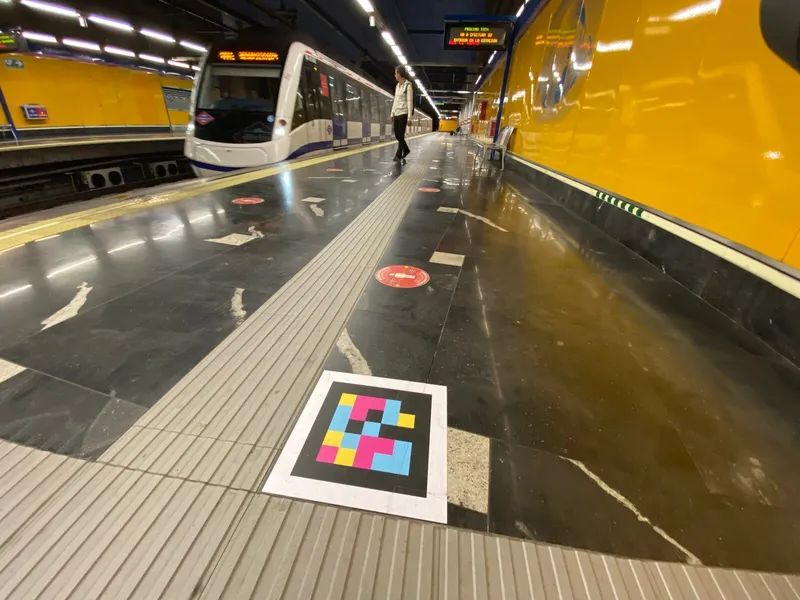
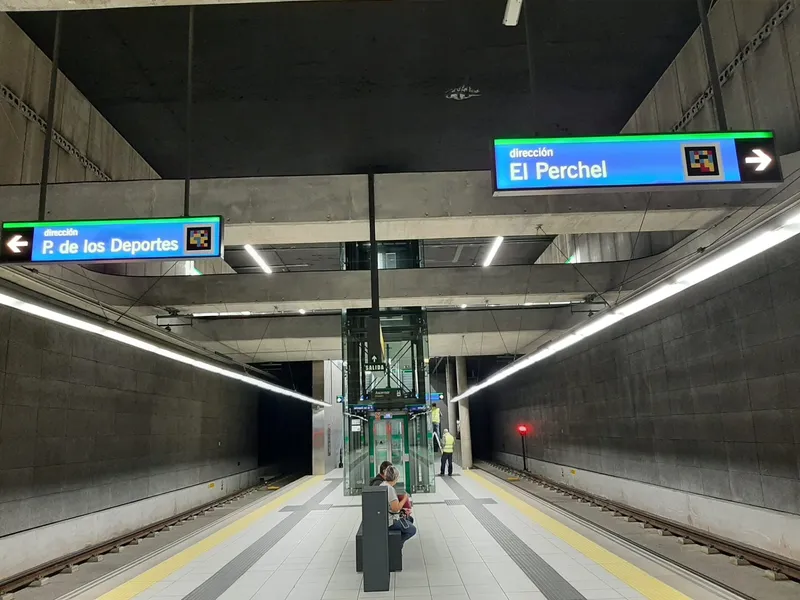
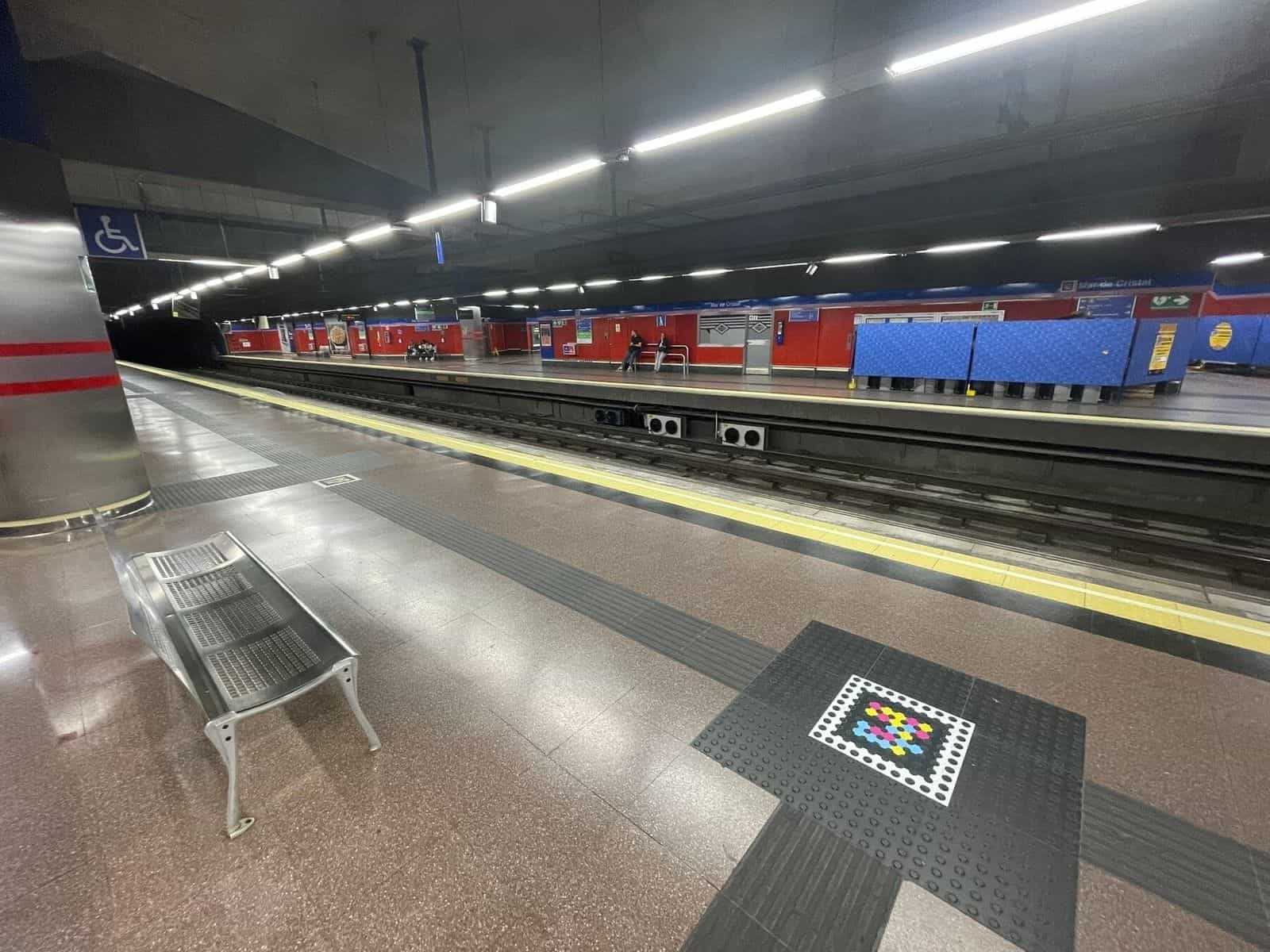
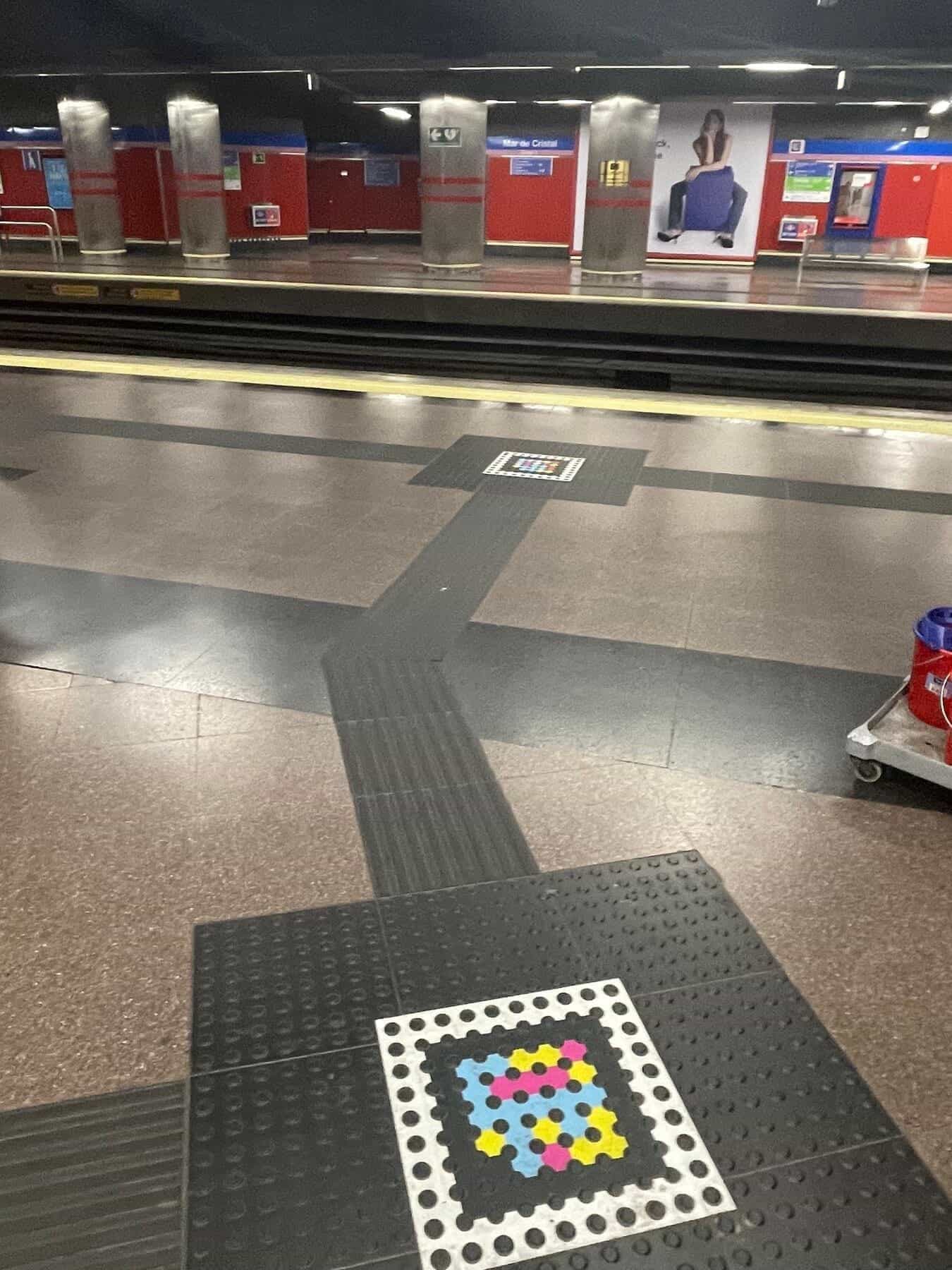
At Mar de Cristal station, an interchange of lines 4 and 8 on Metro de Madrid, the NaviLens codes are embedded as a ceramic mosaic in the paving alongside the tactile strip, and as diamonds on the outside glass cube, the concourse bridge and the exit signs.
Line 8 · “pink line”
Mar de Cristal — between Pinar del Rey and Colombia
L4 ↔ L8 interchange
Connects the pink line with the urban network
On the way to the airport
Intermediate station towards Adolfo Suárez Madrid-Barajas
ES · EN · 42+
Multilingual voice readout in the phone's language
The client
Community of Madrid
Metro de Madrid · L4 · L8
Mar de Cristal is an interchange station between line 4 (Argüelles ↔ Pinar de Chamartín) and line 8—the pink line linking Nuevos Ministerios with Adolfo Suárez Madrid-Barajas Airport. It serves the north of the Hortaleza district, the Bernabéu-Hispanoamérica neighborhood and facilities such as the ORCAM Foundation.
It is part of the voice-guidance rollout for blind people that the Community of Madrid and Metro de Madrid launched in 2023 on line 8 and that has since been extended to key interchange stations.
On top of Metro's iconic identity—red diamond, L8 pink stripe, red walls, yellow tactile paving and braille in elevators—, NaviLens adds a spoken information layer the traveler hears in their phone's language without having to aim at a precise spot.
§ The challenge
Telling which platform goes to the airport.
- 01
An interchange between two lines
Mar de Cristal is an interchange node between lines 4 and 8. For a blind person, telling apart the pink-line platform to the airport from the line-4 platform was the first obstacle of the journey, especially when moving between levels through the concourse bridge.
- 02
Outdoor access from Mar Adriático and the ORCAM Foundation
The station serves the Bernabéu-Hispanoamérica neighborhood and the headquarters of the ORCAM Foundation. The exit towards C. Mar Adriático is the natural access for many blind and low-vision professionals and residents, and needed a spoken information layer from the very door of the glass cube.
- 03
Identifying the right L8 platform
On a platform with columns, tactile paving, characteristic red walls and a lot of train noise, a spoken information point was needed that the traveler could detect with a sweep of the phone without having to stick to a specific sign.
§ The solution
A ceramic code, built to last.
What makes Mar de Cristal special is that the platform's NaviLens code is not a vinyl: it is a ceramic mosaic of colored tiles embedded in the floor, executed with the same craft as Metro's own tactile guide. The code is part of the paving — it doesn't peel, doesn't stain and withstands intensive use from travelers with luggage.
The traveler opens NaviLens GO and, with a sweep of the phone from several yards away and without aiming, hears aloud—in the language of their phone—which station they are in, which platform and which exit corresponds. Codes are placed at the decision-making points: outer glass cube, concourse bridge, edges above the green Exit signs and, most importantly, the mosaic on the platform itself.
The NaviLens layer coexists with Metro de Madrid's usual signage—red diamond, L8 pink stripe, tactile paving, braille—: it replaces nothing, it adds spoken information on top of what is already there.
§ Inside Mar de Cristal
From the glass cube to the pink-line platform.
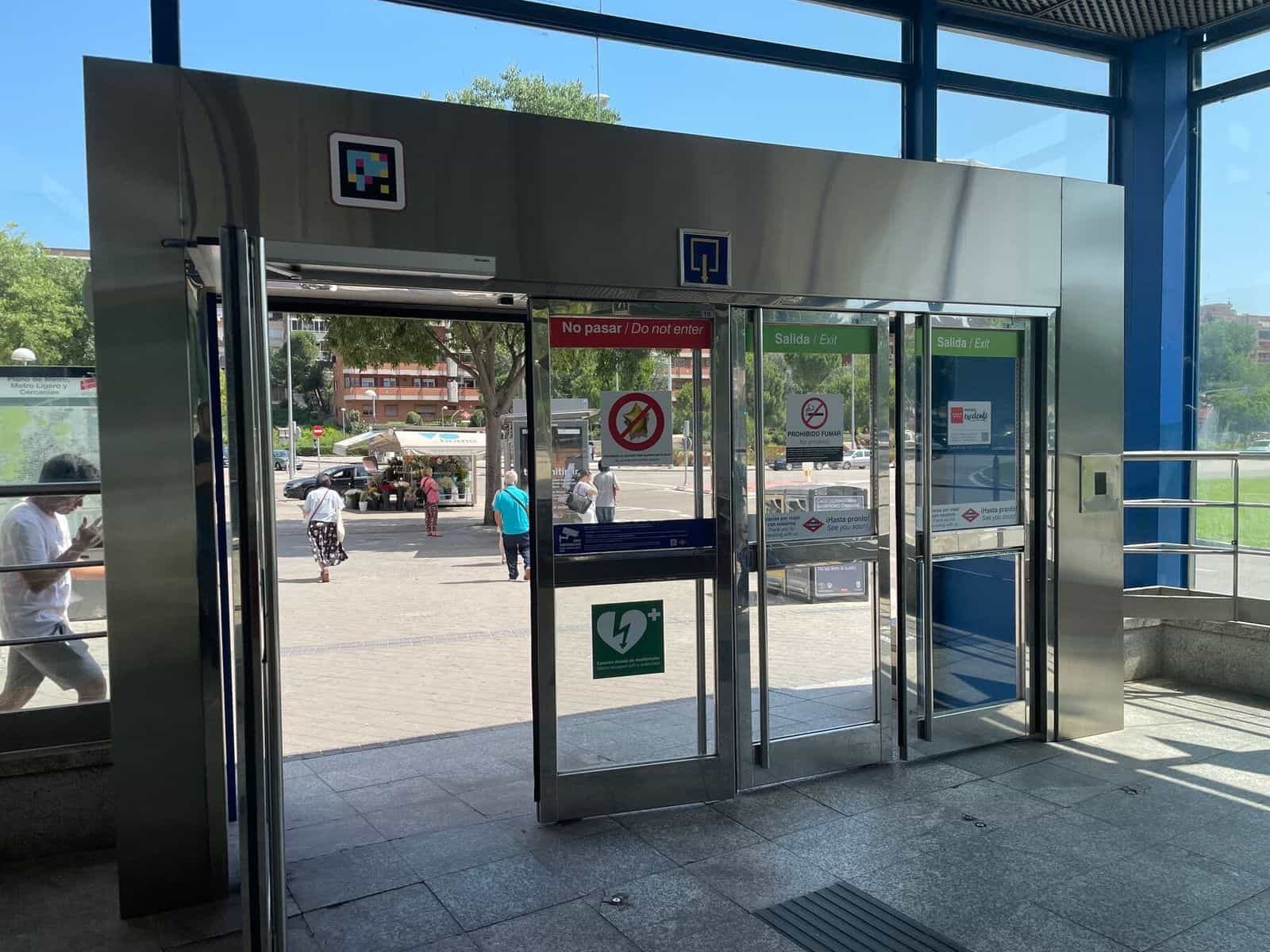
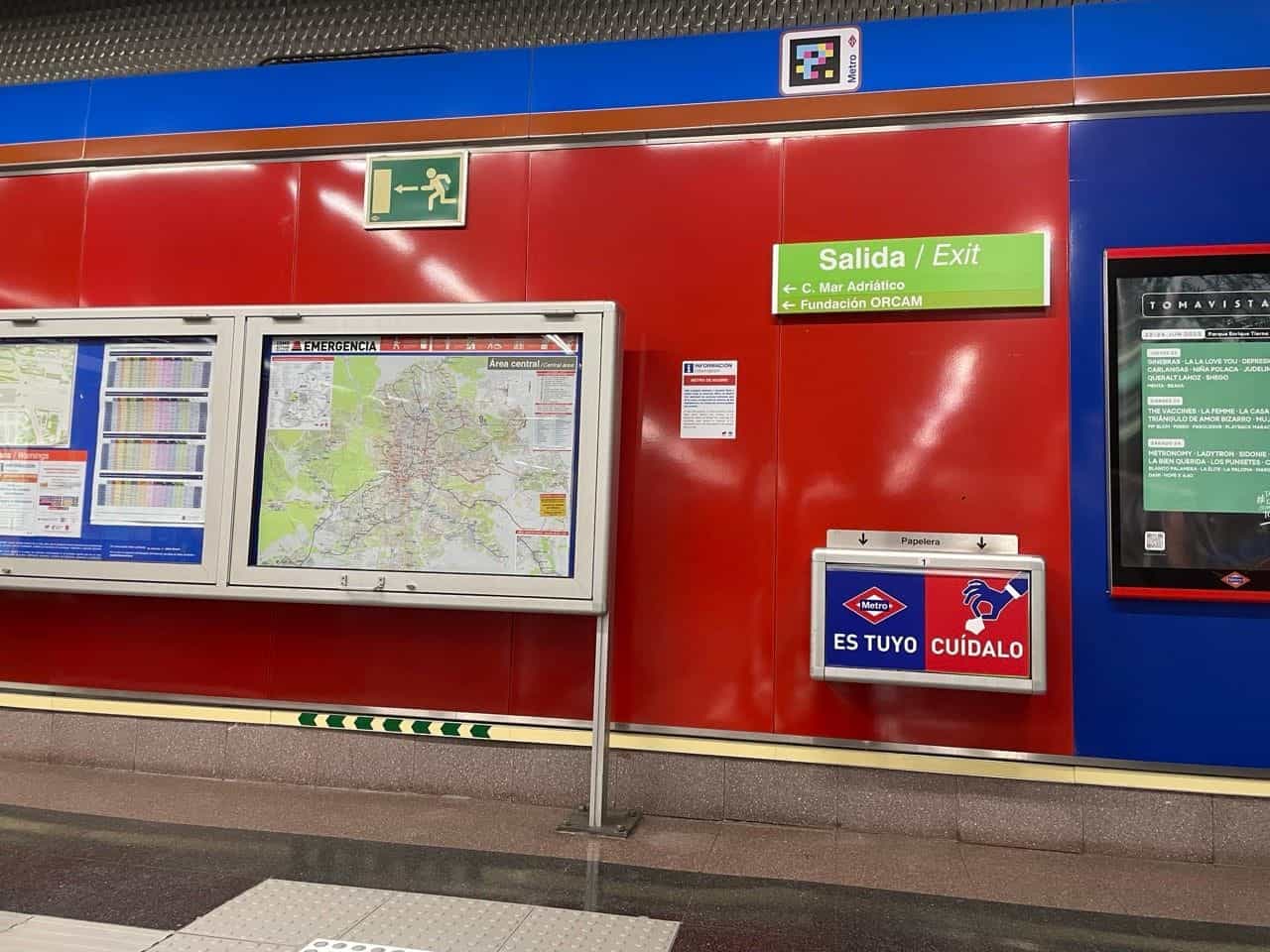
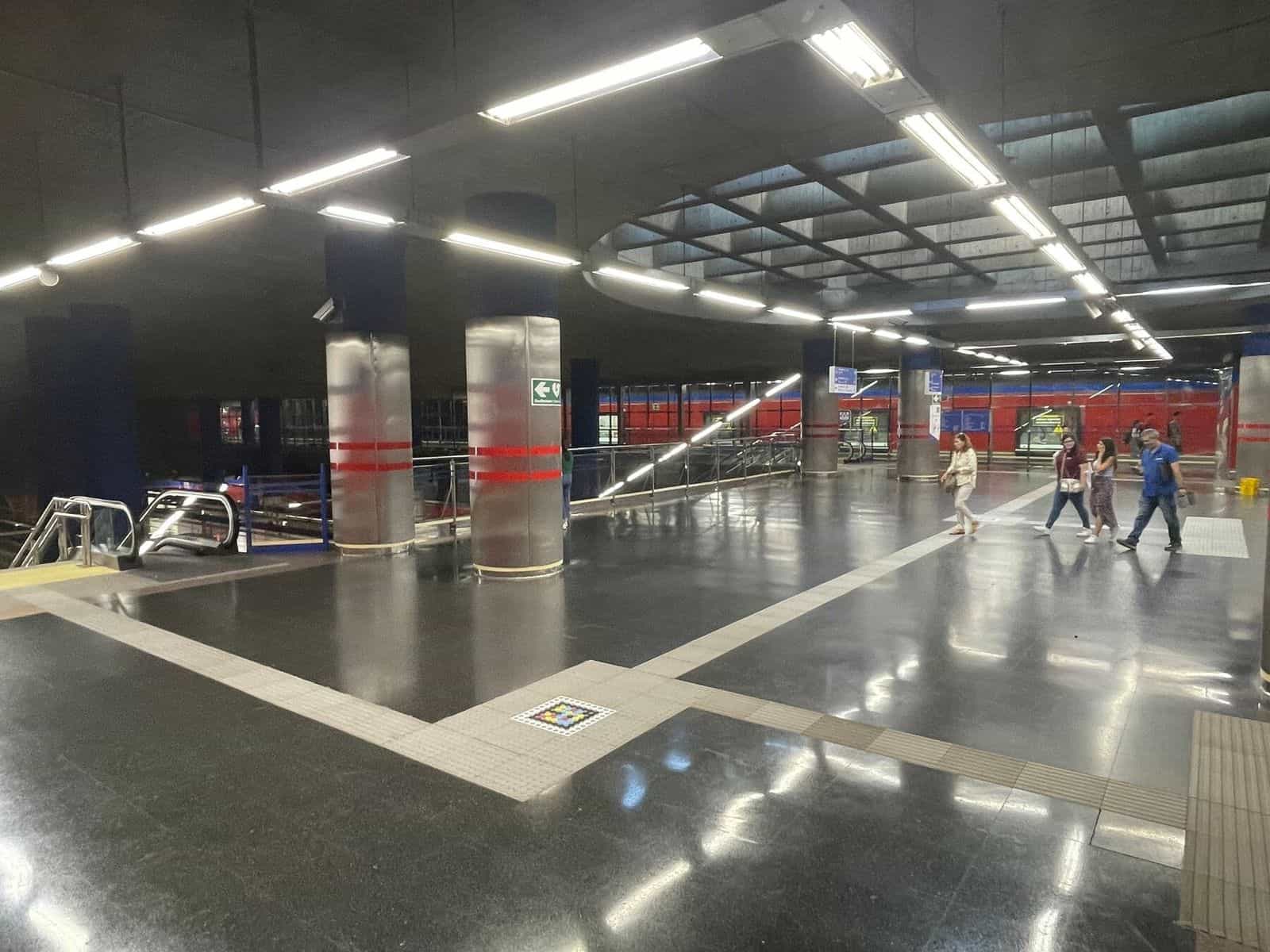
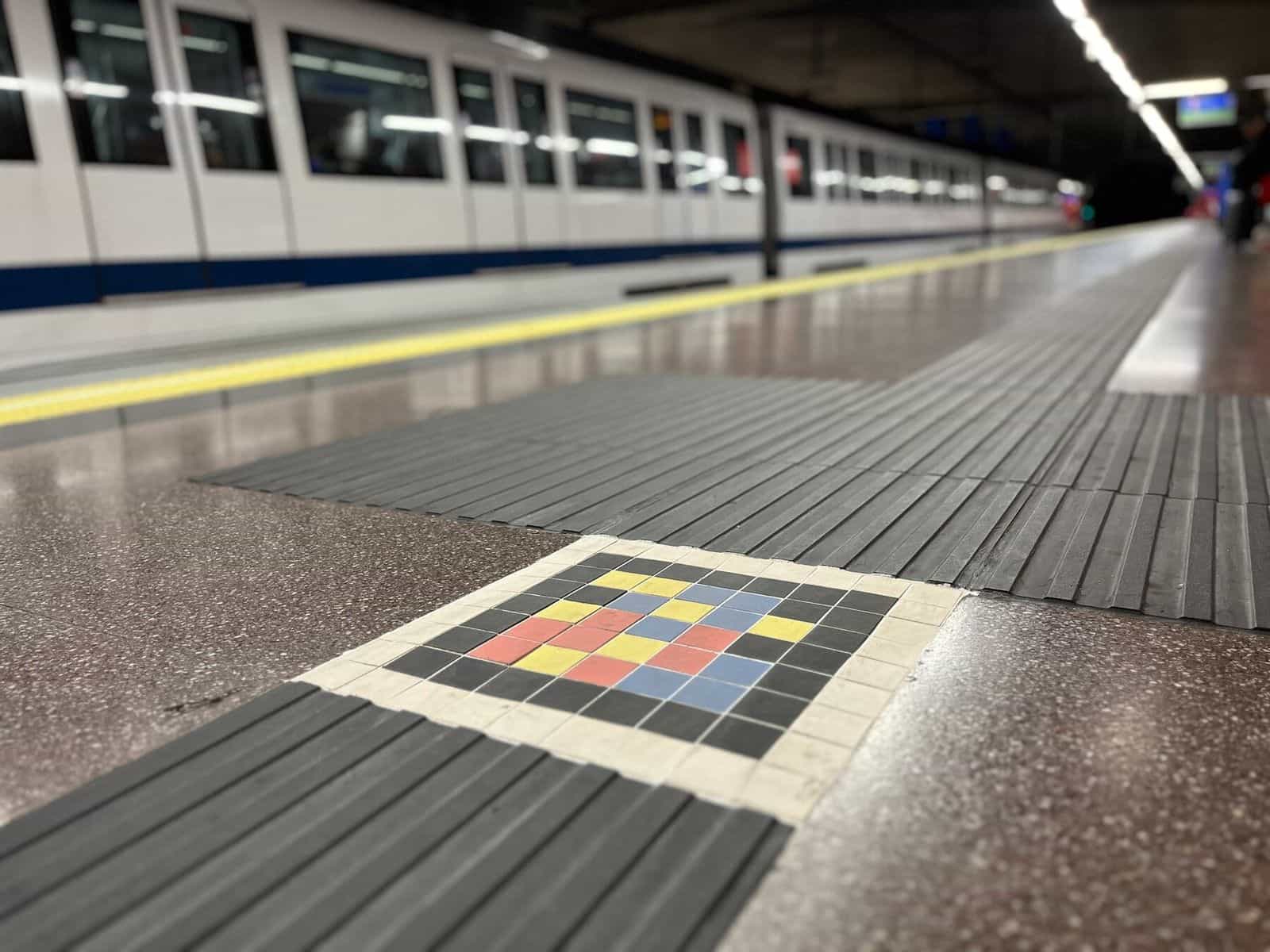
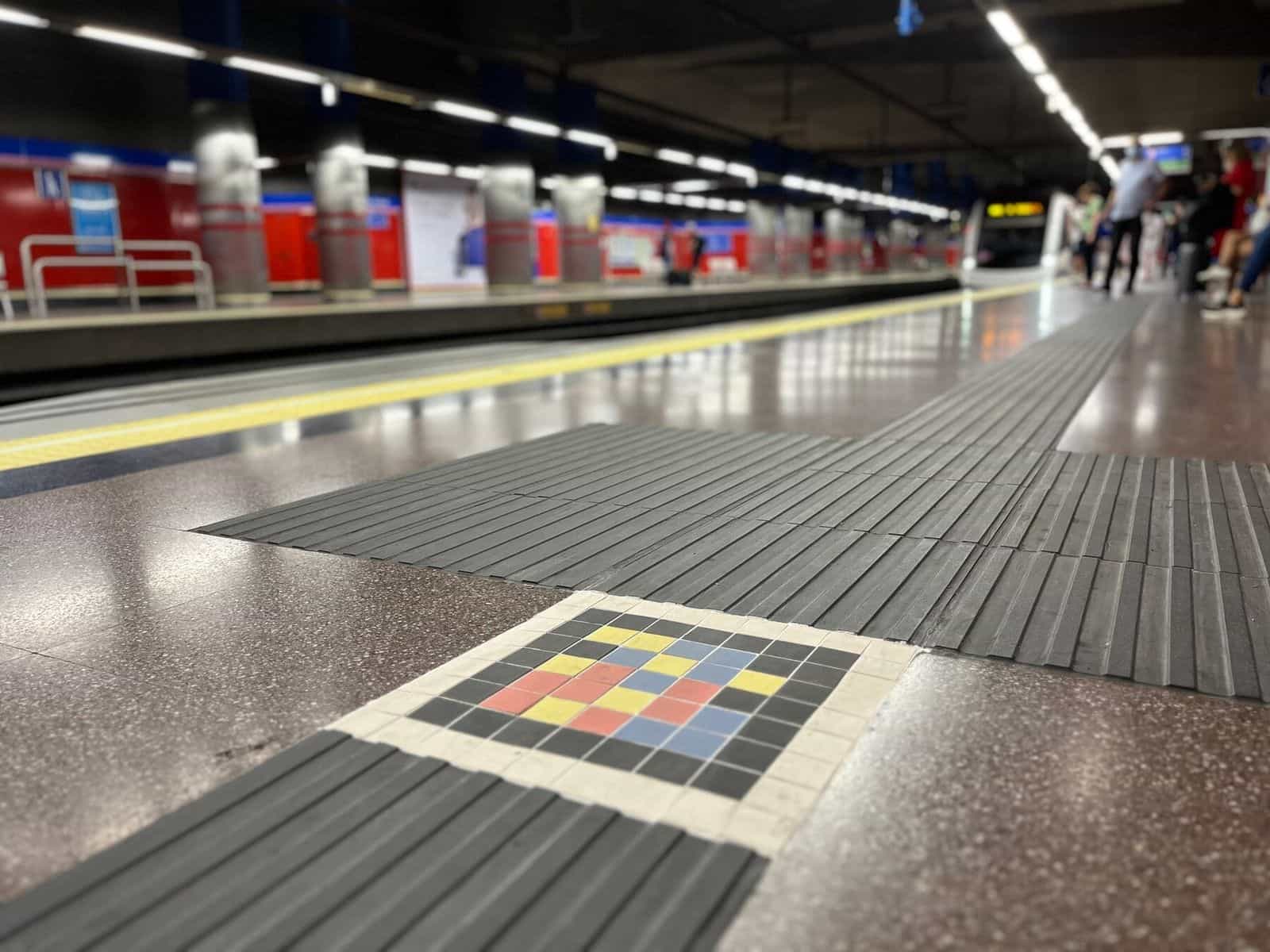
The ceramic mosaic sits at the crossing of the tactile paving, right where the traveler turns to approach the platform edge: a sweep of the phone is enough to detect it from several yards away, even with luggage and at rush hour.
§ Why it matters
A code that is part of the station.
Permanent
The ceramic mosaic embedded in the floor doesn't peel off, doesn't get dirty and withstands millions of travelers: the NaviLens code is built as part of the station, not as a sticker.
Interchange
At an interchange between L4 and L8, hearing aloud which platform you are on—and where the next train is heading—is the difference between catching your flight on time and taking the wrong line.
Neighborhood
Mar de Cristal serves the Bernabéu-Hispanoamérica neighborhood and facilities such as the ORCAM Foundation: residents and blind and low-vision professionals gain independence from the very door of the glass cube.
§ And your network?
Your next station can also speak.
Tell us about your network, your pain points and the KPIs you want to move. We’ll show you how NaviLens would fit—with comparable cases.