Case study · Madrid
From the street to the airport platform, out loud.
The Community of Madrid and Metro de Madrid embedded NaviLens at Nuevos Ministerios, an interchange of lines 6, 8 and 10 and the southern terminus of the pink line to Adolfo Suárez Madrid-Barajas Airport: codes from the street-level glass cube to the Customer Information Point, read aloud in the language of the traveler's phone.
Lines 6 · 8 · 10
Key interchange in the network, southern terminus of L8 to the airport
Pº Castellana
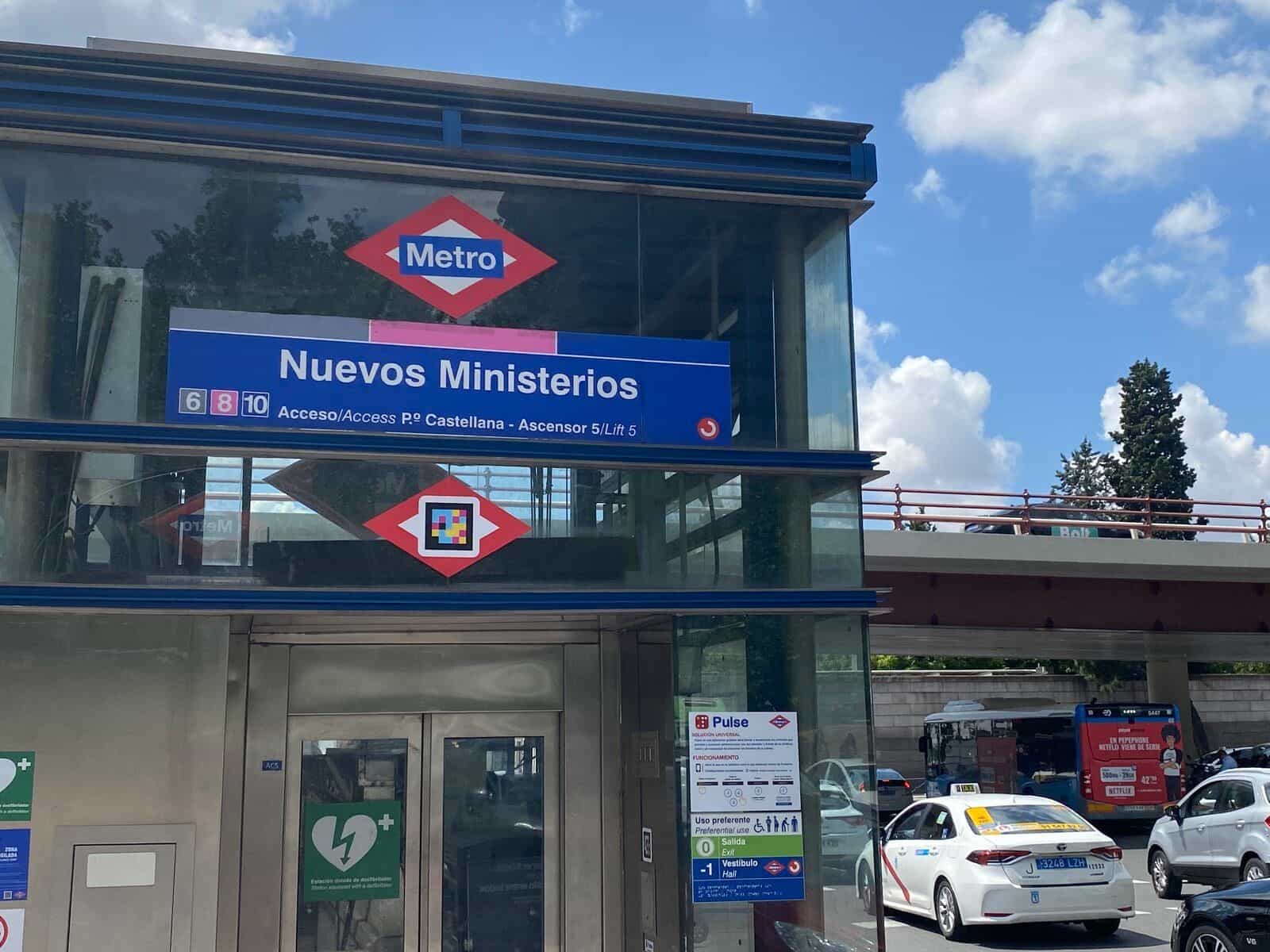
Access via glass cube with NaviLens code on the outside sign
Concourse + CIP
Codes on the floor, edges and Customer Information Point
ES · EN · 42+
Multilingual voice readout in the language of the traveler's phone
The client
Community of Madrid
Metro de Madrid · Regional Transport Consortium
Metro de Madrid is the city's underground and one of Europe's largest networks, with more than 300 stations. Nuevos Ministerios is one of its main interchanges: a crossroads of lines 6, 8 and 10 and southern terminus of the pink line linking the center of Madrid with Adolfo Suárez Madrid-Barajas Airport, plus an interchange with Cercanías Renfe.
In 2023, the Community of Madrid launched together with Metro de Madrid a voice-guidance system for blind people and people with cognitive disabilities based on NaviLens. Line 8—Airport T4 ↔ Nuevos Ministerios—was the first complete line in the network to be signposted, and Nuevos Ministerios, given its terminus and interchange role, one of the stations where the system concentrates the most codes.
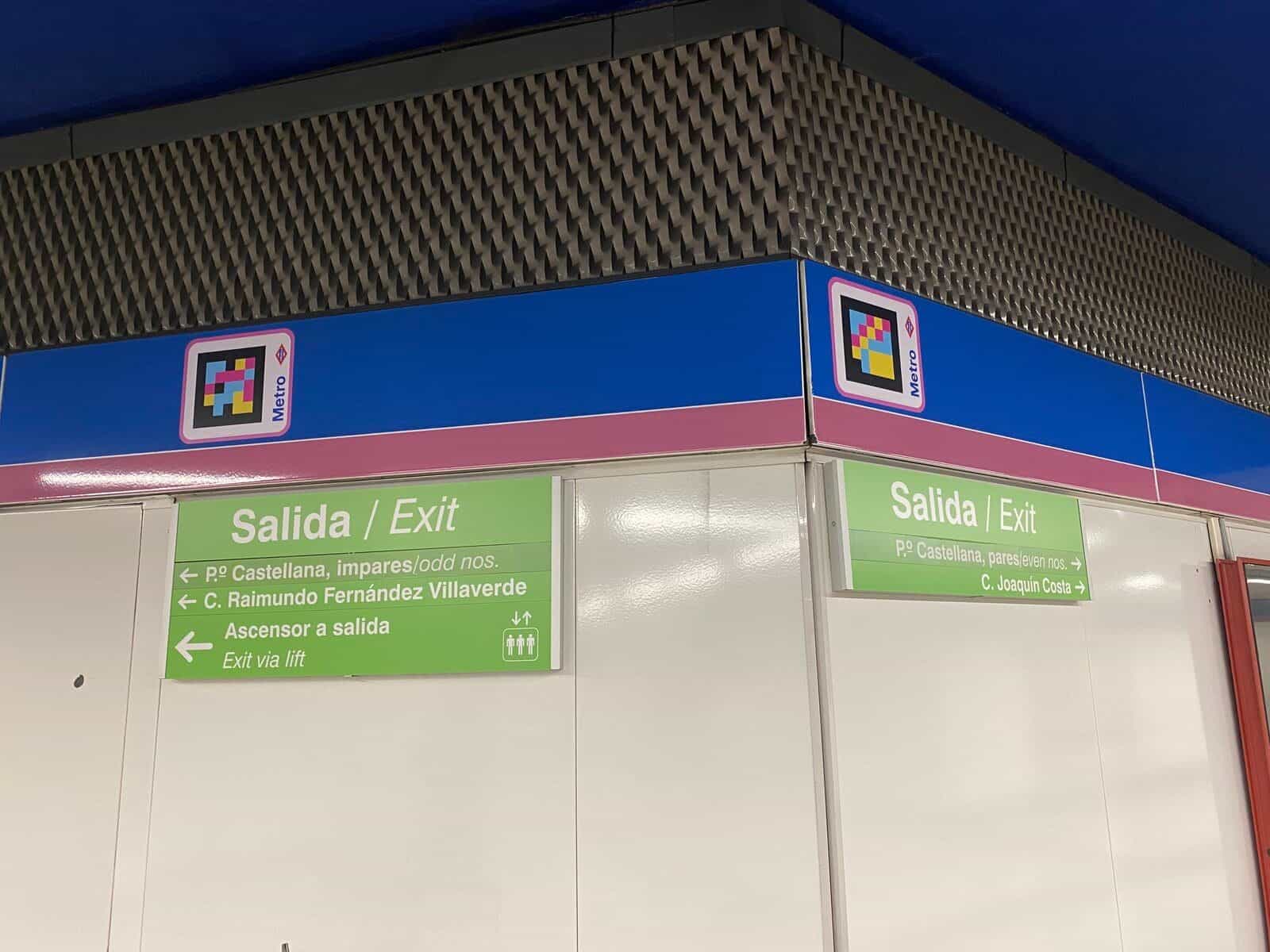
On top of Metro's classic identity—red diamond, blue exit signs, L8 pink stripes—, NaviLens integrates as a small colored diamond the traveler detects with the phone from several yards away, without aiming.
§ The challenge
Crossing an interchange without having to ask for help at every change.
- 01
One of Madrid's most complex stations
Nuevos Ministerios is an interchange for lines 6, 8 and 10 and connects with the suburban rail. For a blind person, that means several concourses, stairs, elevators and exits to Castellana, Raimundo Fernández Villaverde or Joaquín Costa. Without spoken information, every change was a point where help had to be asked for.
- 02
Reaching the airport without a companion
L8 is the pink line that joins Nuevos Ministerios with Adolfo Suárez Madrid-Barajas Airport. The Community of Madrid wanted a blind and low-vision traveler to be able to do that journey independently, from concourse to platform, also for tourists arriving in the city for the first time.
- 03
A layer that coexists with Metro's signage
An accessible signal was needed, detectable from several yards away, without aiming and in the harsh concourse lighting, without touching the iconic image of the Metro diamond, the 6/8/10 line signs or the green Exit arrows. NaviLens was integrated as a small colored diamond next to the logo, preserving Metro de Madrid's identity.
§ The solution
A NaviLens diamond next to the Metro diamond.
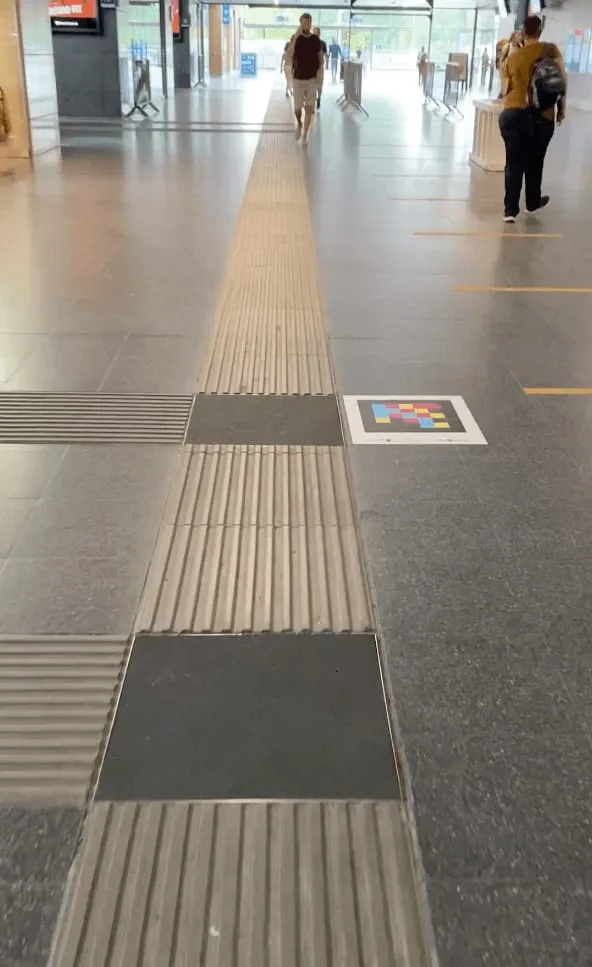
At Nuevos Ministerios, NaviLens codes sit at the traveler's decision points: the glass cube of the access via Paseo de la Castellana — Elevator 5, the concourse corners and edges where the green Exit signs concentrate, the concourse floor itself—on the tactile strip—and the entrance to the Customer Information Point.
The traveler opens NaviLens GO and, with a sweep of the phone from several yards away and without aiming, hears aloud—in the phone's language—what is in front of them: which access they are at, which line they are heading to, where they exit to Castellana or Raimundo Fernández Villaverde, or that right there is the Customer Information Point.
The NaviLens layer coexists with the tactile paving, the Exit signs and the priority-use symbols: it replaces nothing, it adds a spoken information layer on top of what already exists.
§ The station
From the glass cube to the Customer Information Point.
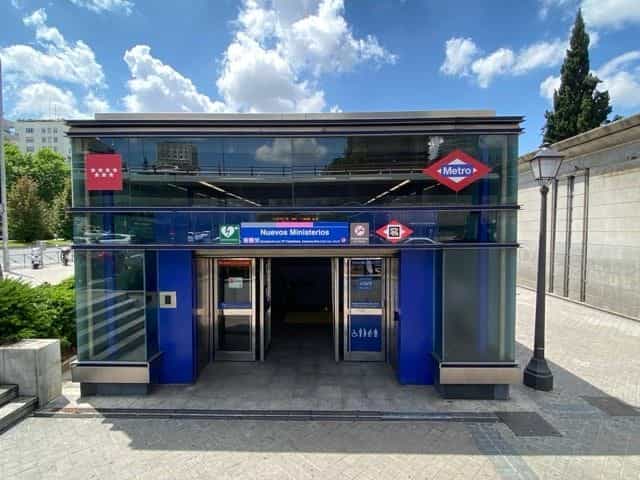
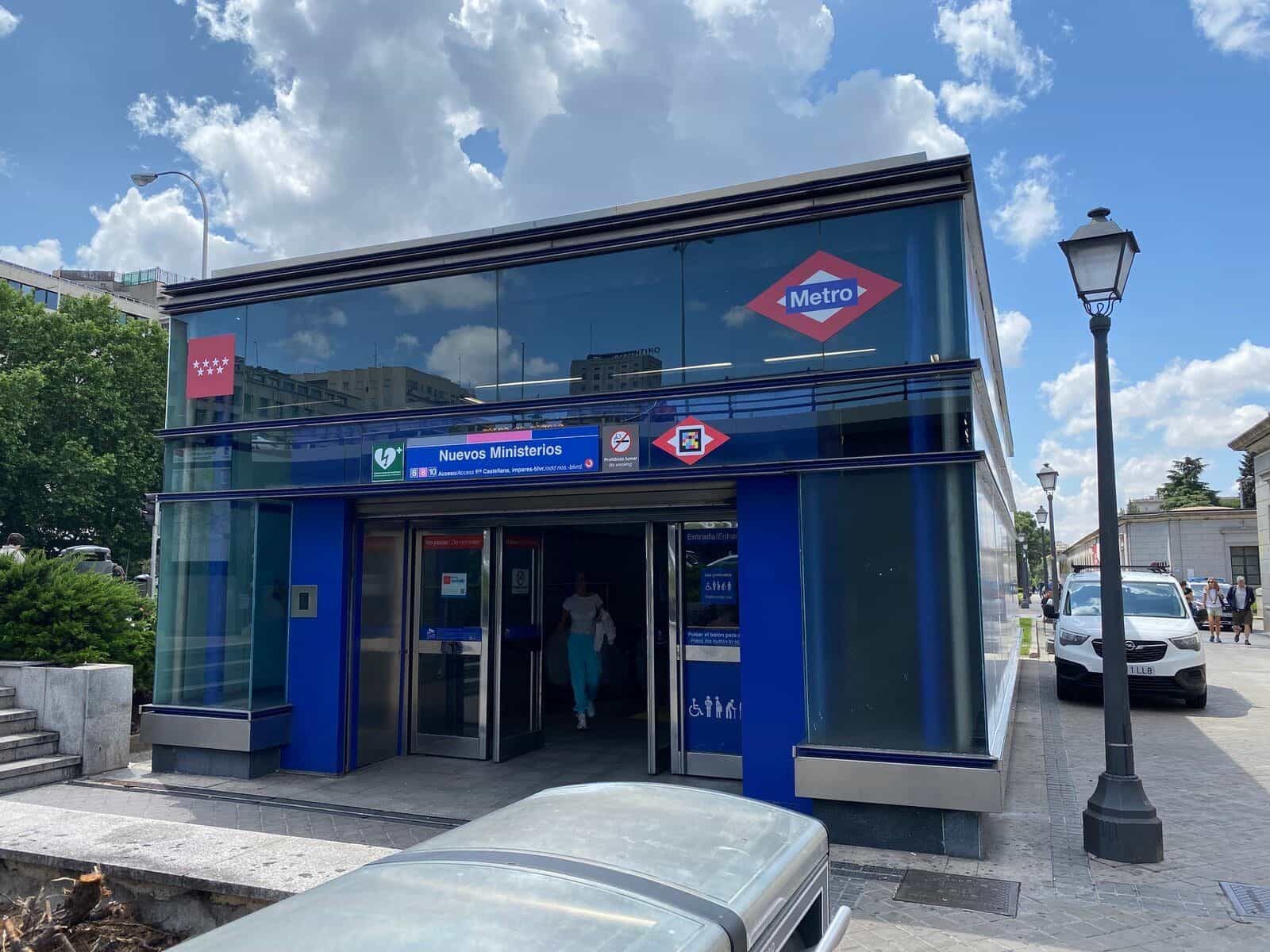
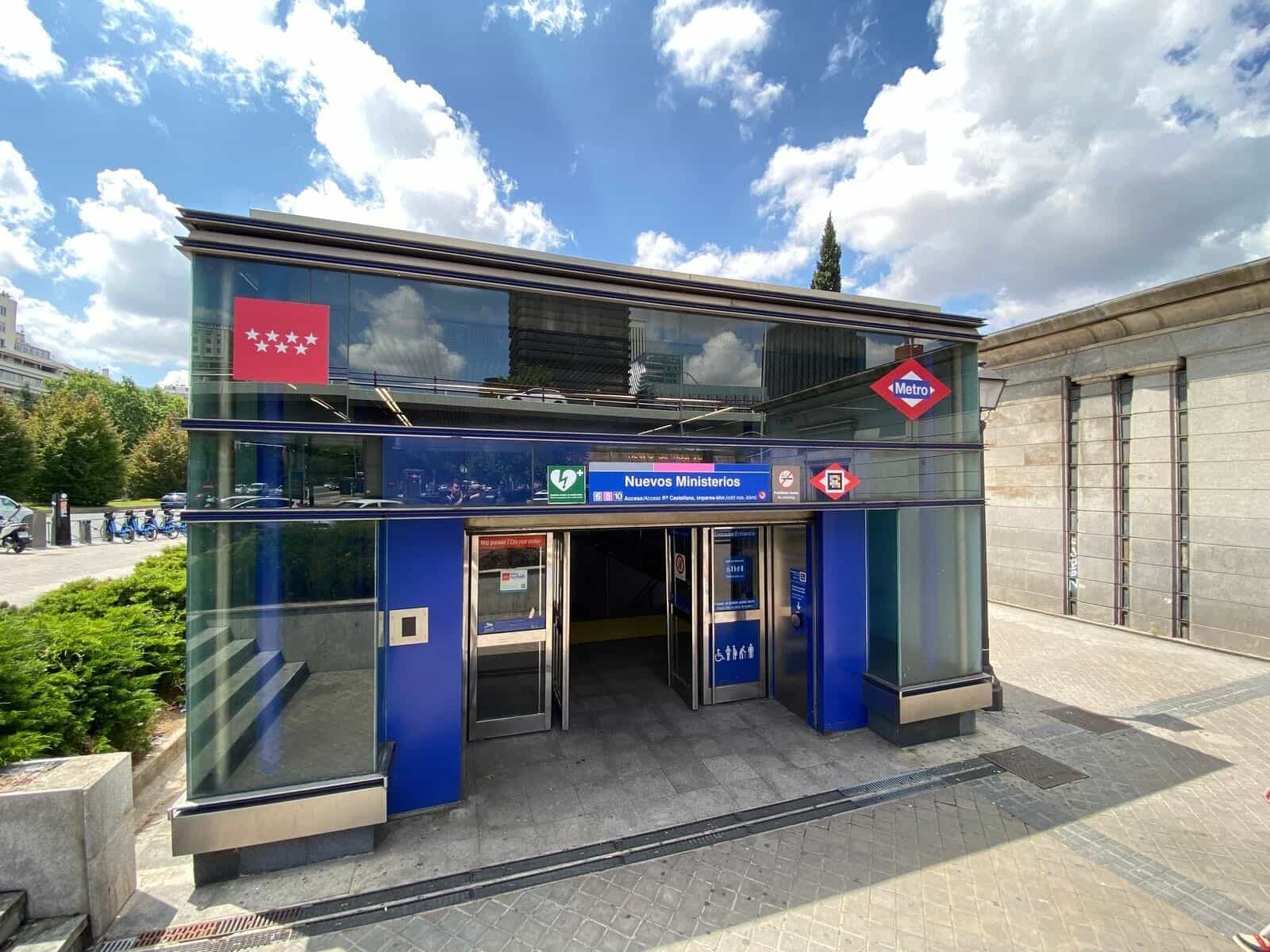
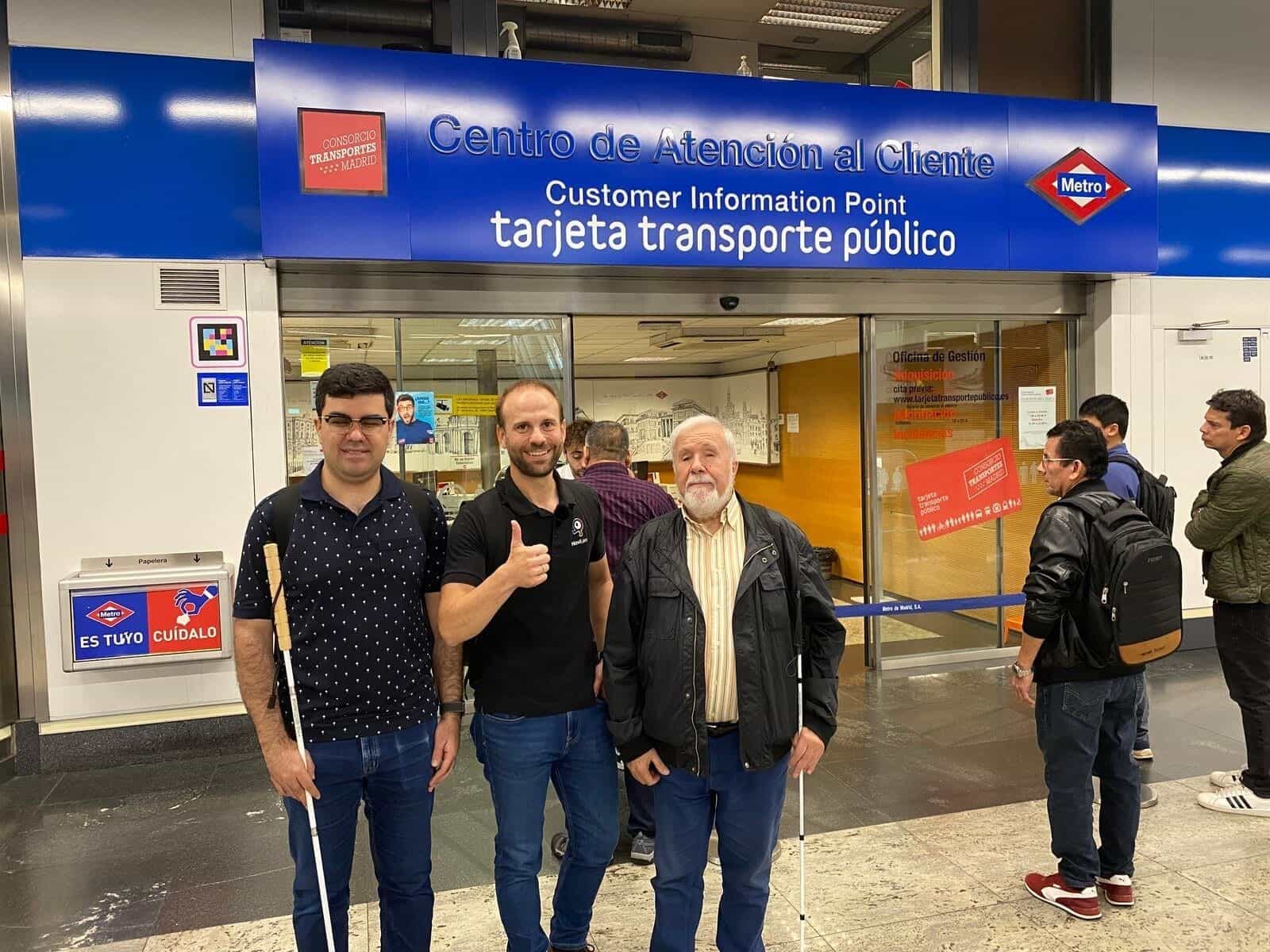
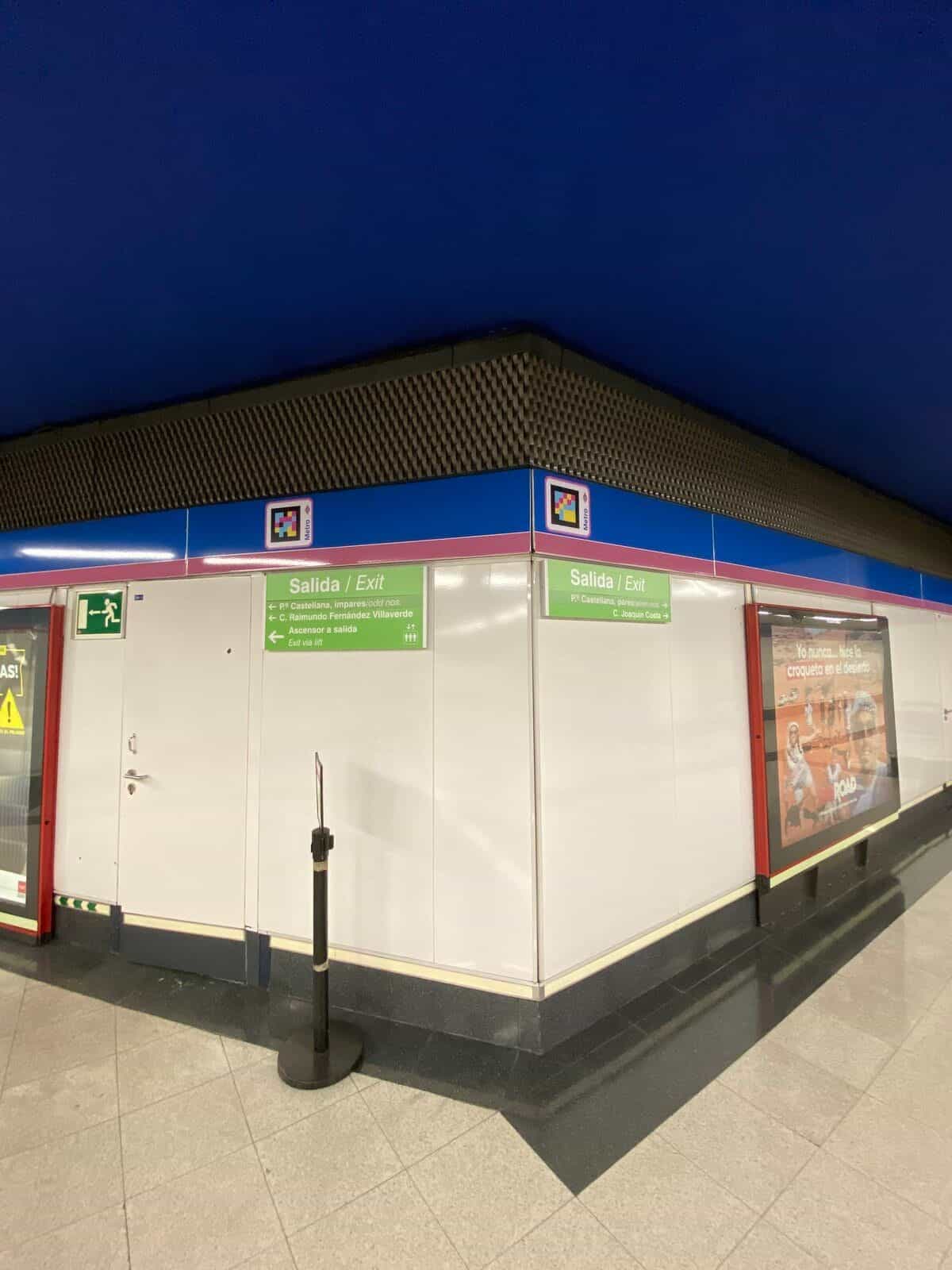
Codes are installed at the useful height of each landmark—glass cube of the access, concourse edges, side of the Customer Information Point, floor on the tactile strip—so a sweep of the phone is enough to detect them without having to aim at a precise spot, even at rush hour.
§ Why it matters
A metro network that also speaks.
Autonomy
At an interchange with three metro lines and the suburban rail, NaviLens lets you switch concourse, find the elevator or exit on the right street without depending on a companion.
Airport
Nuevos Ministerios is the head of the pink line to Adolfo Suárez Madrid-Barajas Airport: a blind traveler or an international tourist can find their way from the center to T4 with voice guidance in their language.
Multilingual
The code is read aloud in the language of the traveler's phone. For a capital with millions of tourists a year, that also turns voice guidance into a tool for foreigners without visual disabilities.
§ And your network?
Your next station can also speak.
Tell us about your network, your pain points and the KPIs you want to move. We’ll show you how NaviLens would fit—with comparable cases.