Case study · MTA Subway, NYC
Stations, subway cars and a code that travels with you.
The MTA has brought NaviLens to the New York City Subway: codes on platform columns, on the outside of trains and inside the new R211 cars — voice wayfinding, in 42 languages, from the platform to your seat.
50+
MTA stations with NaviLens in Manhattan and the Bronx
6 line
Trains and every station along the corridor (Pelham Bay → Brooklyn Bridge)
42
Languages the app reads the information in
$2M
US DOT SMART Grant to expand NaviLens across MTA
The client
MTA · NYC Transit Subway
The Metropolitan Transportation Authority runs the New York City Subway: the largest metro network in the United States, with more than 470 stations and 24/7 service. After the Jay Street-MetroTech accessibility lab, NYC Transit has added NaviLens to over 50 stations across Manhattan and the Bronx.
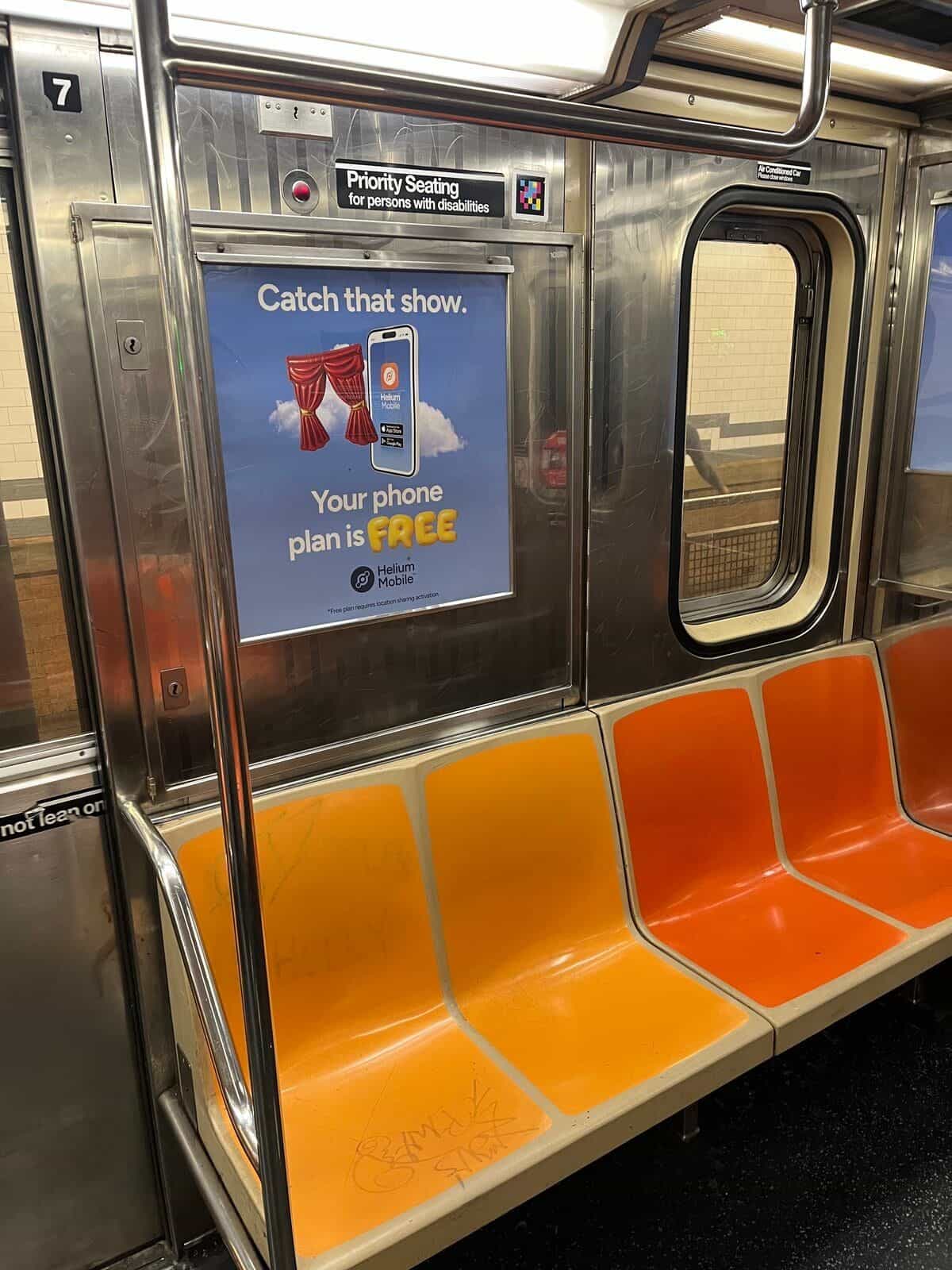
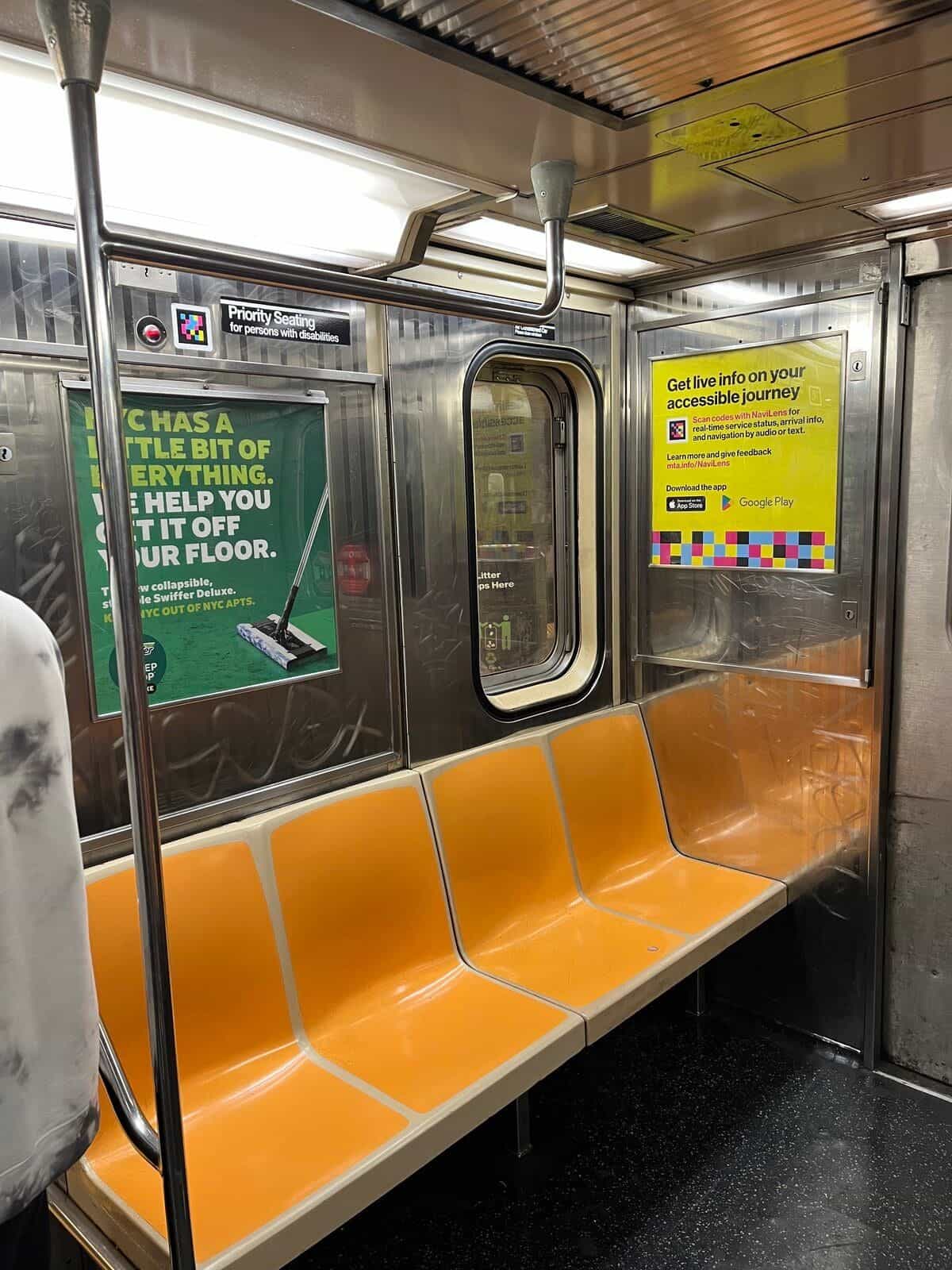
The rollout covers the full 6 line corridor (Pelham Bay Park ↔ Brooklyn Bridge), hubs such as 86 St (Lexington Av), 14 St-Union Sq, 59 St-Columbus Circle and 125 St, and reaches inside the cars themselves — with codes next to “Priority Seating” and the official yellow MTA signage in the new R211 trains.
§ The challenge
Make sure riders never lose the thread between the platform and their seat.
- 01
Which train is in front of me?
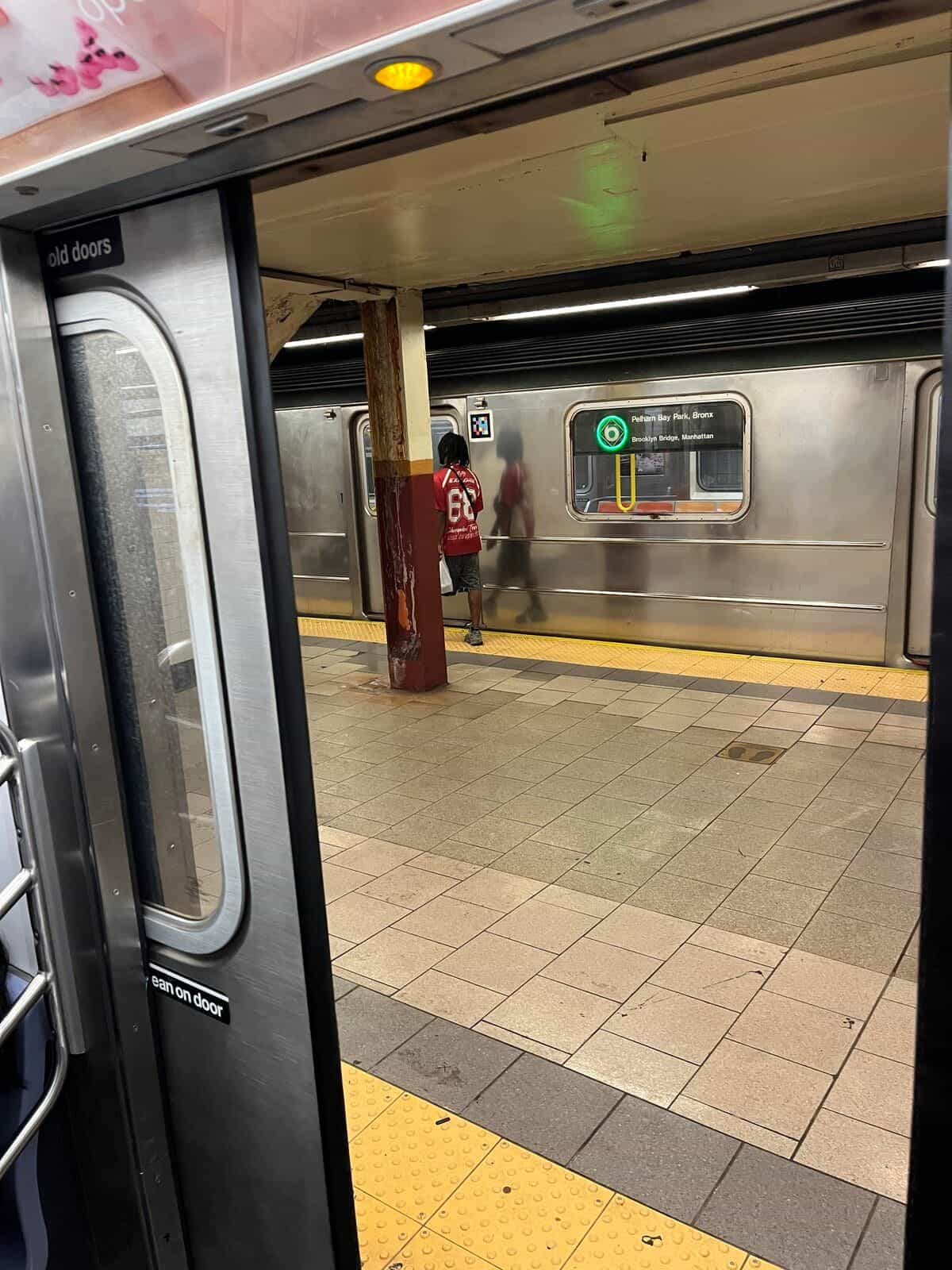
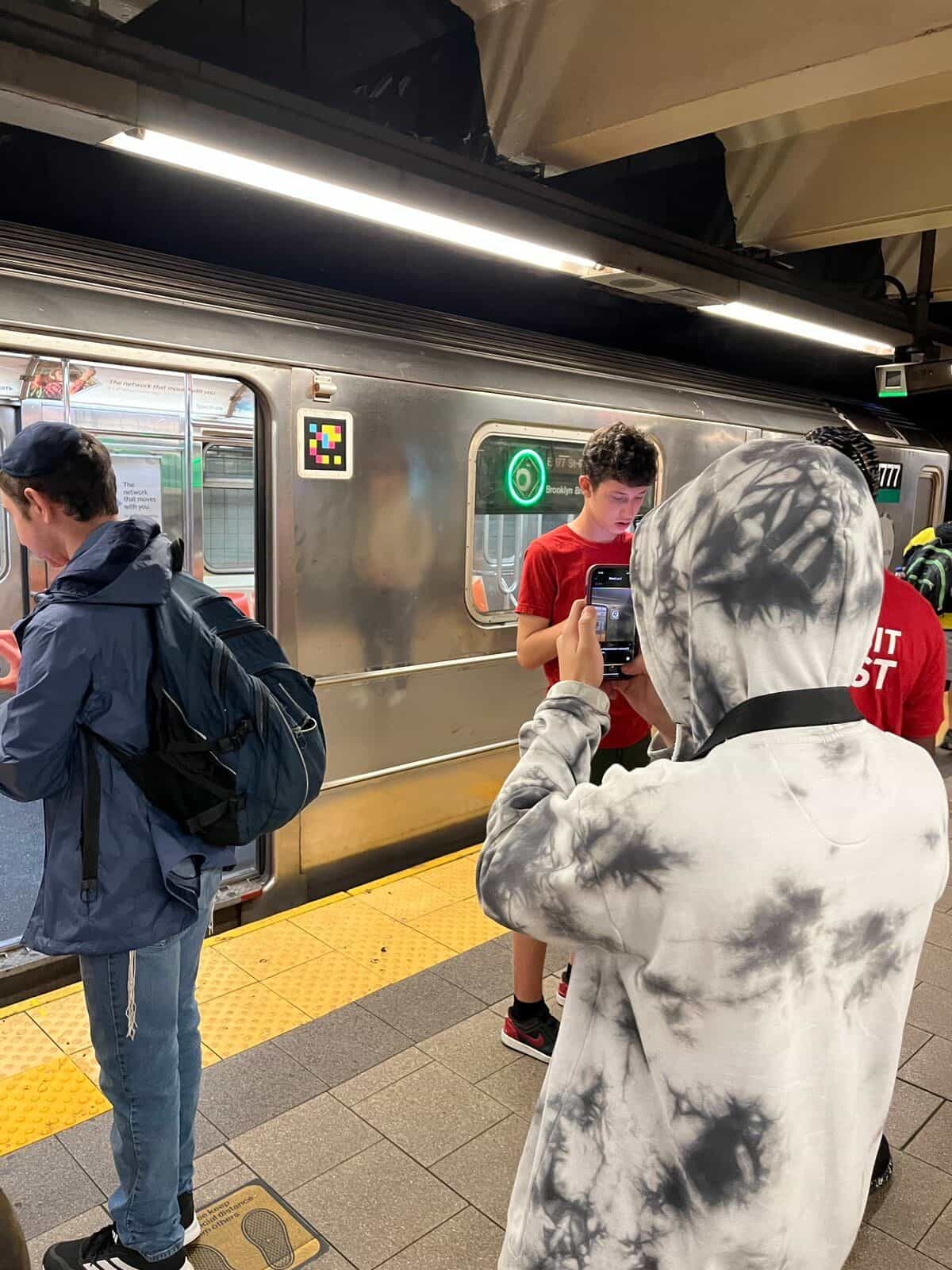
On NYC platforms, several lines and directions share the same track. The roll signs on the front of the car change fast and, for low-vision or blind riders, never arrive in time.
- 02
Mosaic stations full of columns
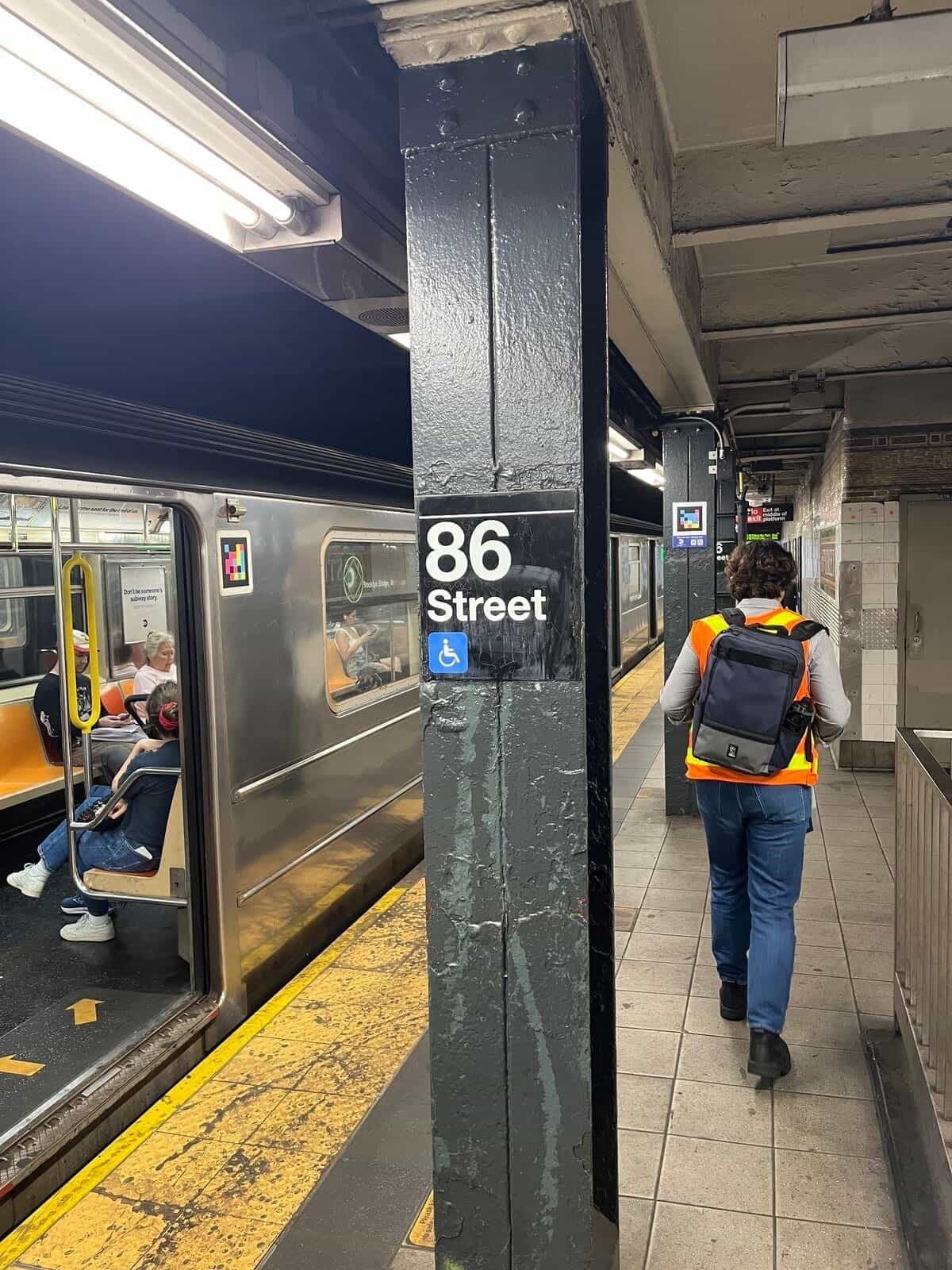
Stations like 86 St (Lexington Av) or the 6 line corridor in the Bronx are full of columns painted with the number and name — but at 12 in or behind a pillar, they're unreadable.
- 03
Real-time service information
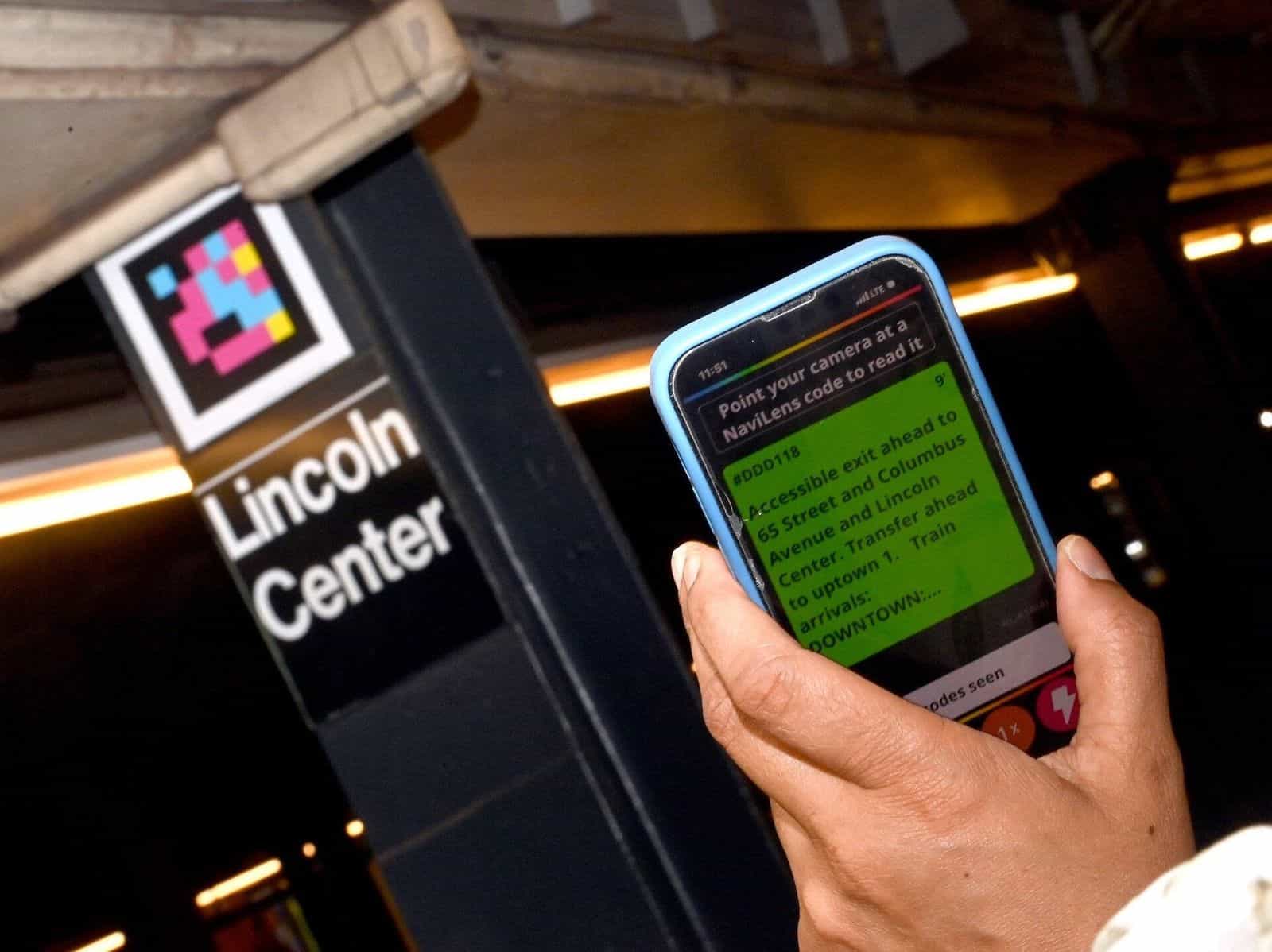
Delays, out-of-service elevators and reroutes change every minute. Riders need them in their own language and by audio, not on a tiny LED screen hanging from the ceiling.
§ The solution
Codes on every station column.
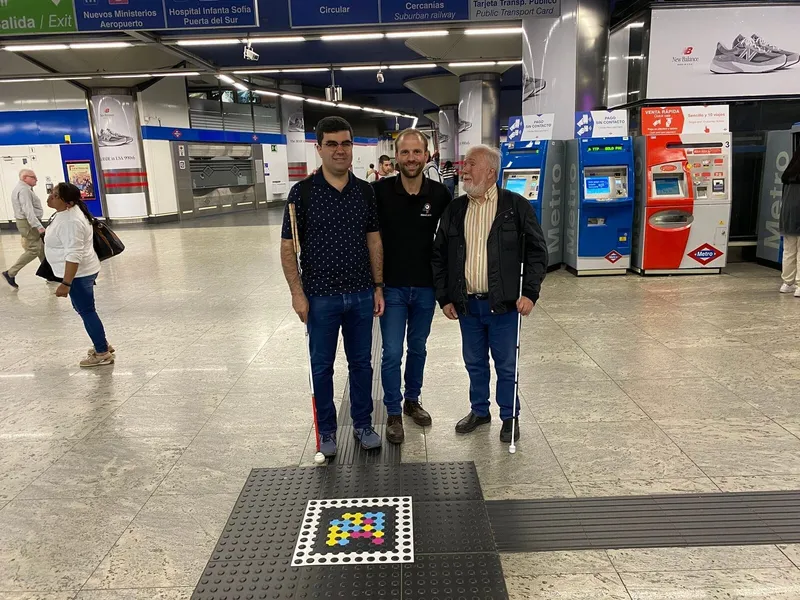
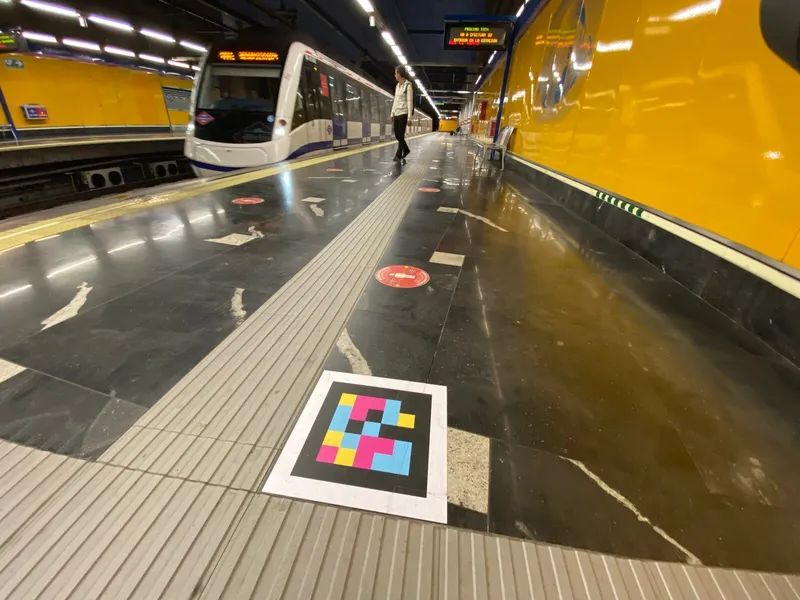
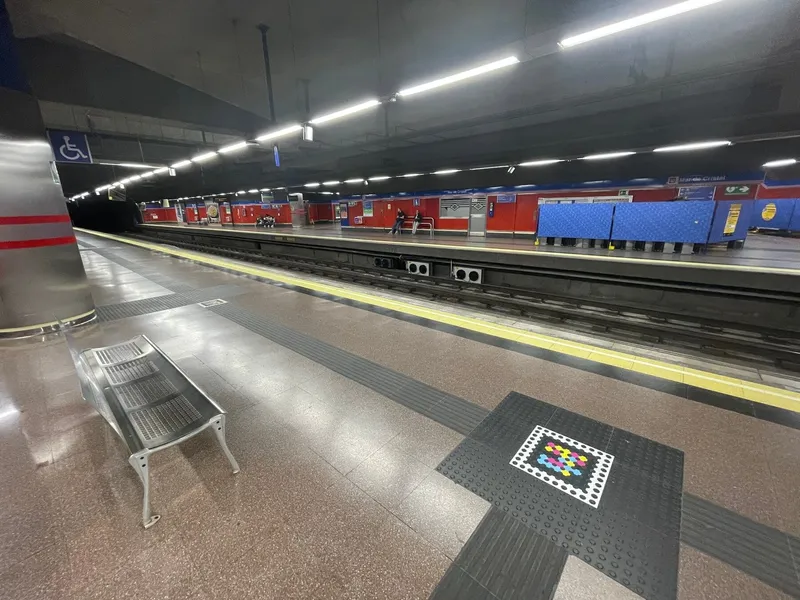
At stations like 86 St or along the 6 line corridor, the NaviLens code sits high up on the platform columns, next to the roundel and the accessibility symbol. The app detects it from several yards away and speaks the station name, the platform you're on and which train is pulling in.
The NaviLens team is on site during every rollout: coverage measurement, user validation and fine-tuning of the strings the app reads aloud.
§ The train, from the outside
Before you board: which line and which way.
§ The train, from the inside
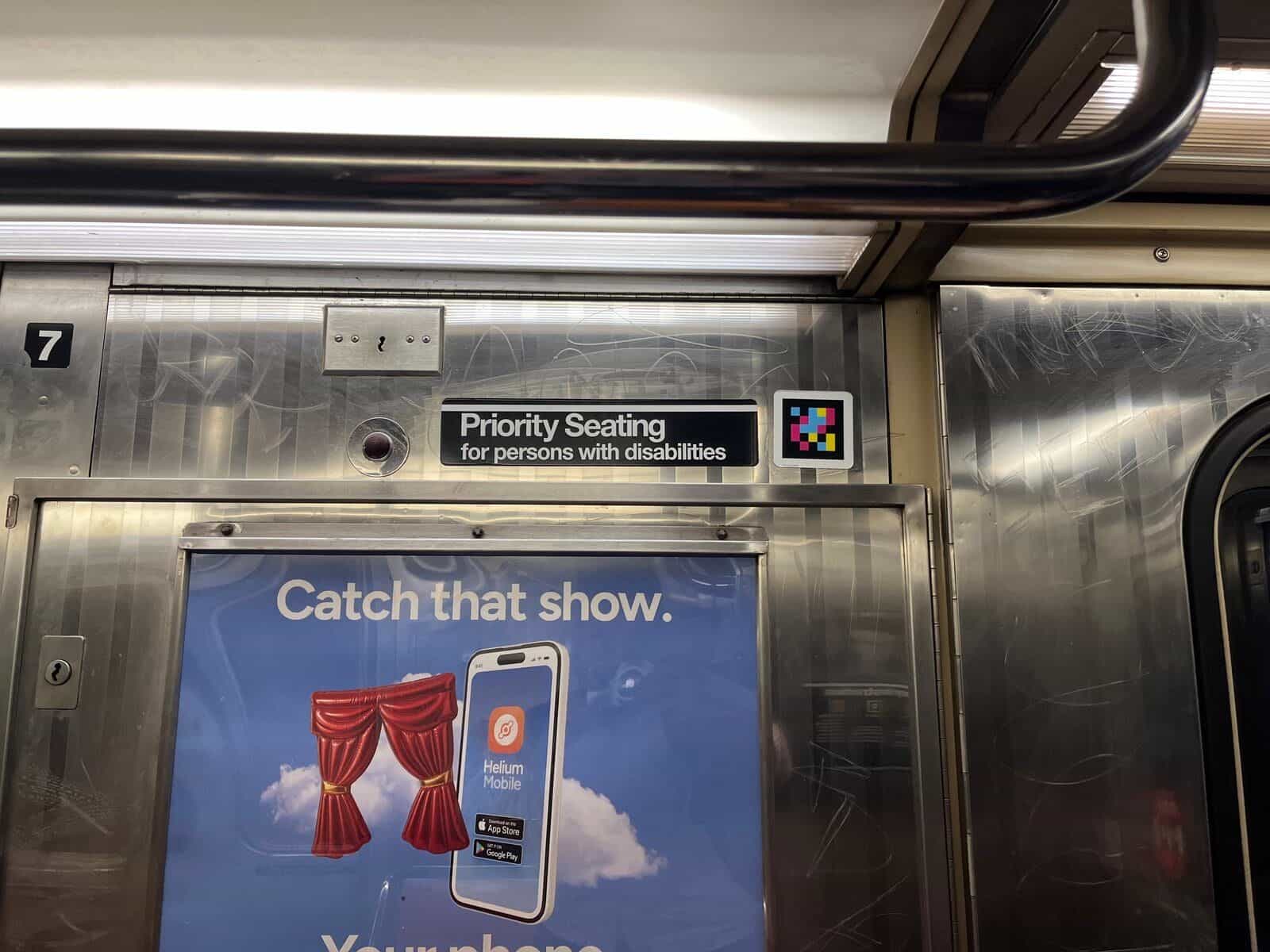
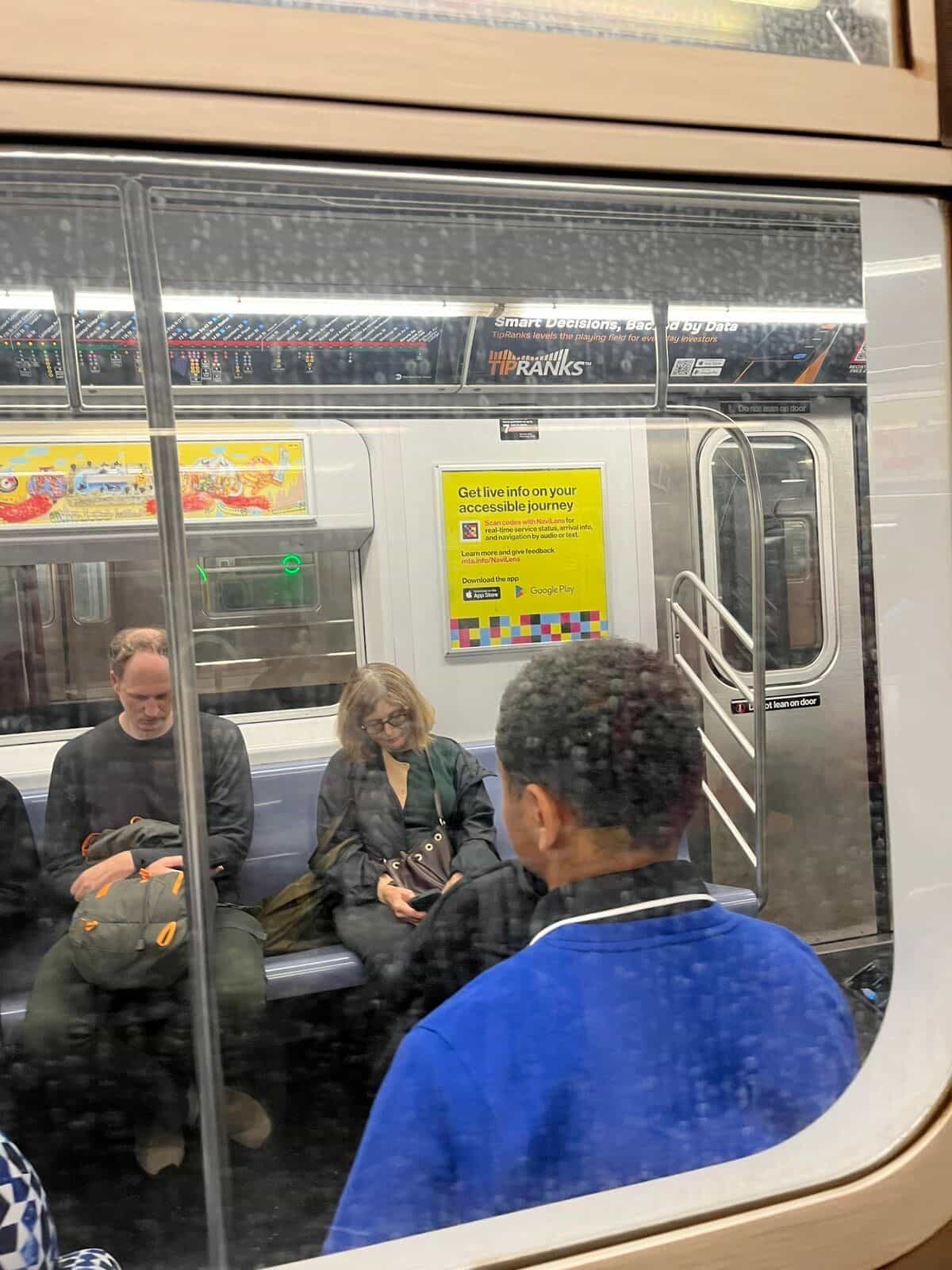
Once on board: priority seating, live info and service.
§ Timeline
From Jay Street to the R211 car.
- 2020-2022
Accessible Station Lab · Jay St-MetroTech
MTA and Transit Tech Lab debut NaviLens at Jay Street-MetroTech as an accessibility lab: codes on columns, stairs, elevators and platform edges.
- Jul 2023
Disability Pride Month — expansion announcement
MTA officially announces the expansion of NaviLens beyond Jay Street, with plans to cover more stations across Manhattan and the Bronx.
- Jan 2024
Rollout on the 1, 2, 3 and M66
Codes appear in Upper West Side stations and along Manhattan lines; CBS New York, West Side Rag and Time Out cover the rollout — the colorful squares become part of the subway's visual landscape.
- 2024
US DOT SMART Grant · $2M
MTA receives $2M from the US DOT SMART Grant program to extend NaviLens to the 6 station of the 6 line, the 6 trains themselves and the stops and buses of the M23-SBS, M66 and Bx12-SBS.
- 2024-2025
Codes inside R211 cars and MTA signage
MTA adds official yellow signage inside the new R211 cars (“Get live info on your accessible journey”) and NaviLens codes next to “Priority Seating” — the system moves inside the train itself.
§ What they said
What MTA and the New York press had to say.
“Through the SMART Grant, NaviLens is rolling out at all 6 subway stations, on all 6 line subway cars, and on all Bx12-SBS bus stops and buses.”
“Get live info on your accessible journey. Scan codes with NaviLens for real-time service status, arrival info, and navigation by audio or text.”
“It speaks to the customer — low vision and blind customers who are using the code to help get wayfinding navigation, both on the sidewalks to find the bus stop or an entrance to the subway and throughout the subway system to navigate those stations.”
§ Results
A voice-driven wayfinding layer covering platforms and cars across the NYC subway.
Manhattan + Bronx
Continuous coverage: the 6 line corridor and key hubs on the 1, 4, 5, 6, A, C, E, L, N, Q, R, W
Audio + AR
NaviLens (blind / low-vision) and NaviLens GO (everyone else), always detected from several yards
Platform + train
Codes on columns, on the outside and the inside of cars: riders don't lose the thread
§ And your network?
Your next station can also speak.
Tell us about your network, your pain points and the KPIs you want to move. We’ll show you how NaviLens would fit—with comparable cases.