Case study · Deutsche Bahn · Stuttgart, Germany
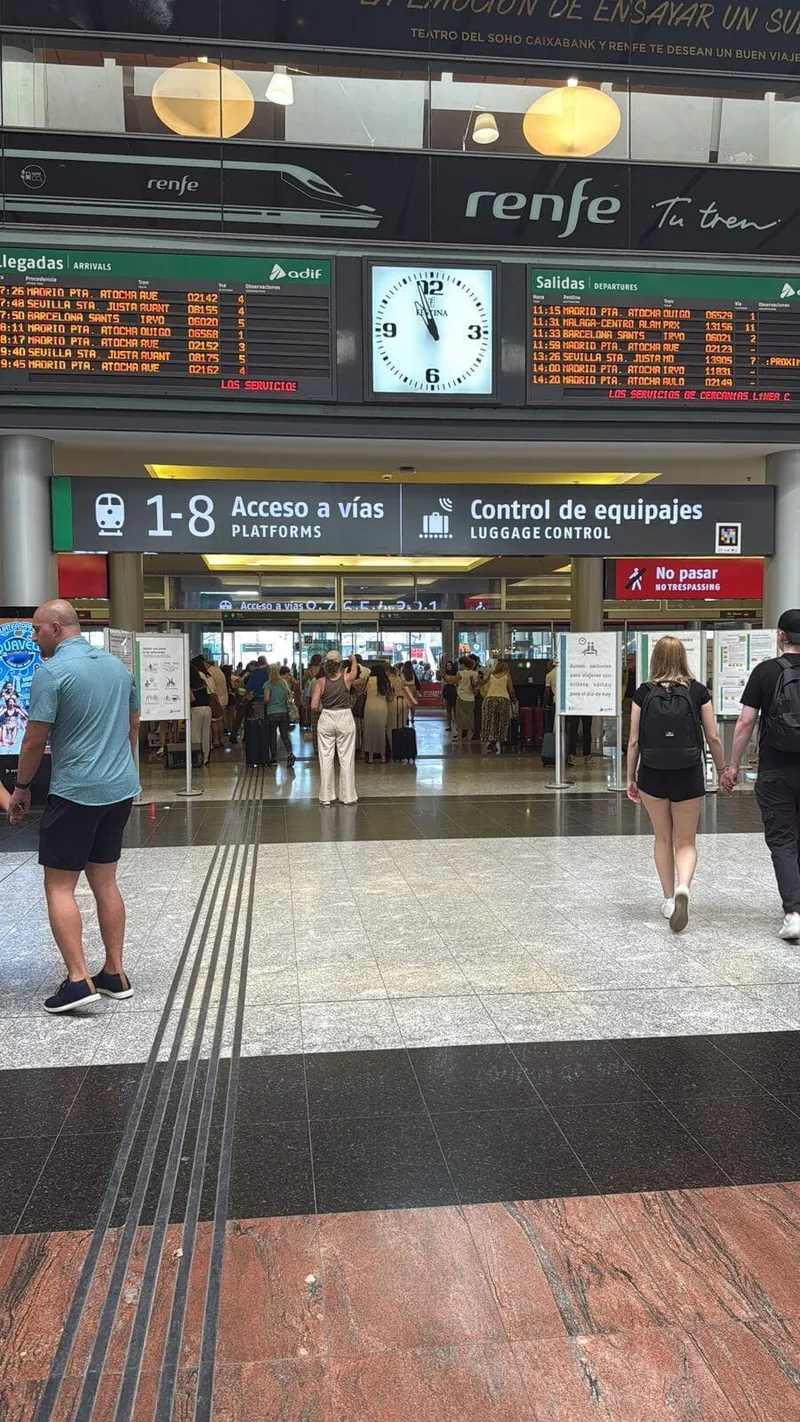
The Klett-Passage and Stuttgart Hbf, read at ground level.
In April 2024, Deutsche Bahn installed NaviLens codes on the floor of Stuttgart Hauptbahnhof and the Klett-Passage—the large underground concourse beneath Arnulf-Klett-Platz—integrated with the tactile Leitstreifen. The real test came in May: the Louis Braille Festival 2024 by the DBSV brought Europe's largest gathering of blind people to the city.
Hauptbahnhof
Stuttgart central station — DB Station&Service AG
Klett-Passage
Underground concourse linking S-Bahn, U-Bahn and street
April 2024
Rolled out ahead of the Louis Braille Festival 2024 (DBSV)
DBSGTP series
Numbered codes on the floor along the main route
The client
Deutsche Bahn · Stuttgart Hauptbahnhof
Arnulf-Klett-Platz 2 · 70173 Stuttgart
The Stuttgart Hauptbahnhof is one of Germany's most complex rail hubs: a terminal for long-distance trains, S-Bahn, U-Bahn and city buses, with an underground “Klett-Passage” that connects the platforms with Königstraße and the main pedestrian accesses of the city center.
With the Louis Braille Festival 2024 in mind—held in Stuttgart from May 17 to 19, organized by the Deutscher Blinden- und Sehbehindertenverband (DBSV)—, DB reinforced the station's accessibility with NaviLens codes printed on the floor, integrated with the existing tactile guide lines and warning strips at decision points.
The rollout covers both the Klett-Passage and the outdoor accesses and surroundings—pedestrian crossings, sidewalks and entrances to adjacent buildings—and is also documented from the University of Stuttgart, within the same DB initiative.
§ The solution
Codes on the floor, right where the white cane already “reads”.
NaviLens is installed on the sidewalk, next to the dotted attention tiles and at the end of every Leitstreifen: the white cane detects the change of texture and the phone scans the code, which reads aloud where the traveler is, what accesses are nearby and where the guide line continues.
Each code carries a serial identifier (DBSGTP05, 15, 18, 25, 30…) which DB uses to document the route and replicate it at other stations. Detection works from several yards, even on wet floors, with backlight or crowds — the three real conditions at the Hbf.
§ Walkthrough
From the pedestrian crossing to the platform door, without losing the thread.
Access · Outdoor crossing
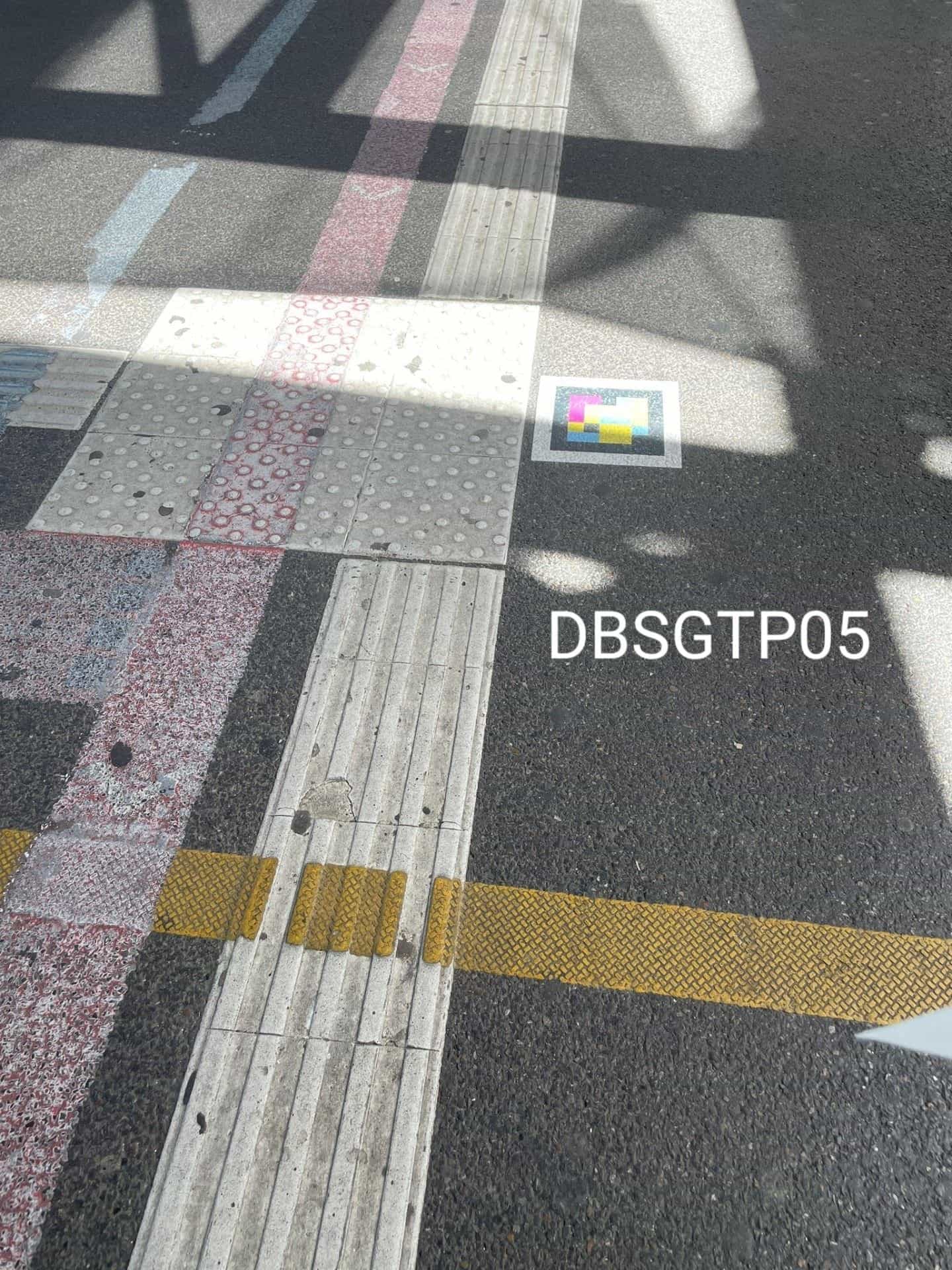
DBSGTP05 — Pedestrian crossing to the Hbf
The first code of the route appears at the outdoor crossing: the app confirms the traveler is on the crossing that connects with the Klett-Passage and indicates the direction of the guide line towards the entrance.
Paving · Decision point
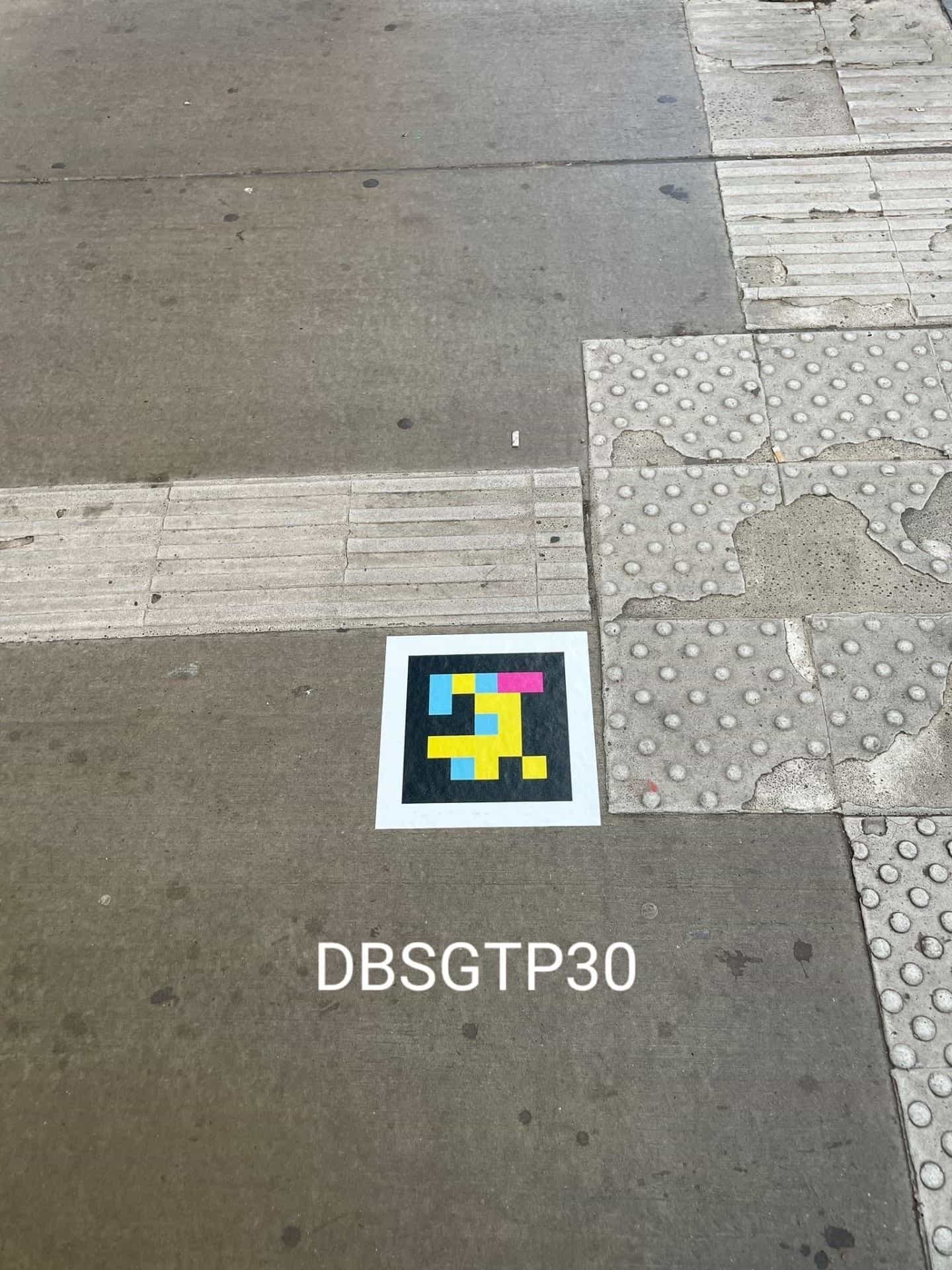
DBSGTP30 — Where guide lines meet
On the paving, the code sits exactly where two guide lines cross. The blind traveler detects it without leaving the tactile route they were already following, and the app offers the available options.
Entrance · Concourse shop
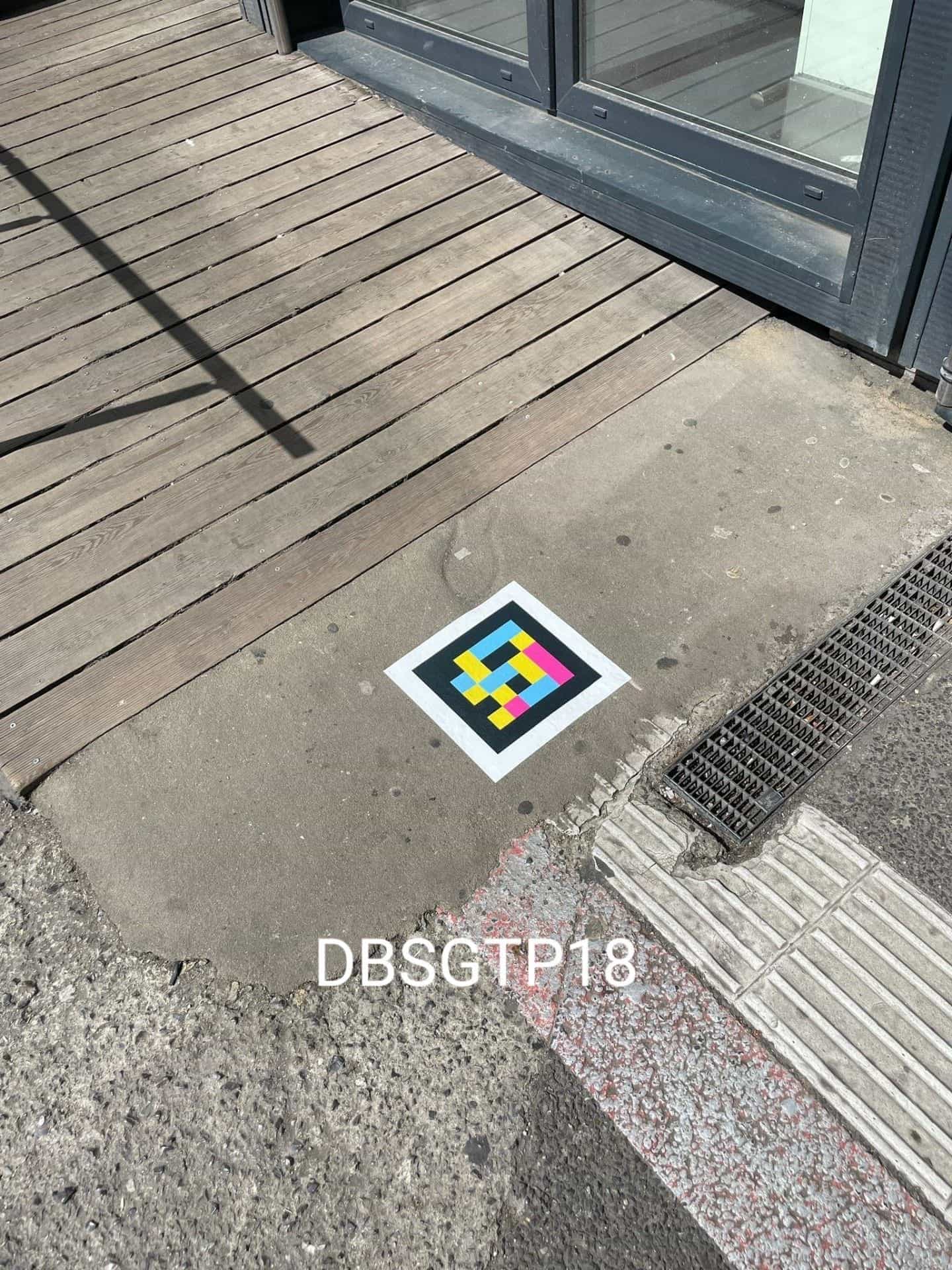
DBSGTP18 — Access to wooden deck
Next to the wooden ramp leading to one of the concourse shops, the code identifies the door and describes what lies on the other side, without the need to read visual signage.
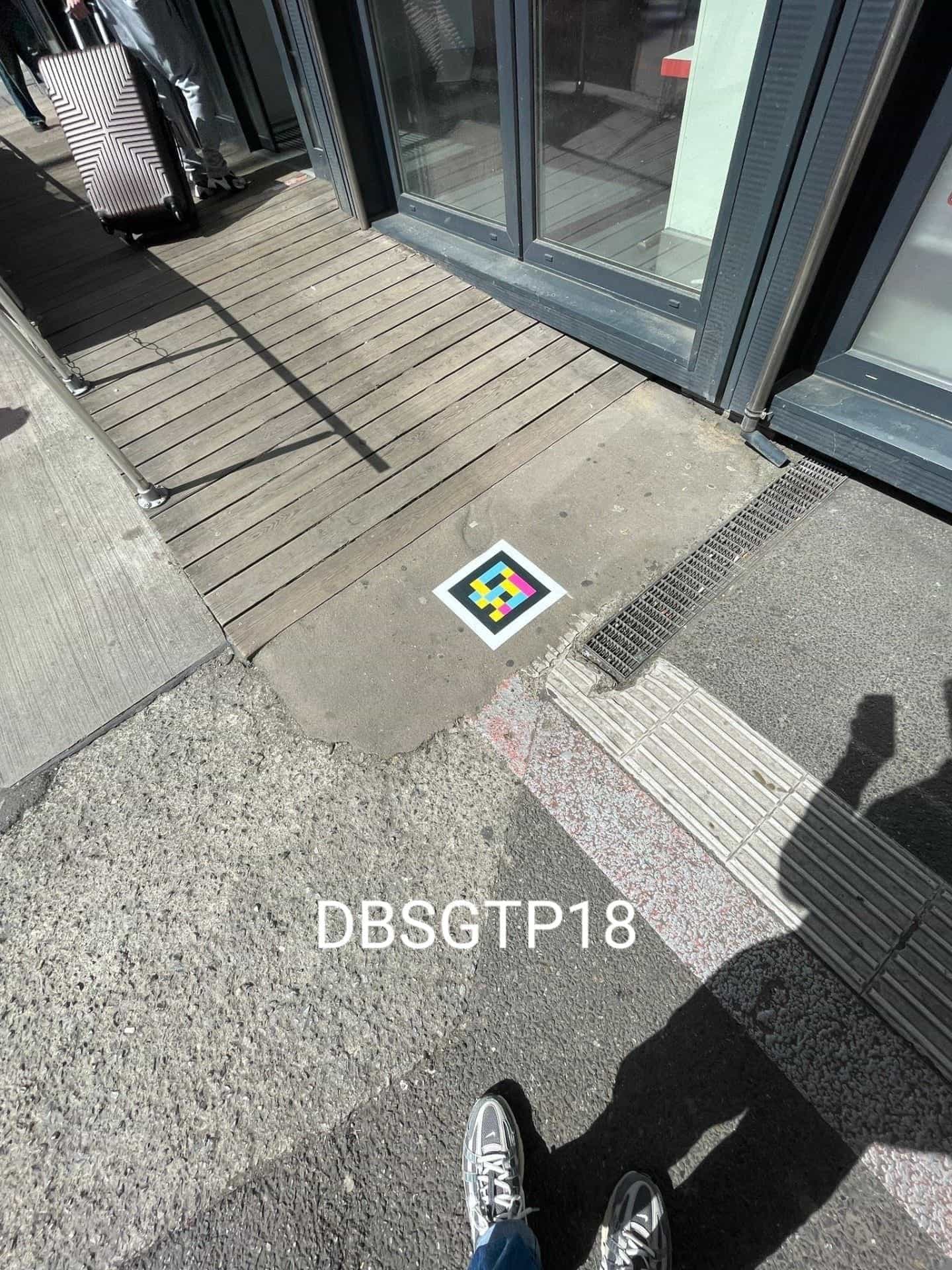
Traffic · Traveler with suitcase
The code lives with real flow
The codes are not isolated: they share the floor with travelers and suitcases. Detection from several yards at 160° lets you scan without bending or breaking stride.
Klett-Passage · Main crossing
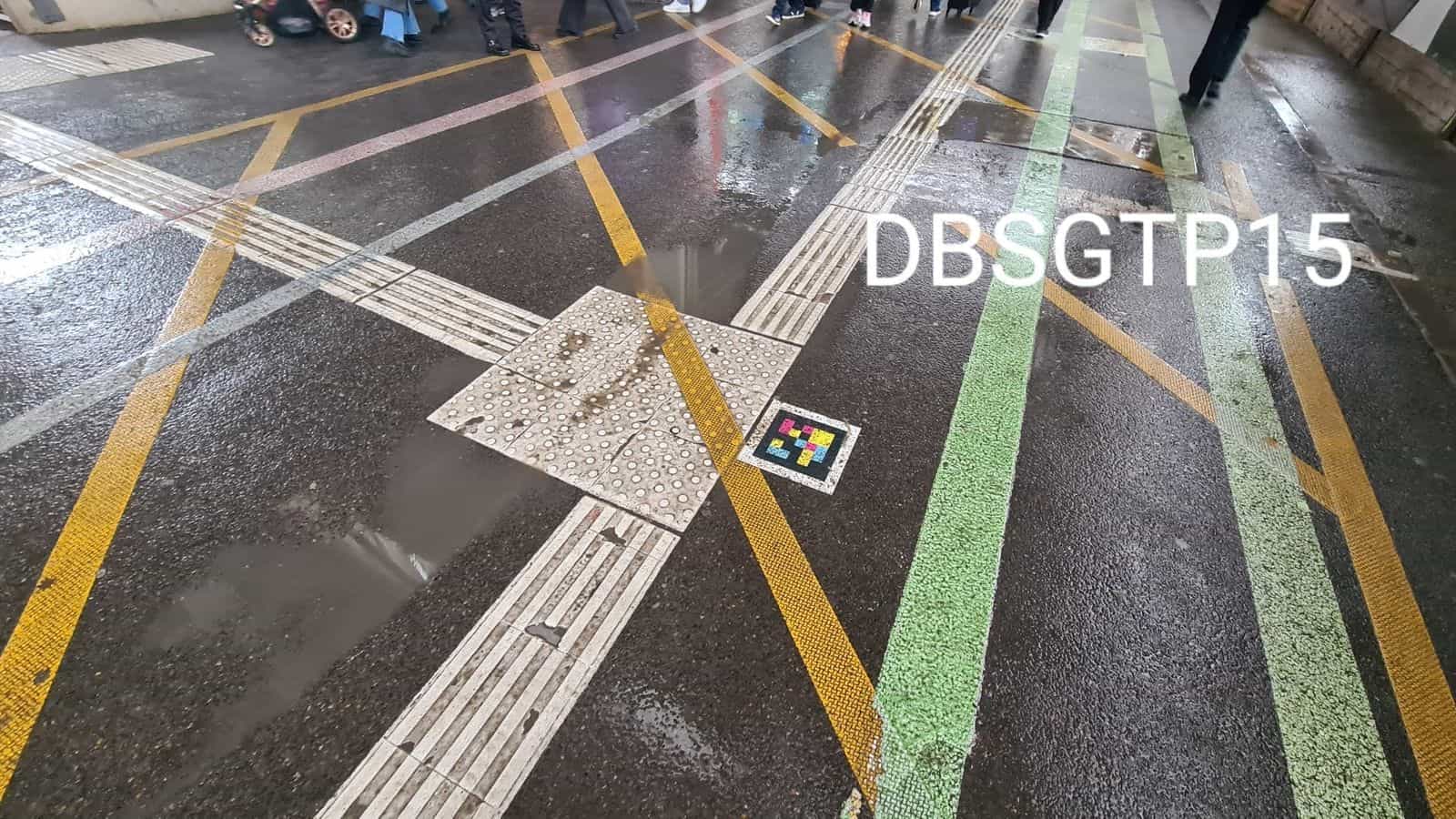
DBSGTP15 — Junction under Arnulf-Klett-Platz
At the heart of the underground concourse, where flows to S-Bahn, U-Bahn and Königstraße converge, the code sits on the warning slab. The app turns the blind crossing into a spoken map.
Interior · Metal guide line
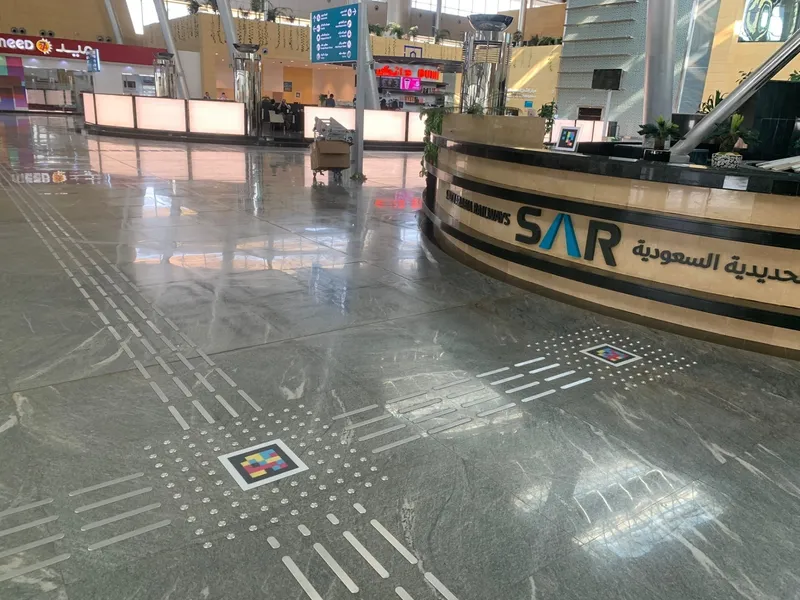
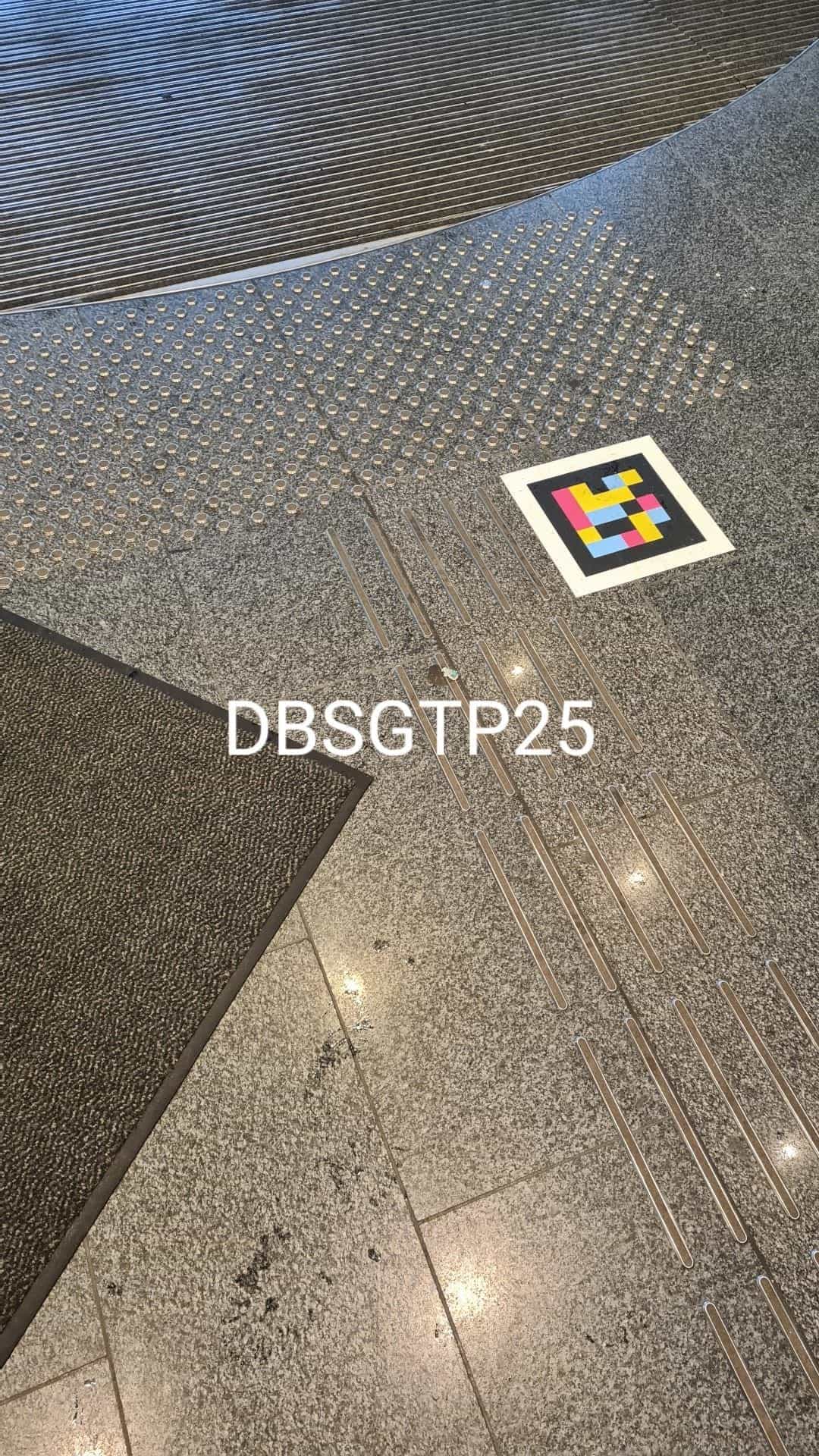
DBSGTP25 — Granite, metal and code
On the granite paving of the shopping area, the embedded metal guide lines lead to the code, which confirms the entrance to the corresponding shop and lets the user keep navigating inside.
Crossing · Colored paving
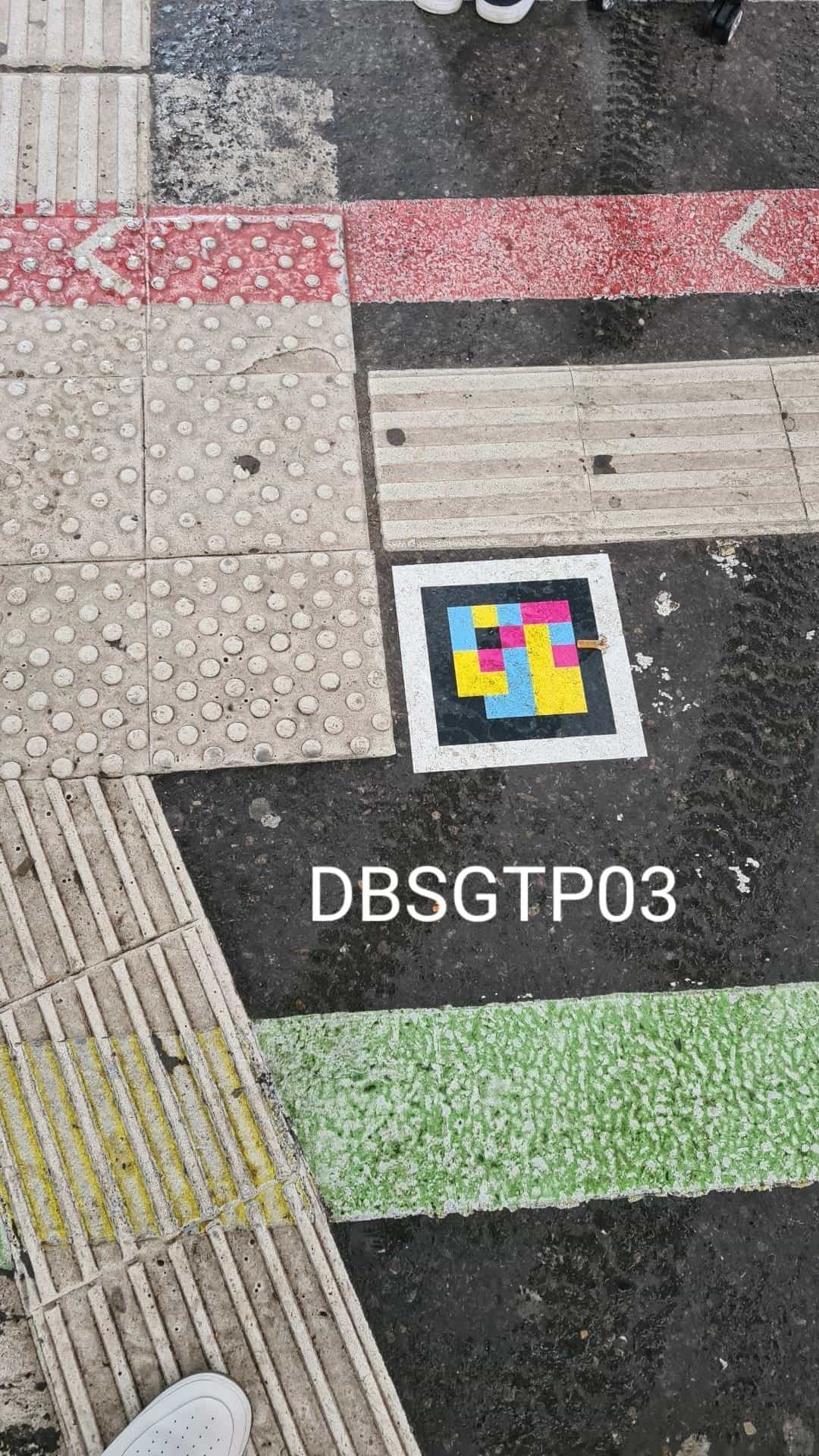
DBSGTP03 — Codes by flow: bike, pedestrian, tactile
The crossing combines green strips (bike lane), yellow ones (pedestrian) and red slabs with arrows. NaviLens sits exactly at the decision point, where the blind traveler needs to confirm direction and priority before crossing.
Rain · Bike lane
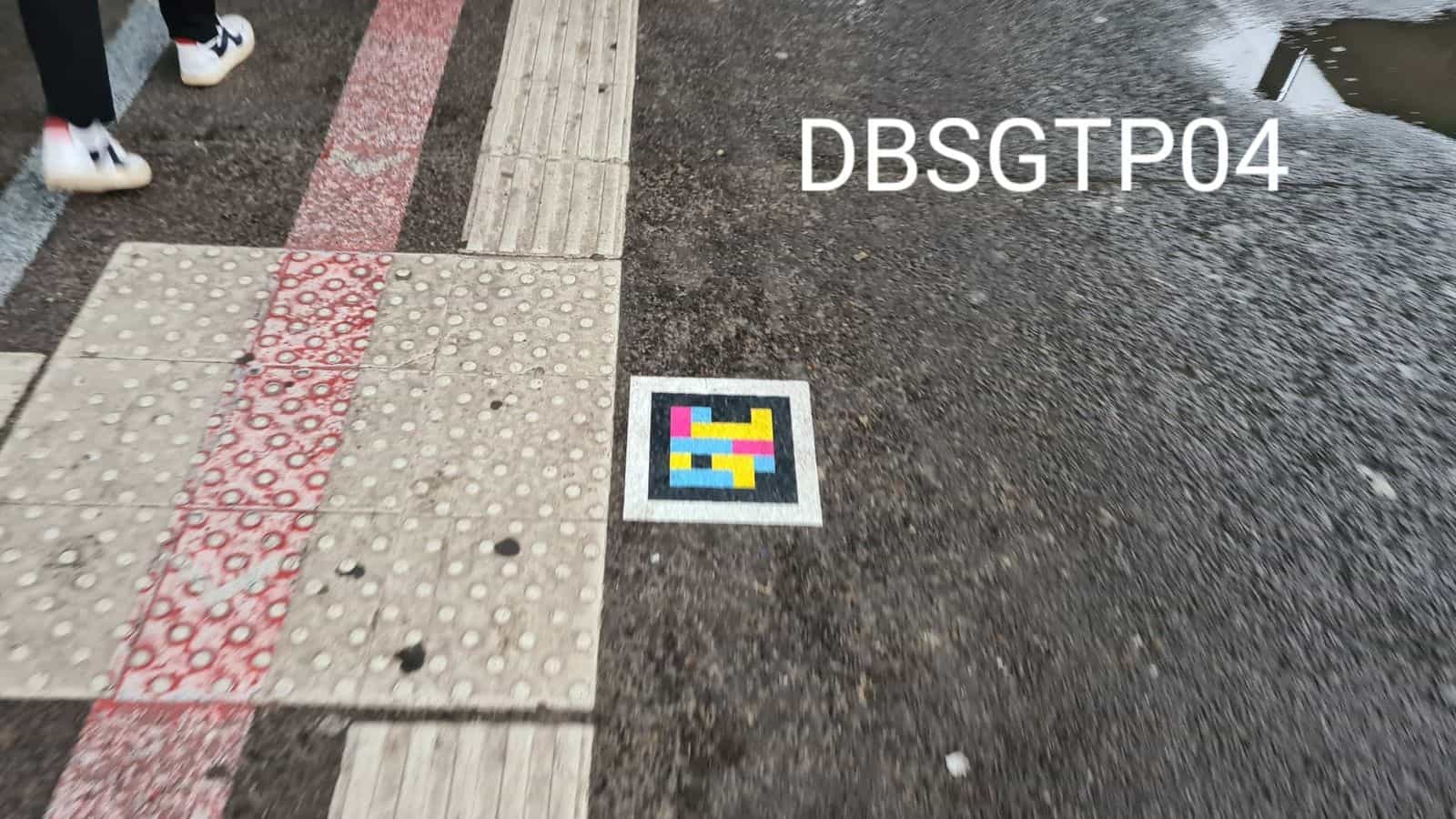
DBSGTP04 — Detection on wet floor and reflections
Stuttgart in April is rainy. The NaviLens code keeps reading on reflective asphalt and red bike lane, with no need to bring the phone close to the ground: the app still detects from several yards in real conditions.
Traffic · Pedestrian crossing
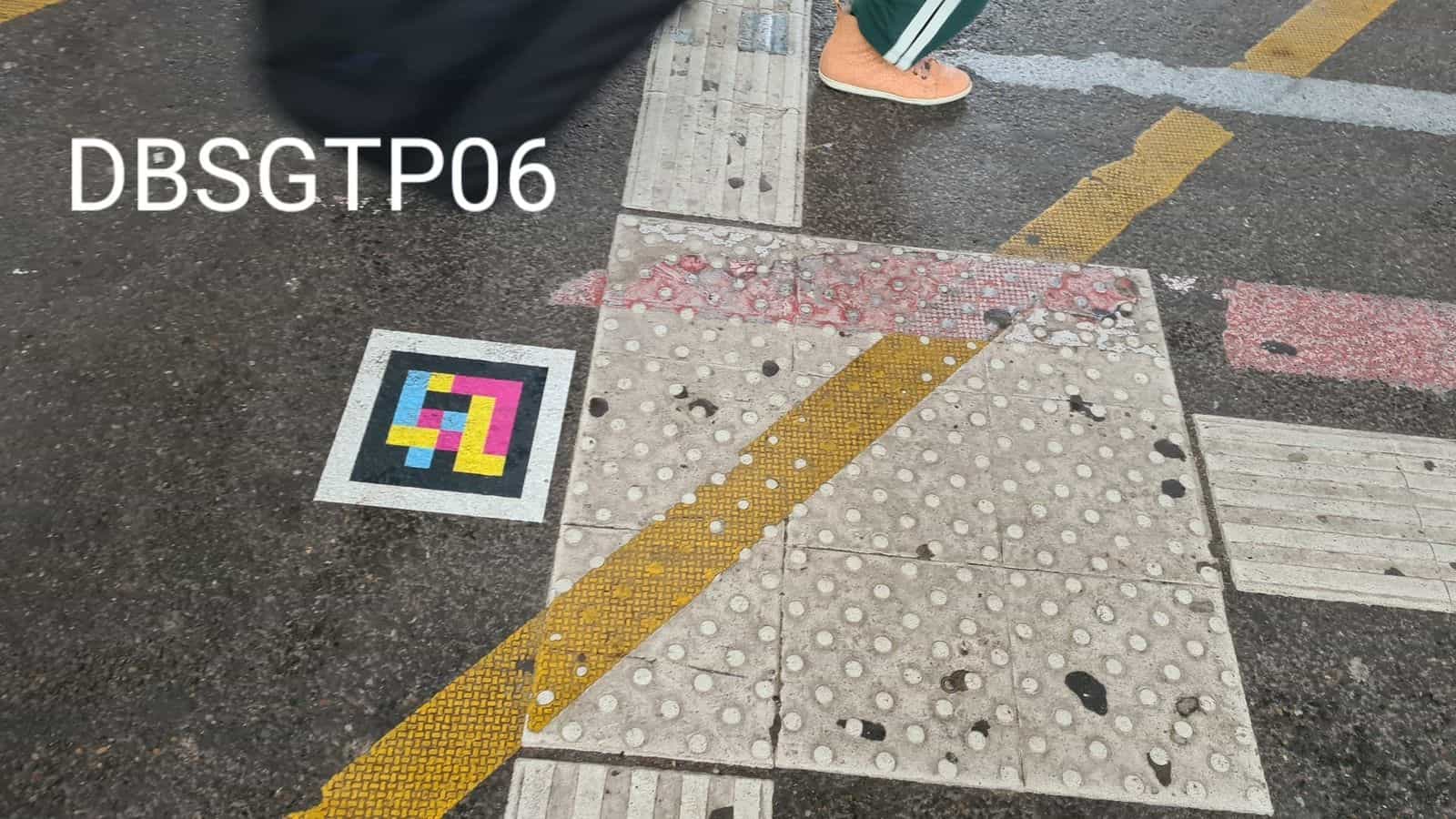
DBSGTP06 — In the flow, not aside from it
The code sits at the natural level of those crossing. Pedestrians walk over it without noticing: the blind person detects it with the camera while following the guide line with the cane.
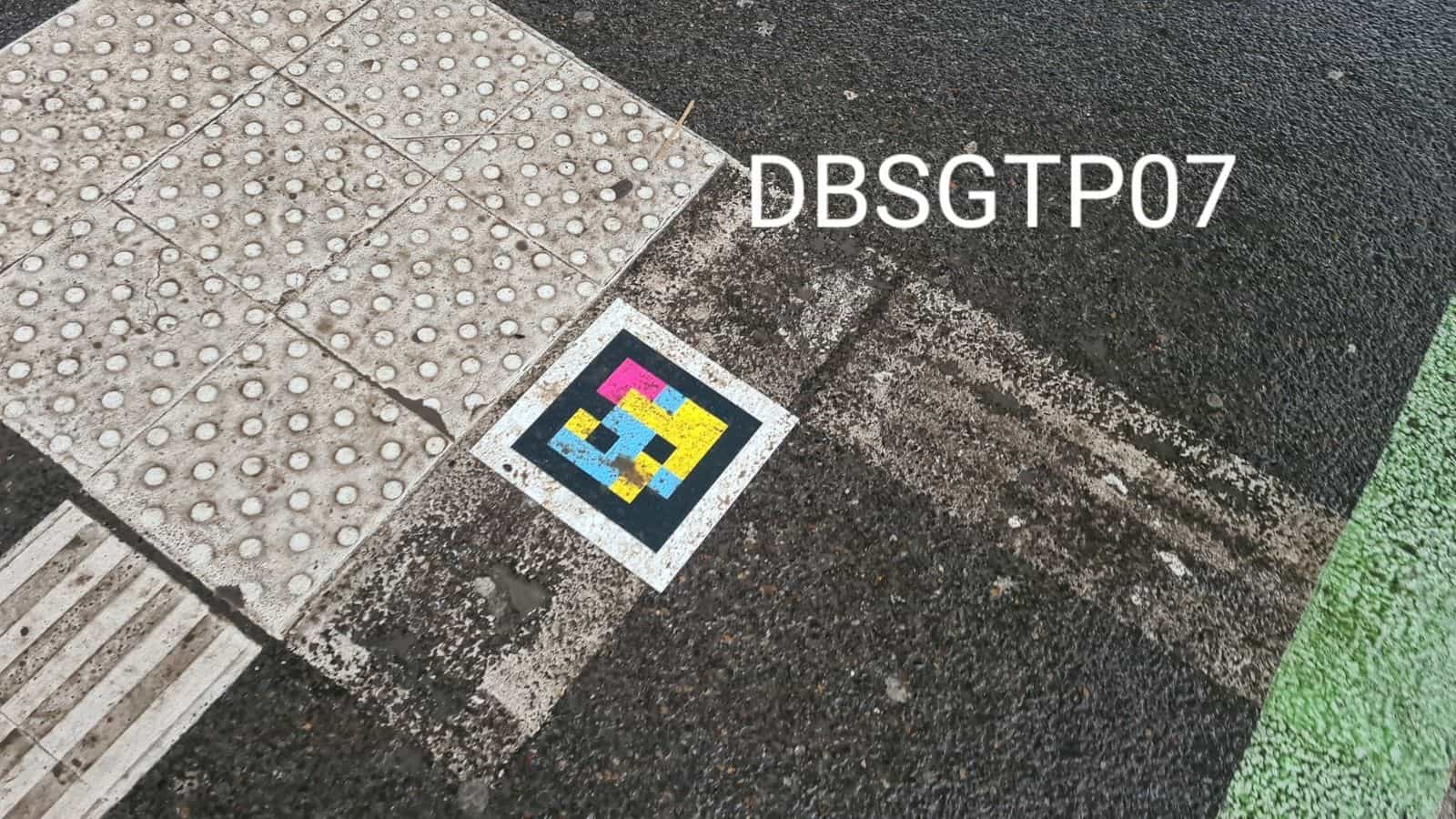
Corner · Grass edge
DBSGTP07 — Code next to artificial grass
At the edge between the tactile slab and the green artificial-grass strip, the NaviLens code marks another decision point on the Hbf's outdoor route. The codes are numbered sequentially to compose the full path.
The rollout was covered by the local press (Stuttgarter Zeitung, Stuttgarter Nachrichten) during the April 2024 tests with blind people and DB staff, and included in the DBSV's official Wegbeschreibungen for the Louis Braille Festival 2024.
§ What they said
“Am Stuttgarter Hauptbahnhof soll eine neue App dafür sorgen, dass sich Reisende zurecht finden. Orientierung im Hauptbahnhof? Ein großes Thema – besonders für Menschen mit Sehbehinderung.”
“Die Bahnmitarbeiter Berhan Tongay und Joshua Kreß wollen von Birgit Schmidt wissen, ob die neue am Bahnhof eingesetzte App eine Erleichterung für Blinde ist.”
“Ergänzend zu den Mitarbeitenden der DB und der Bahnhofsmission werden zum Louis Braille Festival 2024 Lotsendienste organisiert; die Klett-Passage ist mit NaviLens-Codes ausgestattet.”
§ And your network?
Your next station can also speak.
Tell us about your network, your pain points and the KPIs you want to move. We’ll show you how NaviLens would fit—with comparable cases.