Case study · Barcelona · Trambaix & Trambesòs
TRAM Barcelona — platforms that speak to the rider.
Barcelona's metropolitan tram installs NaviLens codes on the Track 1 and Track 2 headers of its stops: line, destination and direction read aloud in 42 languages.
TRAM
Barcelona tram operator
T1–T6
Trambaix and Trambesòs lines
Track 1 / Track 2
NaviLens codes on each platform
42
Languages with voice readout
The client
TRAM Barcelona
— Trambaix & Trambesòs
TRAM runs Barcelona's metropolitan tram network: Trambaix (T1, T2, T3) and Trambesòs (T4, T5, T6), with stops embedded along avenues like Diagonal, Gran Via and the waterfront.
To strengthen the accessibility of its signage, TRAM adds NaviLens codes next to the Track 1 and Track 2 indicators at its stops, aligning with FGC and TMB rollouts across the metropolitan area.
§ The challenge
Knowing which track to take, without reading the sign.
- 01
Street-level platforms
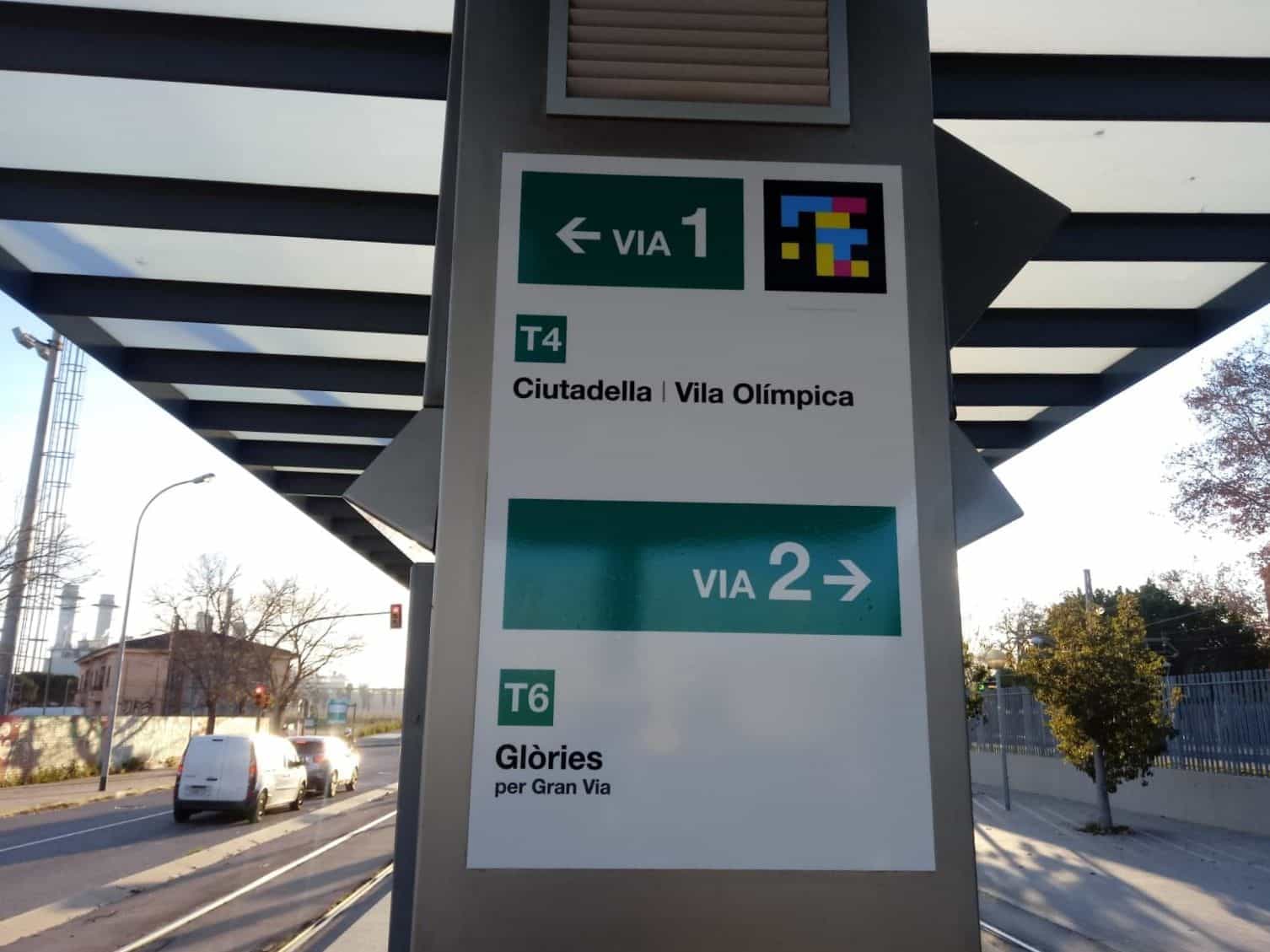
TRAM stops are integrated into the urban fabric: two tracks split by the shelter, no enclosed concourse. Identifying which side goes to Ciutadella | Vila Olímpica or to Glòries via Gran Via is key to not boarding in the wrong direction.
- 02
Dense visual signage
Each sign concentrates a lot of information: track number, direction, T4/T6 lines and final destination. A low-vision rider or someone who doesn't read Catalan needed an audible alternative to the panel.
- 03
Information with zero works
TRAM wanted an accessibility layer overlaid on existing signage, without touching shelters, ticket machines or paving, and maintainable by its own operations team.
§ The solution
One code per track, read aloud.
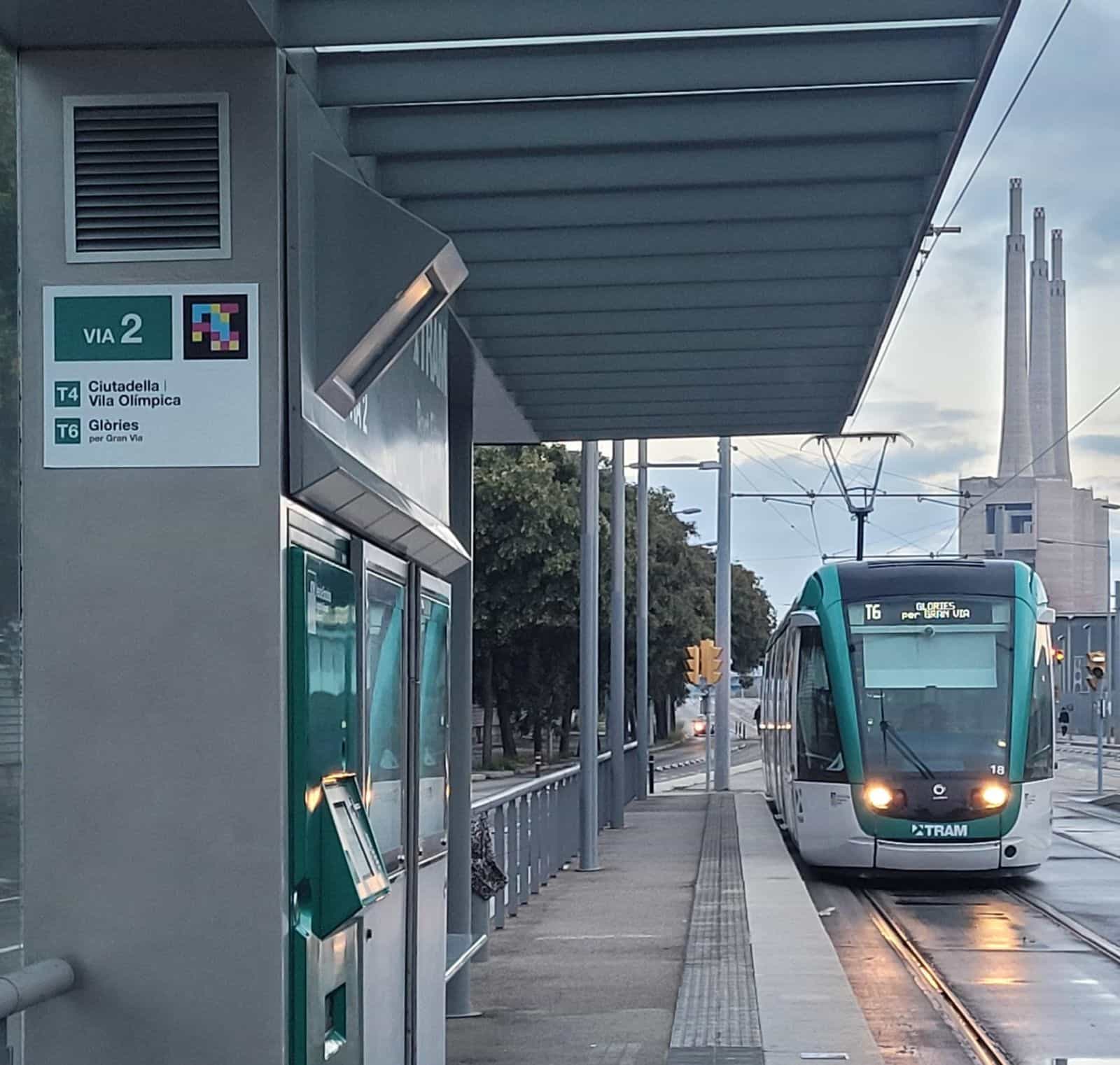
TRAM places a NaviLens code next to each Track 1 and Track 2 indicator. When pointed at with the phone, the free NaviLens app reads out the line (T4/T6), destination and platform direction in the user's language.
No construction, no new screens and no changes to the corporate signage: only an accessibility layer detected from several yards, without precise aiming.
§ Timeline
Trambaix, Trambesòs and the unified network.
- Mobility Week
TRAM unveils NaviLens on its network
As part of the European Mobility Week, TRAM Barcelona announces three info-accessibility improvements, NaviLens being the headline: audio-described QR codes for people with visual disabilities.
- Rollout
NaviLens codes on track headers
Every track sign (Track 1 and Track 2) incorporates a NaviLens code next to the number, with T4/T6 lines, destination and direction in Trambaix (T1–T3) and Trambesòs (T4–T6).
- Today
Permanent accessible layer
TRAM keeps NaviLens as a free tool for blind and low-vision riders, tourists and anyone who prefers to hear the information — coherent with FGC and TMB across the metropolitan area.
§ Walkthrough
From the shelter to the right platform.
Platform
Track 2 — T4 / T6
Track 2 header with NaviLens code: the app reads aloud “Track 2 · T4 Ciutadella | Vila Olímpica · T6 Glòries per Gran Via” as a T6 toward Glòries arrives.
Platform
Central platform between tracks
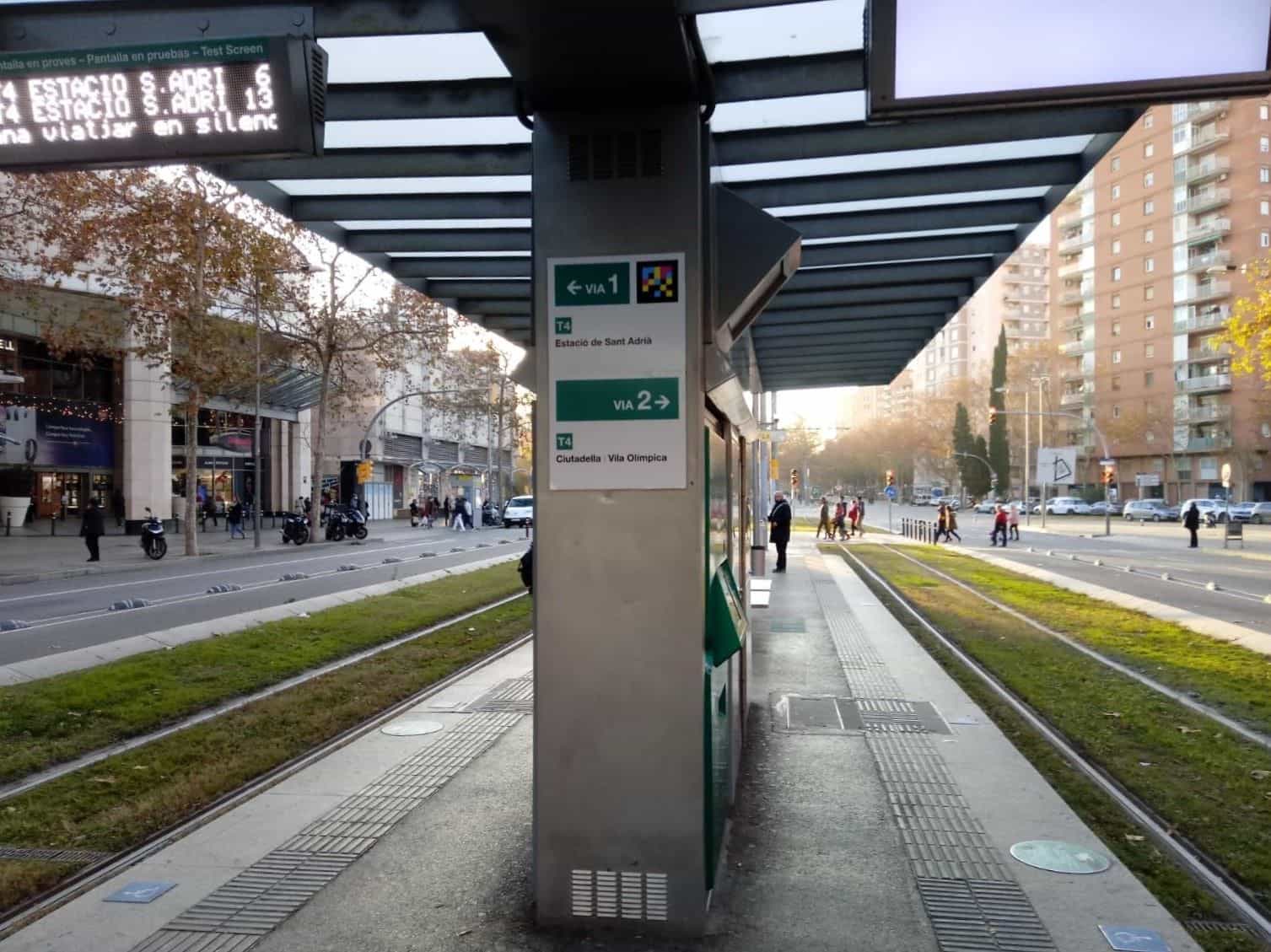
View of the central platform with Track 1 sign (Estació de Sant Adrià) and Track 2 (Ciutadella | Vila Olímpica). NaviLens codes let you know which side to stand on for your destination.
Detail
Track 1 ← / Track 2 → sign
Close-up of the bidirectional sign: T4 Ciutadella | Vila Olímpica toward Track 1 and T6 Glòries per Gran Via toward Track 2. The NaviLens code mirrors that information in voice.
§ Results
A coherent metropolitan network.
0 works
Stickers over existing track signage
Voice + 42 languages
Line, destination and direction read aloud
Multimodal
Consistent with FGC and TMB in Barcelona
§ What they said
“El Tramvia ha implementat la instal·lació del sistema NaviLens, una tecnologia de lectura intel·ligent i a distància de codis QR que permet als usuaris ubicar-se a les instal·lacions tramviàries amb l'audiodescripció del seu contingut, com el nom de la parada, la direcció o les incidències.”
§ And your network?
Your next station can also speak.
Tell us about your network, your pain points and the KPIs you want to move. We’ll show you how NaviLens would fit—with comparable cases.