Case study · Spain · Emergencies · UME + Red Cross + Vodafone Foundation
When the shelter
also lets itself be found.
In UME's largest exercise to date, the Spanish Red Cross and the Vodafone Spain Foundation tested NaviLens alongside Instant Network: the victims' shelter was set up in hours, with registration, waiting area, family reunion and exit signed with codes accessible to blind and low-vision people.
April 2018
UME "Región de Murcia 2018" exercise
3,500
People mobilised in the level-3 drill
Red Cross
Victim shelter signed with NaviLens
Vodafone Foundation
Instant Network · Instant Charge · Instant Classroom · NaviLens
Client
UME, Spanish Red Cross
and Vodafone Spain Foundation
The Military Emergencies Unit (UME) ran the "Región de Murcia 2018" exercise in April 2018 — the largest level-3 drill held in Spain up to that date: two simulated earthquakes in Murcia and Cartagena with their cascading consequences (floods, chemical risk, dangerous goods transport) and 3,500 personnel on the ground, including military observers from the United States and France.
The Spanish Red Cross set up the victims' shelter inside the venue. The Vodafone Spain Foundation contributed its full Instant Network Emergency Response stack — Instant Network (2G/3G/Wi-Fi in under 40 minutes), Instant Charge (simultaneous outdoor charging for up to 66 phones) and Instant Classroom ("a school in a box": 25 tablets + laptop + projector) — and, with NaviLens, the visual accessibility layer of the shelter.
Vodafone Spain's official release describes NaviLens as "a solution developed in Murcia that allows points of interest to be signed for people with visual disabilities," awarded at the Foundation's own Innovation Awards.
§ The challenge
Accessibility that also rolls out in hours.
- 01
A shelter improvised in hours
After a simulated magnitude 6.5 earthquake in Alcantarilla, the Spanish Red Cross set up a command post, registrations, waiting area, family reunion and distribution zone inside the covered venue in just a few hours. All signage was printed and hung on site.
- 02
Victims with visual disabilities
In a real disaster, blind and low-vision people arrive at an unfamiliar space, without their usual companions and with temporary paper signage. Finding registration, the waiting area, family reunion or the exit on their own was practically impossible.
- 03
Testing tech in real conditions
UME brings army, Red Cross, civil protection, police, NGOs and companies together in the same scenario. It was the chance to validate NaviLens alongside the Vodafone Foundation Instant Network kit (mobile network + charging + digital classroom) in the real operation of an emergency shelter.
§ The solution
NaviLens codes at every critical point of the shelter.
Across the Red Cross zone, NaviLens codes were printed and placed on the Information, Registration, Waiting Area, Family Reunion, Distribution and Exit signs. The codes are read from several yards away, with no need to focus up close.
Victims with visual disabilities scan with their phone and the app tells them, by voice and in their language, where they are and how far away the next point is, with no need to rely on volunteers.
§ Timeline
From the CEC to the real shelter.
- 23 Mar 2018
State Coordination Committee
Spain's Ministry of the Interior convenes the CEC in Madrid to coordinate all central-government bodies that will take part in UME's "ECC Región de Murcia 2018" exercise.
- 23 Apr 2018
The exercise begins in Murcia
UME launches one of its largest simulation exercises: magnitude 6.5 earthquake in Alcantarilla, river overflows in Murcia and Cartagena, chemical and transport risk, with 3,500 people and observers from the US and France.
- 23–27 Apr 2018
Red Cross shelter with NaviLens
At UCAM's sports hall (Murcia), the Spanish Red Cross sets up the victims' shelter. The Vodafone Spain Foundation deploys Instant Network, Instant Charge, Instant Classroom and accessible signage with NaviLens codes on tents, tables and exits.
- 23 Apr 2018
Vodafone Spain press release
Vodafone Spain publishes the official note: "The Vodafone Spain Foundation joins the Murcia emergency drill with its most innovative technology" — expressly citing NaviLens as a Murcia-developed solution to sign points of interest for people with visual disabilities.
§ Walkthrough
A Red Cross shelter that also guides by voice.
Demo
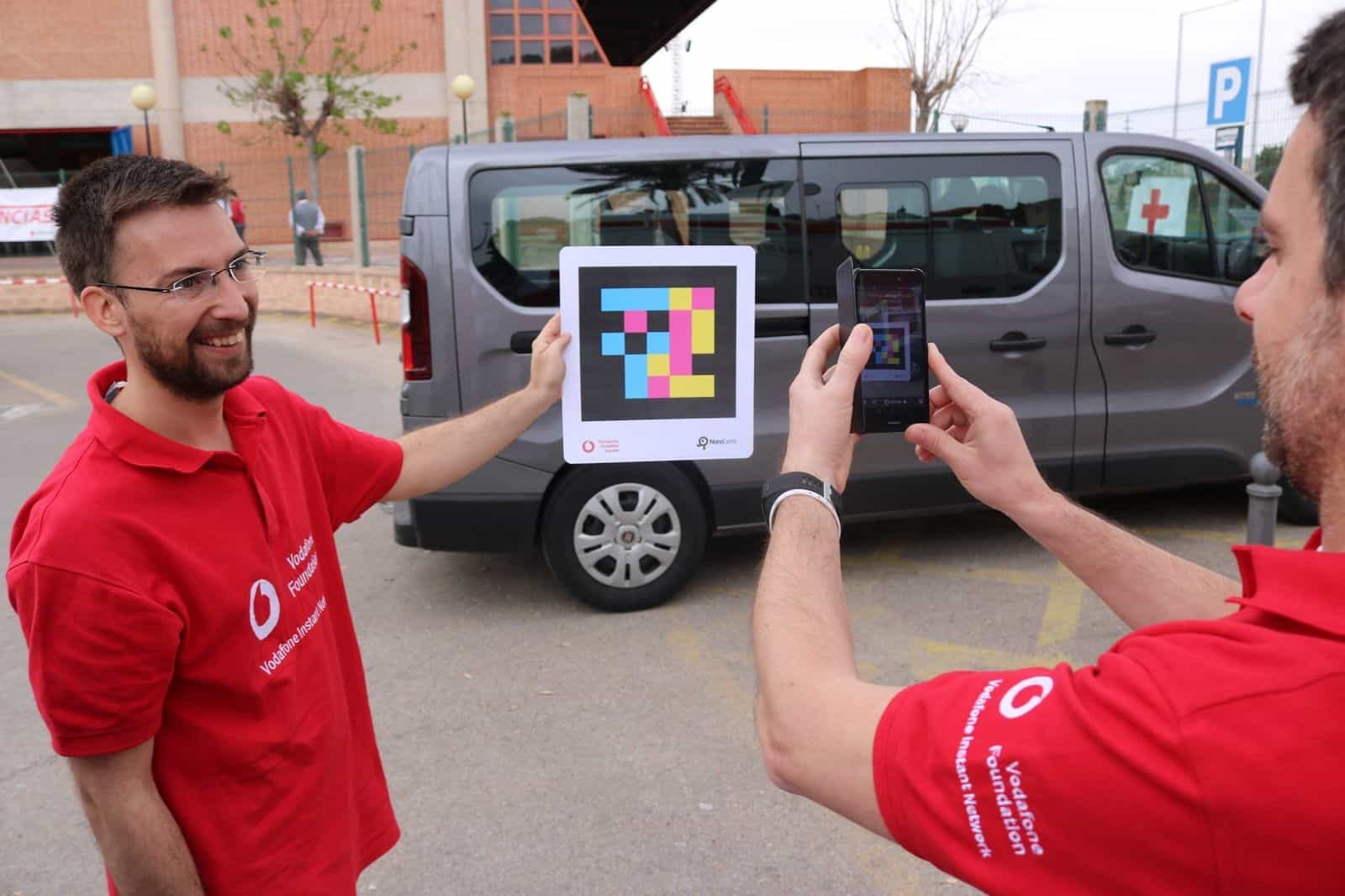
Vodafone Foundation volunteers with the NaviLens code
Two Vodafone Foundation Instant Network volunteers hold a sign with a NaviLens code and the Vodafone Spain Foundation seal next to a Red Cross van. The demo opens the exercise for emergency teams and the media.
Shelter
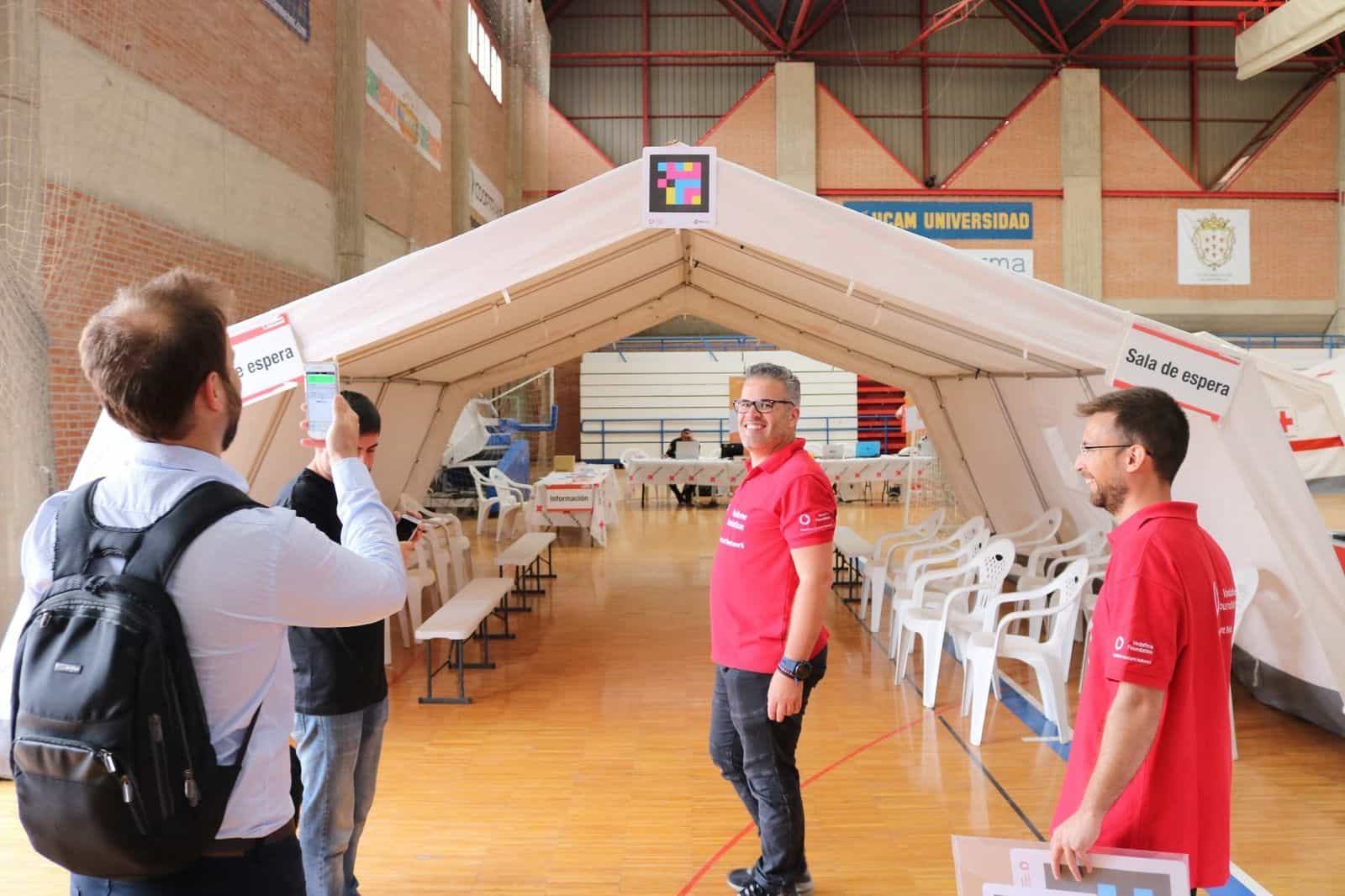
"Waiting Area" tent with a ceiling code
The entrance to the Red Cross "Waiting Area" tent is signed with a NaviLens code hanging from the ceiling, facing the entry so that blind and low-vision people detect it from several yards before crossing the threshold.
Front desk
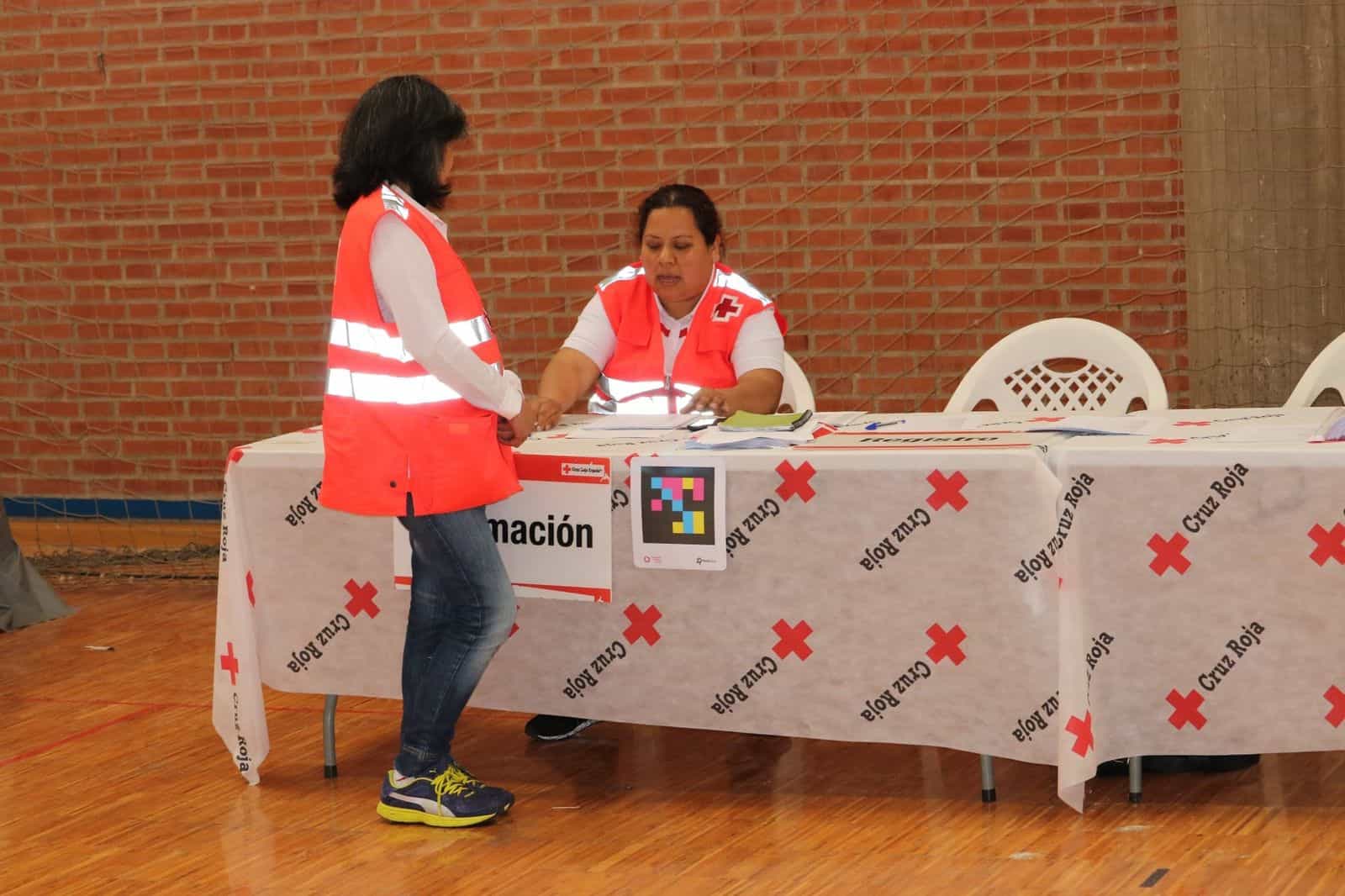
Red Cross Registration and Information
The Spanish Red Cross Information / Registration table has a large NaviLens code stuck to it, aligned with the "Information" sign, so any low-vision victim knows they are at the right point even before speaking to a volunteer.
User
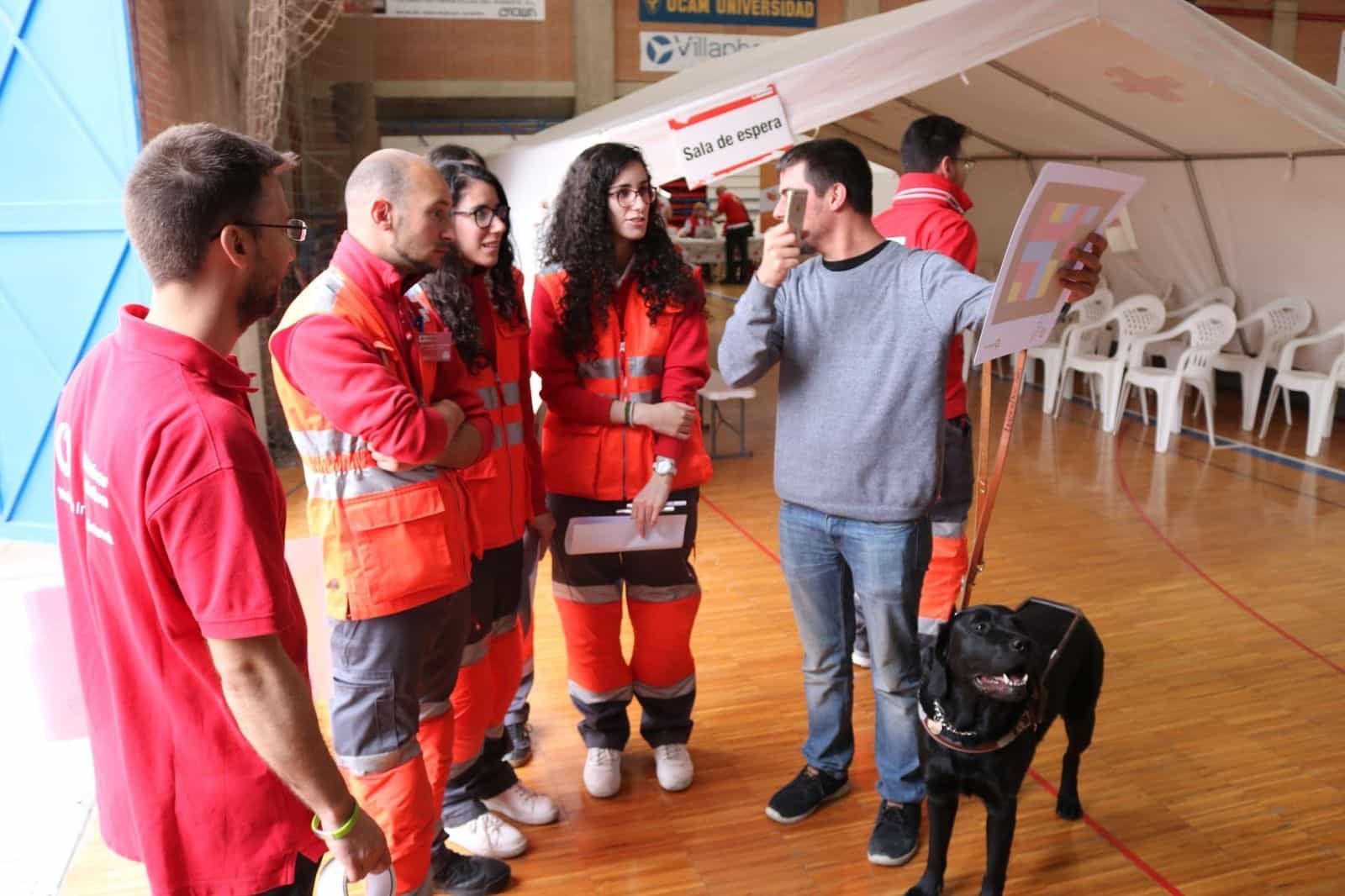
Blind person with a guide dog scanning a code
A victim with a guide dog raises the phone to scan a NaviLens code in the Red Cross tent, in front of the medical team. The scene validates the flow: long-distance detection, voice readout, independent navigation.
Exit
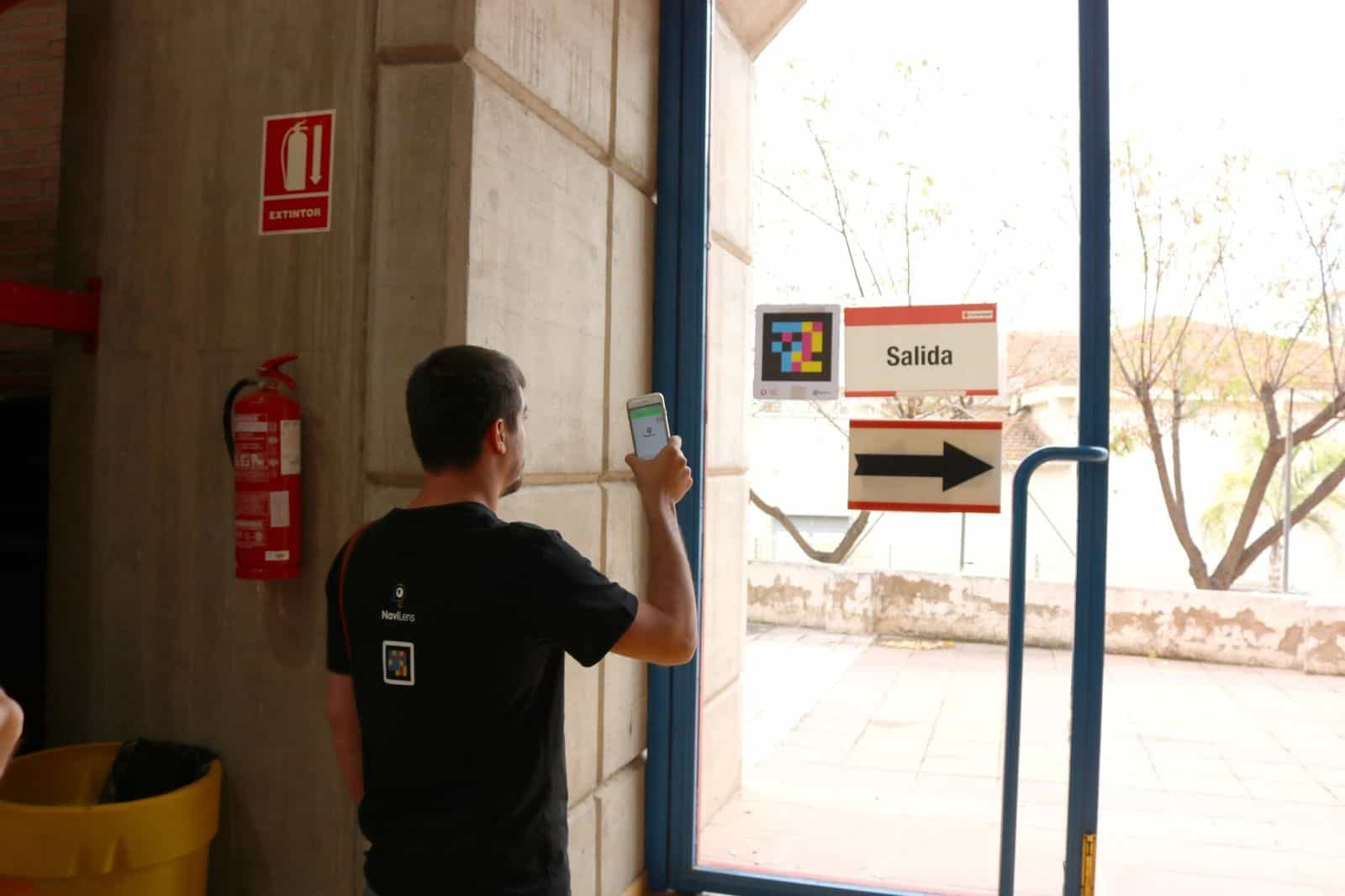
"Exit" sign with NaviLens code
On the venue's perimeter, the Red Cross official "Exit" sign carries the NaviLens code. Another technician in a NaviLens T-shirt checks the read from a distance, next to the venue's fire extinguisher.
Technology
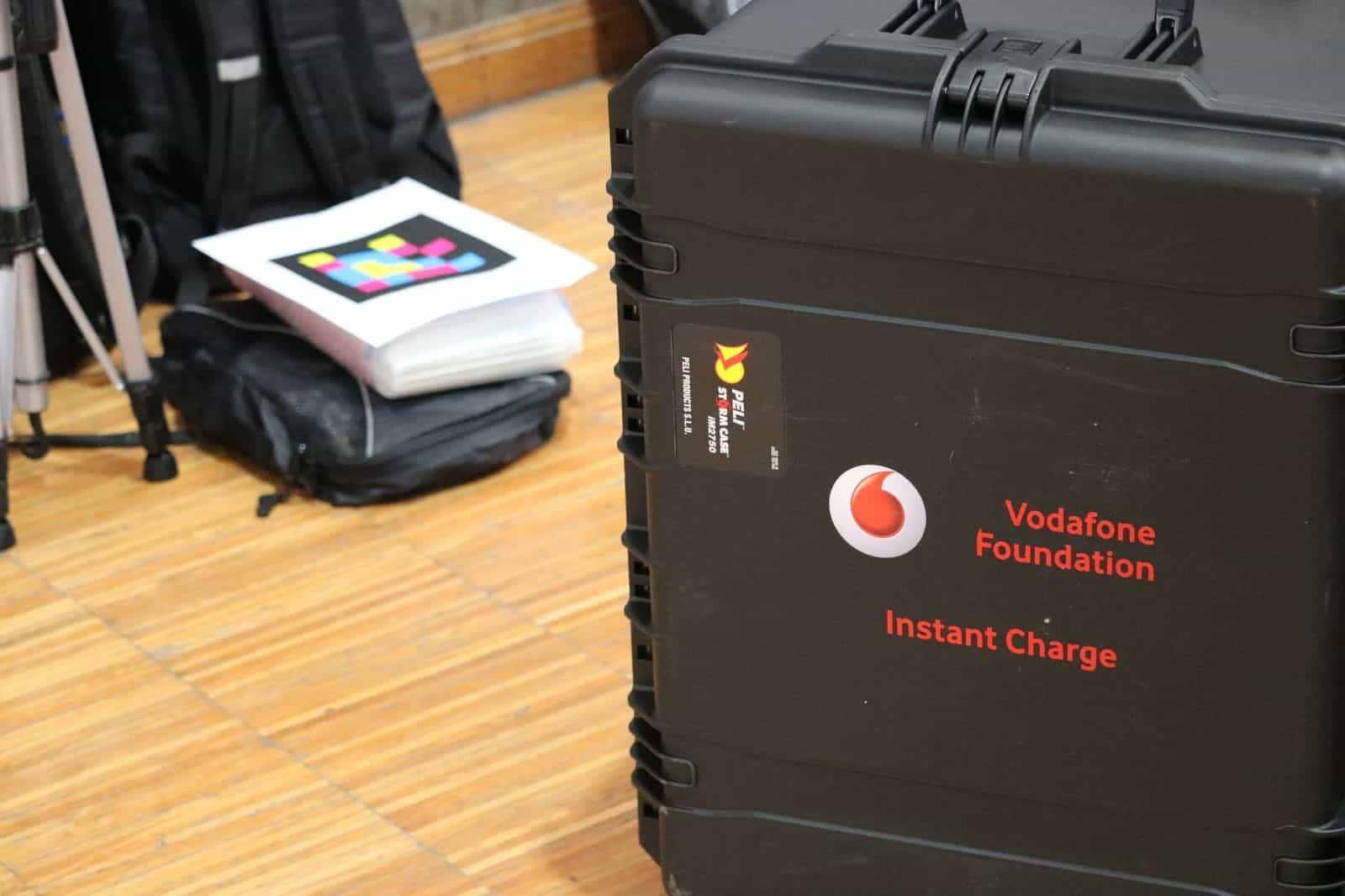
Peli Storm Case · Vodafone Instant Charge
The Vodafone Foundation Peli Storm Case—Instant Charge, capable of charging up to 66 phones outdoors at once—sits next to a stack of signage and NaviLens codes ready to hang around the shelter.
Command post
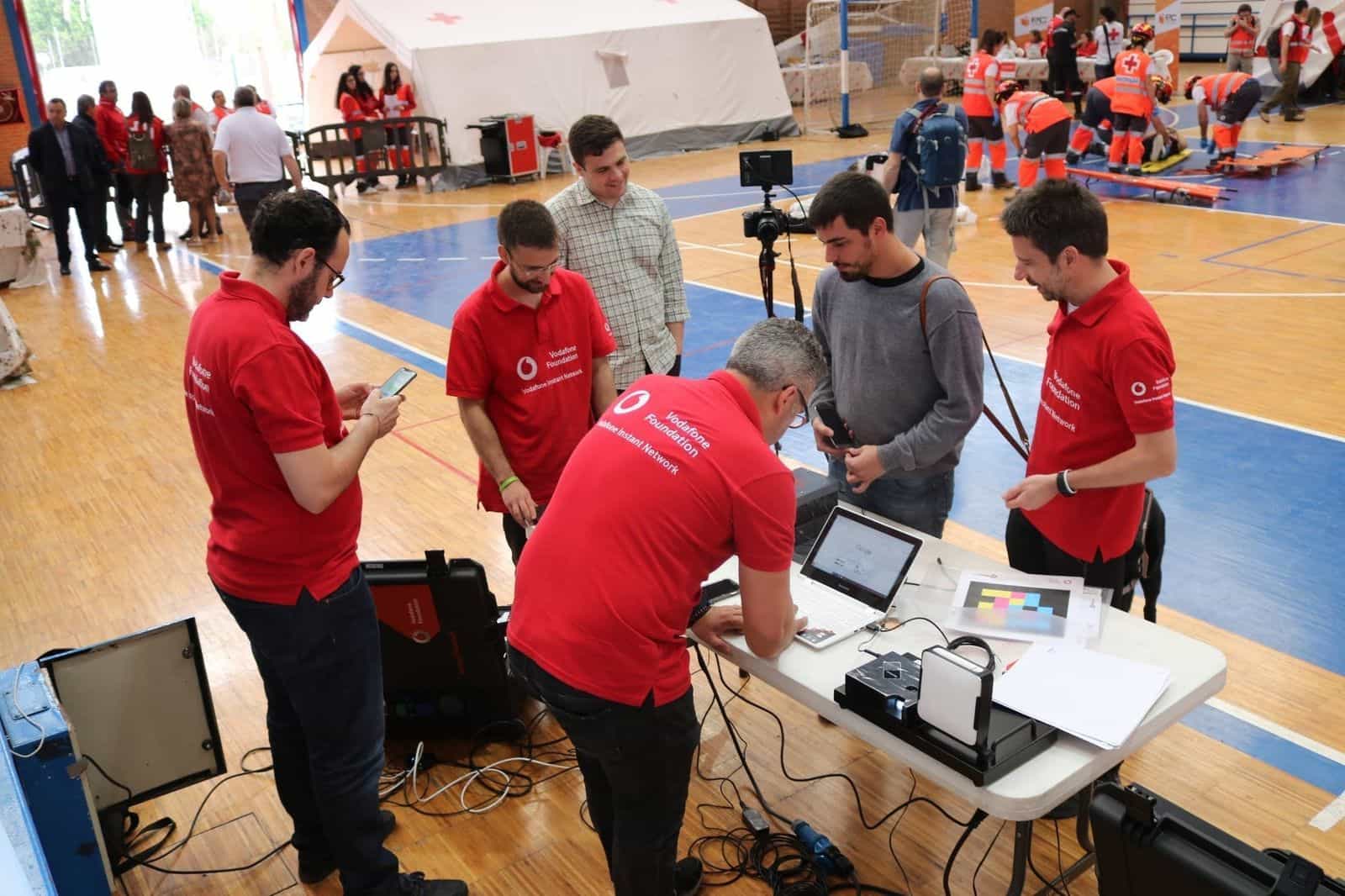
Vodafone Instant Network post in the venue
The Vodafone Foundation team and the NaviLens technician (gray T-shirt) share a post at the center of the venue: laptop, test phones, signage with NaviLens code and the Instant Network case running 2G/3G/Wi-Fi for the emergency network.
Coordination
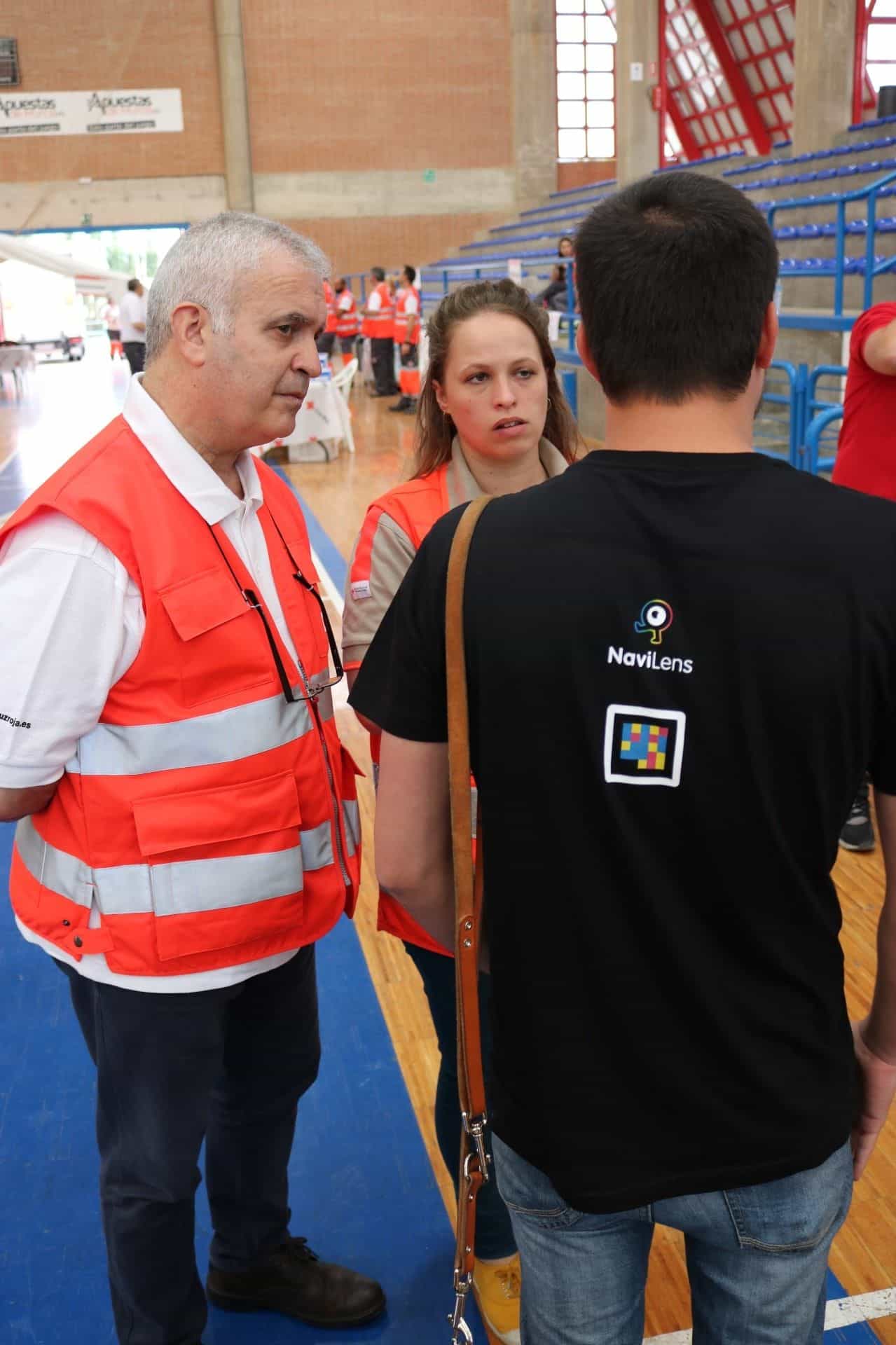
Red Cross talks to the NaviLens technician
Spanish Red Cross managers talk with the NaviLens technician (black T-shirt with the logo and the code). Behind them, Red Cross volunteers wear the orange vest of the Immediate Emergency Response Team (ERIE).
Wrap-up
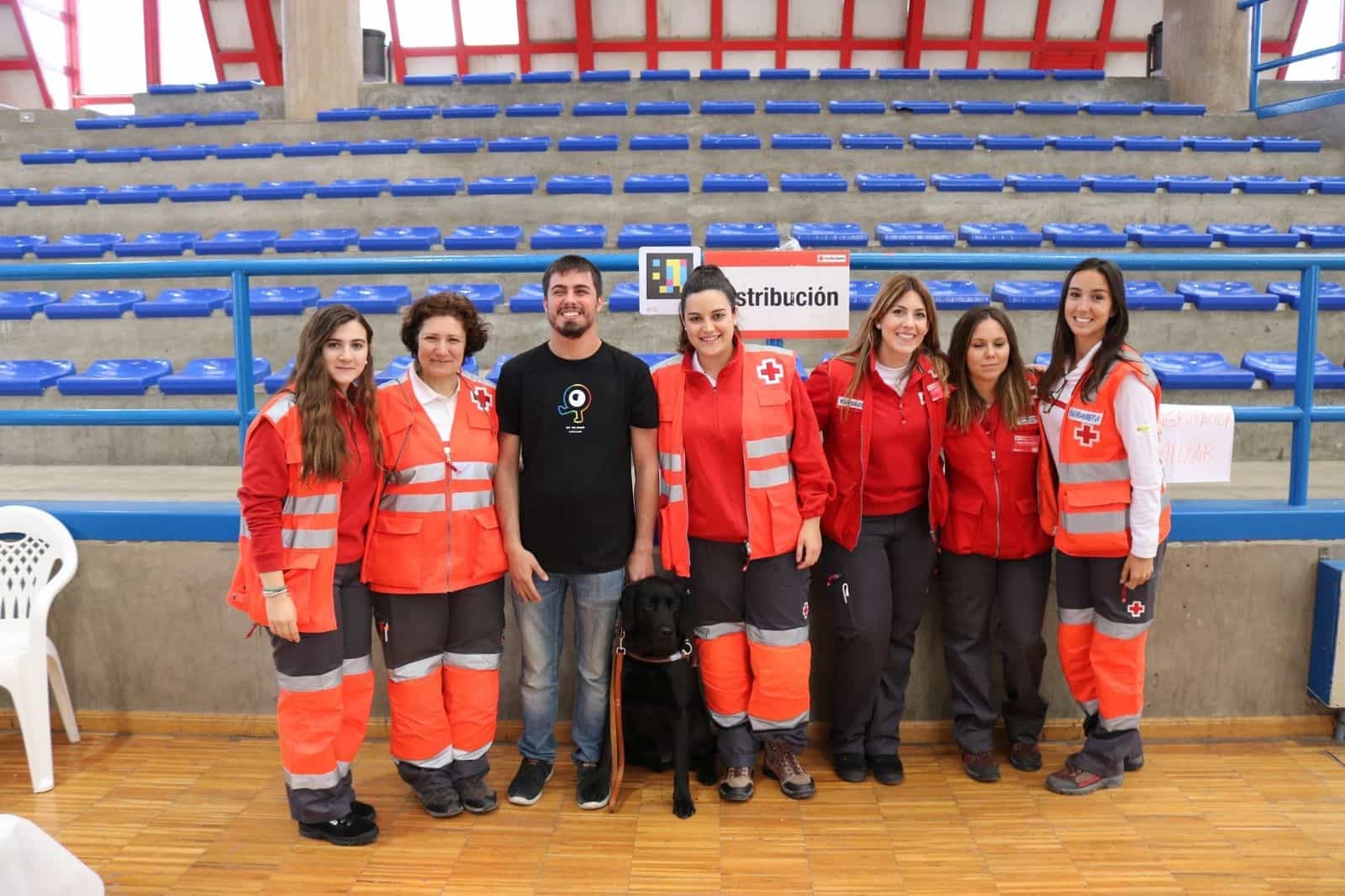
Group photo at the Distribution zone
Red Cross volunteers, the NaviLens technician (black T-shirt) and a user with a guide dog pose under the shelter's "Distribution" sign, also signed with a NaviLens code.
§ Results
Accessibility in emergency operations.
Accessible shelter
Registration, information, waiting area, family reunion and exit signed with NaviLens codes
Detection from meters away
People with guide dogs and low vision find key points without asking volunteers for help
Multilingual and voiced
The app automatically adapts to the victim's language and narrates each point's information
§ What they said
“Navilens, a solution developed in Murcia that allows points of interest to be signed for people with visual disabilities. […] In the drill it will offer a real-time fully inclusive experience, automatically adapting to the user's language in a transparent way.”
“Spain's Military Emergencies Unit started today in Murcia one of its largest simulation exercises, with 3,500 people taking part until Thursday in a multi-hazard scenario to fine-tune coordination in a major seismic disaster.”
“The Exercise is a great opportunity for the National Civil Protection System to bring all bodies together and put their response to a major national emergency to the test.”
“Over 200 people will take part in UME's joint combined level-3 emergency exercise "Murcia 2018", in which a major earthquake will be simulated.”
§ And your headquarters?
Your office can also welcome in 42 languages.
Tell us about your building, your services and your visitors. We’ll show you how NaviLens would make your office truly accessible.