Case study · Melbourne · Australia · Route 96
The world’s largest tram network, read aloud.
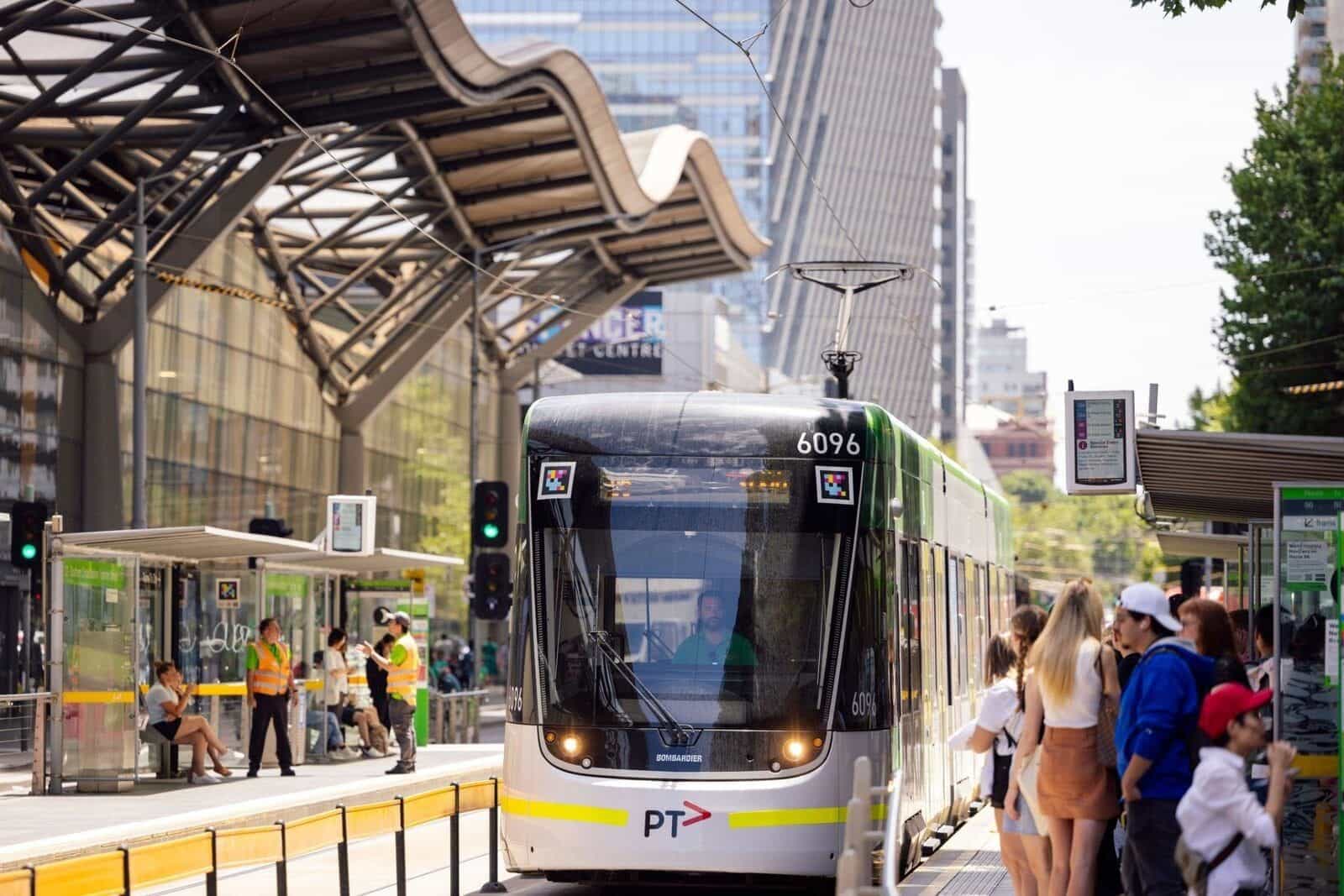
On 14 August 2023, Yarra Trams and the Victorian Government installed the first NaviLens code in Victoria’s public transport at Stop 9 (Bourke St × Spring St). Within weeks more than 3,000 codes covered the entire Route 96 and the full fleet of 100 E-Class Bombardier trams.
14 Aug 2023
First code installed · Stop 9 Bourke/Spring
Route 96
Pilot line · Brunswick East ↔ St Kilda Beach
3,000+
Codes deployed at shelters and on trams
100 E-Class
Whole Bombardier fleet adds codes
The operator
Yarra Trams · Keolis Downer Public Transport Victoria
Yarra Trams operates Melbourne’s tram network, run by Keolis Downer under franchise to the Victorian Department of Transport and Planning. With 250 km of track, 24 lines and around 1,700 stops, it is the largest urban tram network in the world.
In August 2023, Public Transport Minister Ben Carroll and the Yarra Trams team unveiled the NaviLens deployment on Route 96—Brunswick East ↔ St Kilda Beach—as the first pilot line. It is the first time the technology has been added to Victorian public transport with the explicit goal of giving real-time information to blind and low-vision passengers.
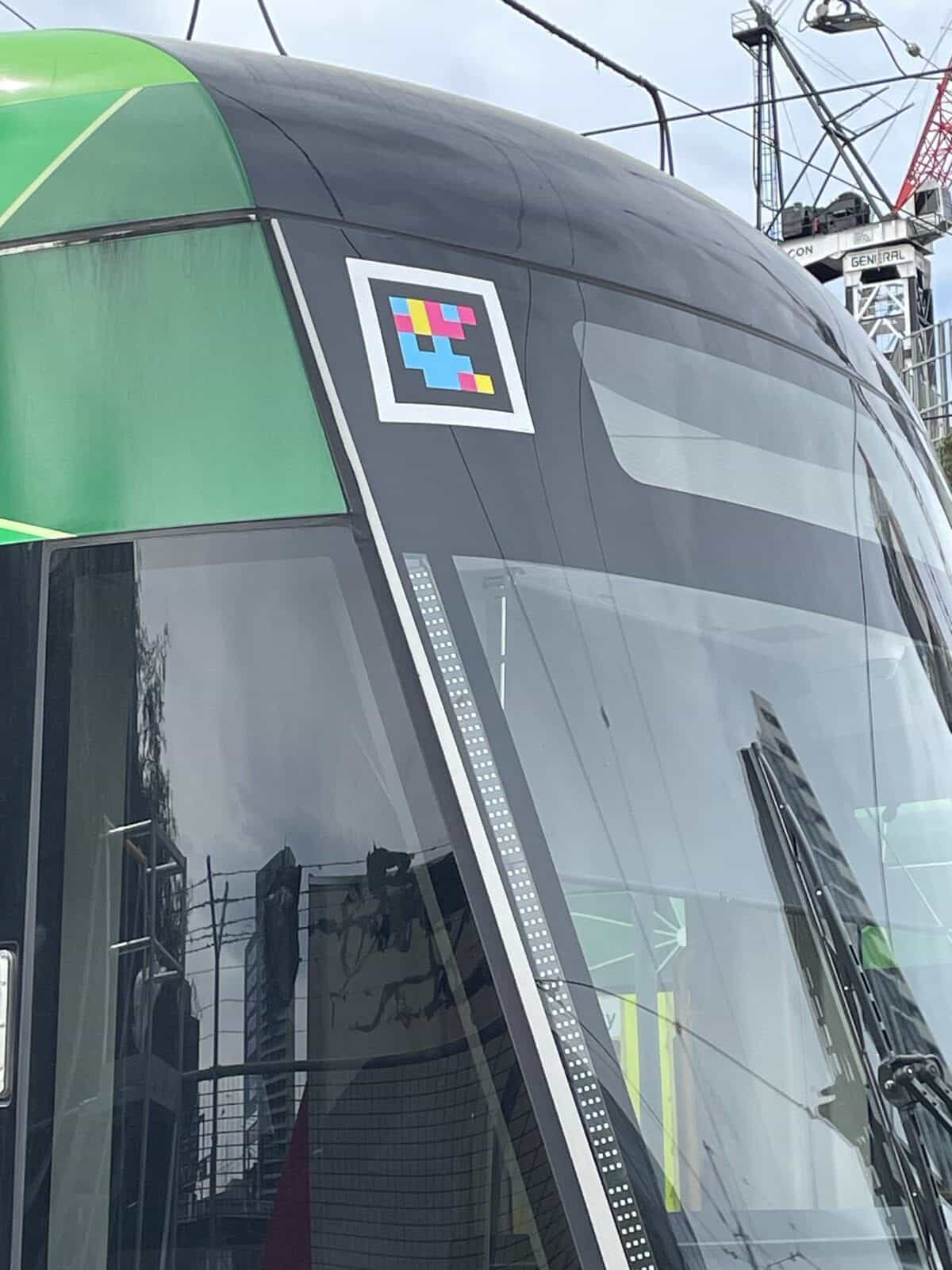
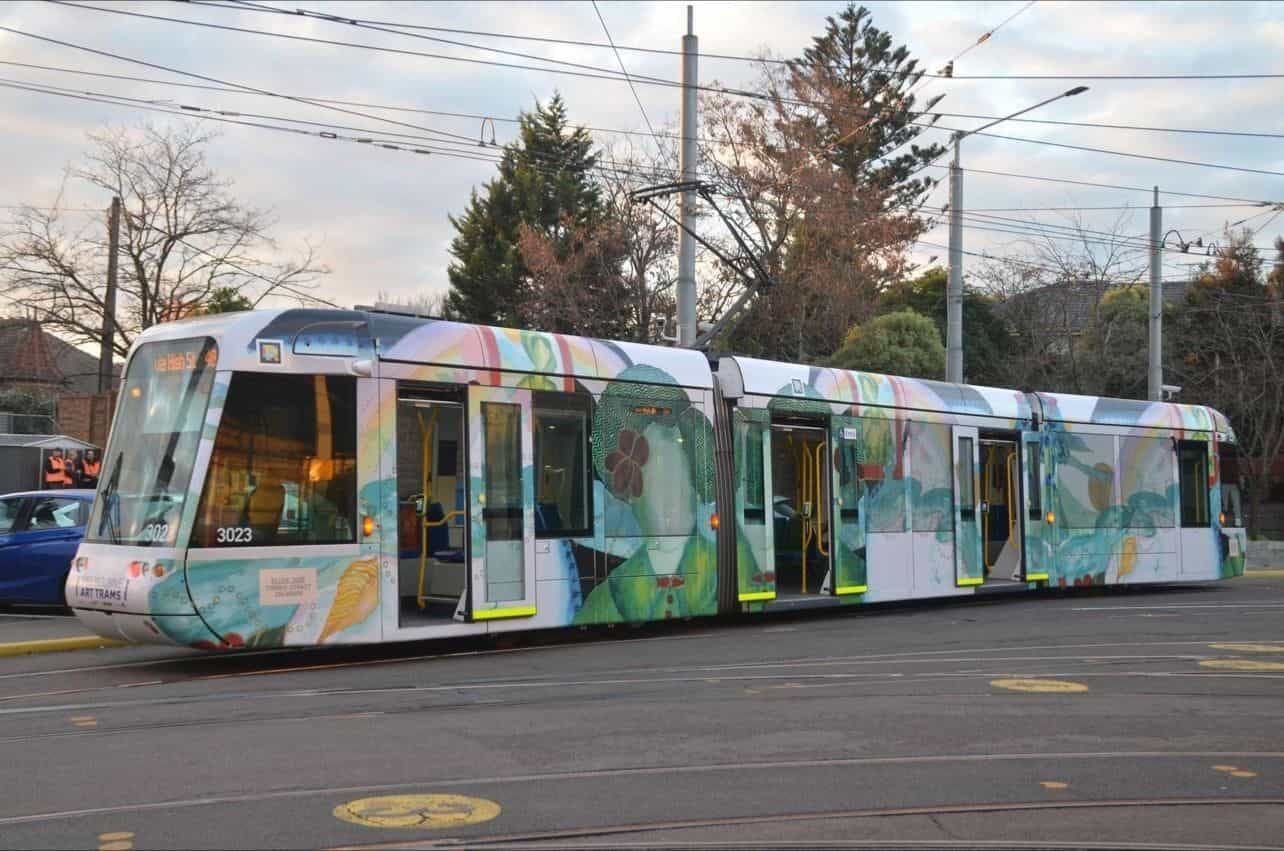
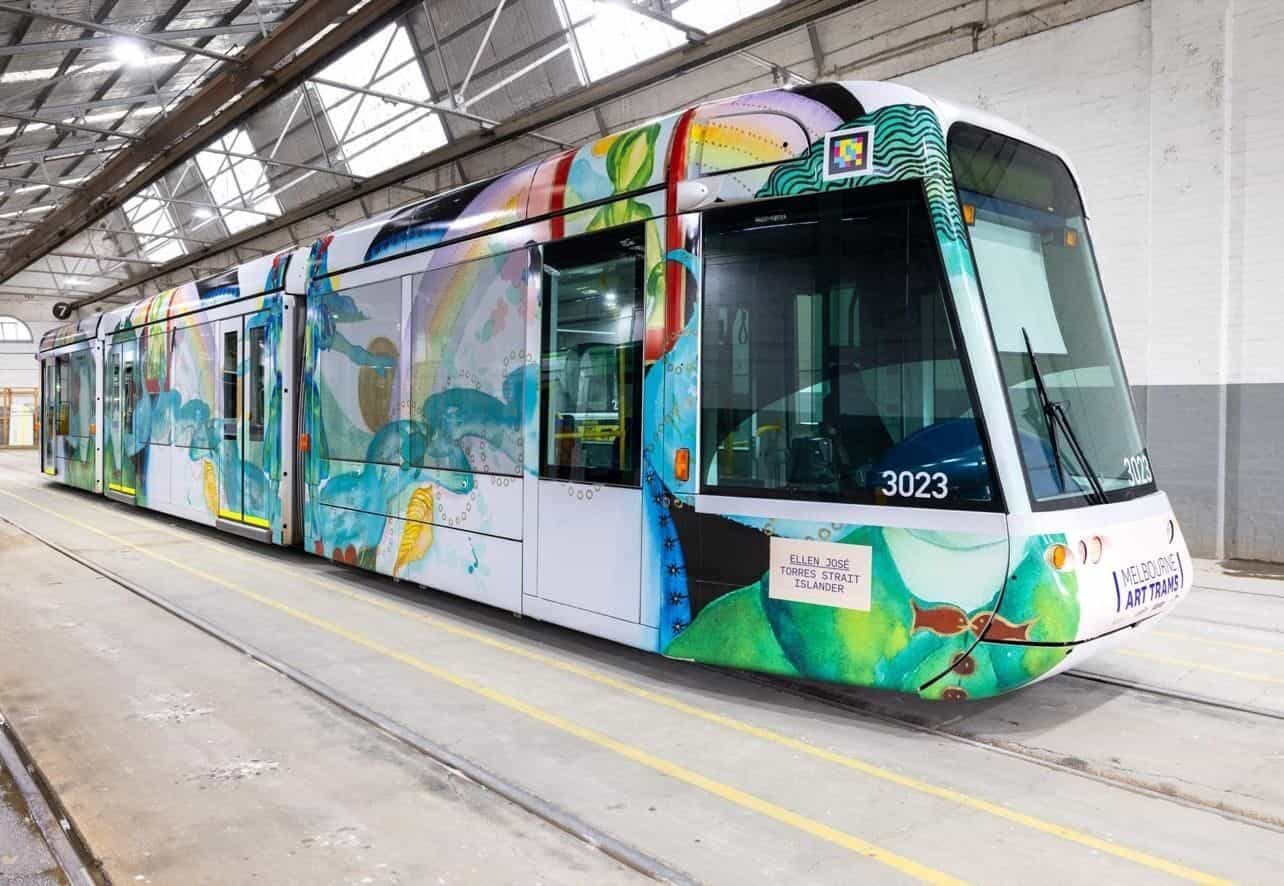
The integration did not stop at the shelters: the codes also travel on the outside and inside of the trams, including the full fleet of 100 E-Class Bombardier units that, beyond route 96, runs lines 11, 30, 58 and 86 and special services.
§ The challenge
Letting every Melbourne stop announce itself.
- 01
The world’s largest urban tram network
Yarra Trams operates 250 km of track, 24 lines and around 1,700 stops all over Melbourne. For a blind or low-vision passenger, finding the right shelter and knowing which tram comes next was a daily challenge that visual signage did not solve.
- 02
Iconic trams, uneven accessibility
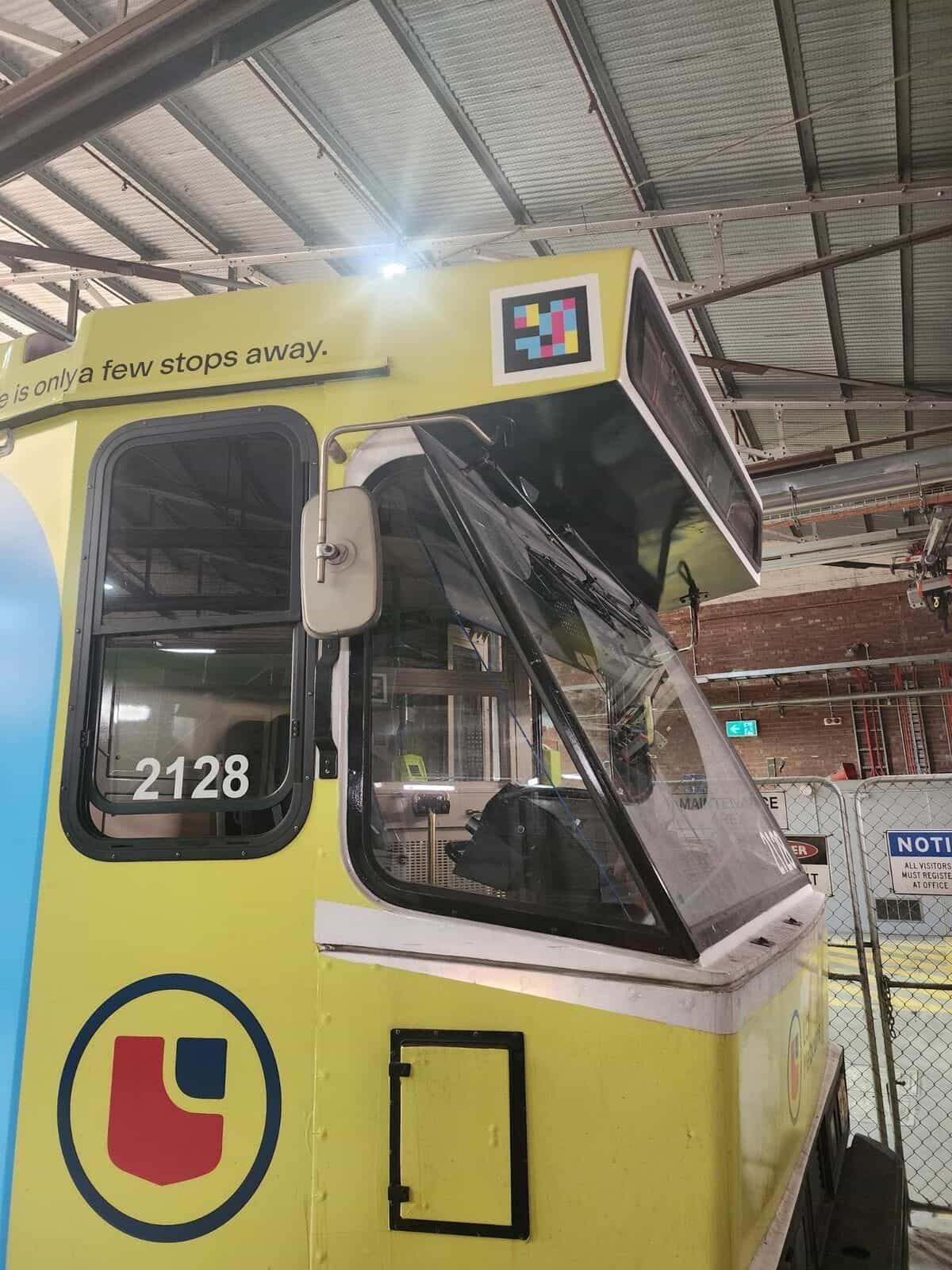
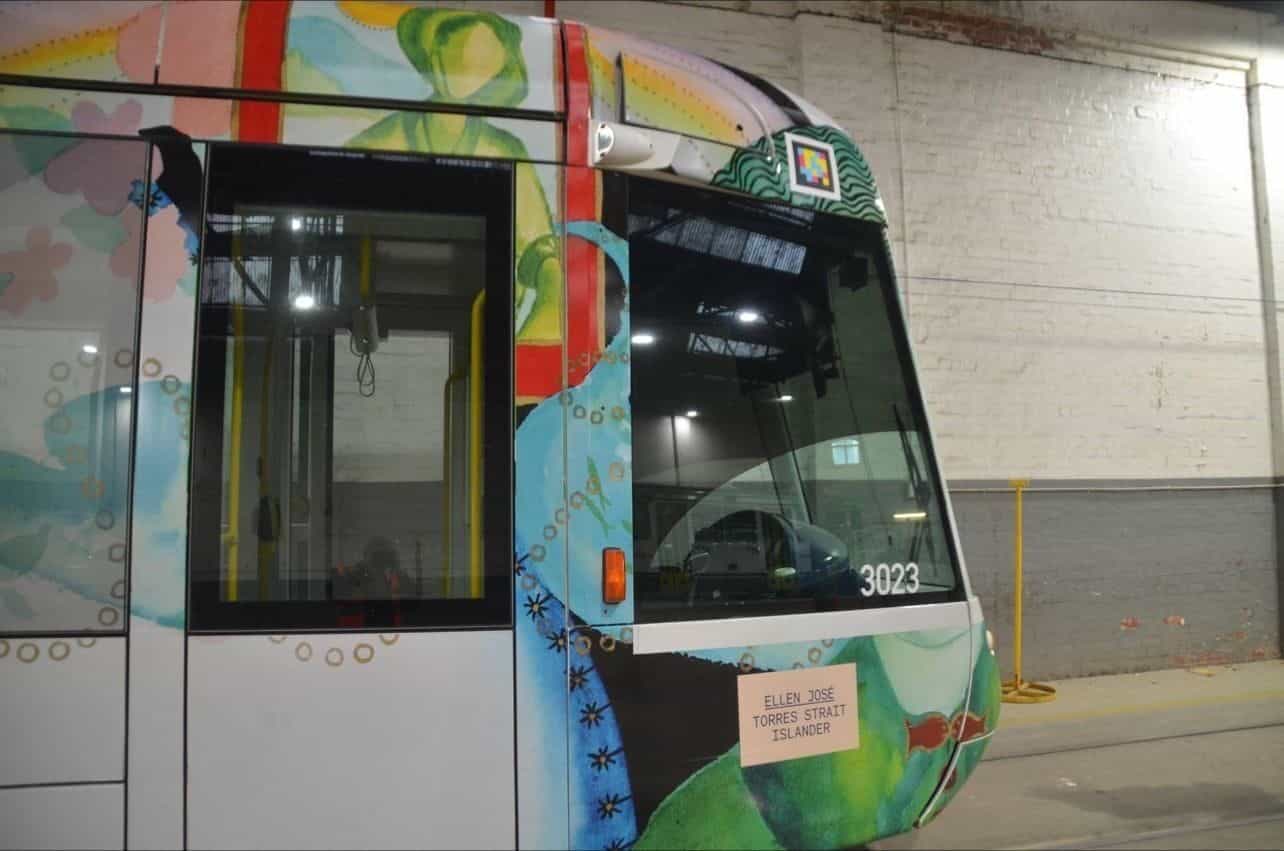
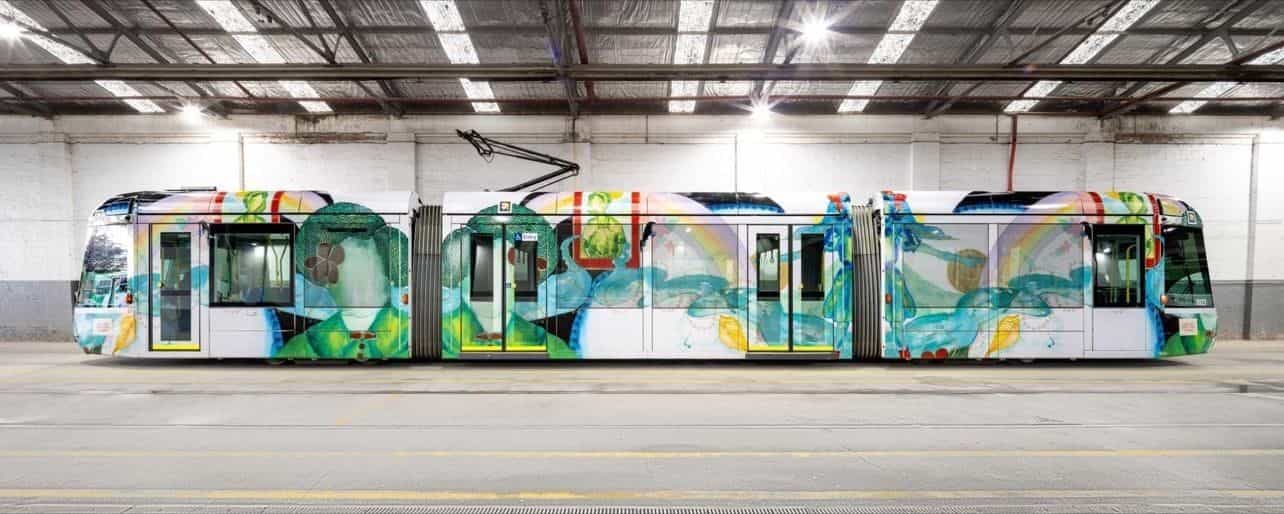
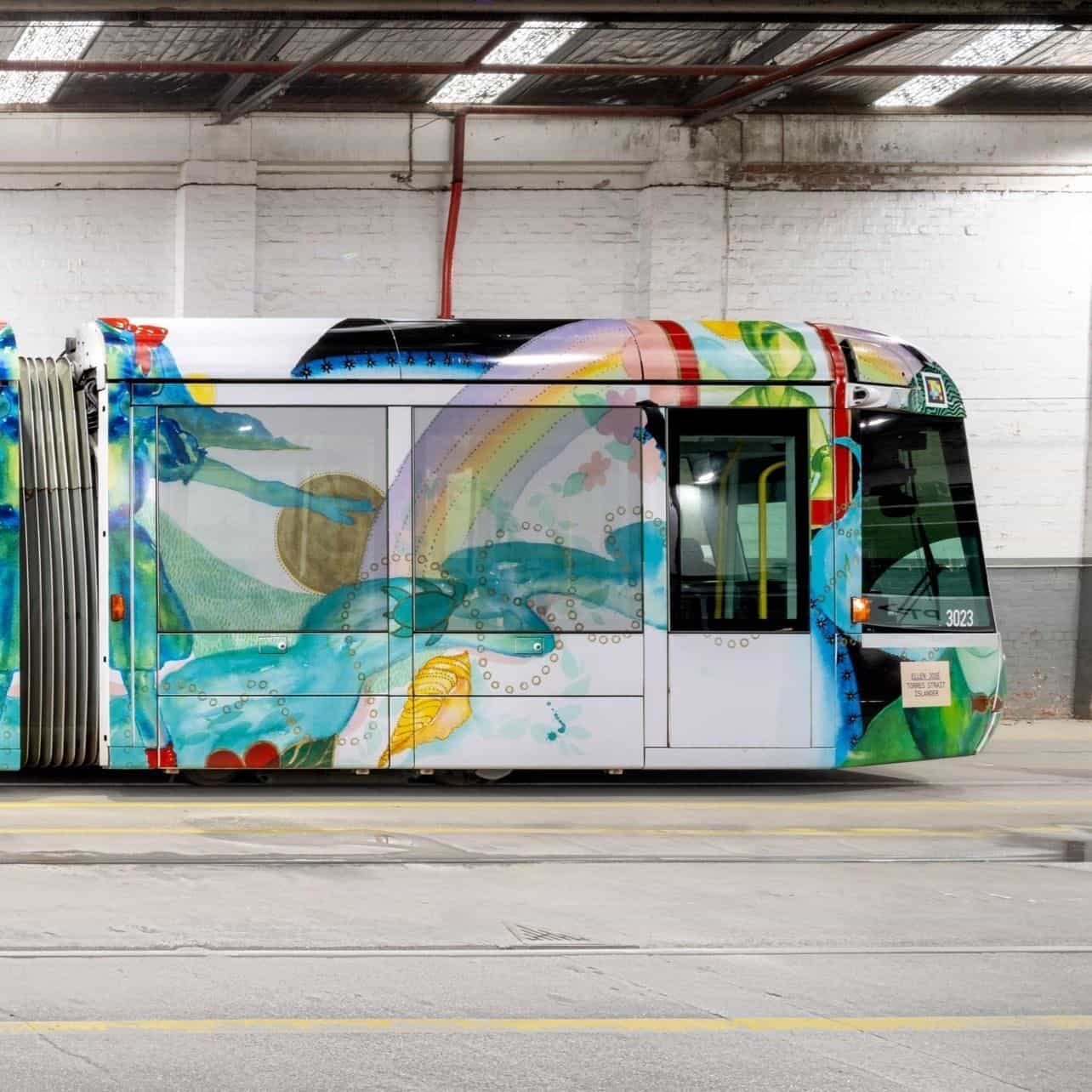
The fleet mixes classic stock (Z, A, B, W) with Alstom C-Class and the modern Bombardier E-Class. Any solution had to work equally well on the yellow steel of a 1980s B-Class, on the hand-painted Art Tram and on the aerodynamic nose of the E-Class.
- 03
Real-time information, not static
The user doesn’t need an embossed sign: they need to know which tram is arriving now, in which direction and how many minutes are left. The solution had to plug into Yarra Trams’ operations center and push dynamic information for every stop to the phone.
§ The solution
Codes at every stop, on every tram.
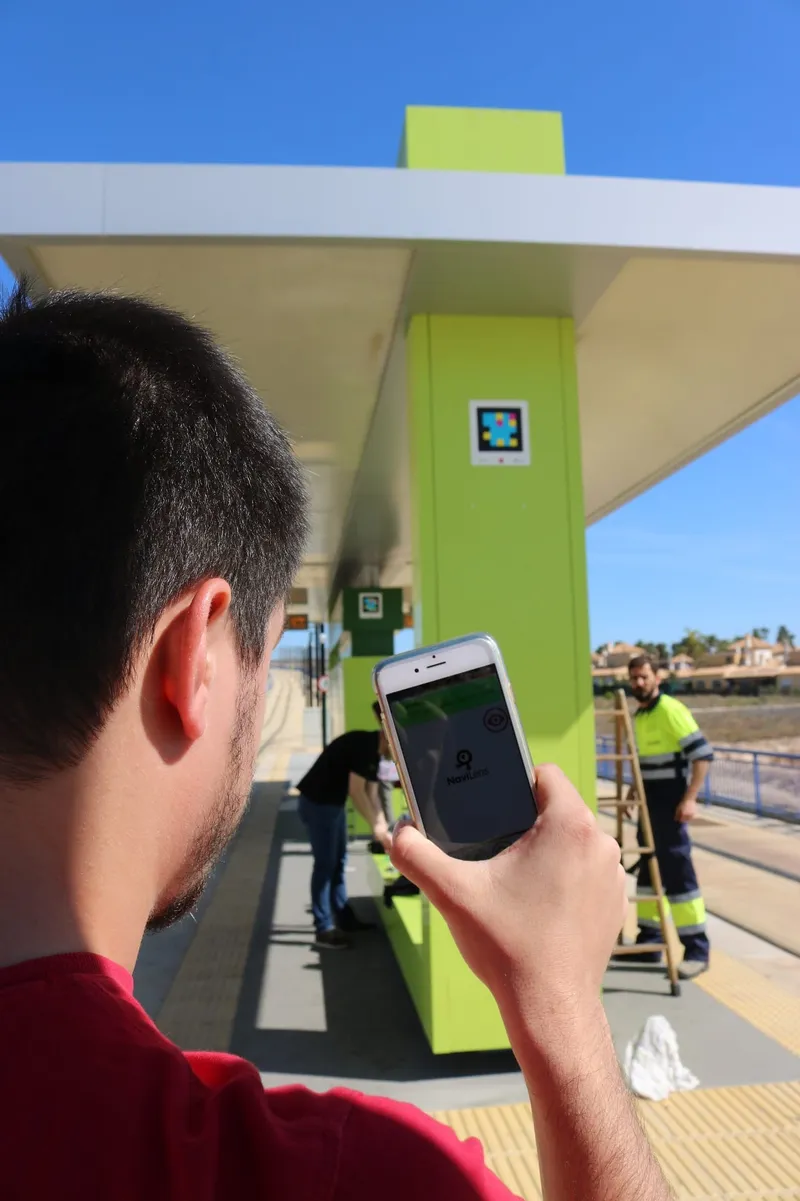
Yarra Trams installed NaviLens codes at every Route 96 shelter and on the outside and inside of every tram running the line. The app—free to download—reads the codes from several yards away and delivers the information via audio, text and in more than 42 languages.
The distinctive piece of the project is the integration: the codes are connected to Yarra Trams’ operations center, so they push dynamic real-time arrival information for every stop and on board every tram, not static recorded data.
The rollout soon extended to the full fleet of 100 E-Class Bombardier trams, making sure that special services and lines 11, 30, 58 and 86 also carry the accessible information layer.
§ On the rolling stock
From the classic B-Class to the Art Tram.
§ Talking to passengers
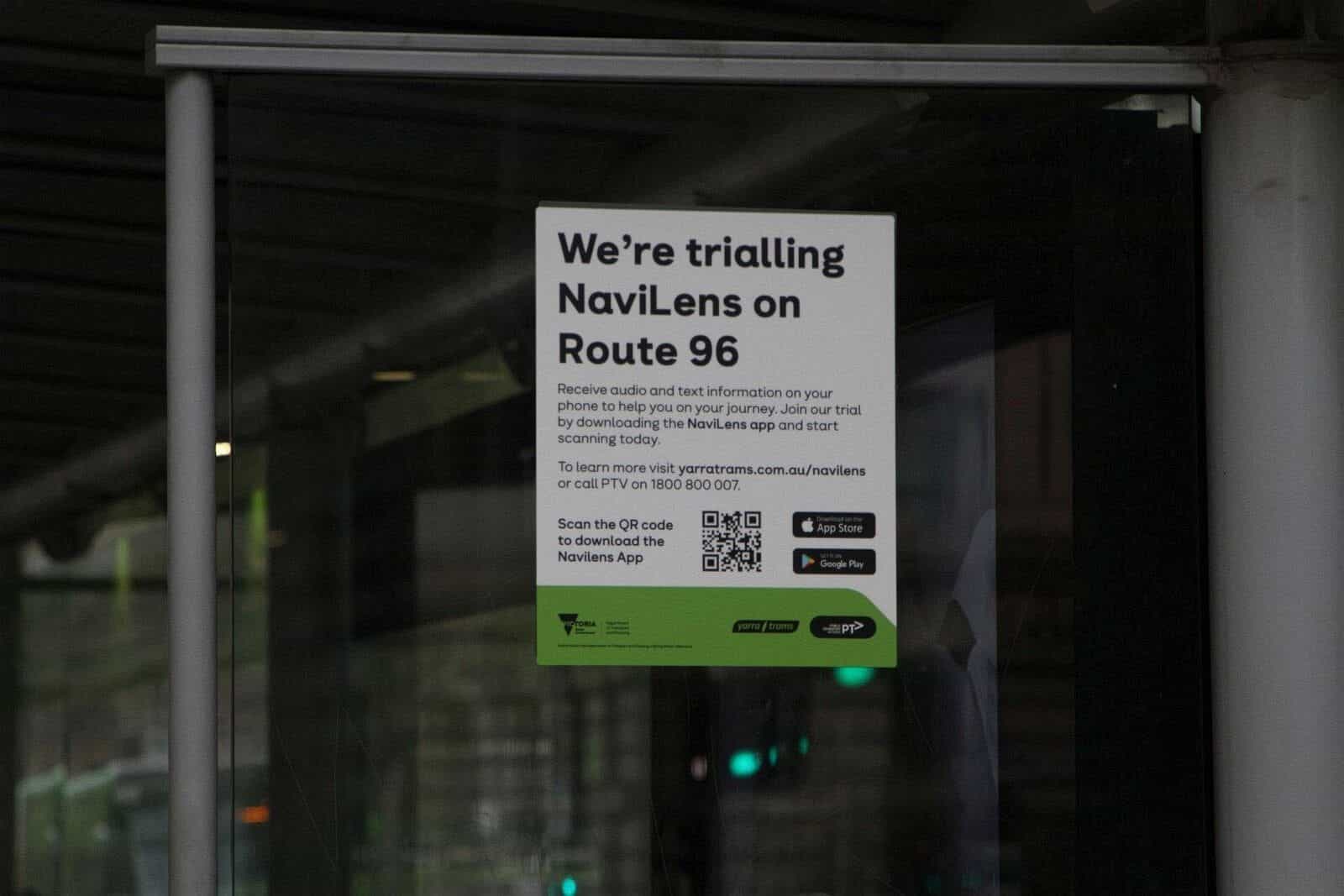
“We’re trialling NaviLens on Route 96”.
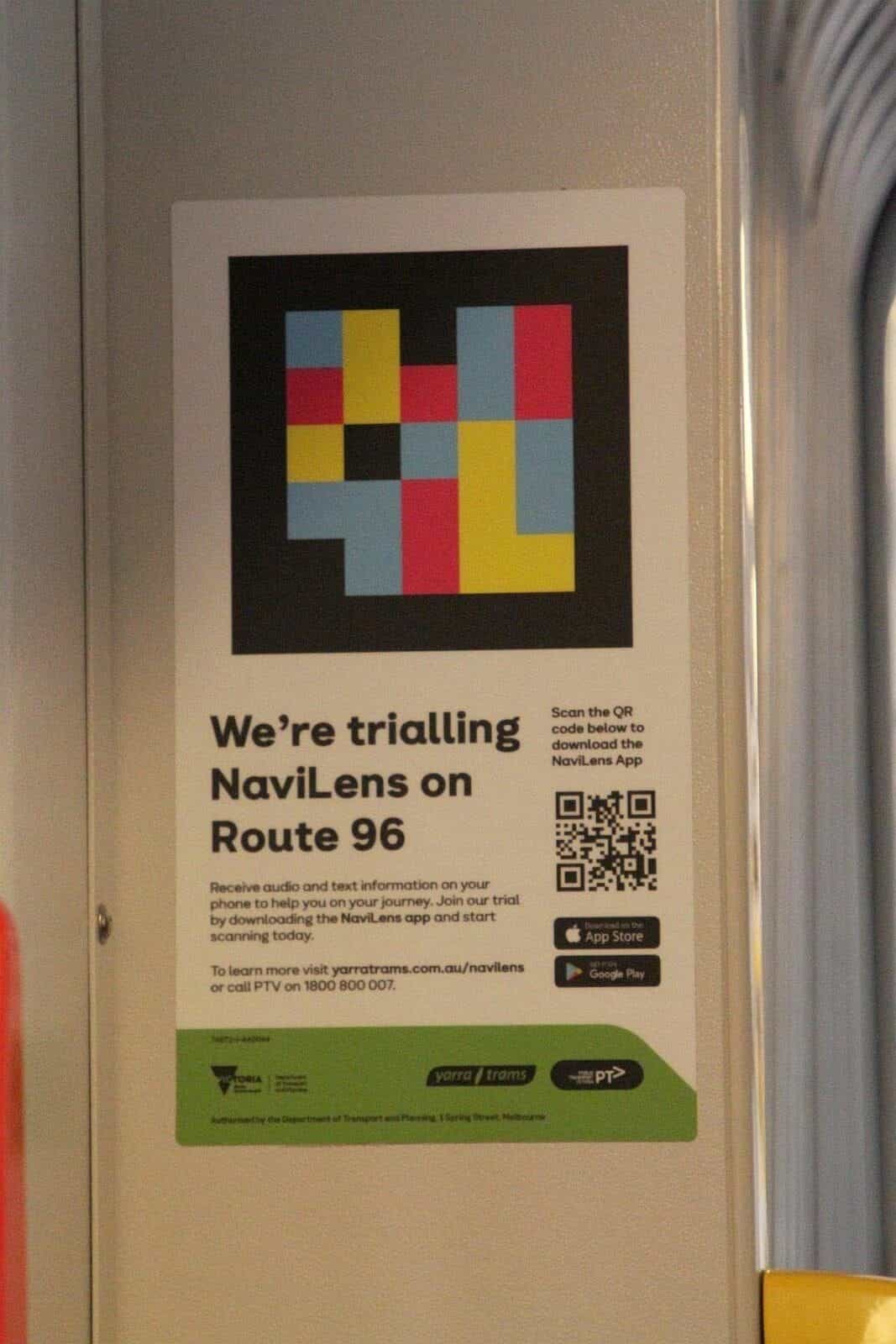
Yarra Trams paired the deployment with a clear end-user communication plan: posters inside shelters and trams explaining what NaviLens is, how to download the app (with QR codes for the App Store and Google Play) and which phone number to call for support (PTV 1800 800 007).
The co-branding of the State of Victoria · Department of Transport and Planning, Yarra Trams and Public Transport Victoria on every poster makes clear that the pilot is not an isolated experiment: it is one more piece of Melbourne’s public transport system.
§ Why it matters
A digital layer across Melbourne’s entire iconic network.
Real time
The codes are connected to the operations center: they show the exact next arrival, not a printed schedule. Accessibility goes from static to dynamic.
Multicultural
More than 42 languages available. In a city where one in three people speaks a language other than English at home, the benefit reaches well beyond visual impairment.
Scalable
What is learned on Route 96 and on the E-Class fleet can be replicated across the rest of the network with no civil works: new codes on top of existing signage. A model replicable to trams in any city.
§ And your network?
Your next station can also speak.
Tell us about your network, your pain points and the KPIs you want to move. We’ll show you how NaviLens would fit—with comparable cases.