Case study · Fujinomiya, Shizuoka (Japan)
The national guide dog center, now with a voice.
The Japan Guide Dog Center “Fuji Harness”, run by the Japan Guide Dog Association, rolls out NaviLens GO codes at its key entry points so that blind and low-vision people can navigate the building on their own.
Fujinomiya · Shizuoka
At the foot of Mount Fuji (Hitoana, Shizuoka Prefecture)
National center
Third training center of the Japan Guide Dog Association (2006)
NaviLens GO
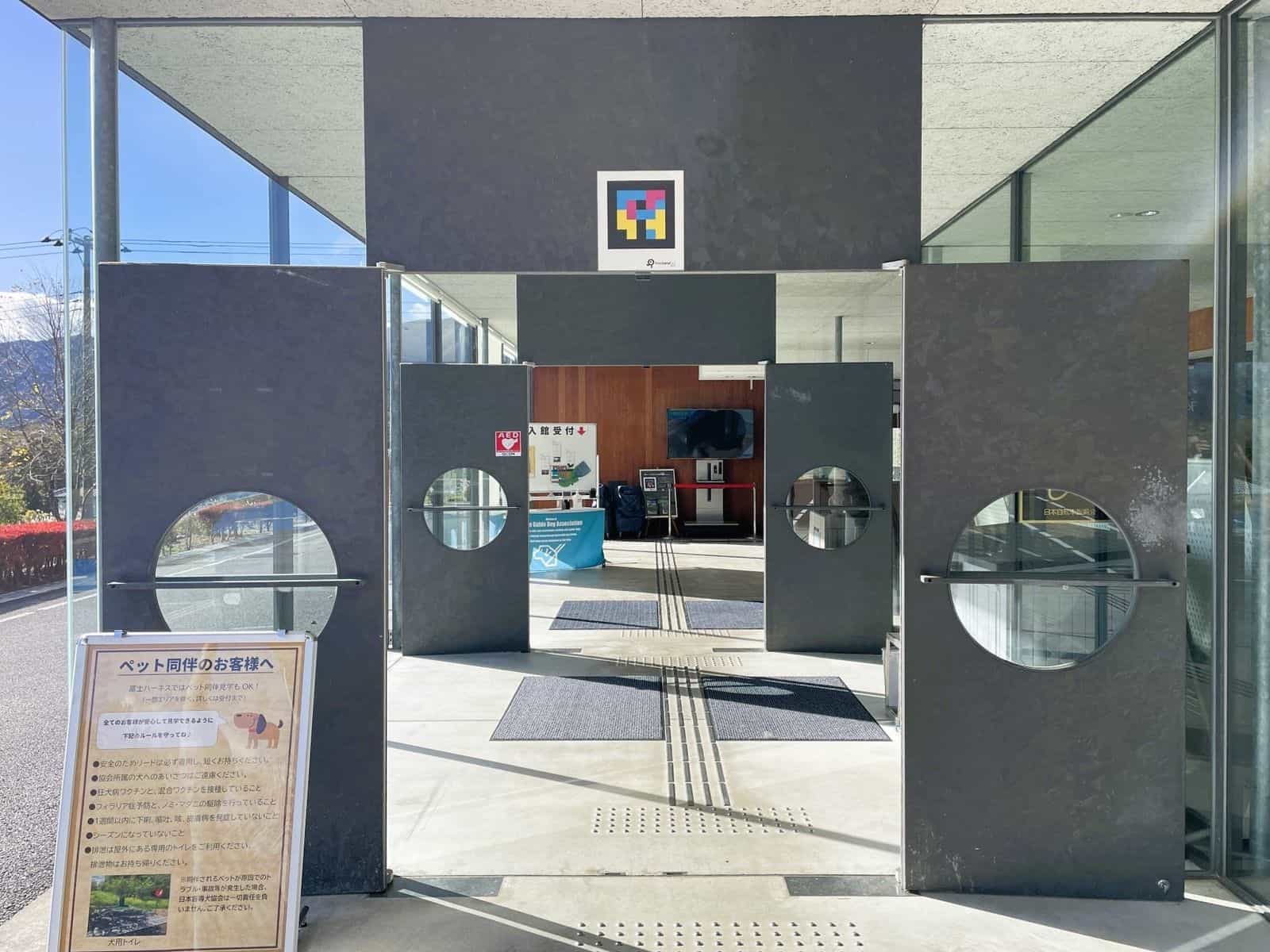
Codes at key access points: entrance, training room, lounge
Guide dog + app
Two-layer wayfinding: guide dogs and multilingual voice in the phone
Client
Japan Guide Dog
Association
The Japan Guide Dog Association (日本盲導犬協会) opened its third training center, the Japan Guide Dog Center “Fuji Harness”, in Hitoana (Fujinomiya, Shizuoka) at the foot of Mount Fuji in October 2006.
It is Japan's first facility designed to care for guide dogs throughout their entire life—breeding, training, working alongside blind people and retirement—and to raise awareness about visual impairment with daily demonstrations at 11:00 and 14:00.
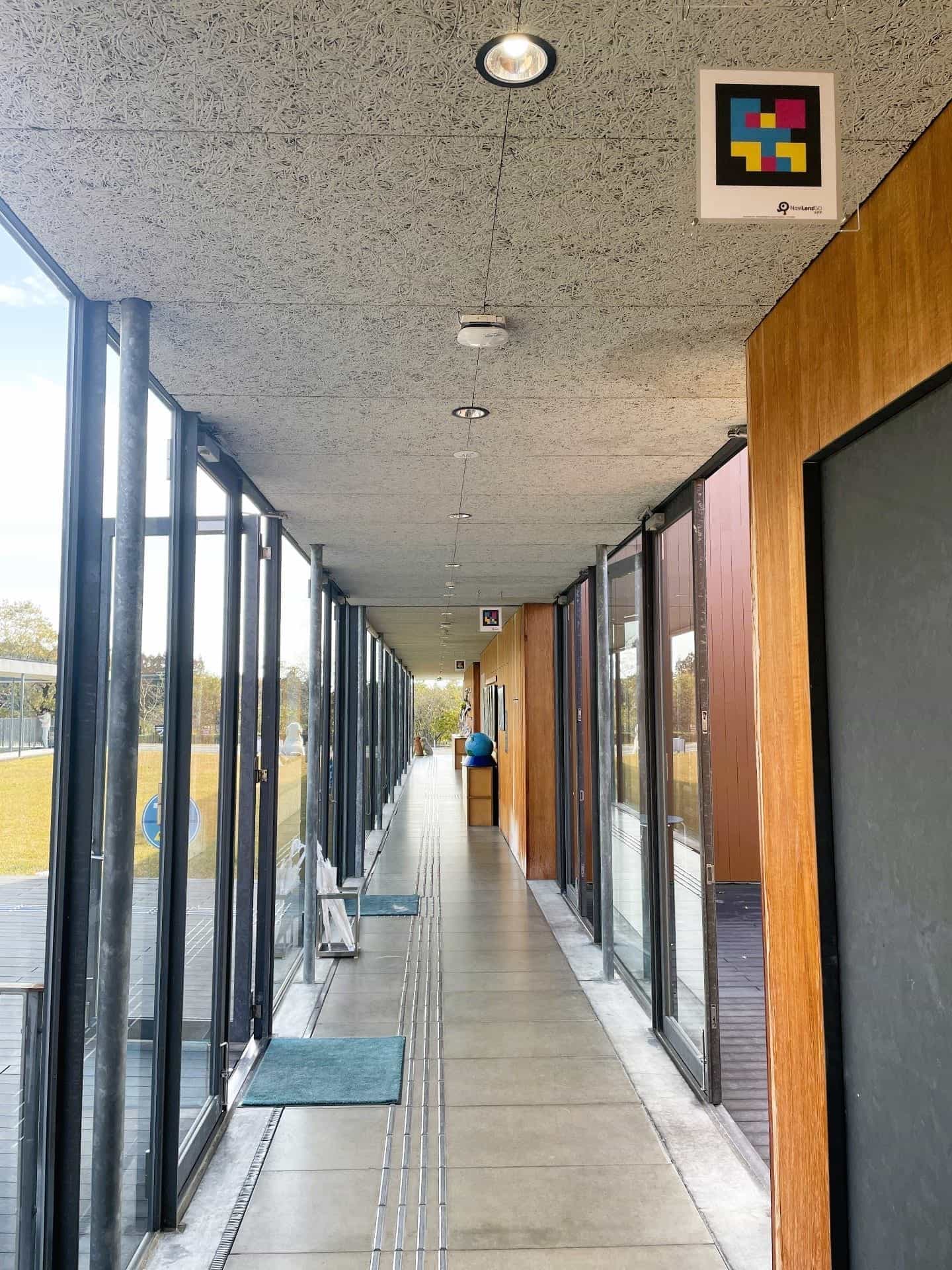
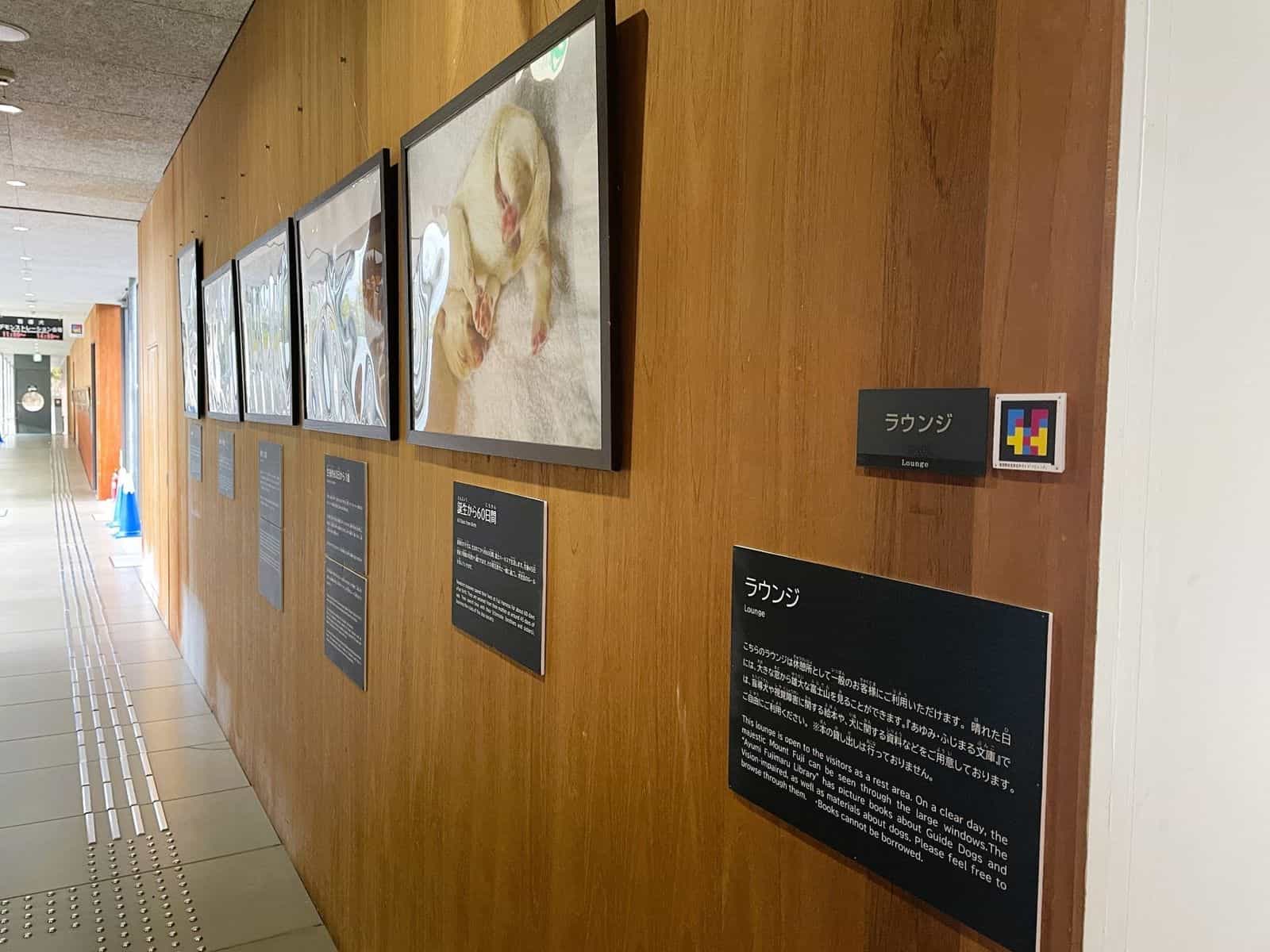
The usual route links the entrance, a long glazed corridor, the Multipurpose Training Room (demonstration hall) and the Lounge, with the “Ayumi · Fujimaru Library” exhibit on puppies and books about guide dogs.
§ The challenge
Making the guide dog center also legible without sight.
- 01
A reference center for blind and low-vision people
Fuji Harness is the first center in Japan to look after the “full life cycle” of a guide dog: birth, training, work and retirement. It welcomes low-vision and blind users who come to train, families and the general public.
- 02
Distinctive architecture, long winding route
The building, blended into the Mount Fuji landscape, has a spiral-shaped corridor that gently rises towards the training room, with glazed walls onto the garden and warm wood. Beautiful, but hard to read without clear cues at visitor height.
- 03
Bilingual signage, but visual only
The existing panels (Japanese + English) explain the rooms very well—Multipurpose Training Room, Lounge, guide dog demos at 11:00 and 14:00—but were out of reach for those who can't read them: precisely the audience the center serves.
§ Solution
NaviLens GO codes at every key access point of the route.
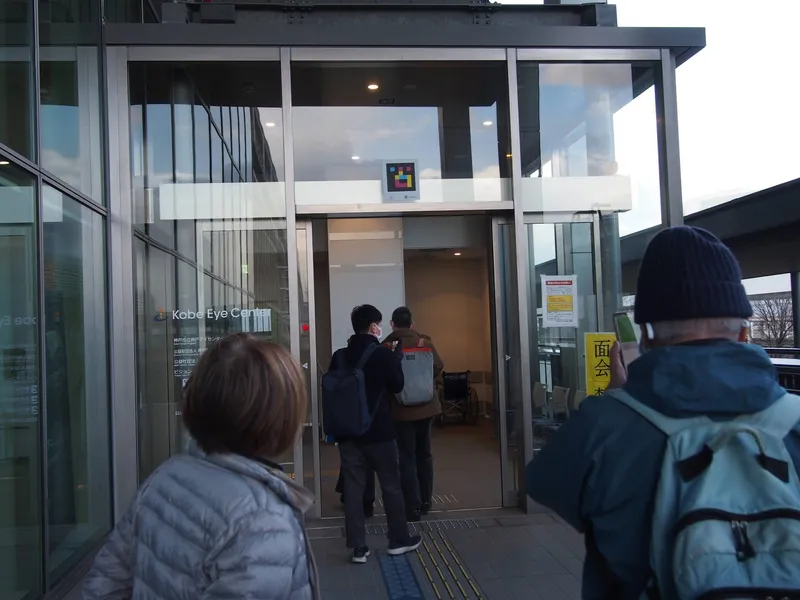
Alongside the center's bilingual signs, large-format NaviLens GO codes are installed — scannable from a distance, without focusing and on the move, using the free app.
The visitor's phone announces where they are—entrance, demonstration hall, lounge—and summarises what's in each space (demo times, what's on display along the corridor, how to continue to the Mount Fuji viewpoint).
The code coexists with the tactile paving and the guide dog: it adds a layer of ambient information that screen readers and traditional signage could never provide.
§ The rollout
Three doors, one shared visual language.
§ Timeline
From 2006 to the NaviLens rollout at the access points.
- Oct 2006
Opening of the Japan Guide Dog Center “Fuji Harness”
The Japan Guide Dog Association opens its third training center at the foot of Mount Fuji, with the mission of caring for the guide dog throughout its life and raising awareness about visual impairment.
- 2024 →
NaviLens GO rollout at key access points
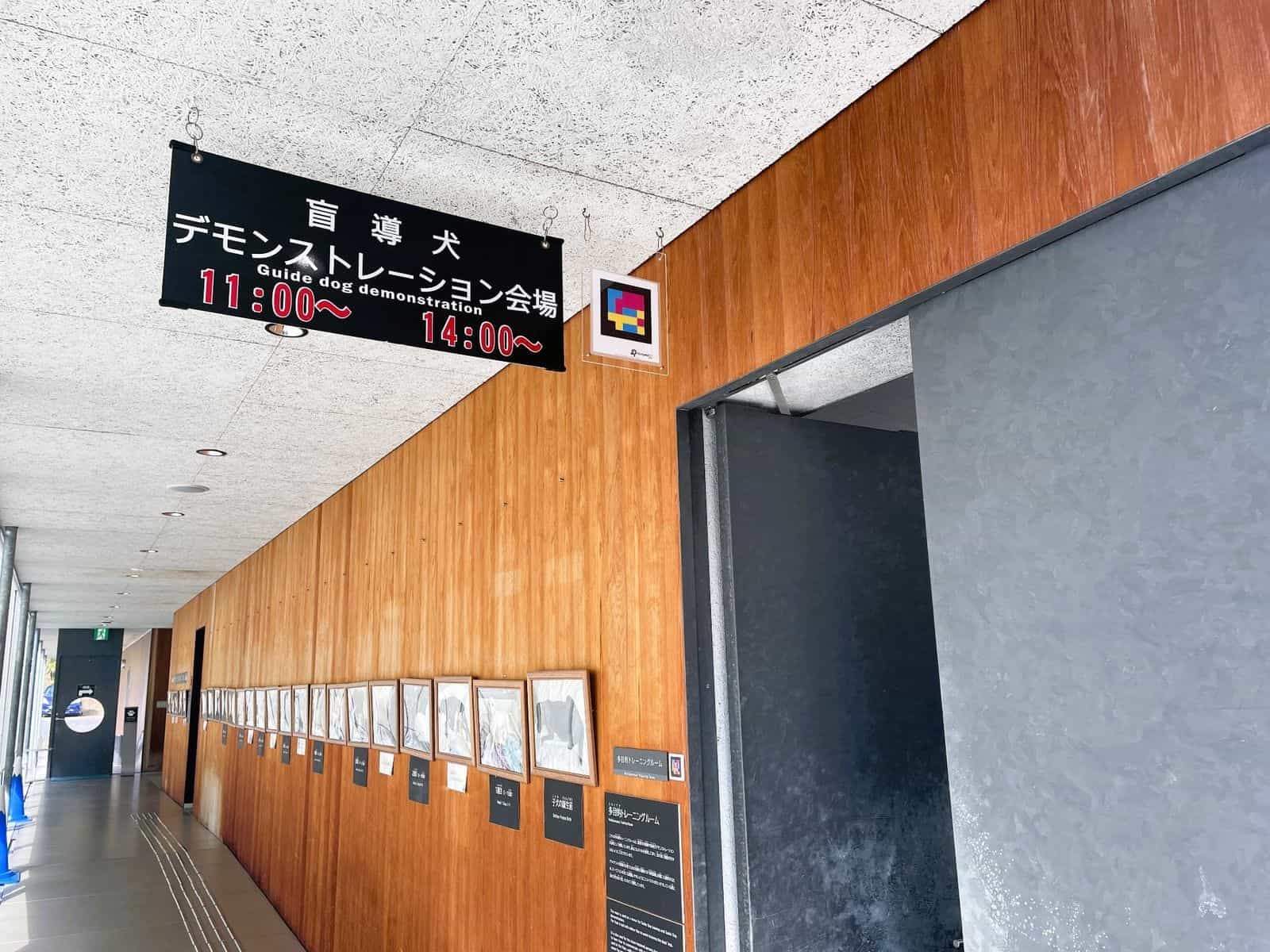
NaviLens GO codes are installed at the building entrance, opposite the Multipurpose Training Room (盲導犬デモンストレーション会場) and at the Lounge entrance, alongside the existing bilingual signage.
- Guided visits
Demonstrations at 11:00 and 14:00
The codes let visitors preview the content of the guide dog demonstrations and find their way independently along the corridor that links the hall, the lounge and the puppy photo exhibit.
§ What they said
The center and its mission, in its own words.
“The Japan Guide Dog Center (Fuji Harness) was established in October 2006 as the third training centre of the Japan Guide Dog Association. A multipurpose training room has been set up in the heart of the centre, and we are trying to spread awareness about guide dogs and vision impairments to many visitors.”
§ Results
The guide dog center, now self-explanatory too.
Audible access
Every key door delivers its label in the language of the visitor's phone
Autonomy
Visually impaired users can move through the center without depending solely on staff
Editorial consistency
The code coexists with the bilingual (JP/EN) signage rather than replacing it, in the center's own graphic language
§ And your campus?
Every classroom and clinic can be guided by voice.
Tell us about your facility, your journeys and your users. We’ll show you how NaviLens would make wayfinding easier.