Case study · Zaragoza, Aragón
A hallway, a school, a Renaissance museum.
How the music department of IES Clara Campoamor Rodríguez turns the hallway into the Renaissance Music Museum: paintings, captions, braille and a NaviLens code next to every piece so you can listen to the explanation.
Zaragoza
IES Clara Campoamor Rodríguez · Parque Goya neighborhood
Renaissance
“Renaissance Music Museum” · Music Department
4 panels
Historical context · Sacred music · Secular music · Dance and instruments
1 code per piece
Every painting in the exhibition carries its own NaviLens with explanatory audio
The client
IES Clara
Campoamor Rodríguez
IES Clara Campoamor Rodríguez is a public secondary school in the Parque Goya neighborhood of Zaragoza (c/ Eugenio Lucas s/n), part of the Zaragoza City Council's Educating City network.
Its Music Department has used permanent exhibitions in the school's hallway as a teaching tool for several years: orchestras, auditoriums and, more recently, the “Renaissance Music Museum” documented on this page.
The museum was born as an internal resource of the school—not a venue open to the general public—and uses NaviLens to add audio, reading for blind or low-vision students and a channel any pupil can use with their phone while walking down the corridor.
§ The challenge
Letting the Renaissance be heard, not just memorised.
- 01
Turning a corridor into a living classroom
The Music Department's challenge was to explain Renaissance music—context, sacred, secular, dance and instruments—without reducing it to an exam. The solution: borrow the language of the museum and bring it to the school hallway.
- 02
One resource for a very diverse student body
The school is home to pupils with different paces, readers and non-readers in several languages, and classmates with visual disabilities or specific needs. Paper captions fell short: a format adding audio and accessibility was needed.
- 03
Making the museum belong to the pupils
The project had to be doable in class: writing the letters, mounting the frames, drafting captions and… generating and sticking the codes. NaviLens fit because pupils themselves can print, link and maintain the museum term after term.
§ The solution
One painting,
one code, one story.
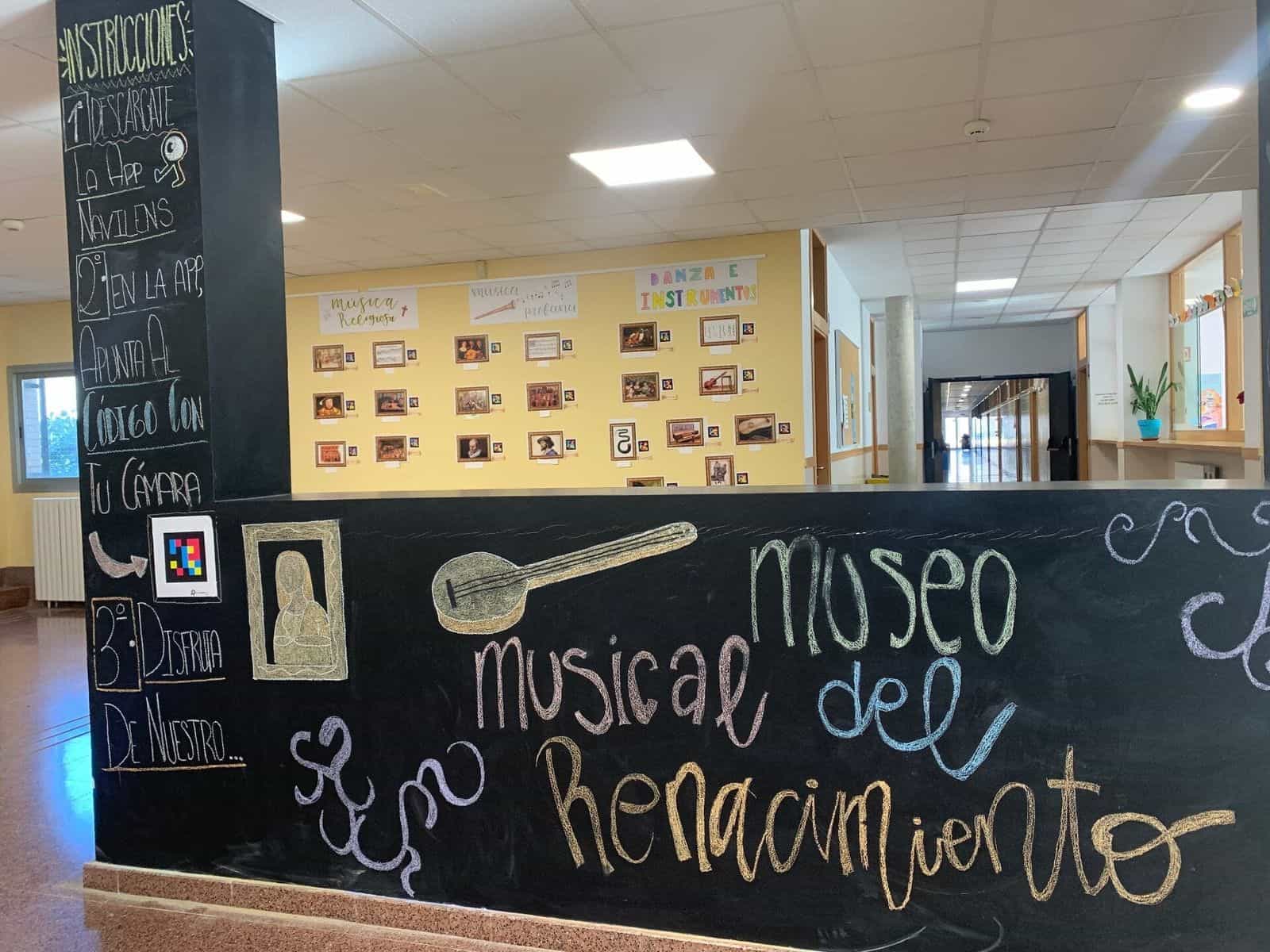
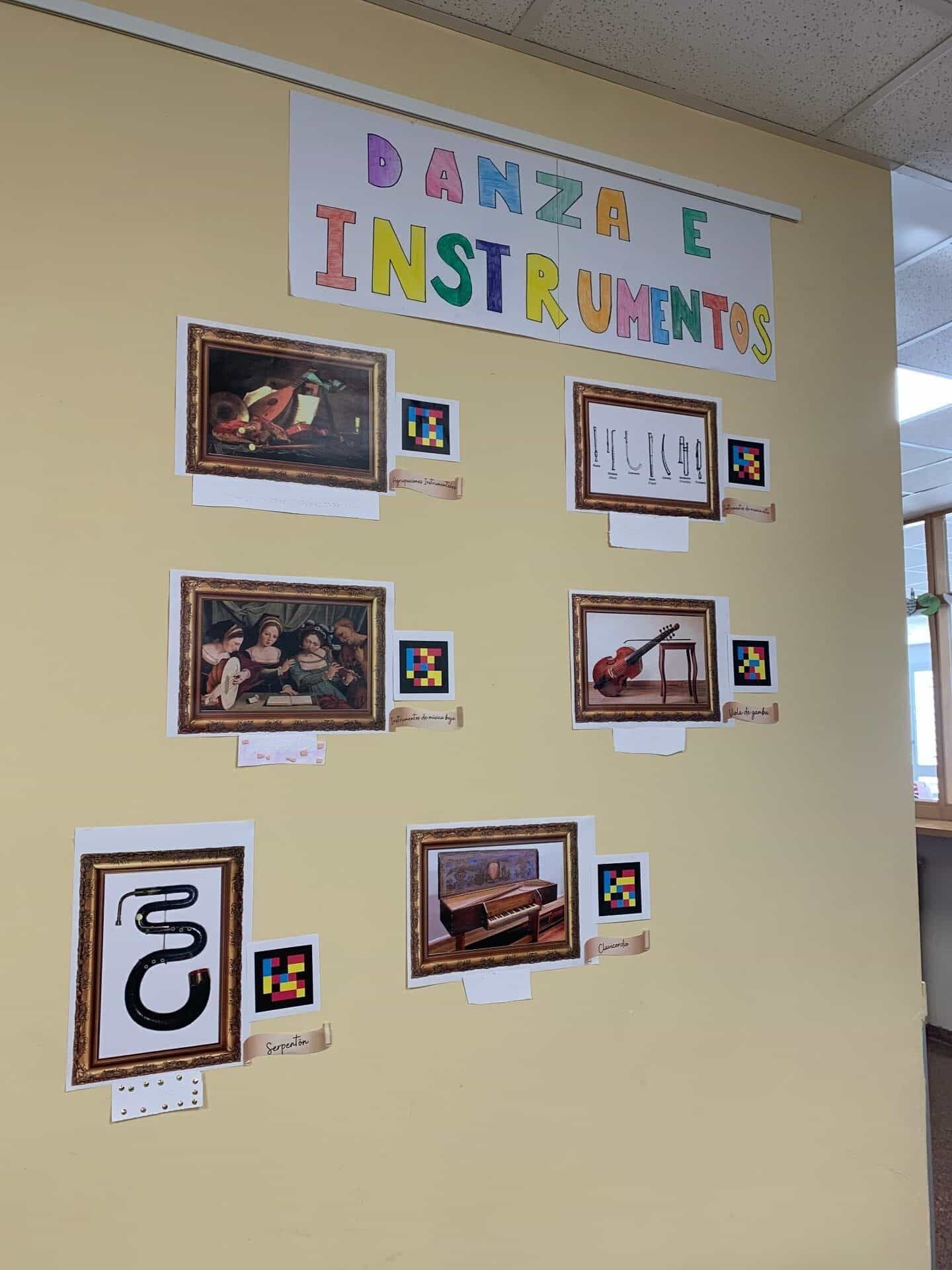
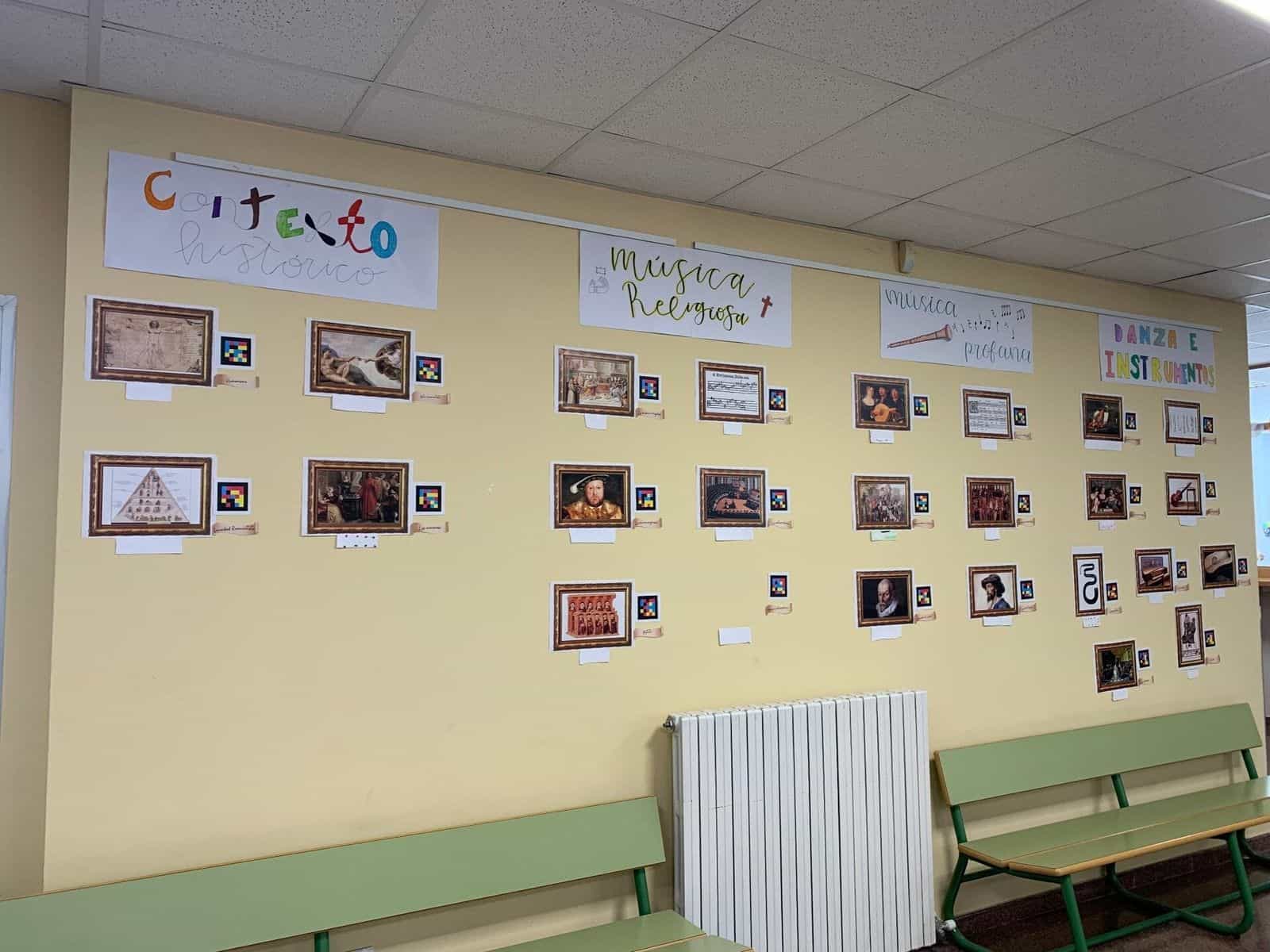
Four panels—Historical context, Sacred music, Secular music and Dance and Instruments—organize the tour along the yellow wall of the hallway.
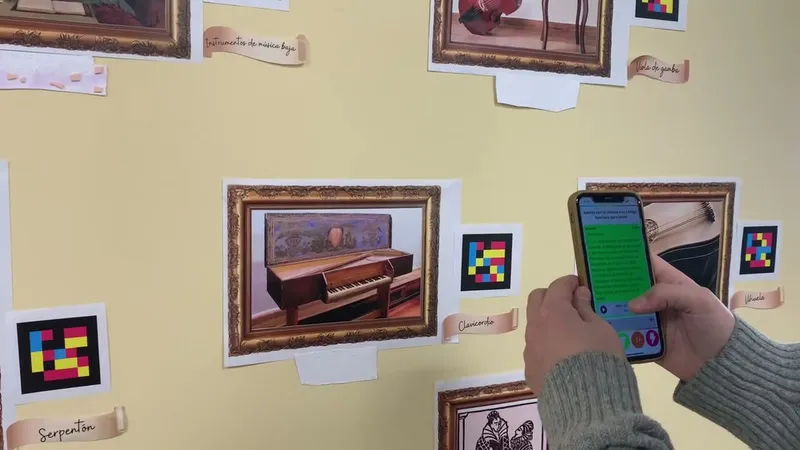
Next to every piece sits a NaviLens code and, on some, a tactile braille relief. The visitor's app reads the caption aloud and lets blind and low-vision pupils take the same tour as their classmates, with the same information.
§ Timeline
From the teaching unit to the permanent museum.
- Year 23/24
“Renaissance Music Museum” kicks off
The Music Department of IES Clara Campoamor Rodríguez frames the Renaissance unit as a permanent exhibition in the school hallway. Four large titles—Historical context, Sacred music, Secular music, Dance and Instruments—structure the tour along the yellow wall.
- Build
Paintings, frames and captions made in class
Every piece—from the Vitruvian Man and the Sistine Chapel to the clavichord, serpent, viola da gamba and the high and low Renaissance instruments—is printed, framed with golden cardboard frames and paired with a brown-ribbon caption and, in some cases, a tactile braille relief.
- NaviLens layer
A code next to every piece
A NaviLens code is stuck next to every painting. Aimed at with a phone, the app reads aloud the caption: title of the work, historical-musical context and curiosities discussed in class. Codes are detected from several yards away and enable an independent tour.
- Opening to the school
Welcome blackboard + instructions
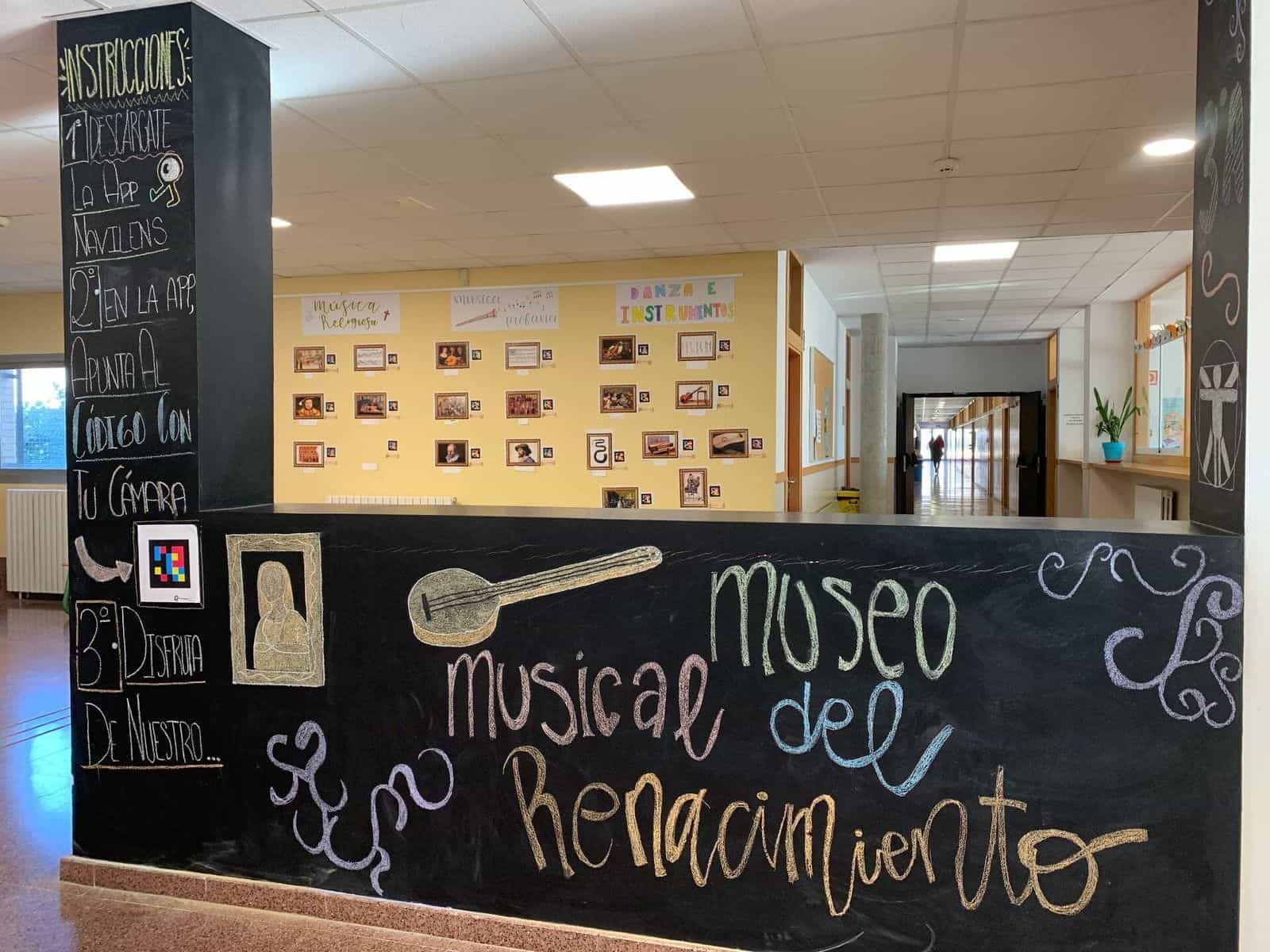
A column and counter painted as blackboards greet anyone entering the museum: on the left, chalked instructions—“1. Download the NaviLens app · 2. In the app, aim at the code with your camera · 3. Enjoy our Renaissance Music Museum”—with a test code stuck on the column; in front, the title “Renaissance Music Museum” with a chalked lute.
§ On the ground
The Clara Campoamor hallway, curated by its pupils.
§ Results
“Download the app, aim at the code and enjoy.”
Hallway
A school corridor turned into a permanent museum of Renaissance music
Audio + text + braille
Every piece has a written caption, NaviLens audio and, on some, tactile braille relief
Pupils = curators
Pupils choose works, write captions, build frames and link the codes
§ What they said
“Una de las maneras de trabajar los diferentes tipos de orquesta, diferentes tipos de música y el procedimiento adecuado para estas fechas quedaron plasmadas en una exposición de las mismas en el hall de nuestro instituto con toda la variedad que se puede contemplar.”
“I.E.S. Clara Campoamor — c/ Eugenio Lucas, s/n. Tipo: centro educativo IES. Página web: iesclaracampoamorrodriguez.es. El centro participa en programas educativos del Ayuntamiento de Zaragoza dentro de la red de Ciudad Educadora.”
§ And your campus?
Every classroom and clinic can be guided by voice.
Tell us about your facility, your journeys and your users. We’ll show you how NaviLens would make wayfinding easier.