Case study · Murcia, primary care
A health center that can also be read with your ears.
The Murcia Health Service launches the NaviLens pilot at the Floridablanca primary care center: color codes on doors, consulting rooms and posters readable from several yards, in 42 languages, easy-read and sign language.
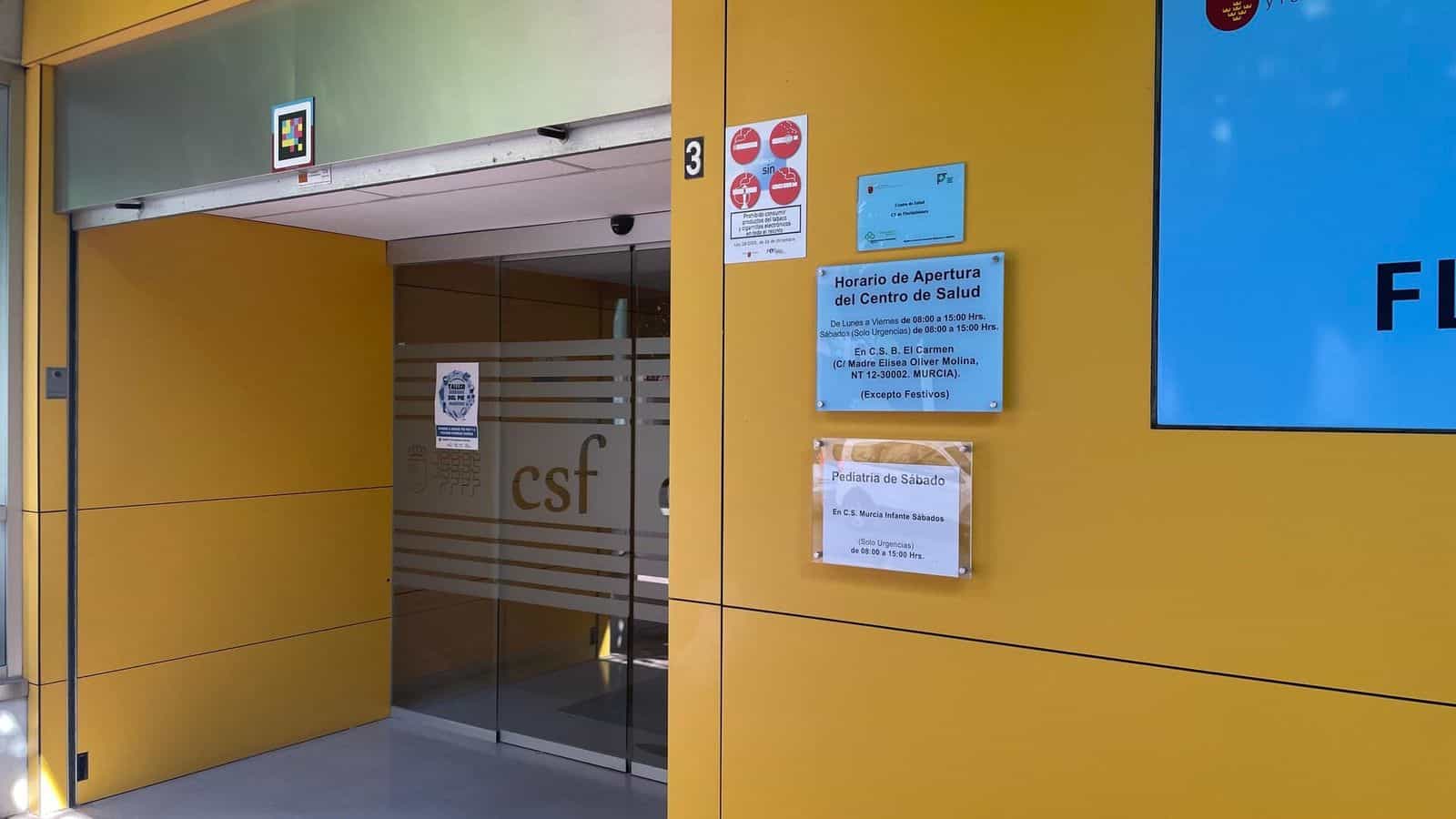
Floridablanca PCC · Murcia
Pilot primary care center of the Murcia Health Service
≈ €50,000
Estimated investment · FEDER Program Region of Murcia 2021-2027
All primary care
Progressive rollout across the Region's health centers and clinics
42 languages + sign language
NaviLens audio, easy-read, pictograms and sign language
The client
Murcia Health
Service
The Murcia Health Service (Health Department of the Autonomous Region of Murcia) runs the primary care centers and clinics serving the whole Region.
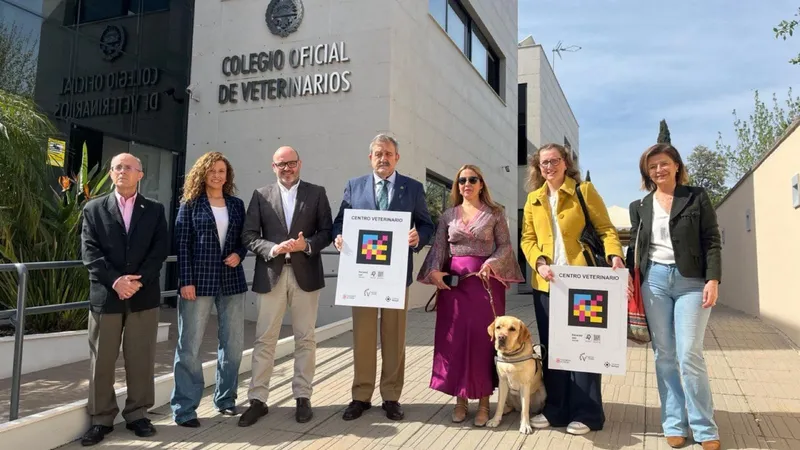
In July 2025, Health Minister Juan José Pedreño presented the NaviLens pilot at Floridablanca, co-funded by the FEDER Program of the Region of Murcia 2021-2027 with an estimated investment of around €50,000.
The plan extends the same signage to every health center and clinic in the Region, with a common implementation guide.
§ The challenge
Make sure any patient can find their way and understand the health center.
- 01
Reaching the consulting room is still the first obstacle
Health centers are complex buildings: several floors, similar corridors, numbered consulting rooms and specialized facilities. Blind, partially sighted or cognitively impaired patients have to ask staff again and again.
- 02
Much clinical information is not in an accessible format
Schedules, lab-test instructions, mental-health programs, health-card procedures or care for displaced patients are almost always published on A4 paper, without braille, easy-read or audio alternatives.
- 03
Universal service, homogeneous rollout across the Region
The Murcia Health Service's challenge was not to equip a single building, but to design a system replicable across every health center and clinic, with a common installation, responsibility and outreach guide.
§ The solution
A NaviLens code next to every label in the center.
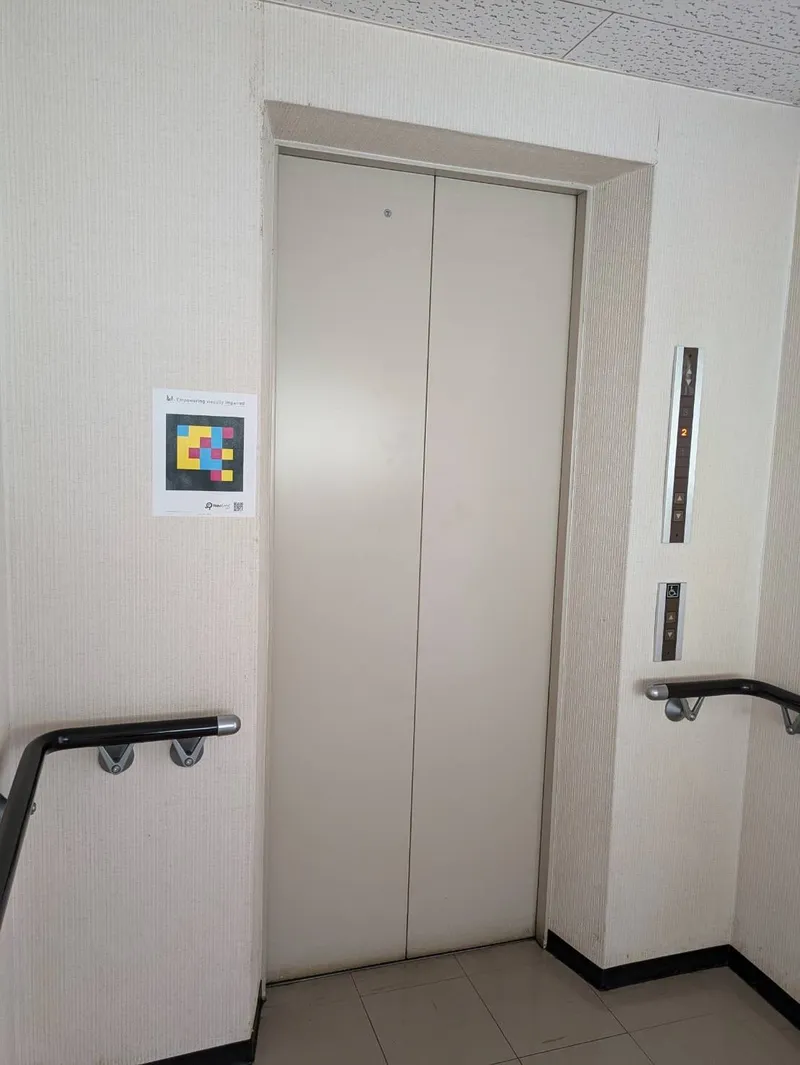
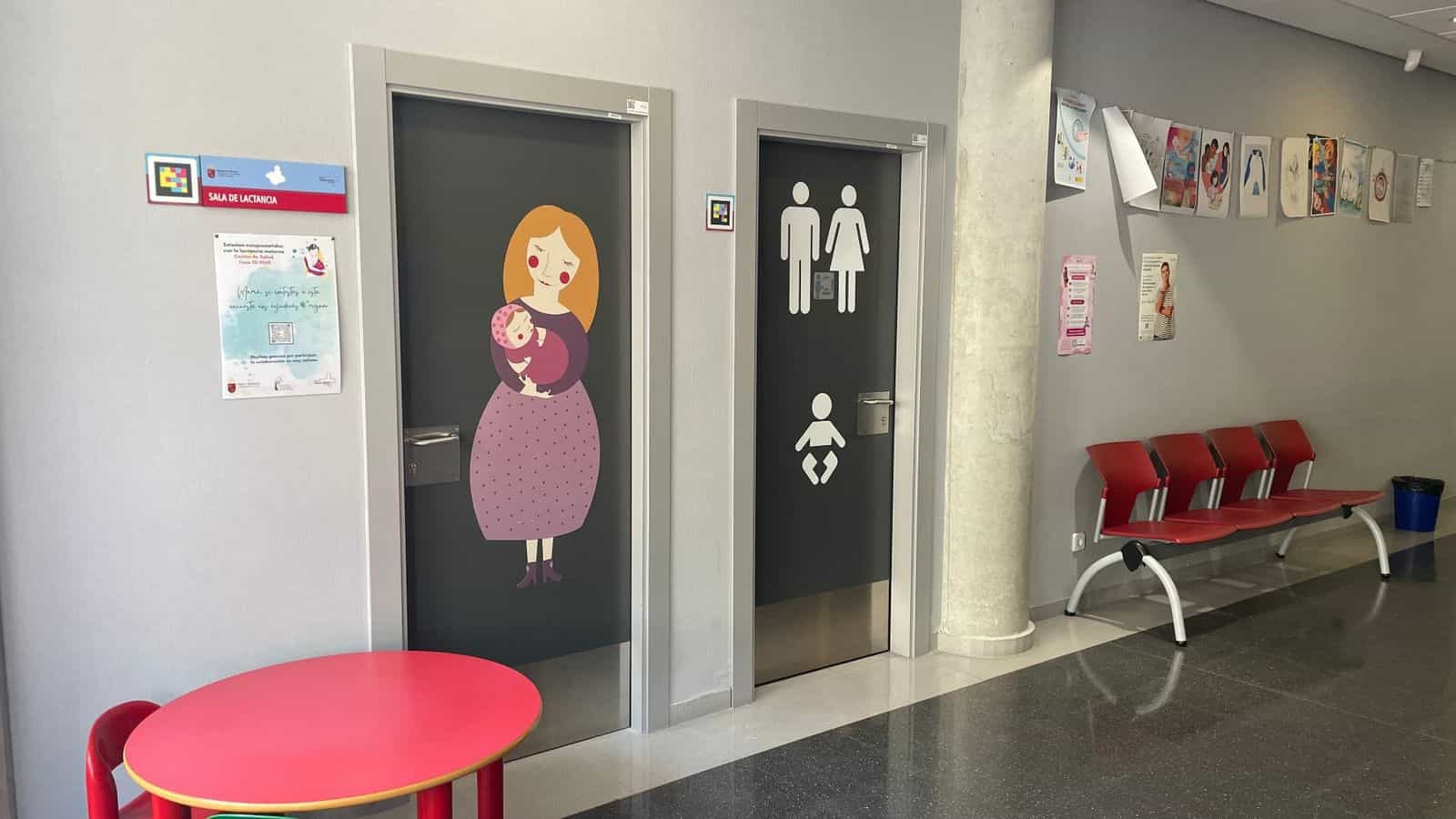
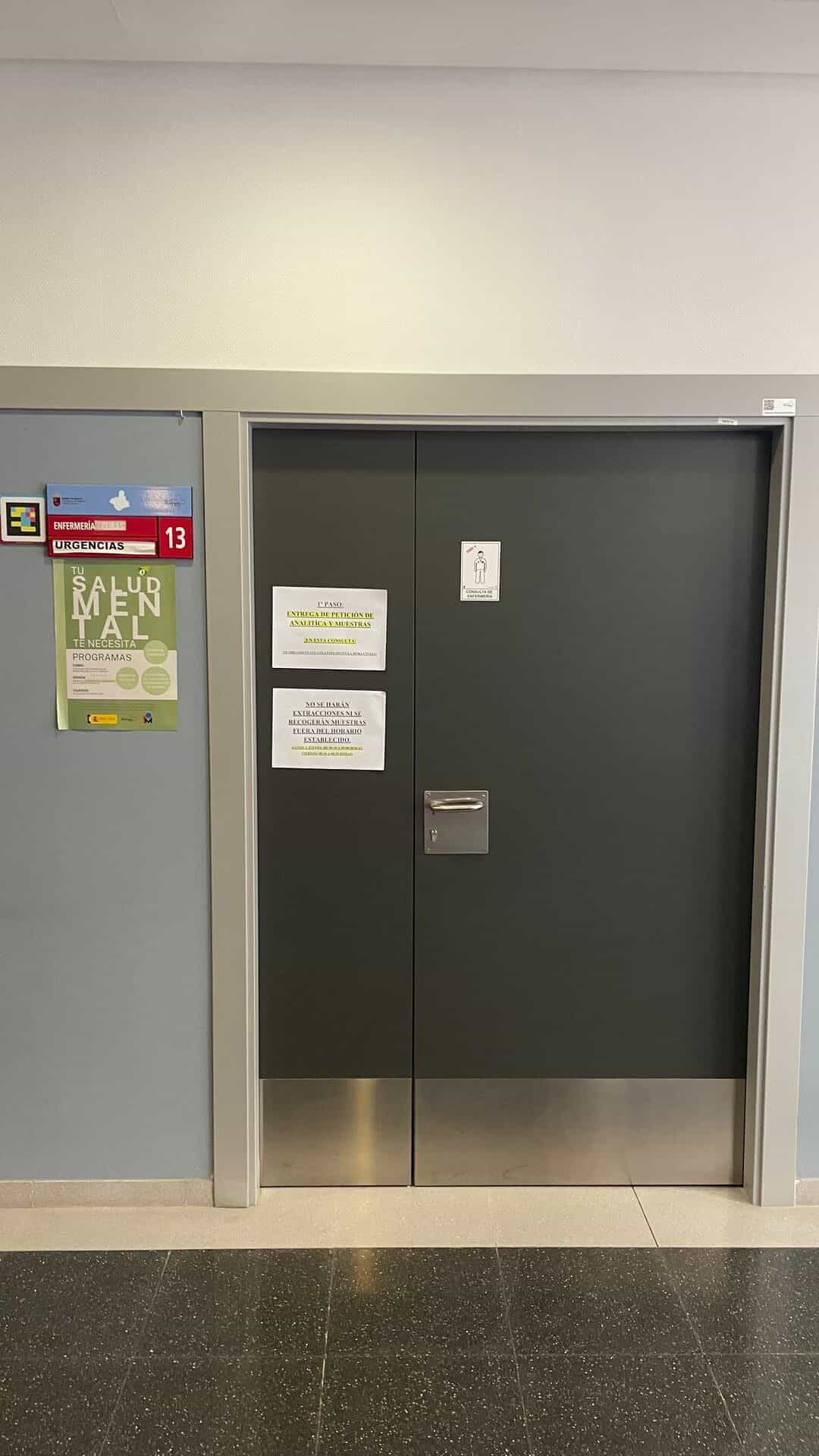
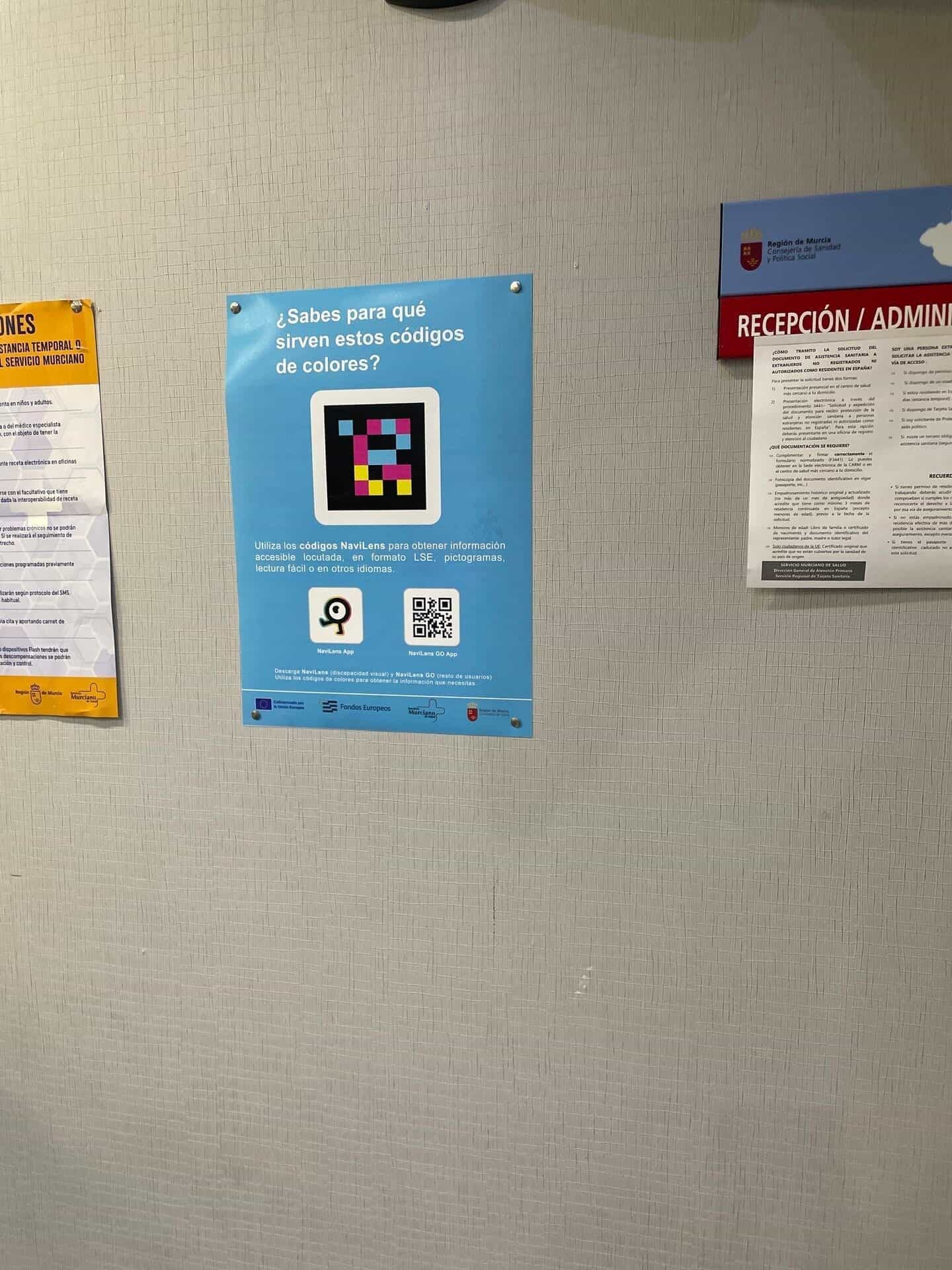
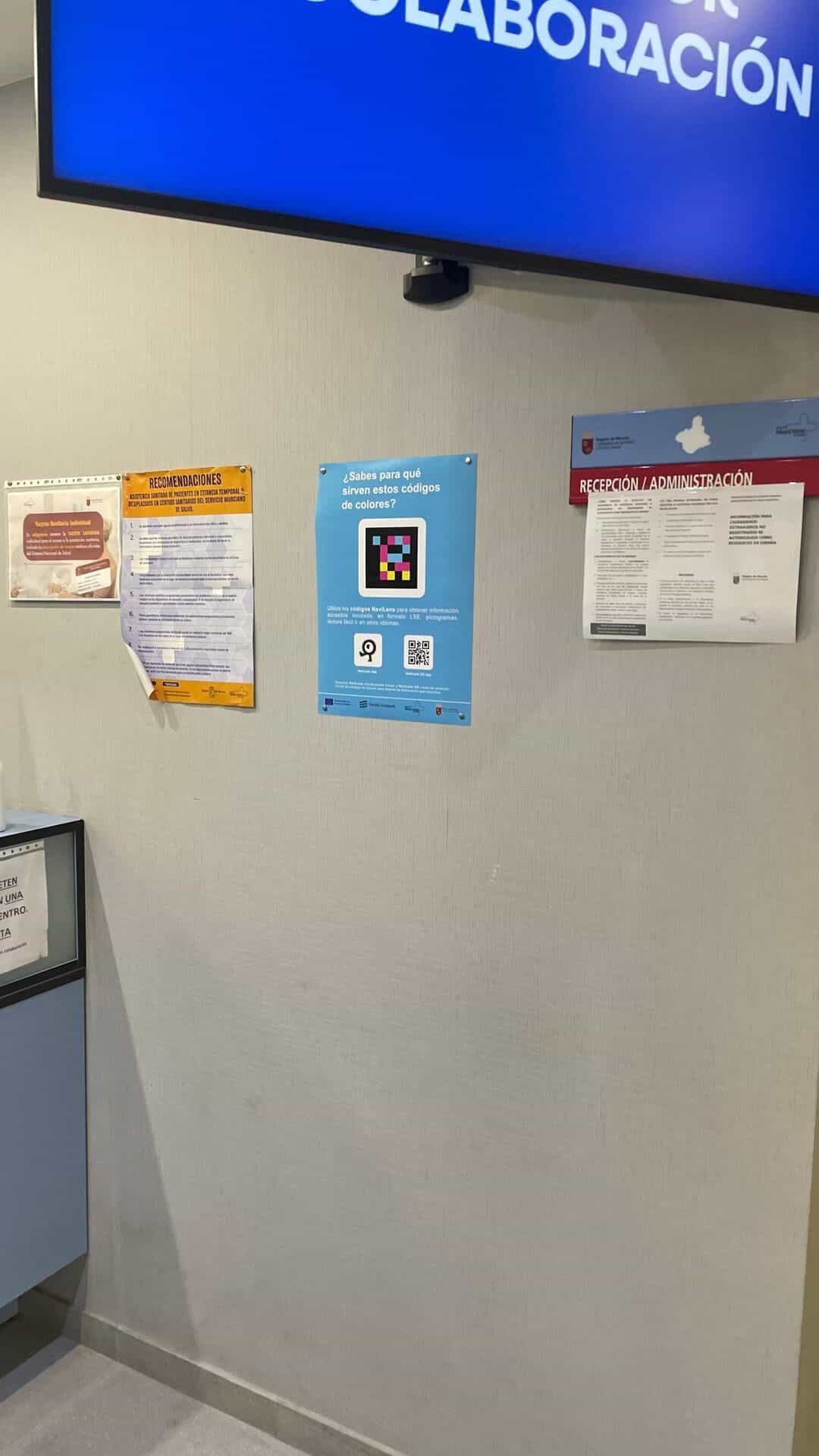
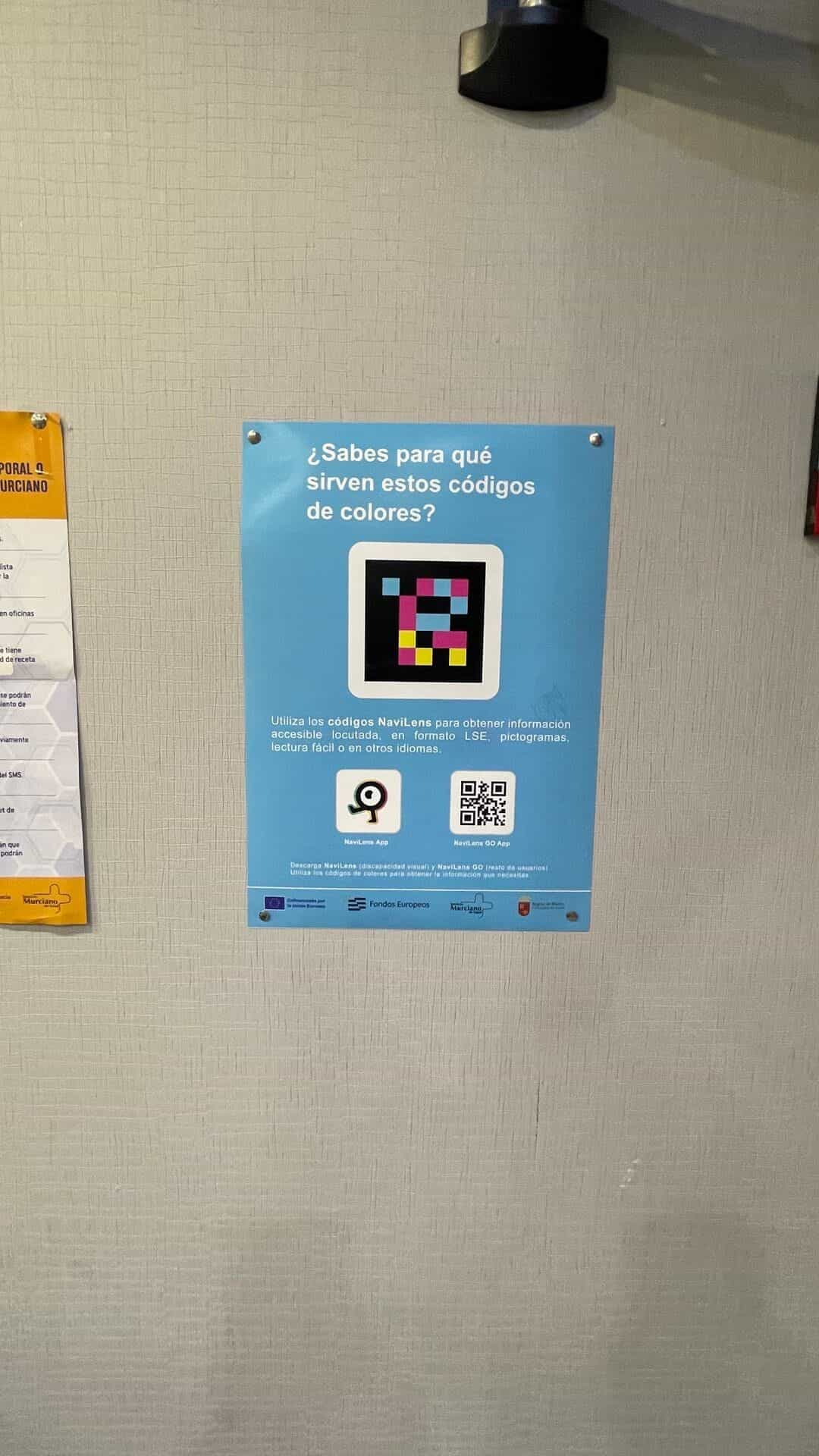
Every door at Floridablanca—reception, numbered consulting rooms, breastfeeding room, nursing, emergencies, restrooms—gets a NaviLens code next to its institutional label. The color tag on a black background is detected by a phone camera from several yards, with no need to focus.
Pointing the free NaviLens or NaviLens GO app, the patient hears the room's name, its purpose and practical instructions in narrated audio, easy-read text, pictograms or sign language.
The codes can be read up to 12 times farther than a QR, at angles up to 160° and in any light condition.
§ On video
A walk through Floridablanca PCC with the NaviLens codes in place.
§ The rollout
Room by room, an accessible health center end to end.
§ Timeline
From a Floridablanca pilot to all primary care.
- 2021-2027
FEDER Program of the Region of Murcia
The NaviLens accessibility project for primary care centers is co-funded by the FEDER Program of the Region of Murcia 2021-2027, with an estimated investment of around €50,000.
- Jul 2025
Pilot at Floridablanca PCC
Health Minister Juan José Pedreño presents the NaviLens system at the Floridablanca health center, installed experimentally on doors, rooms and information posters.
- Coming months
Extension to all primary care
The Murcia Health Service announces that every health center and clinic in the Region will carry NaviLens signage, with a common implementation guide.
§ Results
The same health center, now for everyone.
Mobility and independence
Blind and partially sighted patients reach reception, consulting rooms and services on their own
Information without barriers
Every NaviLens code offers narrated audio, easy-read, pictograms and sign language in a single sign
Replicable model
A common guide extends the same signage to every health center and clinic in the Region
§ And your campus?
Every classroom and clinic can be guided by voice.
Tell us about your facility, your journeys and your users. We’ll show you how NaviLens would make wayfinding easier.