Case study · Murcia · UMU · Education
An exhibition about diversity that also speaks.
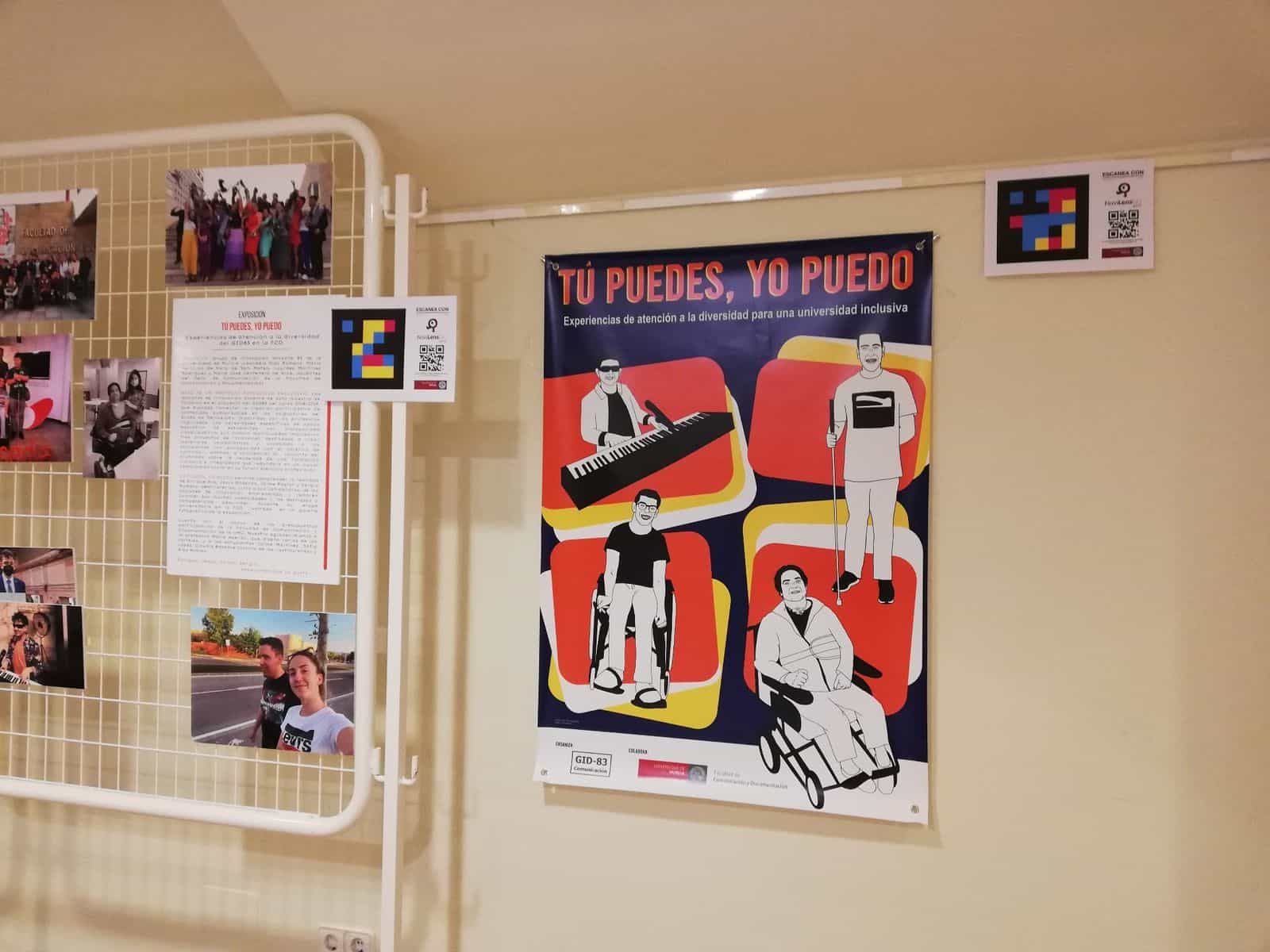
Since 2022, “You can, I can” has toured the University of Murcia with a NaviLens code next to every panel: the poster, the student profiles and the GID-83 podcast panels are read aloud on a phone without touching anything.
School of Communication · UMU
Original venue of the “You can, I can” exhibition
Dec 2022 → Dec 2023
Tour from the FCD to the María Moliner General Library
GID-83 · Communication
Teaching innovation group behind the project
1 code per panel
NaviLens on poster, student profiles and podcast panels
The client
GID-83 · School of
Communication · UMU
The Teaching Innovation Group 83 (GID-83) at the University of Murcia — Leocadia Díaz Romero, María Verónica de Haro de San Mateo, Lourdes Martínez Rodríguez and María José Centenero de Arce, lecturers at the Department of Communication — has worked since 2018-2019 on the participatory creation of accessible audiovisual content in the Journalism, Advertising and Audiovisual Communication degrees.
“You can, I can” gathers that journey: panels dedicated to Enrique Ros, Jesús Ródenas, Jaime Pastor and Sergio Romero—students with visual impairment, cerebral palsy, deafblindness and paraplegia—alongside the podcasts and curricular projects produced in their courses.
The exhibition premieres in December 2022 at the School's own building and moves in December 2023 to the foyer of the María Moliner General Library, coinciding with the International Day of Persons with Disabilities.
§ The challenge
Making the exhibition about diversity an exhibition for everyone.
- 01
A diversity exhibition that could not be inaccessible
“You can, I can” tells the story of Enrique Ros, Jesús Ródenas, Jaime Pastor and Sergio Romero — Journalism students with visual impairment, cerebral palsy, deafblindness and paraplegia. A show about diversity made of text-heavy panels could not leave out the very public it celebrates.
- 02
Standard university signage: lots of text, little voice
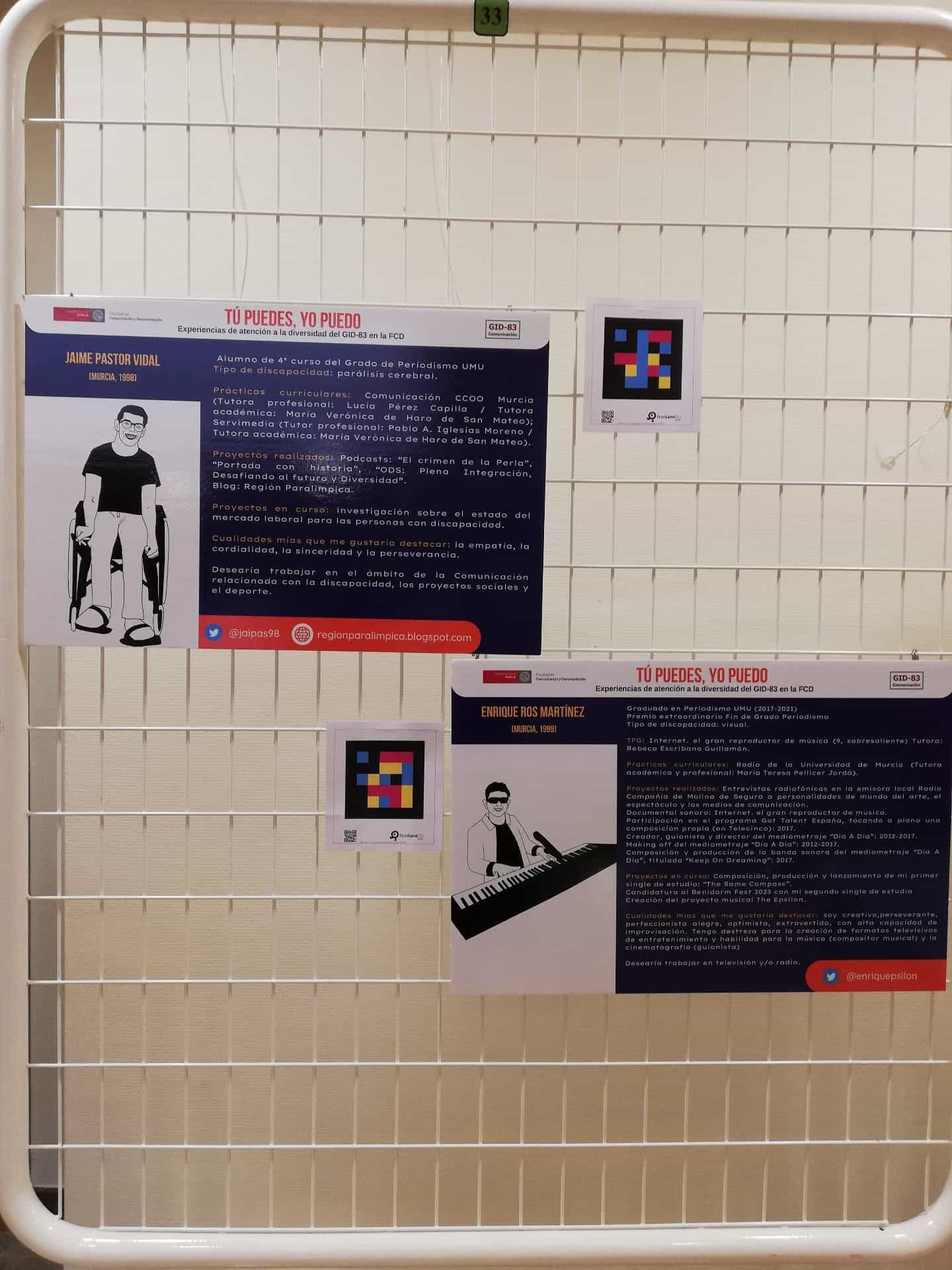
Each panel combines an illustrated portrait, biography, subjects, internships, podcasts and projects. For a blind or low-vision visitor, reading all that from the corridor or the library foyer is simply impossible without help.
- 03
A traveling exhibition that changes venue
The show opens at the School of Communication (Espinardo) in December 2022 and moves to the María Moliner General Library for the 2023 International Day of Persons with Disabilities. Its accessible signage had to travel with it, without works or wiring.
§ The solution
A NaviLens code next to every panel.
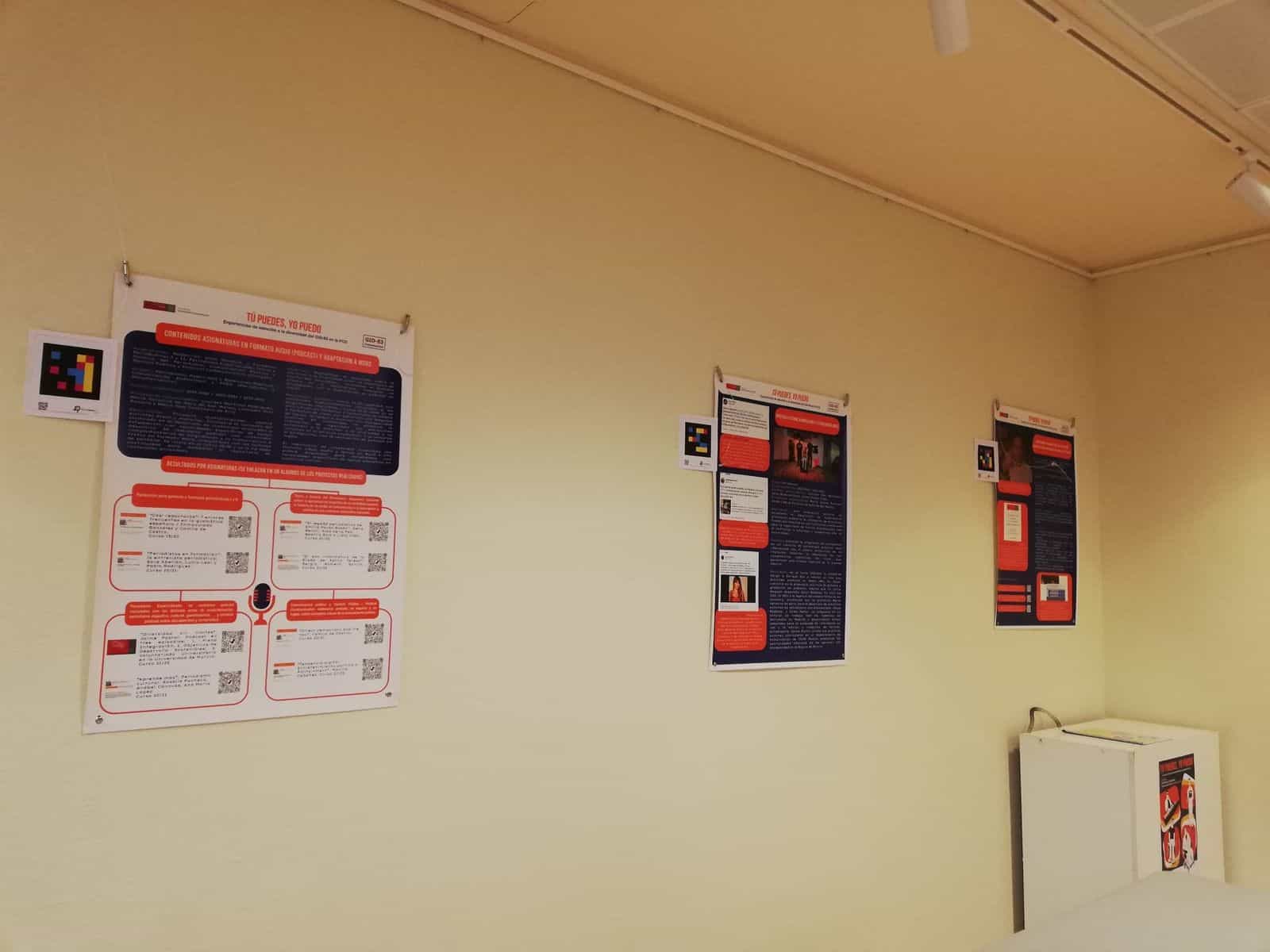
Every element on display—the official poster, the introductory caption, the four individual student profiles and the panels of podcasts and curricular practice—is paired with a rigid white card bearing its NaviLens code and the prompt “SCAN WITH NaviLensGO”.
Pointing the phone from the corridor, the app detects the code from several yards away and reads aloud the full content of the panel: name, type of disability, internships, completed projects and ongoing projects — without having to get close enough to read the small type.
The setup is fully reversible—cards clipped to the white mesh with two pegs, no works or wiring—so the show can move from the School of Communication to the María Moliner foyer without losing a single code.
§ The rollout
Poster, profiles and podcast panels: each with its own voice.
§ Timeline
From the School to the María Moliner foyer.
- Dec 2022
Premiere at the School of Communication
The GID-83 (Leocadia Díaz Romero, María Verónica de Haro de San Mateo, Lourdes Martínez Rodríguez and María José Centenero de Arce) opens the show at the FCD building on Espinardo Campus, next to doors 33 and onward, with panels fixed to white mesh stands.
- Dec 2023
Tour to the María Moliner Library
Coinciding with the International Day of Persons with Disabilities (3 Dec), the exhibition moves to the foyer of the María Moliner General Library (Espinardo Campus), open 8:30–21:00 until 15 December. Curated by María Verónica de Haro and Lourdes Martínez.
- 2024 →
A replicable model for other schools
The formula—poster + individual profiles + NaviLens codes on every panel—becomes a reference for accessible signage in future UMU exhibitions on inclusion.
§ What they said
What was said about the project.
“That the University of Murcia has become a reference in inclusion, ranking as the Spanish university with the highest ratio of students with disabilities, is a source of pride and responsibility.”
“The exhibition incorporates the new disruptive signage technology for people with visual impairment designed by the Murcian company NaviLens.”
§ Results
An exhibition that speaks for itself.
The show speaks for itself
A single scan triggers a voice that reads the whole panel: visual poem and voice coexist without getting in each other's way
Real visibility
The protagonists—students with visual impairment, deafblindness, cerebral palsy and paraplegia—access their own exhibition independently
Inclusive university
The UMU, with the largest ratio of students with disabilities in Spain, reinforces its model of teaching innovation with real, not decorative, accessibility
Sources · UMU Library (Dec 2023) · La Verdad (2 Nov 2022) · UMU Press Room · Accessible signage
§ And your campus?
Every classroom and clinic can be guided by voice.
Tell us about your facility, your journeys and your users. We’ll show you how NaviLens would make wayfinding easier.