Case study · NYISE, Bronx
New York's oldest school for blind children, now read aloud.
At NYISE's Pelham Parkway campus, NaviLens marks every crossing in the outdoor walkways and the entrance to each historic building. Students open the app, move their phone, and hear what's ahead, to the right, and how many steps away.
1831
Founded — one of the first US schools for blind children
K-12
Schermerhorn Program for students who are blind or have low vision
Pelham Pkwy
999 Pelham Parkway North, Bronx, NY — historic red-brick campus
42
Languages NaviLens speaks the information in
The client
New York Institute
for Special Education
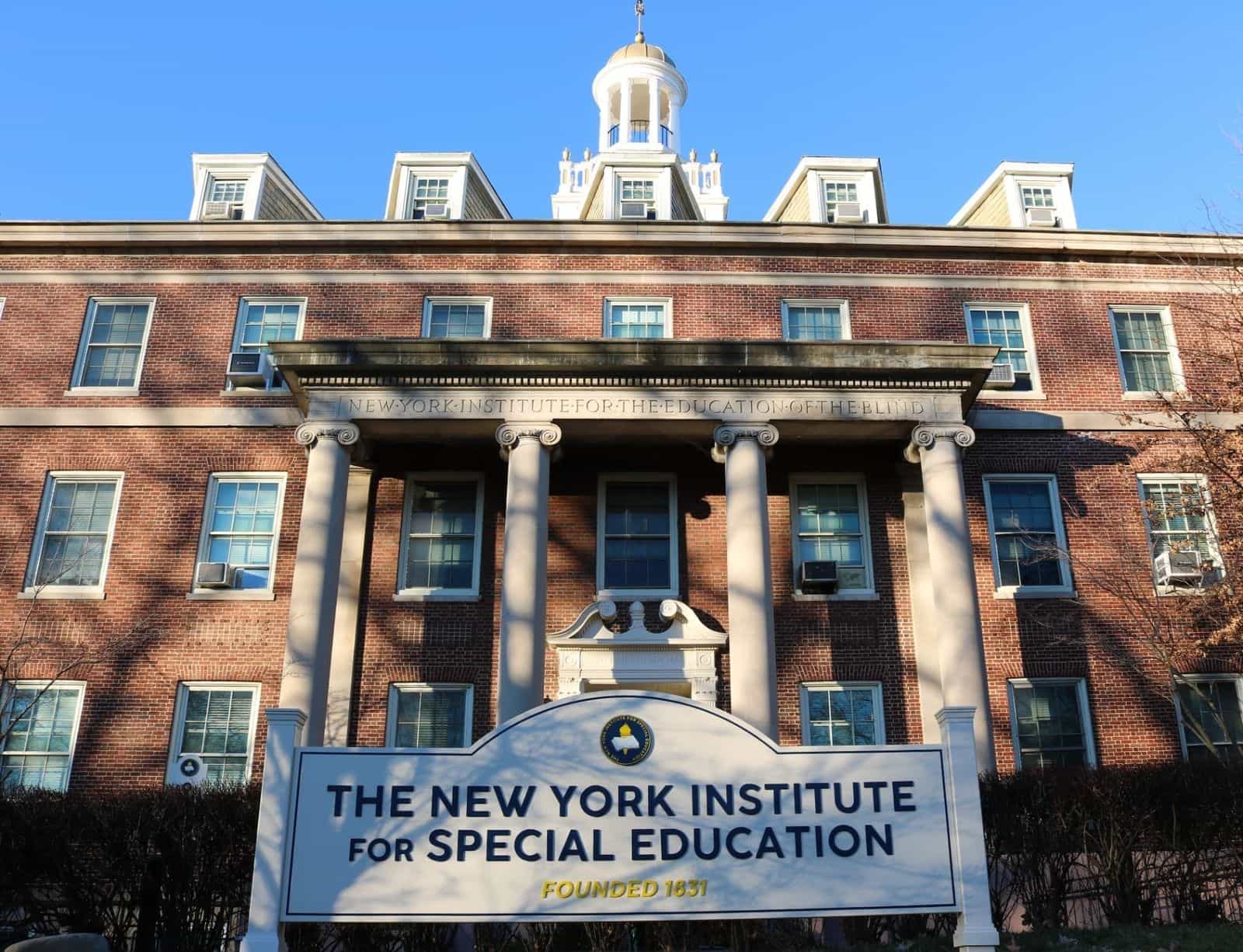
The NYISE is a 501(c)(3) non-profit founded in 1831 as the New York Institution for the Blind — one of the first schools in the United States for blind children. Today it serves K-12 students who are blind or have low vision, plus preschoolers with developmental delays.
Its campus is at 999 Pelham Parkway North, in the Bronx: a cluster of red-brick buildings linked by open porches and pathways, with dorms, dining (Pelham Greens), classrooms, a gym and the historic Schermerhorn Hall, home to the auditorium and library.
§ The challenge
So students can move around their own campus on their own.
- 01
A historic campus of open walkways
NYISE's Pelham Parkway campus is a set of red-brick buildings linked by porches and outdoor passages with handrails. Beautiful — and hard to read for those who can't see: every corner decides which dorm or hall comes next.
- 02
Buildings with proper names
Wood, Russ, Boorman, Akerly, Schermerhorn, Pelham Greens, Dining Room… Students have to memorize a map of names that isn't in braille at every crossing.
- 03
Students still learning to move
NYISE students aren't tourists: they're blind or low-vision children and teens practicing independence. Every well-signed crossing is an O&M (orientation & mobility) lesson they can do on their own.
Video without dialogue · image only
§ The solution
Directional signs that speak, at every crossing.
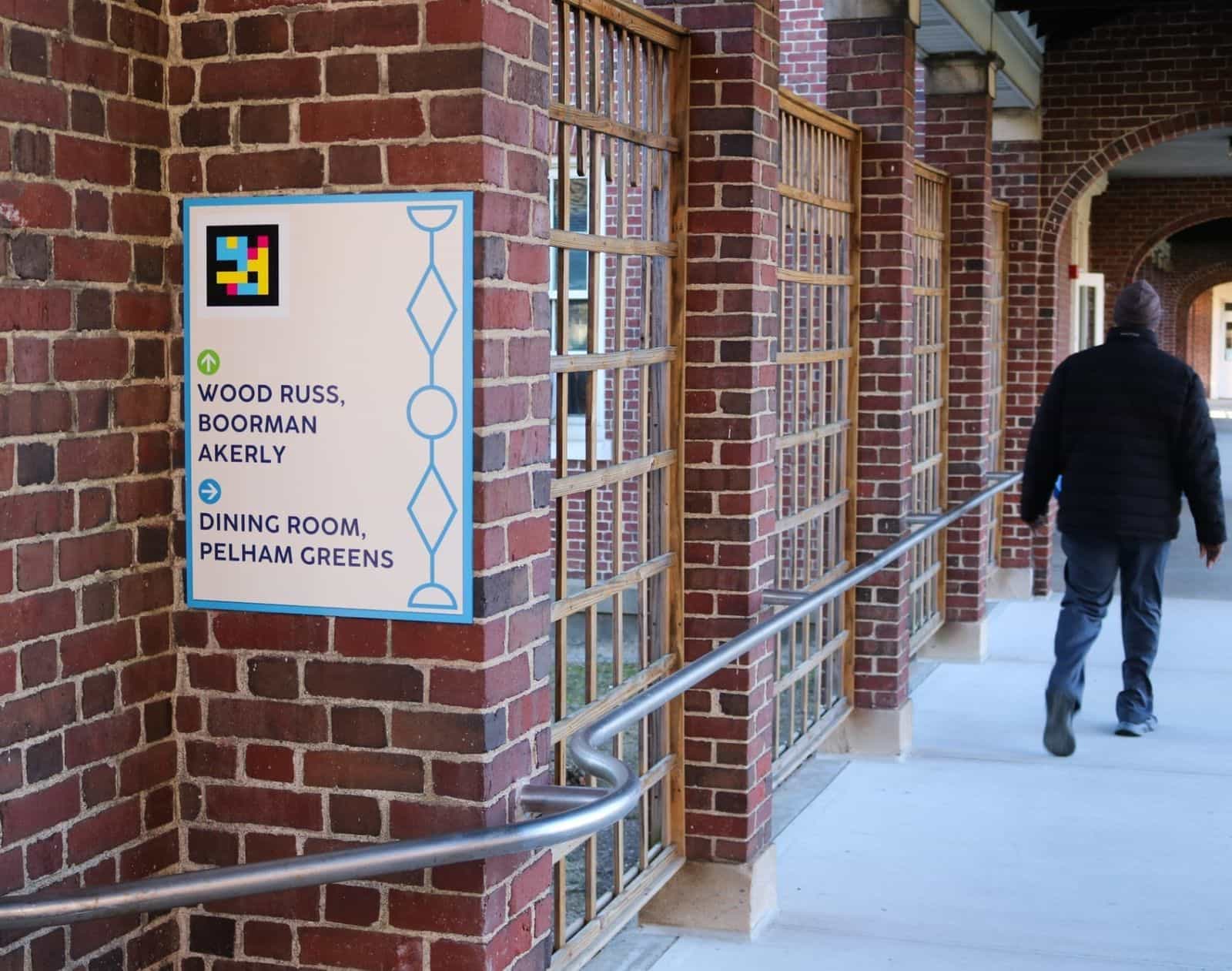
NYISE designed its own directional panels—cream background, turquoise frame, green and blue arrows—and placed them at every crossing of the outdoor walkways. Each panel carries a NaviLens code in the top corner next to the buildings it points to: Wood, Russ, Boorman, Akerly, Dining Room, Pelham Greens.
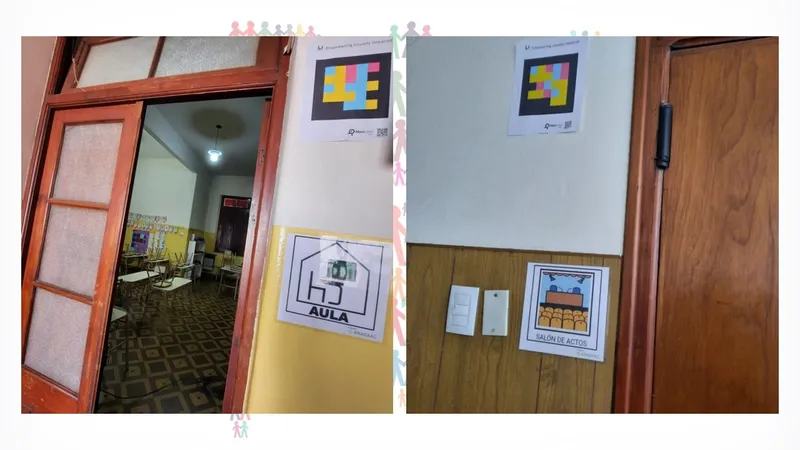
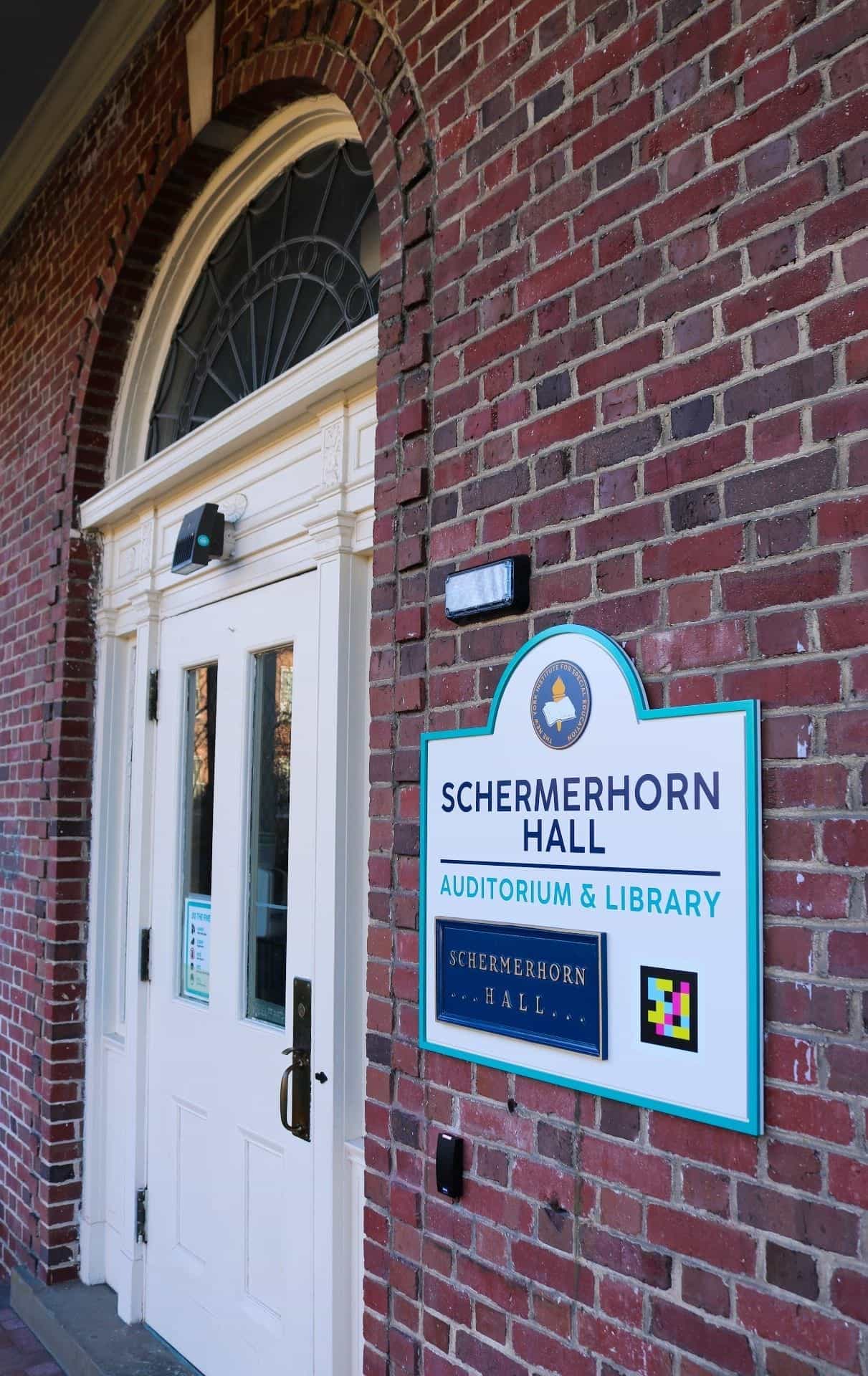
At the entrances of landmark buildings such as Schermerhorn Hall (Auditorium & Library), the code is integrated into the building plaque itself. Students open the app, aim from 2-10 feet away, and hear which building is in front of them.
§ Around campus
Outdoor walkways and buildings with names.
§ Timeline
From 1831 to a campus that reads itself out loud.
- 1831
New York Institution for the Blind is founded
Quaker Samuel Wood founds one of the first US schools for blind children. The institute is later renamed New York Institute for the Education of the Blind and, today, NYISE.
- 20th c.
Move to the Pelham Parkway campus (Bronx)
The institute settles in its current home at 999 Pelham Parkway North, in the Bronx: red-brick buildings with open walkways, gardens, dorms and the historic Schermerhorn Hall (auditorium and library).
- Today
NaviLens at crossings, buildings and facilities
NYISE places NaviLens codes at the campus's key crossings: directional panels pointing to Wood, Russ, Boorman, Akerly, Dining Room and Pelham Greens, plus plaques at the entrances of landmark buildings like Schermerhorn Hall (Auditorium & Library).
- Aligned with the NYC rollout
Same language as the MTA and the subway
NYISE students step out of campus into the Bronx and the subway, where the MTA is deploying NaviLens on Bx12-SBS buses, in subway stations and on the new R211 cars. From the school to the platform, the code speaks the same language.
§ What they said
What the institute says.
“The New York Institute for Special Education (NYISE) is a private, 501(c)(3) nonprofit, nonsectarian educational facility that provides quality programs for blind or low vision children and preschoolers with developmental delays.”
“Founded in 1831 as one of the first schools in the United States to provide an educational program for children who were blind or visually impaired.”
“The Schermerhorn Program serves K-12 students with blindness and visual impairments.”
§ Results
A historic school that blind students can navigate by listening.
Crossings spoken
Directional panels with a code + arrows for every building
Tagged buildings
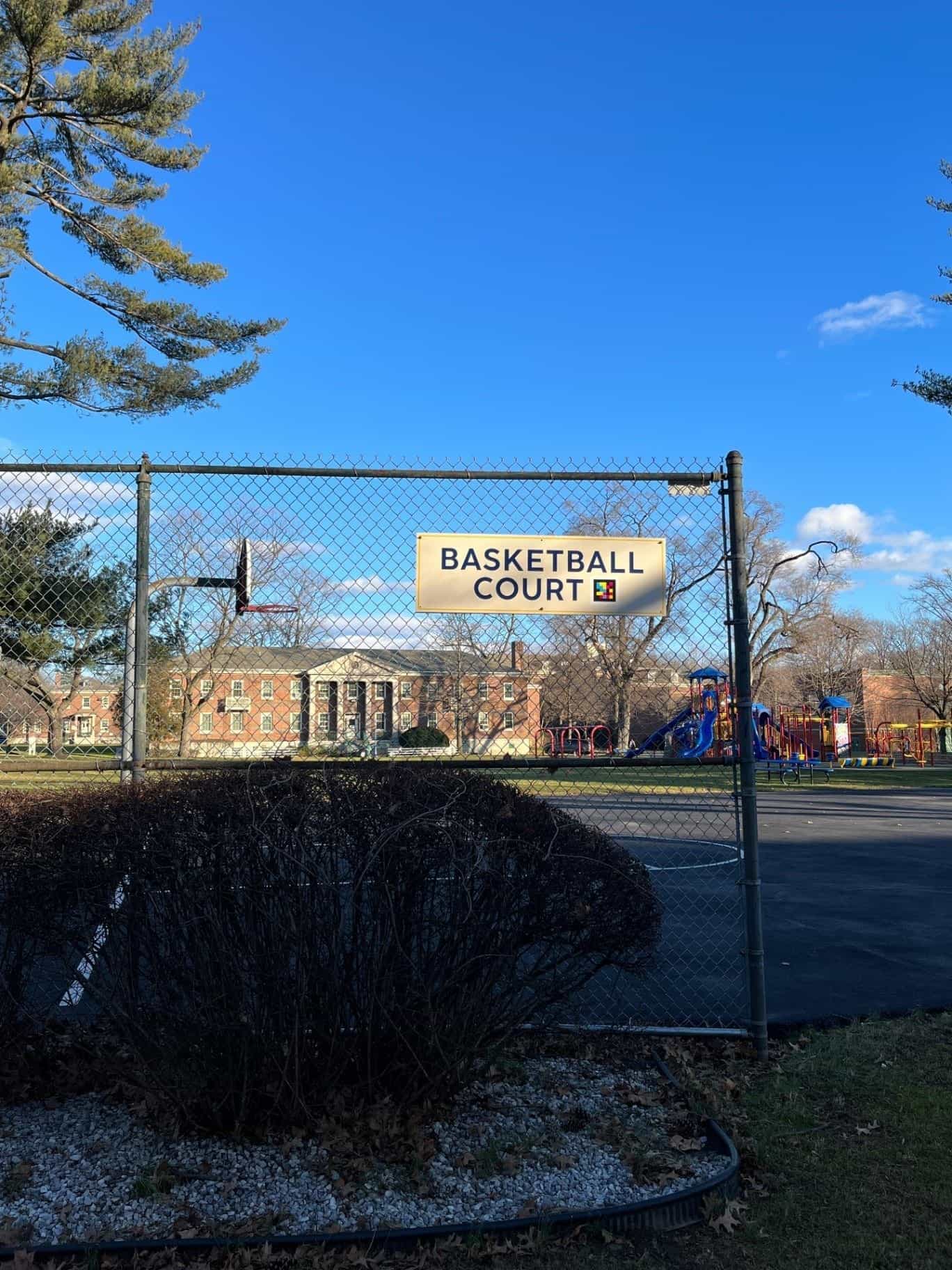
Schermerhorn Hall and other key campus spots, code on the plaque
42 languages
NaviLens reads info aloud — no need to aim precisely
§ And your campus?
Every classroom and clinic can be guided by voice.
Tell us about your facility, your journeys and your users. We’ll show you how NaviLens would make wayfinding easier.