Case study · Radboudumc, Nijmegen
A teaching hospital you can hear in 42 languages.
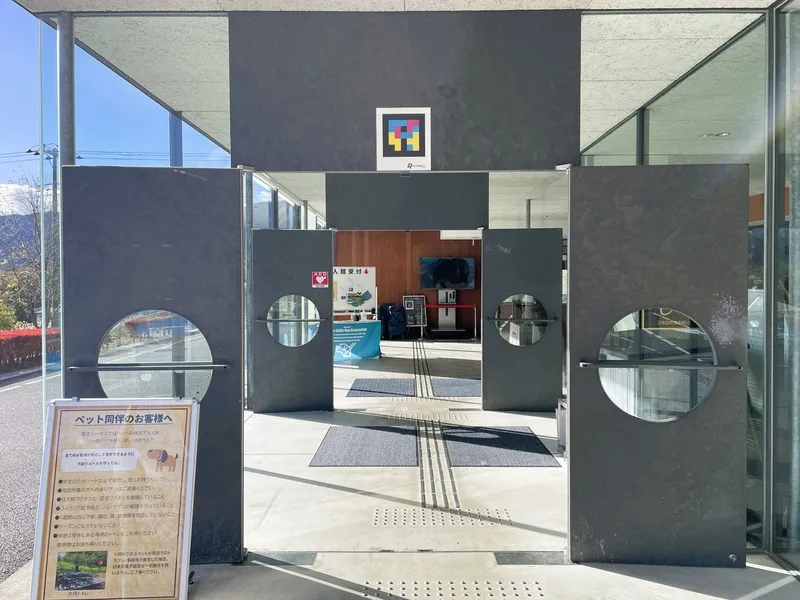
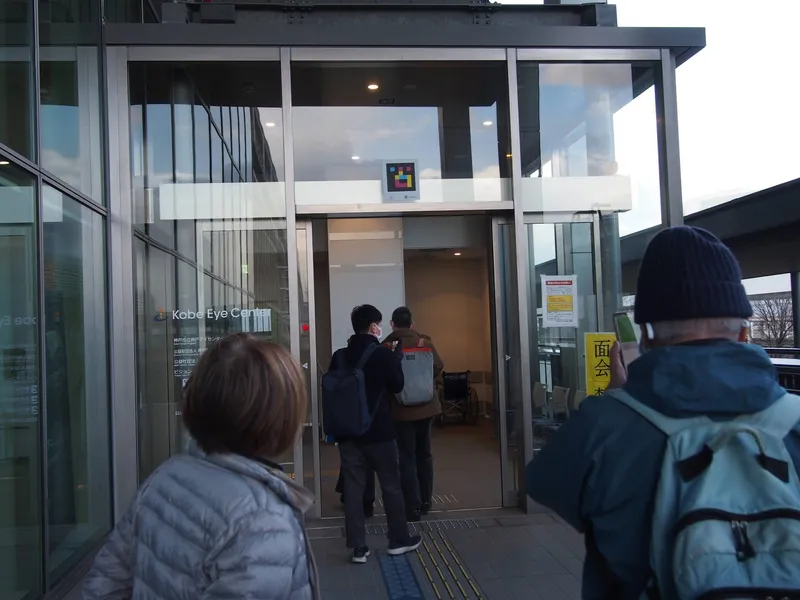
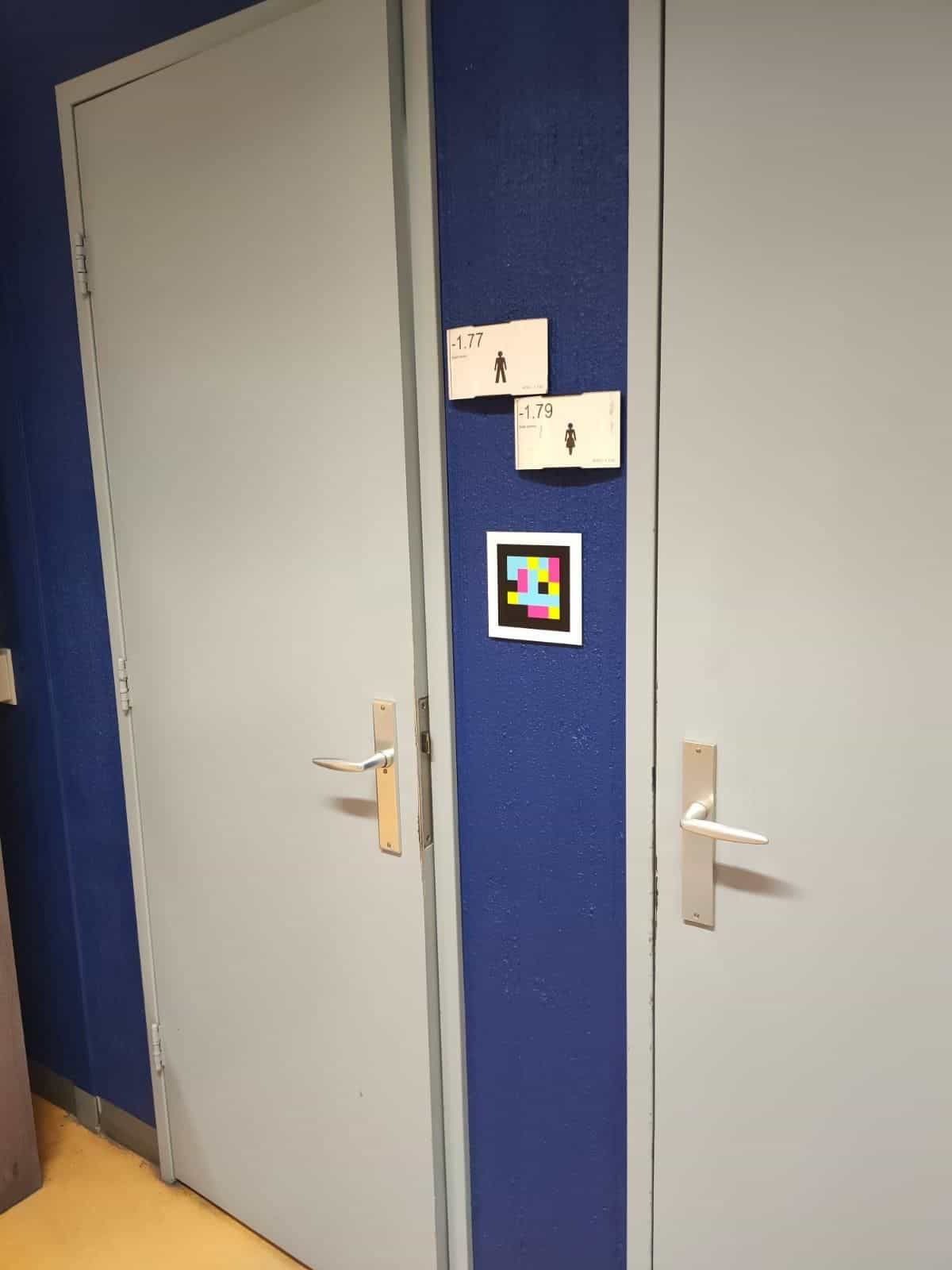
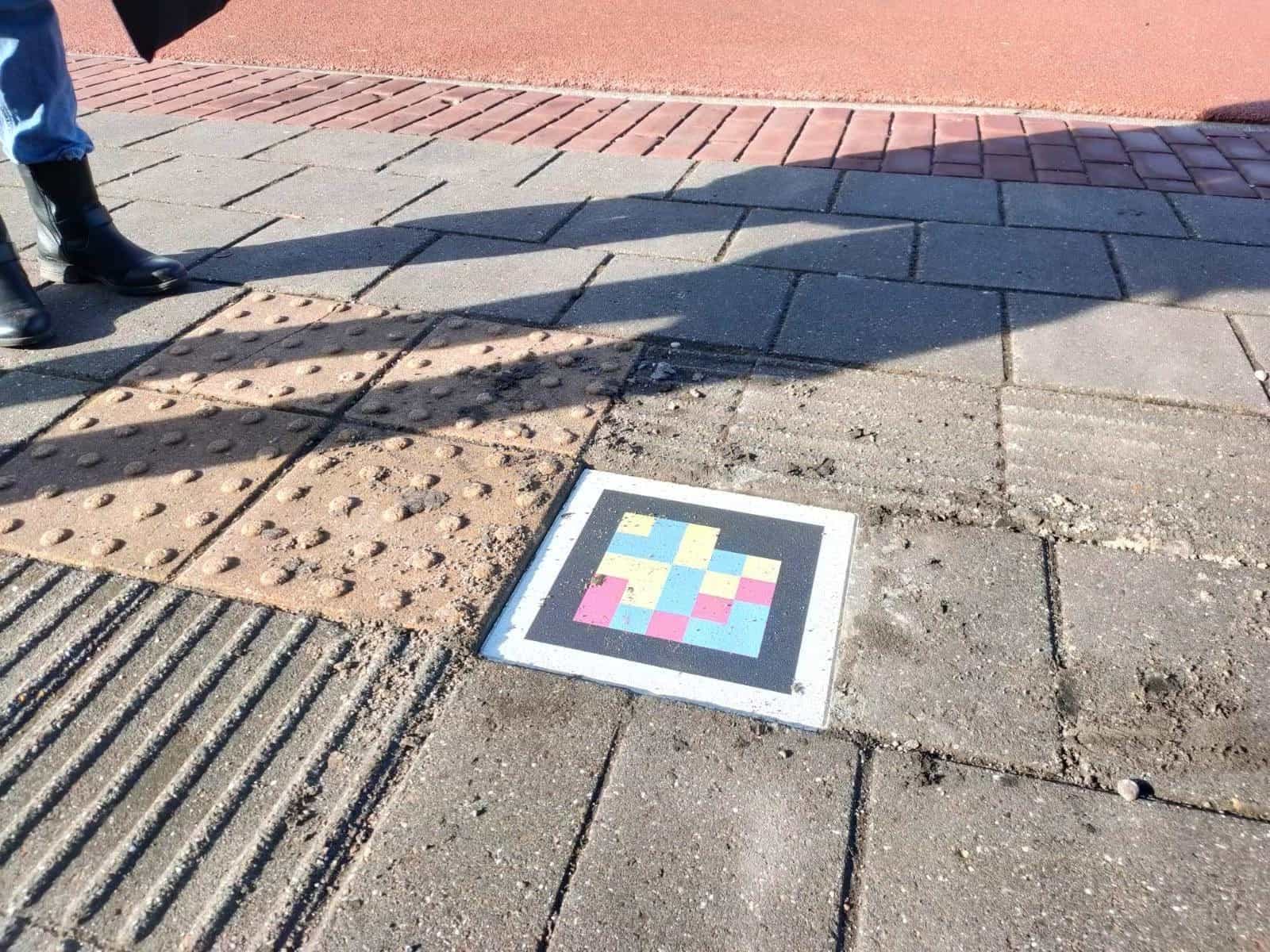
At the Radboud University Medical Center in Nijmegen, NaviLens tags every decision point: the tactile-paved entrance, the outpatient corridors, the heren / dames restrooms and every spot where signage is out of reach for low vision.
1,350
Beds at Radboudumc, a leading teaching hospital
12,000+
Staff on the Heyendaal medical campus (Nijmegen)
42
Languages in which NaviLens reads information aloud
12×
Greater detection distance than a standard QR
The client
Radboud University
Medical Center — Nijmegen
Radboudumc is one of the eight university medical centers in the Netherlands. Its campus in the south of Nijmegen combines teaching, research and patient care, with more than 12,000 staff and around 1,350 beds.
Universal accessibility is part of the center's DNA: ramps, elevators, outdoor tactile paving, painted routes on the floor and, above all, an explicit commitment that any patient—including one who can't see, can't hear or doesn't speak Dutch—can reach their appointment on their own.
§ The challenge
Letting patients find their way alone. Even if they can't read the signs.
- 01
A maze-campus, not a single building
Radboudumc isn't one block: it's routes, floors and sub-levels (-1.77, -1.79…) with numbered consulting rooms. For a blind or low-vision person, reading a sign at 1.5 m is impossible — and the appointment can't wait.
- 02
Signage only in Dutch
Heren / Dames, Houd voldoende afstand, room numbers… The hospital's signage is designed for fluent Dutch readers. International patients, refugees and people with low vision are left out.
- 03
Social distancing and painted floor routes
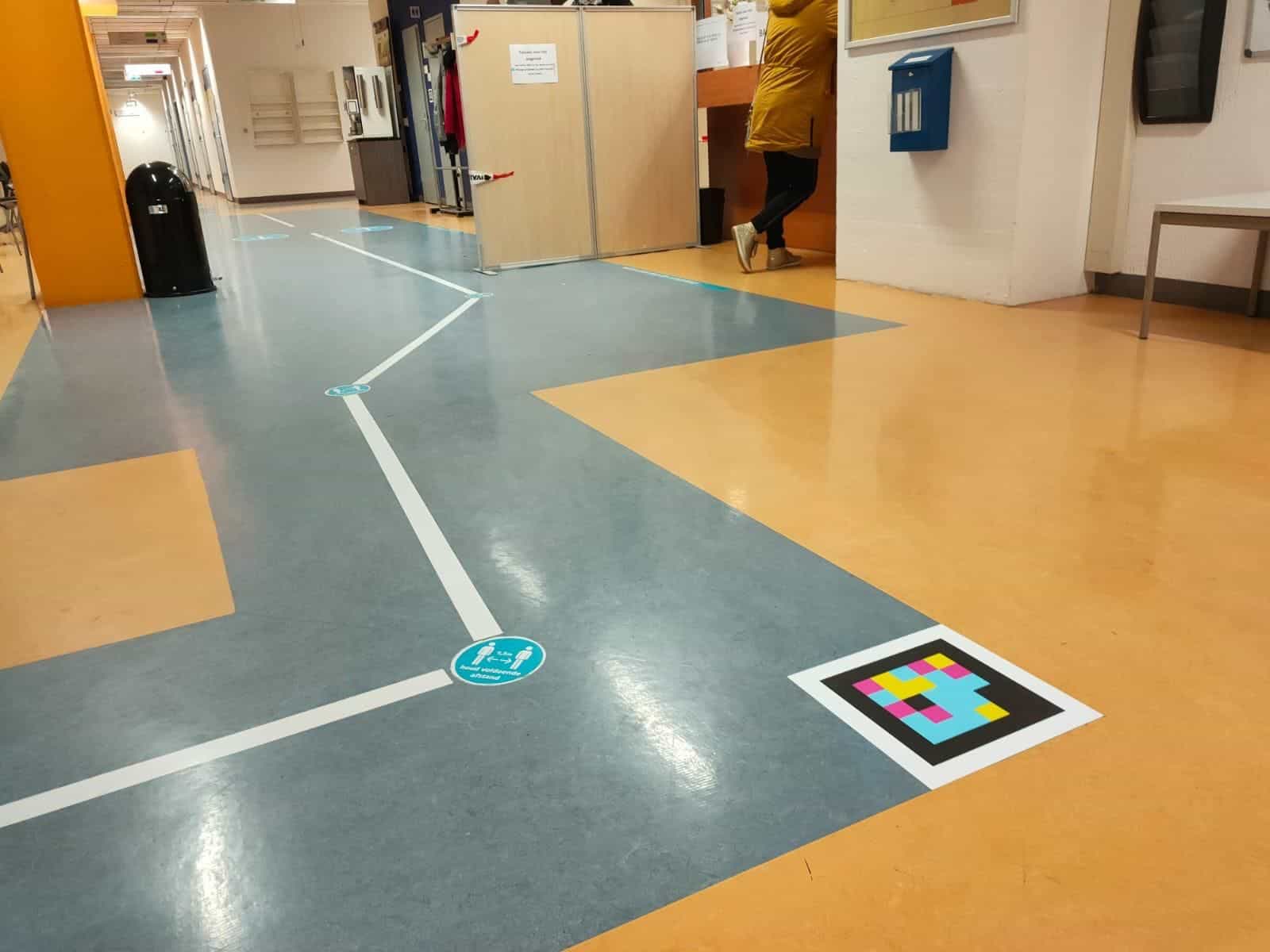
During COVID, Radboudumc painted separate routes on the floor (blue / orange) and 1.5 m distance markers. That helps sighted users — but for everyone else it adds yet another layer that needs to be spoken aloud.
§ The solution
A code at every decision point, read from several yards away.
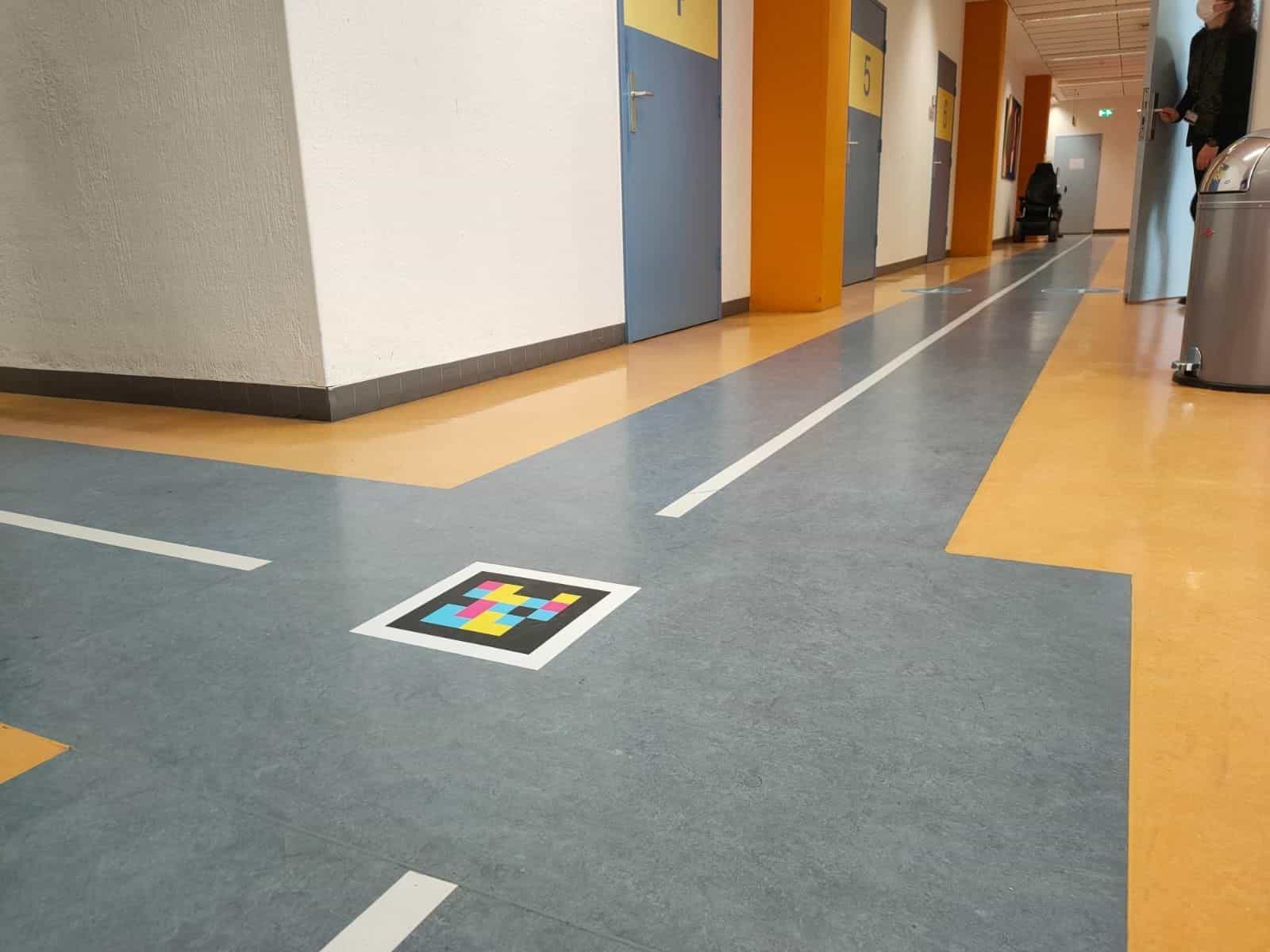
At Radboudumc, NaviLens codes live where patients make decisions: on the corridor floors—where routes cross and lead to numbered rooms—, on restroom and consulting-room doors, and on the outdoor tactile paving, right where the white cane begins to read the hospital entrance.
Just open the NaviLens app and move the phone: the code is detected from several yards away, with no need to aim, and the information is spoken in the patient's language — Dutch, English, Arabic, Ukrainian… 42 in total.
§ Inside the hospital
Corridors, restrooms and consulting rooms read aloud.
§ Outdoor access
Where the cane runs out, the code speaks.
§ Timeline
From COVID routes to an audible hospital.
- 2019
Radboudumc commits to universal accessibility
The Nijmegen academic center puts accessibility and person-centred design at the core of its care strategy, in line with its mission of "zorg dichtbij" (care close to everyone).
- 2020
Circulation redesign because of COVID-19
The hospital paints separate routes on the floor and 1.5 m distance markers ("Houd voldoende afstand"). A need emerges to convey that information in a non-visual way too.
- Feb 2021
NaviLens rollout at Radboudumc
NaviLens codes are installed at outdoor accesses, lobbies, outpatient corridors, restroom and elevator doors. The codes are read from several yards away with the phone's camera and speak the information in 42 languages, with no need to aim.
- Today
Voice-based bilingual wayfinding, with no installation
Patients and visitors with visual impairments move through the hospital while listening: "Outpatient corridor, rooms 5 and 6, 13 feet ahead", "Restrooms: heren on the left, dames on the right", "Exit to the outside, pedestrian crossing with tactile paving".
§ What they said
What the center and European documentation say.
“Radboudumc is een academisch ziekenhuis dat zich met onderwijs, onderzoek en patiëntenzorg inzet voor een gezonde, persoonsgerichte en duurzame zorg.”
“We willen dat iedereen — ook mensen met een visuele beperking — zelfstandig zijn weg kan vinden in het ziekenhuis.”
“NaviLens codes can be detected up to 12 times farther than a standard QR and don't need to be aimed at — ideal for blind users in complex indoor environments.”
§ Results
A teaching hospital you can walk through by listening to it.
Street → Room
Codes at every hop: tactile paving, entrance, corridor, door
Bilingual
NL + EN + 40 more languages, spoken by the NaviLens app
Contactless
Read from several yards with the phone's camera — consistent with COVID protocols
§ And your campus?
Every classroom and clinic can be guided by voice.
Tell us about your facility, your journeys and your users. We’ll show you how NaviLens would make wayfinding easier.