Case study · Madrid
The school where the theatre is also heard from the door.
Madrid's Royal Higher School of Dramatic Art— the Community of Madrid's higher-education center on Avenida de Nazaret—embeds NaviLens codes at its main entrance, on the doors of its stage halls and across the “Somos ASEPAU 2025 · Accessibility in the performing arts” exhibition.
Av. Nazaret 2
Madrid · Retiro district · Niño Jesús
Higher-education center
Community of Madrid · Department of Education
Lorca · Valle-Inclán halls
Stage spaces open to the public
ES · EN · 42+
Multilingual voice in the language of the phone
The client
RESAD
Community of Madrid · Department of Education
The Royal Higher School of Dramatic Art is the Community of Madrid's higher-education center for Dramatic Art. It teaches the higher studies in Acting, Stage Direction & Dramaturgy and Set Design, and regularly opens its García Lorca and Valle-Inclán halls to the public with productions, readings and final-year projects.
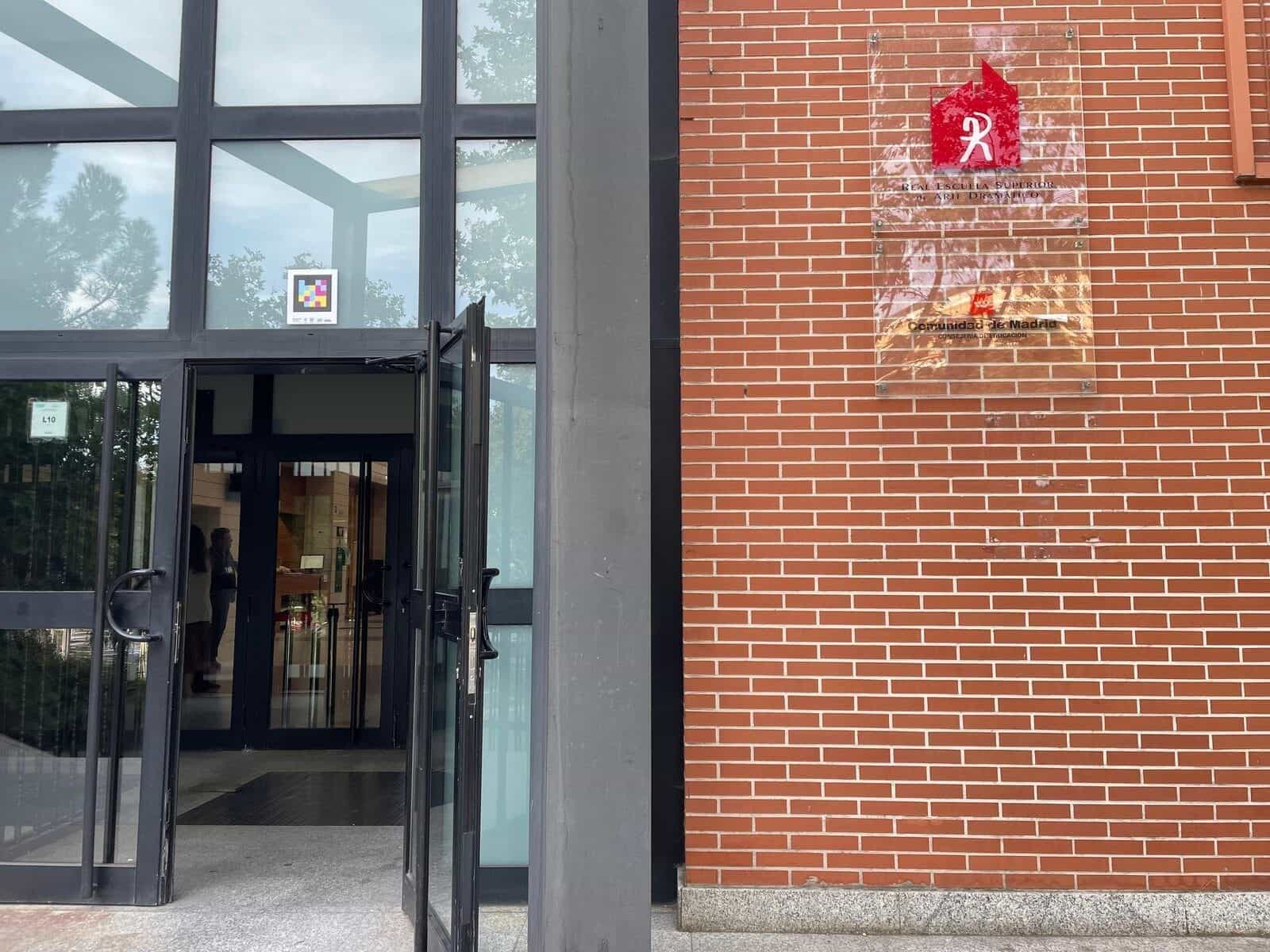
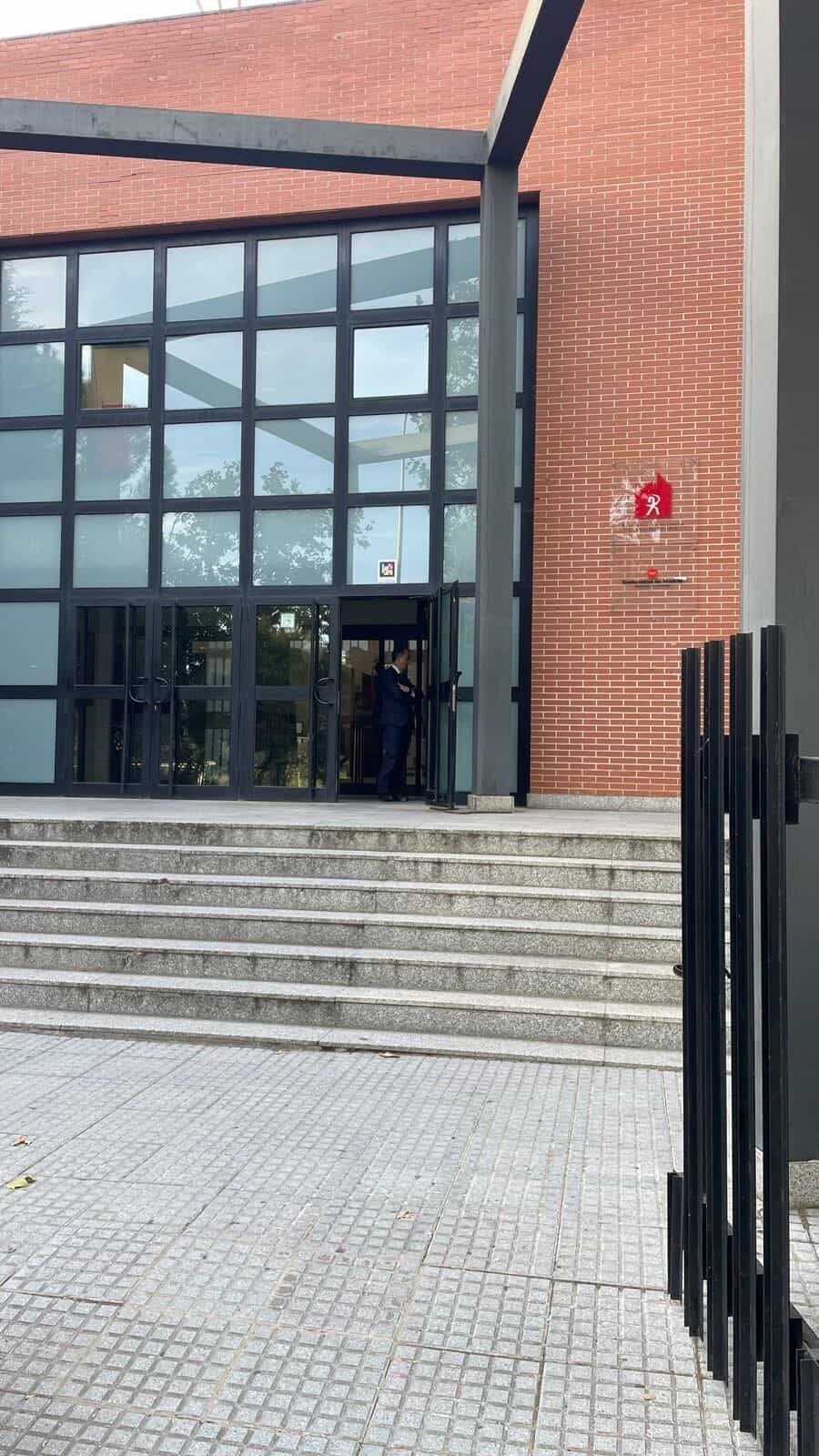
The building, of exposed brick and large glazed panels, stands on Avenida de Nazaret 2 (Retiro · Niño Jesús). The school has long applied accessibility features to its productions—adapted subtitling, stage walk-throughs, easy-read programs—and now adds a voice-orientation layer for the physical spaces and its internal communication.
On top of the usual signage, NaviLens lets any visitor—students, faculty, audience—hear aloud, in the language of their phone, where they are, which hall they are facing or what each panel of an exhibition is about, without having to lean into the sign.
§ The challenge
Making accessibility something to teach and use.
- 01
A school that is also a public theatre
RESAD is not just a classroom: it programs open performances in the García Lorca and Valle-Inclán halls and welcomes first-time spectators. For a person with visual impairment, identifying the correct entrance between the glass cube, the brick façade and the side accesses was the first challenge of the visit.
- 02
Finding the right hall and door
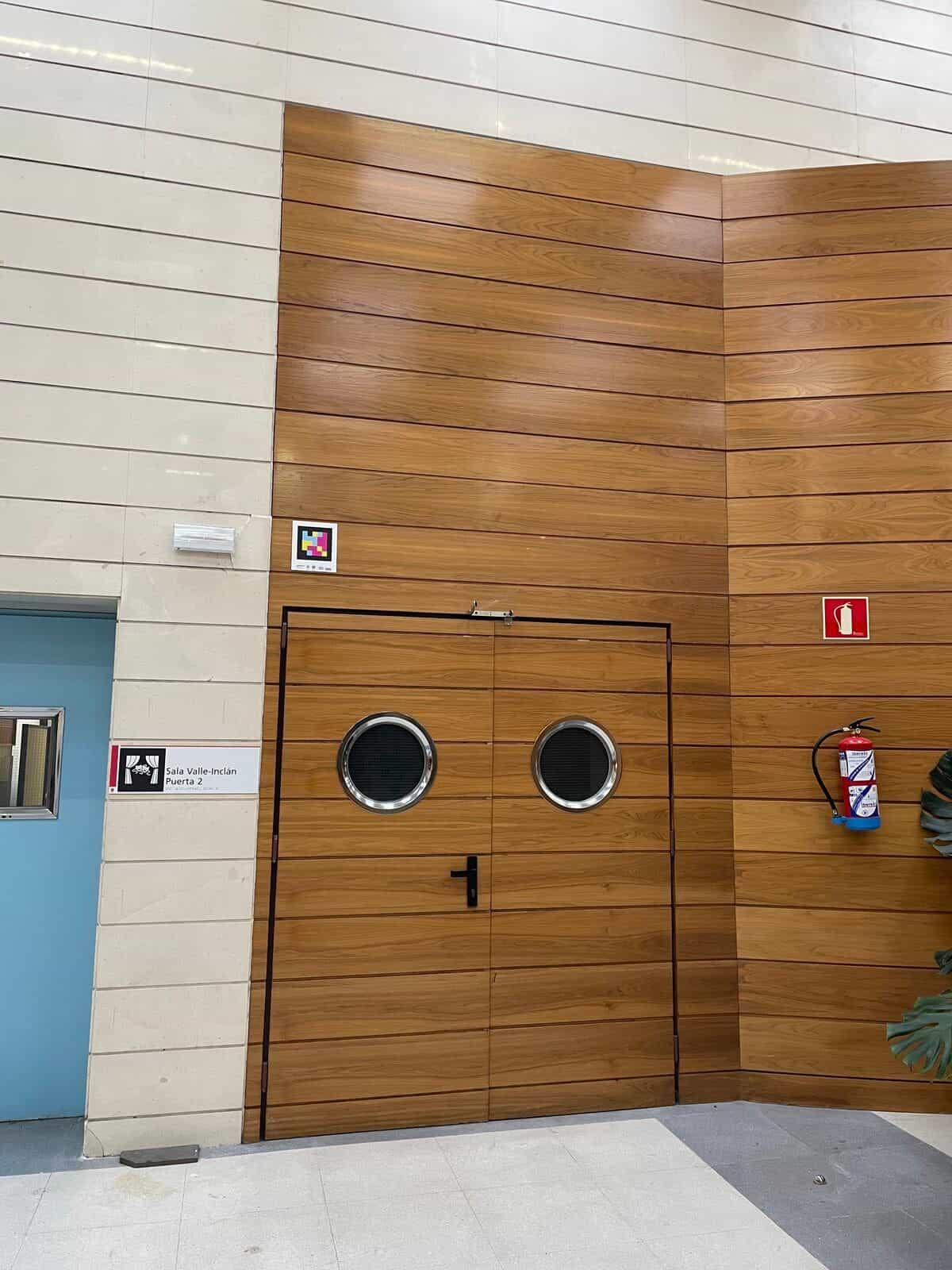
Once inside, the lobby branches into corridors leading to the different halls and classrooms. Reaching “Sala Valle-Inclán · Door 2” independently—and not behind a companion—required an audio information layer over the physical signs.
- 03
Talking about stage accessibility with the students
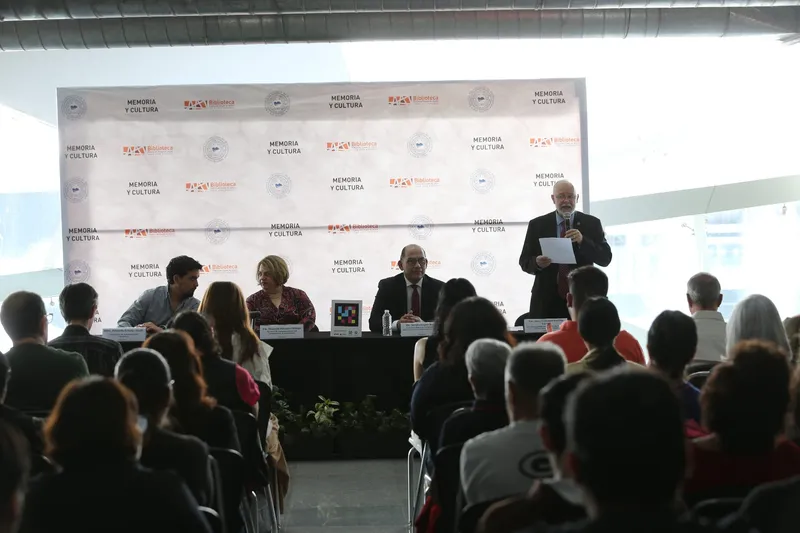
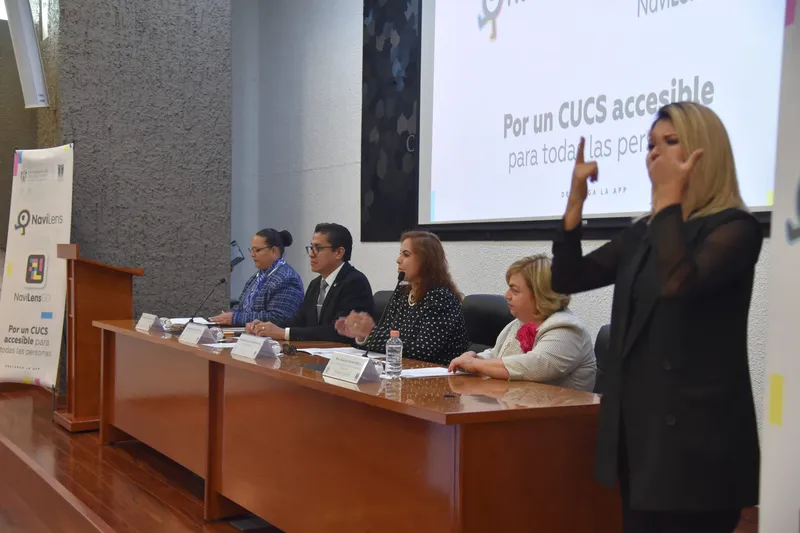
RESAD trains the future directors, playwrights and performers. The “Somos ASEPAU 2025 · Accessibility in the performing arts” exhibition, installed in its corridors, needed its panels—dense in text and image—to be listenable without straining the eyes on the poster.
§ The solution
Codes on the door, on the sign and on the panel.
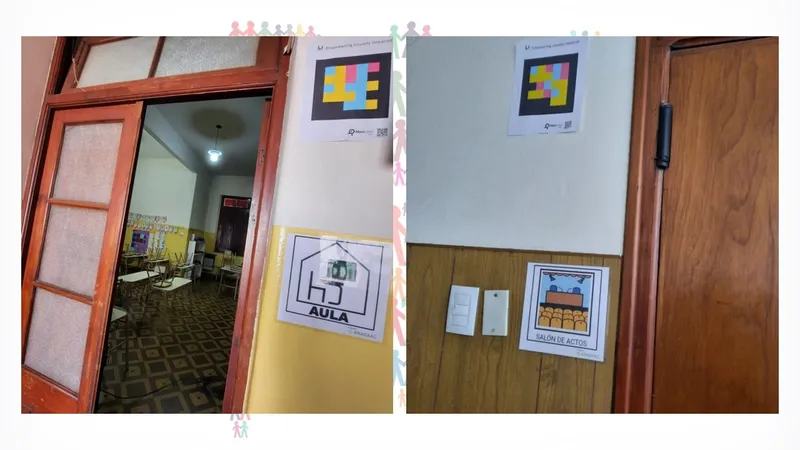
RESAD installs NaviLens codes in three distinct layers. Building access: a framed diamond on the glass cube of the main lobby, identifiable from the street. Stage halls: next to the Sala Valle-Inclán and Sala García Lorca signs, announcing the hall's name, the door number and the day's performance. Internal communication: on every panel of the “Somos ASEPAU 2025 · Accessibility in the performing arts” exhibition.
The visitor opens NaviLens or NaviLens GO and, with a sweep of the phone from several yards away and without aiming, hears aloud—in the language of their phone—which building they are entering, which hall they are facing or the full content of the sign.
It's the same idea the school applies on stage—adapted subtitling, stage walk-throughs, easy-read programs—transferred to architecture: no visitor now has to ask someone else for help to find their hall.
§ RESAD inside
From the glass cube to the tactile table.
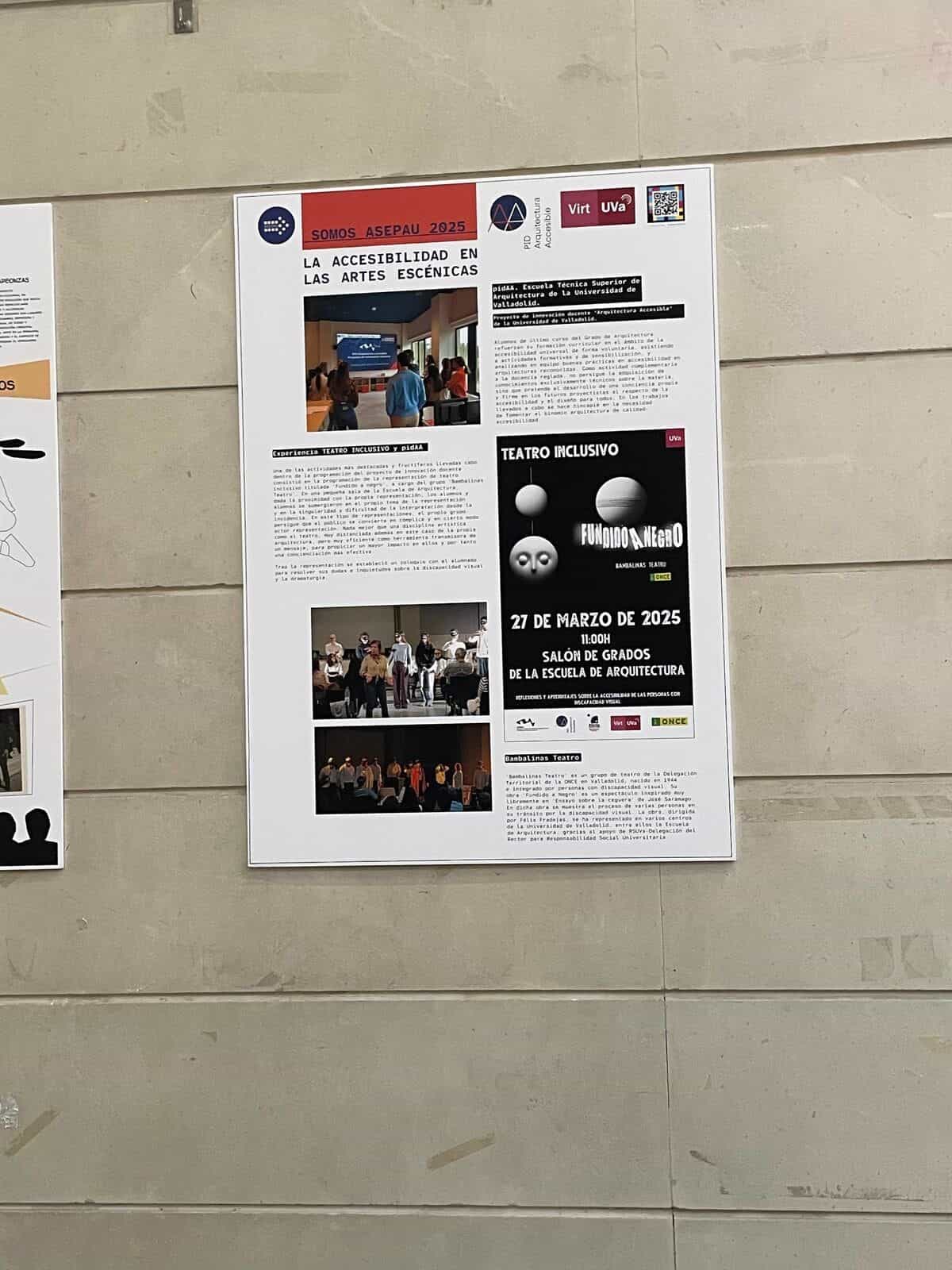
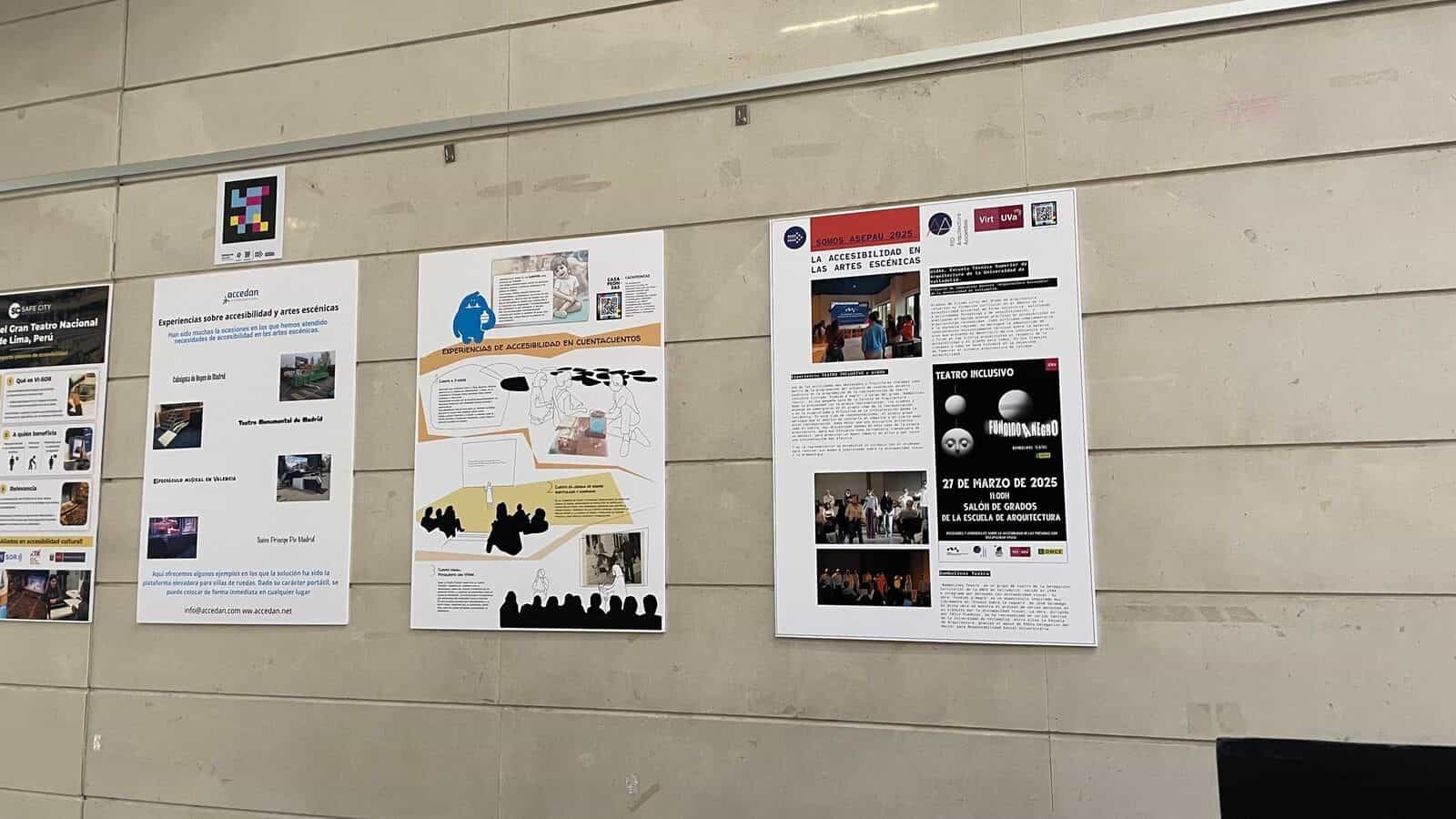
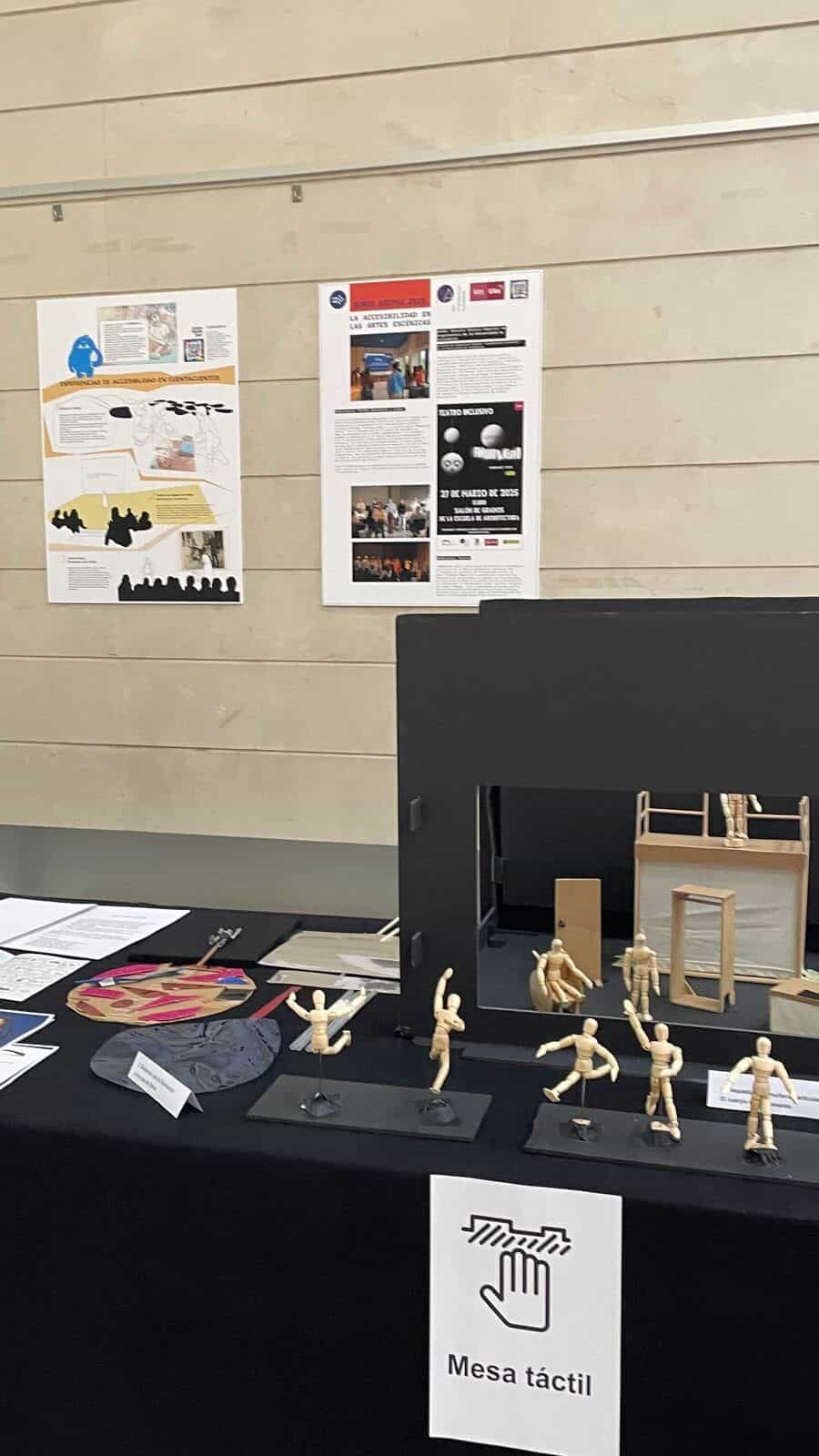
The codes are placed at visitor height, next to the physical sign they label, so the phone sweep detects them without having to aim at an exact point.
§ Why it matters
A public school that practises what it teaches.
Coherence
RESAD already programs performances with adapted subtitling and stage walk-throughs for audiences with visual impairment. NaviLens carries that same logic into the architecture: the building behaves like the productions it hosts.
Pedagogy
The future directors, playwrights and performers trained at RESAD cross paths every day with NaviLens codes and the ASEPAU exhibition. Stage accessibility is learned in the corridor, not only in class.
Audience
Spectators with visual impairment can come on their own to a premiere: they find the entrance from the street, identify the right hall and follow the program panels without asking for help at the box office.
§ And your campus?
Every classroom and clinic can be guided by voice.
Tell us about your facility, your journeys and your users. We’ll show you how NaviLens would make wayfinding easier.