Case study · Vienna
Twenty-three gates that tell their story out loud.
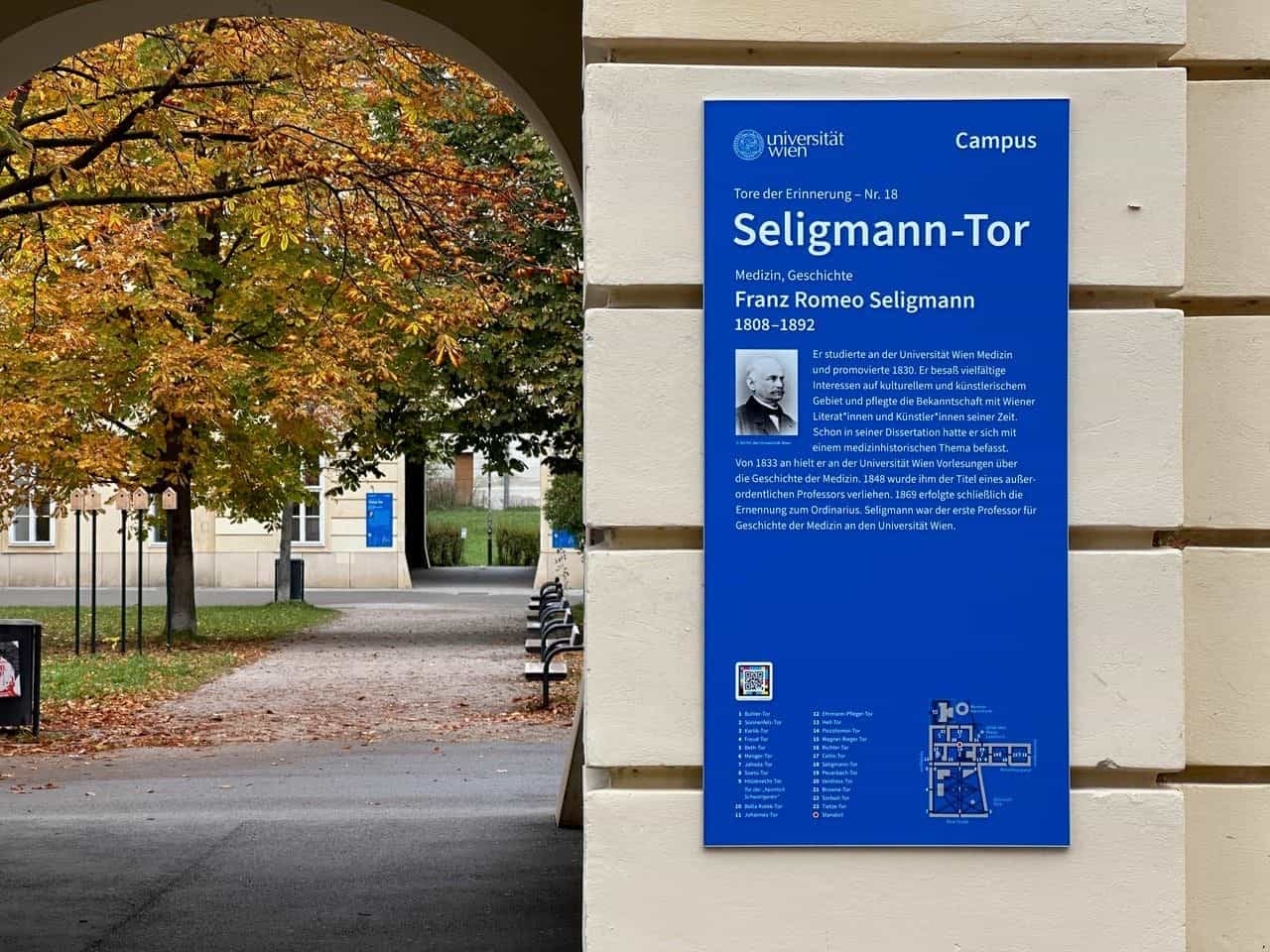
In October 2024, the University of Vienna reopened its 23 Tore der Erinnerung at the Campus (former AKH) with redesigned barrier-free panels and a NaviLens code on each: the campus's memory, read aloud, in German and English.
Vienna · Alsergrund
Campus of the University of Vienna (former Allgemeines Krankenhaus / Altes AKH)
23 Tore der Erinnerung
Gates and passages named after scientists linked to the university
October 2024
Reopening with new barrier-free panels + NaviLens codes
DE · EN · audio
Multilingual voice readout via NaviLens GO
The client
University of Vienna
Campus Altes AKH
The University of Vienna is the oldest German-speaking university, with nearly 90,000 students. Its Campus occupies the grounds of the former Allgemeines Krankenhaus in Alsergrund: 9 courtyards and 23 passages that, in 1998, were named Tore der Erinnerung in honor of figures linked to the institution.
In October 2024, as part of the “650 plus — History of the University of Vienna” project, the new panels were unveiled: revised texts, expanded biographies, an orientation map and a NaviLens code on each for audio readout.
The project sits within the University of Vienna barrierefrei portal — the institution's cross-cutting accessibility strategy for people with sensory, motor or cognitive disabilities.
§ The challenge
So the campus's memory speaks to everyone.
- 01
Memory without access is half-memory
Since 1998, the 23 campus passages have borne the names of historical figures of the University of Vienna. The original plaques were purely visual: for a blind, low-vision or non-German-reading person, the campus's memory layer remained silent.
- 02
An open, busy campus
The former AKH is today a public park, open day and night. Any solution had to work for students, the neighborhood and visitors — without new furniture, no screens and no work on heritage walls.
- 03
A critical review of the narrative
The update was an opportunity to revise biographies and replace problematic figures. The new panels had to be beautiful, accessible and multilingual from day one — consistent with the “University of Vienna barrierefrei” portal.
§ The solution
One code per gate, the same biography read out loud.
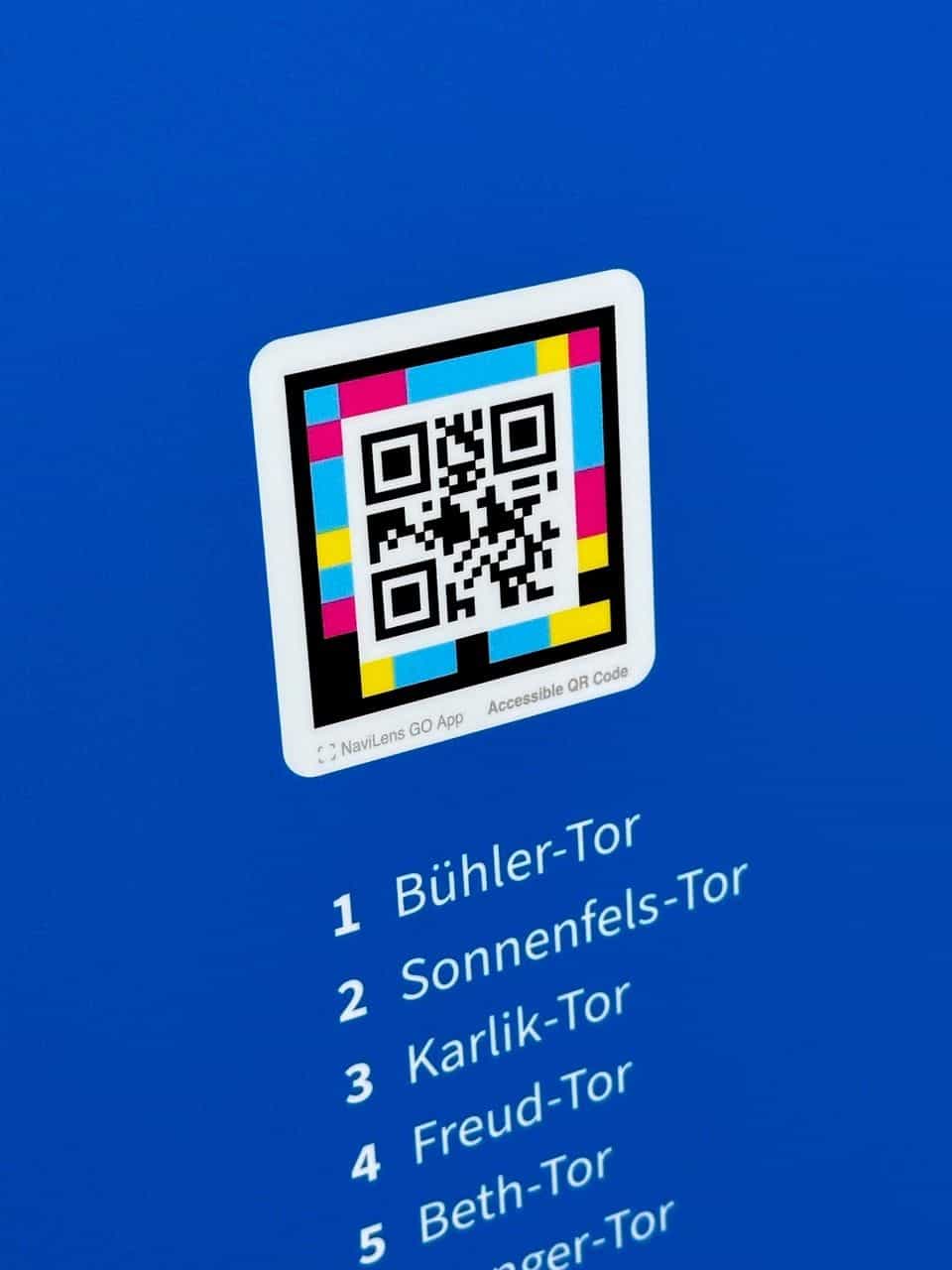
Each of the 23 panels carries a NaviLens code next to the full list of Tore and a small campus map. With the NaviLens GO app, users detect the code from several yards away without aiming and listen to the full content in German or English.
The system coexists with the large, high-contrast typography of the new panels (designed for low vision) and with the digital version of the route on the 650 plus portal.
No work on the walls of the former AKH: the codes are printed on the panel itself — swappable and maintainable like any institutional signage.
§ Walking the Campus
From Hell-Tor to Tietze-Tor, leaving nobody behind.
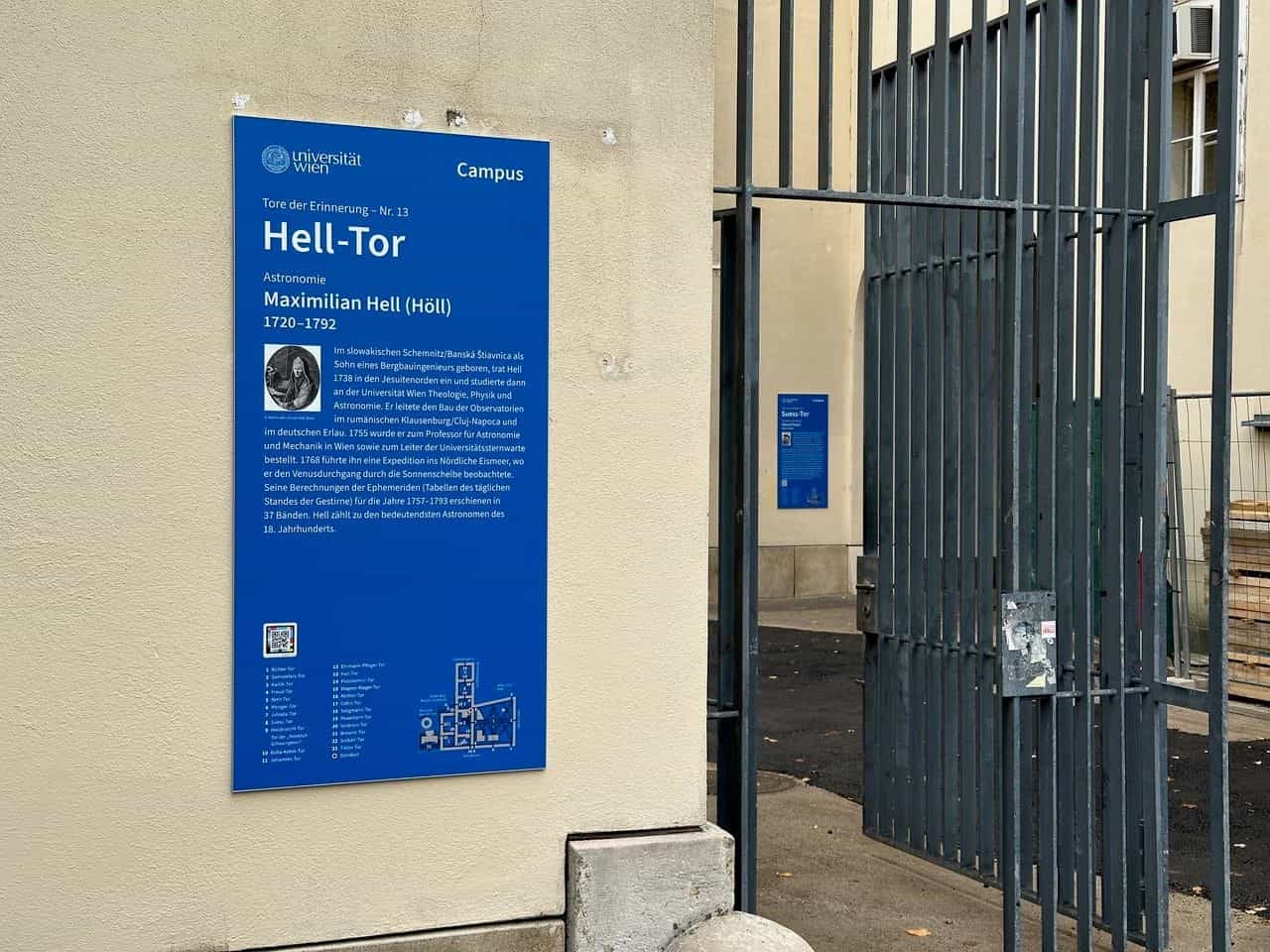
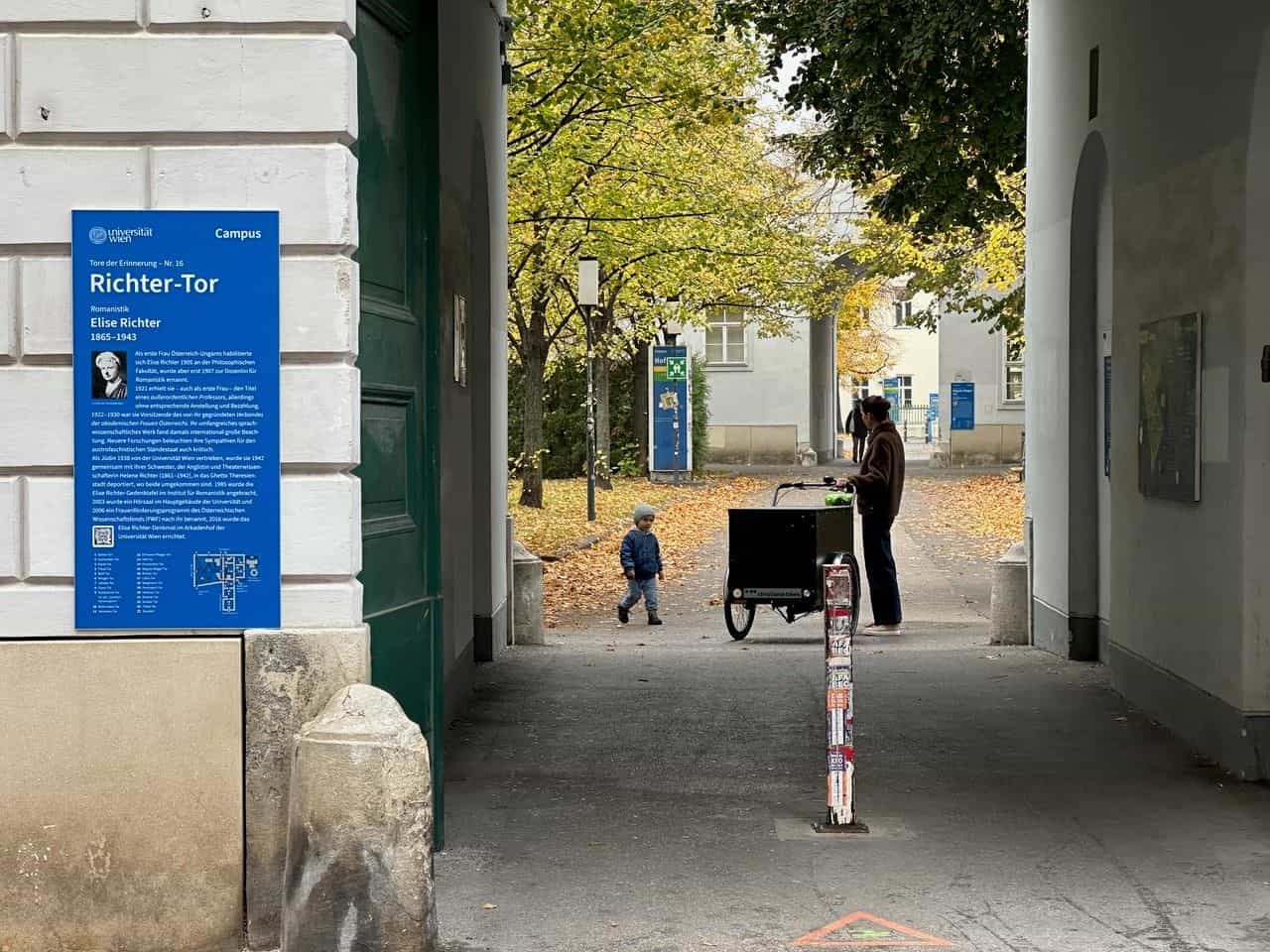
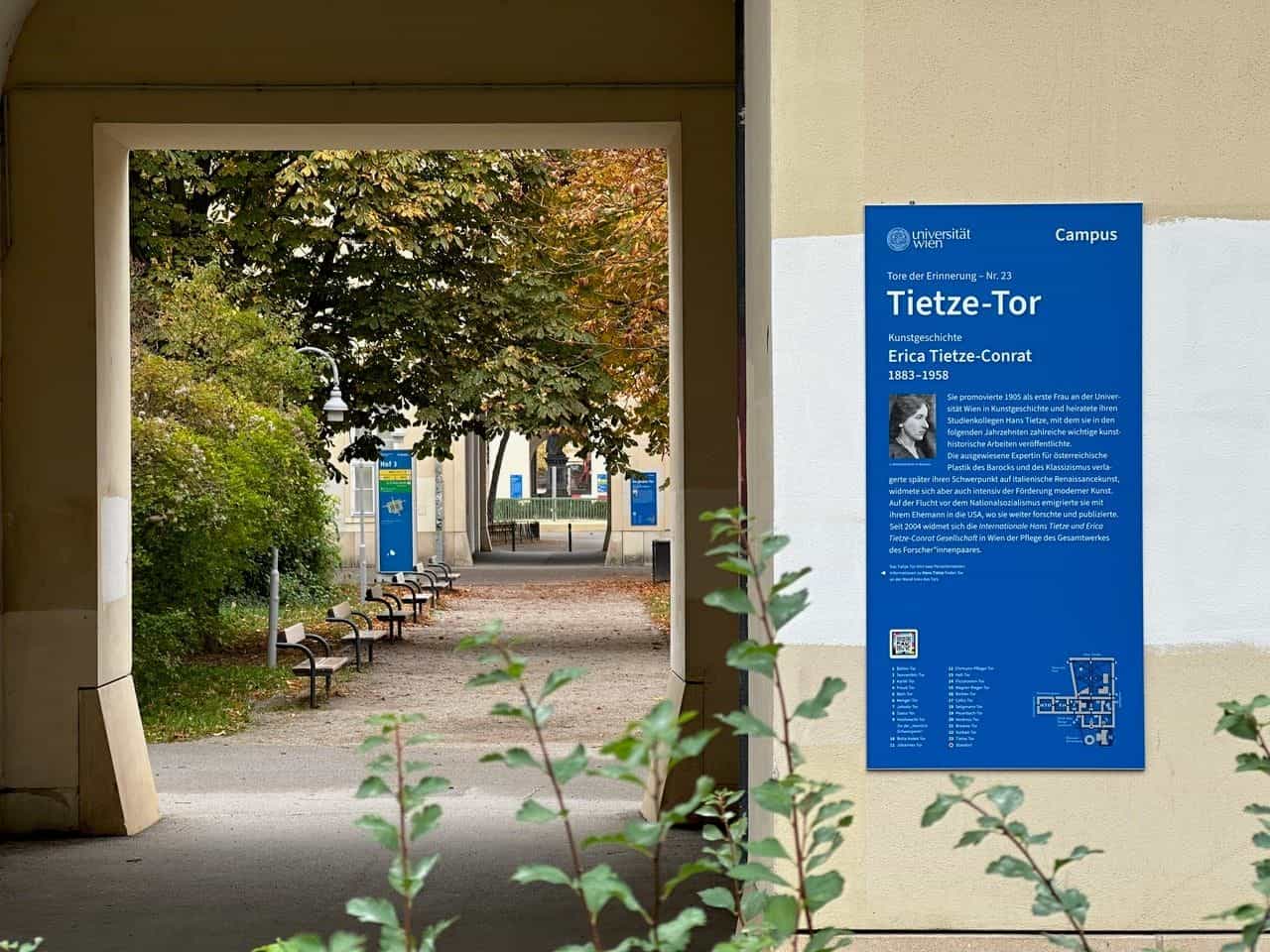
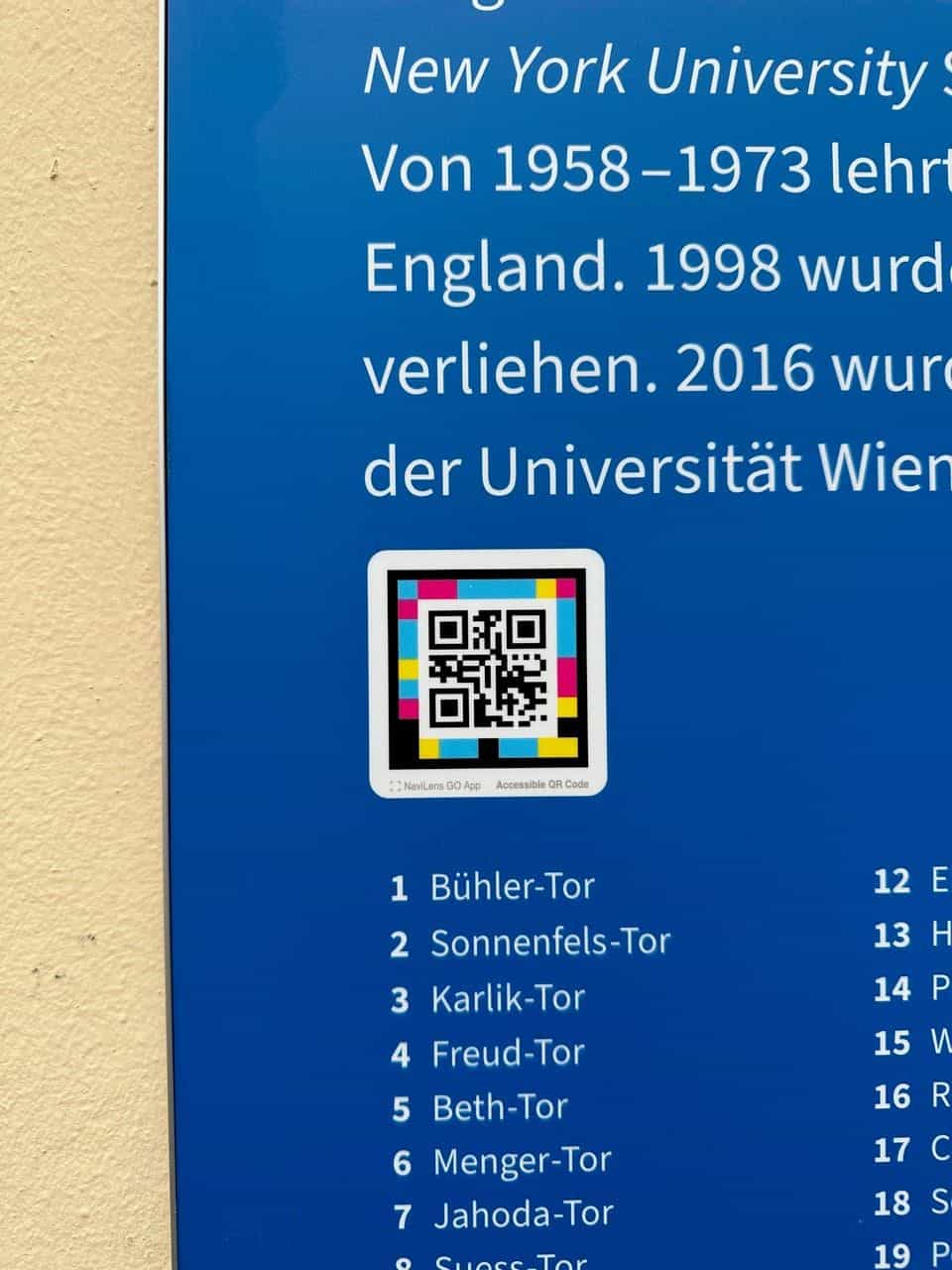
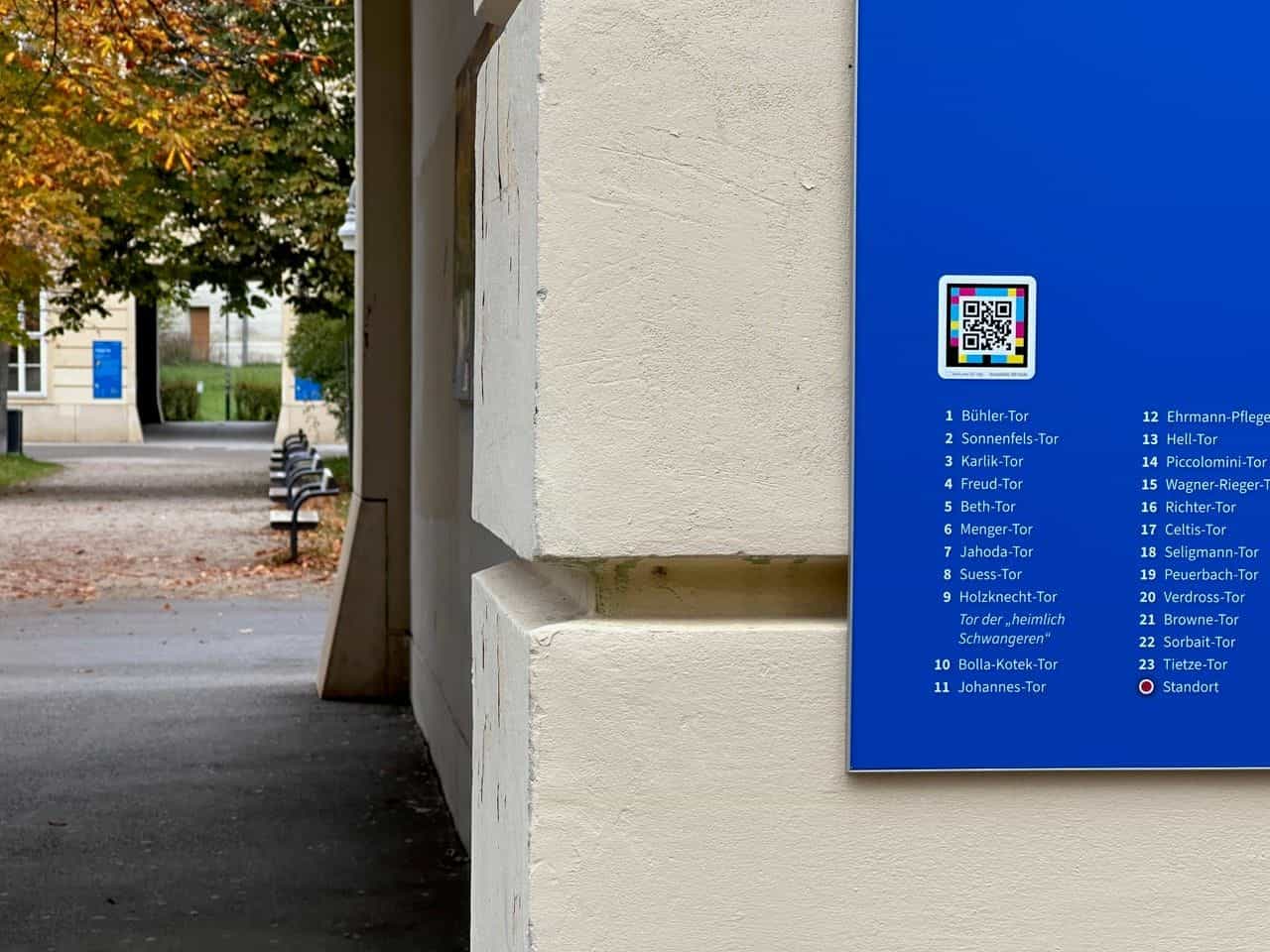
The 23 Tore cross the 9 courtyards of the Campus and form a continuous route: from Bühler-Tor and Sonnenfels-Tor to Tietze-Tor, passing Freud-Tor, Suess-Tor, Holzknecht-Tor, Bolla-Kotek-Tor, Hell-Tor, Richter-Tor, Seligmann-Tor or Browne-Tor.
§ Why it matters
University heritage, genuinely shared.
Audible memory
Blind, low-vision, dyslexic or non-German-speaking people access the biographies by voice, with no extra hardware installed on heritage walls.
Universität barrierefrei
Consistent with the University of Vienna's accessibility portal and with the digital “650 plus” tour.
Panel-replicable
Same graphic pattern across all 23 Tore: once solved, it scales like any other institutional signage.
Sources: APA Science — “Neu gestaltete ‚Tore der Erinnerung‘ am Campus der Universität Wien” (Oct 24, 2024); ORF Vienna — “Neue ‚Tore der Erinnerung‘ am Uni-Campus” (Nov 4, 2024); MeinBezirk Alsergrund — “Uni Wien präsentiert neu gestaltete Tore der Erinnerung”; University of Vienna · 650 plus — “Tore der Erinnerung am Campus”; University of Vienna barrierefrei.
§ And your campus?
Every classroom and clinic can be guided by voice.
Tell us about your facility, your journeys and your users. We’ll show you how NaviLens would make wayfinding easier.