Case study · Los Angeles · California · USA
Union Station speaks without touching a single wall: LA Metro pilots NaviLens.
LA Metro (LACMTA) launches a proof of concept with NaviLens at Los Angeles Union Station — the largest multimodal transit hub in the western United States and a National Historic Landmark. The Office of Civil Rights and the Office of Extraordinary Innovation select NaviLens through an unsolicited proposal via Metro's Unsolicited Proposal Process, to deliver accessible wayfinding without altering the historic architecture of the 1939 building.

Union Station
Largest multimodal hub in the western US
B · D · L + Amtrak + Metrolink
Audio pathways to every platform and Patsaouras Bus Plaza
42 languages
Voice readout from over 100 ft
1939 National Landmark
No drilling, no alteration of the historic fabric
The operator
LA Metro · Los Angeles County Metropolitan Transportation Authority
The Los Angeles County Metropolitan Transportation Authority (LACMTA, “LA Metro”) plans, operates and funds public transit across LA County — subway, light rail, bus, Metrolink commuter rail and bike share — serving more than 10 million residents. Union Station (1939) is its multimodal heart: it connects the B (Red), D (Purple) and L (Gold) Lines, Amtrak, Metrolink, the Patsaouras Bus Plaza and the FlyAway service to LAX airport.
As a National Historic Landmark, Union Station carries strong restrictions on physical intervention: tactile paving cannot be installed across much of the building without compromising its heritage status. That left blind and low-vision travelers without a continuous, independent wayfinding system inside the station.
In 2019 NaviLens submitted a proposal through LA Metro's Unsolicited Proposal Process — the channel any company can use to offer emerging technology to the agency. The Office of Civil Rights and the Office of Extraordinary Innovation assessed the technology and launched a proof of concept: NaviLens codes placed across the station create audio pathways to the platforms and identify ticket vending machines, fare gates, elevators and emergency telephones. Blind and low-vision test riders summarised it as “this feels similar to what sighted people can do, being able to see signage”.
§ How it was deployed
Voice wayfinding without touching a National Landmark.
- 01
Audio pathways to every mode
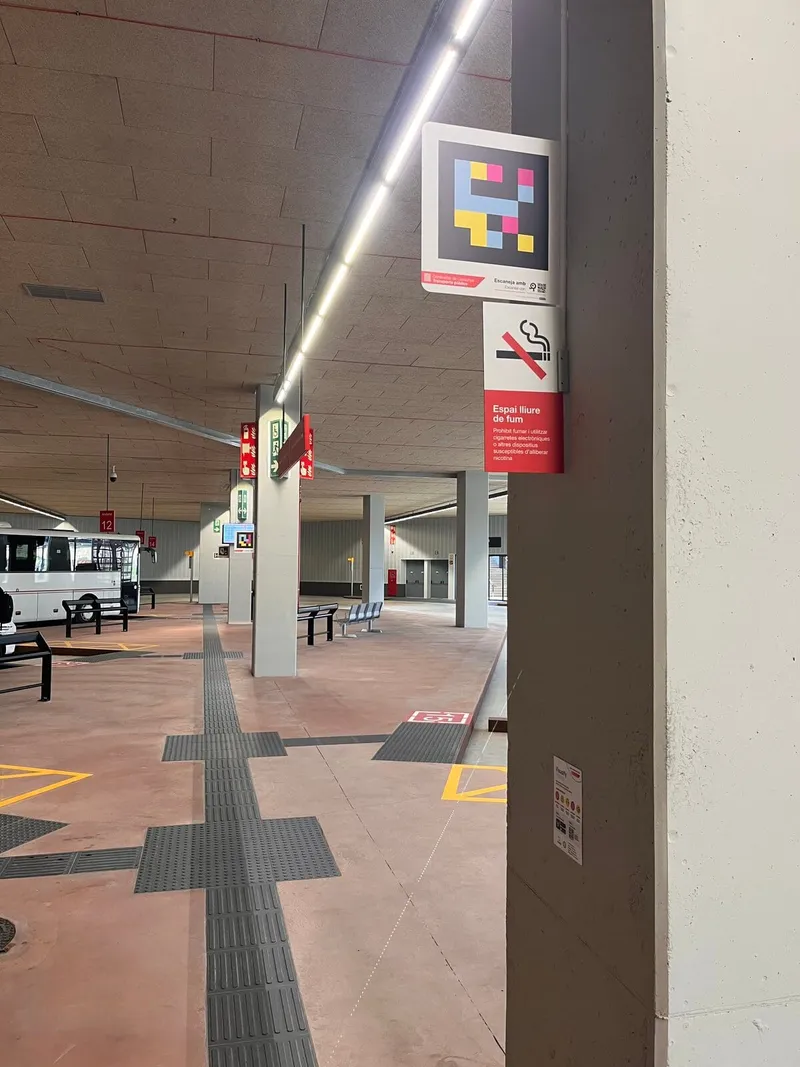
Strategically placed NaviLens codes generate audio pathways to the B (Red), D (Purple) and L (Gold) Line platforms, the Amtrak and Metrolink platforms and Patsaouras Bus Plaza — the user hears direction and distance to each mode, without tactile paving or a human guide.
- 02
Key equipment identified
Each code is individually programmed with the information of a critical element: ticket vending machines (TVMs), fare gate arrays, elevators and emergency telephones. The phone voices what it is, where it is and what to do on arrival.
- 03
Multidisciplinary team
The pilot is designed jointly by the Office of Extraordinary Innovation, the Office of Civil Rights, Metro's Accessibility Advisory Committee (AAC), General Services, Morlin Property Management, Amalgamated Transit Union and the UK's Royal National Institute of Blind People (RNIB) — an international reference that had already endorsed NaviLens.
§ Union Station gallery
A transit cathedral, now audible.




Union Station images: Wikimedia Commons (free licence).
§ Why it matters
Accessible technology for an untouchable building.
No invasive works
Union Station could not receive tactile paving without compromising its heritage protection. NaviLens delivers accessible wayfinding with high-contrast codes over existing signage, with no drilling and no alteration of historic surfaces.
Validated by users
Tests with blind and low-vision riders — coordinated with Metro's AAC and the UK's RNIB — returned comments such as “I would feel more comfortable travelling by myself if this was available everywhere” and “this feels similar to what sighted people can do”.
Path to replication
The pilot fits an international benchmark: NaviLens was already operating in Barcelona and Madrid metros and was being studied in MTA New York's Accessible Station Lab. LA Metro's proof of concept opens the door to scaling the standard across critical stations of the system.
§ And your network?
Your next station can also speak.
Tell us about your network, your pain points and the KPIs you want to move. We’ll show you how NaviLens would fit—with comparable cases.