Case study · Boise · Idaho · United States
The signs are in two languages. The hall is heard in 42.
How The WaterShed, the City of Boise's water and climate education center, added NaviLens codes to its exhibit hall and its outdoor campus — the same bilingual panels, read aloud in 42 languages and picked up from several feet away, with no focusing and no extra app to download.
Mar 15, 2025
Reopened as the City of Boise's water and climate center
25+ exhibits
Bilingual English-Spanish hall, free admission
2 → 42
Languages printed on the signs → languages read aloud by NaviLens
ASL
Climate Stories also served as American Sign Language video
The client
The WaterShed City of Boise · Public Works
The WaterShed is the City of Boise's environmental education center. It opened in 2008 next to the West Boise Water Renewal Facility — the plant that renews thirty million gallons of water a day — and the building itself, certified LEED Gold, is part of the exhibit: reclaimed water, waterless urinals, permeable parking.
In March 2025 it reopened as a water and climate center, with 25+ new exhibits, free admission and a decision made up front: every word on the walls, from wayfinding to murals, in English and Spanish. NaviLens is the layer that carries that same content to every other language, and to anyone who can't read it.
§ The challenge
Two printed languages, and an audience that doesn't fit in two.
- 01
A center where almost everything is read
The exhibits explain themselves with murals, panels and labels. They are in English and Spanish, and that is where the print stops: someone who can't see the text walks the hall with half the content, and someone who reads neither language with even less.
- 02
The sound sets the mood, not the meaning
The exhibits use ambient sound rather than spoken language. That is a deliberate choice so Deaf visitors miss nothing, and it has a side effect: there is no voice explaining what is in front of you either.
- 03
Getting your bearings before you go in
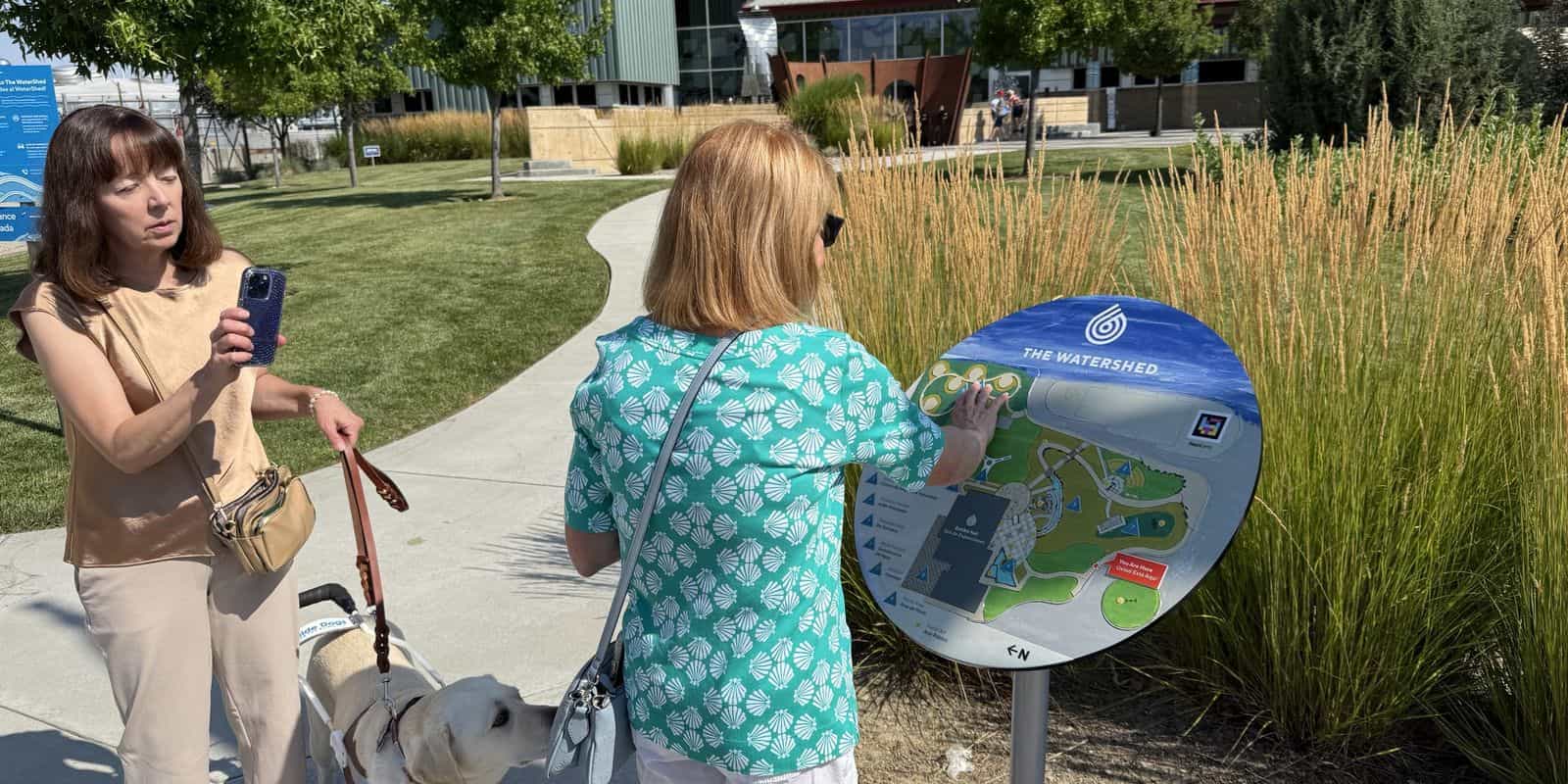
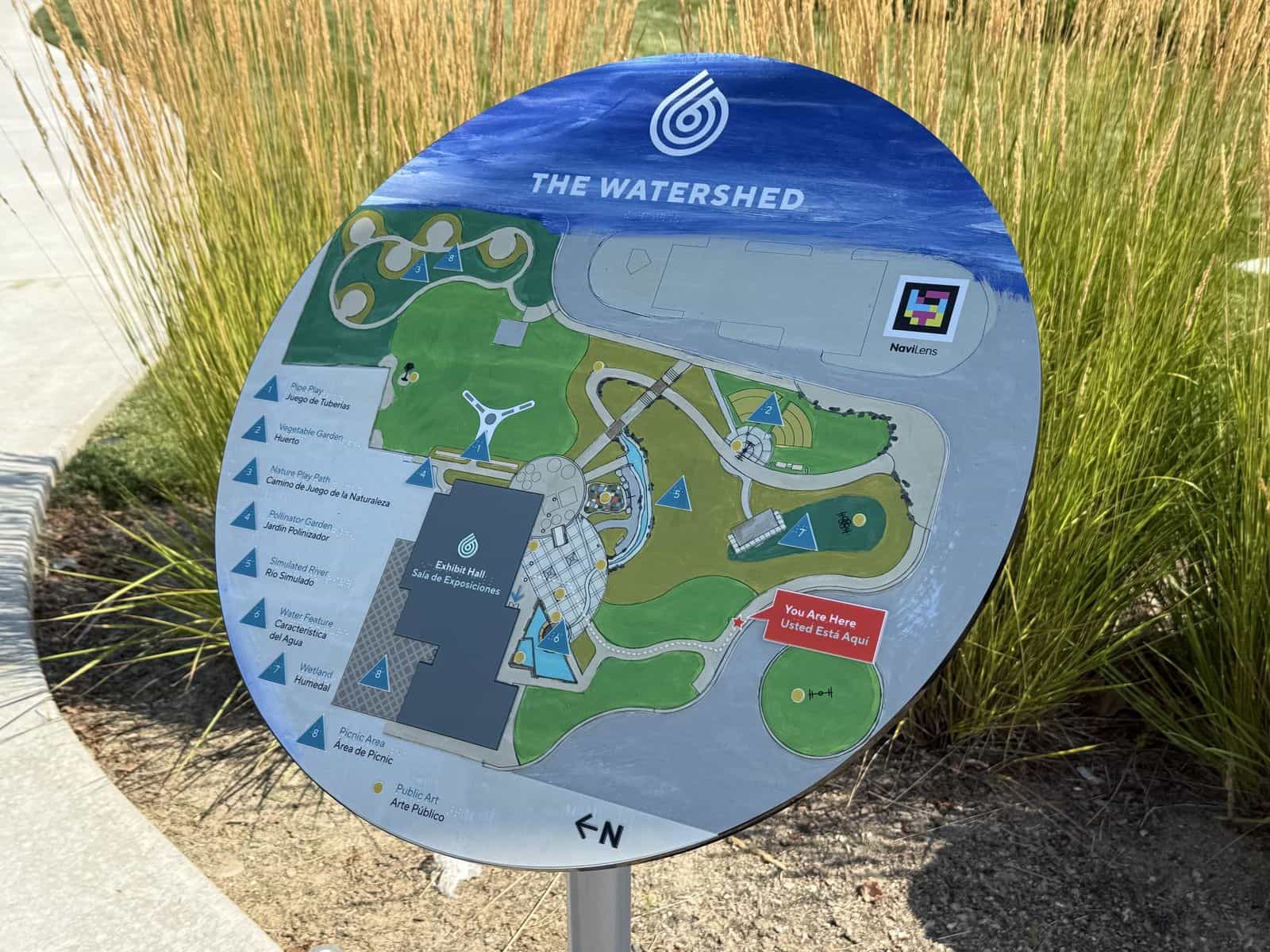
The outdoor campus has a simulated river, a vegetable garden, a wetland, a pollinator garden and a play path. The site map that makes sense of it was a printed plan on a post in the middle of the lawn.
§ The solution
The same panel, read aloud.
The NaviLens codes are spread across the exhibit hall and the outdoor campus. They replace nothing: they sit next to the bilingual sign that was already there — on the edge of the columns, on the sides of the panels, and on the site map at the entrance.
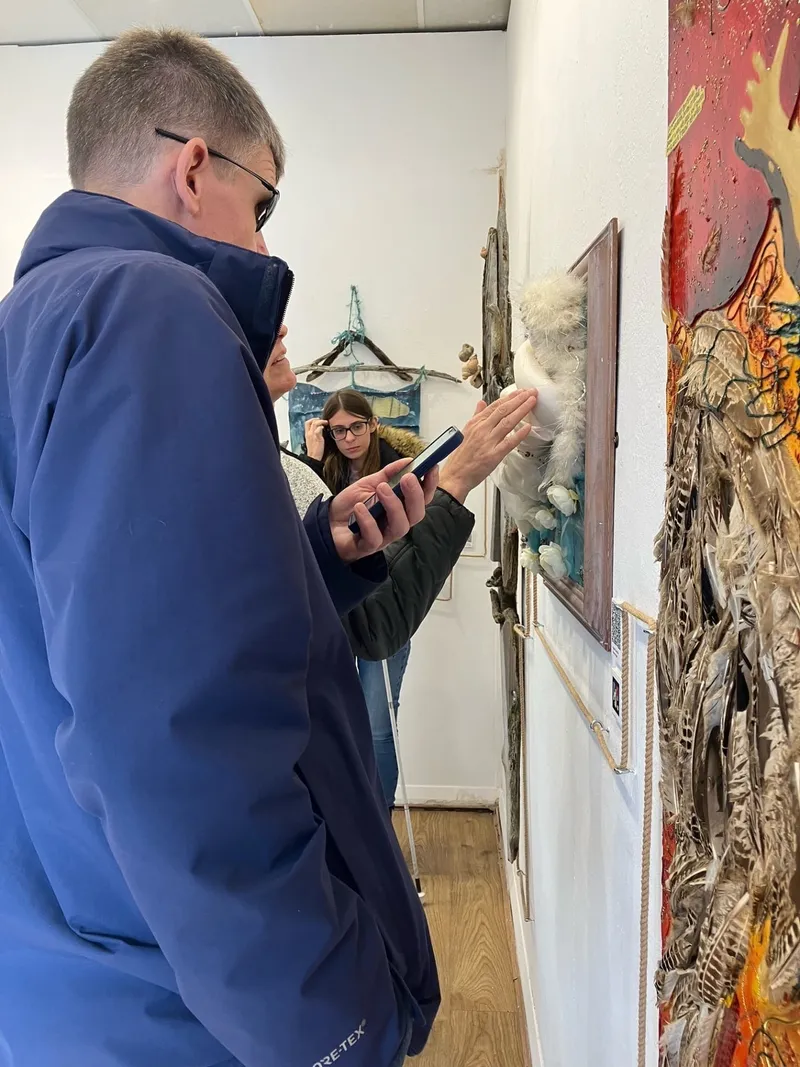
Each code sends the panel's own content to the visitor's phone, read aloud in whichever language that phone is set to. The NaviLens and NaviLens GO apps are free and read the code in 42 languages.
The difference from a QR code is that you don't have to find it. NaviLens is picked up from several feet away, on the move and at angles of up to 160°, with no focusing and no need to know where the code is stuck.
§ On the ground
From the mural to your pocket.
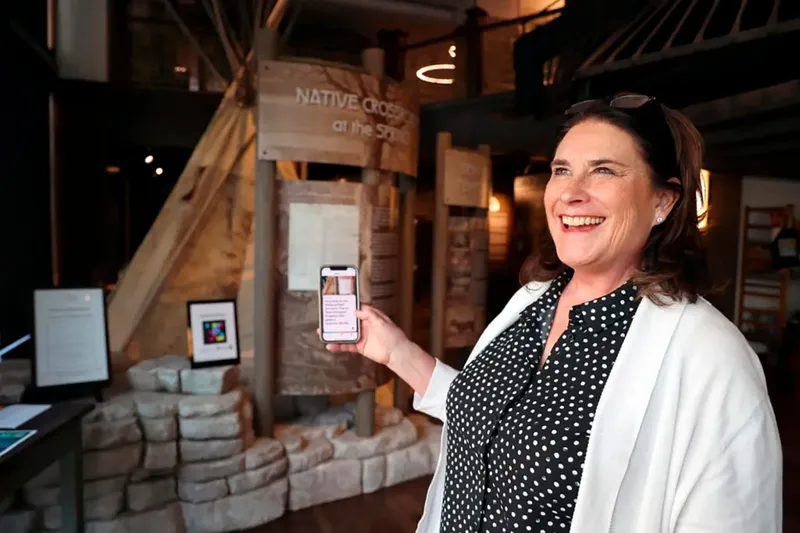
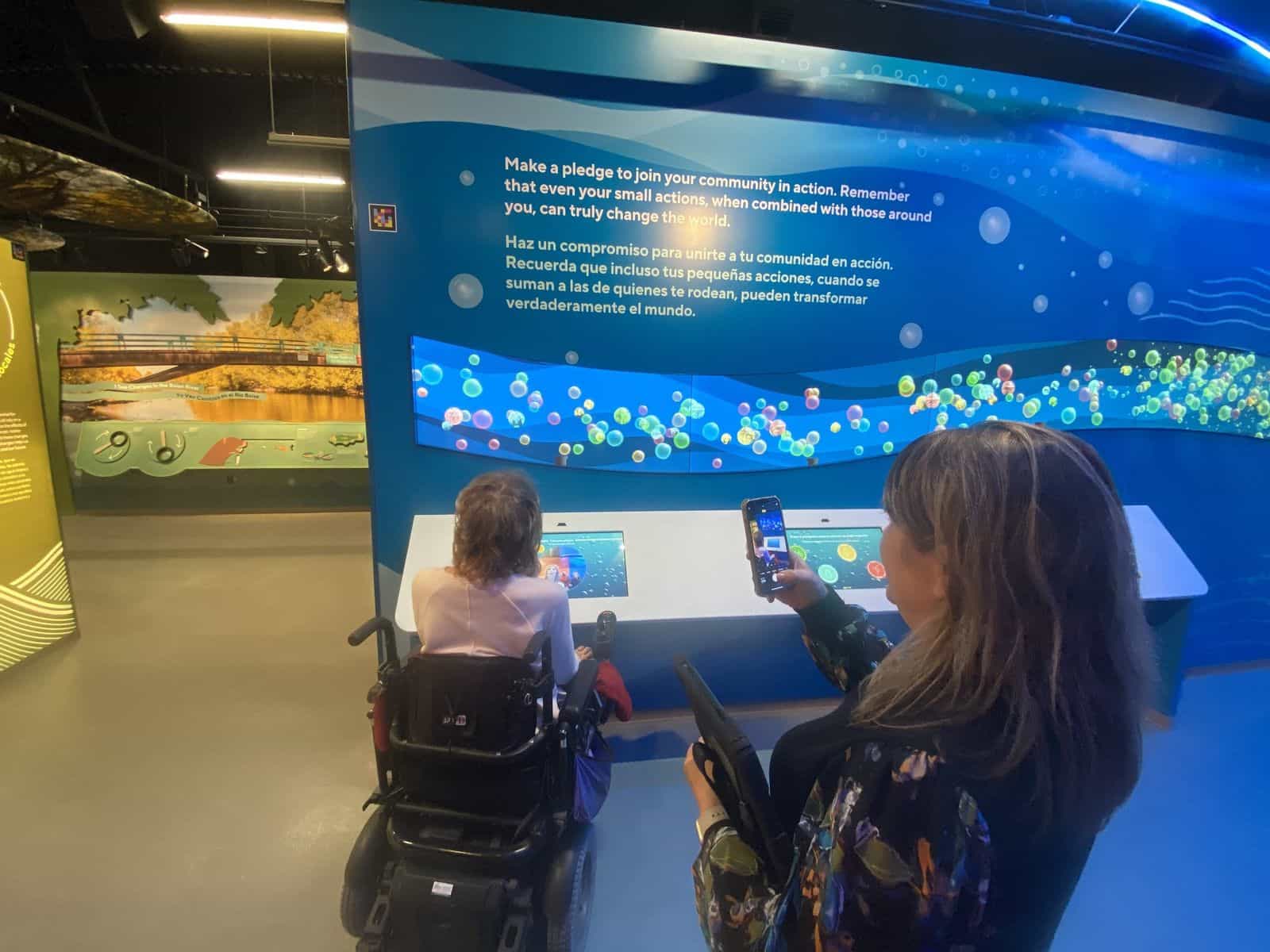
The Pledge Wall is a wall of bubbles where every visitor leaves a commitment. In front of it sit three touchscreens at different heights and, on the edge of the column, a NaviLens code: anyone who can't reach the screen or can't see the mural gets the full text read aloud, from wherever they are standing.
The same pattern repeats across the hall — “Getting Around / Moviéndote Alrededor”, “Our Changing Watershed / Nuestra Cuenca Cambiante”, “Our Water, Our Future / Nuestra Agua, Nuestro Futuro” — and reaches one detail that isn't a sign at all: the Climate Stories, which are audio, are also served as an American Sign Language video.
§ Gallery
The hall, walked column by column.
The center didn't tag an entrance or a front desk. It put the code wherever the information already was, indoors and out.
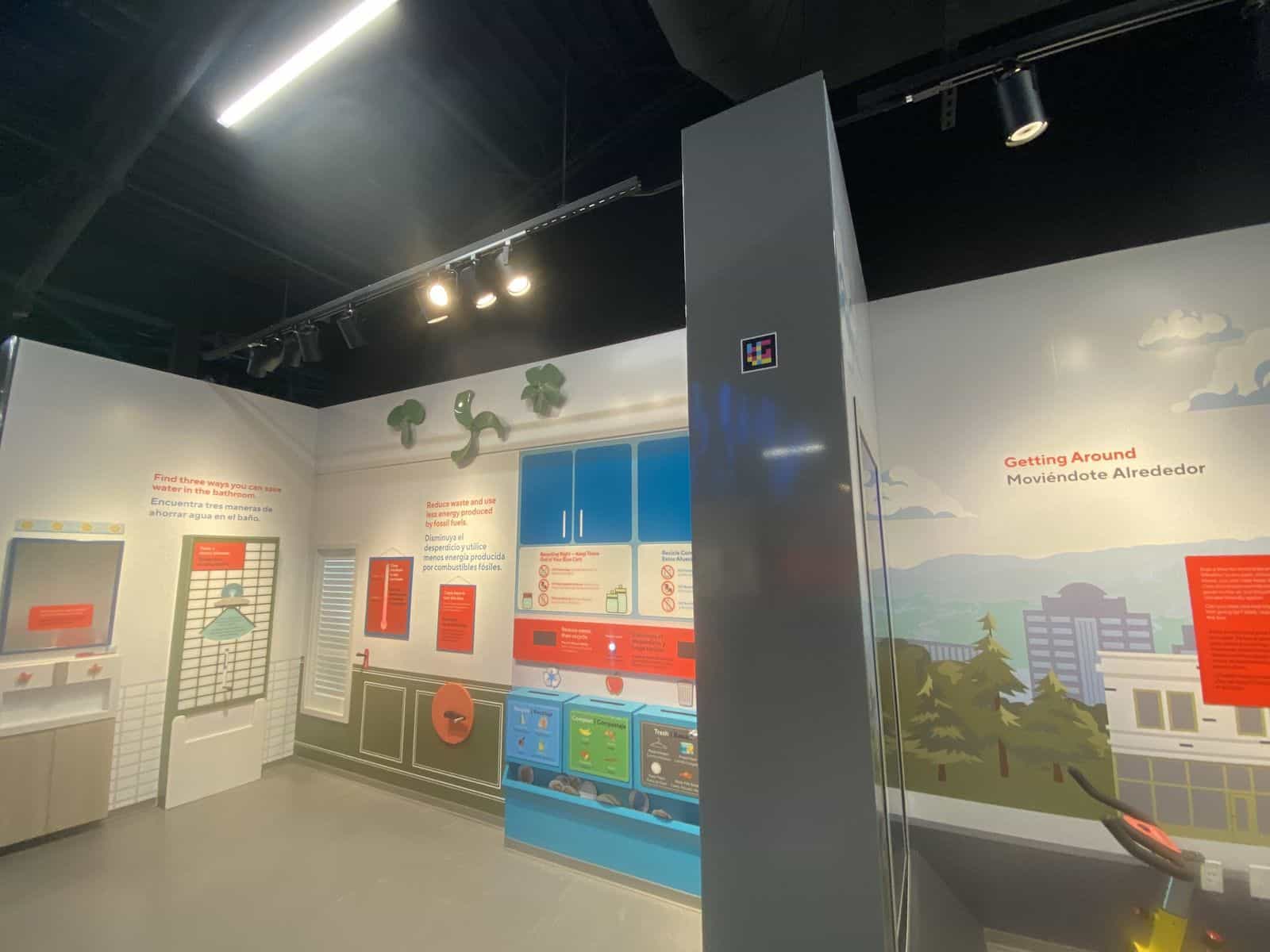
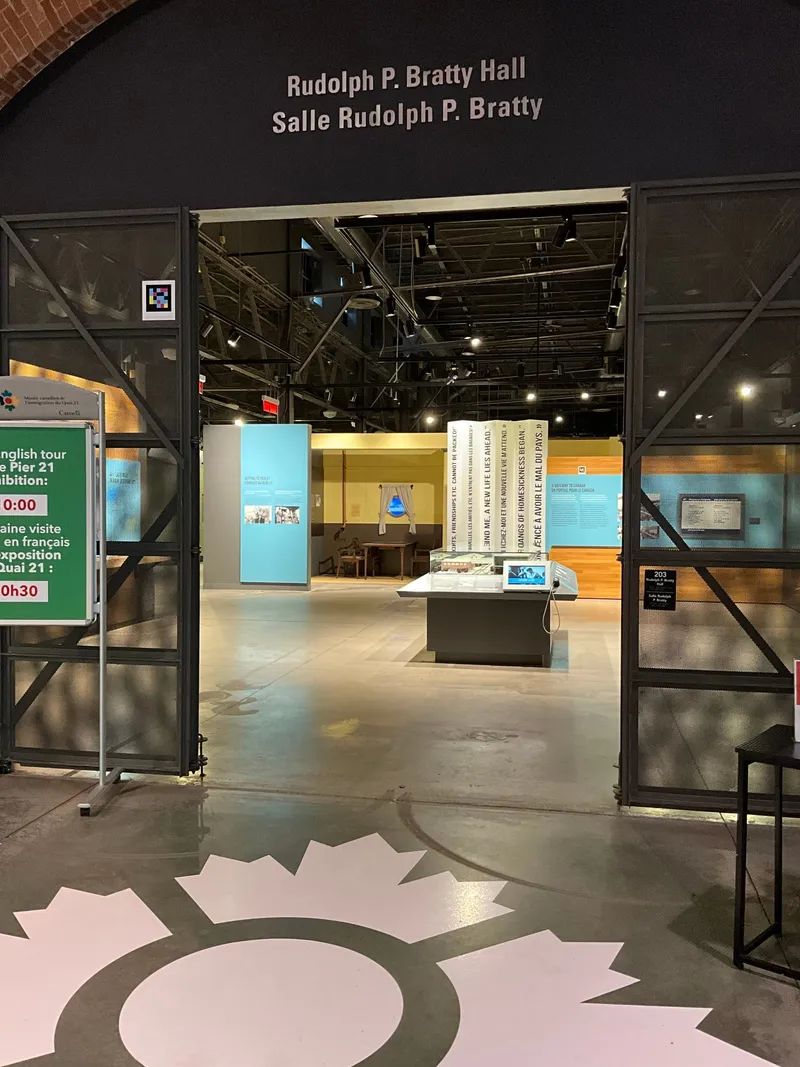
The code goes on the edge of the column, beside the “Getting Around / Moviéndote Alrededor” mural. 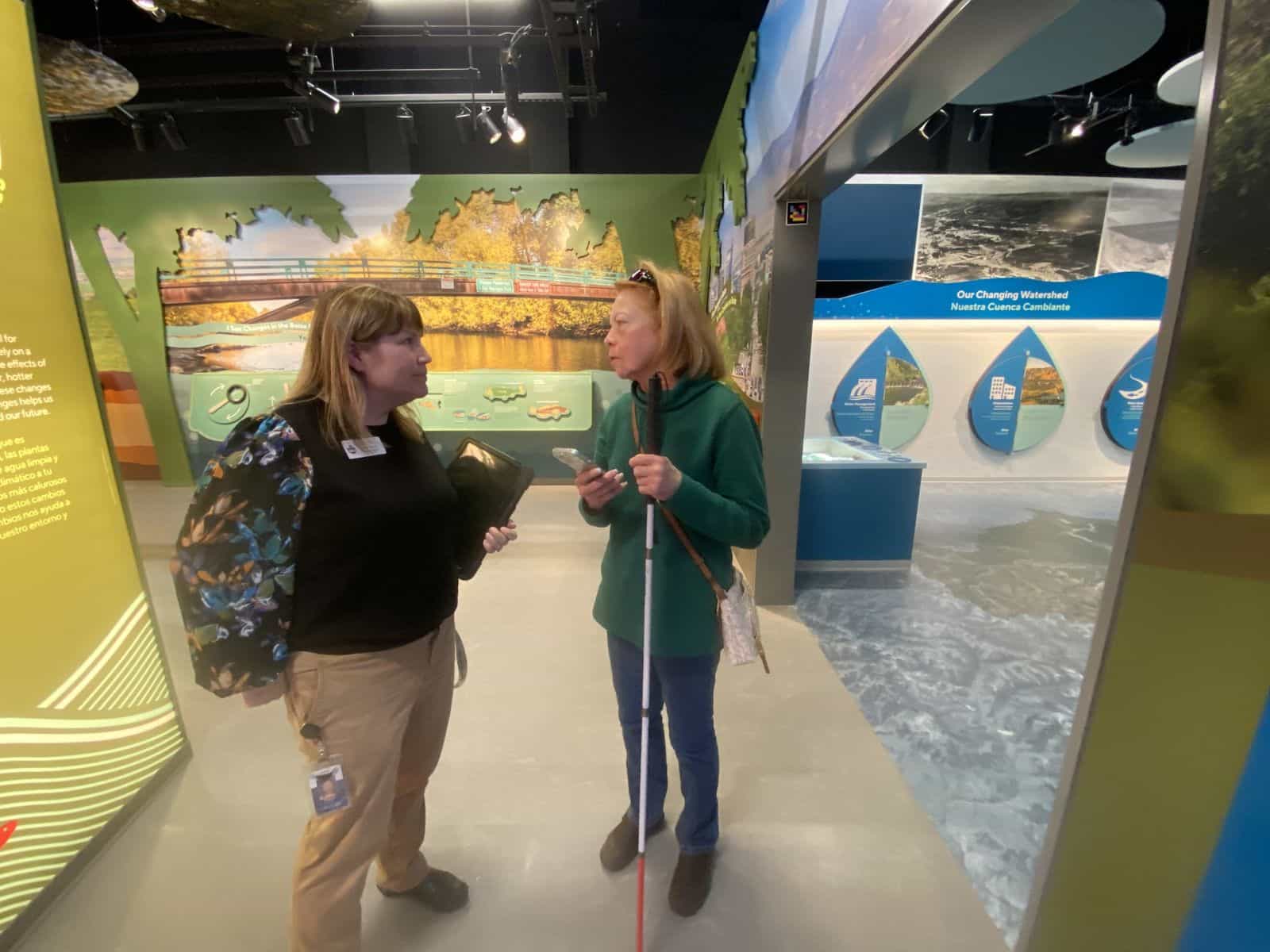
“Our Changing Watershed / Nuestra Cuenca Cambiante”, with its code on the edge of the panel. 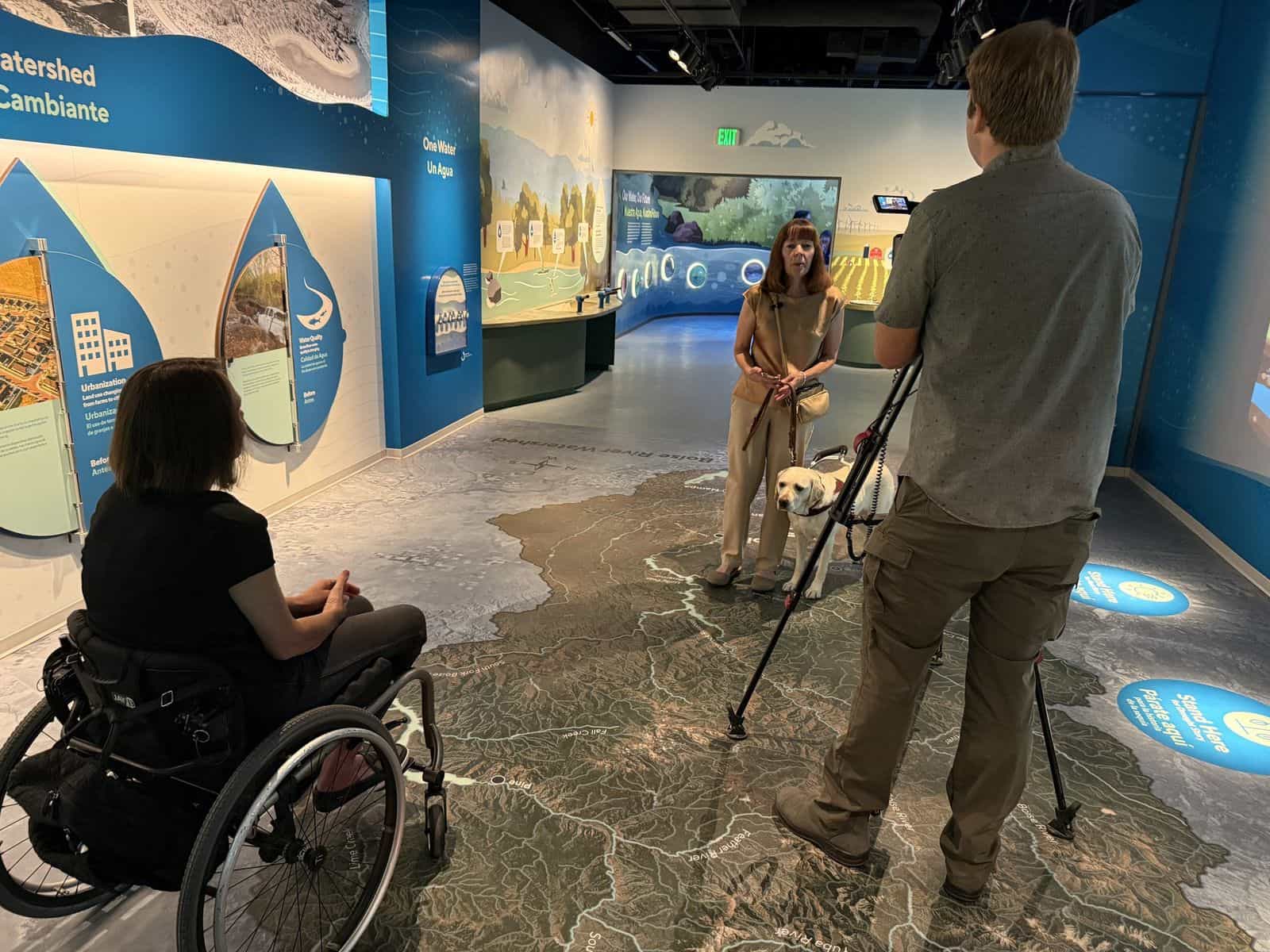
The Boise River watershed, printed on the floor so you can walk it. 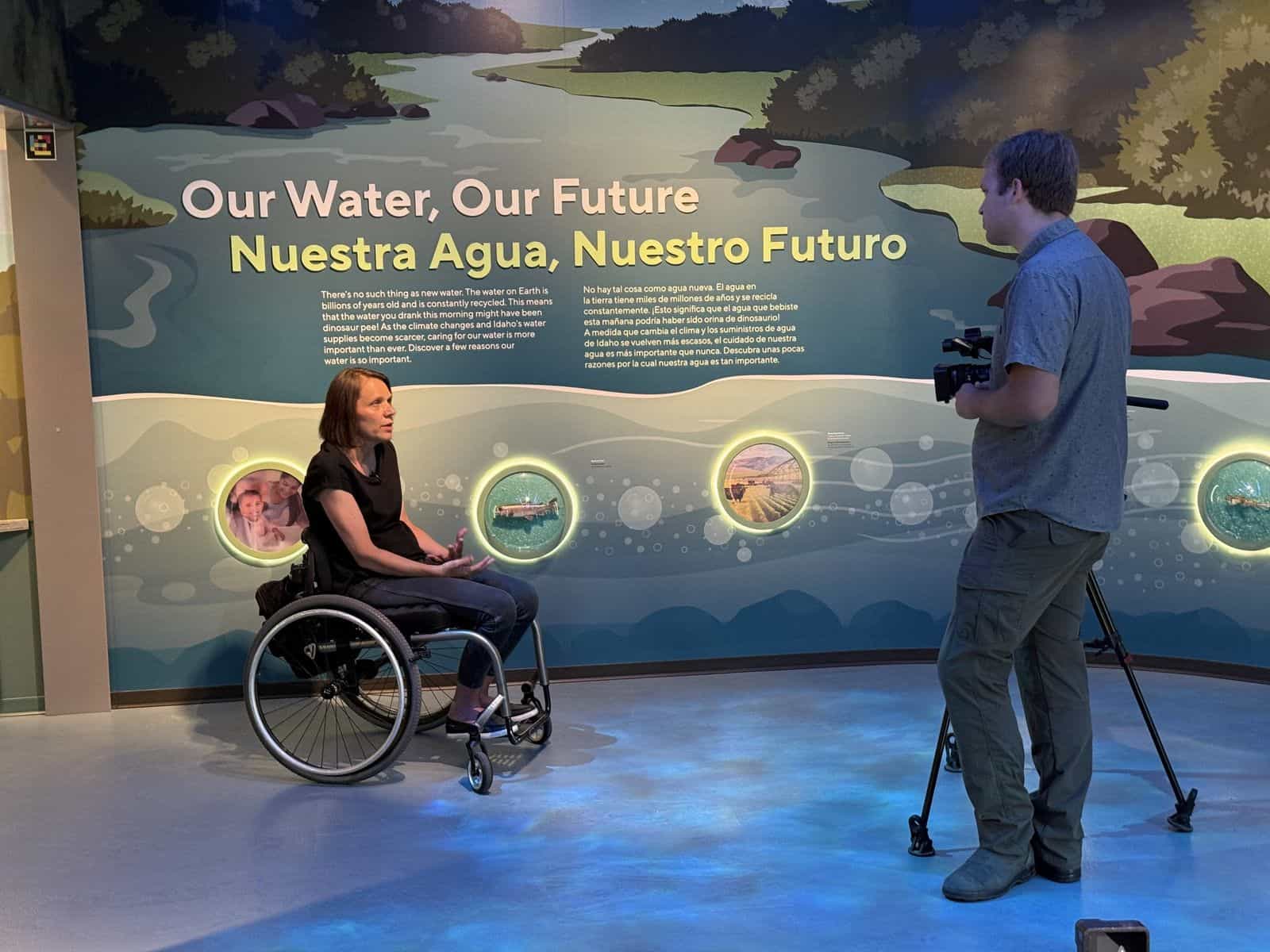
“Our Water, Our Future / Nuestra Agua, Nuestro Futuro”, the mural that opens the route.
§ In the news
Local news told the story this way.
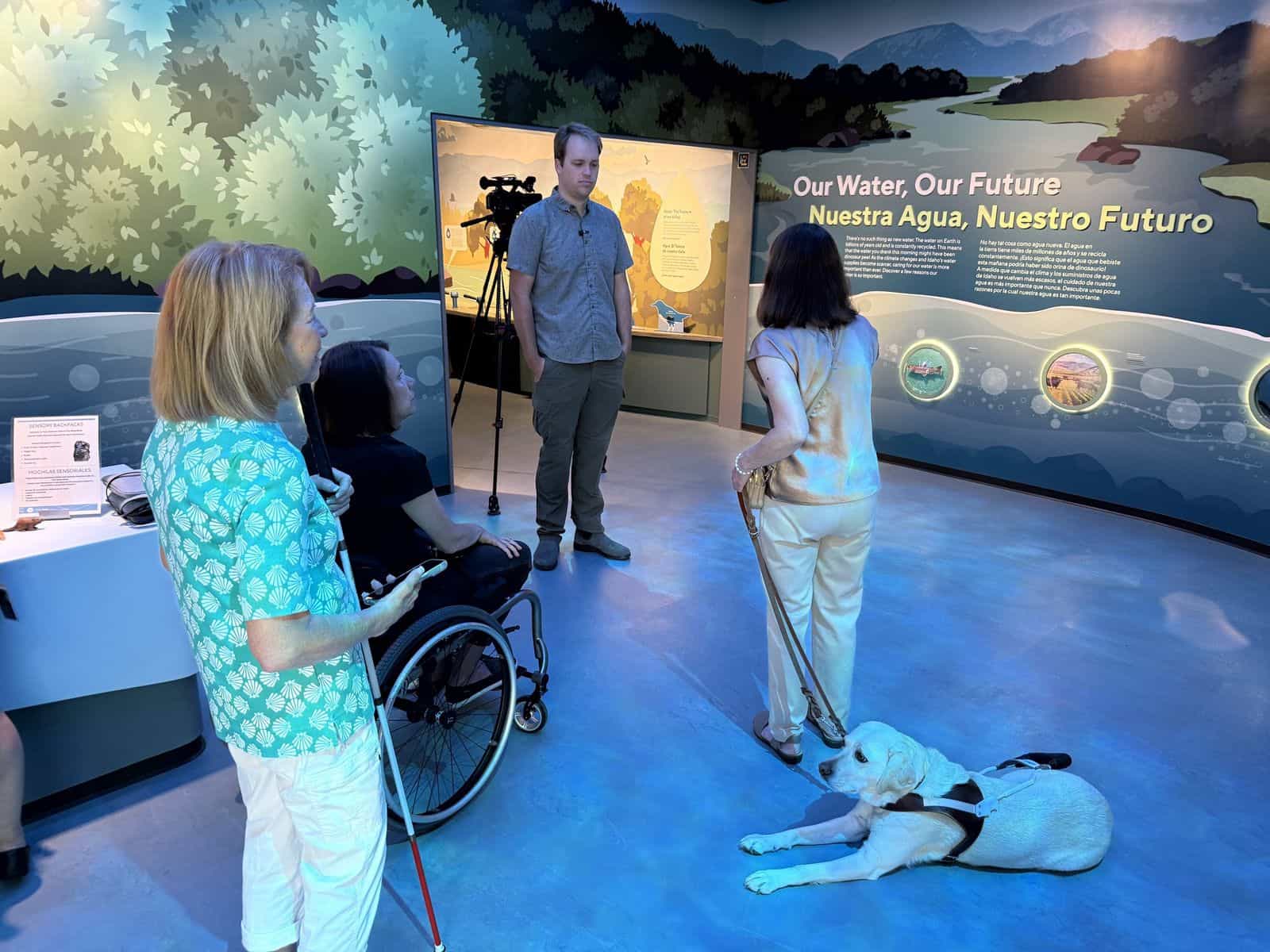
Idaho News 6 (KIVI-TV) visited The WaterShed on July 17, 2025 with Dianna Willis, a member of the City of Boise Disability Task Force, and her guide dog Babbs. Brady Caskey's report walks the hall with her, with Carol Baron and with Cindy Busche, who leads the center's education program.
What they said
“It brings it to life, it brings the Boise watershed or a space to life to me. It gives it dimension, and I can kind of picture it in my mind's eye what's around me.”
“We are one of the first centers and museums in the United States to utilize this technology.”
“Boise's city motto is a city for everyone and if people can't access different facilities and events, then it's not for everyone.”
§ Hands Around the Capitol
From the center to the street.
Eight days after the report, on July 25, 2025, Boise held Hands Around the Capitol: the statewide event marking the 35th anniversary of the ADA, at Cecil D. Andrus Park and around the Idaho State Capitol, with 40+ resource booths, organized by NW ADA Center-Idaho, the Idaho Access Project, LINC, DAC NW and LIFE.
For that day the grounds were signed with a lettered series of codes — E1, E3… — stuck to the light poles, set into the park paving and posted at the bus shelters, all carrying the same bilingual line: “Welcome to / Bienvenido a Hands Around the Capitol!”. The same codes as in the exhibit hall, this time outdoors and for a single day.
At the booths, volunteers wore a name sticker with one line underneath: “Ask me about NaviLens”.
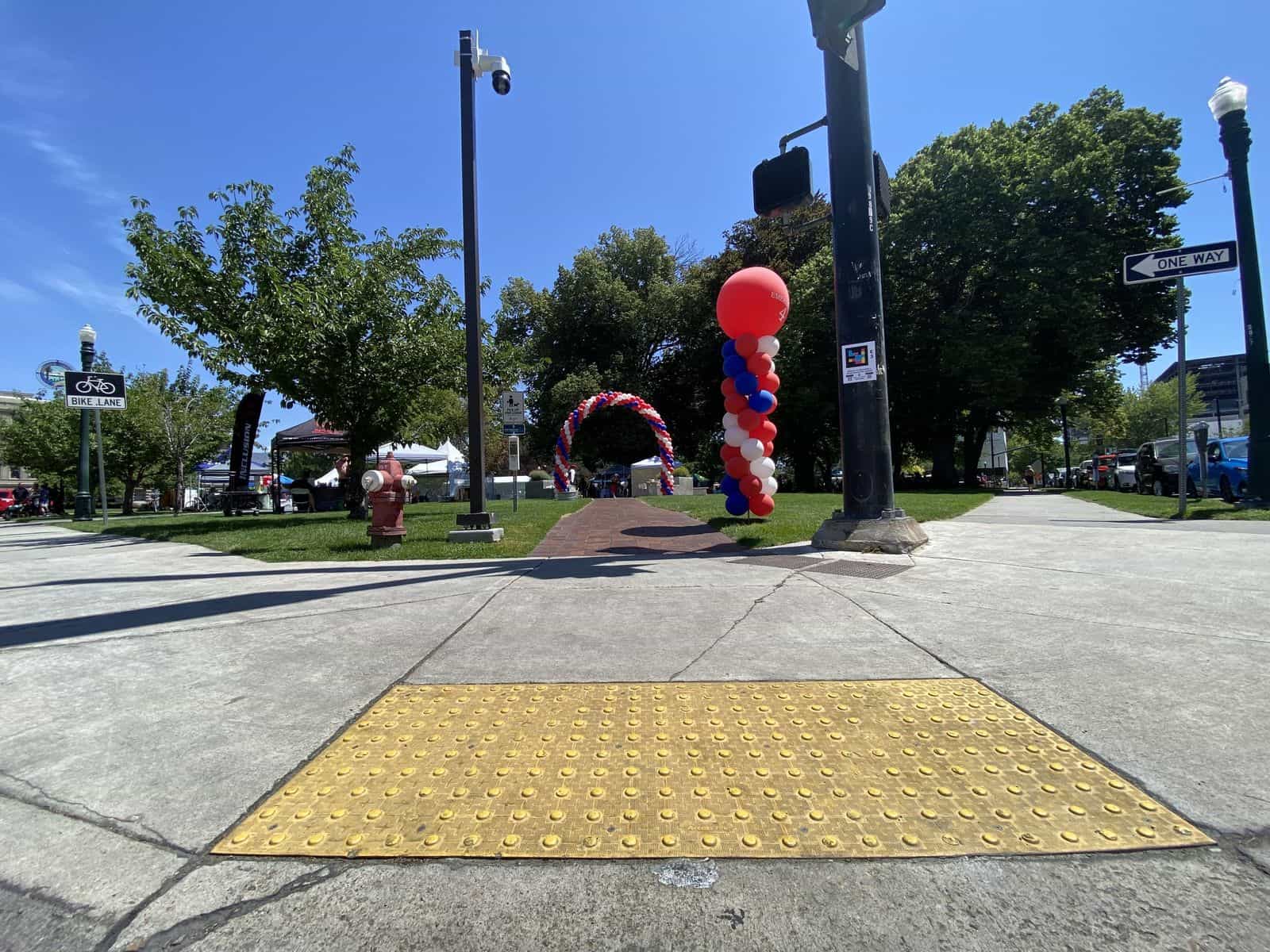
Code E3, on the pole at the accessible crossing into the grounds. 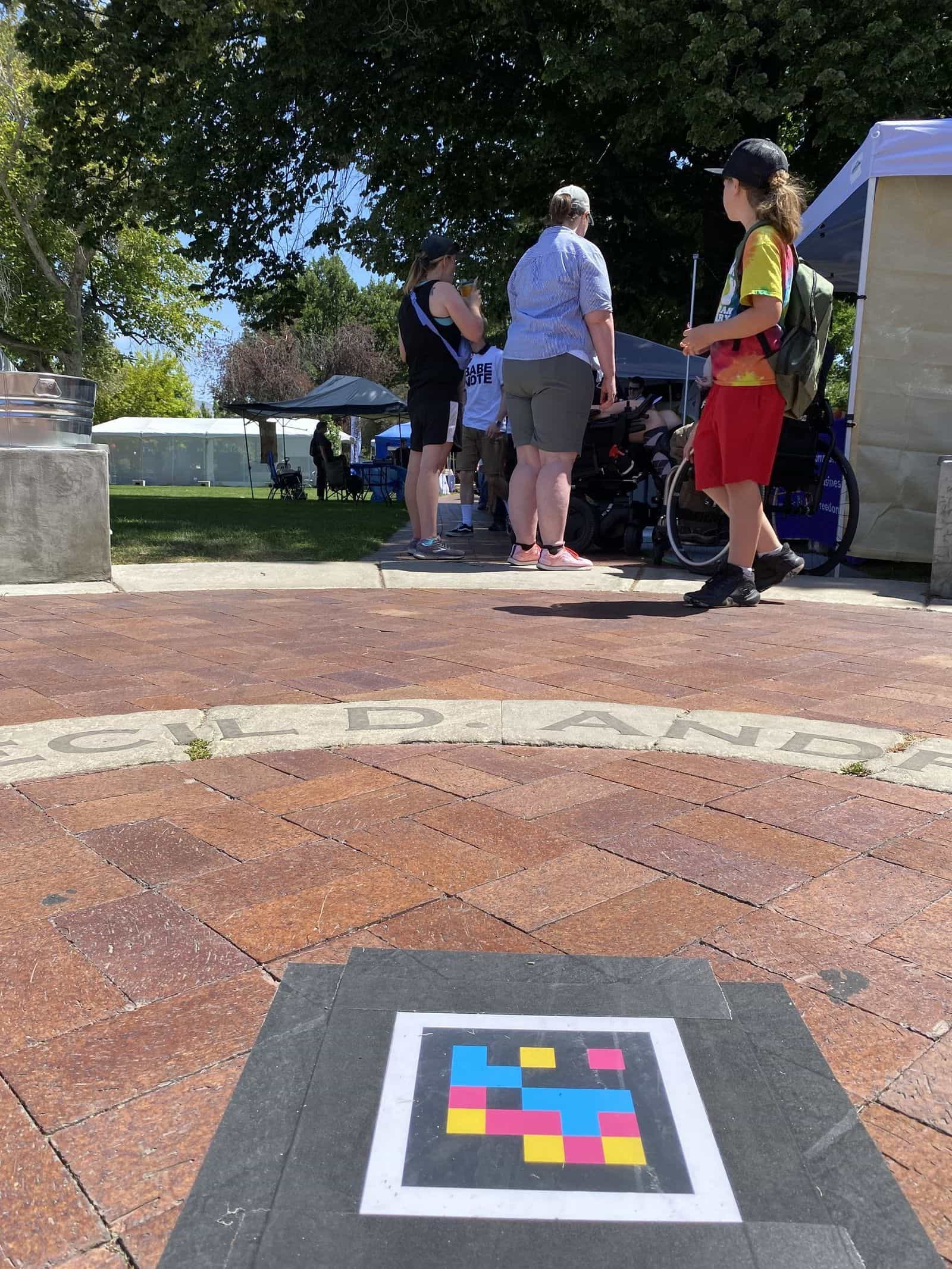
Set into the ground at Cecil D. Andrus Park, beside the inscription in the brickwork. 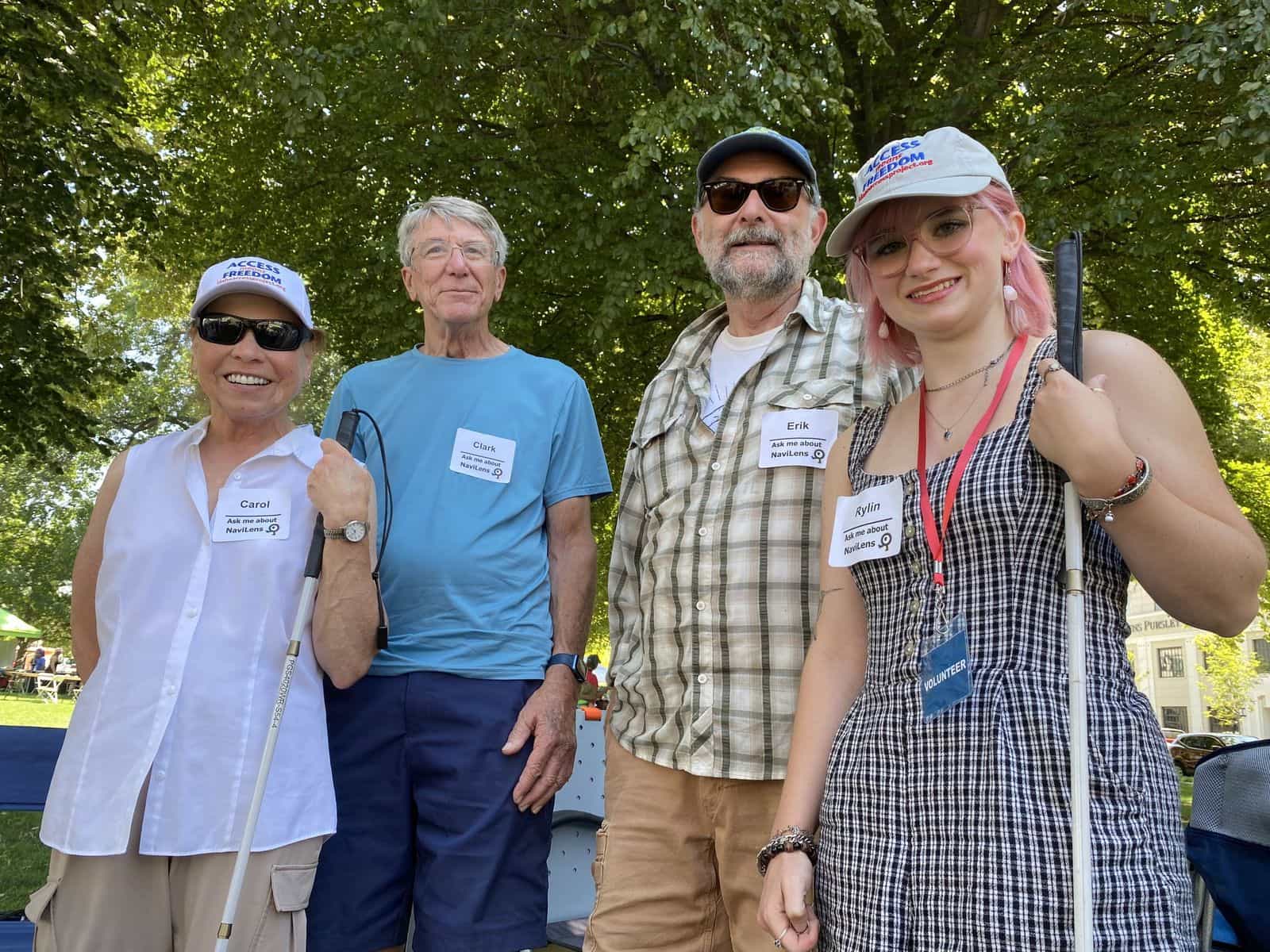
The event volunteers, wearing the “Ask me about NaviLens” sticker.
§ Timeline
From a water plant to a center you can hear.
- 2008
The Boise WaterShed opens
The City of Boise opens its environmental education center next to the West Boise Water Renewal Facility, in a LEED Gold building designed so the facility itself can be toured.
- Mar 15, 2025
Reopens as a water and climate center
The center reopens as The WaterShed with 25+ new exhibits, free admission, and every label and wayfinding sign in English and Spanish.
- 2025
The codes reach the hall
NaviLens joins the exhibit-hall panels and the outdoor campus site map; the Climate Stories, which are audio, are also published as an American Sign Language video.
- Jul 17, 2025
Idaho News 6 covers it
Local television walks the center with Dianna Willis and her guide dog Babbs, with Carol Baron and with Cindy Busche. The headline is Dianna's own line: “It brings it to life”.
- Jul 25, 2025
Hands Around the Capitol
The 35th anniversary of the ADA is marked at Cecil D. Andrus Park, with the grounds signed using NaviLens codes on light poles, paving and bus shelters.
§ Results
A center where “a city for everyone” is also spoken.
42
Languages read aloud in the hall and on the campus, against the 2 in print
0.03 s
Detection time · up to 12× the range of a QR code
2 settings
The center year-round and the Capitol during Hands Around the Capitol
§ And your destination?
Your destination can also guide in 42 languages.
Tell us about your trails, visitor centers, landmarks or galleries. We’ll show you how NaviLens would make your offering accessible—with comparable cases.