Case study · Melbourne · Australia · Multimodal wayfinding
Melbourne, guided in layers: from the train station elevator to the tram shelter.
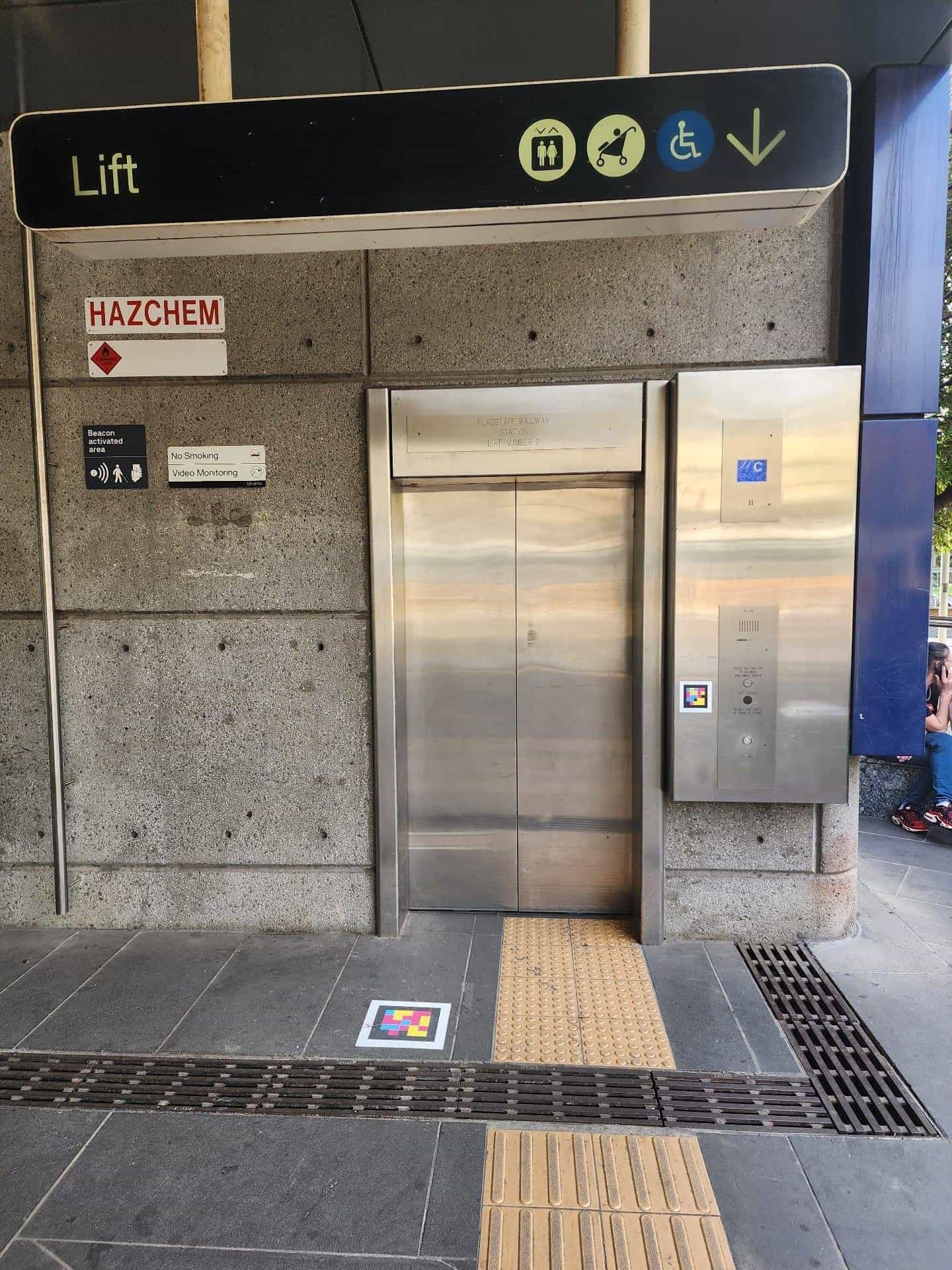
Victoria's NaviLens rollout isn't limited to rolling stock. The same codes also travel across wayfinding infrastructure: elevators at Flagstaff station, tactile pavings, bayside tram shelters and the dedicated Footscray wayfinding trial running until July 2024.
Multimodal
Rail · Tram · Urban shelters
Flagstaff
Wayfinding on elevators and platforms
Footscray
Wayfinding trial until Jul 2024
42 langs
Audio and text on the same sign
The project
Wayfinding on top of the existing network
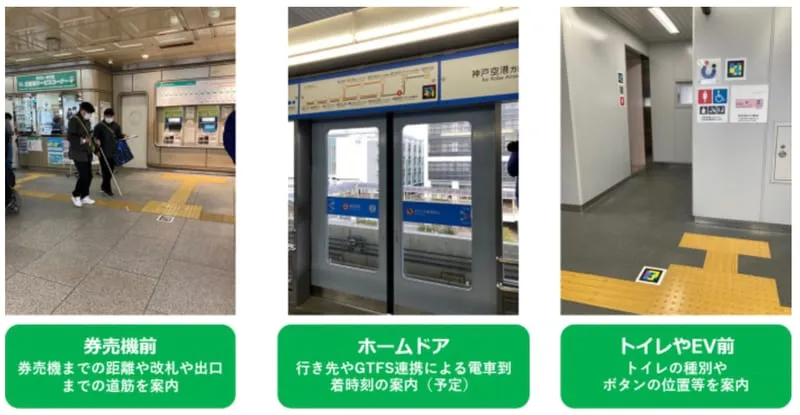
After the success of the Yarra Trams Route 96 pilot, Victoria's Department of Transport and Planning and partner operators extended the rollout to shared wayfinding infrastructure: the code sits exactly where a low-vision, blind or non-English-speaking traveler has to decide the next step of their trip.
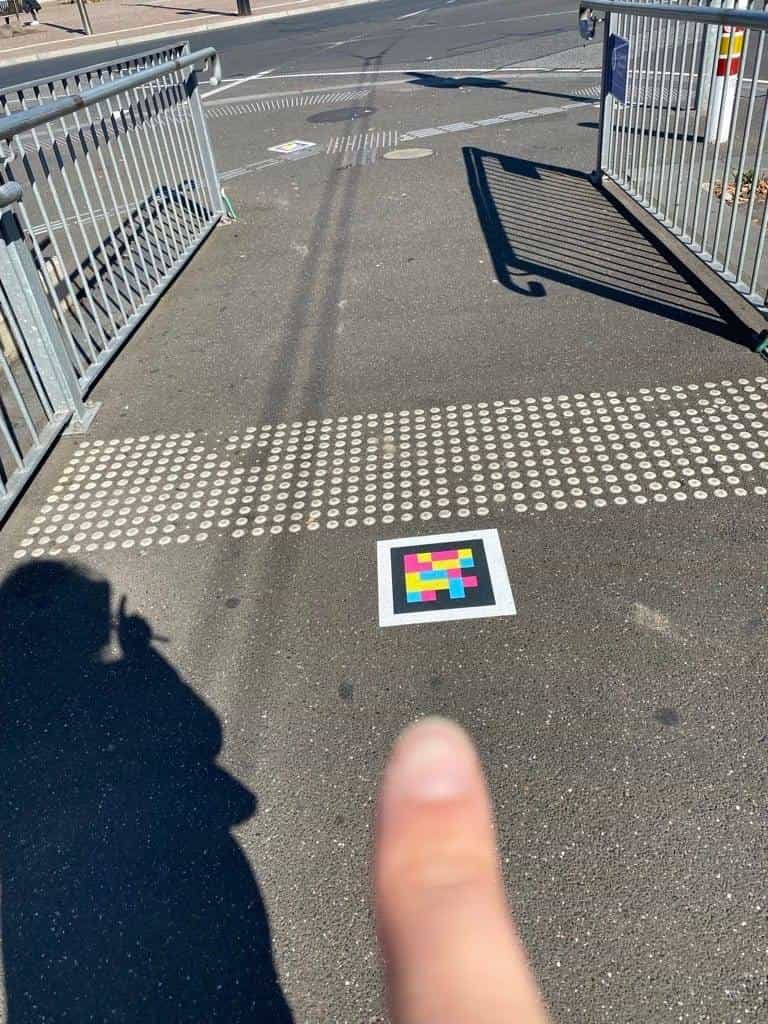
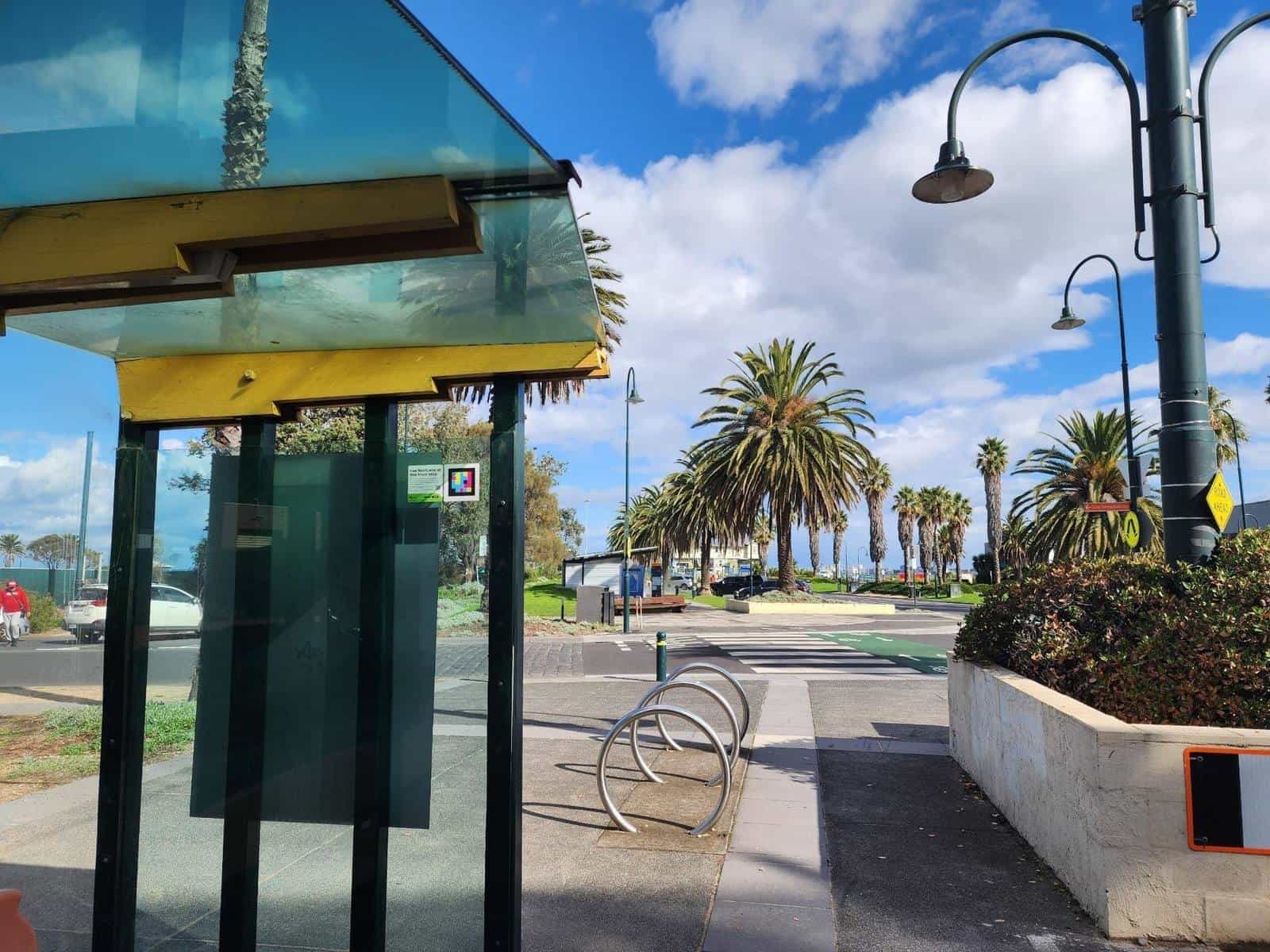
At Flagstaff Railway Station, in the heart of the City Loop, the codes appear next to the “Elevator Number 2” buttons linking concourse and platforms, and on the floor—at the start of the tactile paving—to announce the platform entrance. On the tram network, wayfinding was extended to Footscray until 31 July 2024 with a dedicated trial, and to shelters such as the bayside walk toward Port Melbourne.
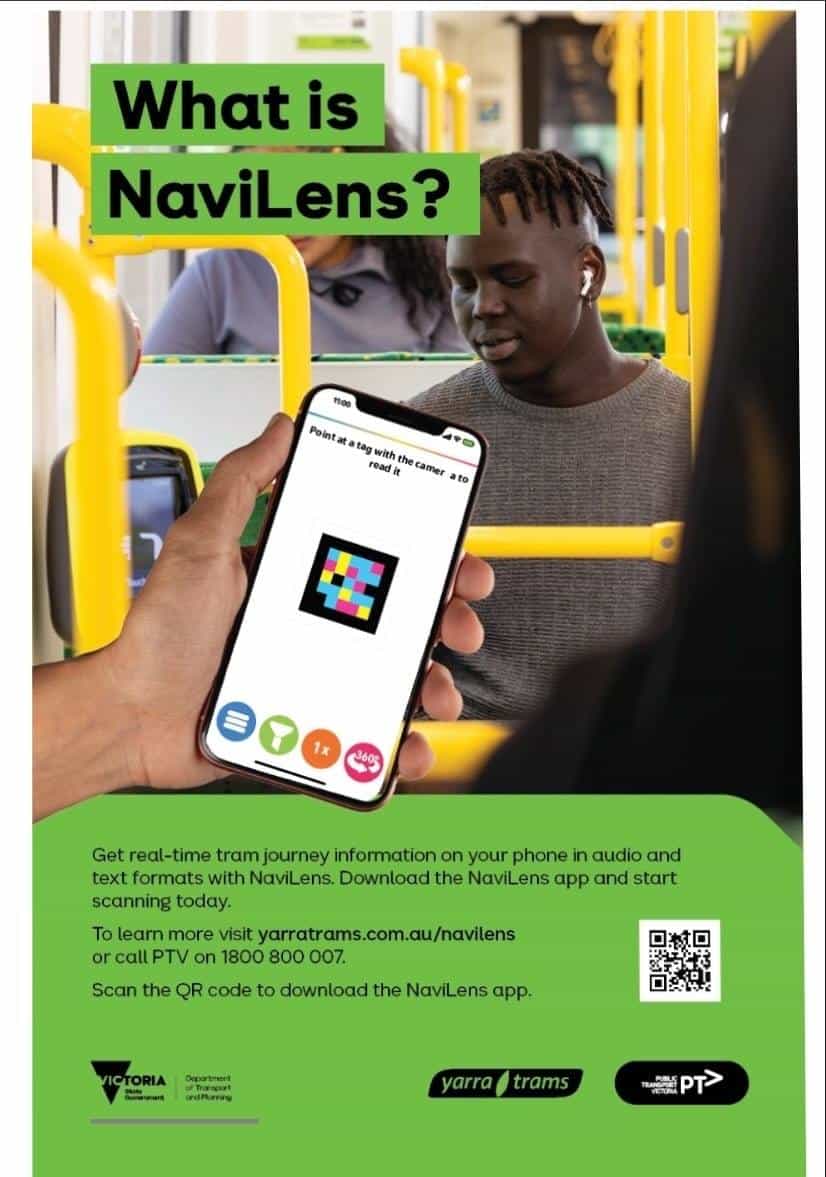
The philosophy is clear: one sticker delivers audio, text and 42 languages at once, with no construction and without replacing the existing visual signage. Wayfinding stops being a static map and becomes a digital layer over the physical environment.
§ How wayfinding is designed
One code at every decision point.
- 01
Codes at the decision point
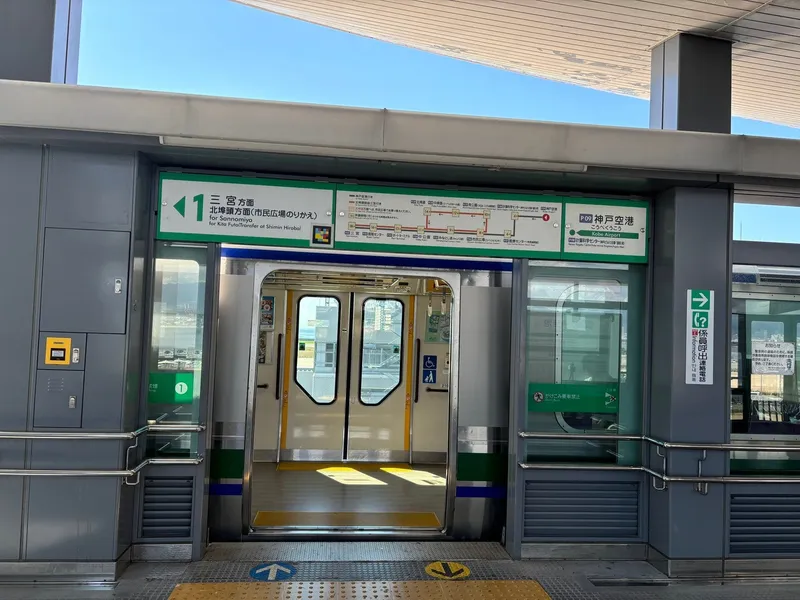
The wayfinding deployment places the codes exactly where someone has to decide: next to the elevator button at Flagstaff, on the floor where the tactile paving begins, on the inner glass of a tram shelter. The information arrives at the very moment you look at your surroundings.
- 02
One sign, several layers
Each code delivers audio, text and translation into 42 languages from the same physical sticker. In Melbourne—where one in three people speaks a language other than English at home—wayfinding serves blind, low-vision, tourist and recent-migrant riders at once.
- 03
Door-to-door continuity
The pilot was designed to chain the trip together: the same codes guide from the street entrance of the train station, the elevator between concourse and platform, the tram shelter and the inside of the tram itself, with live arrival times from Yarra Trams' control center.
§ Inside the deployment
Multimodal wayfinding, one read.
§ Why it matters
Wayfinding stops depending on sight.
Independence
Knowing which elevator to take, where the platform starts, or whether this is the right shelter — without asking for help. Accessible signage becomes self-serve for blind and low-vision riders.
Multimodal
Urban rail (Flagstaff), tram (Yarra Trams) and bayside stops share the same language. The chain of the trip doesn't break when changing mode of transport.
No civil works
Codes are stuck on existing signage and street furniture. This lets accessible wayfinding be extended to complex stations like Footscray with a scoped trial, with no civil-works project.
§ And your network?
Your next station can also speak.
Tell us about your network, your pain points and the KPIs you want to move. We’ll show you how NaviLens would fit—with comparable cases.