Case study · Málaga · Lines 1 & 2
Spain's first metro that also speaks in signs.
Metro de Málaga, the concession operator under the Andalusian Regional Government, embedded NaviLens across entrances, elevators, ticket machines and platforms in 2022 and, in January 2026, added Spanish Sign Language videos inside those same codes — a first for any Spanish metro.
Apr 2022
Initial rollout · Lines 1 & 2
19.2 M
2025 riders · all-time record
+5.29%
2025 growth vs. 2024
Jan 2026
First Spanish metro with SSL in NaviLens
The operator
Metro de Málaga
Junta de Andalucía
Metro de Málaga is the light rail network of the Costa del Sol capital, run under concession by the Andalusian Regional Government and operated by Metro de Málaga, S.A. Its two lines, L1 (El Perchel ↔ Andalucía Tech) and L2 (El Perchel ↔ Palacio de los Deportes), connect the center with the university district and the new western developments.
In 2025 the network hit an all-time high of 19.2 million riders (+5.29% vs. 2024). The challenge was no longer just growing demand, but ensuring that growth reached people with sensory disabilities.
In April 2022 Metro de Málaga rolled out NaviLens technology across the whole network. In January 2026 it went further: Spanish Sign Language videos were embedded into those same codes, making it the first Spanish metro to offer official SSL information for deaf users.
§ The challenge
A network that serves equally those who can't see and those who can't hear.
- 01
Covering a mixed metro: surface and underground
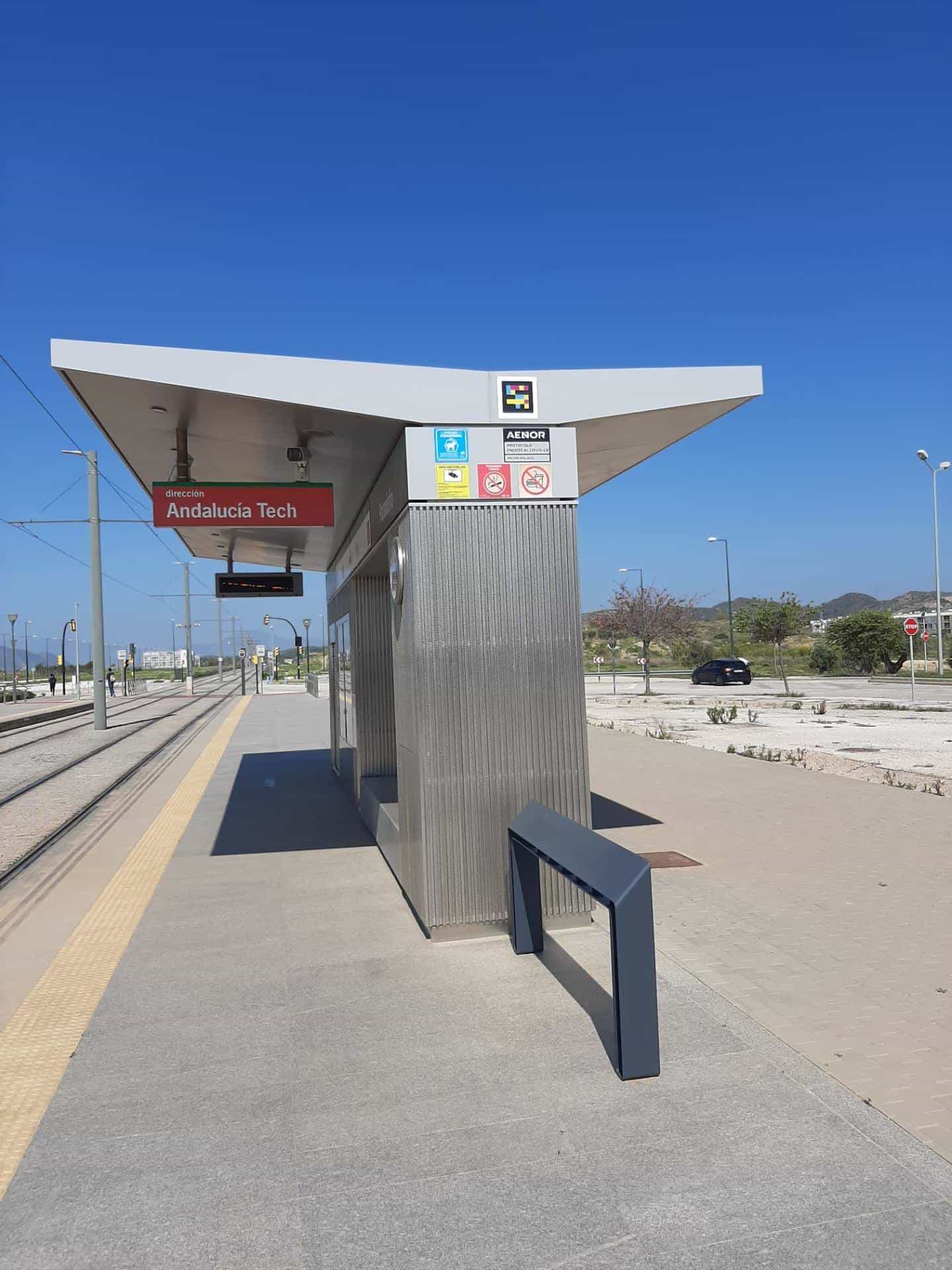
Metro de Málaga combines open-air tram-style stops (Andalucía Tech, Universidad) with deep underground stations (El Perchel, Ciudad de la Justicia). Accessible signage had to work as well in sunlight as it does in subterranean concourses.
- 02
Solving the three critical decision points
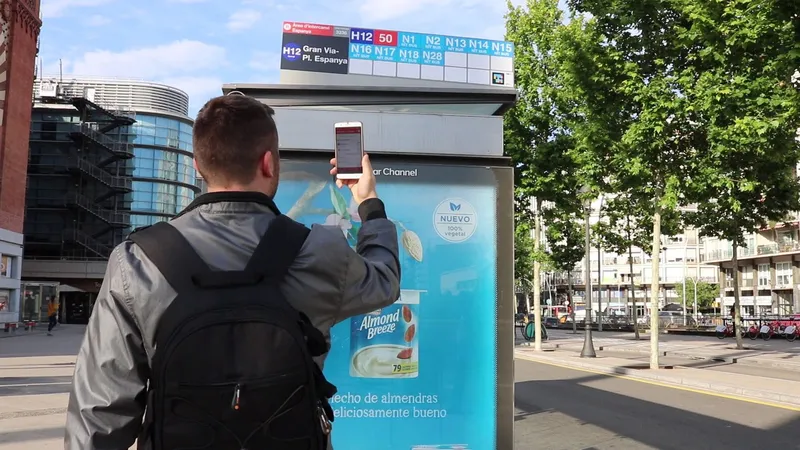
Riders with visual or hearing disabilities need orientation at three moments: finding the street entrance (including the elevator), validating and buying tickets at touchscreens, and choosing the right platform and direction without depending on staff.
- 03
Serving both blind and deaf users
The operator wanted a single system—not two—able to inform blind and low-vision users and, from 2026, also deaf users through Spanish Sign Language videos.
§ The solution
Codes at every decision in the journey.
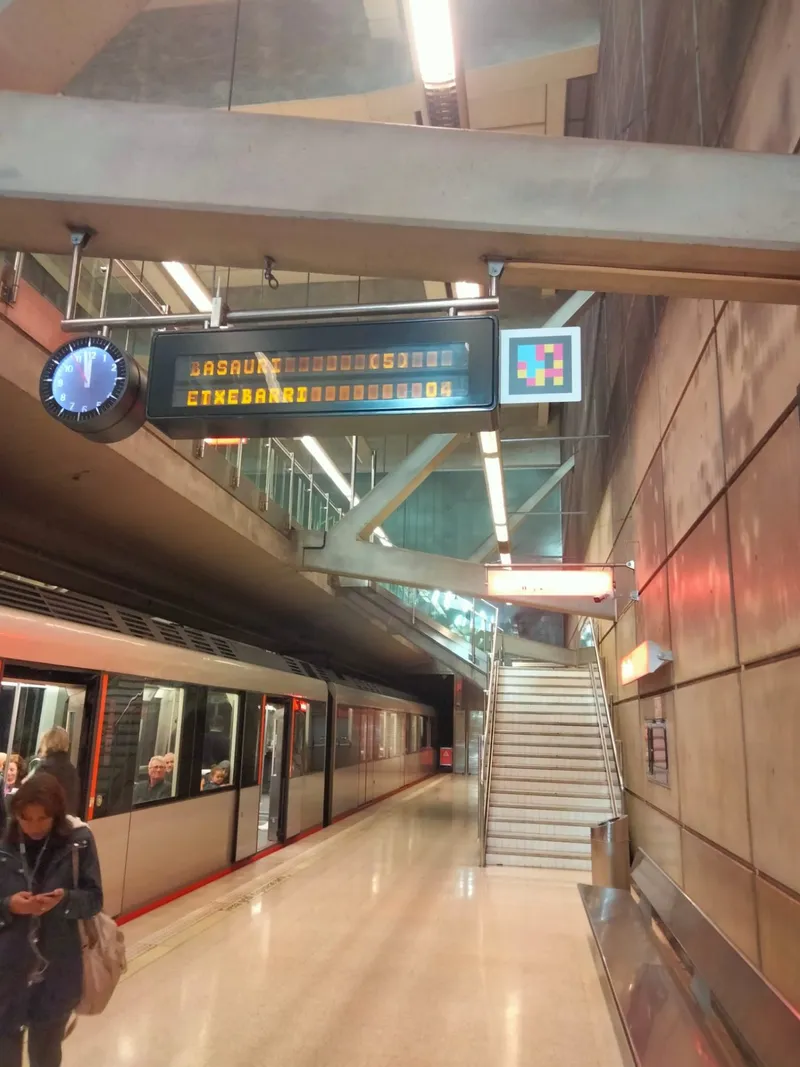
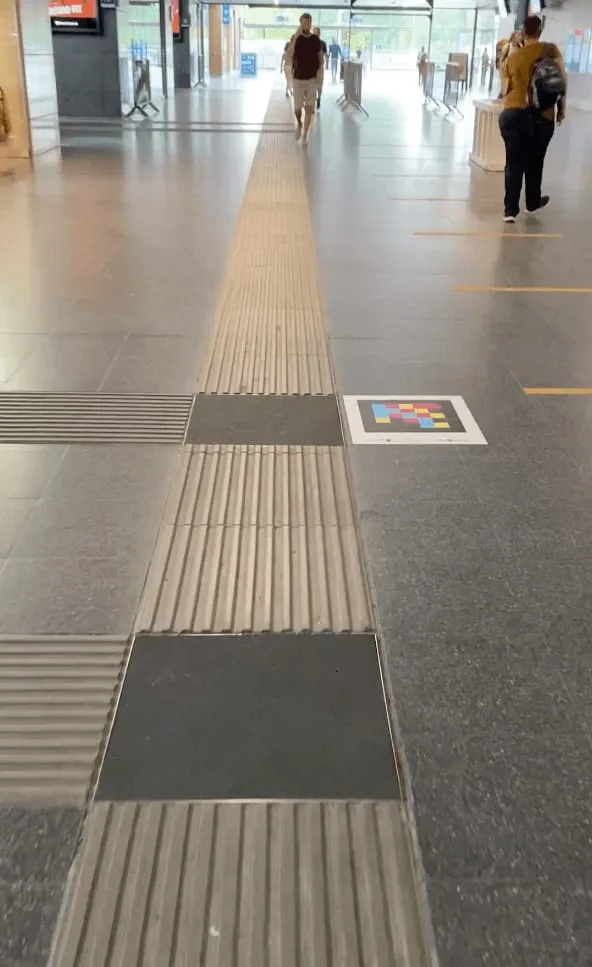
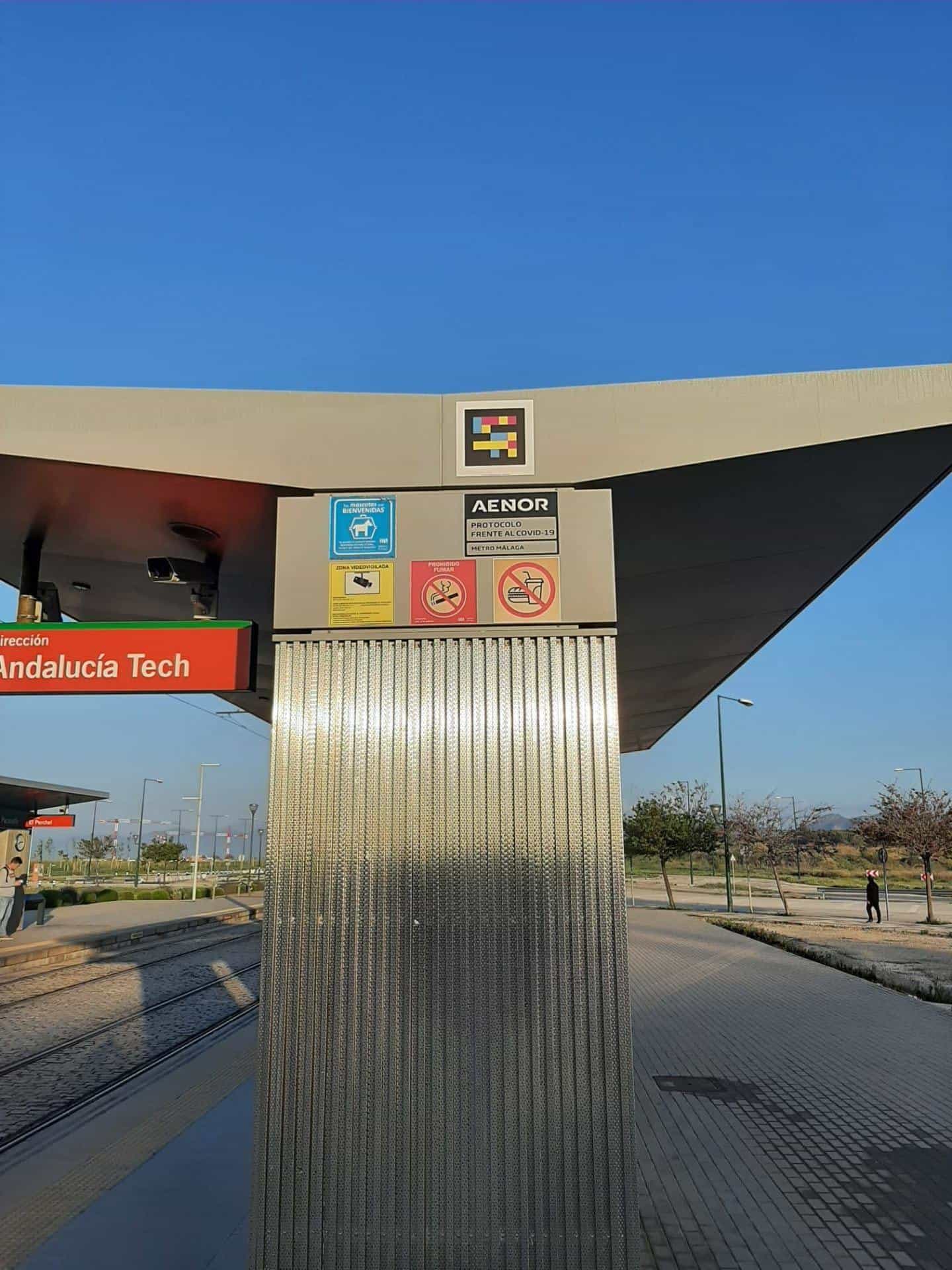
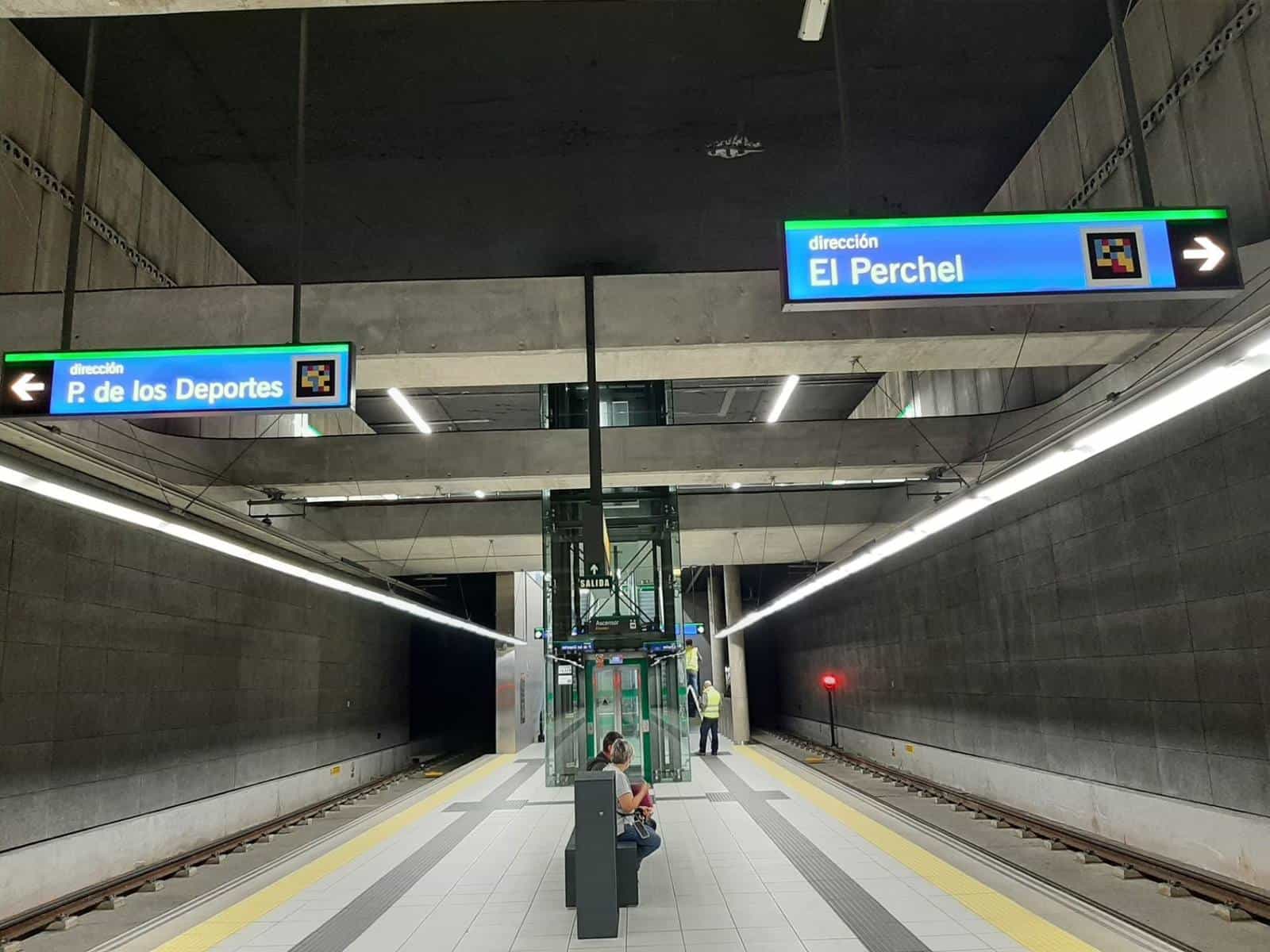
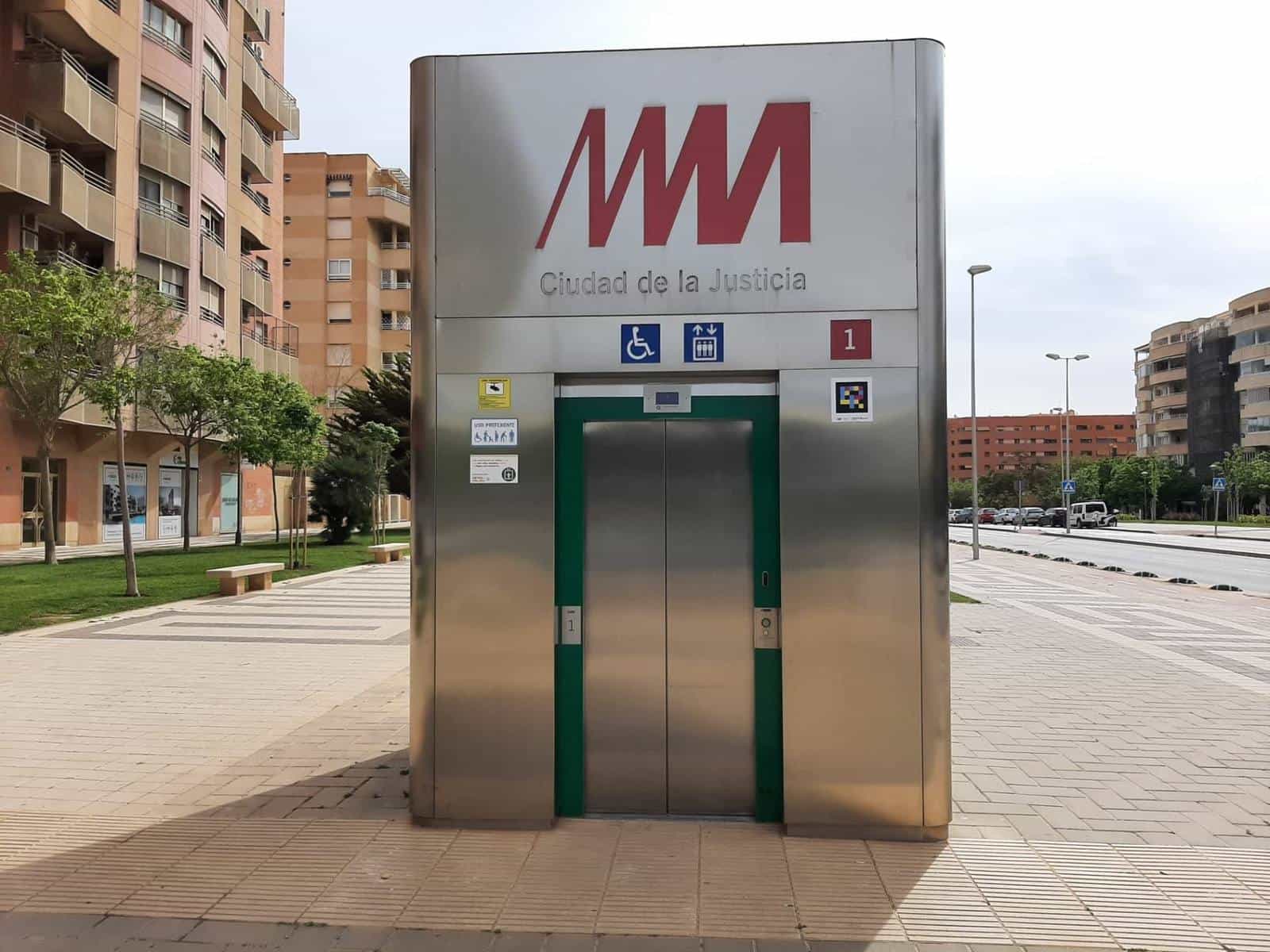
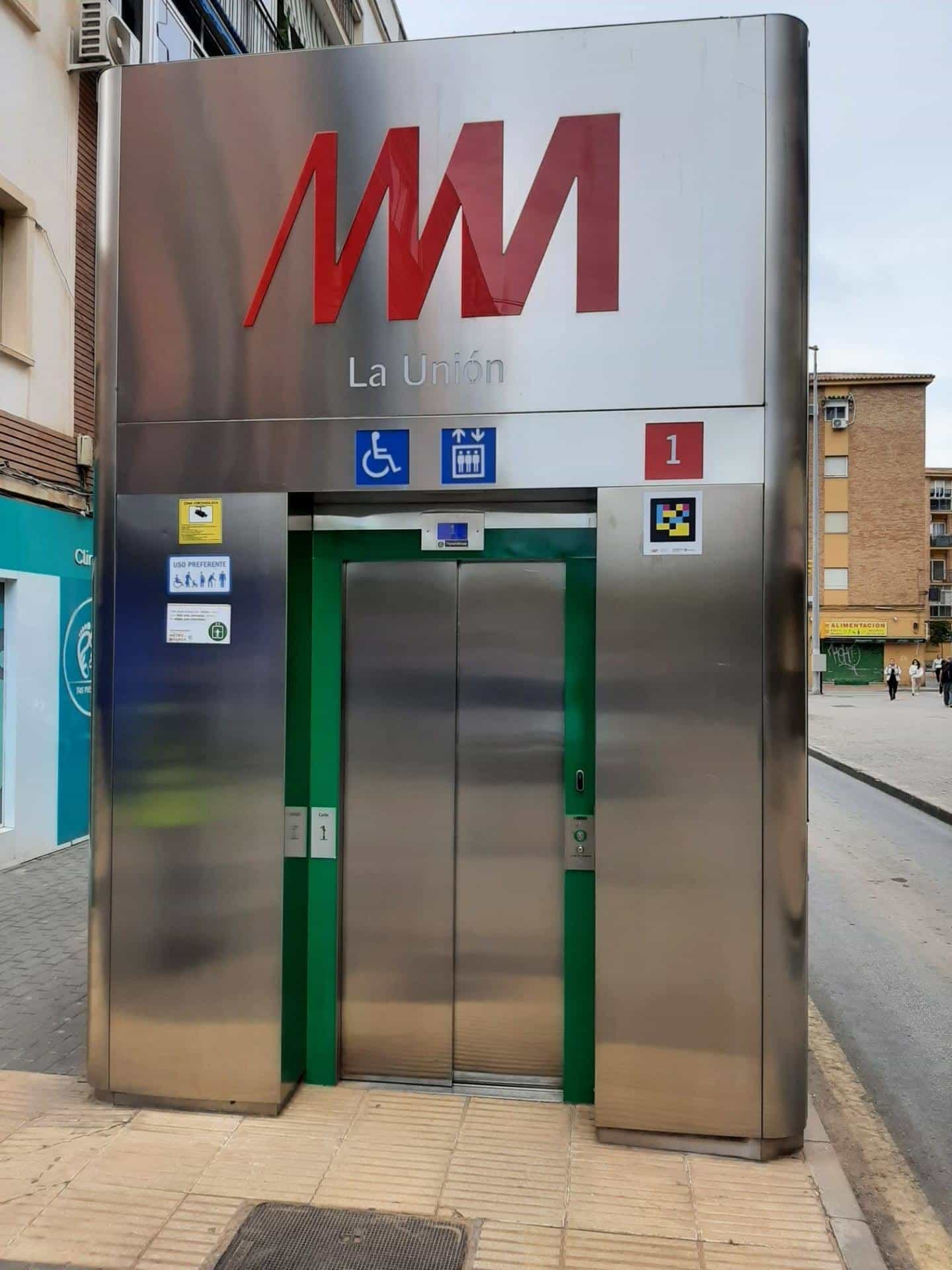
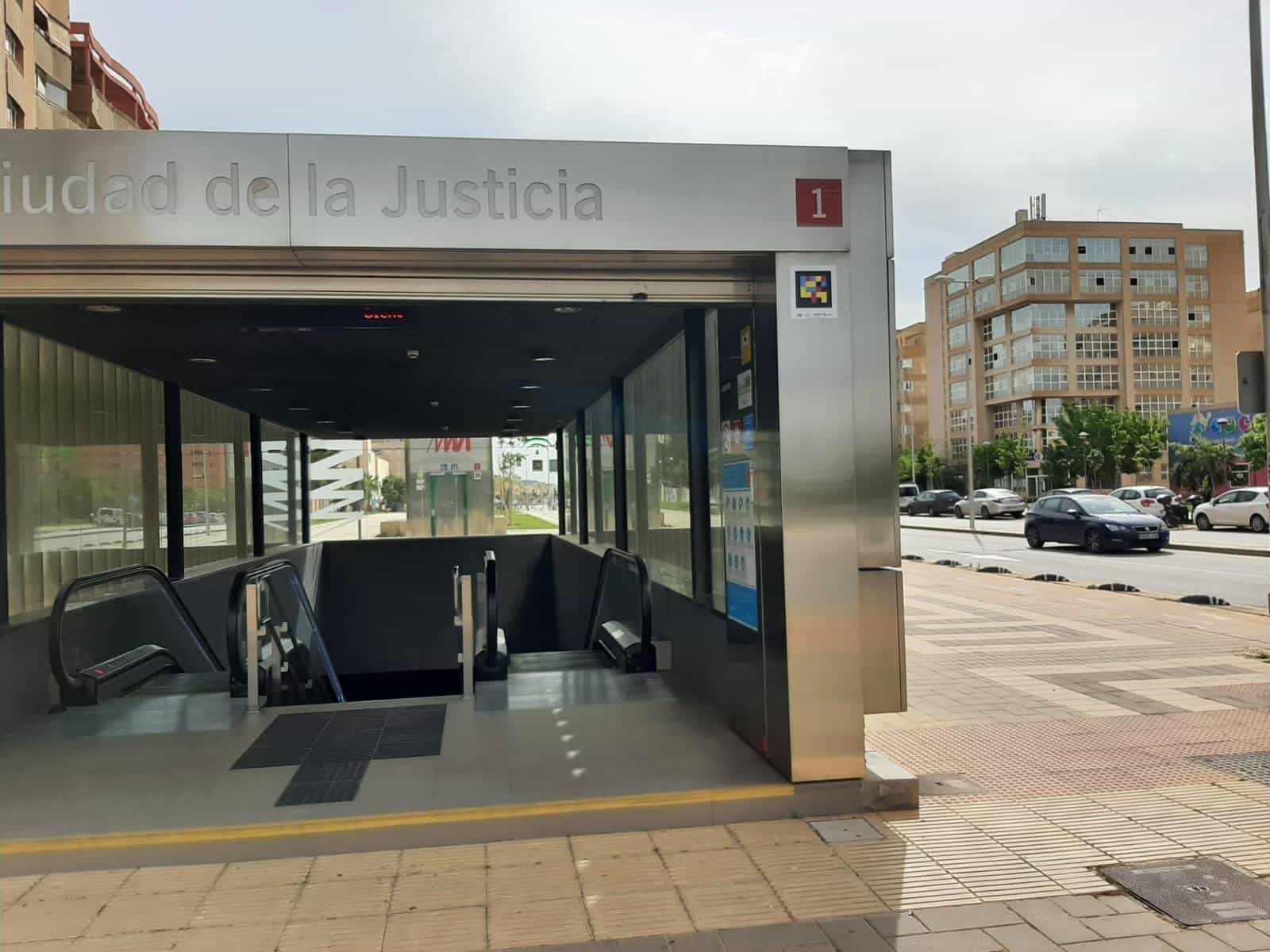
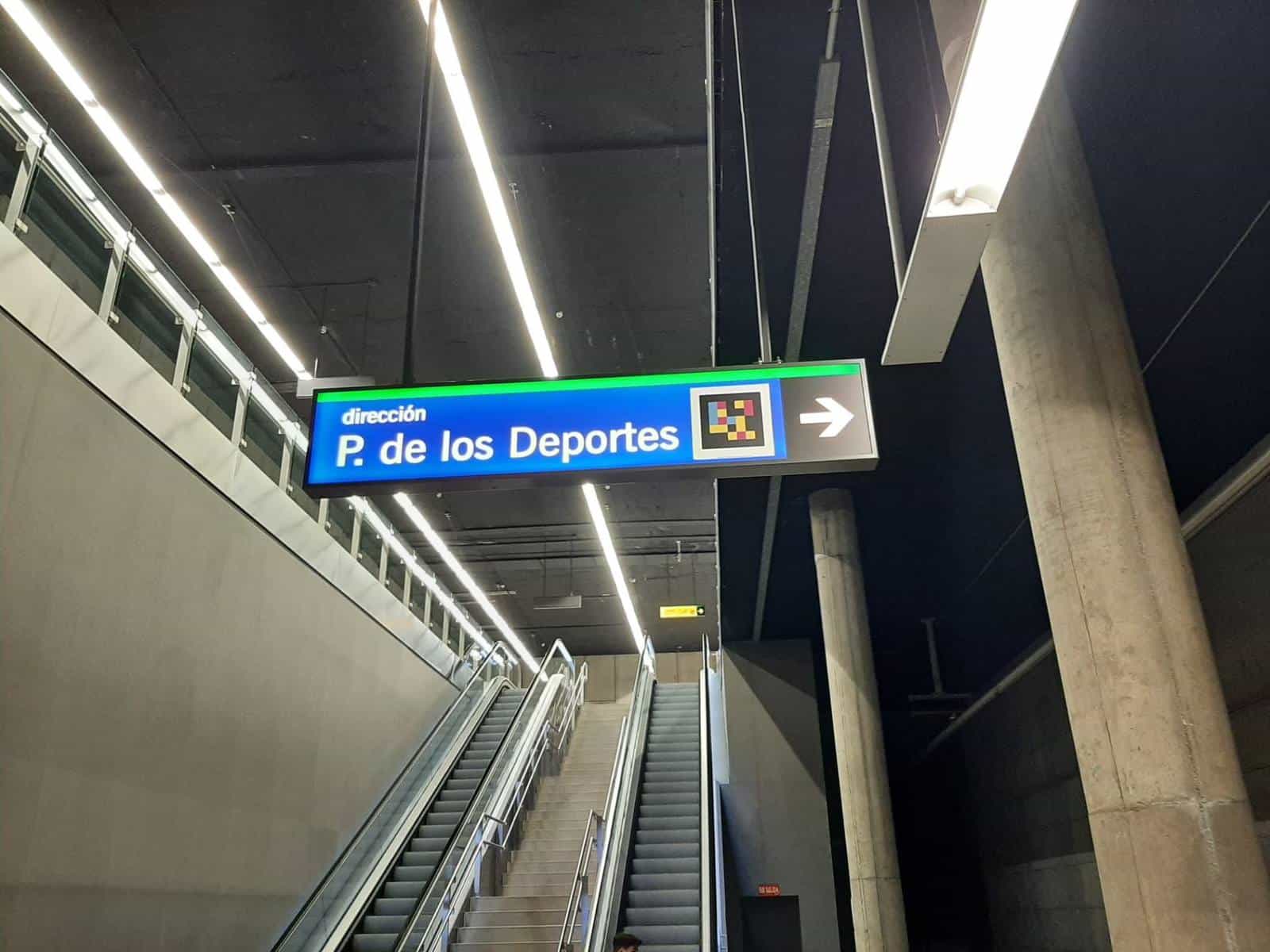
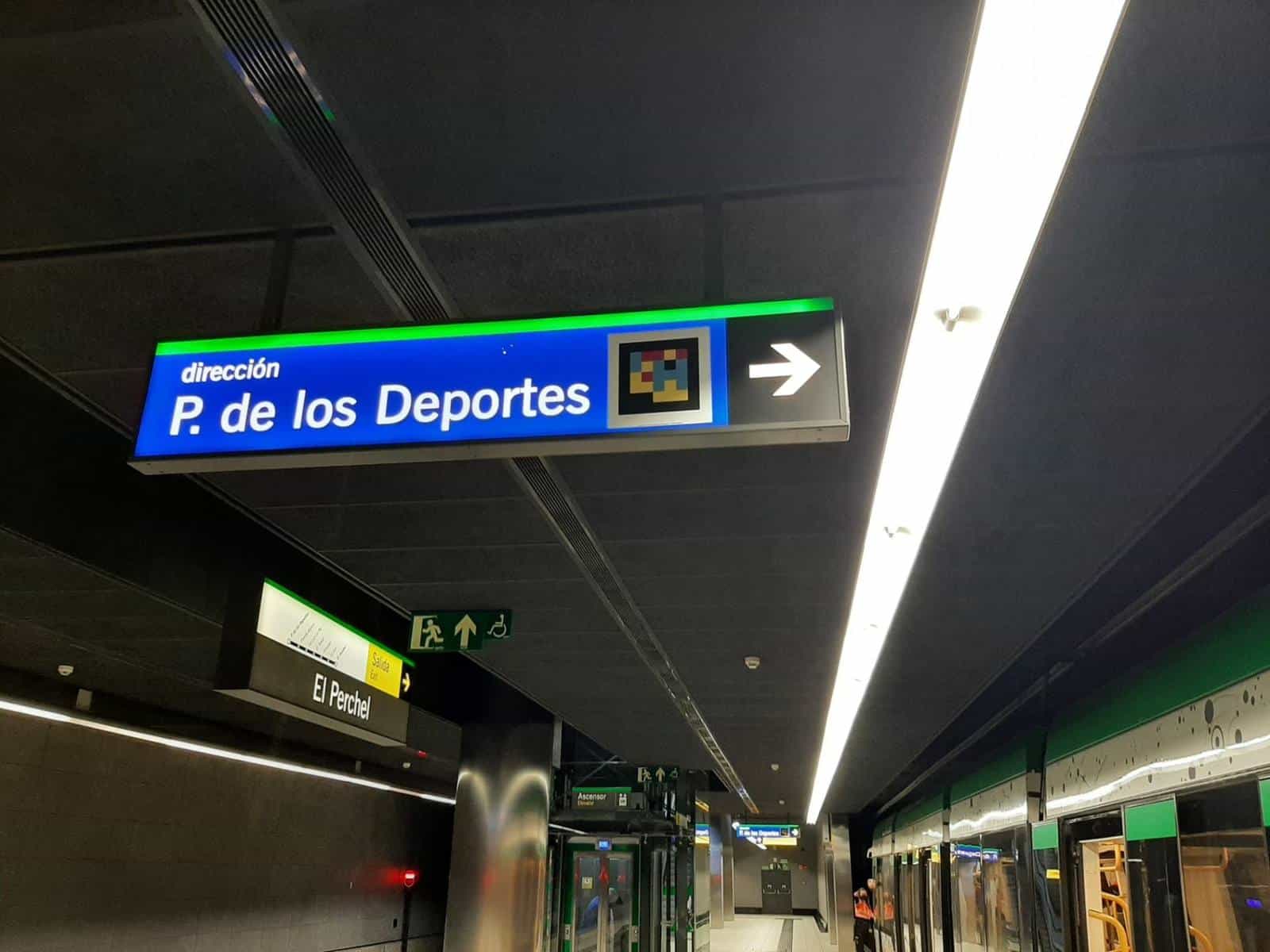
Metro de Málaga placed NaviLens codes at every point where a rider makes a decision: the outdoor shelter at every surface stop, street-level elevators, the “Billetes / Tickets” signs above vending machines, and the blue illuminated platform direction signs.
Using the NaviLens app, a person with a visual disability locates the code from several yards away and hears the station name, train direction and distance to the sign.
In January 2026, those same codes were extended with Spanish Sign Language videos playable from NaviLens GO, positioning Metro de Málaga as the first Spanish metro network with integrated SSL.
§ From the street
The first code is before going down.
§ On the platform
Knowing which direction without asking.
§ At the ticket area
Buying a ticket without looking.
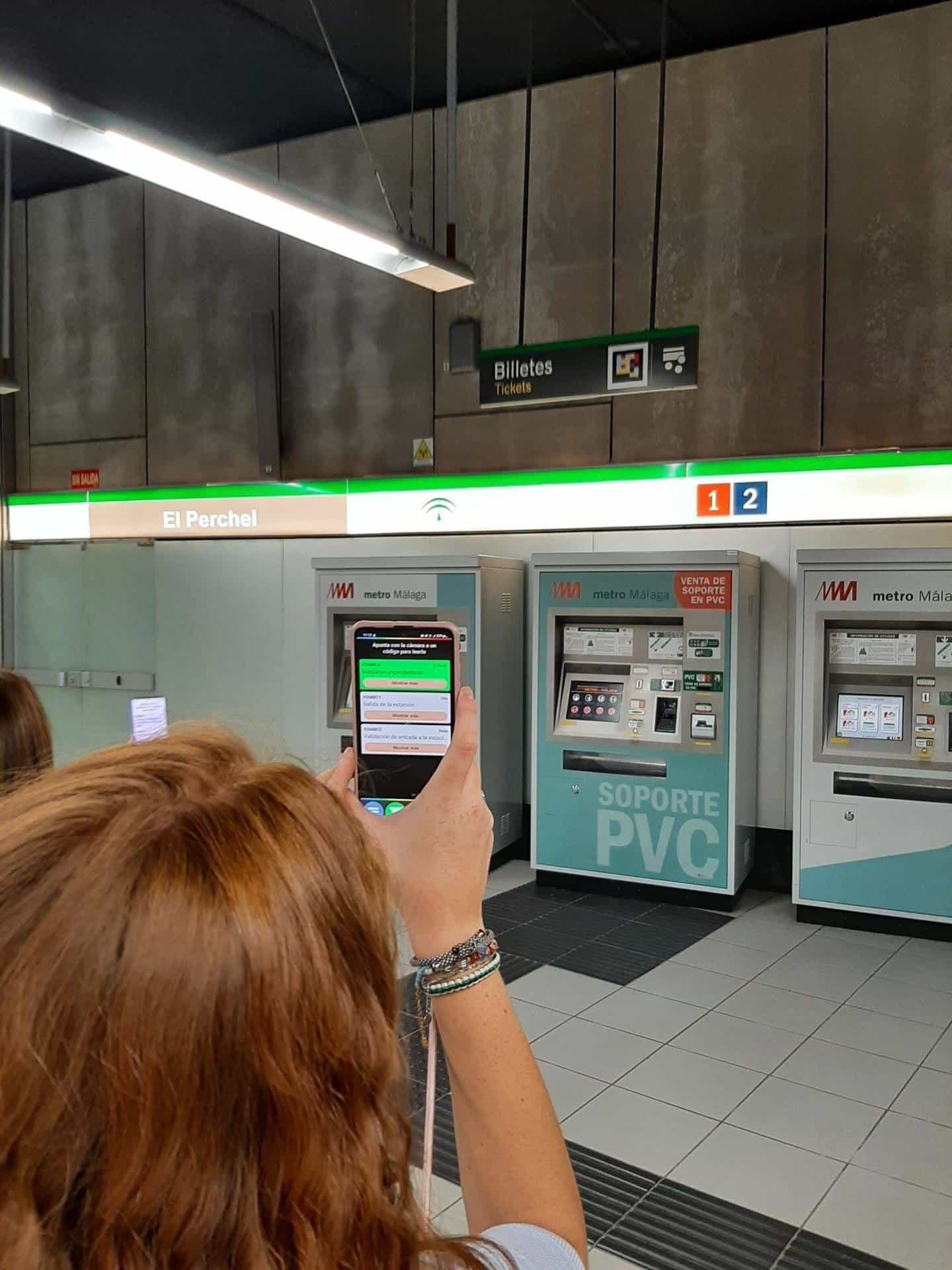
Above the El Perchel ticket machines, a “Billetes / Tickets” sign carries a NaviLens code. With the app, the blind user knows how far the machines are, what to do at each one and where the exit is.
It's one of the most telling images of how NaviLens coexists with the operator's regular signage without replacing it: same information, accessible to all audiences.
§ January 2026
Spain's first metro with Sign Language inside the code.
On 10 January 2026, Metro de Málaga—led by director Fernando Lozano—unveiled an unprecedented move: embedding Spanish Sign Language videos inside the NaviLens codes already installed.
A deaf user scans the code with NaviLens GO and receives the sign's information—direction, exit, services—as an accessible SSL video. The infrastructure doesn't change: the same code that served blind users now serves the deaf community.
The extension fits the strategy of “accessibility that can be seen, understood and lived” that accompanied the 2025 record of 19.2 million riders.
1.º
First Spanish metro to incorporate Sign Language into operational service, embedded in existing NaviLens codes.
§ Why it matters
An infrastructure that grows with the operator.
Coverage
Surface shelters, street-level elevators, numbered entrances, ticket machines and platform signs: NaviLens accompanies the rider at every decision of the journey.
Reuse
The codes installed in 2022 are the same ones that in 2026 carry Sign Language: new content, no physical signage changes. An investment that scales by itself.
Leadership
Being the first Spanish metro with operational SSL makes Metro de Málaga a reference for other Andalusian and national operators in integral sensory accessibility.
§ And your network?
Your next station can also speak.
Tell us about your network, your pain points and the KPIs you want to move. We’ll show you how NaviLens would fit—with comparable cases.