Case study · València · Alacant
From Àngel Guimerà to the whole FGV network.
What started in February 2023 as a launch at Metrovalencia's busiest station was completed in September 2024: Ferrocarrils de la Generalitat Valenciana became the first Spanish rail operator with NaviLens across its entire network — 217 stations and stops between Metrovalencia and TRAM d'Alacant.
217
Stations and stops with NaviLens (Metrovalencia + TRAM d'Alacant)
~3,000
NaviLens codes installed across the FGV network
1st in Spain
Full rail network with NaviLens (Sept. 2024)
€693,814
Investment with EU NextGeneration funds
The client
FGV · Metrovalencia + TRAM d'Alacant
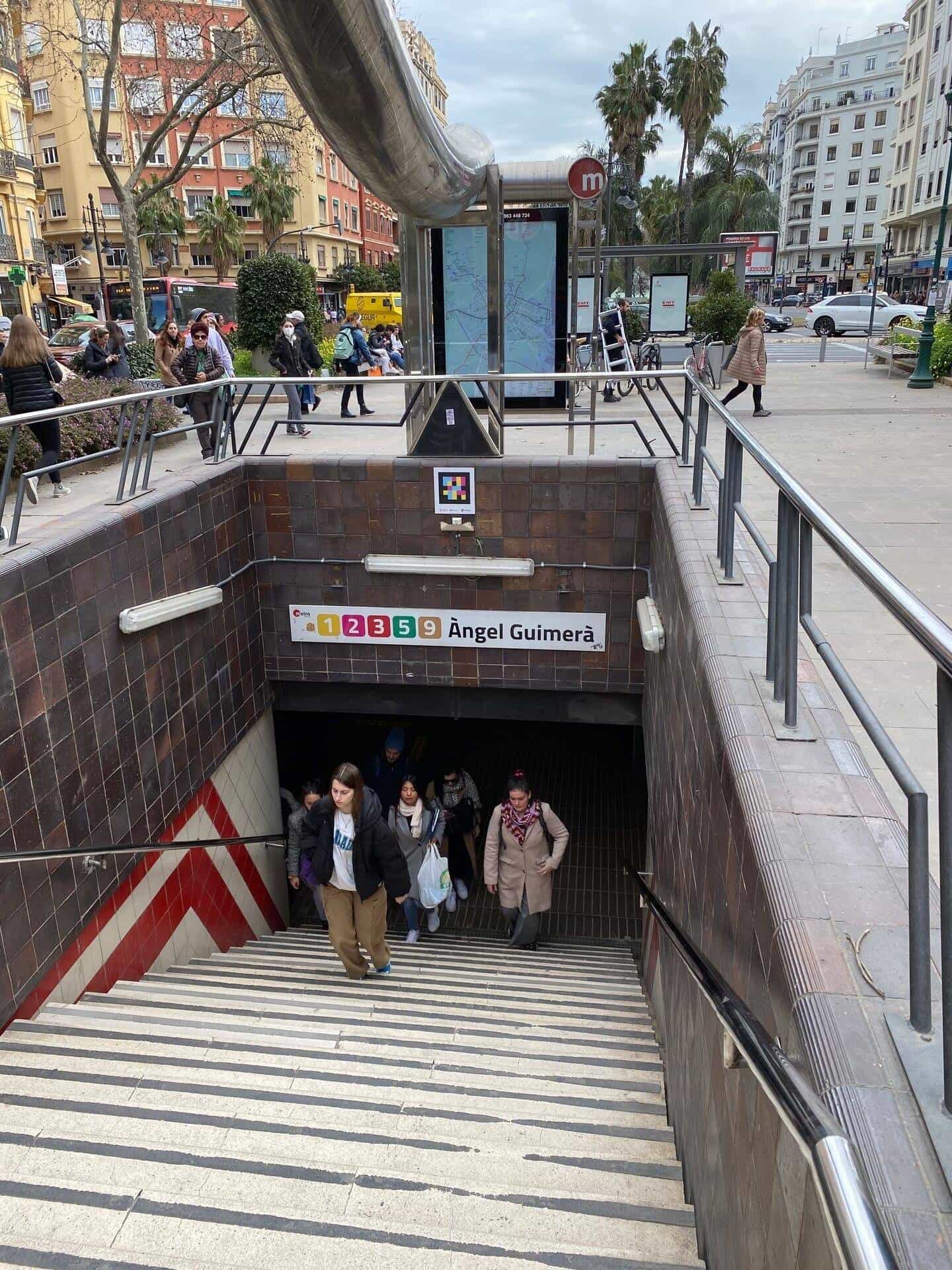
Ferrocarrils de la Generalitat Valenciana (FGV) operates Metrovalencia and TRAM d'Alacant, the two regional rail networks of the Valencian Community. Àngel Guimerà station—where lines 1, 2, 3, 5 and 9 converge—was the showcase of a much more ambitious plan.
In February 2023, FGV launched NaviLens at Àngel Guimerà (Metrovalencia) and Luceros (TRAM d'Alacant) in an event with regional minister Rebeca Torró, managing director Anaïs Menguzzato and representatives from CERMI, FESORD, ONCE and Plena Inclusión.
In September 2024, FGV completed the installation of around 3,000 codes across 217 stations and stops of both networks, becoming the first Spanish rail operator with NaviLens across its entire network. The project, delivered by Neosistec for €693,814 (VAT incl.), was funded by EU NextGeneration funds. The final launch took place at Russafa station, during Mobility Week, with regional minister Vicente Martínez Mus, managing director Alfonso Novo and FGV's Accessibility Board (CERMI, Helix, FESORD, COCEMFE, Plena Inclusión, ASPACE, ASPAYM, ONCE).
§ The challenge
Wayfinding at the crossroads of the network.
- 01
Five lines, two platforms, one name
Àngel Guimerà concentrates most central València interchanges: L1, L2, L3, L5 and L9. For a blind person, reaching the right platform towards Bétera, Llíria, Rafelbunyol, Aeroport or Marítim means crossing several levels, stairs and turns. Without audible, geolocated information, any interchange is an unknown.
- 02
An 80s station that couldn't be rebuilt
The brown ceramic façade, elbow corridors and retrofitted elevators reflect decades of layers. FGV needed a non-invasive solution: no civil works, no new wall-mounted electronics. Just signage that could be stuck on and maintained like any other sign.
- 03
Real waiting times in your ear
The challenge wasn't only wayfinding — it was hearing the SAE. Users had to know aloud which train enters each platform, its destination and how long until arrival, without relying on PA or visual panels, and in the language of their phone.
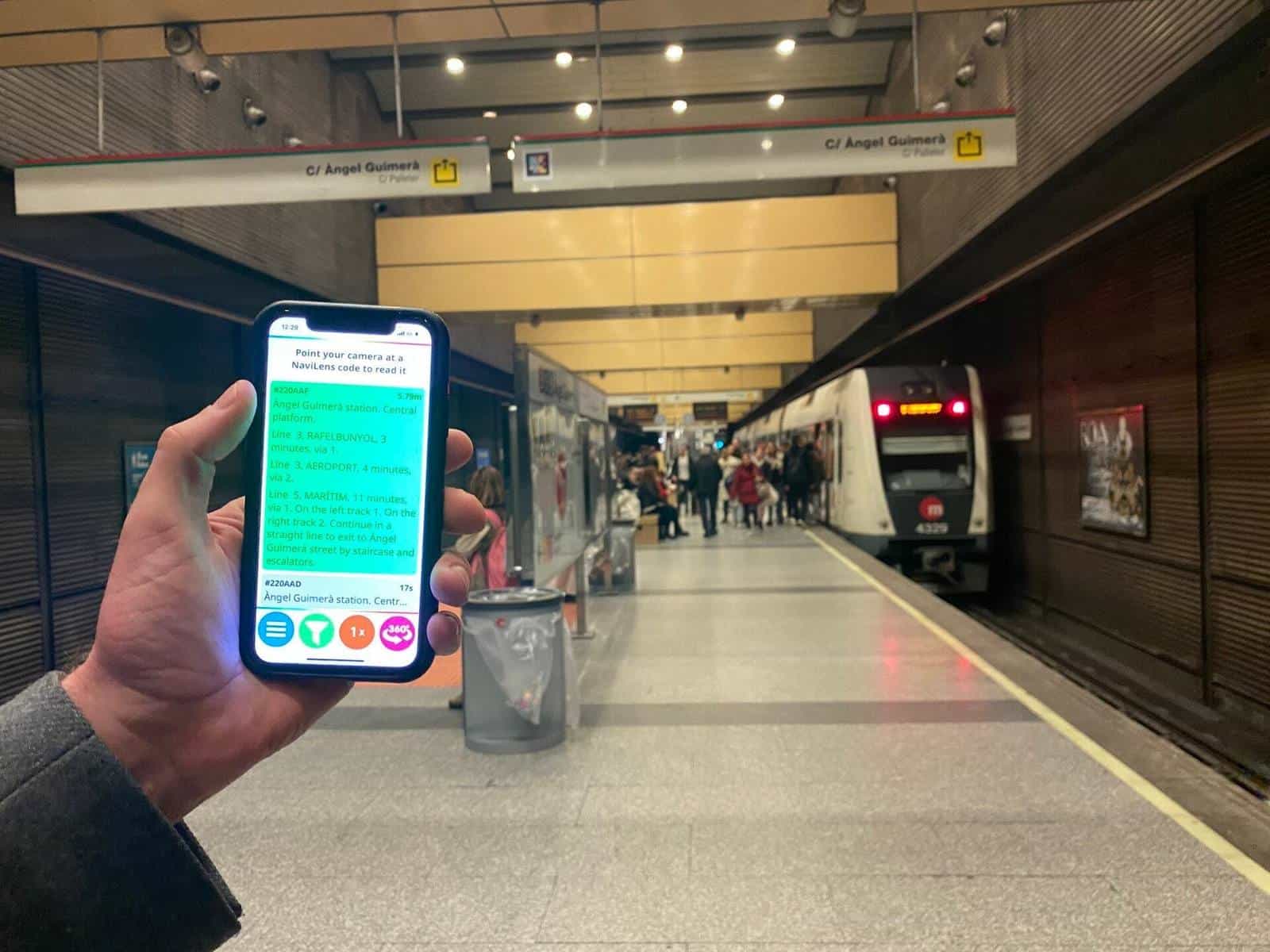
§ The solution
Codes at every decision: descend, validate, change, wait.
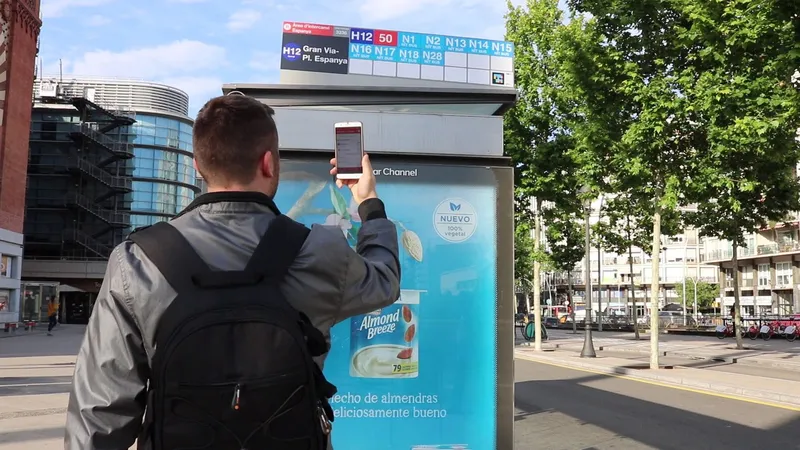
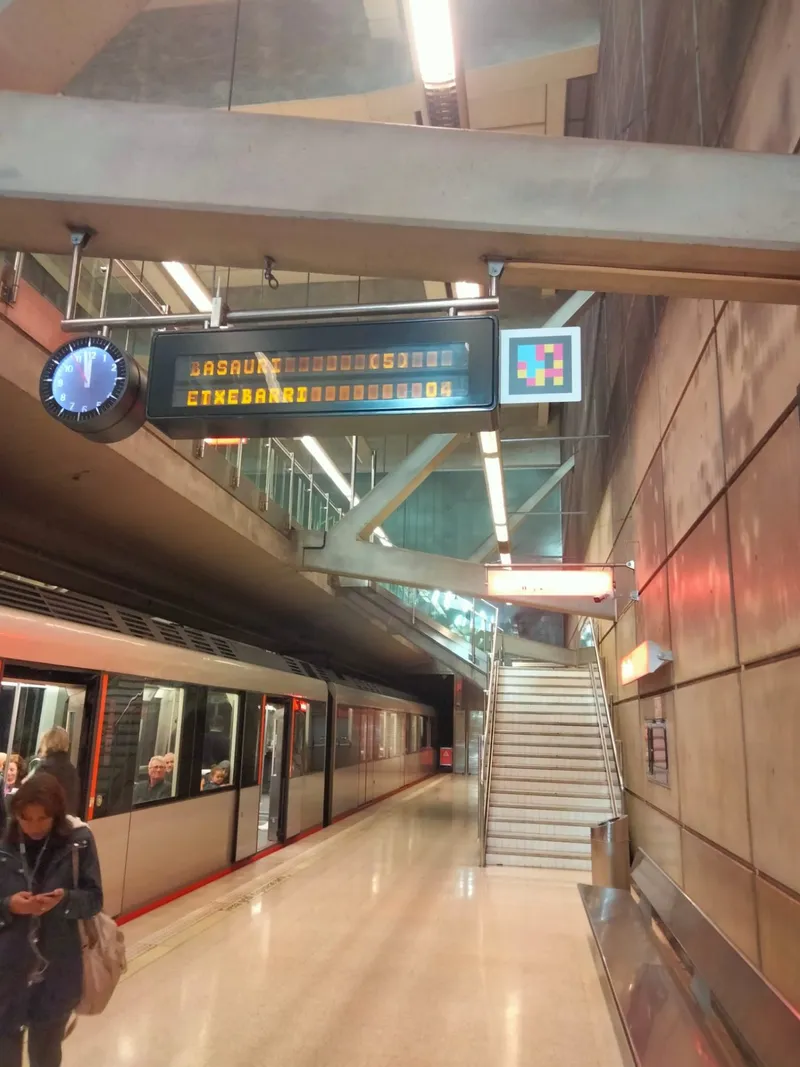
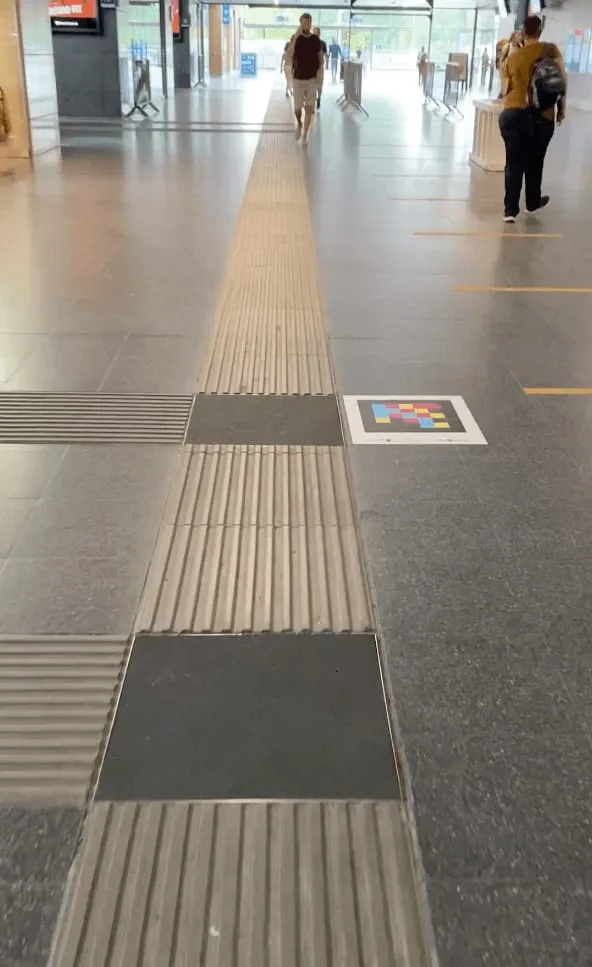
The rollout covers every decision point of the station. There are NaviLens codes at the street entrance, the line of turnstiles, every interchange sign, next to the elevators, on the platform intercom columns and on the platform indicators above.
With the free NaviLens GO app, blind or low-vision users scan without aiming and hear aloud their exact position, the destinations by track, real-time waiting times (3 minutes track 1, 4 minutes track 2) and the instructions to exit onto Àngel Guimerà street.
Information always arrives in the phone's language—Valencian, Spanish, English and others—, with no language barrier for visitors and tourists.
§ Point by point
From the street to the train, without getting lost.
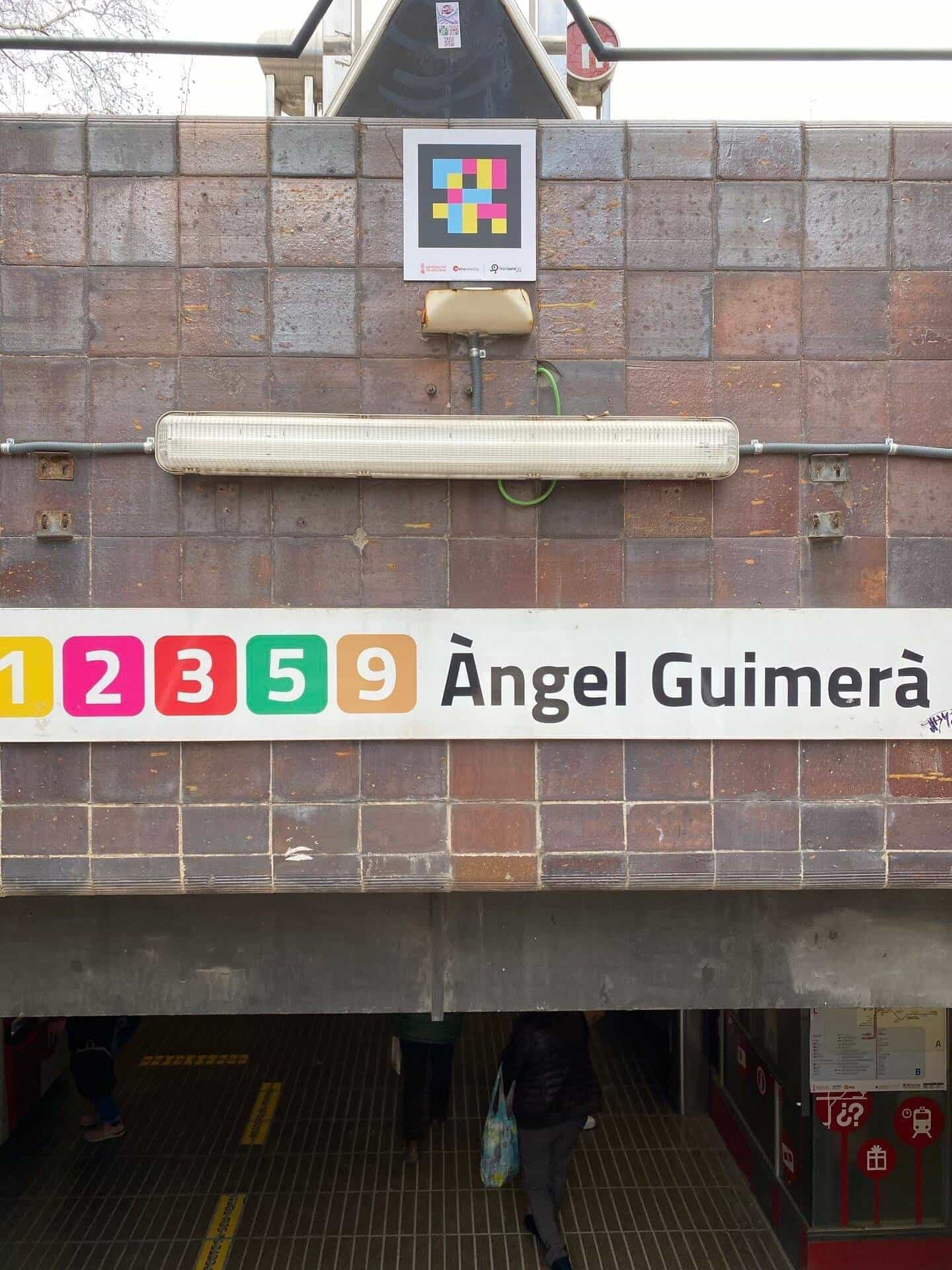
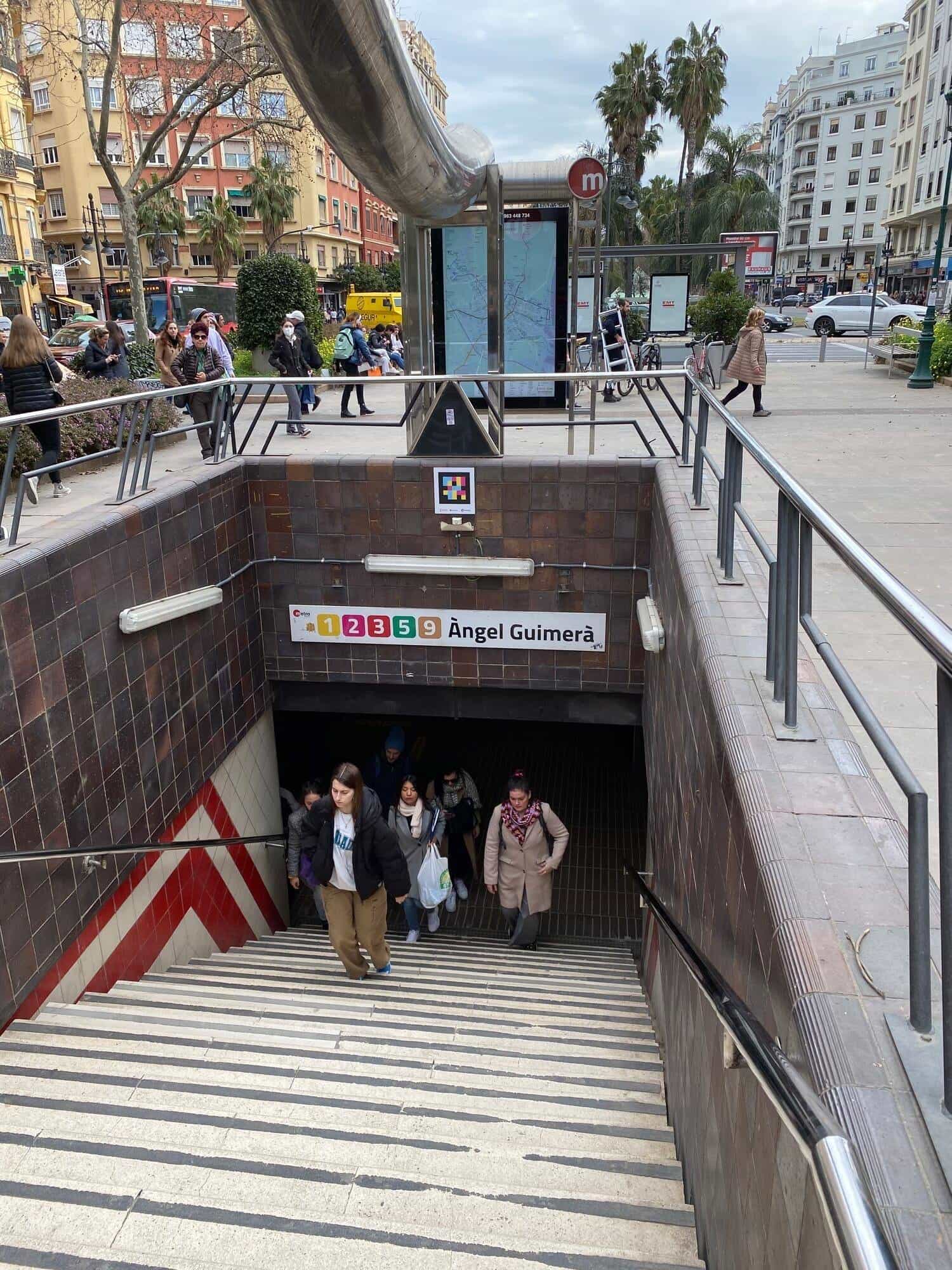
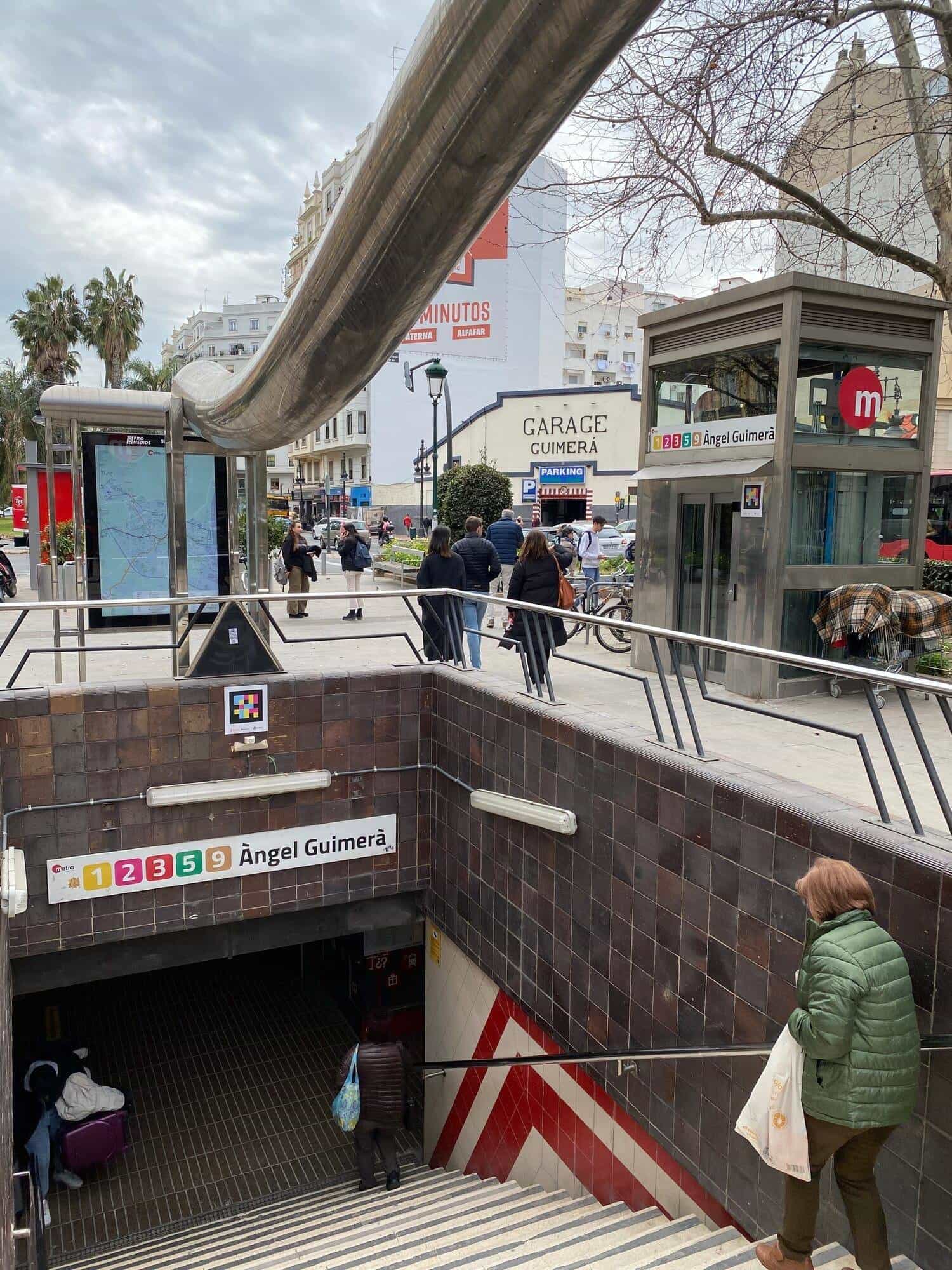
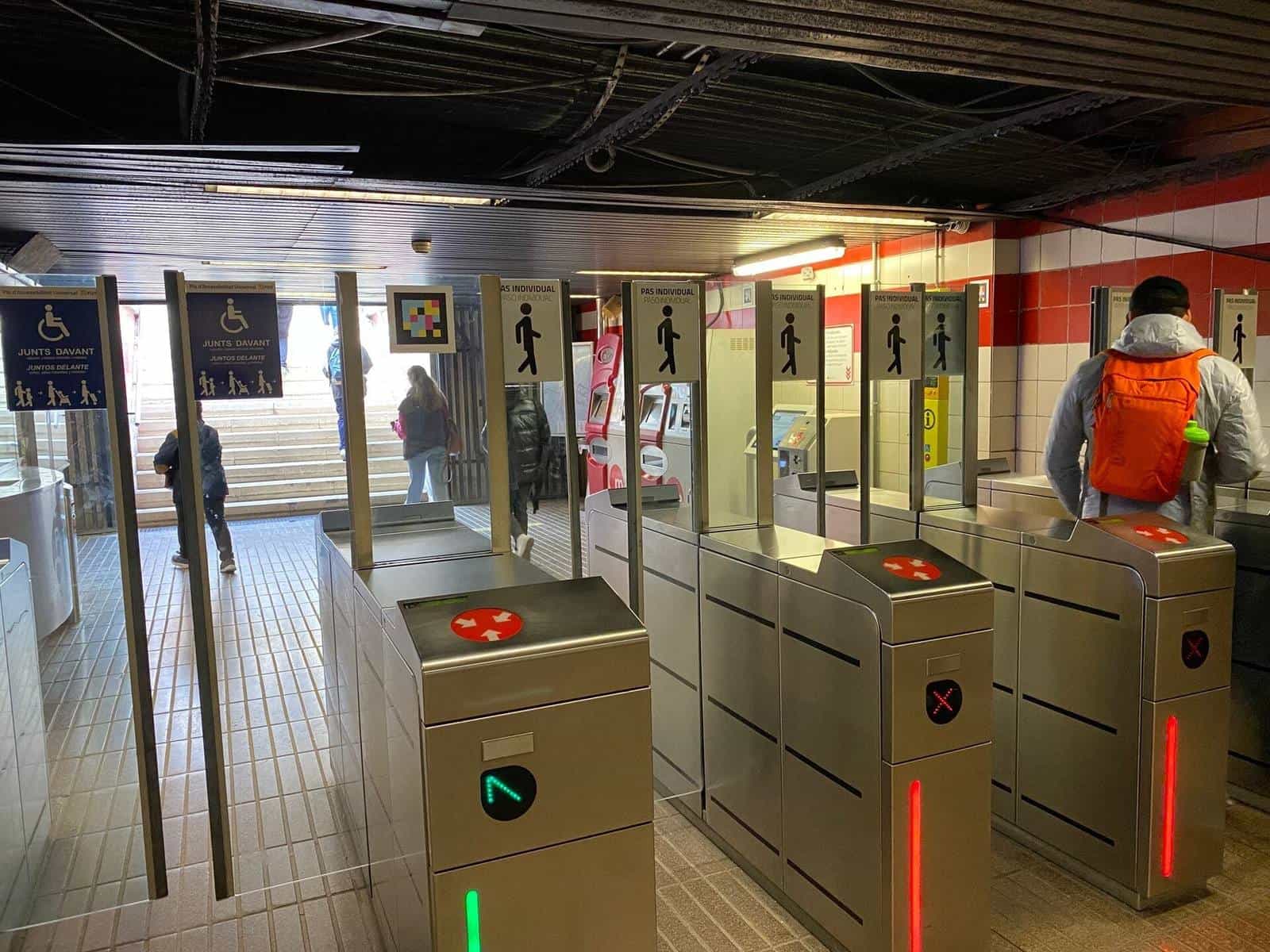
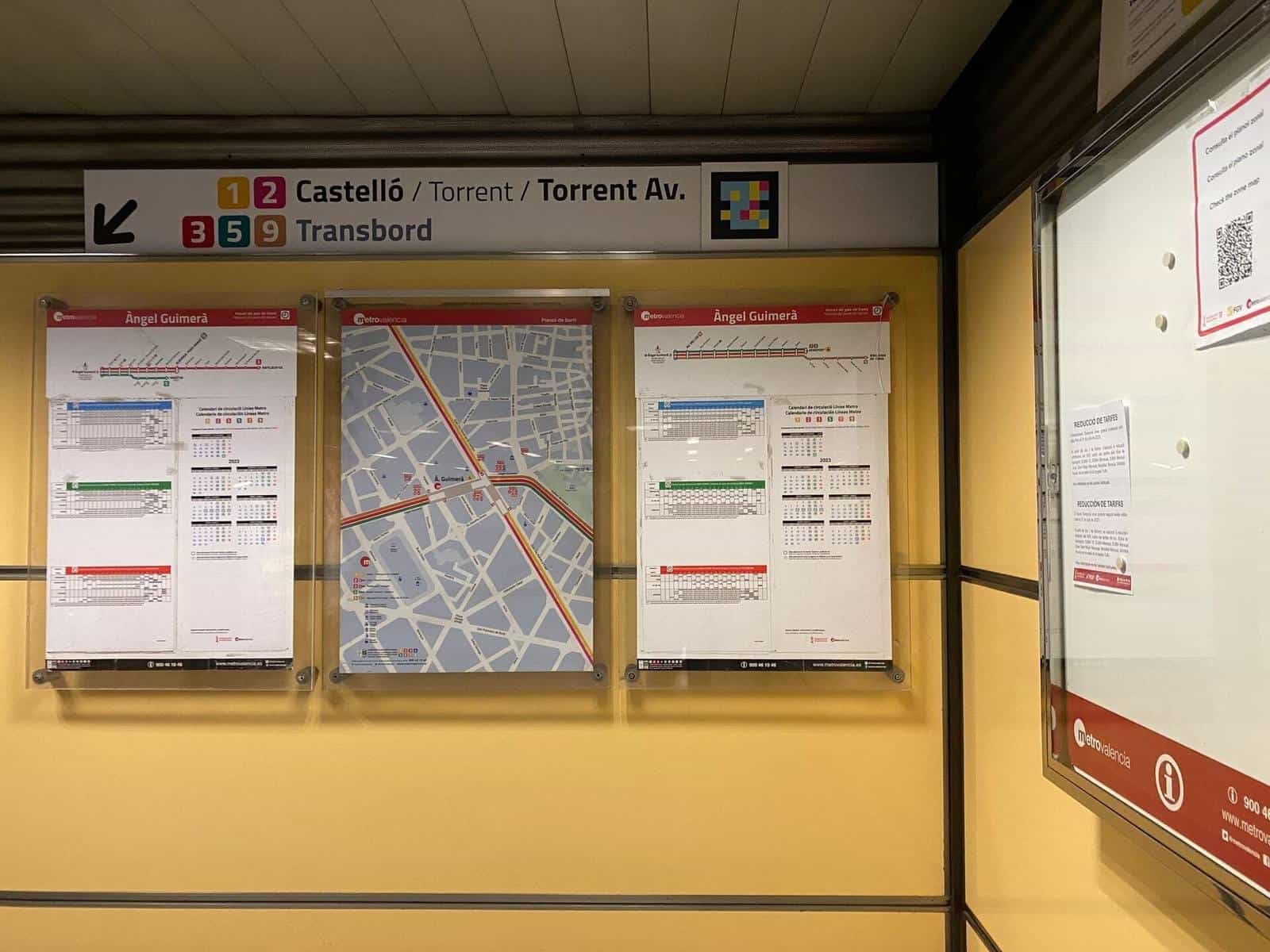
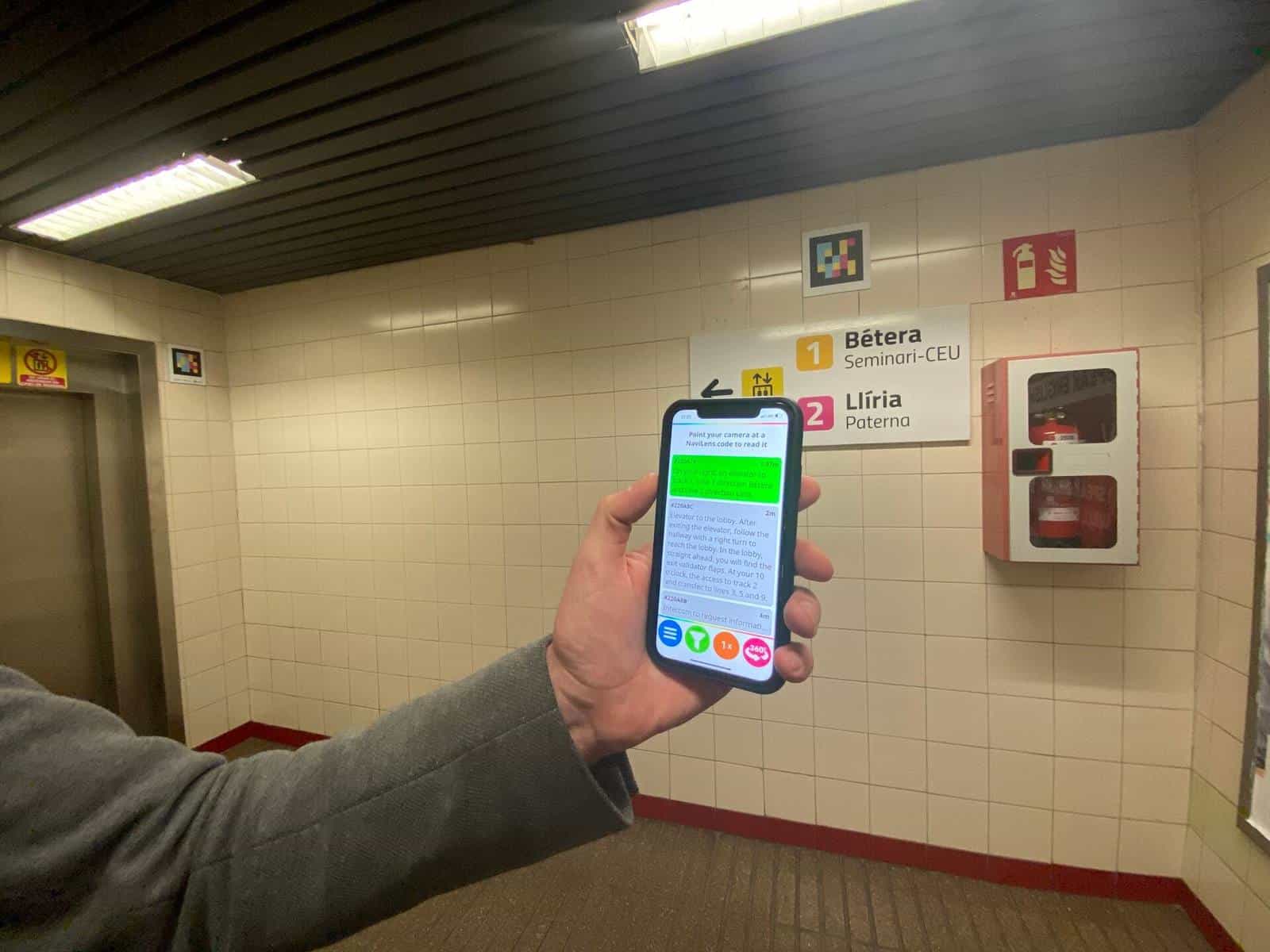
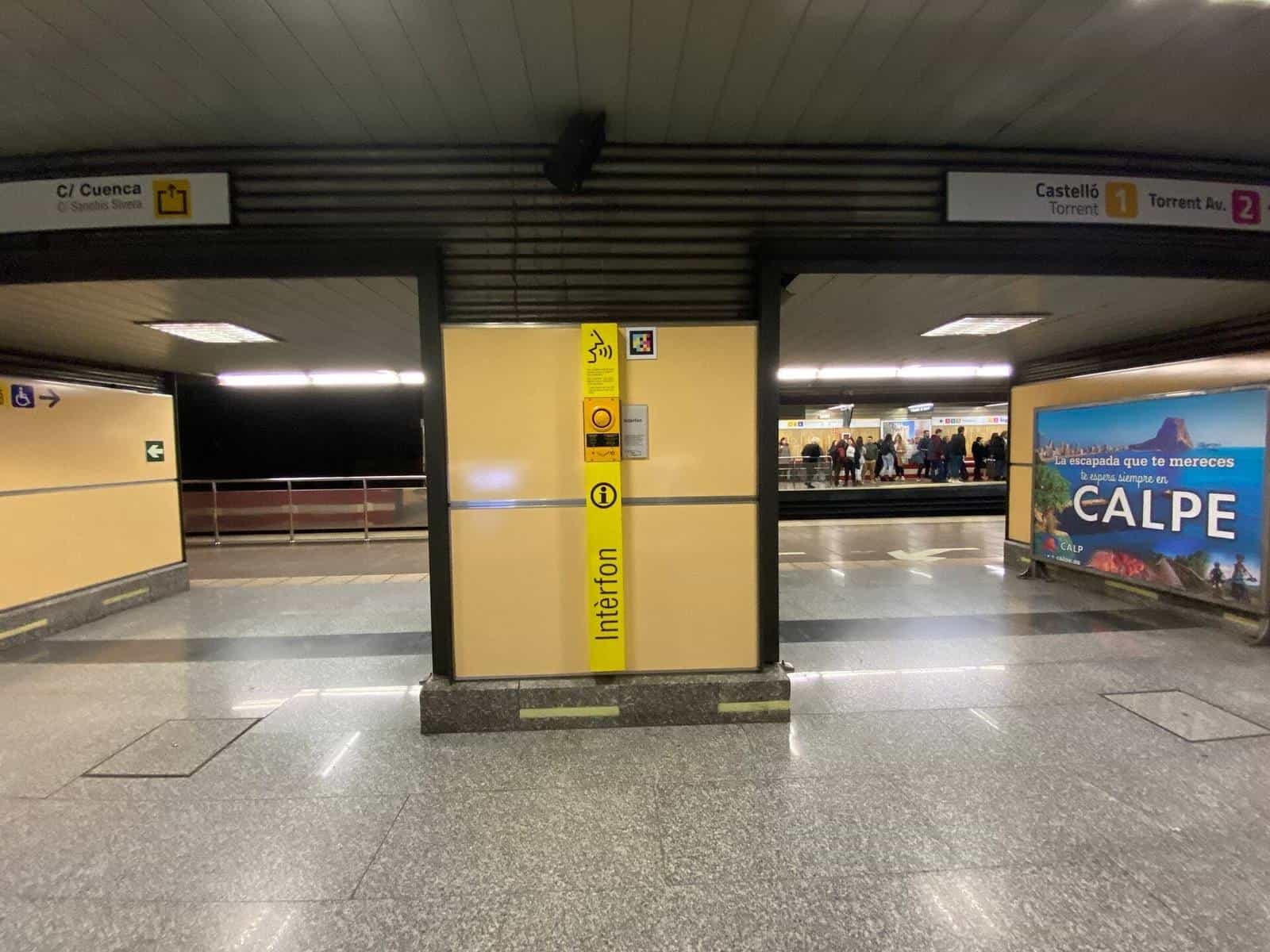
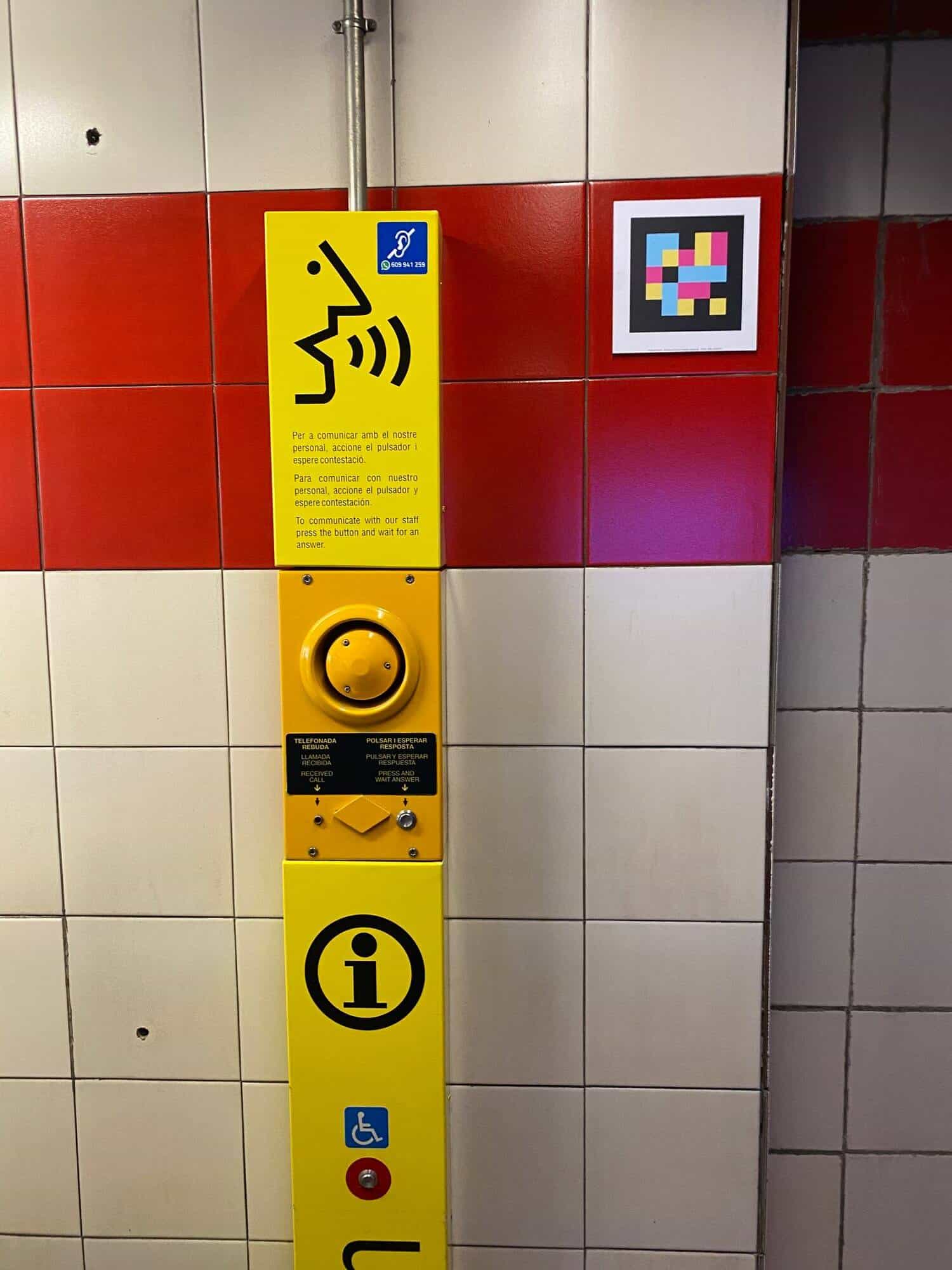
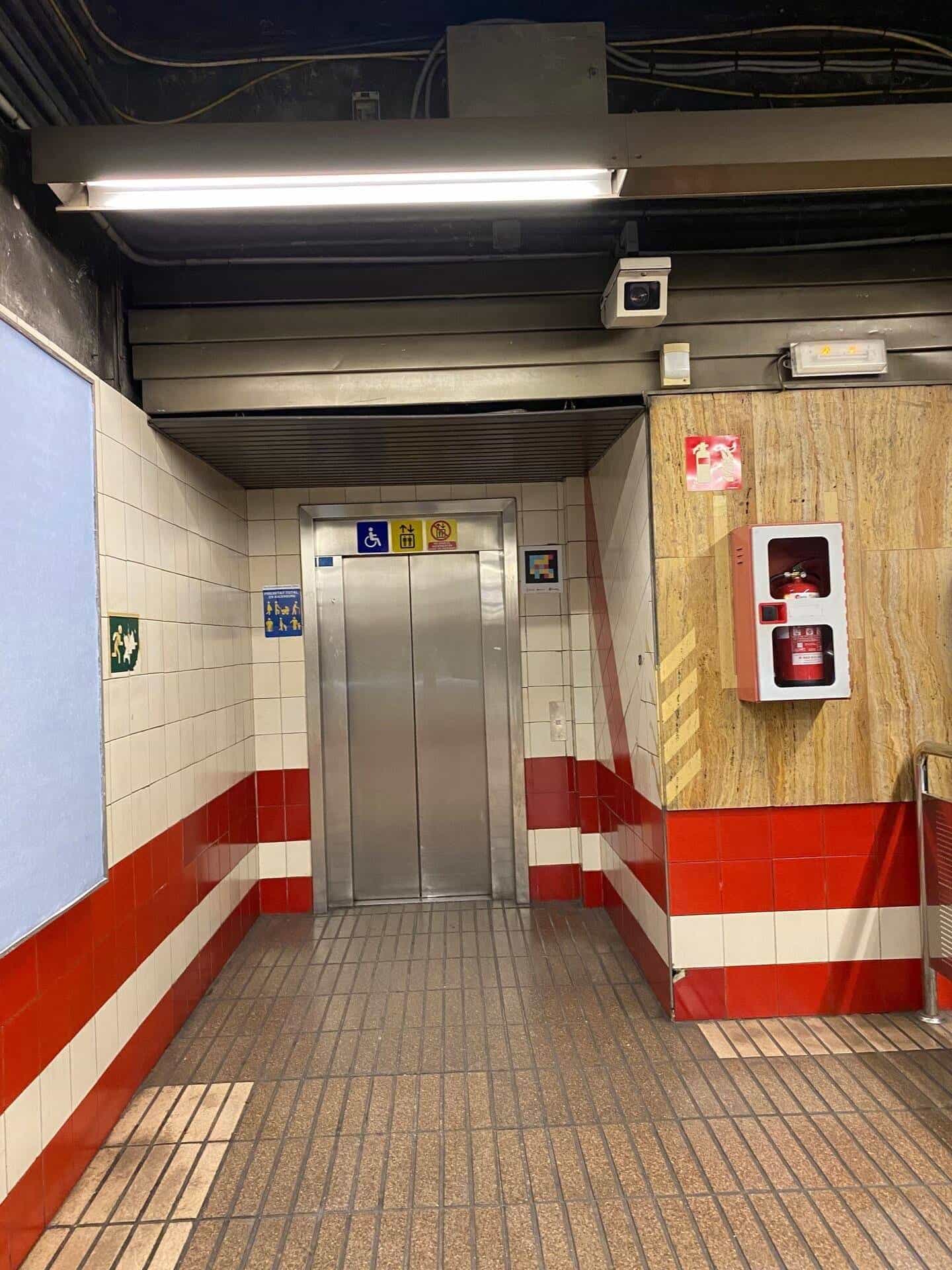
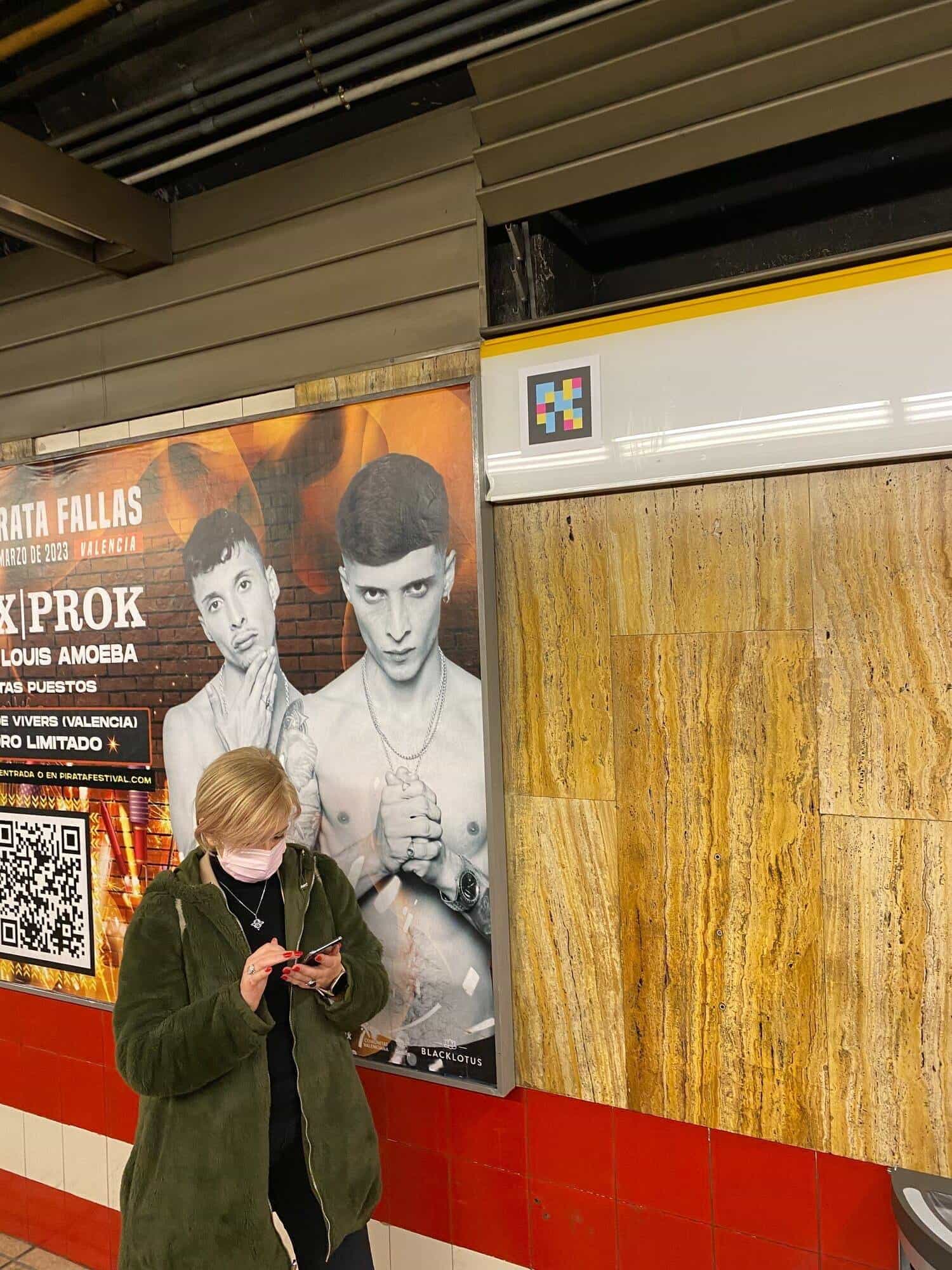
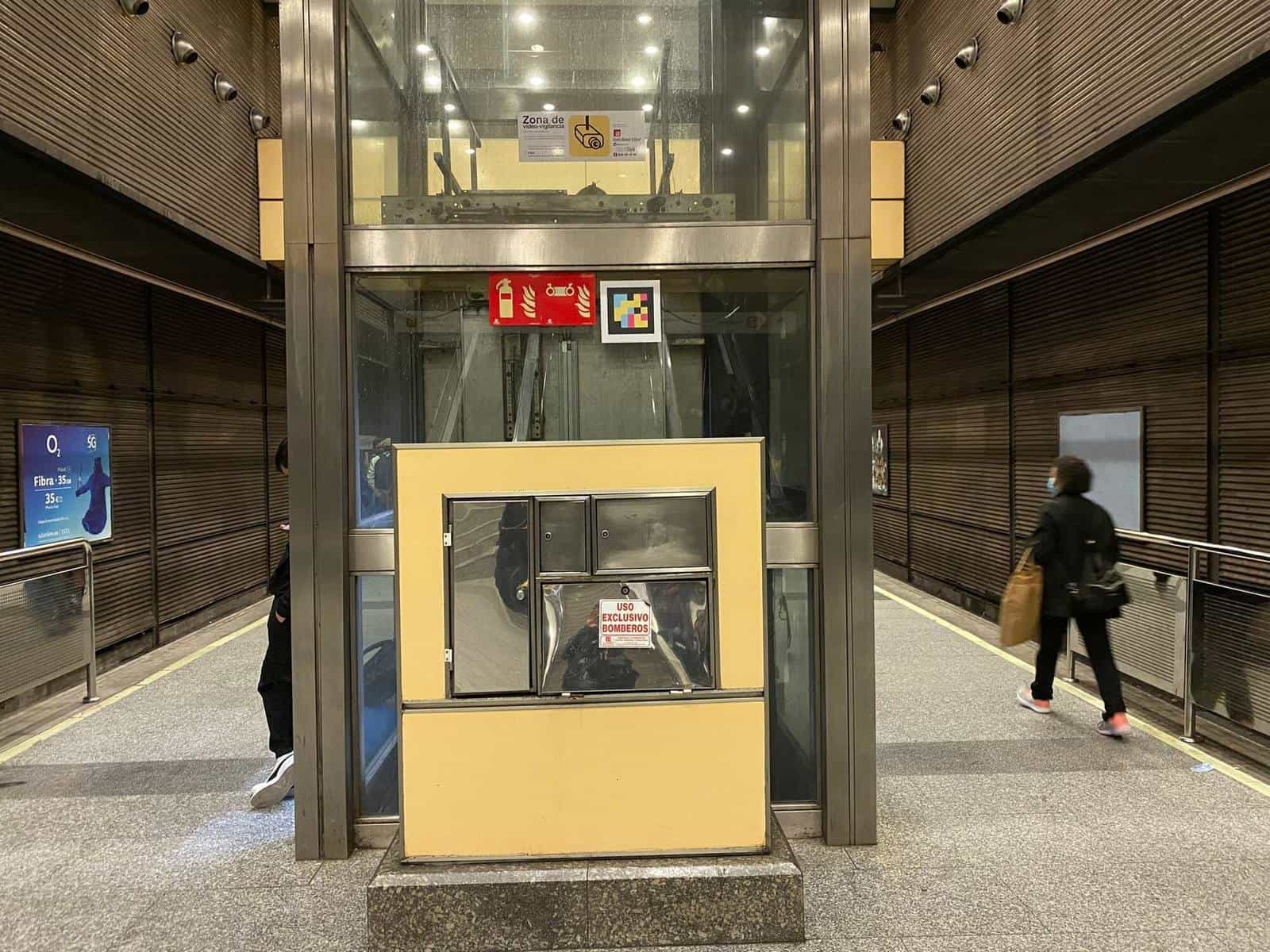
The same gesture at every decision point—entrances, intercom, turnstiles, elevators, platforms, carriages—. One app, one auditory grammar: ‘code at 6 feet, central platform, track 1 towards Rafelbunyol in 3 minutes'.
§ Why it matters
An interchange station you can use by ear.
100 ft
of detection without aiming: the code is found on entering the corridor, not by pressing against the wall. Behind the white cane, that changes everything.
SAE
the real arrival times from the operation support system are read aloud—line, destination and minutes—at each track, without relying on PA or visual panels.
CERMI
the project was designed with CERMI CV, ONCE, Fesord and Plena Inclusión, aligned with FGV's Universal Accessibility Plan, for cognitive, sensory and motor accessibility at once.
§ Sources
- Cadena SER — ‘NaviLens, the new signage and guidance technology for people with disabilities, arrives at Metrovalencia and TRAM d'Alacant' (24 Feb 2023, event at Àngel Guimerà station).
- Ferrocarrils de la Generalitat Valenciana — ‘The Generalitat tenders the deployment of signage and guidance technology to improve accessibility at Metrovalencia and TRAM d'Alacant'.
- Generalitat Valenciana — ‘Pradas unveils the new sign-language translation system…' (1 Dec 2023, explicit reference to Àngel Guimerà among the deployed stations).
- dicaTIC · UPV — ‘MetroValencia and Tram Alicante adopt NaviLens technology'.
§ And your network?
Your next station can also speak.
Tell us about your network, your pain points and the KPIs you want to move. We’ll show you how NaviLens would fit—with comparable cases.