Case study · Murcia · Museum
250 tags so the MAM speaks to everyone.
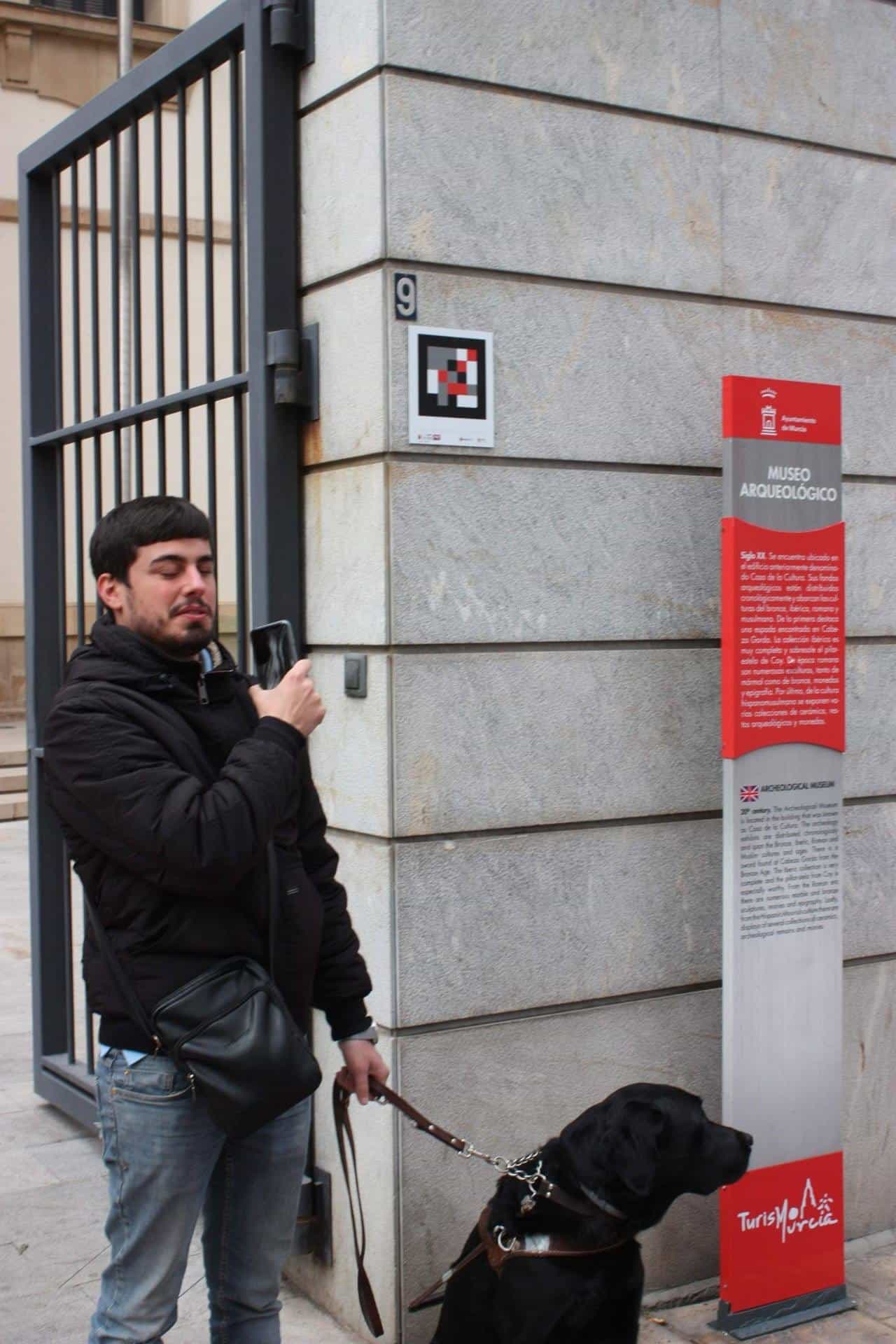
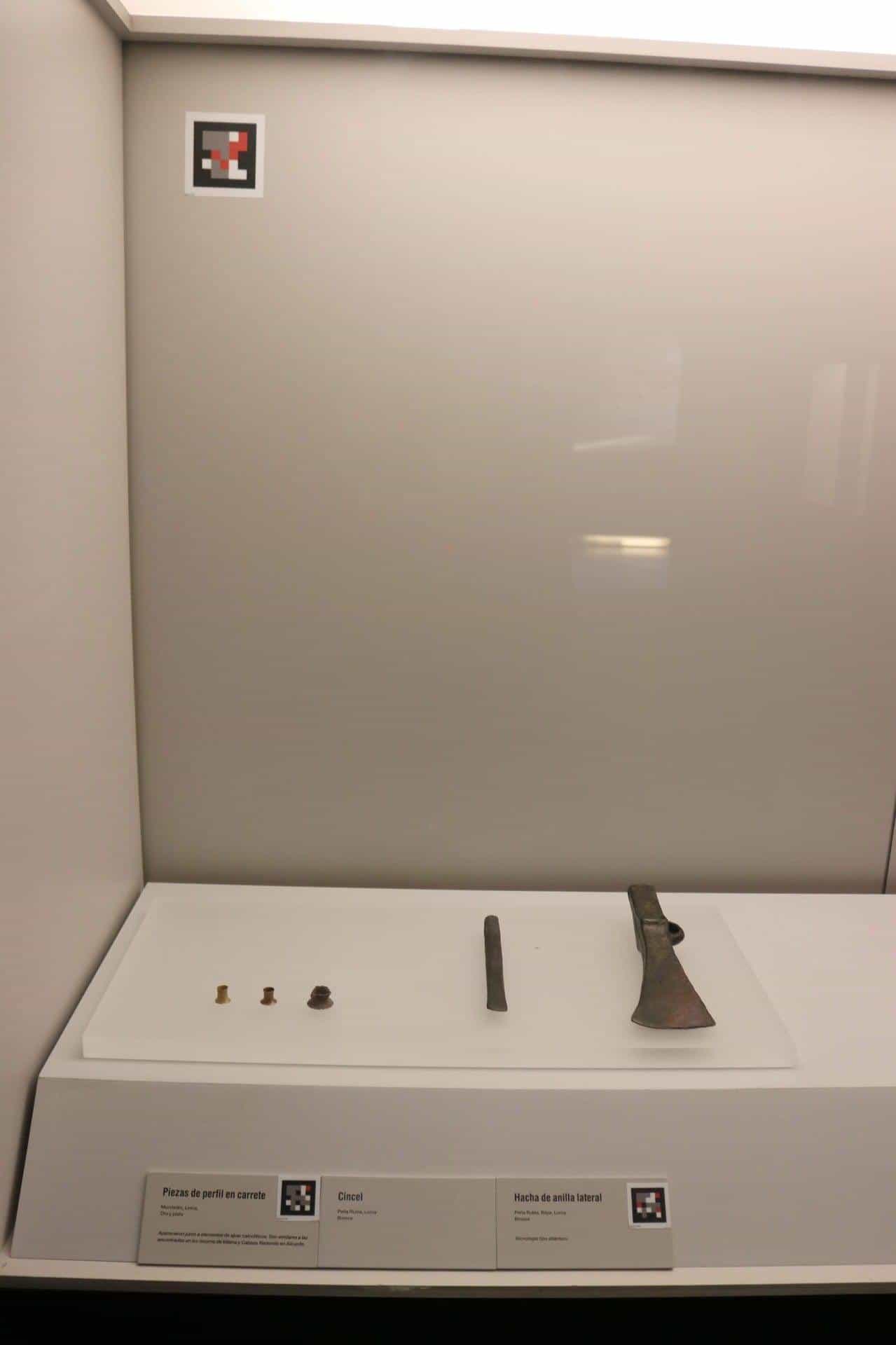
In February 2019 the Murcia Archaeological Museum became the first regional museum with NaviLens signage: a layer of around 250 smart tags throughout its permanent exhibition—from the façade to the Iberian kiln, from the Chalcolithic awls to the Bronze axe.
≈ 250 codes
NaviLens / ddtags spread across the MAM's permanent exhibition
≈ 100 pieces
Codes dedicated to individual objects in display cases
Feb 2019
MAM becomes the first museum in the Region of Murcia with NaviLens
3 apps · audio
NaviLens, ddtags Go and NaviLens Kids — spoken tour for different profiles
The client
MAM · Archaeological
Museum of Murcia
The Murcia Archaeological Museum (MAM), under the Department of Tourism and Culture of the Region of Murcia, sits in the former House of Culture (Av. Alfonso X El Sabio 7), a 1956 building by Luis Moya and José Luis León. Its collections cover the Bronze, Iberian, Roman and Hispano-Muslim cultures of the Region.
Highlight pieces include the Cabezo Gorda sword (Bronze Age), the Coy pillar-stela (Iberian culture), abundant Roman sculpture, coinage and epigraphy and collections of Hispano-Muslim ceramics.
In February 2019, together with Murcia-based Neosistec, the MAM becomes the first regional museum to adopt NaviLens, a pilot the Region later extended to MUBAM, Santa Clara and "El Cigarralejo" in Mula.
§ The challenge
Make the museum tell itself to those who cannot read its labels.
- 01
A dense collection with long labels and lots of chronology
The MAM covers the Region's prehistory, Iberian world, Roman and Hispano-Muslim eras. Its rooms hold hundreds of labels with sites, chronologies and materials that are impossible to read for visitors with low vision and hard to process for children.
- 02
A historic building with sparse wayfinding
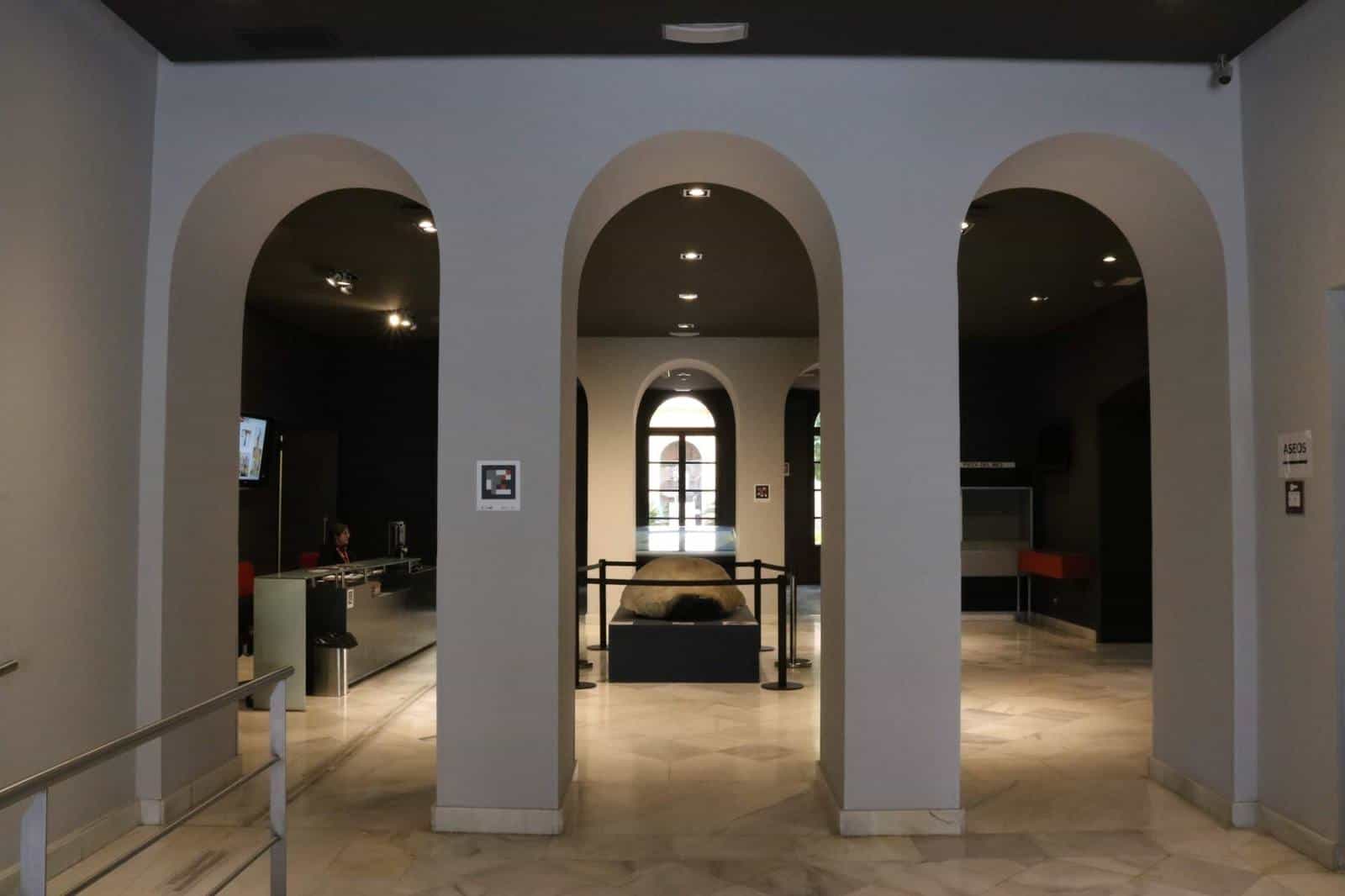
The former House of Culture, with its arched lobby and patios, was not designed as an accessible museum: no audio cues to reach the desk, the restrooms or the meteorite patio.
- 03
A single physical sign had to serve very different profiles
General visitor, school group, blind visitor, easy-read reader, foreign tourist: the MAM needed one code that opens different content depending on the app reading it, without multiplying labels.
§ The solution
One tag, three apps, the whole museum read aloud.
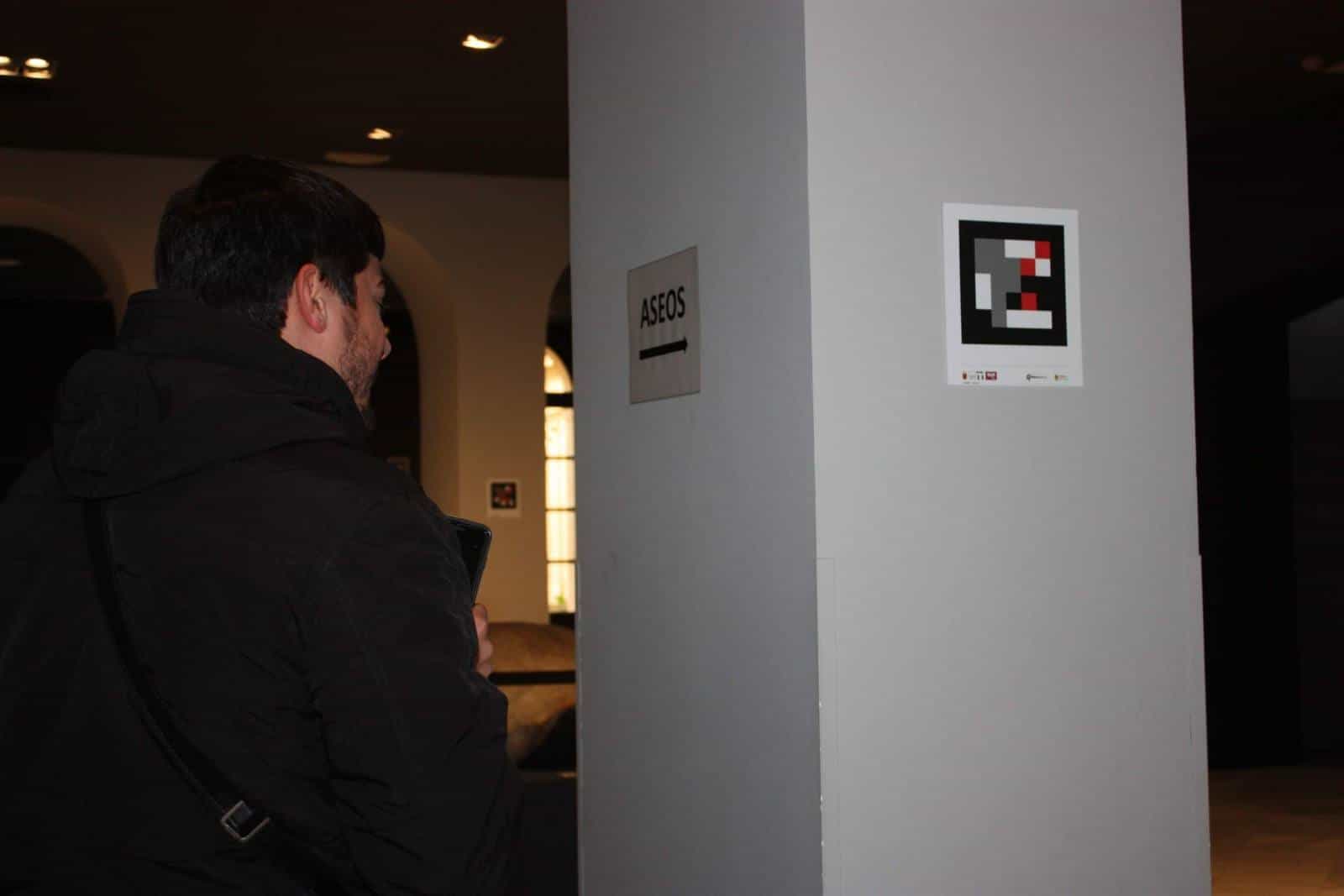
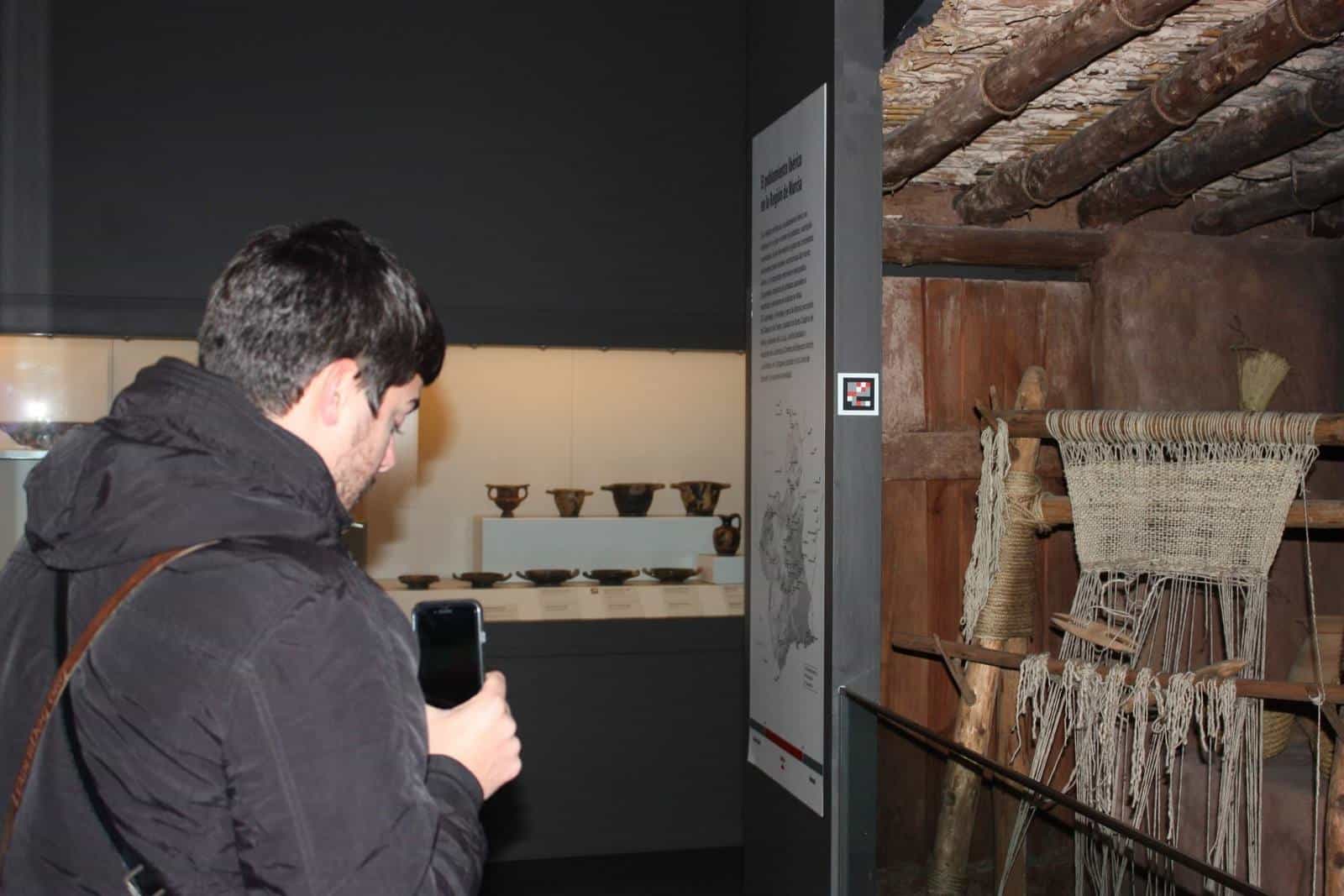
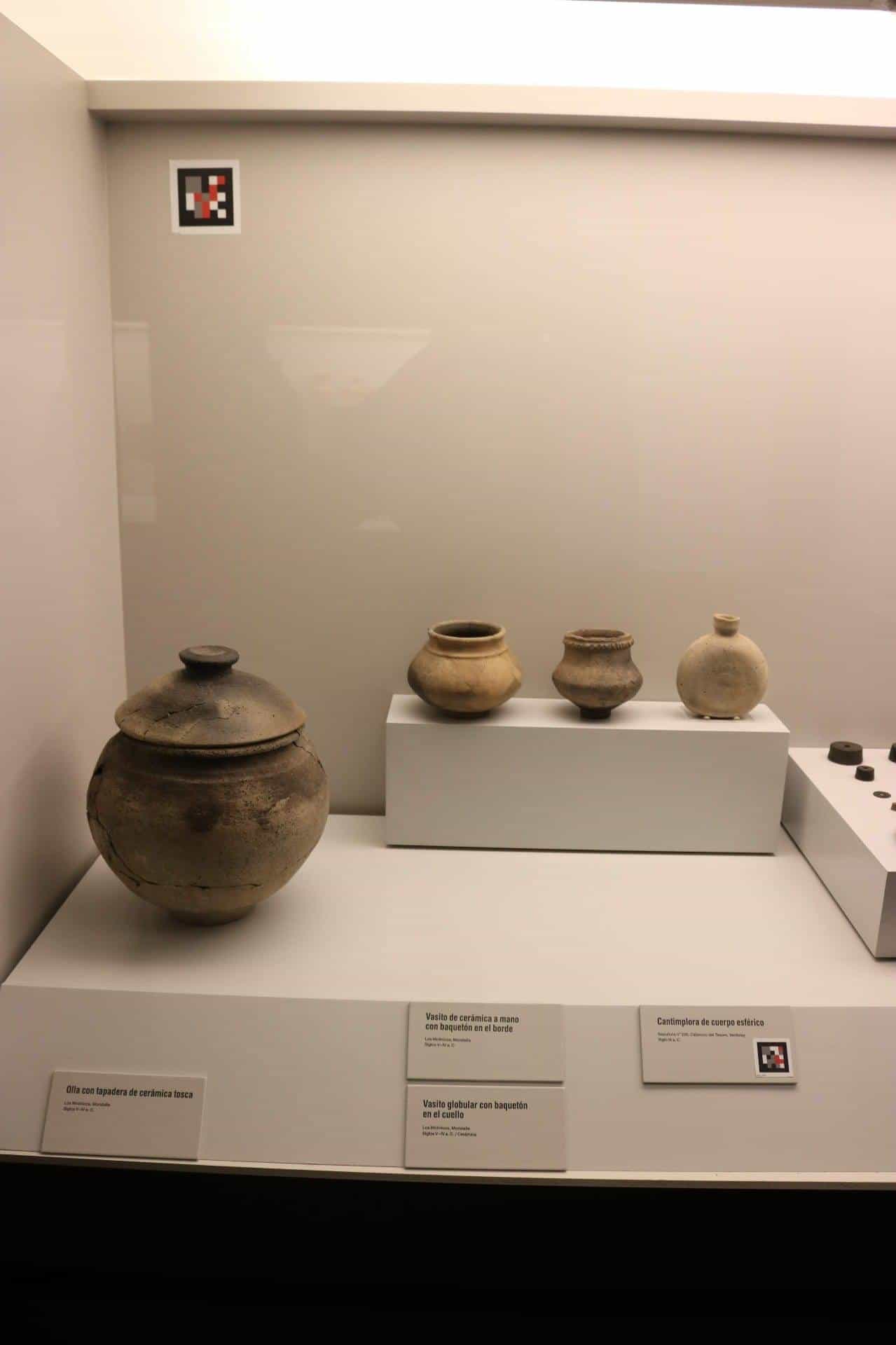
The pilot covers façade, arched lobby, pillars and restrooms and, above all, the display cases: each ceramic set, each thematic panel and each individual piece label carries its own code on a rigid white card.
The same surface is read by three free apps: NaviLens for blind users, ddtags Go for easy-read users and NaviLens Kids for children.
Detection from several yards and at angle means visitors approach the case and the app reads the label even before they stop in front of it.
§ The rollout
From the lobby pillar to the Bronze axe.
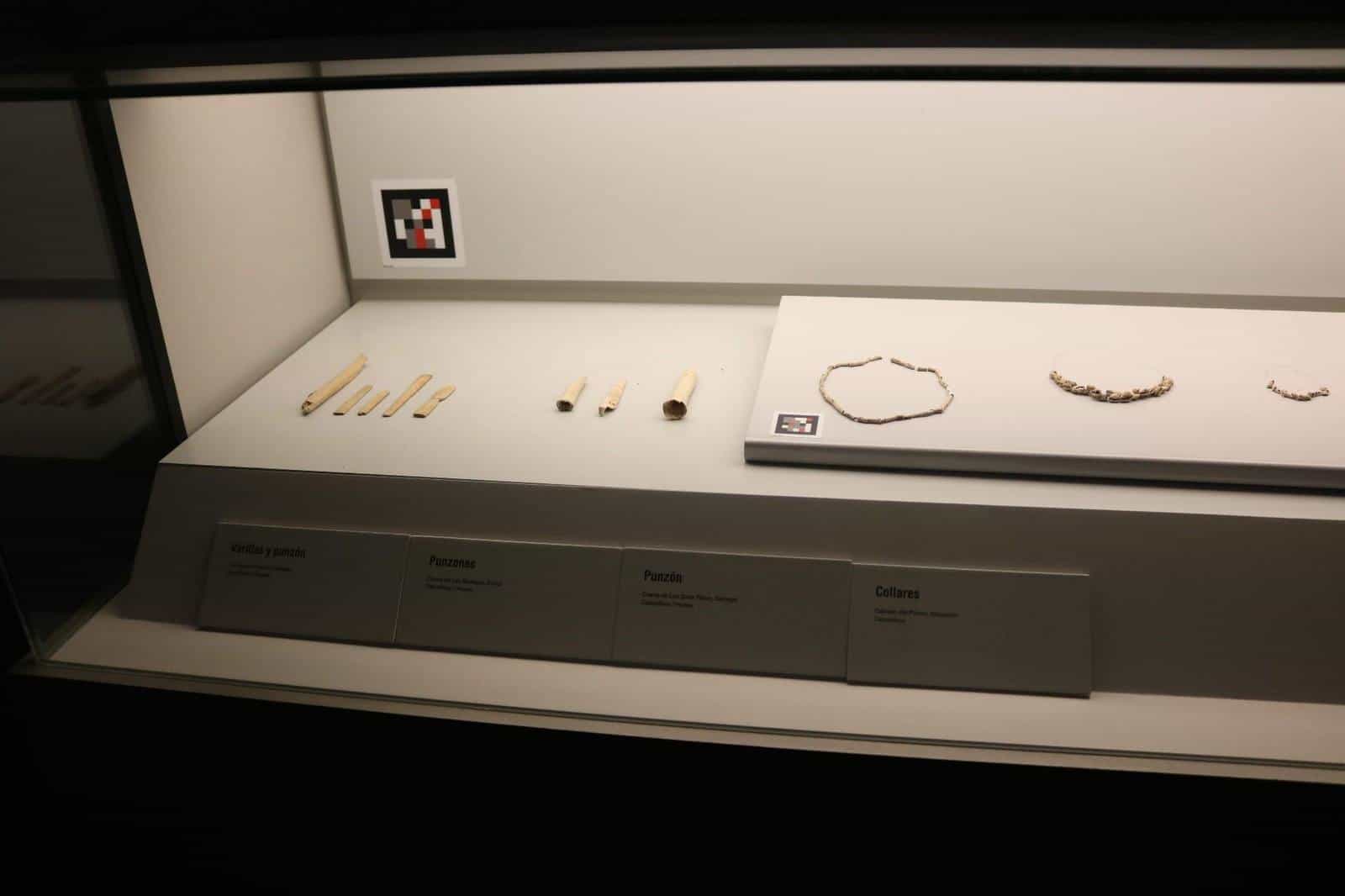
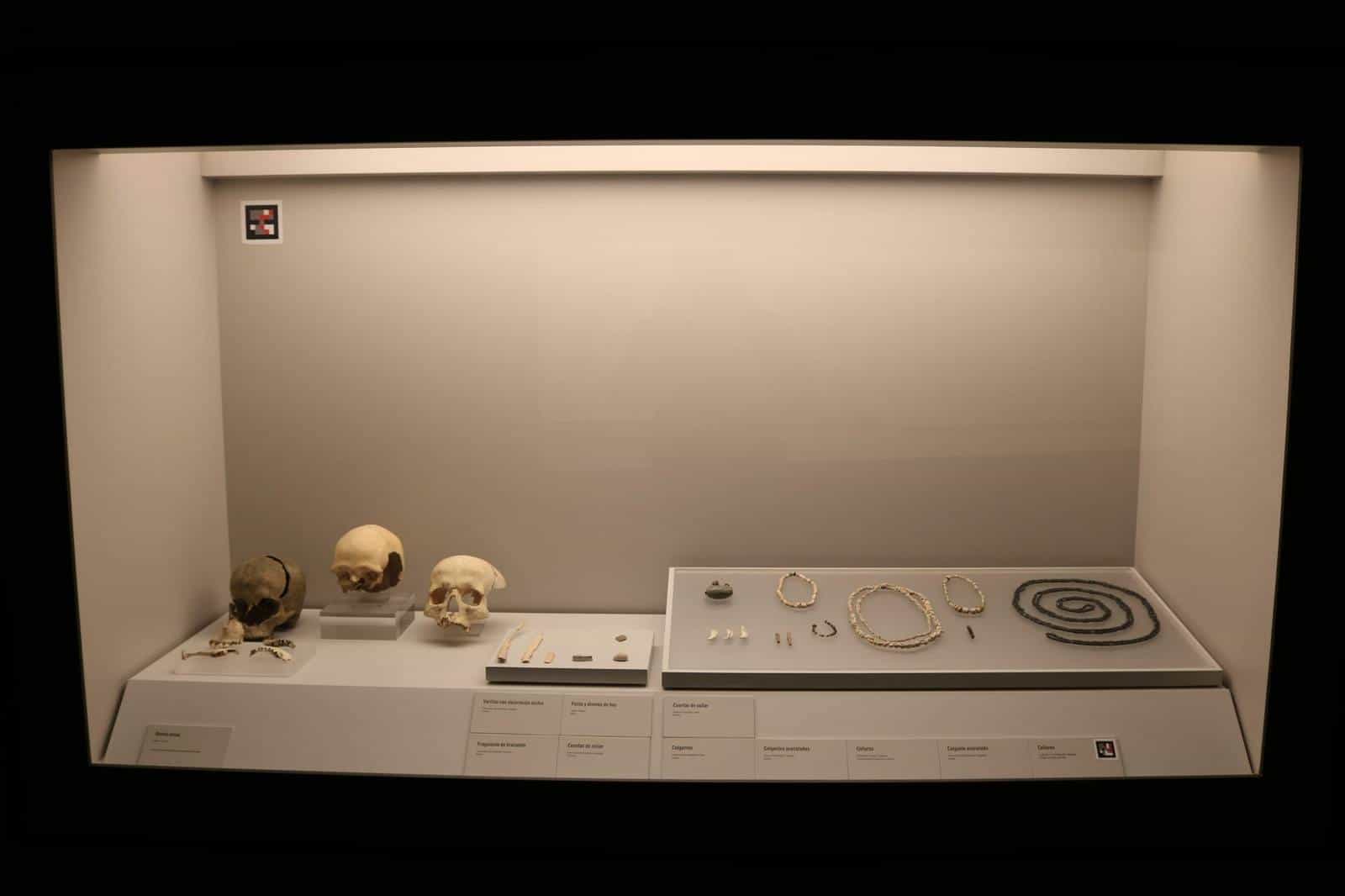
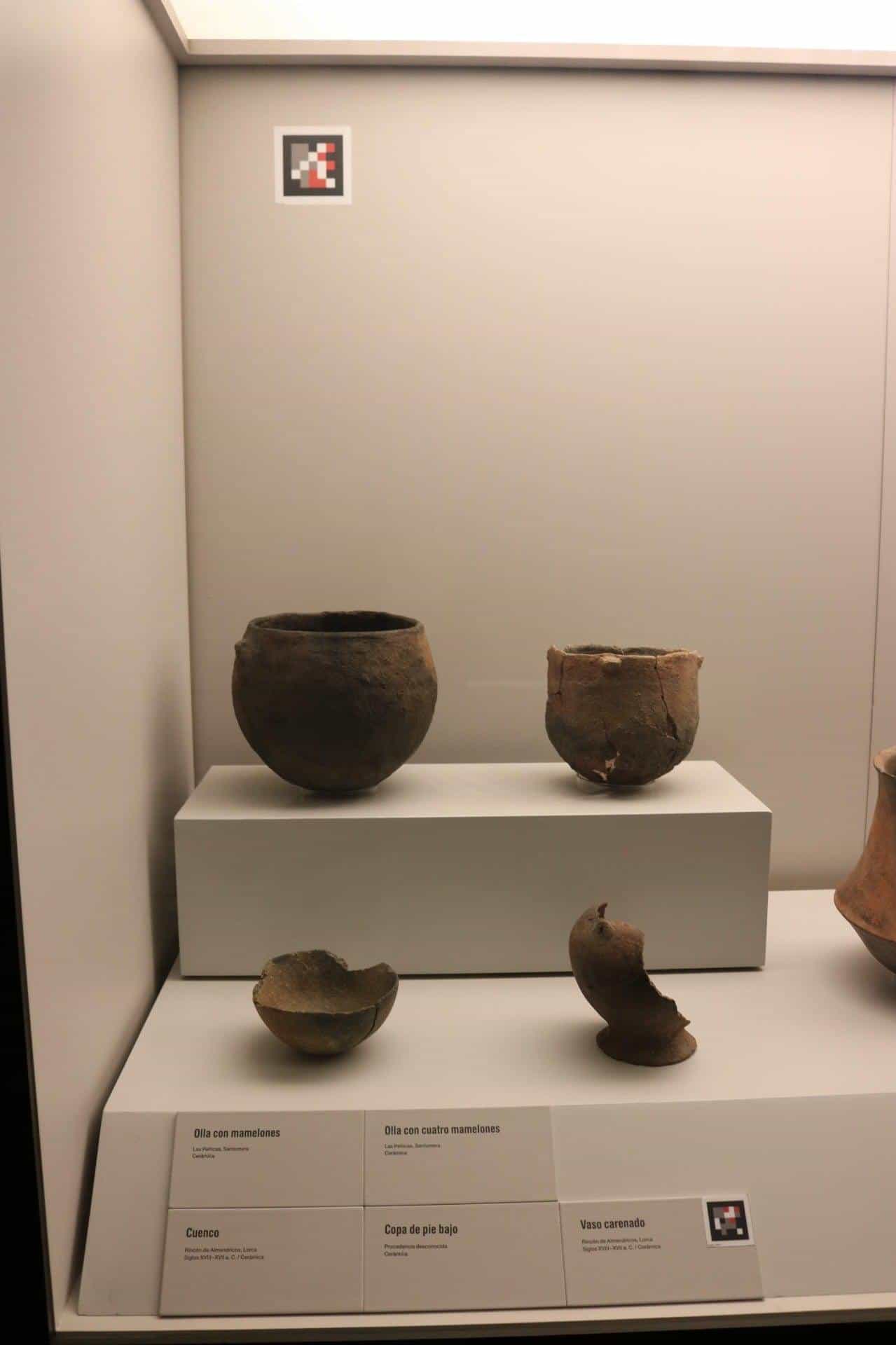
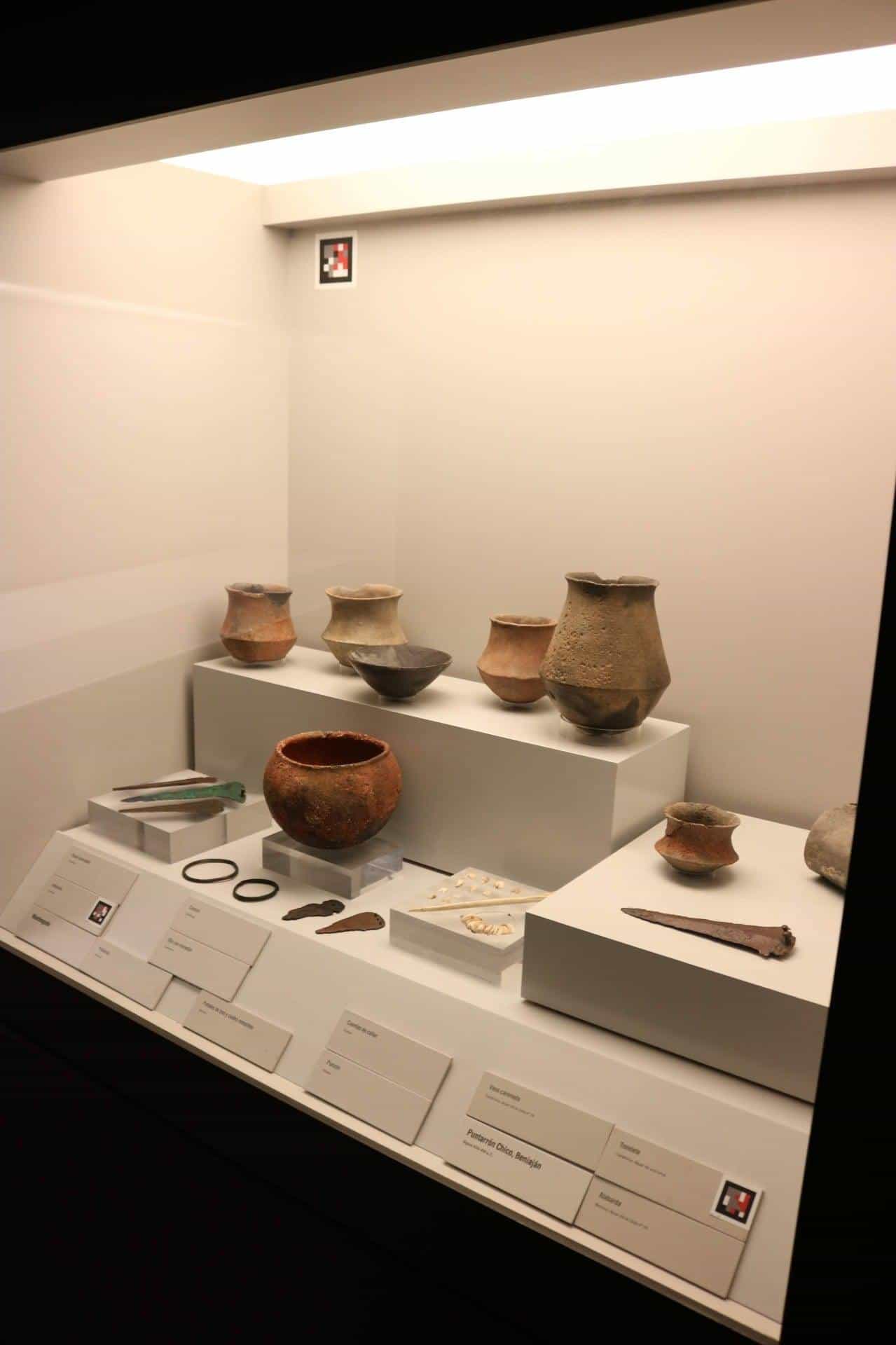
§ Timeline
From the MAM pilot to the model for the Region's museums.
- Feb 2019
Pilot presented at the MAM
Tourism and Culture Minister Miriam Guardiola visits the museum with the Neosistec team and presents the rollout of around 250 NaviLens / ddtags across the permanent exhibition. The MAM becomes the first regional museum with this digital signage.
- Jun 2019
Iberian and Roman replicas to touch
The museum reinforces accessibility with a collection of teaching replicas for school groups and blind visitors, alongside the existing NaviLens codes.
- 2019 →
Model extended to the rest of the regional museums
The system spreads to MUBAM, Santa Clara Museum and "El Cigarralejo" in Mula. NaviLens also enters outdoor wayfinding and the Region's official accessibility statement.
- 2022
Academic study UPV / University of Murcia
The team led by Luis de Miquel Santed, Raquel Baeza Albaladejo and María Fernández Soria publishes on RiuNet (UPV) a study documenting the NaviLens tags at the MAM.
§ Results
A 21st-century museum also for those who cannot read the label.
Independent visit
Blind visitors enter on their own, find the outdoor code next to the "Archaeological Museum" sign and move between lobby, rooms and restrooms guided by the app
Spoken labels
Every display case has a code that reads the full label aloud—impossible on paper for many visitors
Family visit
The same code opens children's content with NaviLens Kids and easy-read content with ddtags Go
Sources · La Opinión de Murcia (15 feb 2019) · La Verdad (7 jun 2019) · MAM · RiuNet UPV (2022)
§ And your destination?
Your destination can also guide in 42 languages.
Tell us about your trails, visitor centers, landmarks or galleries. We’ll show you how NaviLens would make your offering accessible—with comparable cases.