Case study · Madrid
Madrid's skyline, narrated aloud at 92 m.
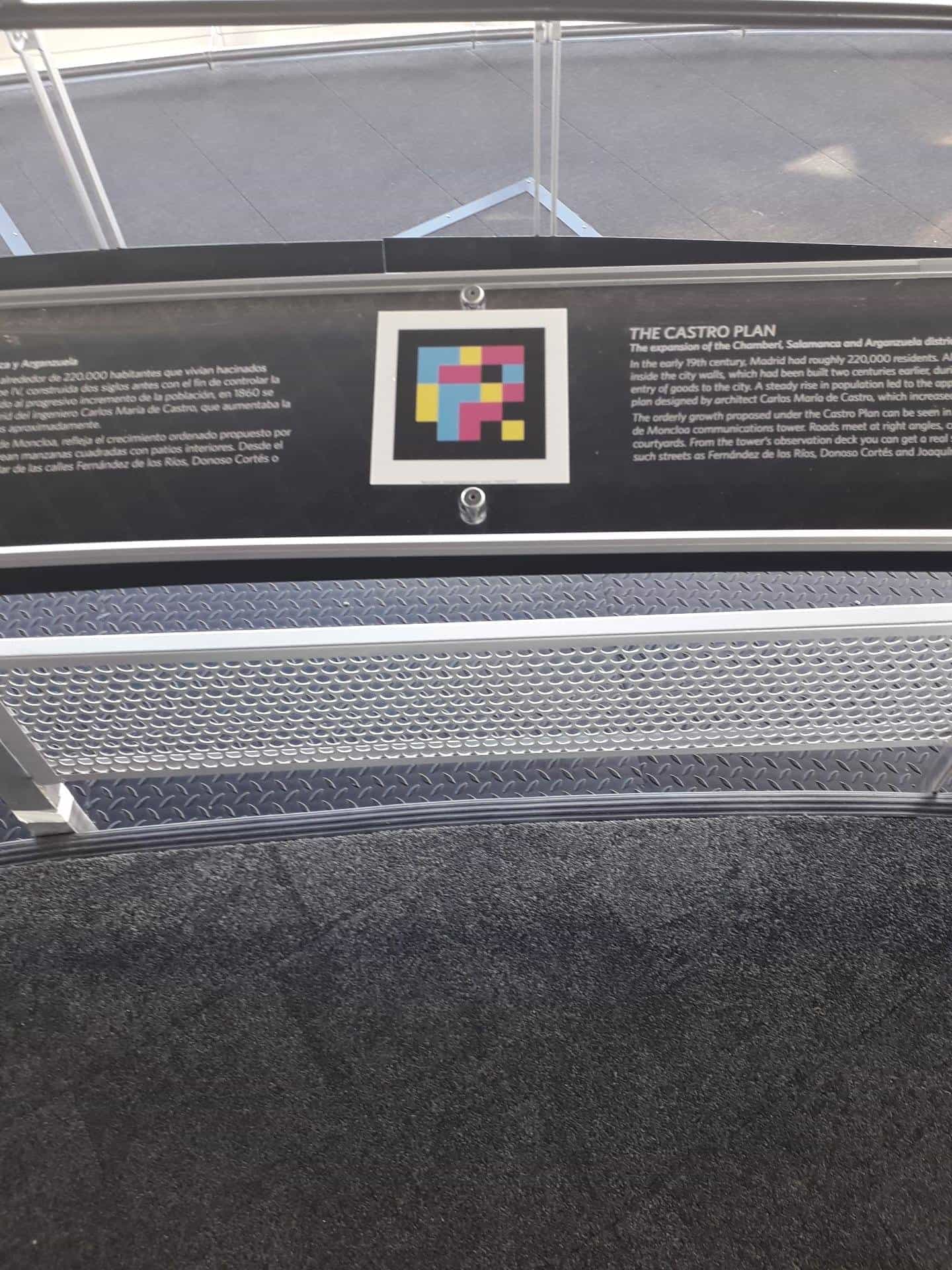
After the Faro de Moncloa reopened in March 2021 as a “one hundred per cent accessible” viewpoint, Madrid Destino integrated NaviLens into the new information railing: every panel—the Castro Plan, the views of Moncloa, the skyline—has its own code that reads its contents aloud in the visitor's language.
Faro de Moncloa
Municipal viewpoint 92 m above ground · Madrid Destino
March 2021
Reopening after the universal accessibility works
Information railing
Every panel on the viewpoint, with its own NaviLens code
ES · EN
Voice output in the language of the visitor's phone
The client
Madrid City Council
Madrid Destino · Faro de Moncloa
The Faro de Moncloa is a former 110-meter lighting tower built in 1992 when Madrid was designated European Capital of Culture. Today it is one of the city's most singular viewpoints, run by Madrid Destino under the Tourism Delegated Area of Madrid City Council.
After comprehensive refurbishment works, the Faro reopened on 30 March 2021 as a fully accessible space: a ramp from the street, an adapted lobby and restrooms, the replacement of one of the viewpoint's staircases with a ramp and, above all, a new information railing lowered so that wheelchair users could also use it.
On that railing, every panel tells a view of Madrid's skyline or an episode of its urban history. To make those contents accessible to people with visual disabilities and to foreign visitors, the Faro added NaviLens codes to every panel.
§ The challenge
So anyone can read the horizon without touching the panel.
- 01
A viewpoint at 92 m with panels out of reach for many visitors
The Faro's circular railing tells Madrid's skyline in Spanish and English, but the texts were too small or too far away for people with low vision, and inaccessible to anyone who couldn't see. Interpreting the horizon almost always depended on the companion.
- 02
Refurbishing without losing the original railing
The 2021 works lowered the railing so that wheelchair users could reach it too, but the content—the maps, the illustrations of Madrid, the historical texts—was to be kept as it was. An accessible layer was needed that did not cover or replace the panel.
- 03
A single gesture, in any language
Visitors to the Faro look at the horizon: they don't want to stop and read a sign or download anything complicated. The accessible signal had to be detected from several yards away, without aiming, and read the relevant panel aloud in the language of the user's phone.
§ The solution
One code per panel on the railing.
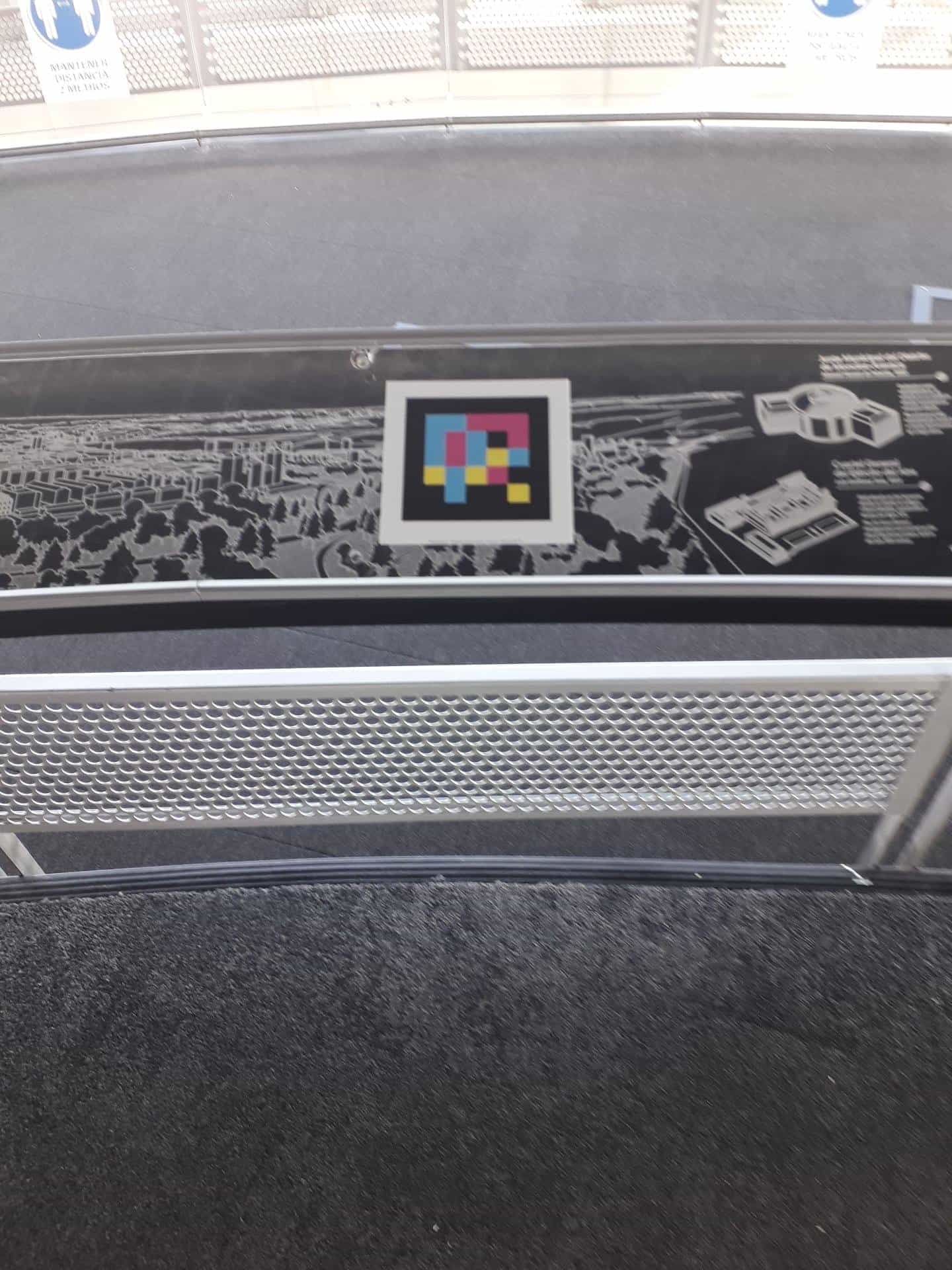
Every panel on the viewpoint has a NaviLens code printed beside it. The visitor points the phone's camera from several yards away, with no need to focus, and the free NaviLens GO app reads the panel's content aloud in the language of their phone.
In practice, the code lives alongside the original panel: a blind or low-vision person hears the same information that a sighted visitor sees, and an international tourist receives it in their own language without having to read the English text on the panel.
An additional sign on the viewpoint announces the presence of the codes and explains how to use them, completing an accessible layer that adds to the lowered railing and the indoor ramp installed in the 2021 refurbishment.
§ The viewpoint
From the railing to the viewpoint sign.
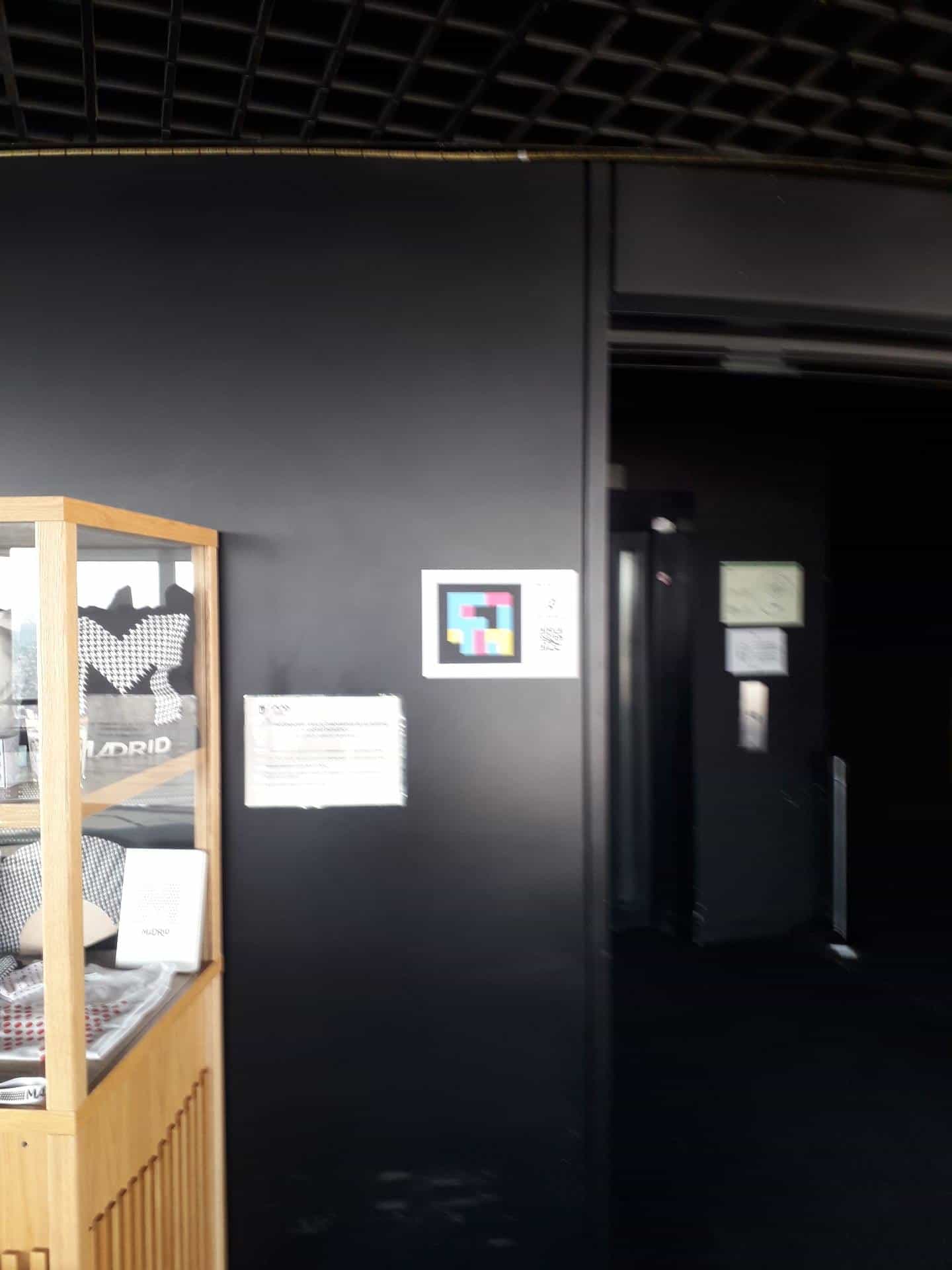
The codes are placed at the right height on the railing, next to the corresponding panel, so the user can detect them with a sweep of the phone without having to aim at an exact point.
§ Why it matters
A fully accessible viewpoint, also for those who can't see.
Autonomy
the visitor with a visual disability no longer depends on a companion to understand what they're looking at: the phone reads every panel for them.
Multilingual
the voice output comes in the language of the phone, broadening the tourist experience beyond the Spanish and English of the original panel.
Added layer
NaviLens lives alongside the lowered railing and the indoor ramp: the Faro's universal accessibility adds layers rather than replacing what exists.
§ And your destination?
Your destination can also guide in 42 languages.
Tell us about your trails, visitor centers, landmarks or galleries. We’ll show you how NaviLens would make your offering accessible—with comparable cases.