Case study · Orihuela · Orihuela Costa · Alicante
Fifty sites, one old town and ten miles of coast.
How Orihuela's tourism department brings NaviLens codes to 50 points of interest—from the cathedral to the coves—with audio in 42 languages, multimedia content and easy-read text, funded 100% by Next Generation EU.
50 sites
Points of interest with a NaviLens code — Orihuela town and Orihuela Costa
13 on the coast
Eleven beaches and coves, plus the Sendero Azul trail and the Norias Gemelas
16 totems
Each topped with a raised silhouette for tactile exploration
100% EU
PSTD actions 11 and 13 · Next Generation EU funds
The client
Orihuela City Council Tourism Department
Orihuela is two destinations inside one municipality. On one side, an old town with a cathedral, a diocesan college, a bishop's palace, museums of the city wall, of the Reconquest and of Holy Week, and the house where the poet Miguel Hernández lived. On the other, Orihuela Costa: ten miles of shoreline with eleven beaches and coves, from Punta Prima to Mil Palmeras.
The tourism department tackled both at once through two actions of the Destination Tourism Sustainability Plan (PSTD): number 11, “Accessible digital guidance system”, and number 13, “Accessible tourist information”. Both funded 100% by Next Generation EU, through Spain's Ministry of Industry and Tourism and the Recovery, Transformation and Resilience Plan.
§ The challenge
Heritage that can only be explained by looking at it.
- 01
Two destinations, two different problems
In the old town the challenge is heritage: labels, dates, styles and names that exist only in print. On the coast it's orientation: which cove is this, what does it offer, how far does the trail go. One signage system had to solve both.
- 02
Reading isn't only a matter of eyesight
A heritage panel is written for someone who already knows how to read it. People with an intellectual or cognitive disability are shut out of that same information, and not because they can't see it.
- 03
A shoreline of international tourism
Orihuela Costa draws visitors from across Europe all year round. The number of languages that fit printed on a panel is always smaller than the number that show up on the beach.
§ The solution
One code across fifty different places.
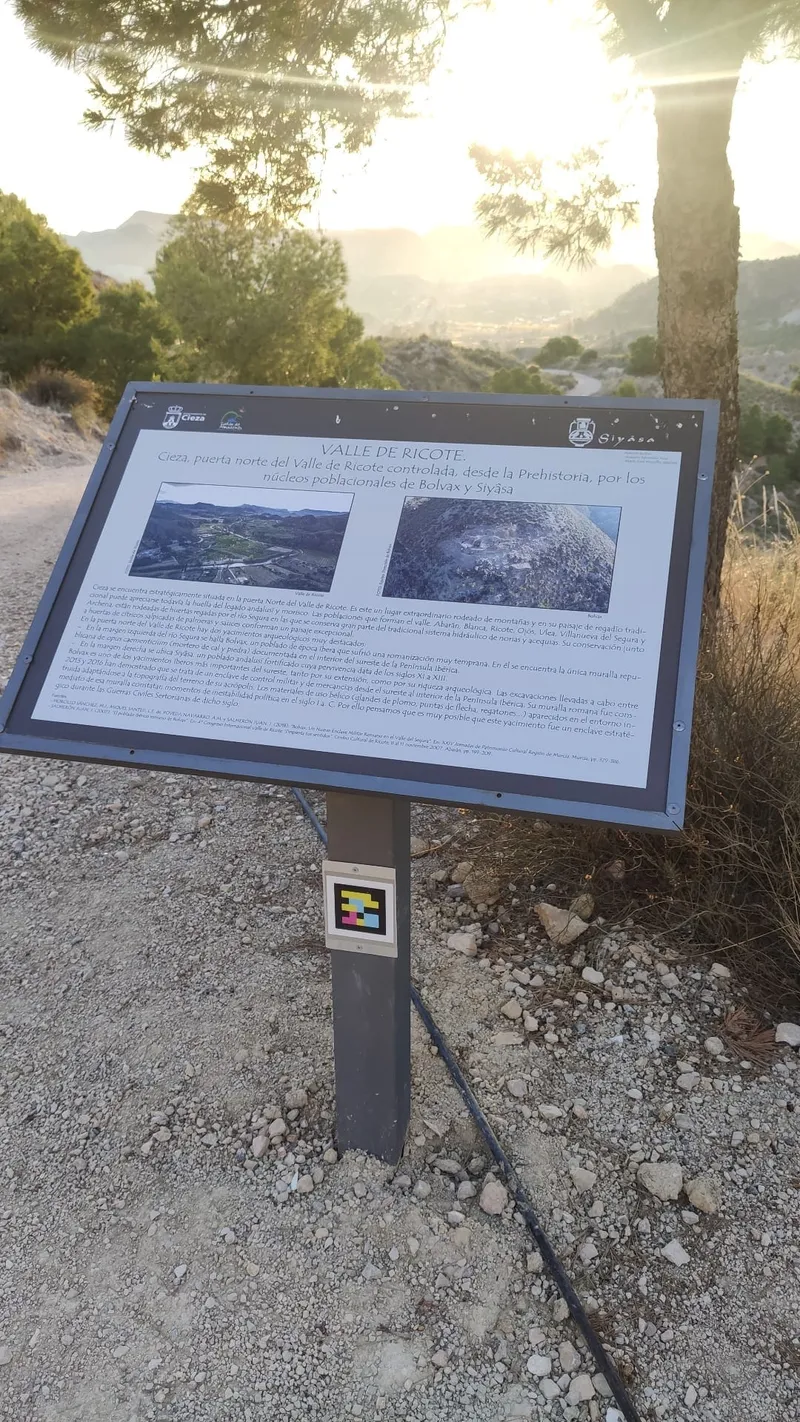
PSTD action 11 installed NaviLens codes at 50 points of interest across the municipality: museums, monuments, notable buildings and architectural features in the old town, and all along Orihuela Costa—Punta Prima, Cala Mosca, Cala Estaca, Cala Cerrada, Cala Bosque, Cala Capitán, Cala Caleta, the Aguamarina coves, La Glea, Barranco Rubio and Mil Palmeras, plus the Sendero Azul trail and the Norias Gemelas.
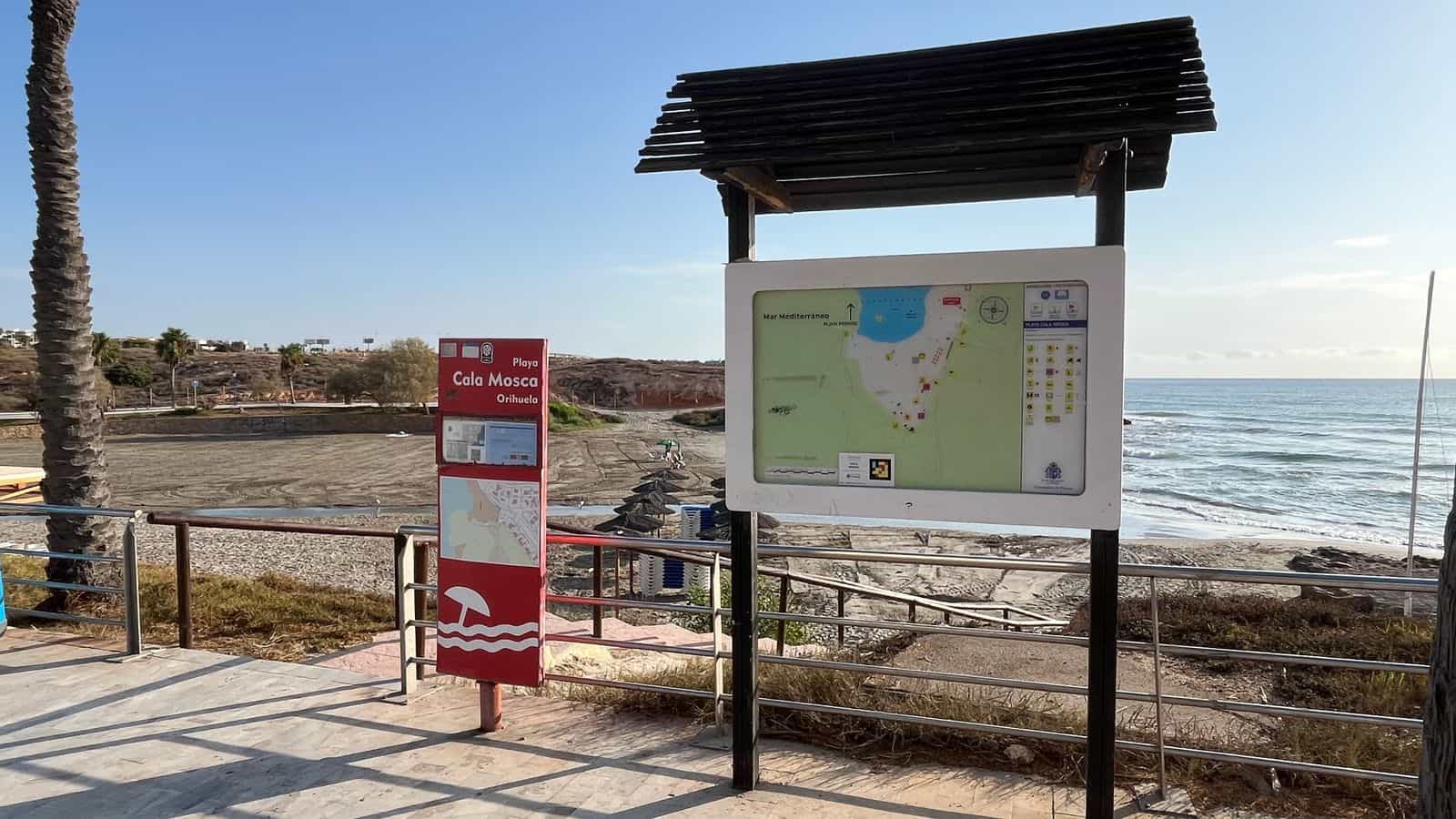
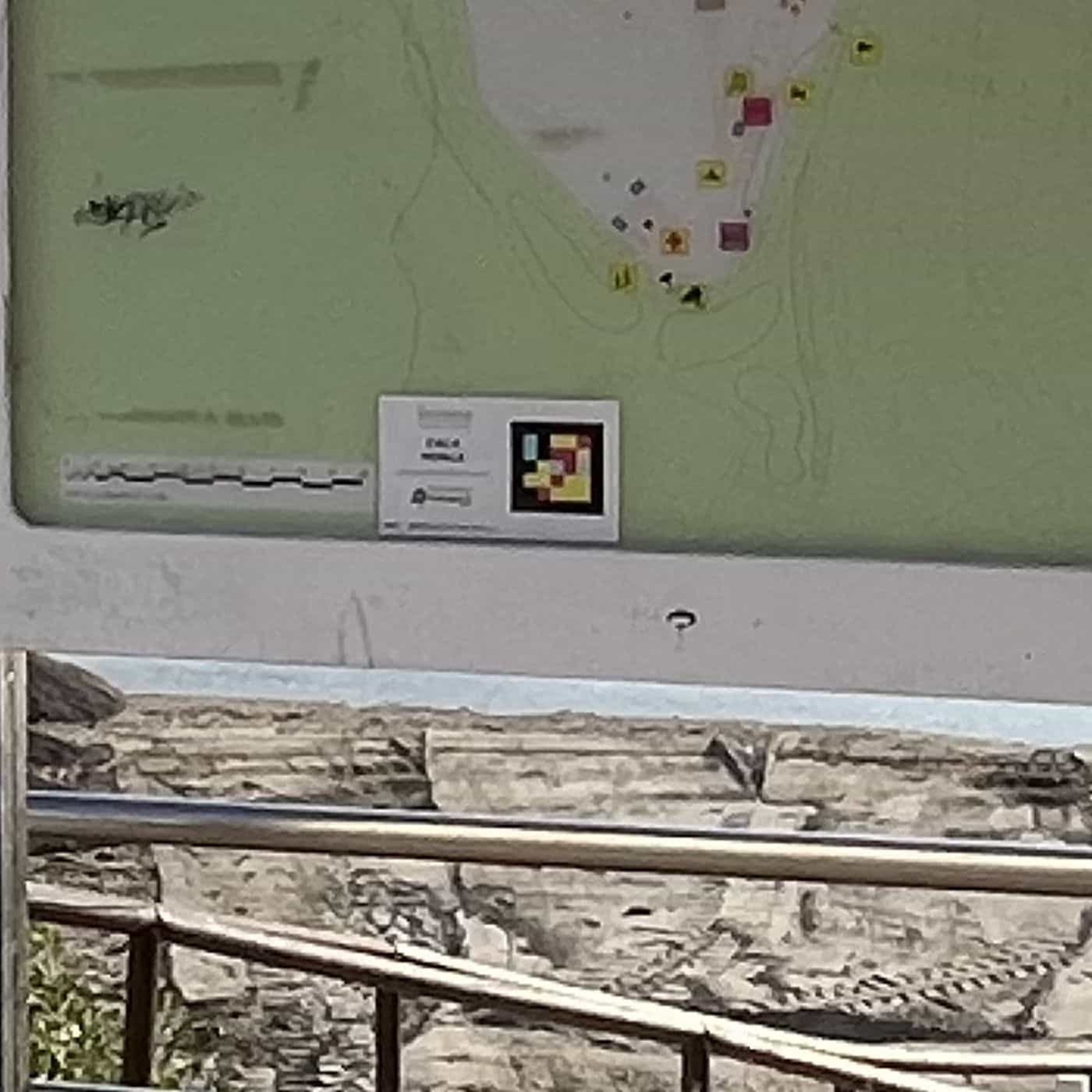
On the beaches the code sits on the location-map panel itself, on a plate carrying the name of the cove. It doesn't replace the panel: it adds to it, so that what the map says in symbols can also be heard.
Visitors point their phone without focusing—NaviLens is detected from several yards away, while moving, at angles up to 160°—and pick the format: audio, multimedia content, augmented reality or easy-read text, designed for people with an intellectual or cognitive disability. The NaviLens and NaviLens GO apps are free and read the code in 42 languages.
§ On the ground
And in the old town, a relief you can touch.
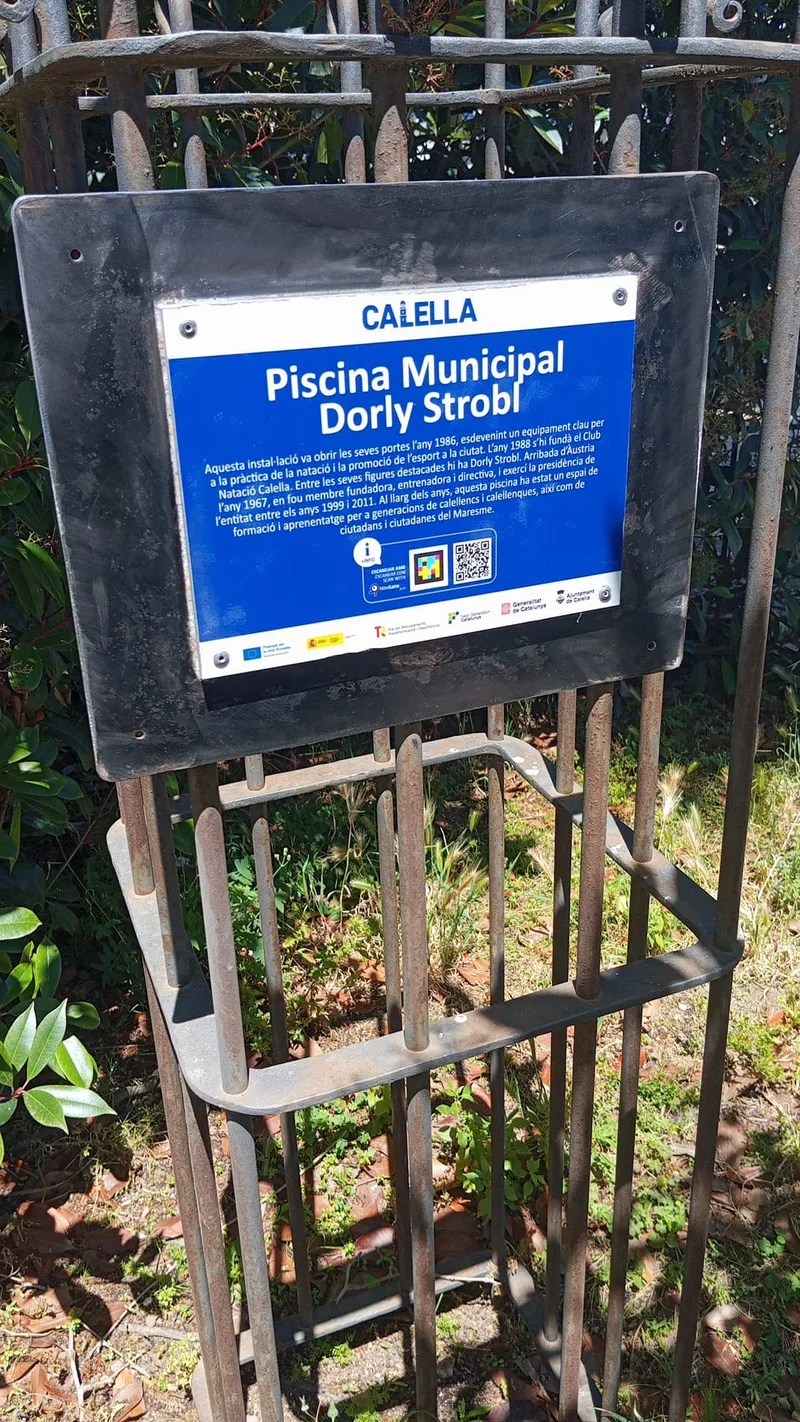
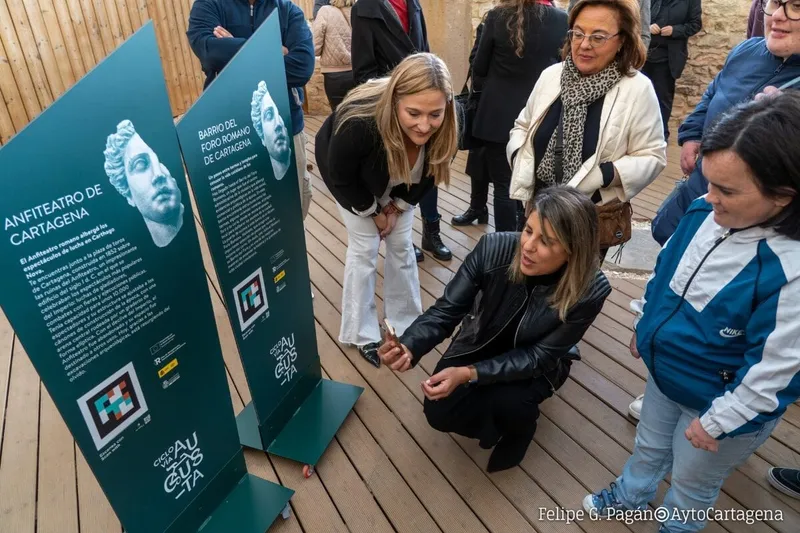
Action 13 of the plan placed 16 information totems at the old town's main points of interest: the Palmeral de San Antón, the Santo Domingo Diocesan College, the Miguel Hernández House Museum, the Atanasio Die Circus Theater, the Holy Week Museum, the Cathedral of El Salvador, the Bishop's Palace, the City Wall Museum, the Royal Monastery of the Visitation of Santa María, the church of Santas Justa y Rufina, the Marqués de Arneva Palace, the Reconquest Museum, the Regional Archaeological Museum, the church of Santiago Apóstol, the Sanctuary of Our Lady of Monserrate and the San Isidro murals.
And on top of each totem, a raised silhouette so visitors can explore by hand what the building in front of them looks like. The code is heard, the relief is touched and the panel is read: three routes to the same content, none of them getting in the others' way.
§ Timeline
From two lines in a plan to a destination you can hear.
- Starting point
A destination signposted in print
Orihuela had the tourist signage any heritage destination has: panels, labels and beach maps. Every one of them depended on sight and on the printed language.
- PSTD
Two actions, one goal
The Destination Tourism Sustainability Plan sets out action 11, “Accessible digital guidance system”, and action 13, “Accessible tourist information”, funded 100% by Next Generation EU.
- Sep 30, 2025
Both actions are awarded
The accessible digital guidance system is awarded for €25,893.01 and the information totems for €25,042.50, each with a three-month term: €50,935.51 in total investment.
- Rollout
Fifty codes and sixteen totems
The codes are spread between the old town and the accesses along Orihuela Costa; the totems, between monuments and museums, each with its tactile silhouette on top.
- Aug 2026
The code, already at the shore
At the Cala Mosca overlook the code plate is fixed onto the location-map panel, beside the beach totem and the municipality's tourism quality awards.
§ Results
The town and the coast, in the same language.
50 sites
With audio, multimedia and easy-read text in the same code
42
Reading languages, without changing a single panel
0.03 s
Detection time · up to 12× the range of a QR code
§ And your destination?
Your destination can also guide in 42 languages.
Tell us about your trails, visitor centers, landmarks or galleries. We’ll show you how NaviLens would make your offering accessible—with comparable cases.