Case study · SMRT Buses · Singapore
The first interchange in Asia that a blind traveler crosses alone.
In May 2022, SMRT Buses became the first transport operator in Asia to deploy NaviLens across its integrated interchanges—Bukit Panjang, Choa Chu Kang and Woodlands—and in August 2023 it added NaviLens GO, an augmented-reality app so every traveler can find their way using the same ddtags already installed.
First in Asia
SMRT Buses, first Asian operator to deploy NaviLens at its interchanges (May 2022)
3 hubs
Bukit Panjang, Choa Chu Kang and Woodlands Integrated Transport Hubs
100+ ft
Detection distance of the ddtag code from the traveler's phone
NaviLens + GO
Accessible app for blind people (2022) and AR app for every traveler (Aug 2023)
The client
SMRT Buses · Singapore · Bukit Panjang ITH
The Bukit Panjang Integrated Transport Hub opened in September 2017, connecting under one roof—inside Hillion Mall—SMRT's bus interchange with Bukit Panjang MRT station (Downtown Line) and Bukit Panjang LRT: Singapore's ninth fully air-conditioned interchange.
In May 2022 SMRT Buses—operator of the Bukit Panjang, Choa Chu Kang and Woodlands interchanges—switched NaviLens on across its three hubs and became the first public transport operator in Asia to do so. In August 2023 it added NaviLens GO, a second app that reuses the same ddtags to guide any traveler, blind or sighted, with on-screen AR arrows.

§ The solution
Same ddtags, two apps, every traveler.
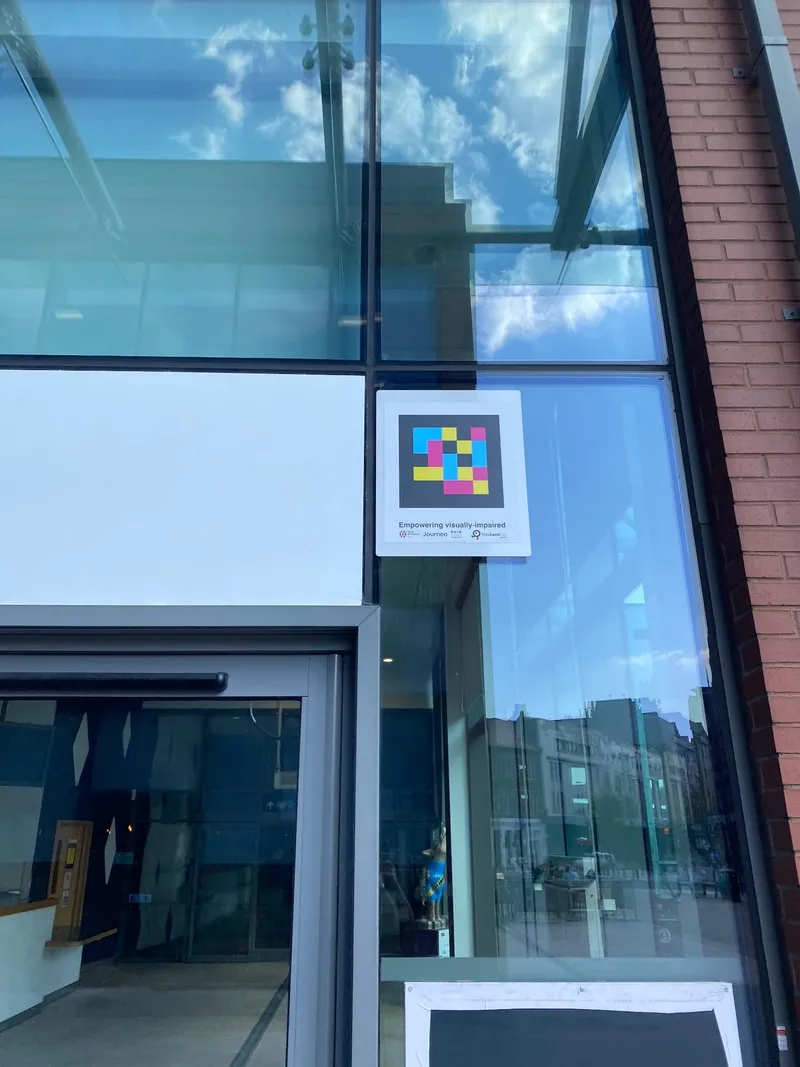
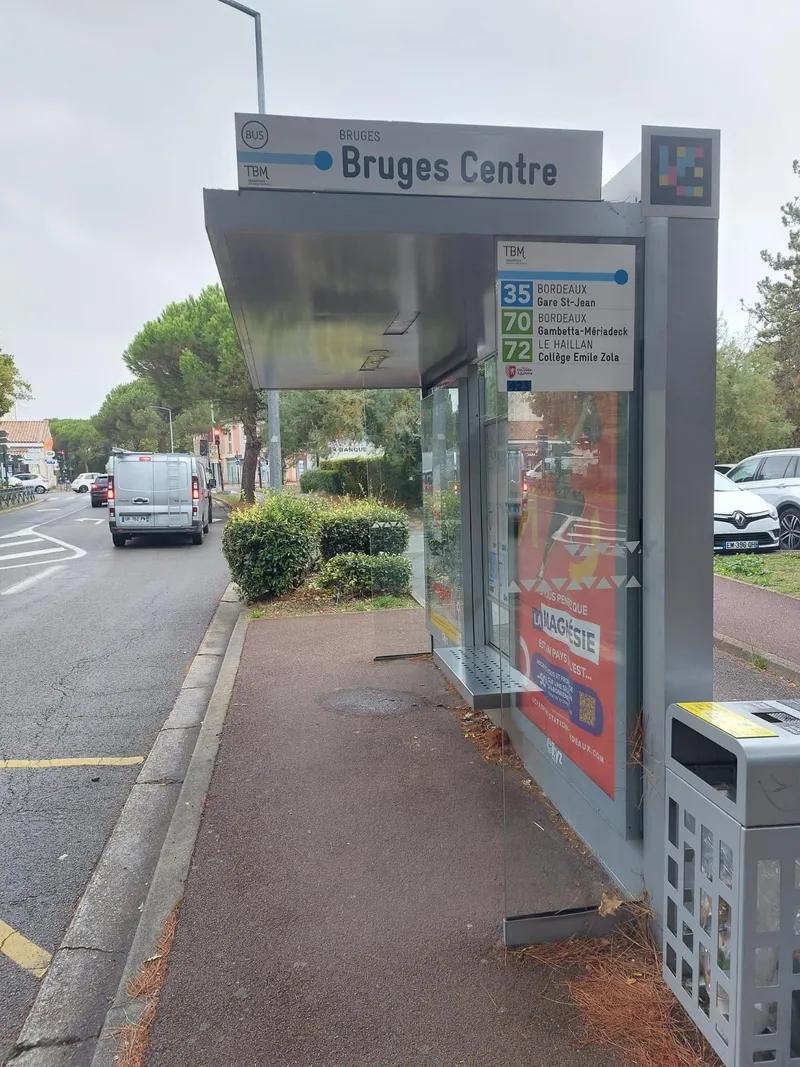
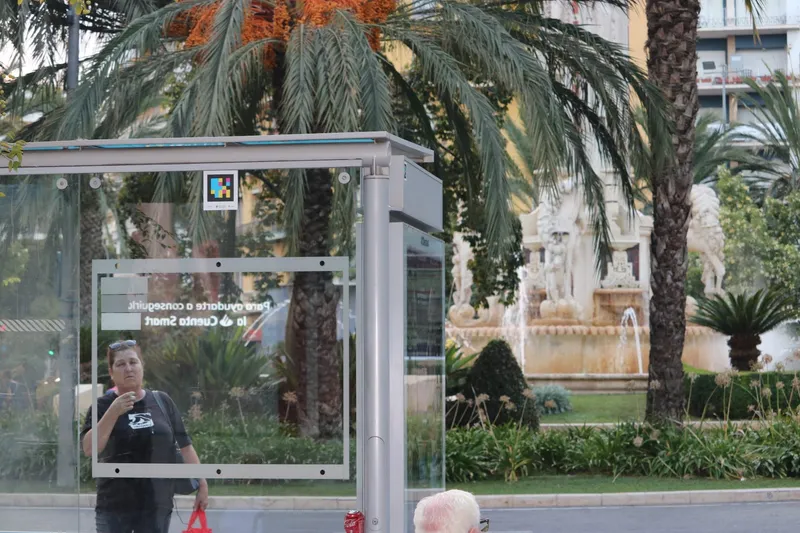
SMRT installed ddtag codes at entrances, elevators, platforms and wayfinding signs of Bukit Panjang ITH and of the other two interchanges. The NaviLens app reads them from several yards away and describes out loud—in the traveler's language—where they are and where they can go; a blind person crosses the bus-MRT-LRT connection without human assistance.
In August 2023 SMRT launched NaviLens GO on the same codes: an augmented-reality layer with on-screen arrows for any traveler—tourist, older person, child or resident—who needs to find their way around a building that combines a shopping mall, bus, metro and monorail.
§ Journey
From the entrance to the platform, with no need to ask.
Entrance · Hillion Mall
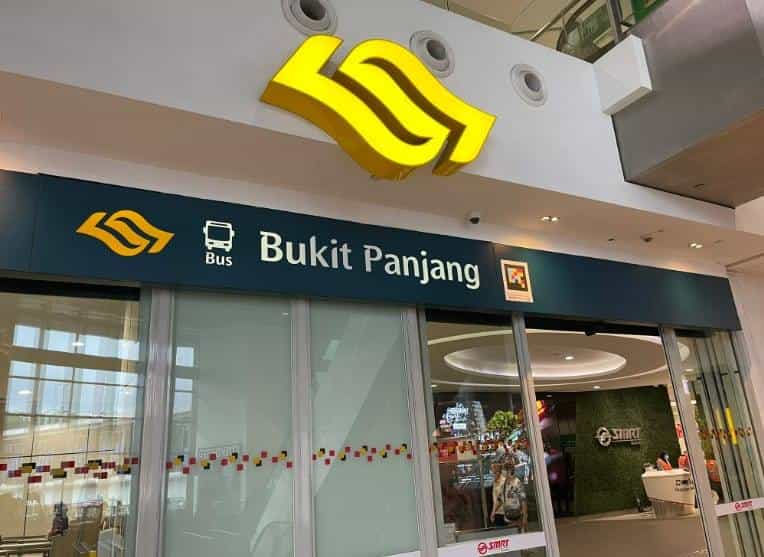
“Bukit Panjang Integrated Transport Hub”
The first code is on the welcome sign, next to the SMRT logo. A blind person arriving from the shopping mall knows they have already reached the interchange before stepping through the glass doors.
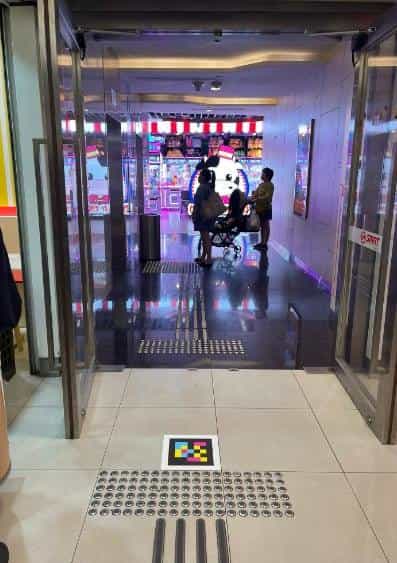
Threshold · Floor + tactile strip
The code on the floor tile
At the threshold, the NaviLens code is printed directly on the floor, aligned with the tactile guide line. The blind traveler following the line gets confirmation on their phone of which door they have just crossed.
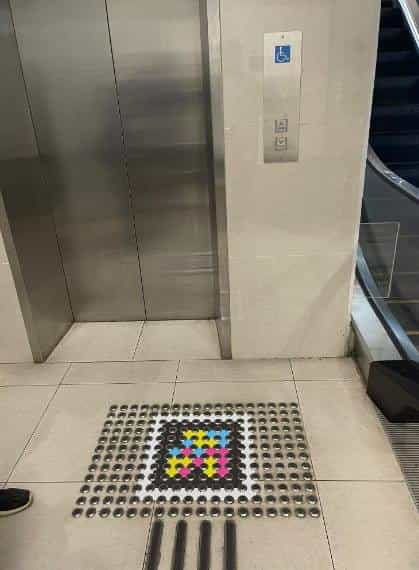
Accessible elevator · Floor
“Elevator to MRT/LRT levels”
In front of every accessible elevator, a code is set into a tile surrounded by tactile dots. The app announces which level the elevator serves before the traveler even presses the button.
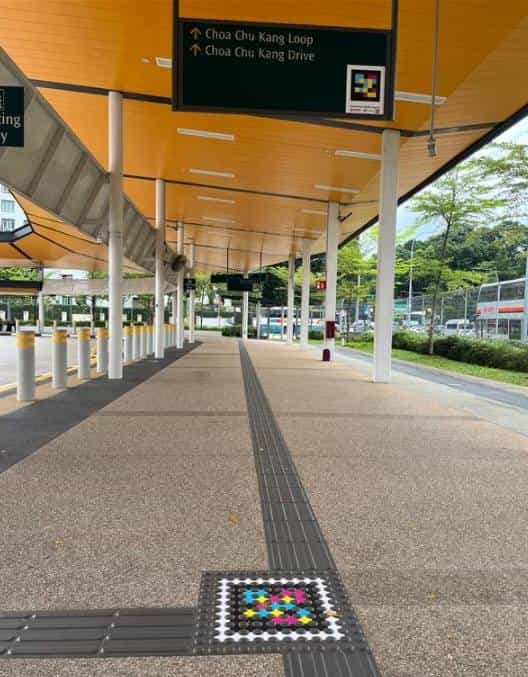
Bus bays · Wayfinding + floor
“Choa Chu Kang Loop / Choa Chu Kang Drive”
At outdoor bays two codes work side by side: one on the wayfinding sign hanging from the ceiling, another on the floor. From a wheelchair or on foot, the traveler checks on their phone which destination the bay serves without having to walk up to the sign.
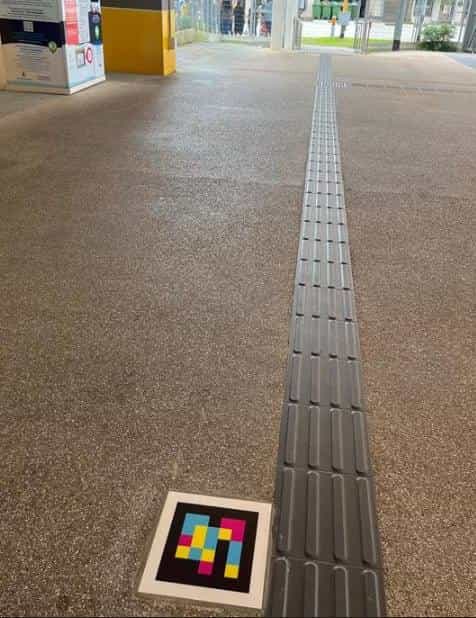
Guide line · Start of the route
The code that kicks off the tactile path
Every tactile guide line begins with a NaviLens code. The blind traveler scans the start of the route and the app tells them which bay or exit that line is going to take them to, before stepping on the first dot.
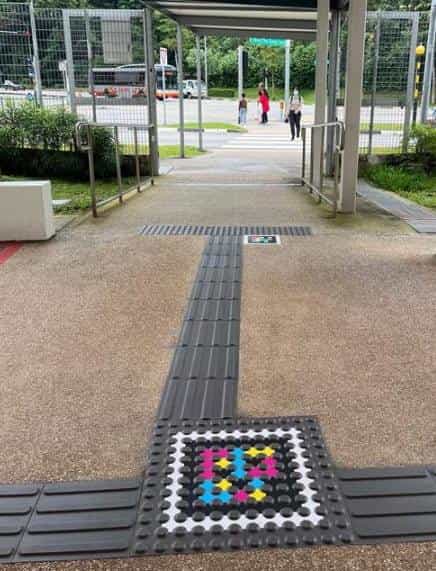
Outdoor connection · Crossing
The code at the crossing
At exits that connect to the street, the code sits where the guide line branches. The app confirms whether the traveler is heading to the pedestrian crossing, the outdoor stops or the MRT entrance.
The roll-out covers the three interchanges operated by SMRT Buses—Bukit Panjang, Choa Chu Kang and Woodlands—and, as Vincent Gay announced, will extend to the new Jurong West Bus Interchange once it opens.
§ What they said
“As part of SMRT's continual efforts to make the public transport network more inclusive and accessible for all commuters to travel with greater confidence, SMRT Buses has launched the full implementation of NaviLens — a first-in-Asia mobile application for the visually impaired to navigate its bus interchanges.”
“SMRT Buses has launched NaviLens Go, an application to enable members of the public to navigate its three bus interchanges — Bukit Panjang, Choa Chu Kang, and Woodlands — in a faster and more effective way. Users do not need to install additional ddtags to use NaviLens Go as it uses the same ddtags.”
“LTA and the public transport operators are continually exploring ways to enhance the travel experience for commuters with disabilities. SMRT Buses' deployment of NaviLens at its bus interchanges is one such initiative, allowing visually impaired commuters to scan ddtags from a distance and receive audio information on their phones in their preferred language.”
“兀兰综合交通中心 为视障者提供语音导航 — 视障者如今只要手握智能手机,就能通过语音导航在综合交通中心独立通行,找到想乘搭的巴士。镜头朝向前方,应用就会自动扫描多达12米远的彩色 ddtag 标识。”
§ And your network?
Your next station can also speak.
Tell us about your network, your pain points and the KPIs you want to move. We’ll show you how NaviLens would fit—with comparable cases.