Case study · Castelldefels · Baix Llobregat · Barcelona
A beach flag is a color. Now it's also a voice.
How Castelldefels' city council adds two NaviLens codes to every equipped beach access: the flag flying right now and the services at that accessible point, read aloud in 42 languages, with no focusing and no extra app to download.
6 accesses
Accesses 3, 8, 19, 26, 32 and 33 — carrying a NaviLens code
2 codes
One on the beach panel, one on the accessible-point sign
3 → 42
Languages printed on the sign → languages read aloud by NaviLens
3 beaches
Baixador, La Pineda and Lluminetes — about 3 miles of shoreline
The client
Castelldefels City Council Platges de Castelldefels
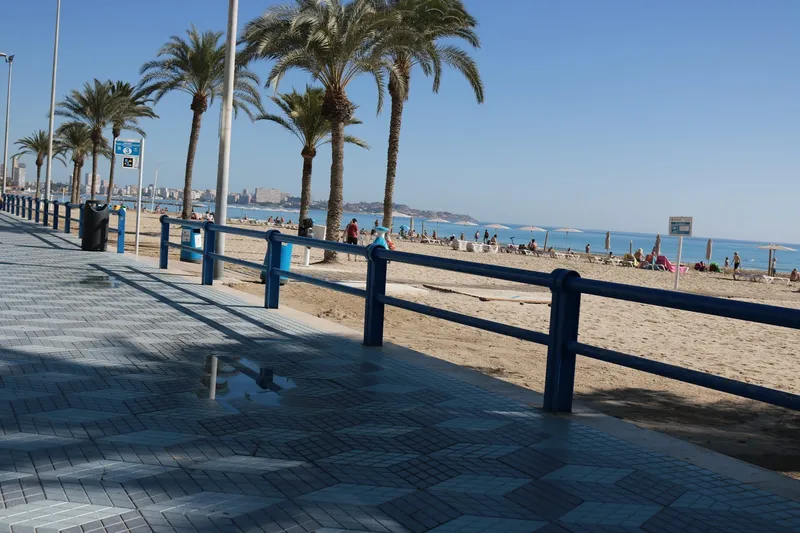
Castelldefels has almost three miles of sand twenty minutes from Barcelona, split across three beaches—Baixador, La Pineda and Lluminetes—and organized by numbered accesses. It is a metropolitan beach: used by locals and by anyone arriving on the Rodalies commuter trains from the Barcelona area, and in season the lifeguard service sets up assistance posts, watchtowers and five adapted bathing points with amphibious beach chairs.
The council has spent years collecting credentials—Blue Flag, Ecoplayas, Biosphere, Q for Tourism Quality, ISO 9001—and in July 2026 it certified the full route at access 32 for Universal Accessibility, from the bus stop and the reserved parking spaces all the way to the water's edge. For the 2026 season it added NaviLens codes to the information panels.
§ The challenge
The whole beach signposted, and the one fact that matters most never arriving.
- 01
A flag is a color on a pole
The most important fact on a beach—whether you can swim or not—is conveyed by hoisting a color at a distance. For people who can't see it, and for people who can't tell red from green, that is precisely the fact that never lands. And it can change several times in the same day.
- 02
The accessible point, spelled out in print
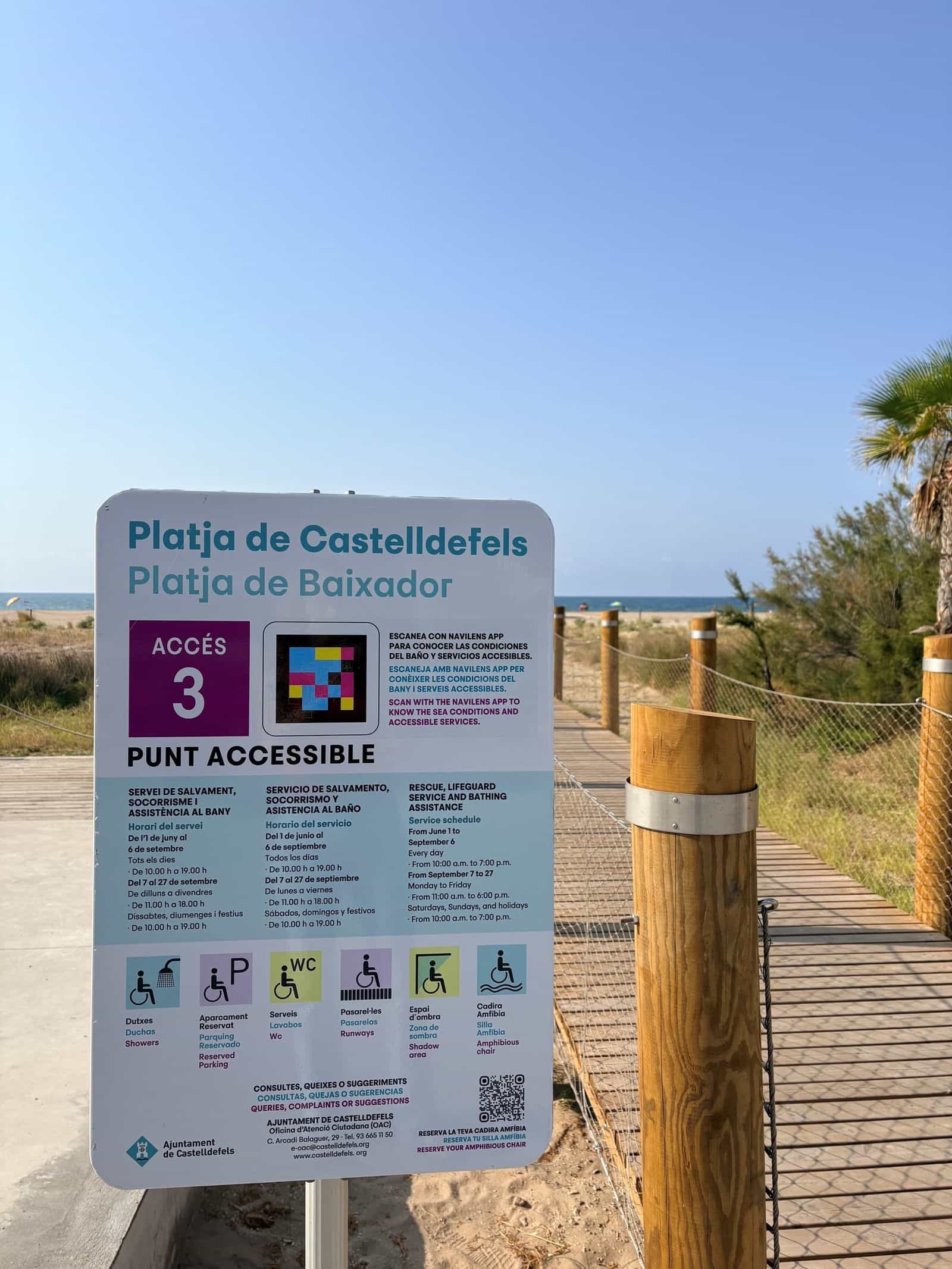
Each accessible-point sign lists what that access offers: shower, reserved parking, adapted restroom, boardwalk, shaded area and amphibious beach chair, each with its own schedule. All of it printed: anyone who can't read it reaches the sand not knowing what is waiting there.
- 03
Three printed languages, an international crowd
The sign fits Catalan, Spanish and English, and that's where paper stops. Castelldefels is a metropolitan beach with international tourism: any other language needs a different channel.
§ The solution
Two codes per access, two different questions.
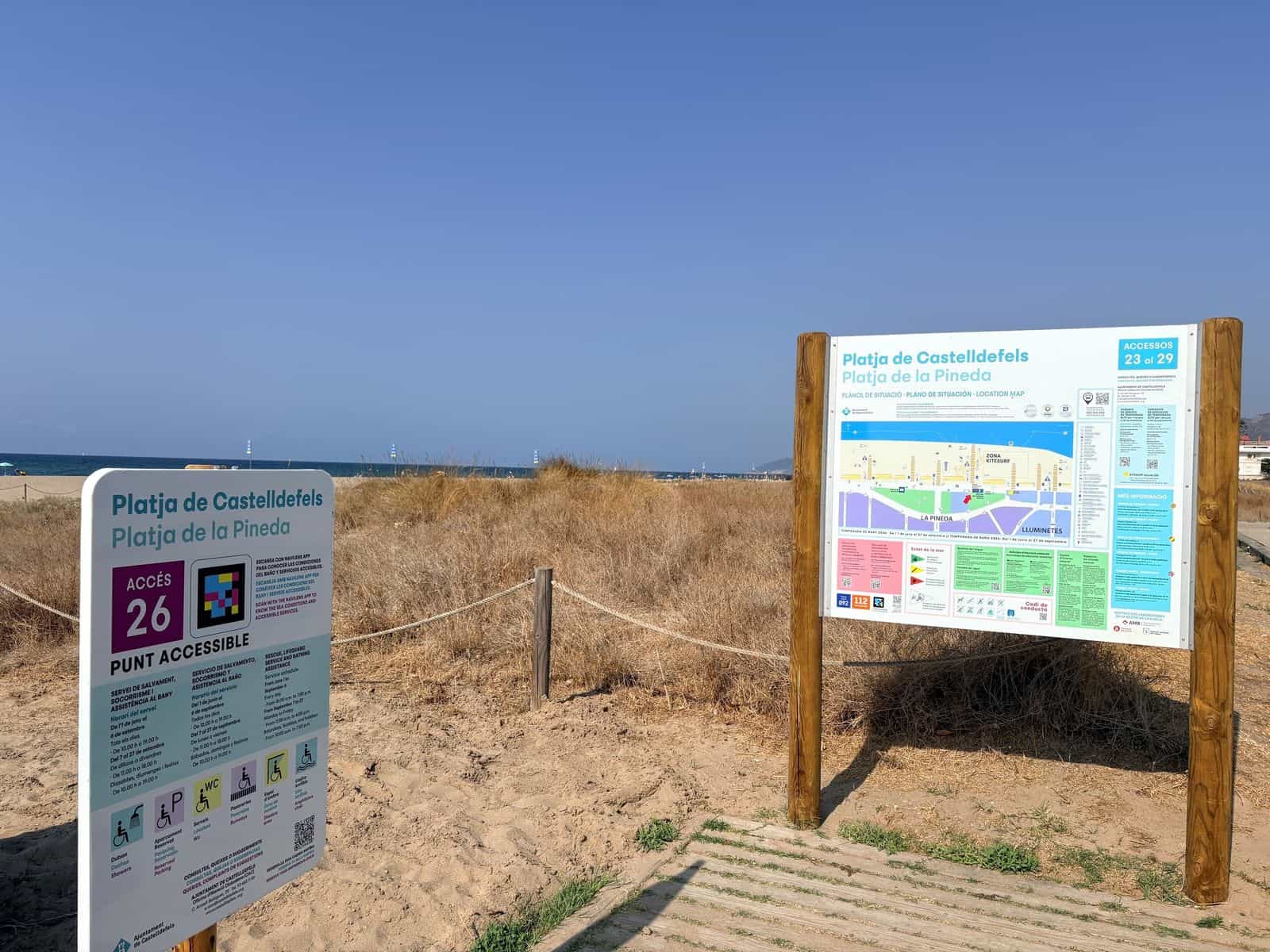
Every equipped access carries two codes, and each answers a different question. The one on the accessible-point sign tells you which services are at that access and when they run. The one on the large location-map panel—the panel that covers a whole stretch, “ACCESSOS 23 al 29”—tells you the sea conditions flying right now, the water quality, whether there are jellyfish and the beach code of conduct.
They are printed next to the trilingual label “SCAN WITH THE NAVILENS APP TO KNOW THE SEA CONDITIONS AND ACCESSIBLE SERVICES”. They replace nothing that was already there: they add to the map, the pictograms and the QR codes on the panel.
Beachgoers point their phone without focusing—NaviLens is detected from several yards away, while moving, at angles up to 160°—and hear it. The NaviLens and NaviLens GO apps are free and read the code in 42 languages.
§ On the ground
From the flagpole to the phone.
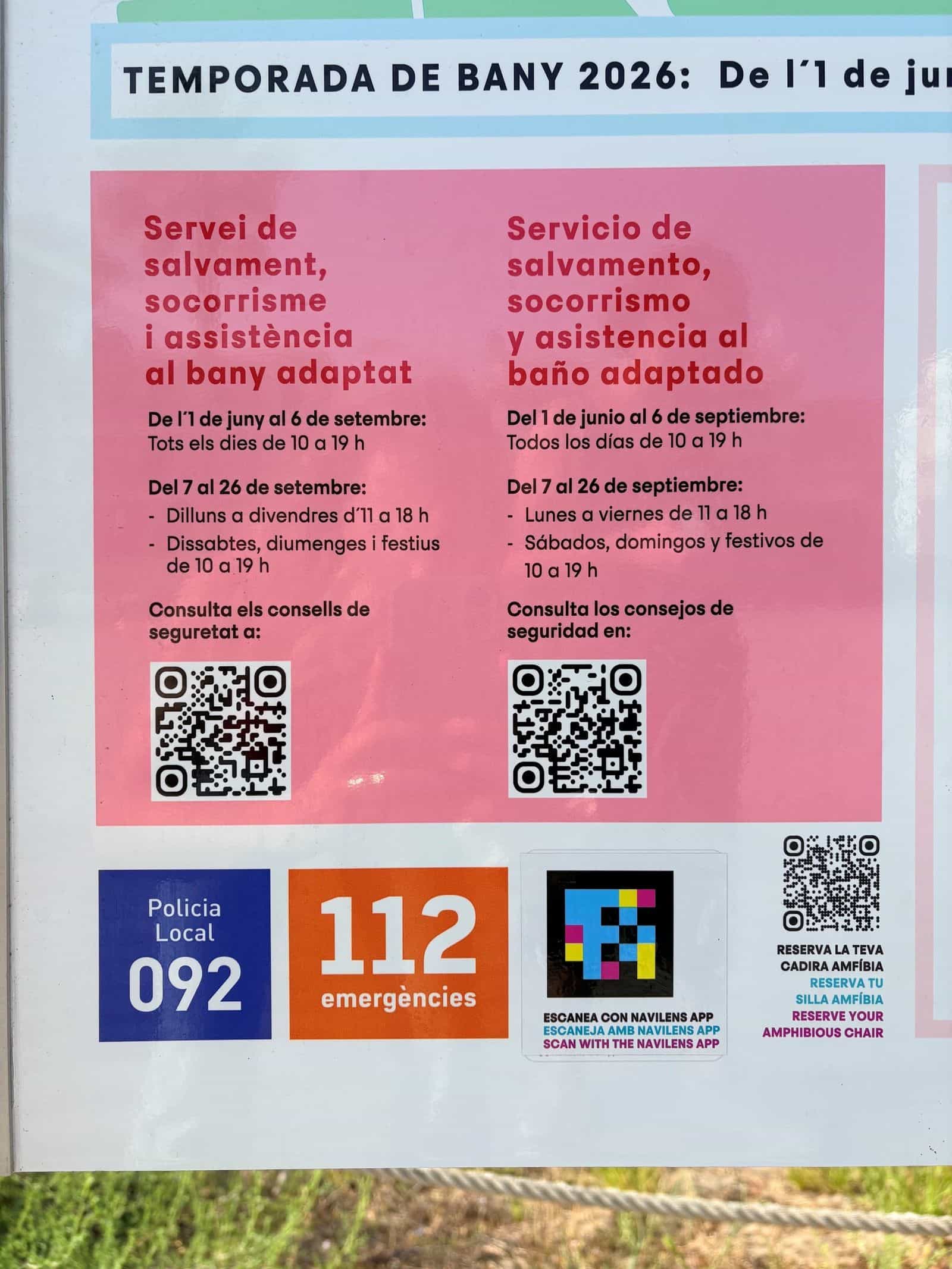
The beach panel isn't a welcome sign: it's the board where whatever changes gets posted. The 2026 bathing season runs June 1 to September 27; the lifeguard service covers every day from 10 a.m. to 7 p.m. until September 6 and then scales back; adapted bathing keeps its own calendar. And on top of all that sits today's flag.
The code is stuck onto that same block, between the 092 local police number and the 112 emergency line. Whoever scans it doesn't get a tourist brochure: they get today's conditions, in whatever language their phone is set to.
§ Timeline
From a page you look up to a beach that speaks.
- Starting point
Accessible services, visual information
Castelldefels already had adapted bathing points, amphibious beach chairs, boardwalks down to the water and a flag system adapted for color blindness. Everything that explained it was still printed text and a hoisted color.
- Jun 2025
Beach status, available online
The council opens up real-time lookup of the flag, sea conditions, jellyfish, water quality, temperature and solar radiation. It works if you know it exists and you have your phone in hand.
- Apr 30, 2026
The summer campaign adds NaviLens
The 2026 accessible and inclusive beach plan brings NaviLens codes to the information panels, alongside a new adapted bathing point at access 32 and sign-language training for lifeguard and tourism staff.
- Jun 1, 2026
The bathing season opens
The 2026 season runs through September 27, with five adapted bathing points spread along the shoreline and bathing assistance using amphibious beach chairs.
- Jun 8–12, 2026
Three new panels on the promenade
Public-works maintenance crews install three new information panels—Passeig Marítim 376, plaça de les Palmeres, and Passeig Marítim at carrers 9 and 9bis—with the accessible design and the codes.
- Jul 2026
Access 32 is certified
La Pineda certifies Universal Accessibility at access 32: the complete route from the bus stop and the reserved parking spaces to the water's edge, walkable independently and safely.
- Aug 11, 2026
Six accesses with a code
The council publishes the list: NaviLens codes are on the beach panels and the accessible-point signs at accesses 3, 8, 19, 26, 32 and 33.
§ Results
A beach where “can I swim?” has an answer.
6 accesses
With sea conditions and accessible-point services read aloud
42
Reading languages, against the 3 printed on the sign
0.03 s
Detection time · up to 12× the range of a QR code
§ And your destination?
Your destination can also guide in 42 languages.
Tell us about your trails, visitor centers, landmarks or galleries. We’ll show you how NaviLens would make your offering accessible—with comparable cases.