Case study · Vall de Núria, Catalonia
ICAC in the Pyrenees — landscape archaeology
spoken aloud.
How ICAC and GIAP made the exhibition “Vall de Núria i Coma de Vaca: paisatges culturals mil·lenaris” accessible with NaviLens — in 42 languages, at 2,000 m altitude.
ICAC · GIAP
Catalan Institute of Classical Archaeology · Landscape Archaeology Group
Vall de Núria
Interpretation center · Vall de Núria station (Queralbs, FFCC)
FECYT
ArqueoPirenaia project (FCT-21-17298) · 10 years of research
8 panels
First Spanish scientific exhibition with NaviLens
Client
Catalan Institute
of Classical Archaeology
The ICAC is Catalonia's reference center for classical archaeology. Its Landscape Archaeology Research Group (GIAP), founded in 2004, studies the cultural landscapes of the Mediterranean arc and, in particular, the high-mountain spaces of the Pyrenees.
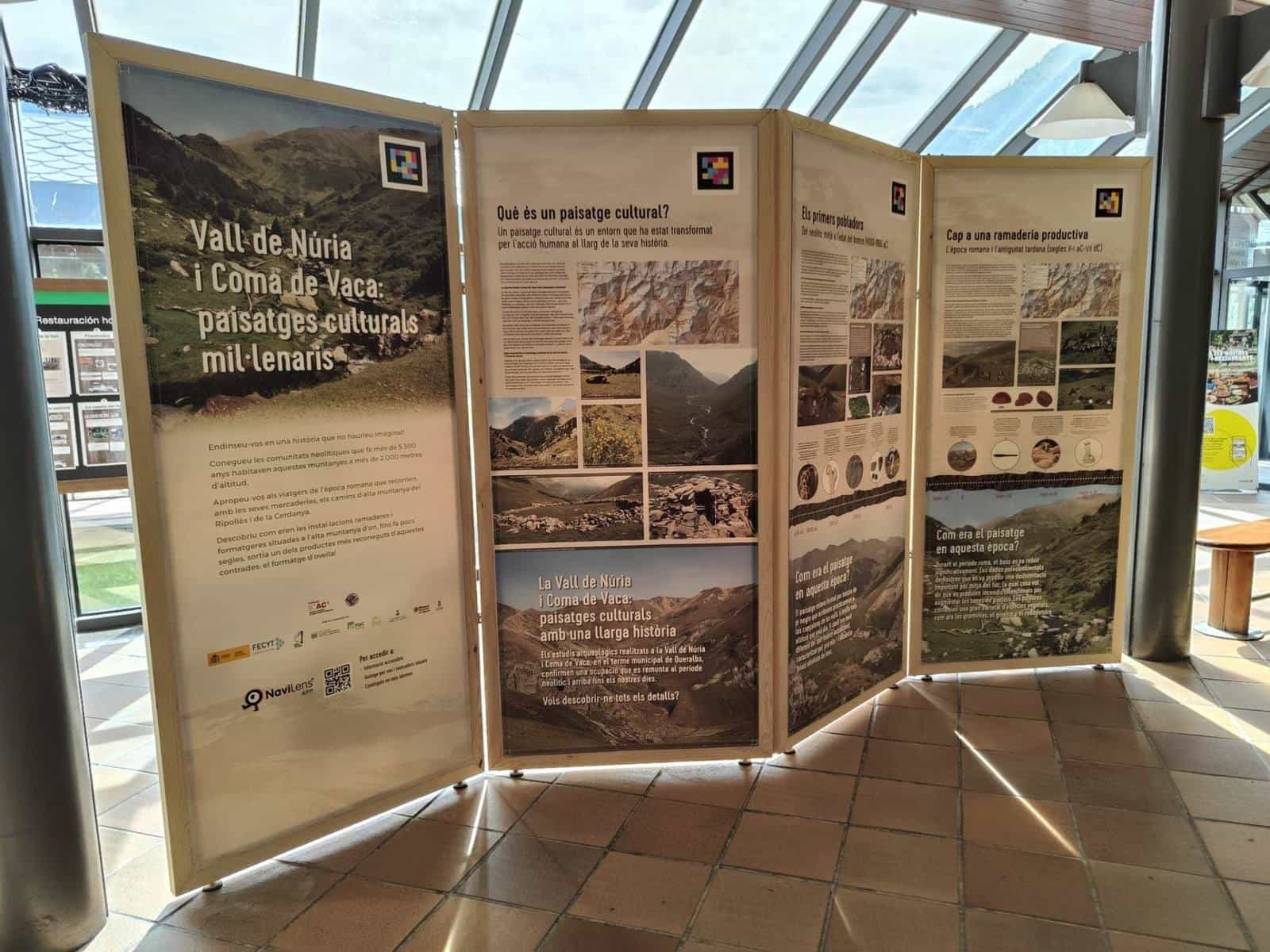
With the support of FECYT, FGC, Vall de Núria, the Ripoll Ethnographic Museum and the councils of Queralbs and Ribes, GIAP produced the touring exhibition “Vall de Núria i Coma de Vaca: paisatges culturals mil·lenaris”. NaviLens turns every panel into accessible content any visitor can hear in their own language.
The official presentation of the final results of the ArqueoPirenaia transfer project took place in 2023 at Vall de Núria (Queralbs), with the main entities and institutions involved (icac.cat). The rollout complements the accessibility strategy of Turisme FGC / Pirineu365, which integrates NaviLens at its mountain stations as part of the progressive upgrade of facilities (valldenuria.cat/accessibilitat).
§ The challenge
Bringing landscape science to every visitor.
- 01
A high-mountain scientific exhibition
“Vall de Núria i Coma de Vaca: paisatges culturals mil·lenaris” covers 5,500 years of human occupation of the Pyrenees. The panels, dense with Catalan scientific text, are hard to follow for visitors with low vision, older audiences or international tourists arriving by rack railway above 2,000 m.
- 02
Touring and unstaffed
The GIAP-ICAC exhibition travels between the Vall de Núria interpretation center, the Ripoll Ethnographic Museum and other venues in the Ripollès and Cerdanya. It needed a self-service accessibility system, no guide and no downloads, that visitors could use with their own phone.
- 03
Scientific Catalan, several tourist languages
The Núria rack railway welcomes visitors from across Europe. GIAP's discourse—landscape archaeology, transhumance, Neolithic, Roman era, cheese huts—also had to be available in Spanish, English, French and 39 more languages.
§ The solution
A code on every
scientific panel.
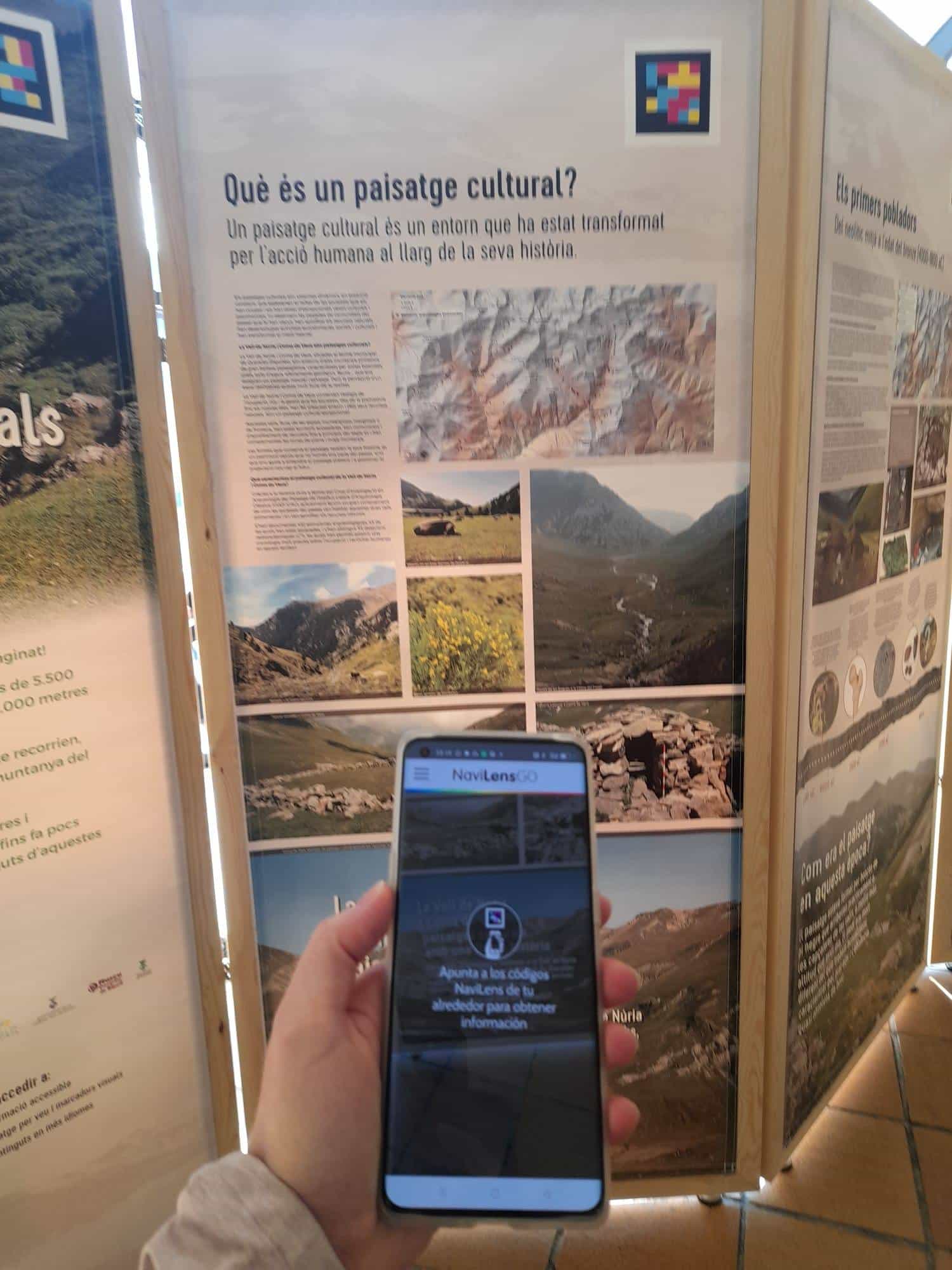
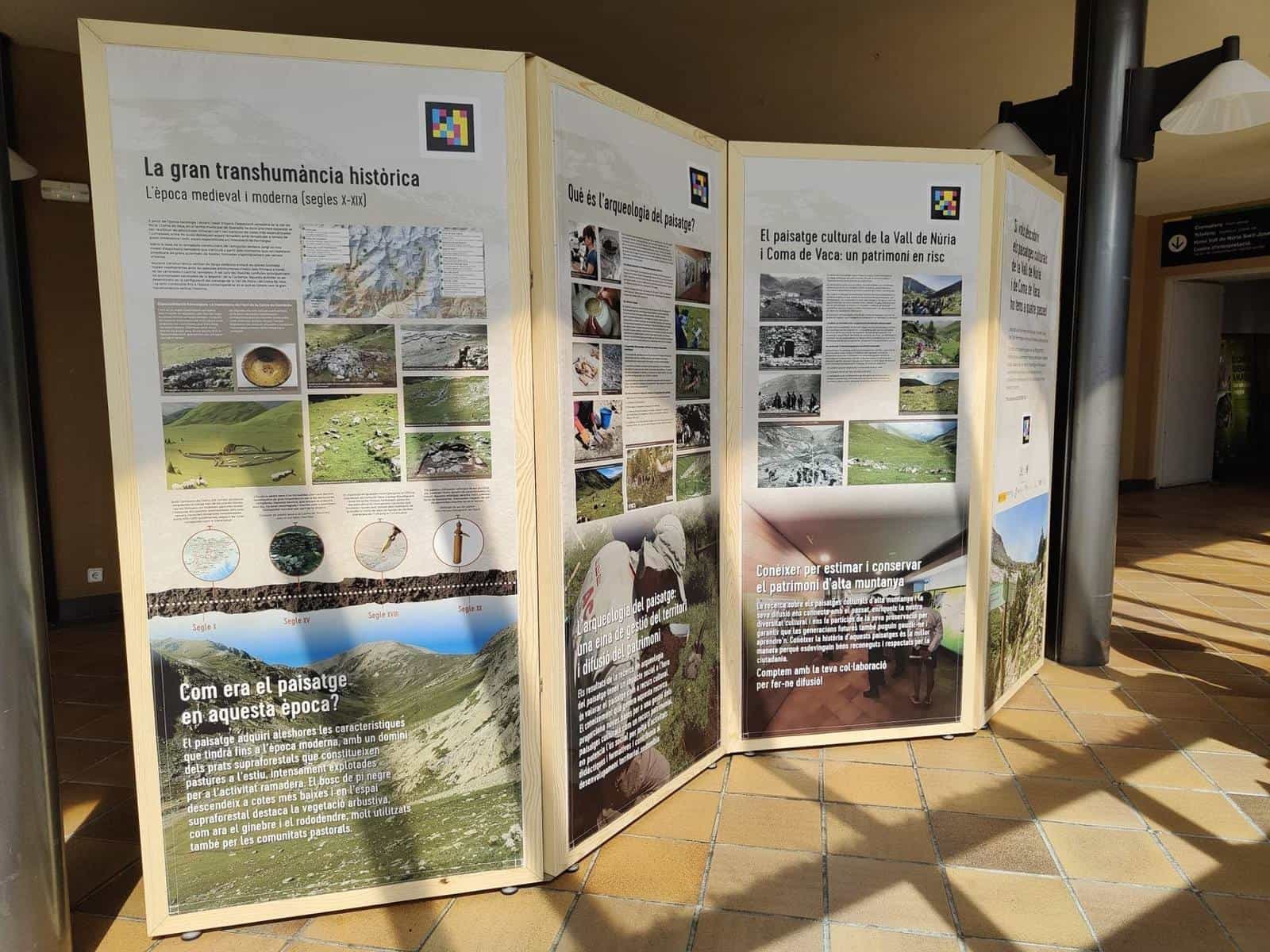
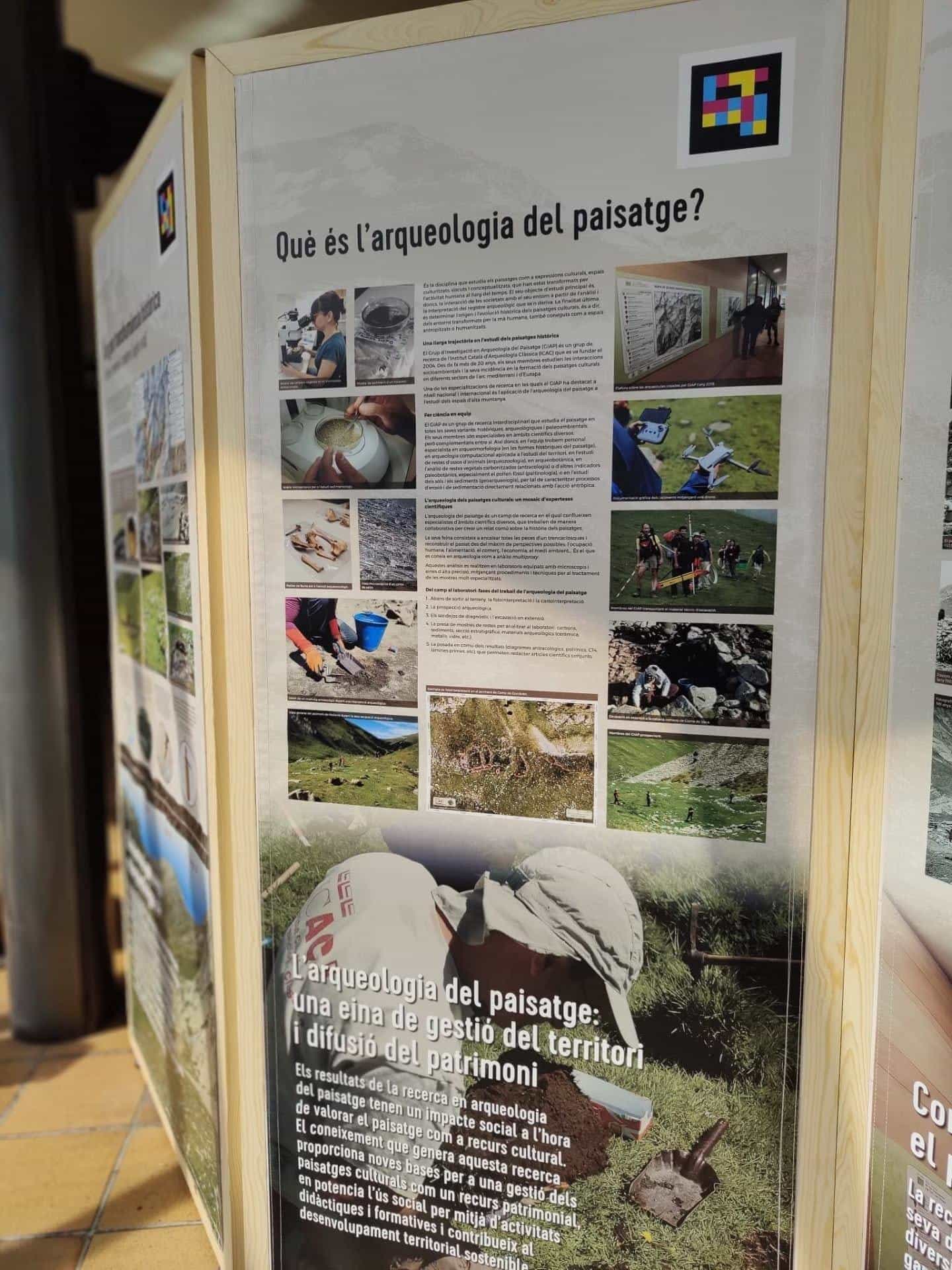
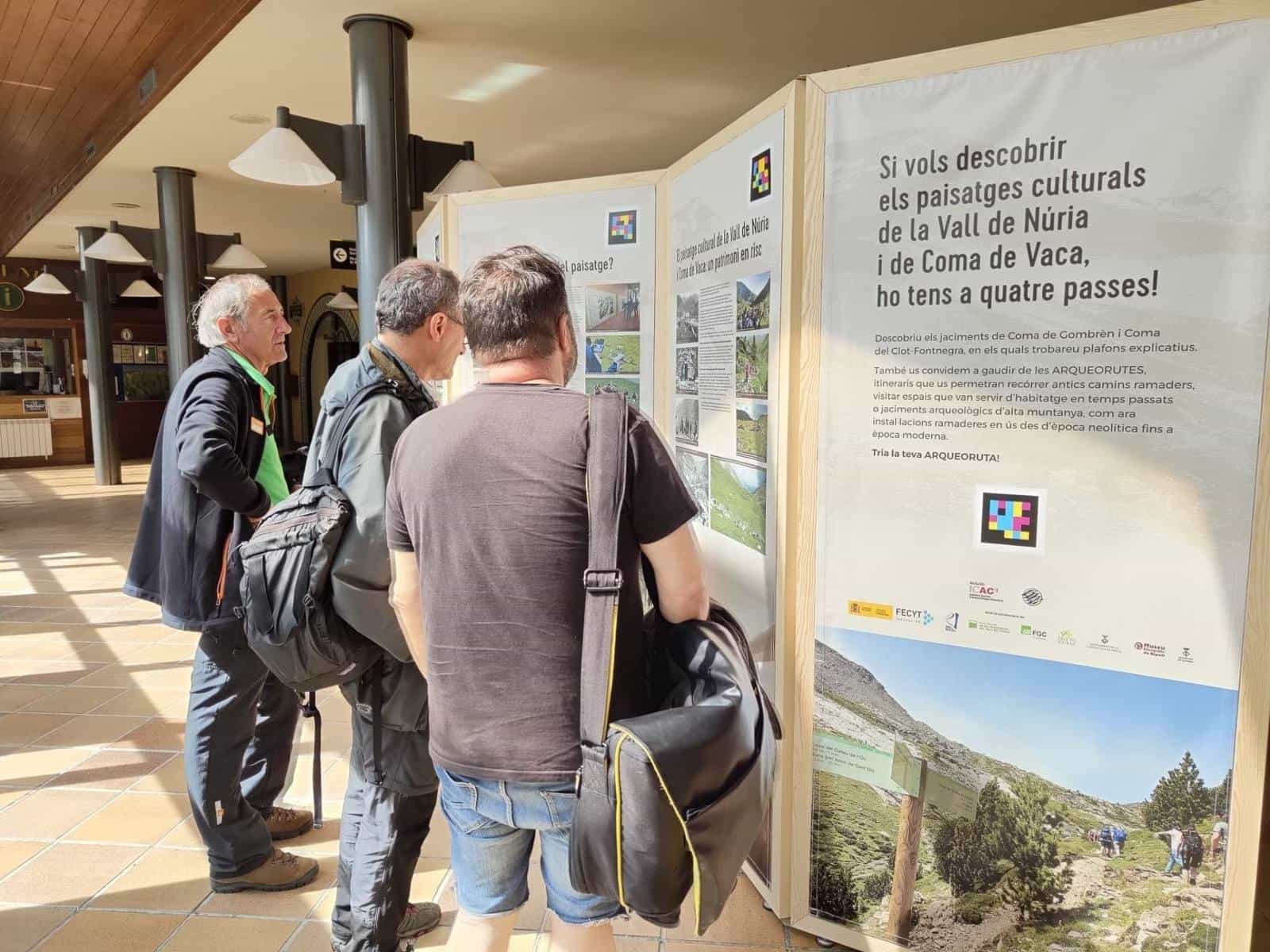
Each panel of the GIAP-ICAC exhibition carries a NaviLens code in the header, next to the title. It is detected from several yards, without aiming and also with low vision.
The visitor hears the panel content—landscape archaeology, first inhabitants, medieval transhumance, archaeo-routes—in their language, with playback controls, no downloads and no on-site guide.
§ Timeline
From the panel header to the archaeo-routes.
- 2010-2023
10 years of landscape archaeology in the Pyrenees
GIAP at ICAC, led by Josep Maria Palet, has studied the Núria and Coma de Vaca valleys (Queralbs, Ripollès) since 2010. The research documents over 350 structures—huts, pens, orris, pastoral shelters—and shows that many, once attributed to recent times, are Neolithic in origin.
- 24 Sep 2023
Opening at Vall de Núria station (FFCC)
Josep Maria Palet (ICAC director), Queralbs mayor Imma Constans and David Codony (Vall de Núria events lead) open the touring exhibition “Les valls de Núria i Coma de Vaca: paisatges culturals mil·lenaris”, with 8 panels equipped with NaviLens codes. According to ICAC itself, this is the first time the technology is used on scientific outreach materials in the Ripollès, in Catalonia and probably across the rest of Spain.
- Visit
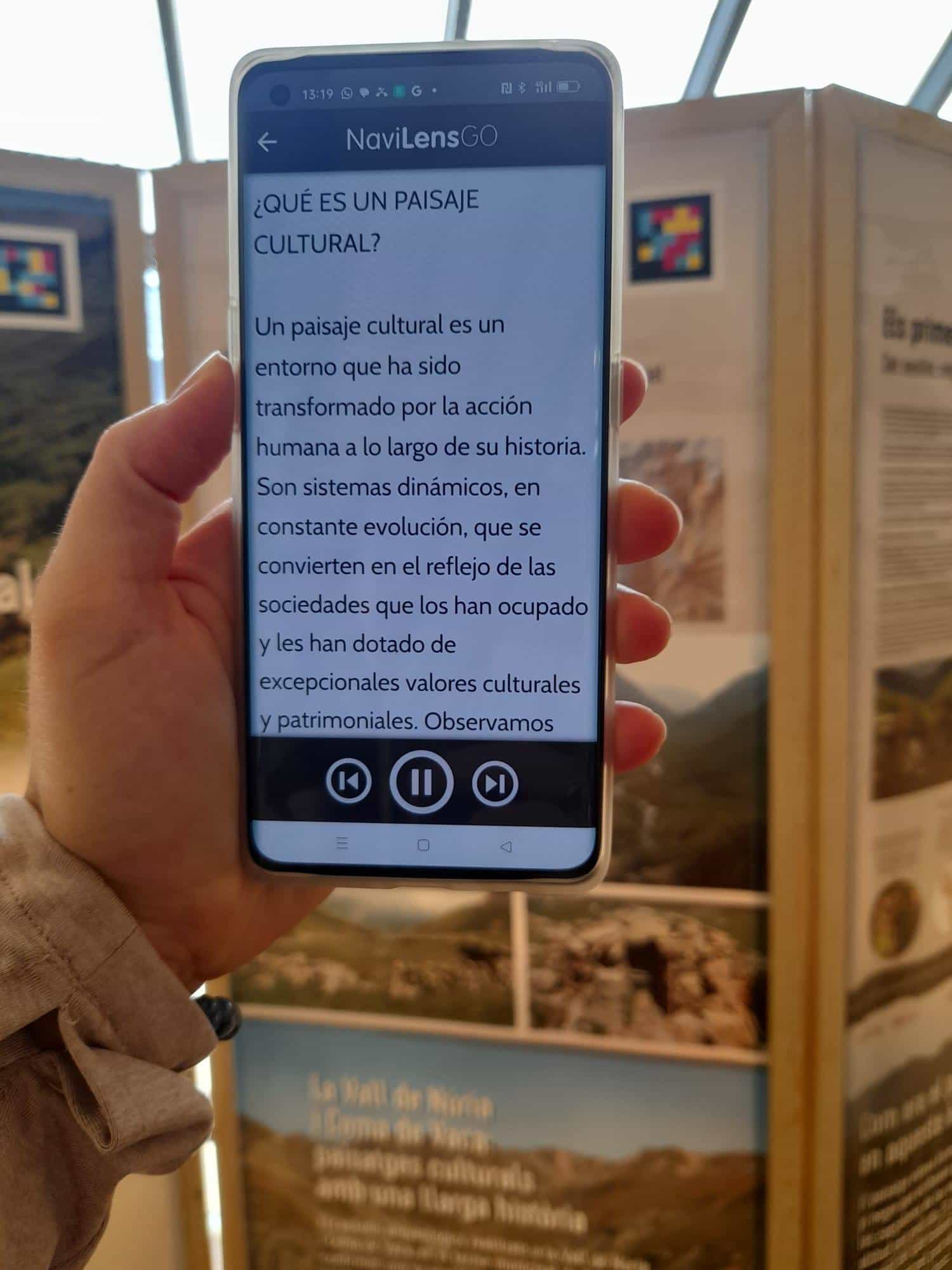
NaviLens GO reads the panels aloud
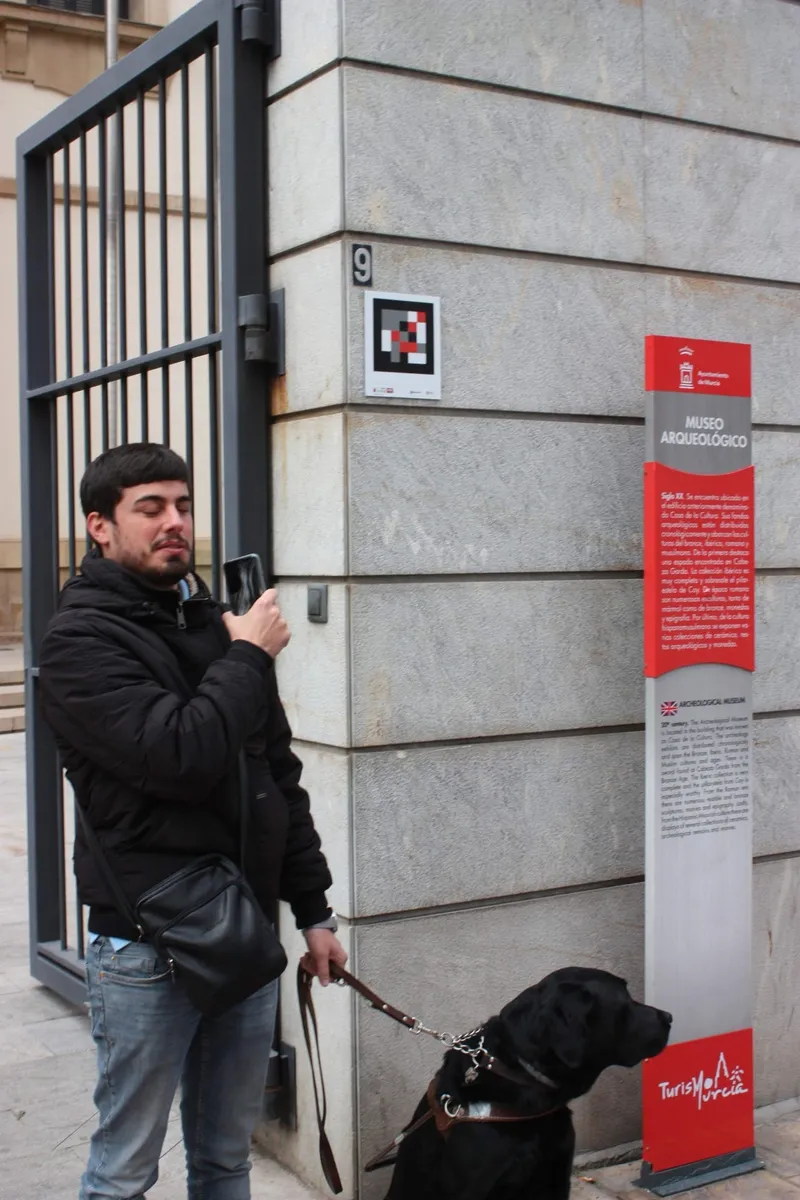
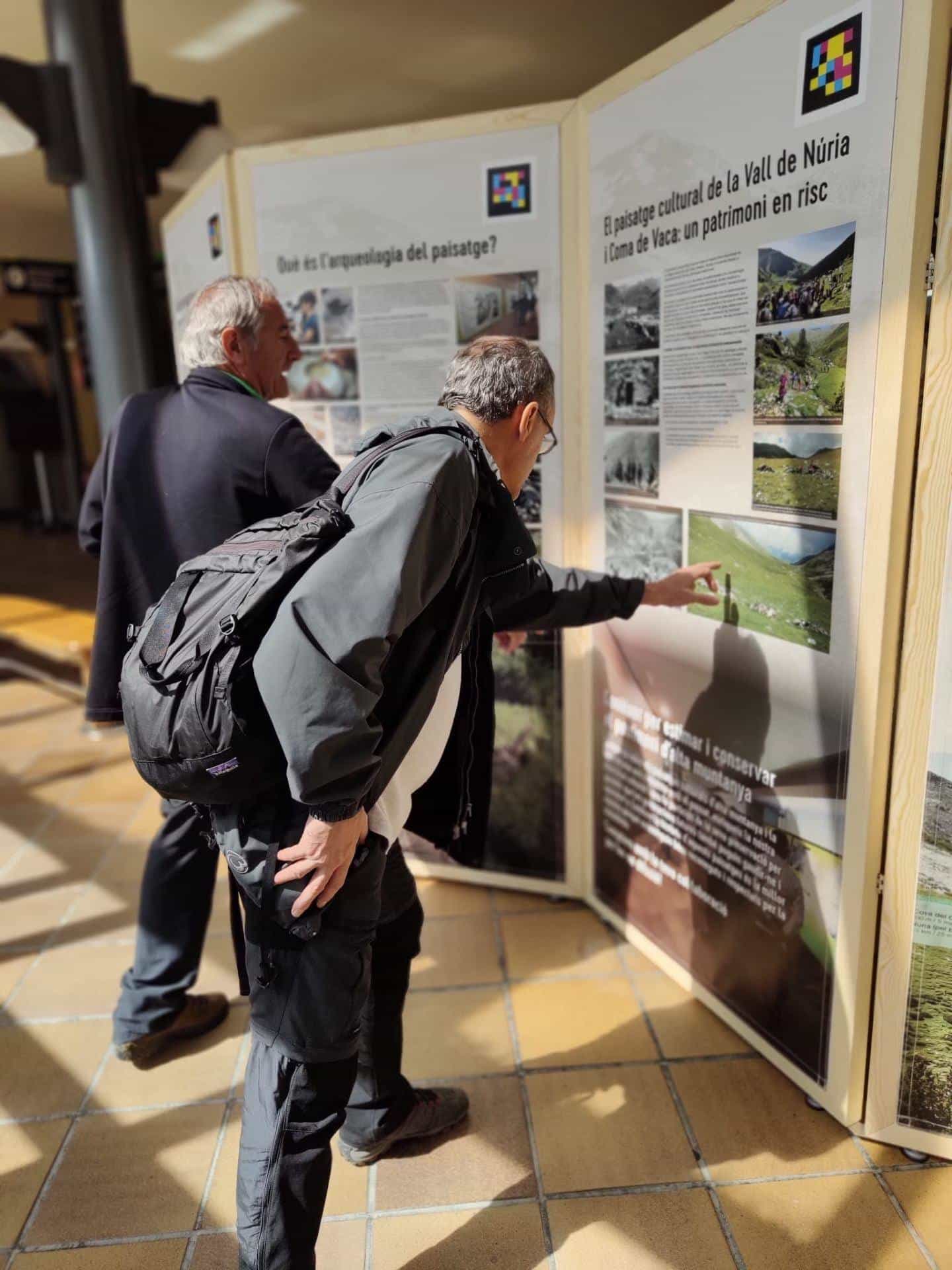
Visitors point NaviLens GO at the code—detected from several yards, without aiming—and hear the panel content in their language, with play, pause and forward controls, with no need to download extra content or request an audio guide.
- Tour
Same accessible layer at every venue
The exhibition travels across the territory (Vall de Núria, Ripoll Ethnographic Museum, Ripollès and Cerdanya facilities) in partnership with the Capçaleres del Ter i del Freser Natural Park and the councils of Queralbs and Ripoll. As the panels are the same at every stop, the NaviLens layer travels with the show with nothing to reinstall.
- Archaeo-routes
From panel to territory
The panels invite visitors to walk the project's ARQUEORUTES—herding paths, sites of Coma de Gombrèn and Coma del Clot-Fontnegra—and the NaviLens codes prepare visitors with the key information before they set out into the high mountains.
- Funding
FECYT · Ministry of Science and Innovation
The ArqueoPirenaia project has been supported by the Spanish Foundation for Science and Technology (FECYT-FCT-21-17298) of the Ministry of Science and Innovation, alongside local institutions.
§ Fieldwork
Panels, codes and visitors at Vall de Núria.
§ What they said
“Pensábamos que muchas de estas estructuras vinculadas a la actividad ganadera —corrales, cabañas, abrigos y orris— eran de períodos muy contemporáneos, pero hemos visto que algunas tienen miles de años y se conservan muy bien porque han sido reutilizadas a lo largo del tiempo.”
“No se trata sólo de poner un panel en la montaña, sino de un conjunto de acciones con el objetivo de ofrecer un enriquecimiento en el tiempo libre a quien quizás vendría sólo a hacer una excursión muy clásica.”
§ Results
A scientific exhibition anyone can read.
100%
Of scientific panels available by voice
42
Languages — including Catalan, Spanish, English and French
0
Visual or language barriers to follow the exhibition
“Knowledge of cultural landscapes only enriches our diversity if it reaches everyone — in any language and without barriers.”
§ And your destination?
Your destination can also guide in 42 languages.
Tell us about your trails, visitor centers, landmarks or galleries. We’ll show you how NaviLens would make your offering accessible—with comparable cases.