Case study · Murcia · Smart City
The first city in the world with street name plates that speak.
Murcia added NaviLens to its municipal street signage: more than 650 smart plates across the old town, readable from a distance with a smartphone, opening up the history of every street to residents, tourists and blind and low-vision people.
1st city in the world
Murcia embedded NaviLens technology in the municipal street grid—smart street plates—as part of the Murcia Smart City strategy
650+ plates
More than 650 plates with NaviLens codes deployed across the old town, following the route of the medieval city wall
Nov 2020 →
First installations on C/ Santo Domingo and Trapería; progressive extension across La Catedral, San Lorenzo, San Miguel and other districts
Feb 2026
The City Council awards the contract to extend smart plates to every street and square in the municipality
The client
Murcia City Council Murcia Smart City
Murcia’s smart street plate project runs from the City Council’s Murcia Smart City strategy, with technical support from the local company Neosistec and the NaviLens system, born at the University of Murcia.
In November 2020, Murcia became the first city in the world to embed NaviLens codes directly into public street plates—not into auxiliary panels, but into the official street name plates themselves—as part of a universal accessibility plan for urban space.
The initial rollout covered more than 650 plates in the old town, following the route of the medieval city wall. In 2025 the Governing Board approved the tender to extend the system and, in February 2026, the City Council awarded the contract to bring smart plates to every street and square, a rollout without precedent anywhere in the world. In September 2026 it reported on the installation work.
§ The challenge
Let the street grid speak to those who can’t read it.
- 01
Until now, a street plate could only be read by looking at it
Traditional plates—white ceramic signs with a border, granite plates or blue panels in the gardens—only inform the pedestrian who sees and reads them. For a blind or low-vision person or a tourist who doesn’t speak Spanish, the plate is opaque: it doesn’t say where you are, which district it is or what history the street holds.
- 02
Murcia’s old town is a dense medieval fabric
Trapería, Platería, Arenal, Serrano Alcázar, Arquitecto Cerdán Martínez, Andrés Baquero, Pasos de Santiago… the city center is organized around the Cathedral and the old districts (San Lorenzo, San Miguel, San Antolín, Santa Eulalia) with narrow streets and historically charged names that the average passer-by doesn’t recognize.
- 03
A single layer for residents, tourists and disabled visitors
The challenge for Murcia City Council and Murcia Smart City was to find a physical asset that could coexist with every existing plate typology (ceramic of La Catedral, San Lorenzo, San Miguel, carved granite of El Arenal) without replacing them, and that would serve residents, international tourists and blind or low-vision people at the same time.
§ The solution
NaviLens printed directly on the official plate.
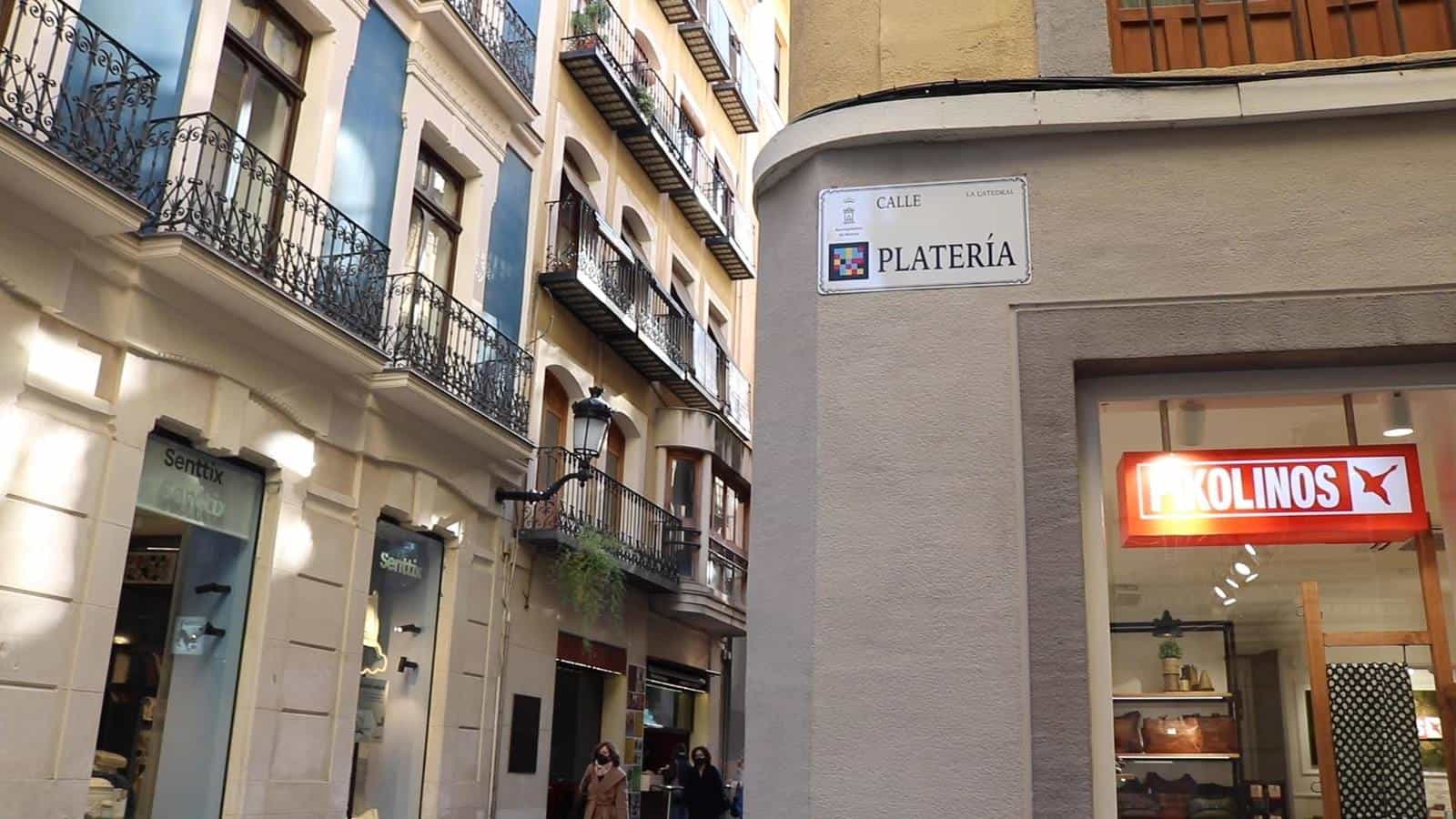
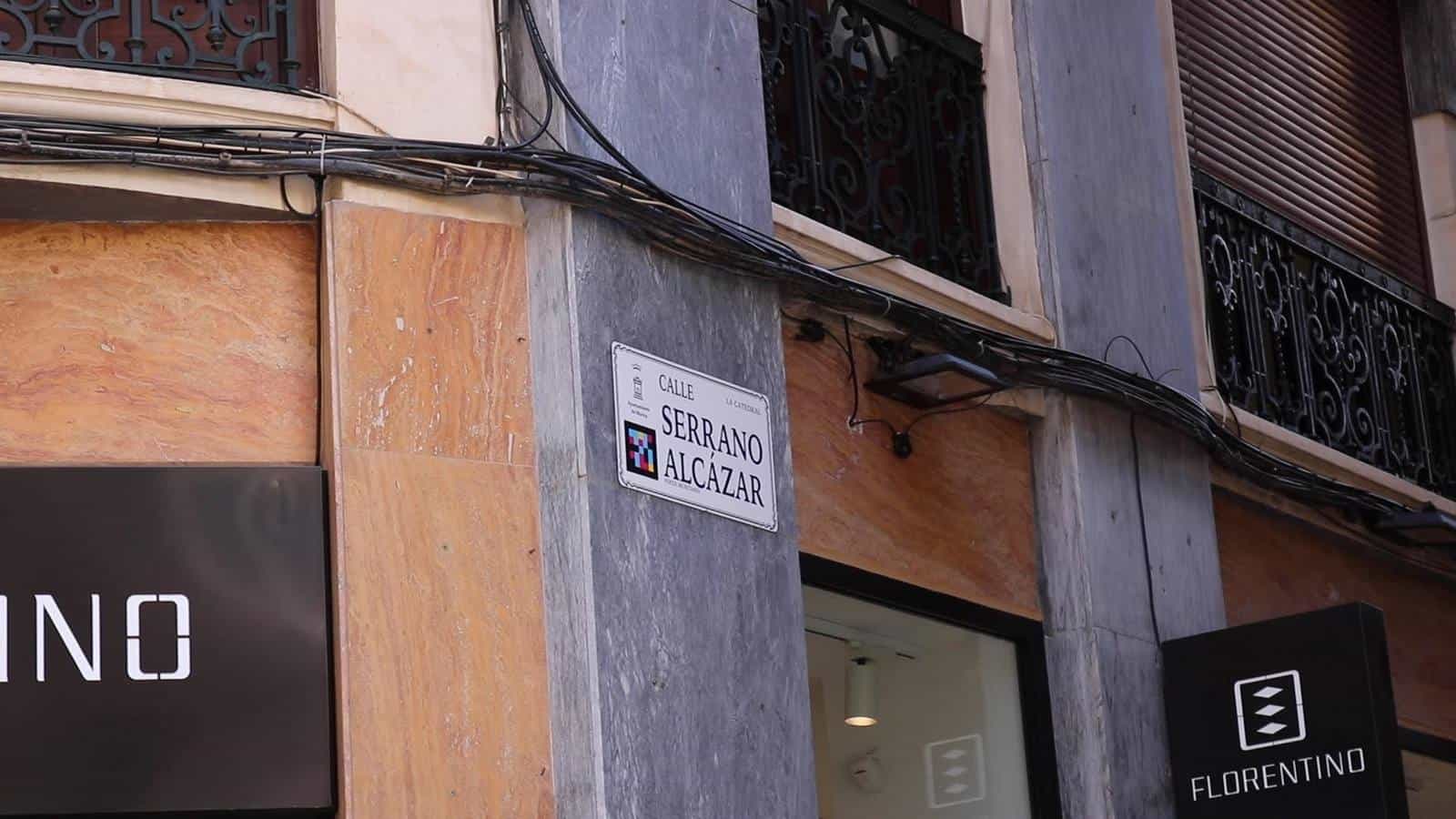
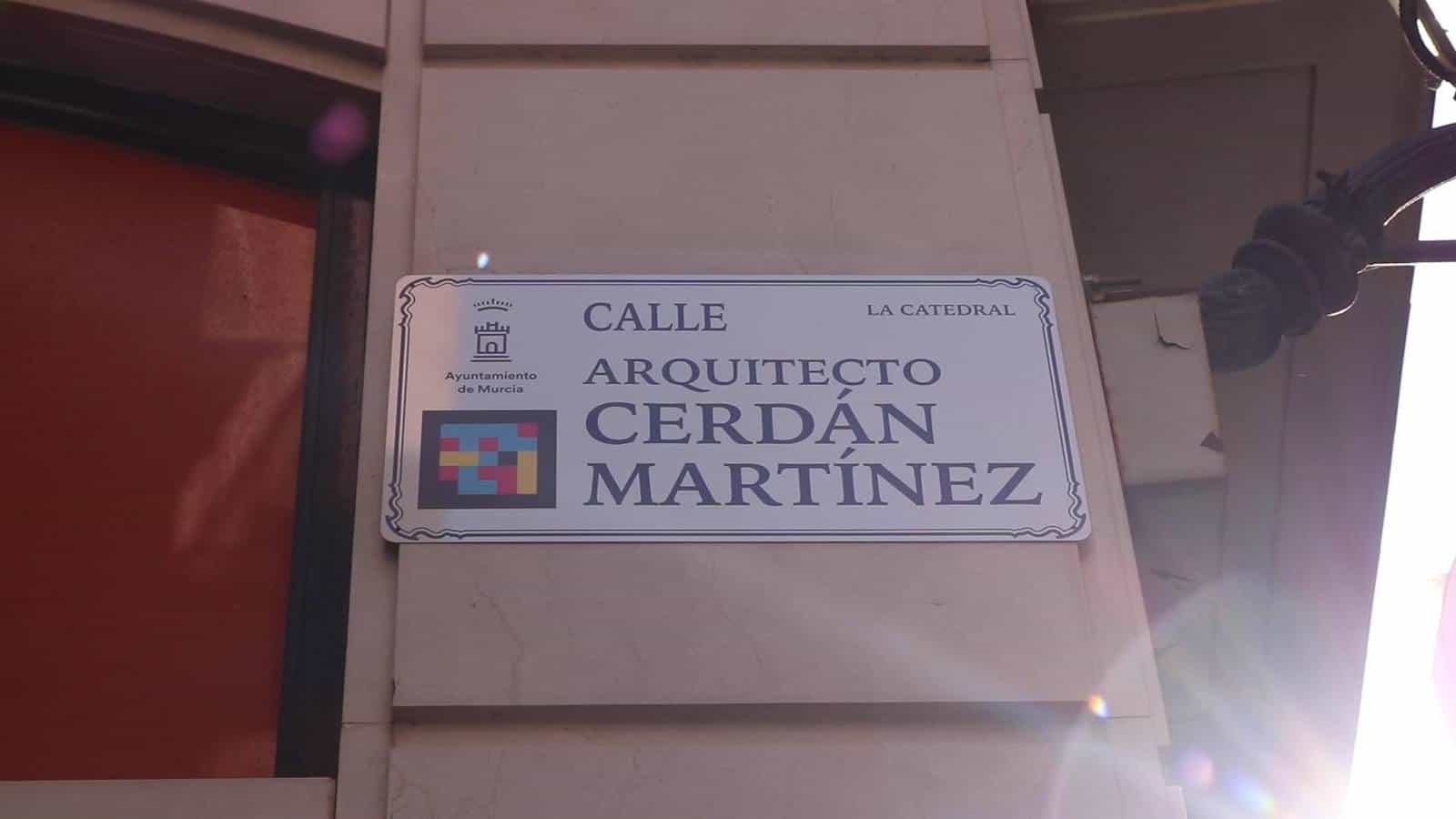
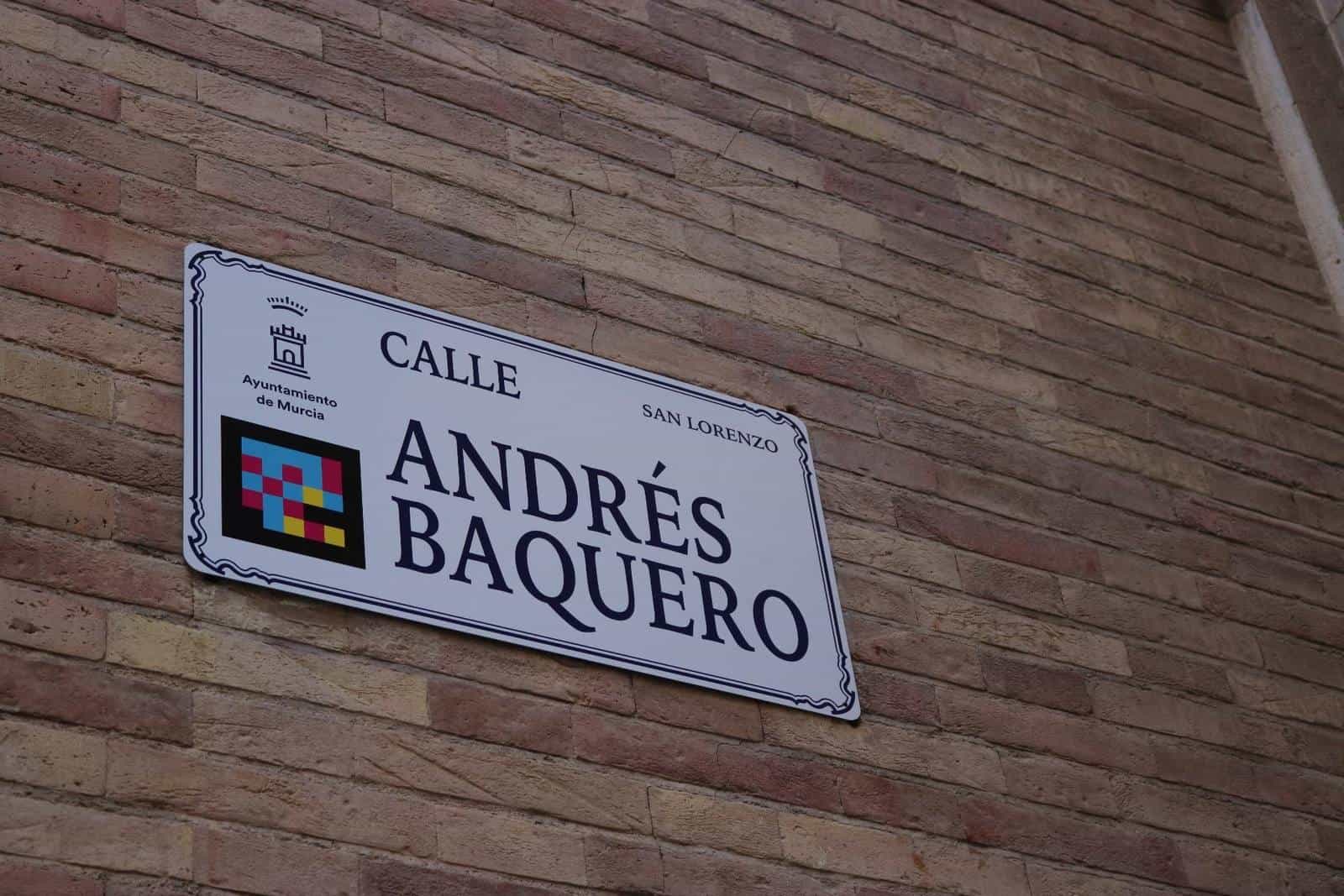
Instead of adding an auxiliary sign, the City Council embedded the NaviLens code inside the official street name plate, next to the city coat of arms, the neighborhood name and the street name.
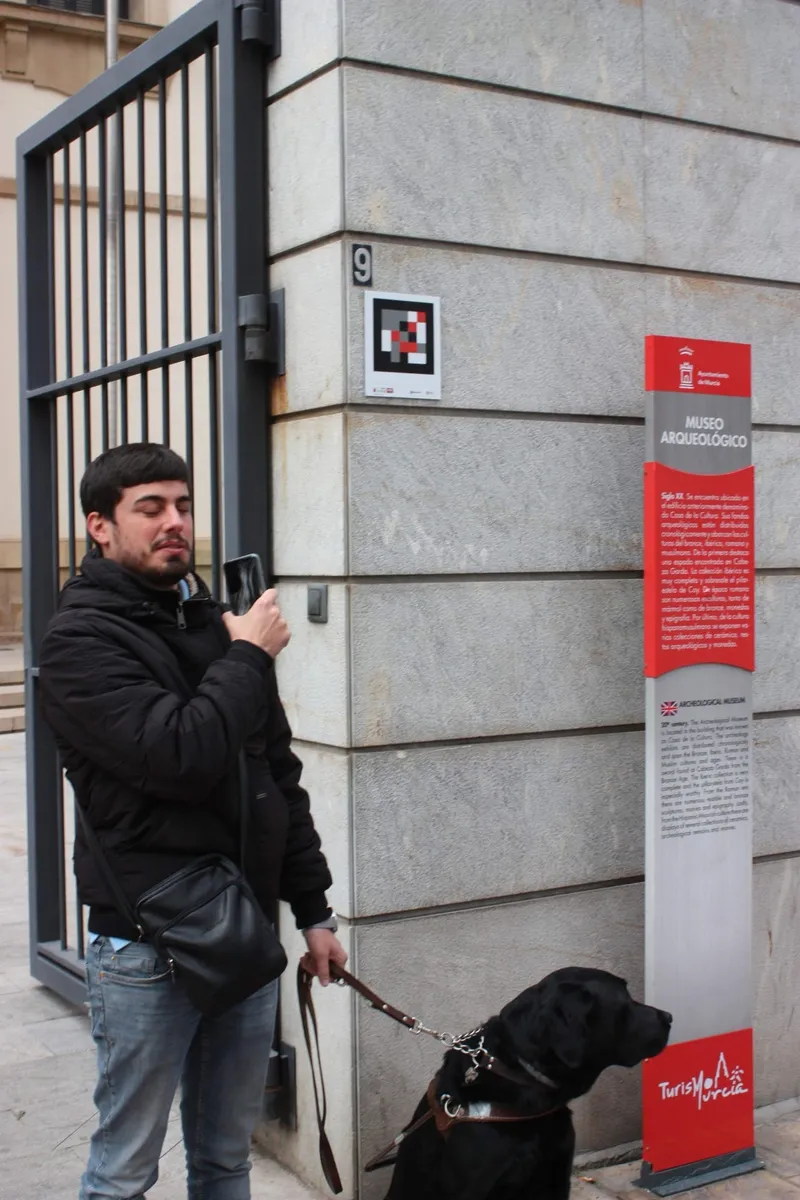
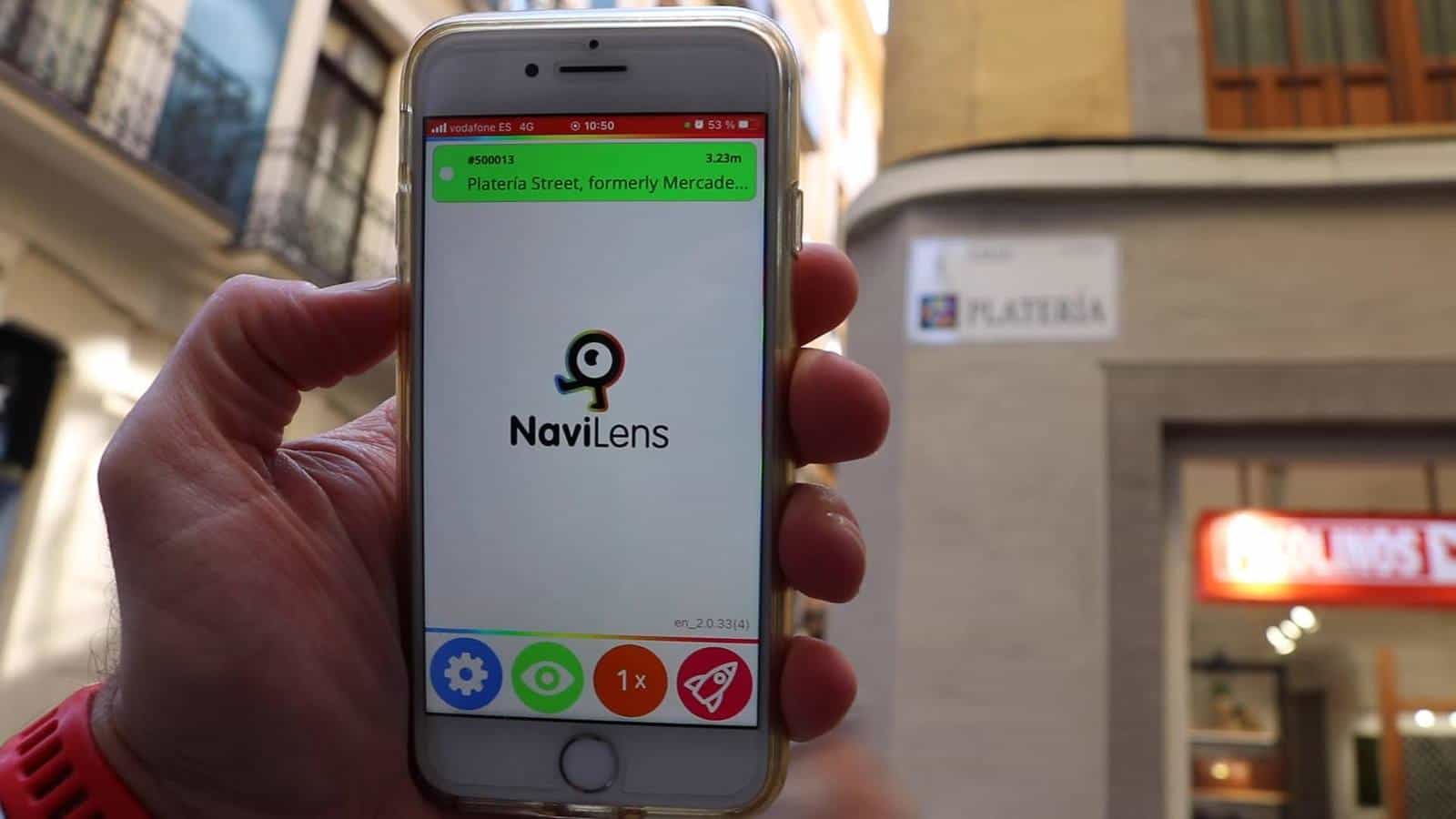
The code is detected from several yards away, with no need to focus on or touch the plate. The phone announces the street name, the neighborhood (La Catedral, San Lorenzo, San Miguel, San Antolín…) and, where relevant, a short historical capsule: “Platería, the old Mercaderes street…”. The app is available in several languages for residents and international tourists.
The system coexists with every historic plate typology used in Murcia: white ceramic with blue border (La Catedral, San Lorenzo), institutional blue ceramic (San Miguel gardens) and carved granite plates from El Arenal, alongside the old embossed metal plate.
§ The rollout
From La Catedral to San Lorenzo, San Miguel and the old districts.
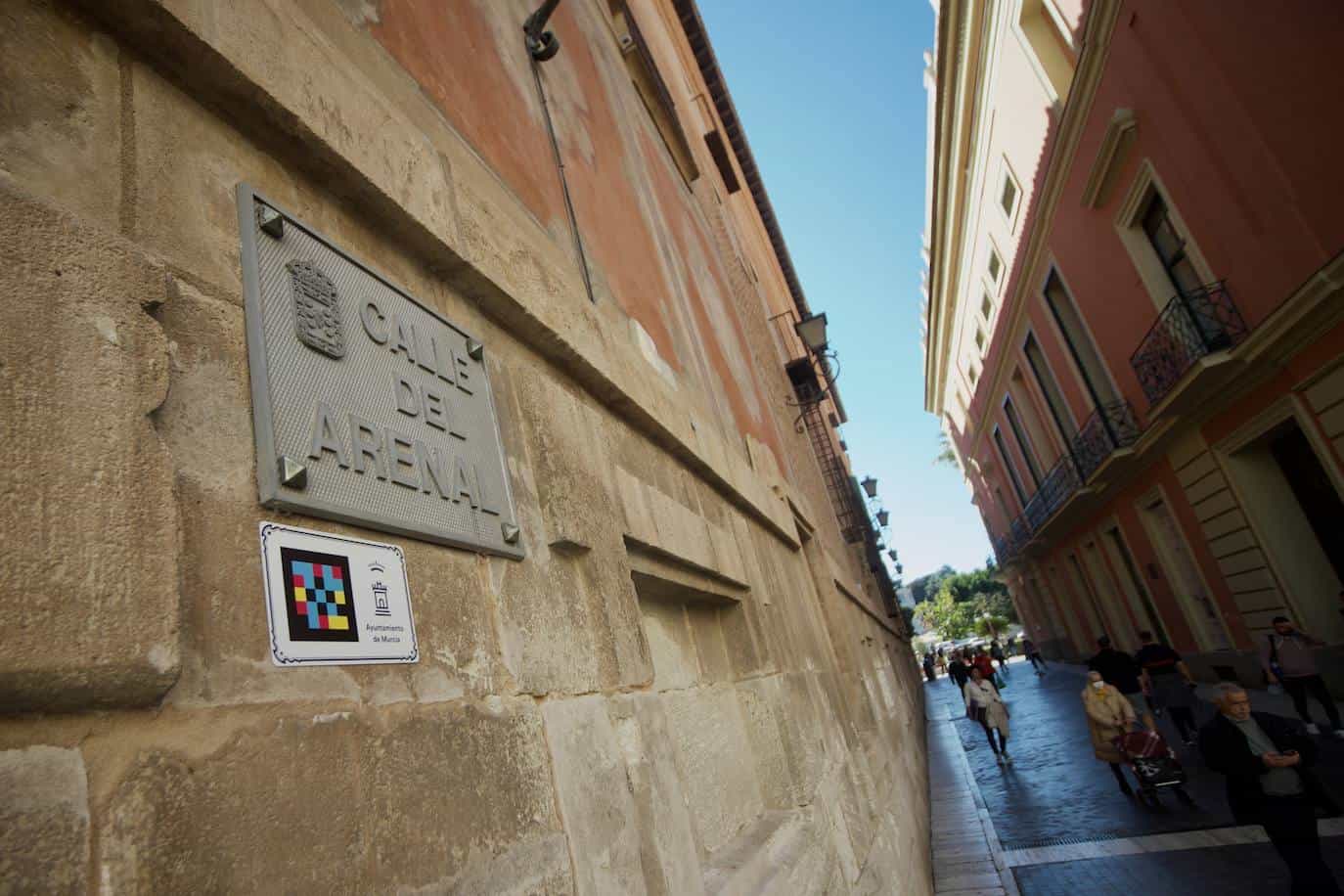
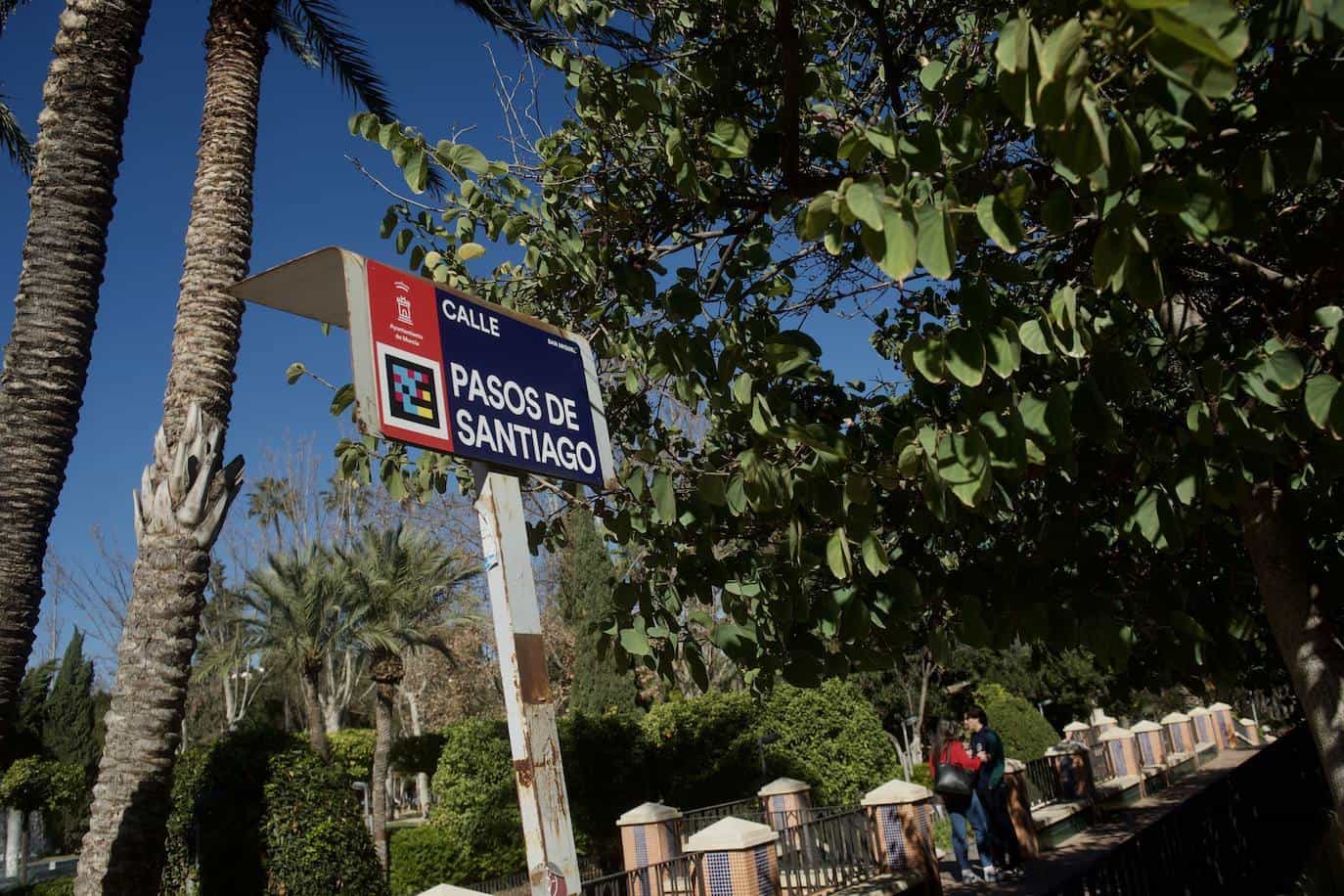
§ Timeline
From Santo Domingo to the entire municipal street grid.
- Nov 2020
First smart plates on Santo Domingo and Trapería
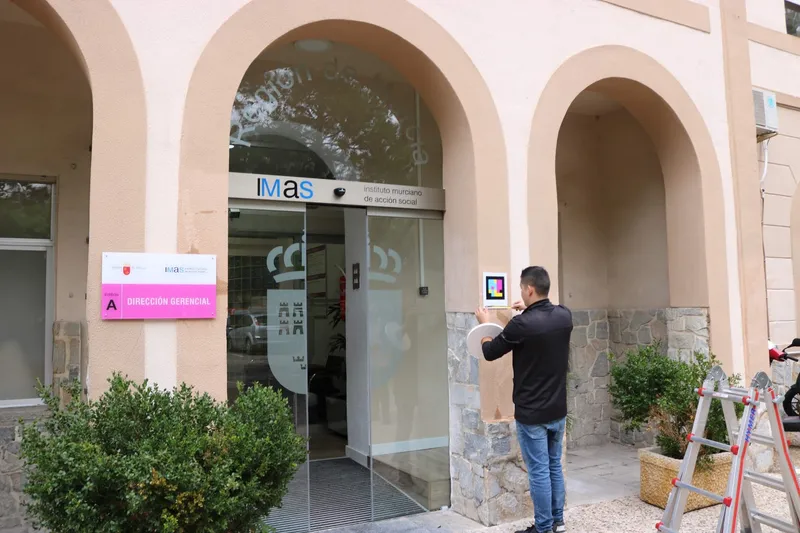
Two workers install the first plates with NaviLens codes on C/ Santo Domingo and C/ Trapería. La Opinión de Murcia reports that the rollout will follow the route of the old medieval city wall.
- Nov 2020
Murcia, first city in the world with NaviLens street plates
Europa Press and the national press report the milestone: Murcia is the first city in the world to embed NaviLens technology—developed by the local firm Neosistec with the University of Murcia—directly into public street plates, as part of the Murcia Smart City strategy.
- Jan 2021
More than 650 plates active in the old town
Turismo de Murcia confirms 650+ smart plates operational. Each code, opened with the NaviLens app, reads out the street name, the neighborhood (La Catedral, San Lorenzo, San Miguel, San Antolín…) and, in many cases, a short historical capsule in several languages.
- 2025
Municipal tender to extend the system
Murcia’s Governing Board puts out to tender the manufacture, supply and installation of public street plates with NaviLens codes, preparing the jump from the old town to the rest of the municipality.
- Feb 2026
Murcia, first municipality with smart plates on every street
The City Council awards the contract for the new smart and accessible digital signage system. The municipality becomes a huge window of digital access to information: any resident or visitor will be able to read any plate on any street with their phone camera, from a distance.
- Sep 2026
Installation work under way on the streets
City councilors José Guillén (Smart City), Marco Antonio Fernández (Districts) and Jesús Pacheco (Tourism) report on the installation of the smart street plates with NaviLens technology at the corner of Príncipe de Asturias and Marqués de los Vélez.
§ What they said
What the press said about the project.
“Murcia is the first city in the world to embed NaviLens technology into its street plates, a project framed within the municipal Murcia Smart City strategy.”
“Murcia woke up yesterday with the installation of the first smart plates in the city, a project framed within the Murcia Smart City strategy that will follow the route of the old medieval wall.”
“Murcia City Council has awarded the installation of a smart, accessible digital signage system that will equip every street and square in the municipality with NaviLens-powered smart codes.”
§ Results
A whole city that tells its own story to whoever walks it.
Spoken street
Every plate with a NaviLens code reads out the street name, the neighborhood and the associated historical information in several languages, with no need to touch or close-focus the code
10 ft detection
The street grid becomes useful for blind and low-vision people: the phone announces the plate before they pass under it—“#500013 · Plateria Street, formerly Mercaderes · 3.23 m”—without having to search the wall
Multi-language · multi-typology
The same physical asset coexists with every Murcian street plate typology and supports multiple languages for international tourism
Sources · Turismo de Murcia · La Opinión de Murcia · Europa Press · Cadena SER · Ayto. de Murcia · Ayto. de Murcia · 09/2026 · Licitación 2025
§ And your destination?
Your destination can also guide in 42 languages.
Tell us about your trails, visitor centers, landmarks or galleries. We’ll show you how NaviLens would make your offering accessible—with comparable cases.