Case study · Setagaya · Tokyo · Japan
Walking into city hall and looking at the paintings.
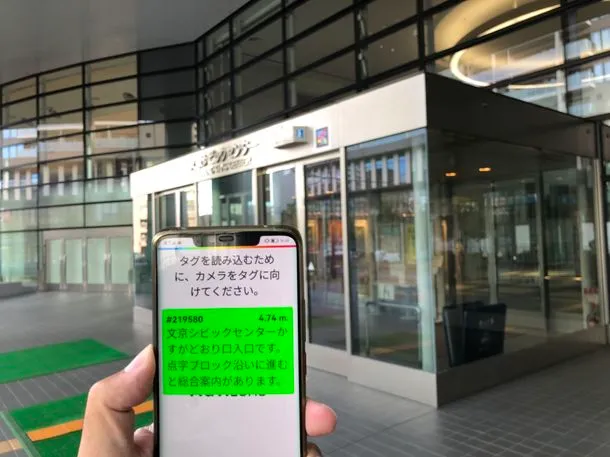
Setagaya Cityhall installs NaviLens codes on the East Wing (東棟) door, at the general information desk (総合案内) and in the painting galleries on floors 1 and 2 of the building, so any blind or low-vision person can enter, ask and enjoy the municipal collection without needing to ask for help.
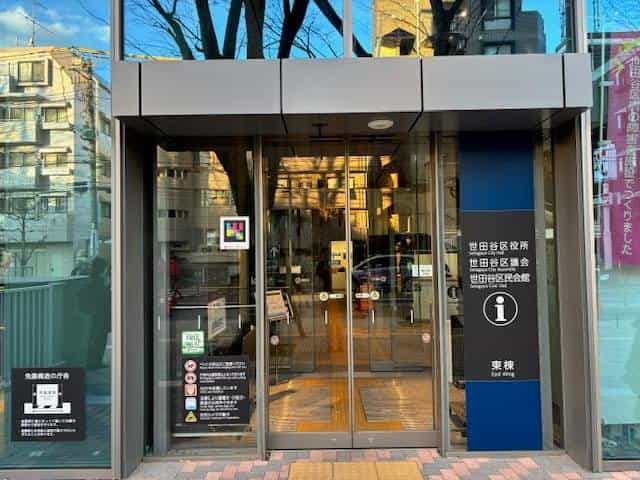
東棟
East Wing entrance with code on the glass door
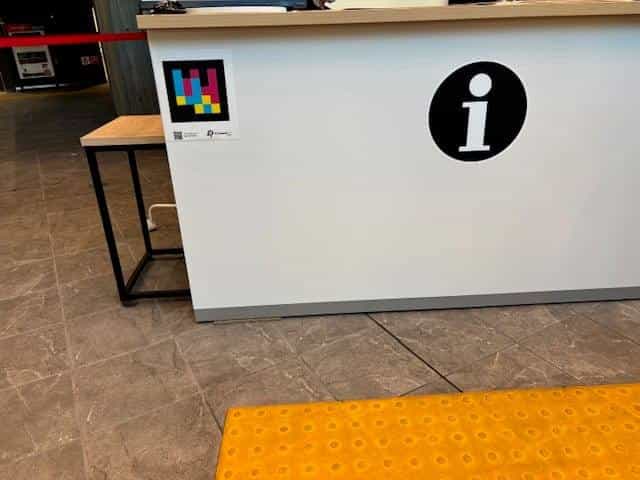
総合案内
General information desk signposted
1F + 2F
Cityhall painting galleries accessible by voice
42
Languages read aloud · multilingual
The client
Setagaya City Office (世田谷区役所) · Setagaya Ward · Tokyo
Setagaya Ward is one of Tokyo's 23 special wards, home to around 920,000 people — the capital's most populous. Its main building, the Setagaya Cityhall (Setagaya 4-21-27), reopened in March 2024 with the first phase of the new building and a fully renovated Setagaya Kumin Kaikan, designed as “a building that is easy to understand, easy to use and friendly to people”.
The signage of the new Honcho was designed over several phases with the participation of people with disabilities. On top of that, the ward office adds NaviLens codes at the key points of the East Wing and in the painting galleries where works from the municipal art collection are exhibited — part of the Ward Art Map that distributes pieces across public buildings so that art is part of everyday life.
§ The solution
Street → door → desk → gallery, with no need to ask.
Each code sits along the visitor's natural route: on the glass East Wing door to confirm entry into the building; at the 総合案内 desk, next to the “i” icon, to identify the point where questions are answered; and at the gallery entrances on floors 1 and 2 to announce what's currently on show.
The code is detected from several yards away, even on the move, and the app reads it aloud in 42 languages — perfect for the many foreign residents living in Tokyo or passing through the ward's offices.
§ Route
From the East Wing to the painting on the back wall.
East Wing · 東棟 · Entrance
“You are entering the East Wing”
The first code is read from the street, even before the automatic door opens: it confirms the user has reached the correct wing of Cityhall and announces what services are inside.
総合案内 · General information
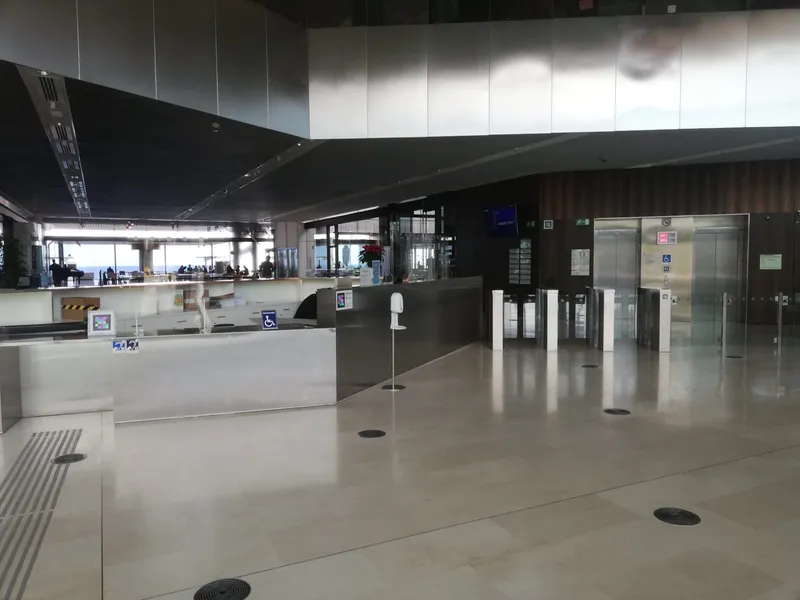
The desk, identified by voice
Next to the big “i” icon, the code identifies the information desk and reads opening hours, floor, elevators, accessible restrooms and the main procedures handled there.
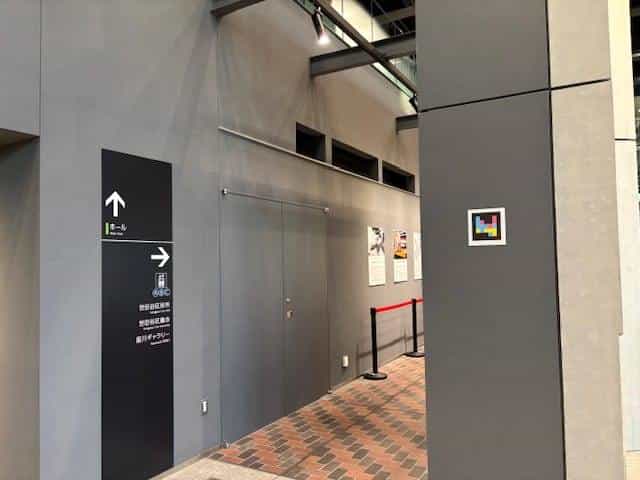
1F · Gallery access
“Painting gallery · entrance this way”
At the crossing with the exhibition board, the code on the column announces the name of the show, the rooms accessible from there and the direction to follow inside.
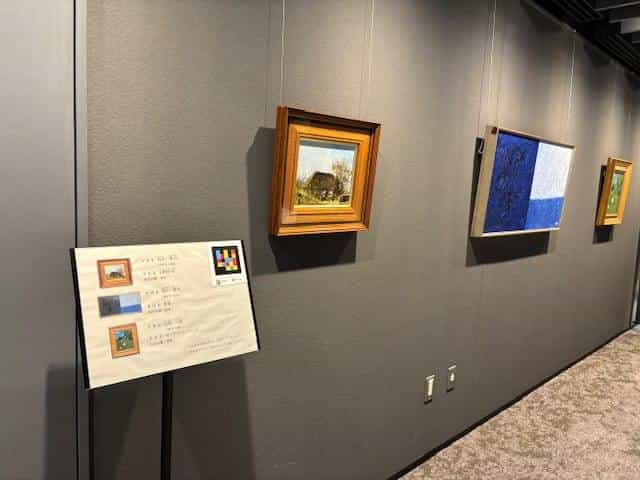
1F · Painting room
The lectern that “narrates” the paintings
The code-equipped lectern replaces the unreadable label: it reads title, author, technique and a description of each painting on the wall, one by one, in the order they are hung.
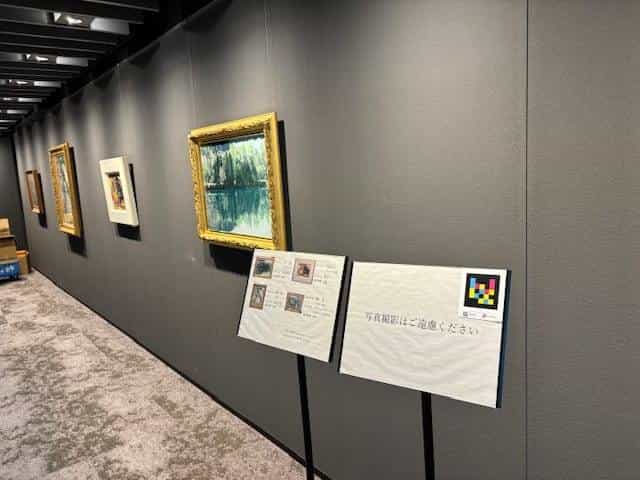
2F · Main room
The municipal collection, also by voice
In the main room on the 2nd floor the code describes the oil paintings from the municipal collection—including the lake landscape in a gold frame—and announces the room's rules.
2F · Room rules
“No photography please” — read aloud
The “please refrain from taking photographs” notice is also read aloud in the visitor's language: a small piece of courtesy that was invisible to a blind person until now.
§ What they said
“The signage of the new building was designed over several phases with people with disabilities, to achieve a building that is “easy to understand, easy to use and friendly to people”.”
“The new Setagaya Kumin Kaikan reopens as a new cultural and artistic hub of the ward, with spaces designed so that any resident can enjoy quality culture and art.”
“Setagaya Ward keeps an art collection distributed across its public buildings so that art is part of everyday life for residents.”
§ And your headquarters?
Your office can also welcome in 42 languages.
Tell us about your building, your services and your visitors. We’ll show you how NaviLens would make your office truly accessible.